Connect with us

Business

Sen. Tim Scott says Clarity Act vote will define US crypto future

Published

on

Sen. Tim Scott says Clarity Act vote will define US crypto future

Sen. Tim Scott, R-S.C., warned that Democratic opposition to cryptocurrency market structure legislation risks standing in the way of America’s ability to lead the next evolution of financial markets.

Scott, chairman of the Senate Banking Committee and one of the bill’s lead sponsors, joined FOX Business’ Taylor Riggs on “Mornings with FOX Business” to discuss the CLARITY Act and a key procedural vote that would allow negotiations to continue.

Advertisement

The Senate is scheduled to hold a procedural cloture vote on the CLARITY Act today, Sept. 15, at approximately 2:15 p.m. ET. The vote is not a final-passage vote; it would allow consideration of the legislation and negotiations over digital-asset market structure to continue.

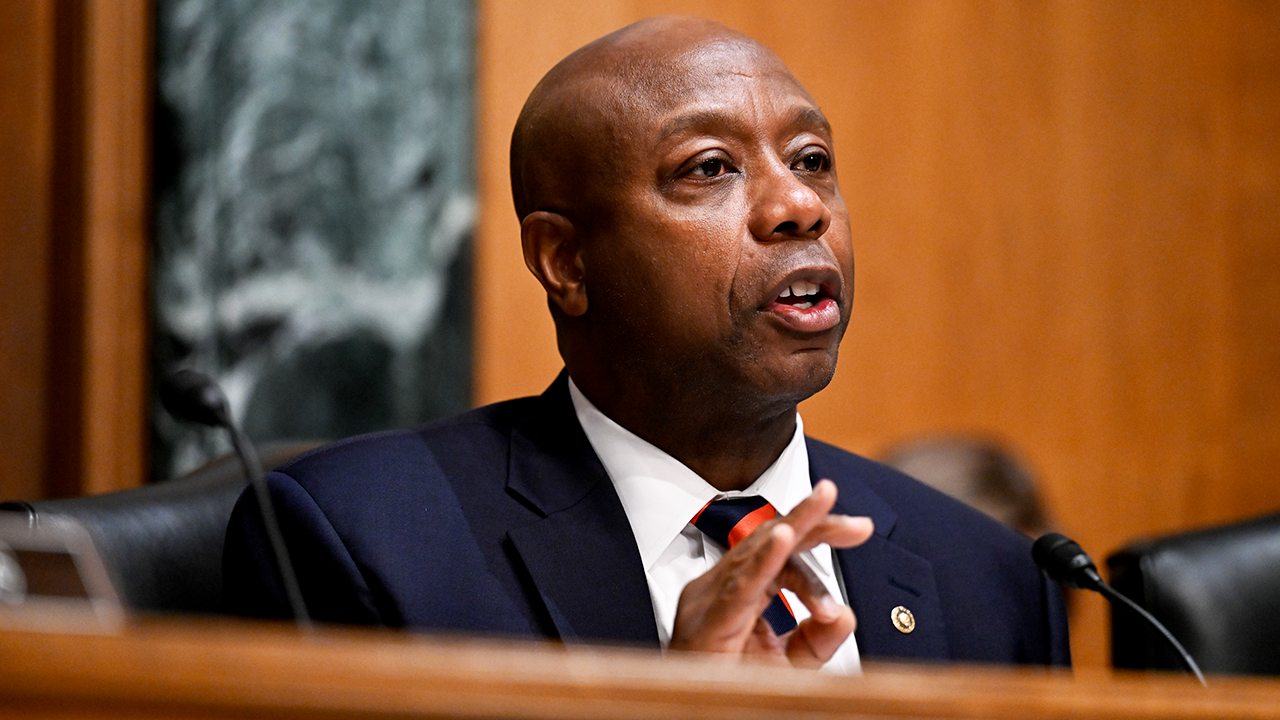
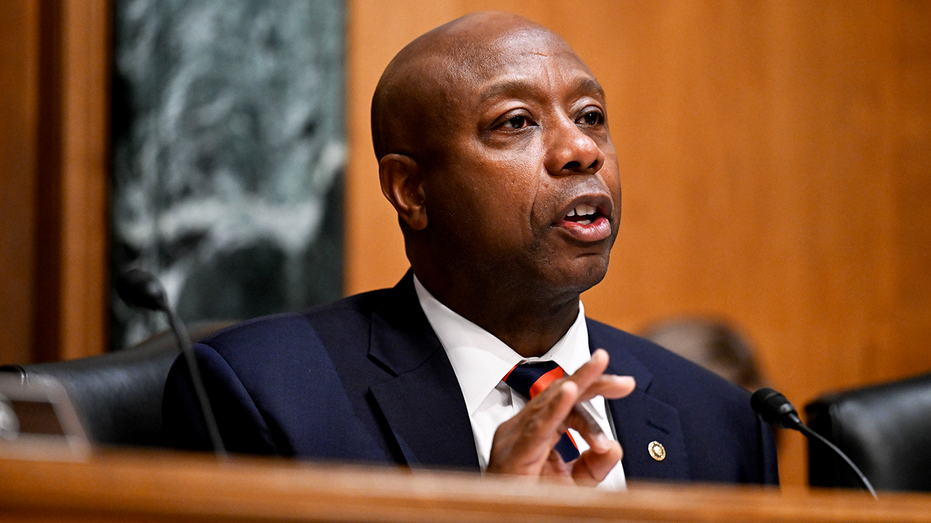
South Carolina Republican Senator Tim Scott.

Republican Sen. Tim Scott weighs in on the fight over the Clarity Act and U.S. financial leadership. (Daniel Heuer/Bloomberg / Getty Images)

“If you want everyday, hardworking Americans to have more access to their resources, more options on the table, and you want America to be the leading financial country on the planet, you vote yes,” Scott said.

The South Carolina Republican argued that establishing a federal market structure would provide clearer rules for consumers and developers while encouraging financial innovation to remain in the United States.

“The truth is that without market structure actually being embedded in the laws of our country, you have the wild, wild West,” Scott said. “Rules of the road matter.”

Scott said some Democrats have already made clear they will not support the legislation, framing the debate as one that could determine whether the U.S. benefits from changes taking place across financial markets.

TRUMP CRYPTO MEETING SIGNALS US ‘NOT GOING TO SLOW DOWN’ IN BID FOR DIGITAL ASSET DOMINANCE, EXPERT SAYS

“They’re never going to vote for clarity. They don’t want market structure to pass,” he said.

Advertisement

Scott also addressed political tensions surrounding the legislation, including Sen. Elizabeth Warren’s opposition to the CLARITY Act and her differences with President Donald Trump.

“He [President Donald Trump] and Elizabeth will probably never be on the same page on this issue or frankly, almost any issue,” Scott said. “And so politics continues, unfortunately. But that’s not in the best interest of our country.”

SEC PROPOSAL COULD OPEN FLOODGATES TO MAKE AMERICA CAPITAL OF DIGITAL CASH

Advertisement

Scott maintained that the debate should ultimately focus on whether Americans benefit from the changing financial system rather than partisan politics.

“This should be about whether or not America and Americans will benefit from the evolution of financial markets,” he said.

GET FOX BUSINESS ON THE GO BY CLICKING HERE

Advertisement
Continue Reading
Click to comment

You must be logged in to post a comment Login

Leave a Reply

Business

Hain Celestial to sell international business

Published

on

Hain Celestial to sell international business

HOBOKEN, NJ. — The Hain Celestial Group, Inc. is selling its international business to Aurelius, a global private equity firm, for approximately $323 million in cash as part of Hain’s ongoing strategic review to streamline the company and reduce debt. Net proceeds from the transaction are expected to range between $305 million and $310 million, the company said.

The transaction includes the majority of Hain’s international business operations, as well as brands such as Joya and Natumi plant-based beverages; Hartley’s jelly; Linda McCartney Foods; Cully & Sully; Yorkshire Provender; New Covent Garden soups; and Ella’s Kitchen baby and children’s foods, among others.

The sale also is part of Hain’s efforts to simplify its portfolio to focus on its North American business.

Hain said its resulting North American portfolio will include Celestial Seasonings teas; The Greek Gods yogurt; Earth’s Best Organics; Spectrum Organic cooking oils; MaraNatha nut butters; and Imagine broths.

Advertisement

“The resulting North American business would feature leading brands in attractive categories with a more streamlined operating model and greater focus on core growth opportunities,” said Alison Lewis, president and chief executive officer of Hain Celestial.

By focusing on its North American business, Hain said it expects to implement cost-reduction actions that will generate approximately $16 million of annualized savings on a run rate basis as compared to fiscal 2026.

The sale of its international business follows Hain’s sale of its North American snacks business to Snackruptors, Cambridge, Ont., for $115 million earlier this year.

The North American snacks transaction included such brands as Garden Veggie snacks, Terra chips and Garden of Eatn’ snacks.

Advertisement

The sale of its international business is expected to close in Hain’s fiscal second quarter, which ends Dec. 31. 

Continue Reading

Business

Bangkok’s Data Center Boom Runs Into a Regulatory Reckoning

Published

on

Bangkok's Data Center Boom Runs Into a Regulatory Reckoning

As the capital grapples with an unprecedented AI-driven digital expansion, the government faces a high-stakes reckoning—balancing the promise of a booming tech economy against severe environmental risks, power grid strains, and growing public outcry.

  • Bangkok’s rapid data center expansion, driven by major investments, has exposed critical regulatory loopholes where industrial facilities were mistakenly approved as warehouses without adequate environmental oversight.
  • In response to public safety concerns and environmental risks, the Thai government has suspended dozens of new projects and initiated comprehensive nationwide regulations covering electricity pricing, water use, and safety.
  • Thailand remains committed to the technology sector while implementing strict reforms to balance resource demands, manage grid upgrades, and address public skepticism regarding local economic benefits.

The moment that exposed Thailand’s data center problem did not come from a government inspection. It came from a smell. 

Stallholders working a market along Rama XI, one of Bangkok’s arterial roads, started noticing a nauseating oil odor drifting from a boxy structure covered in gunmetal grey panels that had gone up across from their stalls with almost no warning. 

A nearby hospital sat close enough to raise its own alarms. When authorities finally looked, they found 200,000 liters of oil being stored on site without a permit. The facility, known as BKK01, was tied to a $1 billion investment from the Dubai-based conglomerate DAMAC, part of a plan to turn Thailand into a Southeast Asian hyperscale hub.

That single discovery cracked open something much larger. Bangkok currently hosts somewhere between 30 and 35 operating data centers, depending on which count you use, with dozens more under construction and well over a hundred additional projects awaiting approval nationwide. 

Advertisement

Bloomberg has reported that Thailand has suspended 49 data center projects, more than the number currently in operation, while 117 more sit in a queue awaiting review. 

The trigger for the freeze was almost identical to the DAMAC case: a facility built next to a hospital that exposed a basic loophole in Thai law. Data centers were being approved as warehouses.

The loophole that let it happen

That loophole is the real story here, more than any single facility. Under existing zoning and industrial rules, a data center does not have to be classified and regulated as a data center at all. 

Digital Economy and Society Minister Chaichanok Chidchob has acknowledged that facilities went up in locations where they were never permitted. Bangkok Governor Chadchart Sittipunt has since ordered a halt to new permits and a review of both urban planning law and the environmental impact assessment process, conceding that the episode exposed a genuine regulatory gap. 

Advertisement

When a facility can sidestep environmental review simply by calling itself a warehouse or an office, “regulation” becomes a formality rather than a safeguard, and it is exactly the kind of gap that lets a billion-dollar industrial facility land next to a hospital without anyone official noticing until the neighbors complain.

The resource math nobody checked

The numbers explain why nobody caught this sooner, and why it matters now that they have. Research from the energy outlet JustPow found that Bangkok’s data centers carry a projected electricity demand of at least 247 megawatts and an annual water consumption of roughly 4.4 million cubic meters, comparable to the usage of tens of thousands of households. 

Separate reporting has tied one Bang Kapi facility to 429,000 liters of stored diesel, which opposition lawmaker Suphanat Minchaiynunt flagged as just under the threshold that would legally classify it as a fuel depot requiring stricter licensing. 

Researchers have also pointed to a “data center heat island” effect, in which clusters of servers and cooling systems measurably raise surrounding temperatures. None of this is exotic. It is the standard resource profile of large-scale computing infrastructure. What is unusual is that so much of it landed inside one of Southeast Asia’s densest urban cores rather than on its outskirts.

Advertisement

Slowing down without pulling back

Thailand’s response so far has been to slow down without pulling back. Prime Minister Anutin Charnvirakul has ordered new nationwide data center rules within a month, covering electricity pricing, water use, siting and safety, and Deputy Prime Minister Ekniti Nitithanprapas is chairing a new supervisory commission tasked with closing the gaps that let this happen in the first place. 

Electricity tariffs aimed specifically at large data center operators are reportedly on the table, along with tighter scrutiny of projects proposed in dense districts. 

A separate 31 billion baht transmission grid upgrade is already underway, an acknowledgment that the existing grid was never built to support this kind of concentrated industrial load. 

None of these measures amount to a retreat from the industry. They are an attempt to keep the investment flowing while giving regulators a legal basis to say no to the next BKK01 before it is built rather than after.

Advertisement

Not anti-AI, just anti-chaos

That balancing act reflects a public mood that is easy to misread. This is not a population turning against artificial intelligence. Survey data cited by the Thailand Development Research Institute found that Thai manufacturers themselves are split: nearly half believe data centers could meaningfully support domestic industry and help the country become a genuine regional hub, while a slightly larger share doubt that local businesses will see much direct benefit, pointing to the sector’s heavy reliance on imported equipment and foreign specialists. That is not rejection. It is skepticism about who actually profits, layered on top of legitimate anger that safety and environmental rules were treated as optional while the investment numbers climbed.

The window Thailand can’t afford to waste

Thailand has been explicit that it has no intention of walking away from this industry, and given how much of its recent industrial growth has been tied to data center investment from firms like Google, AWS and TikTok, that is a defensible position. 

What is not defensible is the idea that the last two years of unchecked growth were simply the unavoidable cost of attracting that capital. Other jurisdictions dealing with the same boom, from Spain’s renewable-supply mandates to New York’s temporary construction freeze, have generally tried to write the rules before the concrete gets poured, not after a hospital’s neighbors start complaining about the smell. Thailand skipped that step once. The government now has a narrow window to prove that its promised reforms are a genuine fix rather than a paperwork exercise that legalizes what already got built and calls the problem solved.

Advertisement
Continue Reading

Business

So Delicious non-dairy dessert recalled over possible stones, hard objects

Published

on

So Delicious non-dairy dessert recalled over possible stones, hard objects

A recall has been issued for So Delicious Dairy Free Salted Caramel Cluster Non-Dairy Frozen Dessert pints over the potential presence of foreign materials, including small stones and other hard objects, within the cashew inclusions.

Danone USA announced the voluntary recall for So Delicious Dairy Free Salted Caramel Cluster Non-Dairy Frozen Dessert pints, on Tuesday.

Advertisement

The recalled dessert item is packaged in pint containers with best-by dates on and before April 3, 2028. The recall applies to SKU 136603 (UPC 744473476138).

CREAM CHEESE AND DELI SALADS RECALLED OVER POTENTIAL LISTERIA CONTAMINATION

So Delicious Dairy Free Salted Caramel Cluster Non-Dairy Frozen Dessert pint

Danone USA initiated the voluntary recall for So Delicious Dairy Free Salted Caramel Cluster Non-Dairy Frozen Dessert pints. (FDA)

The recalled product were distributed to retail stores across the U.S.

The company is working with retail partners to remove affected products from shelves.

Advertisement

POPULAR SQUISHY TOYS RECALLED OVER POTENTIALLY DEADLY WATER BEAD HAZARD

Man eating a frozen dessert from a bowl

A recall has been issued for pints of the popular frozen dessert over the potential presence of foreign materials. (Getty Images / Getty Images)

No other So Delicious Dairy Free flavors or products are affected by the recall. Unaffected items are still available on store shelves, and products shipped moving forward are not affected by the recall.

The issue was identified through consumer complaints, the company said.

Danone USA said it has notified the Food and Drug Administration about the voluntary recall.

Advertisement
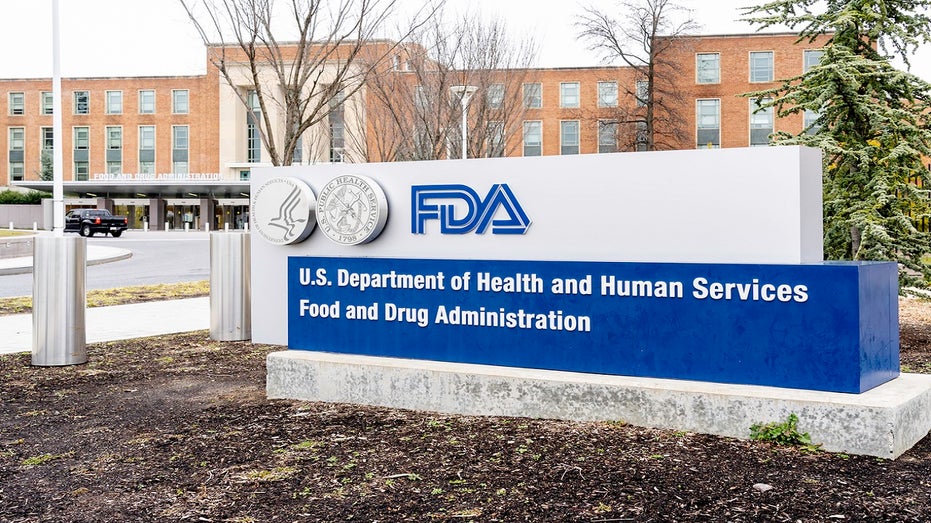
FDA headquarter sign

The Food and Drug Administration has been notified about the recall. (iStock / iStock)

CLICK HERE TO GET FOX BUSINESS ON THE GO

Consumers who purchased the affected product are instructed not to consume it and to contact the So Delicious Dairy Free Consumer Care Line at 1-833-367-8975 for a replacement coupon or refund.

Continue Reading

Business

J.B. Hunt Transport Services, Inc. (JBHT) Presents at Morgan Stanley’s 14th Annual Laguna Conference Transcript

Published

on

OneWater Marine Inc. (ONEW) Q1 2026 Earnings Call Transcript