
Business
Shein banned from University of Texas at Austin campus network


Check out what’s clicking on FoxBusiness.com.
Major fast-fashion retailer Shein has been officially banned from the University of Texas at Austin, one of the nation’s largest college campuses.
The move follows Gov. Greg Abbott’s January expansion of a 2022 directive, which now prohibits roughly 50 Chinese-affiliated companies, including Alibaba and Temu, from state devices due to cybersecurity and foreign interference concerns.
The University of Texas at Austin confirmed to FOX Business Tuesday that the state’s prohibited technologies list also extends to the campus Wi-Fi networks.
“This policy is intended to ensure compliance with the new regulations as well as enhance awareness of potential security risks and safeguard sensitive state and university data,” the school said, according to its website.

University of Texas students walk through campus on the first day of classes Monday, Aug. 25, 2025. (Jay Janner/The Austin American-Statesman via Getty Images / Getty Images)
The campus ban on Shein — which surged into a multibillion-dollar global fast-fashion powerhouse in recent years by offering trendy clothes at hyper-affordable prices — has since received mixed reactions on social media.
While some expressed frustration over the change, others criticized Shein for its controversial manufacturing ethics and labor practices.
TEXAS THE LATEST STATE WITH A LAW BANNING FOREIGN ADVERSARIES FROM BUYING REAL ESTATE
Texas Attorney General Ken Paxton announced in December that his office is investigating the e-commerce site for “potential violations of Texas law related to unethical labor practices and the sale of unsafe consumer products,” while also citing concerns over possible toxic and hazardous materials.
In December 2022, Abbott directed agency leaders to immediately ban employees from using TikTok and other Chinese-owned platforms on government-issued devices, calling them a “threat to Texas’ cybersecurity.”
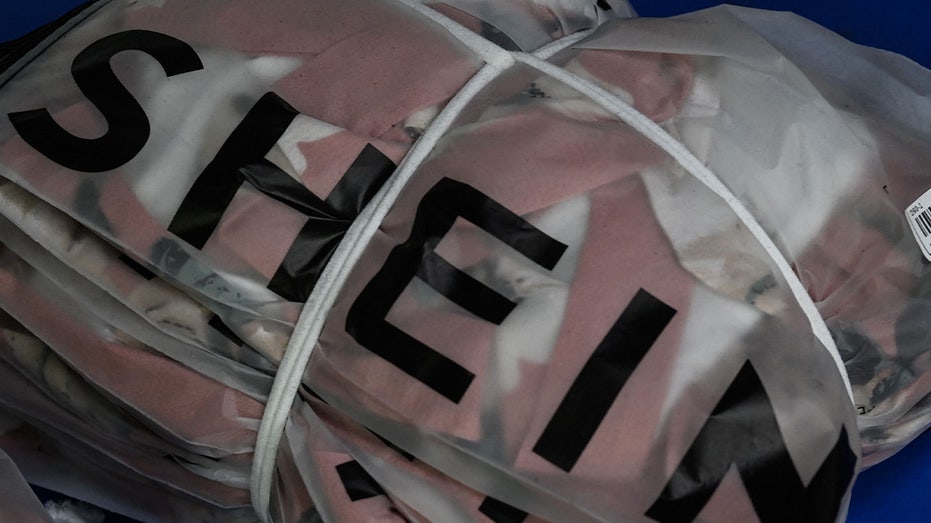
This picture shows signage of fast fashion e-commerce company SHEIN at a garment factory in Guangzhou, China’s southern Guangdong province, on July 18, 2022. (JADE GAO/AFP via Getty Images / Getty Images)
UT Austin later effectively blocked the popular social media app from its campus network in compliance with state regulations.
In January, Governor Abbott added 26 additional companies to the list of prohibited technologies, including artificial intelligence tools, e-commerce sites, and social media apps affiliated with the People’s Republic of China and the Chinese Communist Party.
CLICK HERE TO DOWNLOAD THE FOX NEWS APP
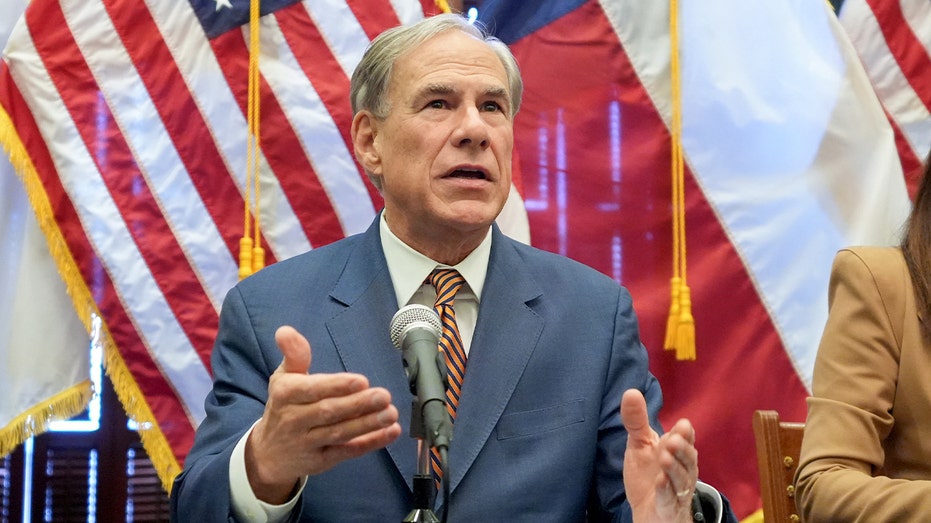
Texas Gov. Greg Abbott speaks during a news conference with U.S. Secretary of Agriculture Brooke Rollins at the Texas Capitol in Austin on Aug. 15, 2025. (Jay Janner/Austin American-Statesman via Getty Images / Getty Images)
Among the 54 prohibited sites, the banned companies include social media platform RedNote, AI platform DeepSeek, electronics giant Xiaomi, Alipay, and Baidu, China’s equivalent of Google.
“Rogue actors across the globe who wish harm on Texans should not be allowed to infiltrate our state’s network and devices,” Abbott said in a statement.
“Hostile adversaries harvest user data through AI and other applications and hardware to exploit, manipulate, and violate users and put them at extreme risk. Today, I am expanding the prohibited technologies list to mitigate that risk and protect the privacy of Texans from the People’s Republic of China, the Chinese Communist Party, and any other hostile foreign actors who may attempt to undermine the safety and security of Texas.”

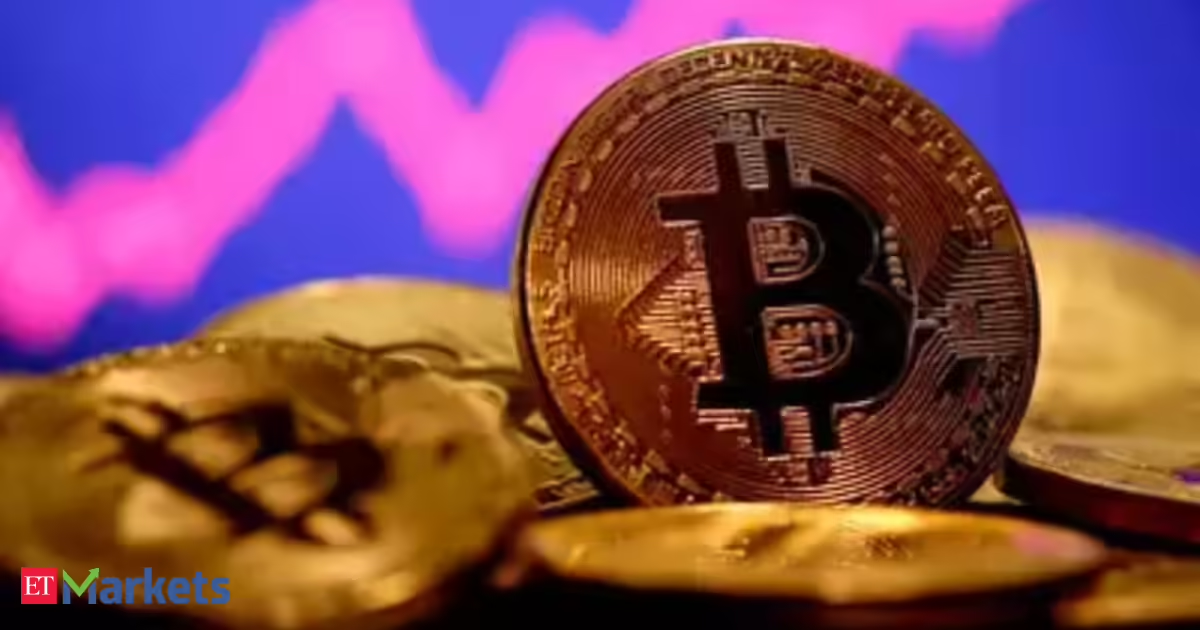
Over the past 24 hours, Bitcoin rose 0.34%, while Ethereum fell 0.18% to trade at the $2,050 level. Among the major altcoins, BNB, Solana, Tron, Dogecoin, Hyperliquid, and Cardano gained up to 1.07%, while XRP slipped 0.32%. The global crypto market capitalisation went up 0.36% to $2.31 trillion, according to CoinMarketCap.
Also Read | SIP or lumpsum? Expert suggests best approach for first-time mutual fund investors with Rs 10,000
Piyush Walke, Derivatives Research Analyst, Delta Exchange, said Crypto markets were subdued on Friday, with no major price movements. Both Bitcoin and Ethereum traded largely sideways, while implied volatilities continued to bottom out. Such conditions are often followed by a period of heightened volatility ahead.
From a technical perspective, sellers would need to push prices below $65K to open the door for a deeper decline toward $60K. On the upside, any meaningful recovery would require a move above $69K, reclaiming the 50-day SMA and breaking back into the lower band of the rising channel, Walke added.

In the past week, Bitcoin and Ethereum went up 1.01% and 3.15%, respectively. Among the major altcoins, BNB, XRP, Solana and Hyperliquid slipped up to 6.68%, whereas Tron, Dogecoin and Cardano gained up to 1.78%.
WazirX Market’s Desk said the crypto market remained stable this week with reduced volatility and improving sentiment. Bitcoin traded within the $66,000–$67,000 range, holding key levels despite earlier macro pressure. Ethereum’s performance over the week was impressive, gaining around 3.7%, supported by continued ecosystem activity and capital rotation.
Institutional signals turned constructive. Bitcoin ETFs recorded their first inflows since October as prices stabilised, indicating renewed demand, WazirX Market’s Desk further said.
According to Binance Weekly Market Research, Bitcoin’s correlation with the Global Easing Breadth Index (GCBI) has turned negative post-ETF (2024–2026), signalling growing maturity as the market prices macro trends ahead rather than reacts to them.
“We think this reflects a shift in marginal price-setting from retail to institutions after ETFs. Since assets are priced by the marginal buyer, and institutions process macro information earlier (often 6–12 months ahead of policy moves), positioning can lead the rate cycle rather than lag it.”
Also Read | Which mutual fund should you add for 15 year SIPs? Expert breaks down multicap vs factor funds
As a result, BTC may have evolved from a macro “lagging receiver” to a “leading pricer.” A peak in easing may already be old news for BTC, and crypto-native drivers—such as policy progress and institutional flows—could matter more than the direction of monetary easing itself, the report further said.
(Disclaimer: Recommendations, suggestions, views and opinions given by the experts are their own. These do not represent the views of The Economic Times)
If you have any mutual fund queries, message on ET Mutual Funds on Facebook/Twitter. We will get it answered by our panel of experts. Do share your questions on ETMFqueries@timesinternet.in alongwith your age, risk profile, and Twitter handle
Intrepid Potash: Iran-Driven Rally Looks Temporary (Rating Downgrade)


India makes first Iranian oil buy in seven years with no payment problems

Oil Sets The Price, Crypto Waits For The Signal

Midcap stocks saw sharp declines in March as rising crude prices, geopolitical tensions and continued FII outflows dragged markets lower, with the Nifty falling over 11%. This list highlights 10 worst-performing midcaps, with losses of up to 29%, reflecting broad-based selling pressure across sectors during a volatile period.

Oselote/iStock via Getty Images
COMEX (US) silver’s registered inventory has fallen to 13-14% coverage of outstanding open interest, while March 2026 delivery was unusually high and SHFE (Shanghai) futures now trade at a 12% premium to COMEX, together signaling extreme tightness that creates upside pressure on silver
FX markets muted as traders watch Iran war updates, wait for jobs data


A freight forwarding professional with over 20 years in the industry, I am an enthusiastic market participant with a flair for picking gems from the general rubble. My industry experience has given me insights into human behavior, investment psychology, and the need to make money work for you instead of against you. My ideas on investing are often contrarian, and the level of due diligence I apply to each of my research projects give my audience the right information at the right time.
Analyst’s Disclosure: I/we have no stock, option or similar derivative position in any of the companies mentioned, and no plans to initiate any such positions within the next 72 hours. I wrote this article myself, and it expresses my own opinions. I am not receiving compensation for it (other than from Seeking Alpha). I have no business relationship with any company whose stock is mentioned in this article.
Seeking Alpha’s Disclosure: Past performance is no guarantee of future results. No recommendation or advice is being given as to whether any investment is suitable for a particular investor. Any views or opinions expressed above may not reflect those of Seeking Alpha as a whole. Seeking Alpha is not a licensed securities dealer, broker or US investment adviser or investment bank. Our analysts are third party authors that include both professional investors and individual investors who may not be licensed or certified by any institute or regulatory body.
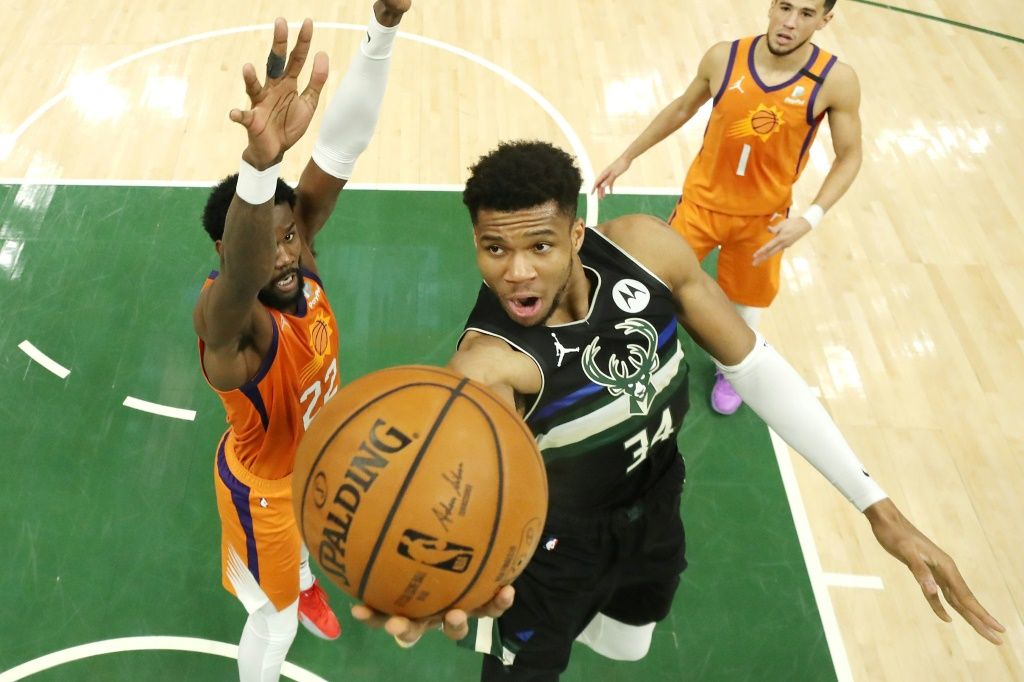
The NBA has launched an investigation into the Milwaukee Bucks for their handling of superstar Giannis Antetokounmpo’s injury status and potential violations of the league’s player participation policy, after the two-time MVP publicly stated he is healthy and wants to play while the team continues to hold him out.
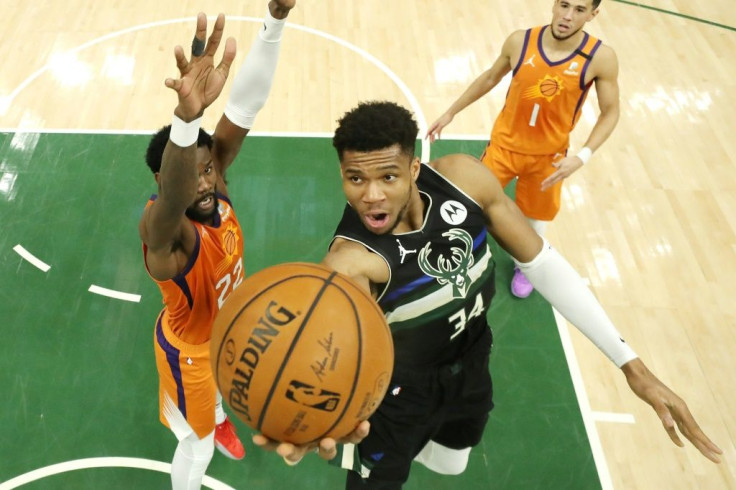
ESPN’s Shams Charania reported Friday that the league is examining inconsistent statements regarding Antetokounmpo’s health. The Bucks have listed the 31-year-old forward as out for the past 10 games with a left knee hyperextension and bone bruise suffered March 15 against the Indiana Pacers. Antetokounmpo, however, has told investigators he is ready to return and the team will not medically clear him, sources said.
Antetokounmpo addressed the situation directly before Friday’s game against the Boston Celtics, expressing frustration and questioning his relationship with the organization. “You know who you are dealing with,” he told reporters. He added that he has never seen a player of his caliber publicly state he wants to play while being sidelined, and welcomed the NBA’s probe. “There should be” an investigation, he said, according to multiple accounts.
The conflict comes as the Bucks, already eliminated from playoff contention and headed for their first missed postseason since 2016, sit near the bottom of the Eastern Conference. Antetokounmpo has appeared in only 36 games this season due to multiple injuries, including a lengthy calf issue earlier in the year.
The National Basketball Players Association previously criticized the Bucks in late March, asserting that Antetokounmpo is healthy and ready to play. The union suggested the team might be engaging in tanking to improve lottery odds, stating the player participation policy exists to ensure stars like Antetokounmpo are on the court when able. “Anti-tanking policies are only as effective as their enforcement,” the NBPA said.
Bucks coach Doc Rivers had maintained that Antetokounmpo is “progressing” but “just not healthy,” pushing back against the union’s claims in late March. Team officials have told league investigators they do not believe he is ready and that he actually wants to play, creating the conflicting narratives now under review.
The NBA has interviewed Antetokounmpo’s representatives, the Bucks and team doctors as part of the probe, sources told Charania and The Athletic. The investigation focuses on whether the franchise violated rules requiring teams to make healthy players available, particularly as the season winds down with no playoff implications.
Antetokounmpo’s public comments Friday marked a notable escalation. He described the situation as feeling like “a slap in the face” and suggested uncertainty about the future of his relationship with the Bucks. “I just don’t want to be part of it,” he said in one account, raising questions about his long-term commitment to the franchise amid ongoing injury concerns and the team’s direction.
The Greek Freak has averaged 27.6 points, 9.8 rebounds and 5.4 assists in his limited action this season while shooting a career-high 62.4% from the field. His absence has contributed to Milwaukee’s struggles, though the team has leaned on other veterans in recent games.
League rules prohibit teams from resting healthy players for non-injury reasons, especially in the context of the new collective bargaining agreement’s emphasis on player availability. Similar investigations have targeted other franchises in recent years over load management and tanking concerns.
The Bucks have not issued a detailed public response to the latest reports beyond standard injury updates listing Antetokounmpo as out. The organization has emphasized caution with the star’s health after a season marked by multiple lower-body setbacks, including groin, calf and now knee issues.
Antetokounmpo’s desire to play contrasts with the team’s apparent preference to shut him down for the remainder of the regular season, which ends in mid-April. With the Bucks out of contention, some observers speculate the front office prioritizes preserving his long-term health and potentially positioning for a higher draft pick or future roster moves.
The situation has drawn widespread attention across the NBA. Fans, analysts and former players have weighed in on social media, with many expressing surprise at the public rift between a franchise cornerstone and his team. Antetokounmpo signed a contract extension in recent years and has been the face of the Bucks since being drafted in 2013, leading them to the 2021 NBA championship.
The timing of the investigation adds pressure as the league office seeks to enforce participation rules uniformly. Outcomes of similar probes in the past have included fines, though more severe penalties are rare unless clear violations are proven.
As of Saturday, April 4, Antetokounmpo remained sidelined for upcoming games, with no updated timetable for his return. The NBA has not commented publicly on the investigation’s progress or potential timeline for resolution.
The episode highlights broader tensions in the modern NBA between player health, competitive integrity and strategic decision-making in a 82-game season. Stars often battle through injuries, but teams increasingly err on the side of caution, sometimes creating friction when a player feels ready.
For the Bucks, the drama unfolds against a backdrop of a disappointing season and questions about the roster’s future direction. Whether Antetokounmpo returns before the season ends — or at all — remains uncertain amid the ongoing probe.
The Greek Freak’s comments Friday suggested he is eager to contribute while he can, emphasizing his competitive drive even in a lost season. “I want to f—ing play,” he said, underscoring the disconnect with the team’s medical and organizational stance.
League officials are expected to continue gathering information in the coming days. Any findings could influence not only the Bucks but also set precedents for how teams manage star players down the stretch of disappointing campaigns.
Antetokounmpo has not elaborated further since his pregame remarks, focusing instead on his personal preparation. The situation adds another layer of uncertainty to what has already been a challenging year for the franchise and its franchise player.
As the regular season concludes, all eyes remain on Milwaukee to see how the investigation unfolds and whether Antetokounmpo makes a late appearance. For now, the public disagreement and league scrutiny have thrust the Bucks into the spotlight for reasons far removed from on-court performance.

IMF backs gradual BOJ rate hikes as Iran war and weak Yen fuel inflation risks

Atletico Madrid: What next for manager Diego Simeone?
Bitcoin holds near $67K as crypto markets stay muted; volatility seen rising ahead

Cambodia Passes First Cybercrime Law to Shut Down Scam Centers for Good


-

 NewsBeat2 days ago
Steven Gerrard disagrees with Gary Neville over ‘shock’ Chelsea and Arsenal claim | Football
-

 Business1 day ago
No Jackpot Winner and $194 Million Prize Rolls Over
-
Entertainment5 days ago
Fans slam 'heartbreaking' Barbie Dream Fest convention debacle with 'cardboard cutout' experience
-

 Fashion15 hours ago
Weekend Open Thread: Spanx – Corporette.com
-

 Crypto World3 days ago
Gold Price Prediction: Worst Month in 17 Years fo Save Haven Rock
-

 Tech5 days ago
The Pixel 10a doesn’t have a camera bump, and it’s great
-
 Entertainment6 days ago
Lana Del Rey Celebrates Her Husband’s 51st Birthday In New Post
-
Crypto World4 days ago
Dems press CFTC, ethics board on prediction-market insider trades
-

 Tech5 days ago
Avatar Legends: The Fighting Game comes out in July and it looks pretty slick
-

 Sports4 days ago
Tallest college basketball player ever, standing at 7-foot-9, entering transfer portal
-

 Fashion6 days ago
Amazon Sundays: Soft Spring Layers
-

 Tech4 days ago
EE TV is using AI to help you find something to watch
-

 Business2 days ago
Login and Checkout Issues Spark Merchant Frustration
-

 Tech6 days ago
Elon Musk’s last co-founder reportedly leaves xAI
-

 Tech4 days ago
How to back up your iPhone & iPad to your Mac before something goes wrong
-

 Politics5 days ago
Should Trump Be Scared Strait?
-

 Crypto World4 days ago
U.S. rule change may open trillions in 401(k) funds to crypto
-

 Tech5 days ago
Apple will hide your email address from apps and websites, but not cops
-

 Fashion5 days ago
The Best Spring Trends of 2026
-

 Tech4 days ago
Flipsnack and the shift toward motion-first business content with living visuals
You must be logged in to post a comment Login