











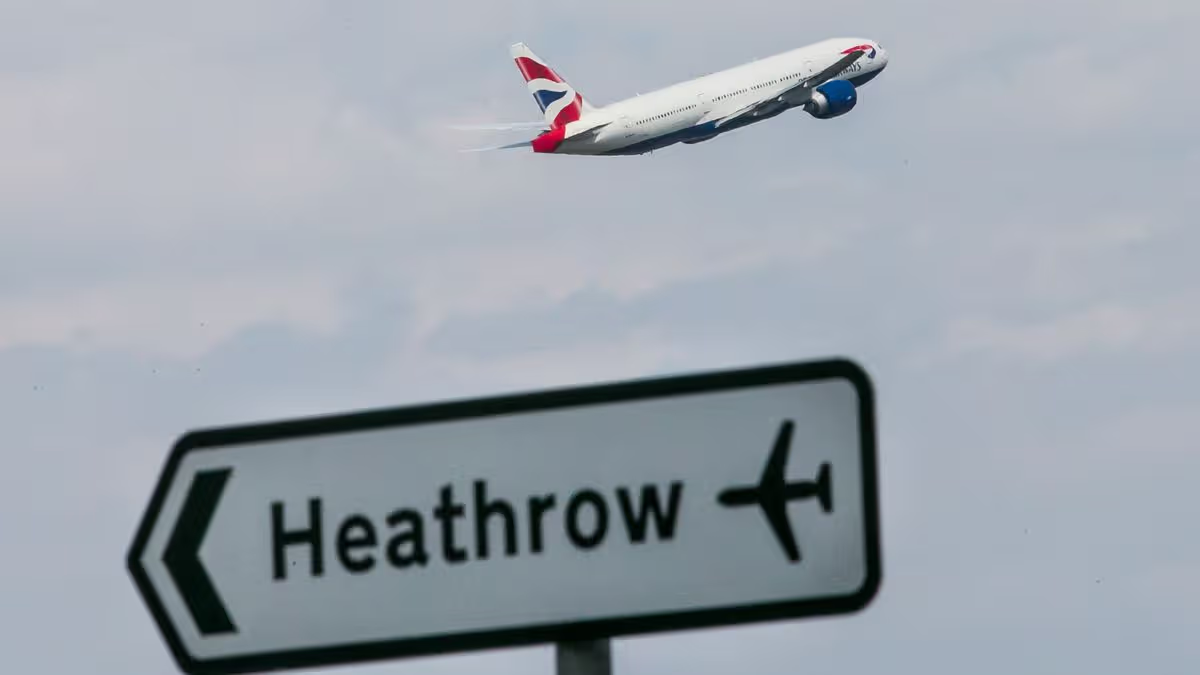
The initial costs are expected to be recouped through ticket prices

A British Airways plane taking off from Heathrow Airport(Image: Daniel Leal-Olivas/PA Wire)
Heathrow will be allowed to pass the enormous bill it has accumulated in preparing its third runway bid on to passengers, the aviation watchdog has confirmed, in a ruling that looks set to cement the airport’s status as the costliest in the world.
The Civil Aviation Authority (CAA) ruled that Heathrow Airport Limited (HAL) will be entitled to recoup the £320m it has already spent competing to secure the megaproject contract by increasing the fees attached to travellers’ air fares.
Rival bidder Heathrow West was also granted permission to recover the £4.2m it has so far spent on its own proposal.
The two operators have been competing fiercely to persuade ministers to back their respective third runway plans, assembling extensive planning documents and feasibility studies, while also enlisting the services of expensive third-party advisers to bolster their bids.
For incumbent HAL, that investment has already stretched into the hundreds of millions, the CAA noted, with the hub previously arguing it needs to cover its early outlay if the expansion is to remain financially attractive, reports City AM.
In its ruling, the aviation regulator said without the design and planning efforts both bidders have undertaken to develop credible expansion proposals, the timely delivery of the third runway project would have been put at risk.
It added that both parties would need to demonstrate their claims had been independently scrutinised line by line before being permitted to pass on the costs.
“Our decision strikes a balance between supporting the delivery of benefits to consumers through timely progress on Heathrow expansion, whilst also protecting them from undue increases in costs,” said Tim Johnson, the UK Civil Aviation Authority’s director of consumers and markets.
“The costs Heathrow can recover are capped, independently scrutinised and subject to efficiency reviews, helping ensure that passengers only pay for efficient costs that are justified.”
Under the compensation scheme, agreed following a consultation held last year, HAL will be permitted to add 10p to every passenger fare over the next 20 to 25 years. It will also be responsible for recouping Heathrow West’s more modest costs, should the rival bid led by hotel magnate Surinder Arora fail to succeed.
The CAA reached its decision alongside a wide-ranging review of Heathrow’s overarching regulatory framework, in which it will determine whether rival operators will be permitted to own and run key infrastructure within the airport.
Airlines operating at the hub have grown increasingly frustrated with the exorbitant charges they are forced to pass on to passengers, and – in lockstep with Arora – some have established a pressure group lobbying for a wholesale shake-up of red tape at the airport.
At £28.80, the airport’s charges are already the costliest in the world, and are anticipated to climb by as much as £50 once the full expenditure of the third runway is factored in.
Wednesday’s CAA ruling will see the airport charge per passenger rise by approximately 15 pence in 2028, climbing to 30 pence in subsequent years.
The initial costs incurred by bidders are expected to be recouped through ticket prices over a period of roughly 20 to 25 years.








































You must be logged in to post a comment Login