

Business
six in ten SMEs cut innovation spend


The reforms designed to clean up Britain’s £8 billion research and development tax credit scheme have worked rather too well.
More than six in ten businesses carrying out R&D have cut their investment as a direct result, according to new data from the advisory firm RCK Partners, with hiring frozen and technology projects cancelled outright.
R&D tax credits subsidise science and technology projects and cost the Exchequer roughly £8 billion a year. After sustained abuse of the scheme, HMRC placed far greater scrutiny on claims and pushed through a package of reforms, including reduced relief rates, which took effect in April 2023.
The consequences for smaller firms now look considerably sharper than intended.
RCK’s survey of more than 250 chief financial officers at R&D-active SMEs found that a third have hired fewer technical staff than planned, and one in five has cancelled innovation projects altogether. Thirty per cent were forced to take out loans to cover delays in relief payouts, and nearly as many fell back on directors’ personal funds.
Lord Hammond of Runnymede, the former chancellor and chairman of RCK Partners, called the findings “disconcerting” and urged policymakers to look “more carefully” at whether the scheme still works.
“It is a national priority to ensure that our SME sector, which is a critical part of the economy, is doing R&D,” he said. “The rates for small and medium companies were reduced at the same time as the regime was toughened up. The risks and the complexity increased while the rewards decreased.”
That combination, tighter enforcement layered on top of thinner relief, is what business owners will recognise. The compliance burden landed at precisely the moment the payoff shrank.
On its own terms, the crackdown has succeeded. The government says the cost of fraud and error fell from £1.34 billion in 2021-22 to £497 million in 2023-24, when an estimated 43,615 R&D claims were made by small businesses. HMRC’s most recent annual accounts also revised down total relief expenditure for 2023-24 by £920 million, from an initial £3.26 billion to £2.34 billion.
“It confirms that the impact on SME claims has been bigger than perhaps policymakers expected or intended,” Hammond said. “Policymaking is not an exact art. You develop a policy, you model it, you implement it. But if you’re sensible, you then go back and monitor what’s happened … and you tweak the model.”
Peter Roscoe, co-founder of RCK Partners, was clear that the enforcement itself is not the problem. “HMRC has done a really good job in getting the fraud and error rates down,” he said. The difficulty, he added, lies in the “inconsistencies” in the inquiry process, an issue familiar to any firm that has watched a routine query metastasise.
“Some inspectors ask targeted questions that are easier to answer, and then other times [a business] could get somebody who could go on for two years.”
A second problem is the advisory market itself. Roscoe pointed to online advertising, where claimants are “contacted out of the blue” by firms promising to deliver an R&D claim but often unqualified to do so. An investigation by The Times in 2022 revealed how the incentives were being targeted by rogue tax advisers encouraging dubious claims, few of which were checked by HMRC. Those same advisers, Roscoe said, have scared off genuine innovation companies from trying to access the scheme at all.
The chilling effect is measurable. Nearly a quarter of respondents said they had decided not to submit a claim at all, a figure rising to nearly half among firms with 250 to 499 staff. HMRC defines an SME as a business with up to 500 employees, which means the largest firms in that bracket, typically those with the most sophisticated R&D programmes, are the most likely to walk away.
The government is unmoved. “This report is based on a tiny fraction of UK SMEs,” it said. “The truth is the UK’s R&D tax relief schemes continue to provide vital support for business productivity and growth, with £8 billion of relief claimed in 2025-26.
“Our reforms mean that taxpayers’ money now goes towards genuine innovation, effectively tackling the high levels of error and fraud that have affected the schemes in previous years.”
Ministers have already floated mandatory pre-approval for R&D claims as a way of restoring certainty, and HMRC’s own review found non-compliance was higher where specialist agents were involved. Neither addresses the underlying arithmetic Hammond describes. With business investment appetite already at post-Covid lows, the question for the Treasury is whether a scheme nobody wants to claim from can still be called an incentive.

Amy Ingham
Amy Ingham is a reporter at Business Matters, covering UK business news with a focus on breaking news, business policy, late payments and insolvency. She joined the magazine in 2026 after completing the NCTJ Diploma in Journalism at Harlow College’s journalism school. Her recent reporting includes British Steel’s nationalisation and its impact on SME suppliers, the decline in late payments by large firms, and Insolvency Service director disqualifications. Reach her at aingham@cbmeg.co.uk.

Mitchells & Butlers reports flat Q3 sales amid heatwave impact
Young boys and men appear to be over-represented in the stats. Of the casualties, 302 – the most of any age and sex category – were males aged 10-19.
Six deaths were recorded in 2024, unchanged from the previous year. Five of these were riders and one a pedestrian.
Although the numbers aren’t conclusive, it is thought more accidents are happening on privately owned e-scooters. Winchcomb says police statistics “aren’t reflective of the number of injuries”.
Nonetheless, campaigners believe there is enough evidence to show that regulation is urgently needed.
Carly Calland’s 14-year-old son Jacob died in March 2025 of a catastrophic head injury. He was a passenger on an e-scooter that was involved with a collision with a car.
If privately owned e-scooters are legalised for public use, Carly believes, there should be mandatory helmets, a ban on carrying passengers and penalties for parents that allow children to ride illegally.
“If Jacob was wearing a helmet that day, he would still be here,” Carly, from Wythenshawe in Greater Manchester, says.
Carly is not against e-scooters. They “are really good for people to get to work, and they are eco-friendly”, she tells me, but “they just need to be used in the correct way.”
What happens if the current situation goes on? Her answer is emphatic: “More deaths.”

AI Spending, Inflation, and 3 More Reasons Why Tech Is Hurting
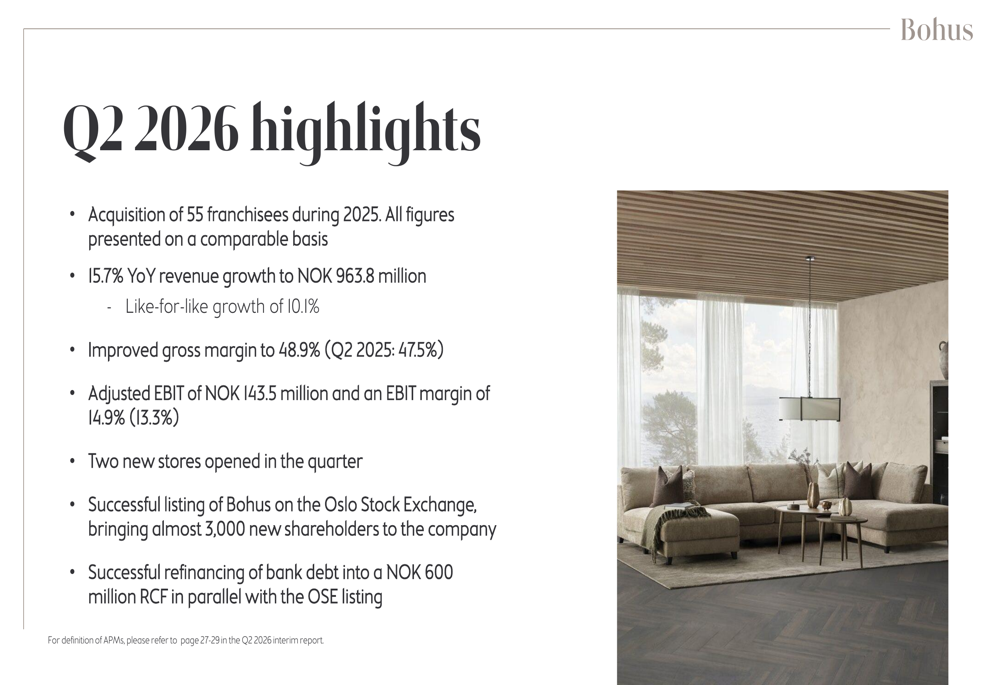
Bohus Q2 2026 slides: Norway’s top furniture retailer posts 15.7% growth

Volution Group raises earnings guidance despite peer warnings


Seeking Alpha’s transcripts team is responsible for the development of all of our transcript-related projects. We currently publish thousands of quarterly earnings calls per quarter on our site and are continuing to grow and expand our coverage. The purpose of this profile is to allow us to share with our readers new transcript-related developments. Thanks, SA Transcripts Team

Samsung Electronics has reshaped its premium smartphone strategy this year, pushing the “Ultra” branding to the top of both its foldable and traditional slab-style phone lines for the first time, a shift that has left shoppers weighing two very different devices with nearly identical internal hardware.
The comparison centers on the Galaxy Z Fold8 Ultra, which succeeds last year’s Z Fold7 as Samsung’s flagship foldable, and the Galaxy S26 Ultra, the company’s traditional bar-style flagship. According to technology outlet Engadget, the two devices share the same processor, the same RAM and storage configurations, and the same battery capacity, yet deliver dramatically different real-world experiences depending on their form factor.
A reshuffled foldable lineup
This year’s release marks the first time Samsung has applied the “Ultra” designation to a foldable device. Alongside the Z Fold8 Ultra, Samsung introduced a new mid-tier model, the standard Galaxy Z Fold8, positioned with a shorter, wider “passport-style” design that sits below the Ultra in specifications while still offering more functionality than the company’s clamshell-style Z Flip8. That restructuring has clarified the roles within Samsung’s foldable range, splitting it into distinct Ultra, standard Fold and Flip tiers for the first time.
Reporting on the change, Engadget described the shift as revealing more than Samsung may have intended, noting that the differences between the Z Fold8 Ultra and S26 Ultra are “both vast and — paradoxically — surface-deep,” given how similar the two phones are under the hood.
Nearly identical core specifications
Both devices run on Qualcomm’s latest Snapdragon 8 Elite Gen 5 processor and ship with matching memory configurations: 12GB of RAM paired with either 256GB or 512GB of storage, or 16GB of RAM on the top-tier 1TB storage option. Both phones also carry a 5,000mAh battery. That overlap in core hardware has led analysts to conclude that competition in the premium smartphone segment is shifting away from raw performance specifications and toward differences in form factor and user experience instead.
Where the two phones diverge
The most significant differences between the devices lie in their displays and physical designs. The Galaxy S26 Ultra retains a traditional smartphone shape and introduces a new Privacy Display feature, described as the first hardware-level implementation of its kind in a smartphone, capable of narrowing the screen’s visibility from off-center angles without relying on an added polarizing film layer. The Z Fold8 Ultra, by contrast, emphasizes its large foldable interior screen, offering a combined smartphone-and-tablet experience when opened.
Camera hardware also separates the two devices. The S26 Ultra includes a wider f/1.4 main aperture, which Samsung says allows the sensor to capture 47% more light than the Z Fold8 Ultra’s f/1.7 aperture, along with an exclusive 50-megapixel, 5x periscope telephoto lens not available on the foldable. Both phones share a 200-megapixel main sensor and a 50-megapixel ultrawide camera, but the S26 Ultra’s additional zoom lens and stronger front-facing camera have made it the preferred option among reviewers focused primarily on photography.
Charging speed favors the slab phone as well. The S26 Ultra supports 60W wired charging, compared with 45W on the Z Fold8 Ultra, giving the traditional flagship an edge in minimizing downtime between charges.
A meaningful price gap
The price difference between the two devices is substantial. The Galaxy S26 Ultra starts at $1,299.99, while the Galaxy Z Fold8 Ultra starts at approximately $1,999, a gap of roughly $700. According to one detailed comparison, that premium buys a second 6.5-inch cover display capable of functioning as a standalone phone, an 8-inch interior tablet-style display, hands-free video call functionality through a half-fold “Flex Mode,” support for three simultaneous apps in split-screen view, and access to Samsung DeX on the larger interior screen rather than the more cramped 6.9-inch portrait display used for DeX on the S26 Ultra.
Physical dimensions and durability trade-offs
Hands-on comparisons have highlighted meaningful physical differences among Samsung’s three new devices. The Z Fold8 Ultra measures 158.4mm tall when unfolded, matching the exact height of the Galaxy S26+, while its narrower 72.8mm body and 8.9mm thickness make it the sleeker of Samsung’s two foldable options compared with the wider, shorter standard Z Fold8, which measures 81.9mm wide and 9.7mm thick. The Z Fold8 Ultra weighs 215g, just a gram heavier than the S26 Ultra, while the standard Z Fold8 weighs 201g.
Despite steady industry-wide improvements to basic foldable durability features such as water and dust resistance, engineering trade-offs in weight, thickness and long-term durability remain an inherent part of the foldable form factor, according to Engadget’s analysis, distinguishing both Fold models from the more conventional build of the S26 Ultra.
Different phones for different priorities
Engadget summarized the comparison by describing the Galaxy S26 Ultra as “a more balanced device for most users,” while characterizing the Z Fold8 Ultra as “a specialised product that offers the experience of putting a tablet screen in your pocket.” That framing reflects a broader theme running through most detailed comparisons of the two devices: rather than one model clearly outperforming the other, each is built around a different set of priorities, camera performance, charging speed and one-handed convenience on the S26 Ultra, versus multitasking, screen real estate and tablet-like functionality on the Z Fold8 Ultra.
What it means for Samsung’s strategy
The overlapping specifications combined with sharply different display technologies and use cases suggest a broader shift in how Samsung is positioning its flagship lineup. Rather than competing primarily on raw performance, where the S26 Ultra and Z Fold8 Ultra are now functionally equivalent, Samsung appears to be betting that consumers will increasingly choose between devices based on form factor and specialized features, whether that means a privacy-focused display and best-in-class camera system, or a foldable screen capable of replacing both a phone and a tablet in a single device.
With both phones now available, the decision for shoppers weighing Samsung’s two top-tier devices increasingly comes down to a straightforward question: whether they value the flexibility of a folding tablet-sized screen enough to pay a roughly $700 premium and accept a heavier, thicker device, or whether they’d rather have Samsung’s most refined and camera-capable slab phone at a lower price point.
Google parent Alphabet saw its business continue to grow in recent months, yet growing spending on artificial intelligence (AI) infrastructure put its leftover cash into negative territory.
The company’s free cash flow, the cash it maintained after paying for operations and investments, came in at negative $5.9bn (£4.3bn) for the first time in at least a decade, according to its past financial records.
Alphabet’s spending on AI is now expected to hit as much as $205bn this year, an increase from $190bn, as major tech companies race to build around a new wave of the technology.
Meanwhile, Alphabet’s combined quarterly revenue hit $119.8bn, up 23% compared with the same time last year.
But the company’s stock fell 4% in after hours trading.
Anat Ashkanazi, Google’s chief financial officer, noted on a call with financial analysts that the company had shown negative free cash flow due to growing capital expenditures, essentially all of which was related to AI spending.
She said the company spent $45bn in the second quarter, with 60% of the cost going towards servers and the remaining 40% going towards data centres.
Alphabet’s capital spending was $36bn in the first quarter of this year.
Ashkanazi said on the call that when it comes to AI, “the demand still outpaces that investment”.
“As long as we see these attractive opportunities to invest, we will continue to invest.”
Sundar Pichai, Google’s chief executive, said that the technological shift to AI tools and capabilities still “feels like early innings in a shift across multiple areas” and that the company’s plans around generating financial returns on its spending were “disciplined”.
“What I see with what you can do with frontier capabilities, there is still a lot of work left to do to translate that into experiences for our users. So that looks like extraordinary opportunities with extraordinary returns.”
Tesla, the electric vehicle company controlled by Elon Musk, also reported negative free cash flow on Wednesday of $1.1bn for the second quarter due to its own increasing investment costs.
It was the company’s first negative showing of leftover cash in two years, according to its financial records.
Vaibhav Taneja, Tesla’s chief financial officer, said during a call with analysts that the company will spend as much as $25bn this year, more than double its capital spending in 2025.
He added that Tesla was in “a big investment cycle” and that its spending would probably increase further over the next three years.
Tesla’s stock also dropped by 4% in after hours trading.

Sandfire Resources boss Brendan Harris has praised the company’s strong finish to FY26, which included a new quarterly revenue record.
President Donald Trump signs an executive order in the Oval Office that puts into effect his plan for the social media and video streaming platform TikTok.
Most members of President Donald Trump‘s Cabinet are expected to launch official TikTok accounts Tuesday, a White House official confirmed to Fox News.
The coordinated rollout, first reported by Axios, follows a July 16 opinion from the Justice Department’s Office of Legal Counsel concluding that federal employees may use TikTok because the app is now operated by a U.S.-approved owner that falls outside the federal ban.
The DOJ opinion concluded that the version of TikTok operated by the TikTok U.S. Data Security Joint Venture is not prohibited under the No TikTok on Government Devices Act, a 2022 law that barred TikTok from federal government devices because of national security concerns tied to Chinese parent company ByteDance.
The opinion says the law prohibits versions of TikTok “developed or provided by entities in which ByteDance Limited has a controlling ownership stake.”
TIKTOK AVOIDS US BAN BY FINALIZING HISTORIC TRUMP-BACKED AMERICAN MAJORITY OWNERSHIP DEAL
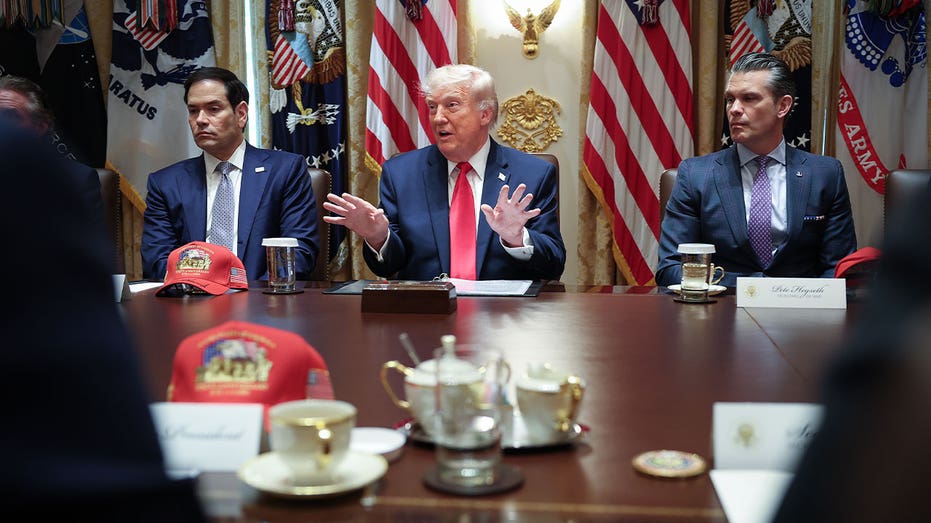
President Donald Trump speaks during a Cabinet meeting at the White House. Most members of his Cabinet are expected to launch official TikTok accounts Tuesday after a Justice Department opinion allowing federal employees to use the app. (Win McNamee/Getty Images / Getty Images)
According to the DOJ, the current version of TikTok no longer meets that definition because the joint venture “functions independently of ByteDance, is majority-owned by American investors and has revised the content recommendation algorithm and cybersecurity program originally developed by ByteDance to insulate federal government information against the concerning security features that initially motivated the prohibition.”
The decision marked a significant shift in the federal government’s posture toward TikTok after years of bipartisan concerns over the app’s ties to China and data security risks.
Trump has increasingly embraced TikTok, arguing the platform helped him connect with younger voters during the 2024 campaign.
“You know, I watched a couple of people critical of the fact that TikTok, TikTok, it’s so bad. It’s so dangerous. It’s horrible. They’re spreading all these rumors,” Trump said July 8.
“And the numbers came out yesterday. You know who’s No. 1 on TikTok? I am. I’m No. 1 at TikTok.”
The opinion says the law prohibits versions of TikTok “developed or provided by entities in which ByteDance Limited has a controlling ownership stake.” (iStock / iStock)
Trump also dismissed criticism from some China hawks, saying his messaging on the platform undercuts concerns about Chinese influence.
“And all I talk about is how bad communism is, right?” Trump said. “They say, ‘Oh, it’s terrible.’ They’re spreading. But I’m No. 1. I listen to Gordon Chang. I like Gordon Chang, but he’s always, like, negative.
“Oh, China is so terrible. They’re so terrible, and TikTok is so terrible. But I am No. 1 on TikTok. I have, like 4 billion views or something like that.”
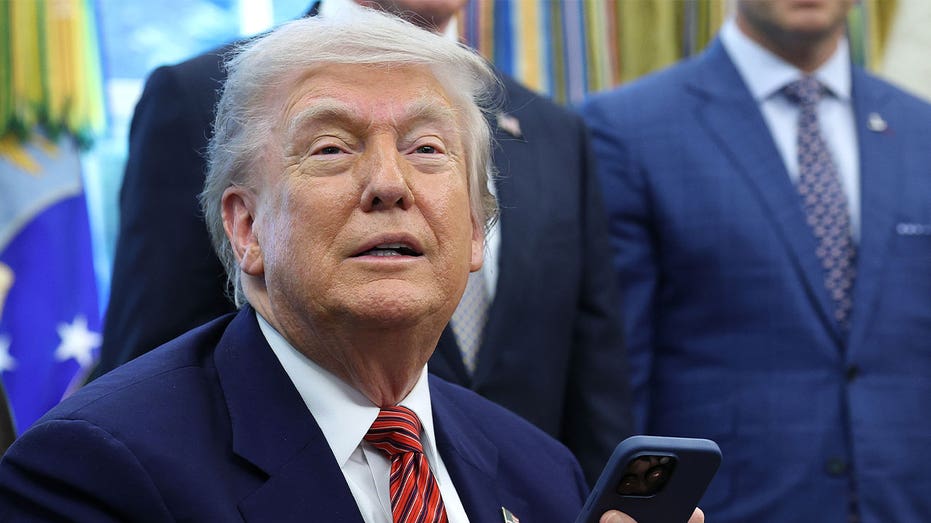
Trump’s Cabinet is expected to launch official TikTok accounts Tuesday after the Justice Department concluded federal employees may use the app under its new ownership structure. (Win McNamee/Getty Images / Getty Images)
Earlier this month, Trump also credited TikTok with helping deliver his election victory.
CLICK HERE TO GET FOX BUSINESS ON THE GO
“We have to be careful because China is a great competitor,” Trump said during a July 6 event. “But, you know, he was talking about we must stop TikTok. I’m No. 1 on TikTok. I think it helped me win the election in a landslide if you want to know the truth.”
Fox News’ Patrick Ward contributed to this report.

Talking smack about a doctor got him access to private medical files

Police searching for man missing for five days find car abandoned near bridge
Mitchells & Butlers reports flat Q3 sales amid heatwave impact


-
 NewsBeat7 days ago
London Mayor Sadiq Khan handed a peerage by Keir Starmer alongside 15 other Labour figures… just days before the PM leaves No10
-

 Fashion6 days ago
Weekend Open Thread – Corporette.com
-

 Politics5 days ago
The House | The City of London can help the new chancellor deliver growth in every postcode
-

 Crypto World5 days ago
Ripple Payments Joins MiCA With 14 Firms, Does It Mean Anything For XRP?
-
 Crypto World6 days ago
Two July Windows Left: The CLARITY Act’s Senate Fight and What Failure Means
-

 Politics4 days ago
Democrats look to World Cup watch parties to register thousands of voters
-

 Crypto World5 days ago
Ripple wins EU-wide access as ESMA adds it to MiCA register
-

 Crypto World2 days ago
Grayscale Files For Worldcoin ETF, WLD Registers Sharp Rise
-

 NewsBeat3 days ago
Unregistered fitter used Gas Safe logo on business flyers
-

 Tech2 days ago
Sail Virtually Aboard The “Itanic” With IA-64 Emulator
-

 Crypto World6 days ago
Injective Submits SEC Transfer-Agent Registration to Onchain Ownership Records
-
 Tech2 days ago
Turtle Beach Command Series KB7 review: a nifty screen-equipped gaming keyboard
-

 NewsBeat6 days ago
Registration is now open for March for Men with Kev 2026
-
 Business1 day ago
New Jersey voter registration controversy explained: How 6,600 noncitizens got on the rolls, and what happens next
-

 Crypto World6 days ago
Claude Fable 5 Slips to Second in AI Coding Leaderboard
-

 News Videos6 days ago
Money | Class 12 Economics | CBSE Board Exam 2026-27
-

 Business6 days ago
Banco Bilbao Vizcaya Argentaria, S.A. (BBVA) Discusses Global Macro Environment and Economic Outlook for Core Markets Transcript
-

 Crypto World5 days ago
Kaspersky exposes OkoBot’s 20-module crypto wallet attack
-

 News Videos4 days ago
Big Money Is Entering XRP
-

 NewsBeat5 days ago
Durham County Council to send out electoral registration emails
You must be logged in to post a comment Login