
TL;DR
Brockman called Kimi K3 “pretty good” but said it is too early to tell if Moonshot distilled from OpenAI, as the White House accused the startup of IP theft




This article is republished from The Conversation under a Creative Commons license. Read the original article.
Concerns surrounding young people’s screen time are widespread.
Australia became the first country to ban social media for users under 16 in December 2025, and Denmark, France and the U.K. have since announced similar restrictions to begin this year.
In the U.S., as of mid-2026, more than 30 states have passed laws banning or restricting cellphones in K–12 classrooms; in 2023, the U.S. surgeon general issued a formal advisory on social media and children’s and adolescents’ mental health; and bestselling books tell parents that smartphones are “rewiring” their children’s brains.
These concerns and policies are part of a quickly changing national and international conversation around how young people spend time on screens and its relationship to their overall health and development. My reading of the mounting research on this issue across disciplines is that the popular narrative blaming screens and smartphones for an adolescent mental health crisis runs well ahead of the current evidence.
I study adolescent digital media use and its influence on social, emotional and academic outcomes. A growing body of research suggests that one-size-fits-all solutions are not the answer and that managing appropriate use of digital media needs to take into account a child’s developmental milestones, how parents and adults around them use media, and the ways kids use it to connect and learn with friends and family.
Wide adoption of digital media and the internet broadened the range of experiences young people could have online. At the same time, the digital age introduced newfound uncertainties. As with the advent of radio, comic books and arcades, adults worried about how children might interact with or be affected by internet use.
In response, the American Academy of Pediatrics first recommended in 1999 that parents and caregivers keep children under 2 away from screens. In the decades since, professional guidance largely treated children’s media use as a behavior to be mitigated.
Policies introduced by the academy in 2013 and 2016 continued to advise that school-age kids and adolescents – those ages 5 to 18 – be restricted to no more than two hours of “entertainment” screen time a day. The goal was to curb risks associated with heavy media use, among them disrupted sleep, online safety, cyberbullying and physical inactivity.
Originally created for young people’s engagement with stationary media that tend to be confined to one room or context – for example, watching television – these hourly limits became outdated with the integration of smartphones and other digital devices into everyday life. Compared with watching television, online media was far more difficult to track and define, and more nuanced in its use.
Developmentally beneficial activities such as education, socializing and leisure have come to rely on the internet to extend and maintain face-to-face connections. Remote schooling and social distancing during the COVID-19 pandemic only accelerated this digitization of daily life.
In my view, adopting strict time limits and restrictions could pose risks to children’s well-being, autonomy and development, for example, by harming adolescent self-esteem.
In January 2026, the American Academy of Pediatrics retired its decade-old framework that had largely organized its advice around hourly screen limits. The new policy statement on children, adolescents and digital media diverges from this blanket approach. Instead, it suggests parents consider the larger picture in which this media use exists rather than lumping all screen use together.
Similar to the World Health Organization’s 2019 guidance for children under 5, the American Academy of Pediatrics still advises that parents avoid screen media for children younger than 18 months. This recommendation is largely because extended use by children by themselves can be problematic for many young children, crowding out important developmental milestones.
Both the World Health Organization and the American Academy of Pediatrics also recommend that when children under 24 months use screens, they should be limited to content and devices that encourage children and caregivers to interact. For ages 2 to 5, screen time – including TV and interactive apps on devices – may be extended to more solo use, provided it’s high-quality digital media designed around learning goals in mathematics and reading. But recreational use should be limited to roughly an hour per day.
For school-age children and teens, the newest guidance has begun to step away from fixed screen time limits and asks families to weigh online activity in the context of everyday life.
Doing so recognizes that a child’s digital experiences are shaped by diverse factors rather than the hours spent online. Current guidelines call on caregivers to distinguish among types of media, from television and social media to video games and interacting with artificial intelligence chatbots. They also call for taking into account a child’s individual characteristics, such as their interests and personality, family members’ own use of screens, and the type of content children are spending time on.
Moving beyond strict screen time limits includes questioning the kind of digital activities kids and adolescents participate in. Do the activities encourage time spent interacting with others online, which can help young people develop important skills and competencies?
Scrolling an algorithm-based, auto-playing video feed likely does not equate to the same opportunities as video-chatting with friends, creating digital art or working with teammates in a multiplayer game. Research suggests these different uses relate to development in different ways and can help kids develop varying skill sets pertaining to everyday life and schooling.
Indeed, a large review of current research found that young people who take part in a range of digital activities, such as browsing the web, online gaming or interacting on social media, show positive associations with social connection, identity exploration, civic participation and learning.
The current evidence suggests parents and caregivers are best positioned to be digital instructors. Cutting children off altogether can carry its own risks for social and emotional development. Caregiver mediation of children’s screen time can produce widely different outcomes and effects, depending on whether the guidance is supportive or controlling.
Considering your own digital media use is the first step: Are family members engaging in problematic or heavy media use that children in the household might emulate? What applications and uses are most common in the family, and what positive or negative effects might they have, depending on the child’s age? How could these digital activities be safely integrated with other everyday experiences to increase their benefit for children? Conversely, what online time might be better spent on face-to-face experiences?
The American Academy of Pediatrics’ Family Media Plan tool turns these ideas into concrete questions. For example, it recommends working out what each child needs from digital technology, what activities screens might be crowding out, and where their family or household can build in screen-free time. The recommendation is to talk with each child about why they are drawn to particular apps or online activities, what they encounter while browsing, and what might be lost when kids bring phones to gatherings such as mealtimes.
The debate over young people’s screen time is not going away. But the most up-to-date guidelines, and the growing body of research behind them, make a strong case for a more holistic approach. The guidelines treat digital media as a complex, diverse and evolving environment that children need to learn to navigate in the digital age. The risks and rewards depend, as with any developmental setting, on the child, the content and what online time might be crowding out.
Gabriel E. Hales is a Research Fellow in Media and Information at Michigan State University
Filed Under: kids, screentime

Former DHS head Kristi Noem got permanently sidelined for being unable to do two impossible things at once: be the anti-migrant hardliner Trump appointed her to be and massage the message when shit went sideways. Two murders in less than a month in Minneapolis may have made plenty of administration figures secretly happy, but once the narrative spun out of their control, it was clear a head needed to roll.
Say hello to Markwayne Mullin. Mullin was yet another Trump loyalist, albeit one that promised a kinder, gentler approach to the bigoted targeting of anyone who didn’t look white enough to belong in this country.
During his confirmation hearings in March. Homeland Security secretary Markwayne Mullin told senators: “My goal in six months is that we’re not in the lead story every single day.”
Well, that’s not going to look good on the next employee review. While immigration officers did manage to keep murders to a minimum after Mullin took office, ICE is back to being the lead story every single day.
Federal immigration agents who killed a man during a traffic stop in Houston on Tuesday had been searching for a different person, according to a Department of Homeland Security spokeswoman.
The victim of that shooting was Lorenzo Salgado Araujo, a Mexican immigrant who had lived and worked in the United States for 35 years. According to his family, Araujo was still actively trying to obtain permanent residence and/or citizenship.
And let’s not pretend — as the DHS would have us do with its statement — that it’s okay to kill people who are the targets of immigration arrests. The DHS may have (kind of) admitted fault here, but only in the context that any killing of someone actually targeted by ICE, etc. is fair game when it comes to instant death penalties. Most of the people ICE targets have no violent criminal record, which means federal officers are routinely boxing in vehicles, smashing windows, and violently accosting people suspected of a civil violation. It’s not like this is happening to people who are overdue on their property taxes. I mean, yet.
This isn’t helpful either, and fewer journalists should be willing to publish whatever happens to fall out of the government’s mouth moments after it has summarily executed someone:
When agents tried to stop the vehicle, the encounter quickly escalated, and an agent shot Mr. Araujo in the abdomen. He died at a hospital hours later.
Homeland security officials said Mr. Araujo had tried to use his vehicle as a weapon, though no video or other evidence for that claim has emerged.
The encounter was escalated the moment ICE officers decided to treat suspected civil violations like a felony stop. The government escalated. The reaction officers received was entirely expected from an innocent person who was suddenly surrounded by masked people with guns.
But video not recorded by ICE officers (who were all supposed to be wearing body cameras at this time) pokes a lot of holes in the government’s self-serving theory:
I don’t know what Araujo thought was happening, but in the videos it looks like a couple of unmarked crossovers aggressively pursuing a vehicle with no lights on or any other indication the vehicles contain law enforcement officers. (See 1:20-1:25 of the video where the ICE vehicle cuts through a parking lot.)
Either way, it ended with officers killing Araujo, then the government going on to smear the person they’d just killed:
The Houston incident, following one of the latest deadly shootings by US Immigration and Customs Enforcement officers, mirrors countless routine police encounters that happen daily across the country as officers find suspected drug paraphernalia and seek court orders to seize and test it for illegal substances.
In this instance, however, the search warrant, shielded from public view when initially filed, was inexplicably unsealed and made public the next day. Justice Department veterans told CNN they can’t remember a time when information that could be critical to a case was made publicly available while a criminal investigation was still underway.
A bit more on the “illegal substances:”
The still-unidentified substances were allegedly found on the dashboard and floor of a van driven by Lorenzo Salgado Araujo, a Houston man ICE tried to pull over last week on suspicion of being in the country unlawfully.
First and fucking foremost, these were immigration officers who had the wrong person. Second, this chase wasn’t initiated because officers saw some possible illicit substances on the dashboard. This was only discovered after Araujo had already been killed. Third, the government has yet to deliver lab results on the substances, which means they could have been anything. Considering they were found on the dashboard (those recovered from the floor probably fell off the dashboard), it’s hard to believe Araujo was just driving around with drugs right out there in plain sight. And, once again, this ain’t the Philippines. You can’t just kill people because they have drugs on them.
This was nothing but a cheap attempt to somehow justify a killing after the fact. But it didn’t end with a shitty smear campaign. The other people in the van were apparently subjected to intimidation tactics by ICE officers following the shooting:
They were detained by Immigration and Customs Enforcement during the encounter, and we haven’t heard from them publicly about what happened.
Now, in another potentially dark turn in the saga, those three men are under pressure from immigration officials to agree to self-deport, Juan Proaño, a representative for the families and CEO of the League of United Latin American Citizens, claimed in an interview with The New Republic.
Araujo had no criminal record, ran his own business, and was on his way to a job with his passengers when he was chased, shot, and killed. And while the government has admitted it misidentified the person officers killed, it still hasn’t explained why it’s okay to engage in these tactics against people only suspected of violating immigration law. It also hasn’t offered any information about the person officers were seeking, which means the real target was another harmless migrant and not the “worst of worst” we keep hearing about every time the DHS is asked to defend its actions.
As I noted earlier, this is only one of two killings to happen this month. Another killing happened in Maine roughly a week later. Since we’re already more than 1,000 words into this one, I’ll dig deep into that killing in another post. But I will leave you with this, which not only shows the kind of people ICE is willing to hire to keep the deportation mill running, but also the kind of people who are innately attracted to ICE:
The Immigration and Customs Enforcement officer who shot a Colombian man in Maine this week is an Army veteran who has struggled with serious mental health issues since early childhood and never should have been given a badge and gun to patrol American streets, several of his close relatives told The Associated Press.
David Brouillette has a history of terrifying and violent behavior, according to those relatives. They accuse him of attacking women in his life over the years, and one shared a voicemail with the AP from last winter in which he told her that he thought someone should slit her throat.
This is the real reason ICE officers want to wear masks. It’s also the real reason ICE wants officers to wear masks. These officers are the real threat to public safety, but the less we know about them, the more ICE can publicly pretend it’s nothing but top-notch, well-trained officers regularly engaging in excessive force.
Filed Under: dhs, doj, houston, ice, maine, mass deportation, murder, texas, tom homan, trump administration

Lenovo has revealed more details about an upcoming Legion gaming handheld that could be among the thinnest and lightest devices in its category. The Legion C700 will measure just 14.99mm at its thinnest point and weigh approximately 556 grams, or around 1.25 pounds. By comparison, Lenovo’s Legion Go S is 22.6mm thick and weighs about 730 grams, while the ASUS ROG Ally X measures 24.7mm and weighs 678 grams.
Trimming these figures down should make the C700 much easier to hold for long periods and carry in a bag. But all of this portability comes at a cost–and that’s cloud gaming.

The Legion C700 has a 7.82-inch IPS display with a 120Hz refresh rate, placing it slightly below the 8-inch screen on the Legion Go S. Lenovo has also equipped the handheld with TMR thumbsticks, Hall Effect triggers, an omnidirectional D-pad, and four customizable buttons split between the shoulders and rear panel.
TMR sticks use magnetic sensing and should avoid the physical wear that can eventually cause conventional analog sticks to drift. They are also becoming an increasingly common premium feature across newer gaming controllers and handhelds.
Lenovo has yet to reveal many of the key details of the C700, like its processor, memory, storage, and battery capacity. Those missing details will determine whether the device can handle any sort of games and emulation locally or remains largely dependent on an internet connection.

The C700 was developed alongside Tencent and will prominently feature the company’s START cloud gaming service. That platform lets players stream games from remote hardware without installing them on the handheld itself. Its Tencent partnership also suggests the C700 may initially remain limited to China. Lenovo has confirmed an August 2026 release window, although pricing and availability outside the country remain unknown.
Cloud gaming explains how Lenovo produced such a slim machine, but cloud gaming hardware often misses the mark on value. The Logitech G Cloud previously offered a similarly lightweight streaming experience, yet its $350 launch price and reliance on separate cloud services made it a niche proposition.


In its Galaxy Unpacked July 2026 event, Samsung announced a handful of new devices. Taking the center stage is the company’s eighth generation of foldables. This year, Samsung is adding a new form factor to the mix — the Galaxy Z Fold 8, which comes in a wider, passport-style design — akin to the rumored iPhone Fold. At 201 grams, it’s also the lightest foldable Samsung has ever made. It’s powered by the Snapdragon 8 Elite Gen 5 SoC, up to 16GB of RAM and 1TB of storage, and a 4,800 mAh battery. The Z Fold 8 features dual 50-megapixel wide and ultrawide cameras.
The cover screen is a 5.5-inch 120Hz AMOLED panel, which folds out to reveal the 7.6-inch main display in a 4:3 aspect ratio, which Samsung says can offer a more enjoyable experience when watching films or reading books. The Galaxy Z Fold 8 Ultra is simply the more direct successor to last year’s Z Fold device. It offers a taller 8-inch display and boasts a flagship camera system with a 200-megapixel wide, a 50-megapixel ultrawide, and a 10-megapixel 3x telephoto lens. The battery is larger at 5,000 mAh with 45W fast charging.
The Galaxy Z Flip 8 has seen iterative updates, too. Samsung claims its new Flex Titanium technology combines “a titanium-alloy film with an enhanced titanium plate, to make foldables thinner while maintaining durability.” Pricing for the Z Flip 8, Z Fold 8, and Z Fold 8 Ultra starts at $1,199, $1,899, and $2,099, respectively.
Samsung’s new additions to the Galaxy Watch series bring refreshed hardware, new health tracking features, and a sprinkle of AI. The Galaxy Watch 9 remains the mainstream option in the lineup, featuring a familiar circular design in an aluminum casing. It comes in two sizes — 40mm and 44mm — with battery capacities of 390 mAh and 445 mAh, respectively. The display is a Super AMOLED panel with a brightness of up to 3,000 nits.
Samsung also refreshed its rugged offering this year, with the Galaxy Watch Ultra 2 featuring a similar design and build as the outgoing model. It bumps you up to a titanium casing that’s better suited for outdoor use and adventure sports. The Galaxy Watch Ultra 2 is 12% slimmer than the previous model, despite packing in a larger 800 mAh battery. The smartwatch also boasts a 5,000-nit display, which Samsung claims is a world first. The new Trail Run mode lets you track details like elevation and terrain impact. There’s even a live hydration guidance reminder that draws from estimates of how much you have sweat.
Both Galaxy Watch models are powered by the Snapdragon Wear Elite platform, which includes an NPU for the better handling of AI tasks. There’s support for dual-band Wi-Fi, LTE, Bluetooth 6.0, and NFC. The Galaxy Watch 9 is priced at $379, which gets you 32GB of internal storage. The Galaxy Watch Ultra 2 doubles the storage capacity and starts at $699.
Samsung has also revealed more information about its upcoming eyewear products — two pairs of smart glasses, designed in collaboration with Gentle Monster and Warby Parker. Both glasses will run on the Android XR operating system and will be powered by the Snapdragon AR1 Gen1 platform. CNET went hands-on with the smart glasses and confirmed that they don’t have a display. You do get a camera, a microphone, and built-in speakers. Since these are heavily reliant on AI, the bulk of your interaction is meant to happen through voice commands.
Gemini is at the core of the smart glasses here, allowing them to understand what you’re looking at and respond accordingly. You can even ask them to capture photos of information you find interesting, which they can save in the Samsung Notes app. If you’re on a video call with someone, you can share what you’re seeing through the smart glasses’ camera. Convenient smart glasses features like these are what make the lack of a display less of a drawback.
Battery life has been rated at up to nine hours on a single charge. When you need to top it back up, the case provides up to seven additional full charges. Details about pricing and availability haven’t been revealed yet, with Samsung only stating that they’re “excited to continue this momentum and bring this experience to people soon.”


SECURITY
Who needs a working security badge when you know how to talk your way into the records room?
PWNED Welcome back to PWNED, the weekly column where we focus on security own-goals so you can avoid them. This week’s topic involves serious problems in the healthcare sector, specifically the very human problem of compromised gatekeepers.
Have a story about someone leaving a gaping hole in their network? Share it with us at pwned@sitpub.com. Anonymity is available upon request.
Our legend of lameness comes courtesy of red teamer Dahvid Schloss, who shared so many great stories with us that we’ve featured his tales a couple of times before. Schloss has made a career out of testing not only network security but also physical security at a wide variety of places. He has learned that if you act as you belong, people will usually treat you like you belong.
At one hospital, Schloss was hired to test security by getting access to the records room and trying to steal a specific physical file that his client left there for him to pilfer. The challenge was that the records room had both an electronic lock and a nurse gatekeeper guarding it.
Schloss told us that he considered several approaches to get into the records room. He could try picking the lock, cloning a badge, or even stealing the badge of someone who had access. Instead, he decided to try social engineering.
Schloss did research on the hospital and he put on a pair of appropriate scrubs and made himself a fake security badge that could not possibly swipe in. Then he knew it was time to turn on the charm with the nurse who was on duty at the records room. And by “turn on the charm,” we mean “diss the doctor.”
“Nurses talk a lot of shit. It’s the law of the land when it comes to the hospital,” Schloss told us.
So he tried to swipe his non-working badge and showed frustration when it didn’t work. Then he walked up to the window where the on-duty nurse was standing and won her over.
“I’m doing fine, hon. How you doing,” he told the nurse. “Look, I’m gonna save you the details. But Dr Johnson’s being an absolute asshole right now; he didn’t pull out his patient records that he was supposed to pull out for trauma. We need these records, and they sent me down here. I’m brand new. I just started yesterday.”
Schloss had done his research and picked out the name of an actual doctor on staff. What he couldn’t have known is that the doctor was actually a difficult person to work with. And the duty nurse let him know she was on his side before letting him in.
“The nurse goes ‘honey, I know exactly the pain that you’re going through,’” Schloss continued. “She goes ‘I got you’ and she opens the door, lets me in.”
After Schloss went into the records room and retrieved the file, he hung around and talked to the nurse for another 10 minutes, complaining about how security was incompetent for not activating his badge and letting her complain about what jerks some of the doctors were. He even had a backstory about where he had worked before. She invited him to hang out and go for lunch sometime before he left with the folder.
Other hospitals he tested had bad network security practices. He told us about one hospital where he sat down in the waiting room and logged into the guest Wi-Fi network and did a scan.
What he found was that all the important devices in the hospital were on VLAN 1, the same network as guest Wi-Fi. All of the data coming out of medical devices like the MRI machine was readily accessible and unencrypted. He said that most medical devices at most hospitals he’s tested do not encrypt data that they send over the network.
“So you’re getting Social Security numbers just being populated over the network via the MRI machine and you’re getting the patient data, the date of birth, all the PII that any organization would lose their shit about,” he said.
Schloss said that he thinks hospitals he’s tested prioritize the ability to keep machines running and distributing data quickly over good security hygiene. If someone tried to get data, failed, and had to call IT for help, those precious minutes of delay could cost a life.
But even if it’s a matter of life and death, do not let someone into a restricted area just because they look and act the part. ®
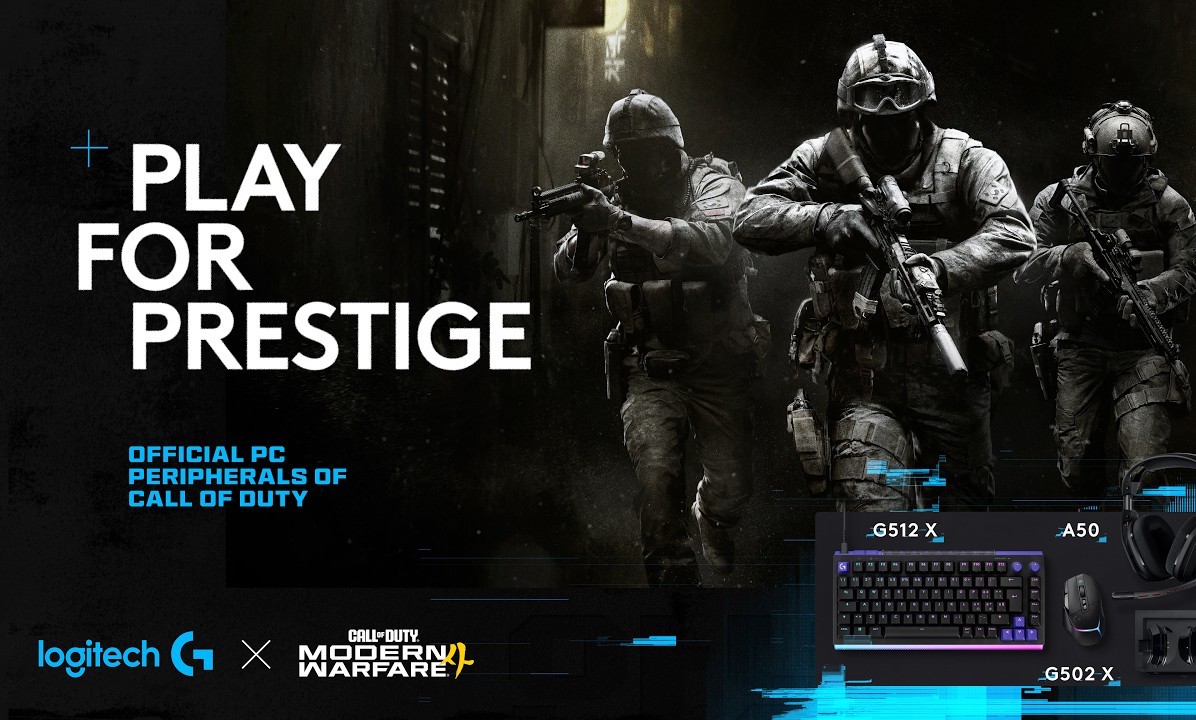
The Logitech G series has just announced a partnership with Call of Duty: Modern Warfare 4. In the partnership, Logitech G will serve as the Official PC Peripheral Partner, while the Logitech G ASTRO Series will be the Official Headset Partner for the game. The partnership will also introduce exclusive in-game rewards, creator-focused experiences, and community events for players.
Logitech G will offer all its PC gaming accessories to enhance the gaming experience for fans of Modern Warfare 4. Some of the gaming products include mice, keyboards, headsets, and other peripheral devices. It says the hardware is designed to deliver consistent performance during every match and support both casual and competitive players.
As part of the collaboration, Logitech G has introduced the Play for Prestige campaign. It includes exclusive in-game rewards designed around the Logitech G brand. Events such as creators’ events, streamer partnerships, community tournaments, and game challenges will be part of the campaign. Logitech G will give away gaming equipment during the event as an added bonus to the gamers.
Creators and streamers will also benefit from the collaboration. Streamlabs provides AI-driven overlays, automatic highlight capture, and custom streaming software. The collaboration also brings interactive features influenced by the game Modern Warfare 4. Logitech G HUB offers customized Audio EQ and LIGHTSYNC RGB.
This partnership extends Logitech G’s long-standing connection with Call of Duty. The company emphasized that ASTRO headsets have been part of the franchise for more than 10 years. Logitech G intends to keep providing its support to casual and professional gamers using its equipment. The company is also dedicated to developing itself within the field of esports.
Call of Duty: Modern Warfare 4 will launch on October 23, 2026. Players can already pre-order the game for Xbox Series X|S and PlayStation 5. PC players can pre-purchase it through Battle.net and Steam. The game will also arrive on Nintendo Switch 2, with pre-orders opening later this year.
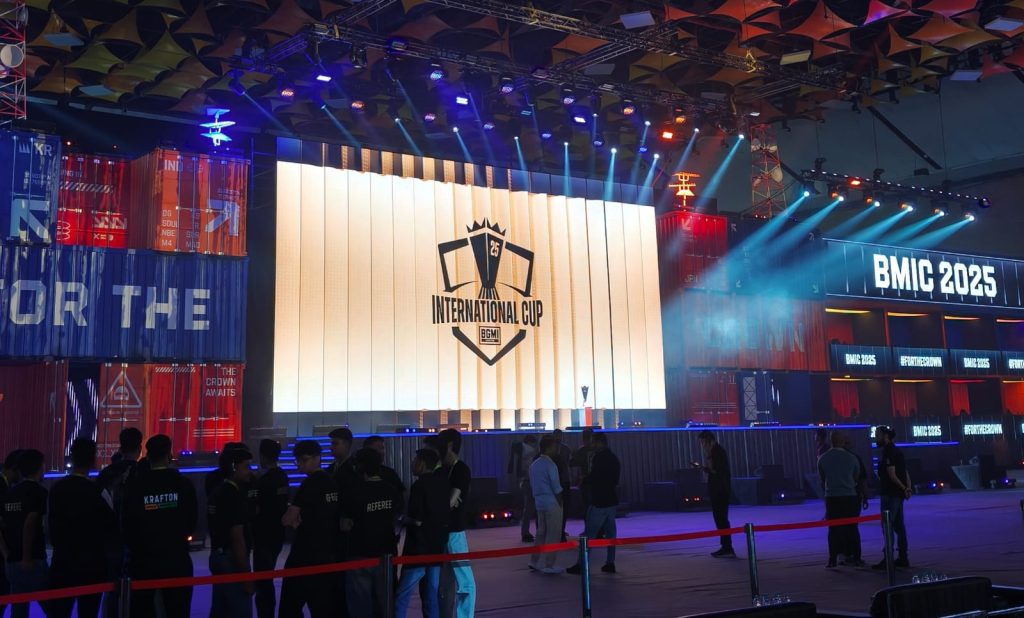
After wrapping up the super exciting BGMI Pro Series (BMPS) 2026 a month back, KRAFTON India has revealed what’s next for the country’s competitive BGMI scene. There will be two major tournaments for the second half of the year: the return of the BGMI International Cup (BMIC) and an all-new BGMI Showdown (BMSD).
While BMIC will once again pit India’s best teams against top squads from across Asia, the newly introduced BGMI Showdown is an invite-only championship reserved for the country’s highest-performing teams. Both tournaments will feature a ₹1 crore prize pool.

The second edition of the BGMI International Cup (BMIC) is scheduled to take place from October 30 to November 1 at the Dome, SVP Indoor Stadium in Mumbai. The tournament will feature 16 teams, including six from India, five from South Korea, and five from Japan. They’ll compete for a ₹1 crore prize pool, with the event bringing some of Asia’s strongest BGMI teams to India for the first time. For Indian fans, BMIC will be one of the rare opportunities to watch domestic teams take on international opponents on home soil in front of a live audience.
Alongside BMIC, KRAFTON has also announced the BGMI Showdown (BMSD), a brand-new tournament focused entirely on India’s top-performing teams. Unlike BGIS or BMPS, there won’t be any open qualifiers. Instead, the tournament will feature 48 invited teams, selected based on their performances across the KIE Leaderboard, BGIS, and BMPS. The competition begins on September 22 and will progress through Promotion & Relegation rounds, Survival stages, Semi-Finals, and a Last Chance stage before culminating in the LAN Grand Finals.
BGMI Showdown Schedule:
Speaking about the announcement, Karan Pathak, Associate Director:
Every season should feel bigger than the last- not just in scale, but in the quality of competition it delivers. That’s what we’ve set out to achieve with this year’s H2 calendar. The BGMI International Cup brings some of Asia’s strongest teams to Mumbai, while the BGMI Showdown rewards the teams that have consistently proved themselves across the season.
Brockman called Kimi K3 “pretty good” but said it is too early to tell if Moonshot distilled from OpenAI, as the White House accused the startup of IP theft
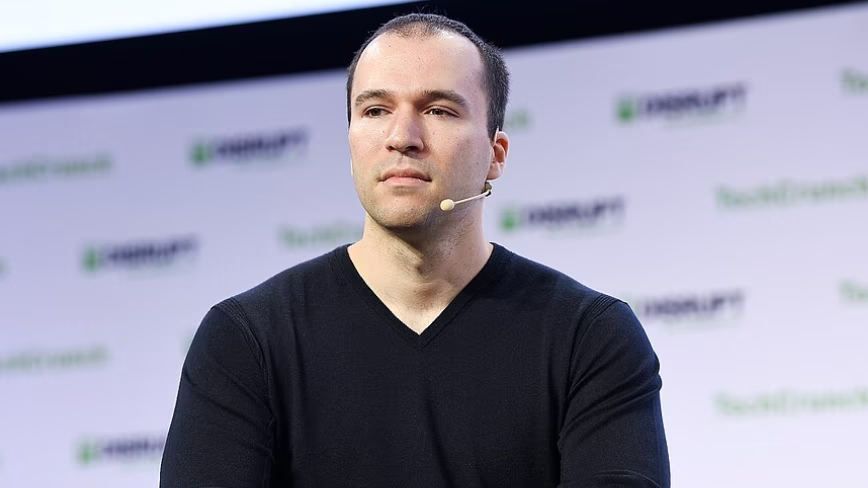
OpenAI president Greg Brockman called Moonshot AI’s Kimi K3 “pretty good” in a Bloomberg interview on Tuesday, a rare public acknowledgement from a US frontier lab that a Chinese rival has produced a competitive model. Brockman said it is “too early” to determine whether Moonshot trained K3 by distilling outputs from OpenAI’s own systems, a practice the company has repeatedly accused Chinese labs of using. His measured tone stood in sharp contrast to the White House, which hours earlier had levelled its most specific accusations yet against the Chinese startup.
OSTP Director Michael Kratsios accused Moonshot of accessing banned Nvidia chips through intermediaries in Thailand and of conducting large-scale distillation against American AI models, according to Bloomberg. The accusations landed the same day that Treasury Secretary Scott Bessent said the administration would scrutinise Chinese open-source models for stolen intellectual property and could impose sanctions within weeks. Nvidia CEO Jensen Huang pushed back against the alarm, calling Chinese open models “excellent” and urging the government to let American firms use them.
The distillation charge has been building for months. In February, Anthropic accused Moonshot, DeepSeek, and MiniMax of running roughly 16 million exchanges through about 24,000 fraudulent accounts to extract knowledge from its Claude models. OpenAI has made similar complaints, and the White House now appears to be treating the allegations as a matter of national security rather than a commercial dispute between rival labs.
Brockman framed OpenAI’s position around the company’s infrastructure investments, arguing that the US has a “huge advantage” because of the billions it has poured into compute. He said open-weight models like K3 are not truly free because running them at scale still requires expensive hardware, a point that undercuts the narrative that Chinese labs can simply give away frontier-level AI. He estimated that China remains roughly four months behind the US in overall model development.
K3 is a nearly three-trillion-parameter open-weight model that Moonshot released on July 16, and it has rattled Washington and Wall Street by matching or beating the best American systems on several benchmarks. The model topped Arena’s frontend coding leaderboard within 24 hours of launch, placing ahead of both Anthropic and OpenAI’s flagship offerings. Moonshot is pricing K3 at a fraction of what US labs charge, accelerating the commoditisation of the model layer that investors have been warning about since DeepSeek’s price cuts earlier this year.
Brockman, who donated to a Trump-aligned super PAC, declined to wade into the debate over whether Chinese models should be banned. He instead stressed that OpenAI believes open models are important for “democratizing access to AI,” a position that aligns him more closely with Huang than with the White House officials pressing for sanctions.

Juzear might not be a familiar name to most American listeners, but the Chinese manufacturer is gaining attention in the increasingly crowded wired IEM market. That category is enjoying a rather healthy moment as more listeners rediscover that better sound, replaceable cables, and freedom from batteries still have value in a world drowning in disposable wireless earbuds.
For the new Juzear Nebula, the company has partnered with Japanese reviewer KOTO on a five-driver tribrid IEM featuring one dynamic driver, three balanced-armature drivers, and one micro-planar driver in each earpiece. Juzear says the Nebula has been tuned around forward, expressive vocals and an expansive three-dimensional soundstage, although those claims will ultimately require independent listening rather than blind faith in a specification sheet.
The collaboration also follows a growing trend of YouTube personalities and online reviewers lending their names and tuning preferences to audio products. Some of those partnerships clearly move units, but they also muddy the waters when the same people helping to develop products are part of an ecosystem built around reviewing them. A subscriber count is not proof of objectivity or a hearing test, but recognizable names apparently move the needle for enough readers and viewers to keep the collaborations coming.

The Juzear Nebula utilizes a 1 dynamic driver, 3 balanced-armature drivers, and 1 planar driver configuration, combined with a high-precision four-way physical crossover to deliver a transparent sound profile. The goal is to reduce congestion and produce a more spacious, high-fidelity listening experience.
Juzear’s four-way acoustic crossover system incorporates four independent sound tubes, with specific frequency ranges assigned to the dynamic, balanced-armature, and micro-planar drivers. According to the company, this helps the Nebula deliver a clear, transparent, and highly detailed presentation across the entire frequency range.
The Nebula’s MACCD dynamic driver, which uses a Multi-Layer Amorphous Carbon Composite Diaphragm, is designed to produce fast, deep, and tightly controlled bass.
For the midrange, a custom three-driver balanced-armature configuration is intended to deliver natural, clear vocals, while a customized micro-planar driver handles the treble and provides extended high-frequency response and greater detail.

Beyond its internal architecture, the Nebula also showcases Juzear’s attention to craftsmanship.
The Juzear Nebula draws its visual inspiration from the flowing light trails of deep-space nebulae. Its intricate Phantom Color Artistic faceplates are created using a combination of laser layering, micro-jet printing, and color-refraction processes.
The result is a visually striking finish that appears to glow and shift depending on the viewing angle. Lightweight, ergonomically shaped resin shells complete the design, with each earpiece weighing just 6.1 grams for a comfortable fit during longer listening sessions.
Juzear includes a high-purity cable with the Nebula that appears more substantial than its price might suggest. It features 6N OCC silver-plated conductors with a 400-core configuration, protected by a durable, double-layer PVC jacket.
The cable also incorporates an interchangeable termination system, allowing users to switch easily between the included 3.5 mm single-ended and 4.4 mm balanced plugs to match their source equipment.
| MSRP | $129.99 |
| Driver Configuration (each ear) | 1 x Dynamic Driver 3 x Balanced Armature Drivers 1 x Micro Planar Driver |
| Frequency Response | 20Hz to 20kHz |
| Impedance | 32 Ohms |
| Sensitivity | 110 dB +/- 1dB SPL/mW |
| Noice Isolation | 26 dB |
| THD | <0.8% |
| Connector | 0.78mm 2-Pin |
| Plug | 0.78mm / 4.4mm Interchangeable |
| Cable | 6N OCC Silver-Plated Cable |
| Weight | 6.1 grams per side |
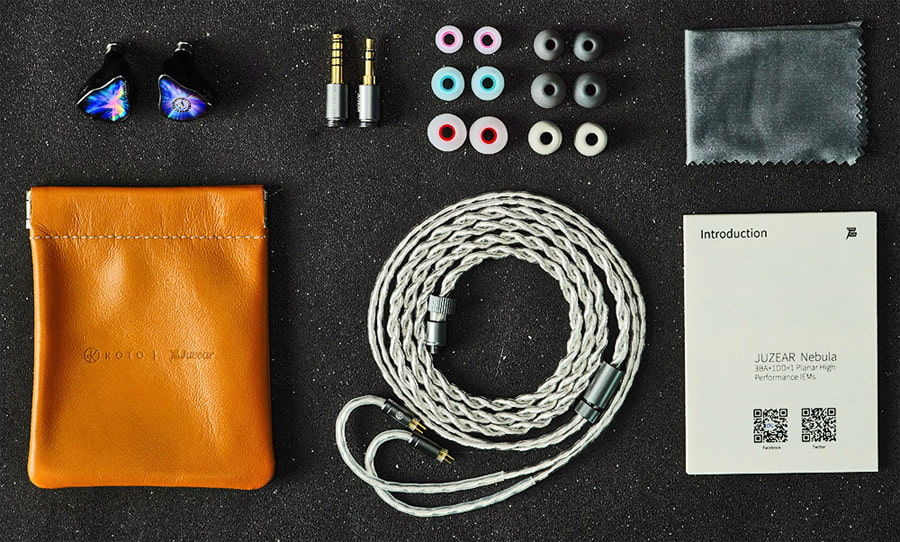
Wired IEMs continue to gain popularity among listeners who want reliable sound quality without batteries, Bluetooth codecs, or software complications. At $129.99, the Juzear Nebula stands out with its five-driver design, four-way crossover, lightweight resin shells, and interchangeable 3.5 mm and 4.4 mm plugs.
It is aimed at listeners who prioritize vocals, spacious presentation, and distinctive styling. What remains unknown is how well the five drivers integrate, how effective the passive isolation will be, and whether the fit works across a wide range of listeners. The specifications look competitive, but the tuning will determine whether the Nebula is genuinely special.

The Juzear x KOTO Nebula IEMs are priced at $129.99 at HiFiGo.

More and more, we want to know: Is it human, or is it AI? Is that image real? That song? That video? The publishing platform Substack is trying to add some clarity by partnering with the AI detector Pangram to help readers understand just how much AI is in all the content they consume on the publishing platform.
The tool is available to all Substack subscribers and works on posts, notes, comments and replies published on or after Tuesday that are longer than 100 words. Creators will also be able to scan their drafts with Pangram to see how much AI is detected and can also provide a statement to explain their writing process, Substack said.

Web and iOS users can try the Pangram features now, and Android users will get access later.
In a blog post announcing the new feature, Substack co-founder and CEO Chris Best said his platform aims to avoid “Claudefishing,” meaning when a reader consumes content without realizing it was generated by AI.
“When readers have to wonder if what they’re reading is real, it undermines trust in authorship and threatens the livelihood of writers — including those who use AI tools thoughtfully to produce work they believe in,” Best wrote.
From CNET: AI Slop Is Destroying the Internet. These Are the People Fighting to Save It
Pangram estimates that roughly 40% of text on some social media platforms is AI-generated, with a stunning two-thirds of that on the networking site LinkedIn. And AI growth agency Graphite recently published a white paper saying that AI is now writing as many online articles as humans. A Gartner survey found that 68% of people wonder if the content they see is real, and that half of consumers prefer brands that aren’t using AI in their marketing.
I’ve only recently joined Substack, but I wanted to check out the new Pangram AI detection tool. The tool works on posts, notes, comments and replies, so I decided to use posts as my makeshift testing lab. First, I logged in to my Substack account and published a new post. I copied and pasted text from an article I had written — by myself, no AI — into the Substack post and published it.
After a few minutes, I clicked on the live post. On the three-dot menu at the upper right of the page, I saw a “Scan for AI text” option. I clicked on it, and a small window popped up accurately declaring that my article was “Fully Human-Written.” A line appears below this that indicates the percentage of the text that is AI, AI-assisted, or human.

I next took the same post but added a long, fully AI-generated paragraph that I pasted from ChatGPT. When I performed the “Scan for AI text,” the tool reported that 10% of the article was written by AI, a roughly accurate estimate.
I next published a fully AI-generated post, and the scan correctly identified it as 100% AI-generated.
For another test, I added a couple of AI-generated sentences to a post that was otherwise purely human content, and the scan flagged it as 100% human-generated. Close, but not quite right. So, the Pangram tool worked pretty well for my crude experimentation.

Although I was fairly satisfied with how well Substack’s AI detection system worked on my own content, I was disappointed to learn that one of my favorite podcaster-bloggers apparently went full AI on his latest post. Other writers I checked out, however, used fully human-generated text.
In his announcement, Best admitted that the AI detection tool is “not perfect,” but cited independent research that found Pangram’s software was 97.5% accurate in detecting fully generated AI text. The University of Maryland found that Pangram was 99.3% accurate in identifying “humanized AI-generated text,” which basically means a human has rewritten or paraphrased AI content.
Substack writers who do not use AI are understandably concerned about being incorrectly labeled as AI-assisted authors. As a result, the risk of false positives is a significant issue. Substack said creators can scan their content to see if it will be labeled as containing AI while it’s still in draft form. If Pangram incorrectly identifies AI text, the creator can report the error to Substack and have the false scan removed.
To promote greater transparency, publishers can now include a “How I make this” statement if they want readers to know how much, if any, AI they have used in their content. Best said Pangram can’t detect if AI was used to gather information or as a source for written pieces.
“We’re not against people using AI to assist their work, and we think people should be free to choose which tools they use to express themselves,” Best said. “But people should know what they’re getting.”



The Russian nuclear-powered missile cruiser the Admiral Nakhimov is believed to be close to a return to operational status after it was spotted by satellite undergoing sea trials in Kola Bay on June 25, 2026. The Kirov-class ship, which will likely be assigned as the new flagship of Russia’s Northern Fleet, has undergone a lengthy $5 billion refit. Indeed, calling the refit lengthy is something of an understatement. The ship has been out of commission for 27 years, although the refit didn’t start seriously until 2014. For comparison, the world’s most advanced carrier, the USS Gerald R. Ford, took 12 years to build.
The Nakhimov first entered service in 1988 and was originally known as the Kalinin but was renamed in 1992. Weighing in at about 28,000 tons, the 823-foot ship is the only nuclear-powered surface warship in the world apart from aircraft carriers. However, by 1997 the ship had been taken out of service and spent two years laid up in Severomorsk, the main base for the Russian Northern Fleet. It was then towed to Severodvinsk and placed in dry dock. And, for a few years, not much happened.
As noted, it wasn’t until 2014 that the project to modernize the massive ship began. Originally, this was meant to be a relatively modest refit, and work was initially cited to be completed by 2018. However, the program suffered continual delays, resulting in a near three-decade absence from operational duties.
With the latest development suggesting that progress has been made, let’s have a closer look at what we know about the ship and its twenty-year-long refit.
The Admiral Nakhimov refit project may have started as the naval equivalent of a quick service, but this quickly became a massive project and one of the largest ever undertaken by the Russian Navy. While we don’t know the full details of the refit, there are some blanks that we can fill in.
Starting with the propulsion system — this ship is fast, with a top speed thought to be around 32 knots (36.8 mph). This is faster than most large warships, and just pips the top speed of a US Navy aircraft carrier. Providing all this power are two nuclear reactors that can produce an impressive 140,000 hp. While these weren’t replaced in the refit, they were refurbished and refueled. Both reactors were back online by February 2025. As a side note, the reactors used are pressurized water reactors — which are also the world’s most common nuclear reactor type.
In terms of armament, the Admiral Nakhimov also packs a serious punch. The original P-700 Granit anti-ship missile system was stripped from the ship as part of the refit and replaced with 10 eight-cell, universal launch modules, supporting a total of 80 UKSK vertical launch system cells. As the name would suggest, these are versatile modules that can deploy a wide range of Russian missiles. This includes anti-submarine, anti-ship, and land attack missiles as well as the 3M22 Zircon missile, the world’s fastest hypersonic missile.
Additionally, the ship is believed to have been fitted with improved sensors, upgraded radar systems, and more advanced air defense missiles.
When the Admiral Nakhimov is welcomed back after its nearly three-decade-long hiatus, its mission will be of strategic significance. The ship is expected to lead Russia’s Northern Fleet, a formation that largely supports the country’s most valuable naval assets — its ballistic missile submarines. Essentially, the Northern Fleet acts as part of the “bastion” of defenses that Russia has established to protect its operations in the Barents Sea. A ship with Nakhimov’s speed, virtually unlimited range, and long-range air defense and attacking capabilities is designed to strengthen this defense.
However, just how effective the ship will be in the role is a matter of conjecture. A lot has changed since the original Kalinin battlecruiser took to the seas. The emergence of drone warfare has significantly changed the playing field. Nowhere is this more apparent than in the Black Sea. In terms of sheer size, comparing Russian Navy resources in the Black Sea to Ukrainian resources is like comparing Goliath to David — yet we all know how that ended. The Ukrainian use of drones has reduced the Russian Navy to defensive duties and greatly restricted the use of its major surface warships.
This is the world that the Nakhimov will enter. While it’s considered the most heavily armed surface warship, it exists in an age where packing so many “eggs in one basket” is being increasingly challenged in naval doctrine. The changing face of naval warfare is one of the reasons that the US Navy is looking for long-range drone ships. Time will tell whether the Nakhimov remains relevant in such a rapidly evolving field.




London Mayor Sadiq Khan handed a peerage by Keir Starmer alongside 15 other Labour figures… just days before the PM leaves No10


Weekend Open Thread – Corporette.com


The House | The City of London can help the new chancellor deliver growth in every postcode


Ripple Payments Joins MiCA With 14 Firms, Does It Mean Anything For XRP?

Two July Windows Left: The CLARITY Act’s Senate Fight and What Failure Means


Democrats look to World Cup watch parties to register thousands of voters


Ripple wins EU-wide access as ESMA adds it to MiCA register


Grayscale Files For Worldcoin ETF, WLD Registers Sharp Rise


Unregistered fitter used Gas Safe logo on business flyers


Sail Virtually Aboard The “Itanic” With IA-64 Emulator


Injective Submits SEC Transfer-Agent Registration to Onchain Ownership Records

Turtle Beach Command Series KB7 review: a nifty screen-equipped gaming keyboard


Registration is now open for March for Men with Kev 2026

New Jersey voter registration controversy explained: How 6,600 noncitizens got on the rolls, and what happens next


Claude Fable 5 Slips to Second in AI Coding Leaderboard


Money | Class 12 Economics | CBSE Board Exam 2026-27


Banco Bilbao Vizcaya Argentaria, S.A. (BBVA) Discusses Global Macro Environment and Economic Outlook for Core Markets Transcript


Kaspersky exposes OkoBot’s 20-module crypto wallet attack


Big Money Is Entering XRP


Durham County Council to send out electoral registration emails


You must be logged in to post a comment Login