Connect with us
DAPA Banner
DAPA Coin
DAPA
COIN PAYMENT ASSET
PRIVACY · BLOCKDAG · HOMOMORPHIC ENCRYPTION · RUST
ElGamal Encrypted MINE DAPA
🚫 GENESIS SOLD OUT
DAPAPAY COMING

Business

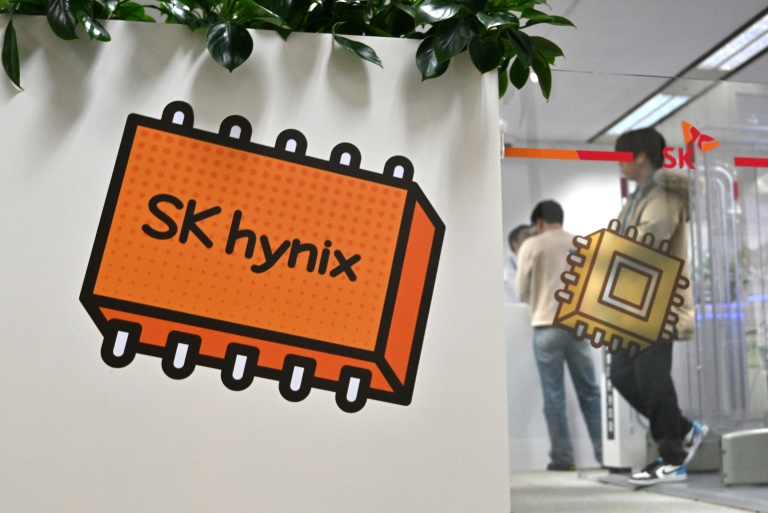
SK Hynix ADR Soars Sharply 24% as Leveraged ETFs, Options Debut Fuel Rebound From Monday’s Crash

Published

on

South Korea is home to the world's largest memory chip maker Samsung, and largest memory chip supplier SK Hynix

SK Hynix’s newly listed American depositary shares surged 23.85%, or $36.33, to $188.68 in Tuesday afternoon trading, erasing much of the losses from Monday’s historic single-day plunge and pushing the stock to a fresh high since its Nasdaq debut just four days earlier.

Tuesday’s rally capped one of the more volatile stretches in recent memory for a newly public company. SK Hynix’s American depositary receipts opened trading Friday, July 10, at $170 and closed their debut session up nearly 13% at $168.01, part of a $26.5 billion offering that marked the largest-ever U.S. listing by a foreign company. The stock then plunged Monday alongside a broader rout in Korean markets, with the underlying Seoul-listed shares falling 15.4% in the stock’s worst single-day decline on record, dragging the ADR down as much as 9% and triggering a market-wide trading halt on South Korea’s Kospi index. By Tuesday, the stock had reversed sharply higher, climbing well above its earlier debut levels.

Several factors converged to drive Tuesday’s rebound. A cooler-than-expected June consumer price index report in the United States helped fuel a broader risk-on mood across markets, with the Nasdaq 100 rising roughly 1% and lifting sentiment across the chip and memory sector generally. South Korea’s Kospi staged its own V-shaped recovery Tuesday, aided in part by comments from SoftBank CEO Masayoshi Son at the annual SoftBank World conference in Tokyo, where he predicted the artificial intelligence sector would require $5 trillion in annual investment by 2040 and dismissed concerns about an AI bubble.

The more immediate catalyst behind Tuesday’s sharp move, according to multiple market analysts, was the launch of new leveraged, single-stock exchange-traded funds tied directly to SK Hynix. GraniteShares launched both a 2x Long SK hynix Daily ETF, trading under the ticker SKUU, and a corresponding 2x Short version, SKDD, while ProShares rolled out its own 2x long single-stock fund, ProShares Ultra SK hynix, trading as SKHU. The introduction of those geared products, combined with the start of options trading on SKHY shares on U.S. exchanges Tuesday, pulled in heavy trading volume that amplified the stock’s underlying moves in both directions.

Advertisement

Daniel Kirsch, head of options at Piper Sandler, said the newly available options market was likely to draw significant short-term speculative activity. “Traders are expected to aggressively position for short-term trades betting on further gains in SK Hynix ADR this week,” Kirsch said, adding that demand for short-dated call options was likely to heat up further, with contracts expiring this Friday potentially attracting a rapid influx of retail investors. The most actively traded options contract as of Tuesday afternoon was a $185 strike call, with volume around 2,900 contracts, followed closely by a $145 strike put, while August calls with a $200 strike price also drew significant interest, with volume exceeding 1,500 contracts.

Analysts at research firm TradingKey cautioned that Monday’s rout stemmed more from technical correction and liquidity dynamics than from any fundamental deterioration in SK Hynix’s underlying business. “SK Hynix’s current decline stems more from technical corrections and liquidity shocks following excessive earlier gains, and the medium-term supply-demand dynamics of HBM have not undergone any directional shift,” the firm wrote, referring to high-bandwidth memory, the specialized chip category that has powered much of SK Hynix’s recent growth as a key supplier to Nvidia and other artificial intelligence infrastructure customers. UBS reiterated a buy rating on the stock in early July, raising its price target on the Korean shares to 3.2 million won and projecting SK Hynix’s 2026 operating profit would reach 32.7 trillion won, roughly 27% above the broader market consensus.

Not every analyst has turned uniformly bullish following the recent volatility. A separate analysis from FX Leaders cautioned that the ADR remains technically vulnerable, noting that a sustained rebound would require SKHY to reclaim and hold above the $162 to $168 range to restore confidence in the post-listing rally, while a break below the $149 to $150 zone, near the original IPO price, could open the door to further declines toward $145 or $140 if broader chip-sector weakness resumes. “Until the ADR premium narrows or Q2 earnings confirm that expectations remain achievable, investors may continue treating rallies with caution,” the firm wrote.

That premium has become a notable point of focus among analysts tracking the stock. According to Bloomberg, the premium for SK Hynix’s American depositary receipts over their Korean-listed shares had swelled to nearly 50% just three days after the stock’s U.S. trading debut, a gap some market strategists attribute to the ADR’s smaller, thinner float relative to the much larger pool of shares traded in Seoul, along with strong U.S. retail demand for direct exposure to the AI memory theme.

Advertisement

Tuesday’s rally lifted sentiment across the broader memory chip sector. Micron Technology shares rose roughly 5%, extending a rally that had already pushed Micron stock up 229% year to date through Monday’s close, following the company’s fiscal third-quarter results, which showed revenue of $41.46 billion and adjusted earnings of $25.11 per share. Micron CEO Sanjay Mehrotra pointed to the “strategic value of memory in the AI era” in describing the results. SanDisk shares rose about 4% and Western Digital gained roughly 1%, while the Roundhill Memory ETF, a sector-focused fund with heavy weightings in Samsung Electronics, SK Hynix and Micron, climbed about 6%.

Analysts have generally cautioned that the combination of a newly listed stock, a comparatively thin float and the sudden introduction of leveraged trading products creates conditions ripe for outsized volatility in either direction. Investors considering exposure to SK Hynix at current levels have been advised by several market commentators to treat the leveraged single-stock ETFs specifically as short-term speculative trading tools rather than buy-and-hold investments, given the compounding and volatility decay risks disclosed by the funds’ own issuers, which note that investors can lose money even if the underlying stock rises over periods longer than a single trading day, and that a full loss of principal is possible within one session.

With SK Hynix’s formal second-quarter earnings report still pending and major cloud providers including Microsoft scheduled to report their own results later this month, analysts said the coming weeks are likely to offer a clearer signal on whether Tuesday’s sharp rebound reflects renewed confidence in the underlying AI memory demand story or simply another leg of the extreme volatility that has characterized the stock since its record-setting Nasdaq debut just four trading days ago.

Advertisement
Continue Reading
Click to comment

You must be logged in to post a comment Login

Leave a Reply

Business

Maine Democrats, rattled by Platner’s downfall, protest fatal ICE shooting

Published

on


Maine Democrats, rattled by Platner’s downfall, protest fatal ICE shooting

Continue Reading

Business

SpaceX Stock Closes at New Low

Published

on

SpaceX Stock Closes at New Low

SpaceX Stock Closes at New Low

Continue Reading

Business

Hemab Therapeutics: A Cash-Rich Coagulation Franchise With Multiple Clinical Catalysts

Published

on

Hemab Therapeutics: A Cash-Rich Coagulation Franchise With Multiple Clinical Catalysts

This article was written by

I have a strong inclination towards high-growth companies, often treading in sectors poised for exponential expansion. My expertise lies in understanding and investing in disruptive technologies and forward-thinking enterprises. My approach is a mix of fundamental analysis and future trend prediction. I believe in the power of innovation to yield substantial returns and aim to provide insightful analysis on such companies here on SeekingAlpha.

Analyst’s Disclosure: I/we have no stock, option or similar derivative position in any of the companies mentioned, and no plans to initiate any such positions within the next 72 hours. I wrote this article myself, and it expresses my own opinions. I am not receiving compensation for it (other than from Seeking Alpha). I have no business relationship with any company whose stock is mentioned in this article.

Seeking Alpha’s Disclosure: Past performance is no guarantee of future results. No recommendation or advice is being given as to whether any investment is suitable for a particular investor. Any views or opinions expressed above may not reflect those of Seeking Alpha as a whole. Seeking Alpha is not a licensed securities dealer, broker or US investment adviser or investment bank. Our analysts are third party authors that include both professional investors and individual investors who may not be licensed or certified by any institute or regulatory body.

Advertisement
Continue Reading

Business

JPMorgan initiates Tango Therapeutics stock at Overweight

Published

on


JPMorgan initiates Tango Therapeutics stock at Overweight

Continue Reading

Business

Old Somerset cattle market could be turned into 100 new homes

Published

on

Business Live

The former Yeovil cattle market site has been assessed for potential housing development

The former cattle market site, seen from Court Ash in Yeovil. CREDIT: Daniel Mumby. Free to use for all BBC wire partners.

The former cattle market site, seen from Court Ash in Yeovil(Image: Local Democracy Reporting Service / Daniel Mumby)

A former cattle market in Yeovil town centre could be converted into as many as 100 new homes if the site progresses under the new Somerset Local Plan.

Advertisement

Somerset Council has recently begun the first phase of public consultation on its new Somerset Local Plan, which will determine where new housing and employment sites are designated until 2045.

As part of the Local Plan procedure, the council has published the results of its housing and employment land availability assessment (HELAA), which identifies every site submitted during the ‘call for sites’ in early 2025 (which invited developers, promoters and landowners to put forward sites for future development).

Among the sites included within the HELAA is the former cattle market south of the A30 Reckleford and Market Street – with local councillors suggesting it could accommodate up to 100 new properties.

Councillors Mike Hewitson and Oliver Patrick, who represent the Coker division near Yeovil, highlighted the issue in their latest monthly newsletter to their constituents.

Advertisement

They said: “Councils are required to have up to date Local Plans in order to. demonstrate how they are delivering central government housing targets for their area.

“The HELAA process sits as a first stage in the wider Local Plan site selection process. It does not allocate sites or grant them planning permission or planning status of any kind.”

The cattle market was designated as one of the principal regeneration locations within the Yeovil Refresh regeneration scheme, launched by South Somerset District Council and supported by £9.75m from the then-Conservative government’s future high streets fund.

After the current Labour government took office in July 2024, the programme was restructured to enable the remaining funds to be concentrated on the Glovers Walk site and several smaller projects in the town centre.

Advertisement

The cattle market component of the Yeovil Refresh programme was formally scrapped in August 2024, alongside any proposed improvements to the Poundland outlet at 72-74 Middle Street.

Hewitson and Patrick added: “The owners of the cattle market have submitted their land for consideration in the Local Plan. They have indicated it could accommodate approximately 100 homes.

“Could we finally see this major brownfield site finally come forward for redevelopment?”

In their formal evaluation of the location, the council’s own planning officers said the cattle market was “potentially suitable” for inclusion within the Local Plan as a “regeneration site” (i.e. one where central government funding could be targeted to unlock new homes).

Advertisement

The officers added: “The site has been promoted for housing development and therefore is not considered available for economic development.

“The site is adjacent to multiple highways, so it is assumed that access could be taken from multiple points.

“The promoter has identified a few common constraints but anticipates that they can be overcome.”

A summary of the consultation responses is due to be published in early November, with the second round of consultation, incorporating further details of proposed development sites, expected to commence in September 2027.

Advertisement

The third and final round of public consultation is currently scheduled for March 2028, after which the Local Plan will be submitted to the Planning Inspectorate, which may hold additional public hearings should it be deemed necessary.

If everything proceeds, the new Local Plan will be formally adopted on March 16, 2029.

Continue Reading

Business

Meta Faces Lawsuit Alleging AI Tools Discriminated Against Workers on Protected Leave in Mass Layoffs

Published

on

Is Claude Still Down? Anthropic's Claude AI Chatbot Hit by

SAN FRANCISCO — Dozens of Meta employees have filed a federal lawsuit accusing the social media giant of using artificial intelligence systems to select workers for layoffs in a way that disproportionately targeted those who took maternity, medical or disability leave.

The 71-page complaint, filed Monday in U.S. District Court in the Northern District of California, was brought by 26 current and former employees who claim the company’s AI-driven performance evaluations penalized them for exercising legally protected rights to time off. The workers are among approximately 8,000 employees, or about 10% of Meta’s global workforce, notified of layoffs beginning in May.

Meta, the parent company of Facebook, Instagram and WhatsApp, has disputed the allegations. “These claims lack merit and are not based on facts,” a Meta spokesperson said in a statement. “Workforce management and organizational decisions were and are made by people, not AI.”

The lawsuit alleges that Meta relied on a “constellation of internal artificial intelligence systems” — including AI performance ratings, keystroke and activity monitoring, productivity metrics and AI token-usage dashboards — to score, rank and select employees for termination. These tools, according to the complaint, failed to account for periods when employees were on approved leave, effectively punishing them for absences required by law.

Advertisement

“Meta did not assemble the termination list through the considered judgment of managers who knew the work,” the complaint states. “Instead, the company used AI systems to score, rank and select employees for inclusion on the list.”

Plaintiffs include a scientist notified of her layoff just days before giving birth while on approved pre-birth pregnancy leave, an engineer who received a lowered rating due to time off for an injury, and a manager let go 16 days into medical leave. All 26 plaintiffs, who are proceeding anonymously as Does 1-26, had taken protected leave in the 24 months prior to the layoffs, the suit says.

Eight of the plaintiffs are women who took maternity or pregnancy-related leave, four are men who took parental leave, and another took leave to care for a family member followed by bereavement leave, according to the filing. The suit claims the practices violate the Family and Medical Leave Act, the Americans with Disabilities Act, the Pregnancy Discrimination Act, the Pregnant Workers Fairness Act and various state laws.

The case highlights growing concerns about the use of AI in workplace decisions. Regulators and lawmakers in states including California, Colorado and Illinois have enacted rules in recent years to address potential bias in automated employment tools. The U.S. Equal Employment Opportunity Commission has also stated that existing anti-discrimination laws apply when employers use AI for such purposes.

Advertisement

Meta announced the latest round of job cuts in April as part of efforts to improve efficiency and redirect resources toward artificial intelligence development. Employees received notices starting around May 20, with departures scheduled through July 22. The company also reassigned thousands of other workers to AI-related initiatives during the restructuring.

The lawsuit points to Meta’s employee-monitoring program, introduced earlier this year, which captured keystrokes, mouse movements, browser history, messages, emails and location data on company devices. The program was intended to train the company’s AI systems on employee behaviors, according to internal statements attributed to CEO Mark Zuckerberg.

In an internal meeting reported by The Information, Zuckerberg said the AI models would “learn from watching really smart people do things,” noting that the average intelligence at the company was higher than what could be obtained externally for certain tasks.

Plaintiffs allege the monitoring program was rolled out with limited notice and little opportunity for opt-out, contributing to an environment where data collection fed into layoff decisions without proper safeguards for protected leave.

Advertisement

The suit seeks a preliminary injunction to halt the finalization of layoffs for the plaintiffs, along with reinstatement, back pay, lost equity, benefits and other damages. Because of Meta’s arbitration agreements, the plaintiffs are not seeking class-action status but are pursuing individual claims.

Legal experts following the case say it could test how courts view the intersection of AI tools and employment protections. If the metrics used in decision-making inherently disadvantage workers on leave, companies may need to implement more robust adjustments or human oversight to comply with federal and state laws.

The controversy unfolds amid broader tensions at Meta over its aggressive push into AI. Employees have expressed concerns about surveillance tools, reassignments to data-labeling roles described internally by some as “draftees” work, and the overall pace of change. Petitions and internal protests have highlighted worries that AI initiatives are coming at the expense of worker well-being.

Meta has defended its approach as necessary for remaining competitive in the rapidly evolving technology landscape. In communications to staff, executives have emphasized flattening organizational structures, increasing ownership on smaller teams and leveraging AI to boost productivity.

Advertisement

The company has paused aspects of its monitoring program at times due to internal data concerns and employee feedback, but continues to integrate AI deeply into operations.

This latest lawsuit adds to a series of legal challenges facing big tech companies over AI deployment. As tools become more sophisticated, questions about transparency, bias detection and accountability are likely to intensify.

For the plaintiffs, the stakes are personal. One researcher reportedly received her first “Meets Most” performance rating shortly after disclosing a disability and requesting accommodations, according to details in the complaint. Others describe lowered scores directly tied to leave periods.

The case is assigned to U.S. District Judge William Orrick in Oakland. Plaintiffs are seeking preservation of relevant data, models and logs, as well as an independent audit of the algorithmic selection process.

Advertisement

Meta’s spokesperson reiterated that decisions involved human judgment and that the company complies with all applicable employment laws.

As the tech industry grapples with balancing innovation and worker rights, the outcome of this suit could influence how other companies approach AI-assisted workforce management. With AI adoption accelerating, similar disputes may become more common.

The plaintiffs’ attorneys from firms specializing in employment law argue that failing to adjust for protected leave in automated systems amounts to built-in discrimination. They call for greater scrutiny of “black box” AI tools in high-stakes employment decisions.

Industry observers note that while AI can streamline processes, it requires careful calibration to avoid unintended biases, particularly around sensitive areas like health and family responsibilities.

Advertisement

Meta, with a workforce of around 78,000 at the end of the first quarter, has conducted multiple rounds of layoffs in recent years as it pivots toward AI. Previous cuts in 2022 and 2023 were larger in scale, but the 2026 reductions come as the company invests heavily in computing infrastructure and model development.

Zuckerberg has publicly stated that AI will transform many aspects of work, including at Meta itself. The company’s internal AI efforts include tools like Metamate, described as a large language model assistant, and “second brain” systems trained on employee data.

Critics within the company have raised alarms about the potential for these systems to create feedback loops that favor constant availability and high-volume output, metrics difficult to maintain during legitimate absences.

The lawsuit does not seek class certification due to arbitration clauses but requests the court issue a preliminary ruling preserving the status quo for the named plaintiffs while their claims proceed.

Advertisement

Broader implications could extend to other employers using similar technologies. Employment lawyers advise companies to audit AI tools for disparate impact on protected groups and to maintain clear documentation of human involvement in final decisions.

As of mid-2026, the debate over AI in human resources continues to evolve, with calls for federal guidelines gaining traction alongside state-level regulations.

The case underscores the challenges of integrating powerful new technologies into traditional employment frameworks. For Meta and its workforce, the resolution may help define the boundaries of acceptable AI use in one of the most consequential areas of business operations: deciding who stays and who goes.

Advertisement
Continue Reading

Business

Tesla Stock Is Falling. Can Robots Arrive Soon Enough to Save It?

Published

on

Tesla Stock Is Falling. Can Robots Arrive Soon Enough to Save It?

Tesla Stock Is Falling. Can Robots Arrive Soon Enough to Save It?

Continue Reading

Business

Japan stocks higher at close of trade; Nikkei 225 up 1.49%

Published

on


Japan stocks higher at close of trade; Nikkei 225 up 1.49%

Continue Reading

Business

Kuwait International Airport Open Today as Terminals 4 and 5 Operate, Terminal 1 Still Shut for Repairs

Published

on

Kuwait City, Kuwait

KUWAIT CITY — Kuwait International Airport is open and operating on Wednesday, with the country’s two national carriers running scheduled flights, though one of the airport’s main terminals remains closed for repairs following months of disruptions tied to the broader U.S.-Iran conflict.

Kuwait Airways is currently flying out of Terminal 4, while budget carrier Jazeera Airways operates from Terminal 5, with both airlines maintaining largely normal schedules as the country’s aviation sector continues a gradual recovery. Terminal 1, the airport’s primary international facility, remains closed pending repairs after sustaining significant structural damage, and authorities have not announced a confirmed reopening date.

For travelers with existing bookings, airline and travel industry sources continue to recommend confirming flight status directly with carriers before heading to the airport, given the facility’s recent history of abrupt, security-driven schedule changes.

A Rocky Road to Reopening

Advertisement

The airport’s path back to normal operations has been anything but smooth. Since the conflict began on February 28 with U.S. and Israeli strikes on Iran, Kuwait’s airspace and its main airport have been repeatedly disrupted by Iranian drone attacks, part of a wider pattern of strikes targeting Gulf states hosting American military installations.

The airport was first forced to suspend all flights starting February 28, with Jazeera Airways temporarily diverting operations to Qaisumah International Airport in Saudi Arabia, roughly two and a half hours away by road, during the closure. Kuwaiti authorities reopened the country’s airspace nearly two months later, with the state-run Kuna news agency reporting that flights would resume gradually, beginning with select destinations through Terminals 4 and 5.

Sheikh Hamoud Mubarak Al Sabah, chairman of Kuwait’s General Civil Aviation Authority, said at the time that the phased restart was coordinated with domestic and international authorities to ensure operations resumed in line with the highest safety and security standards. He also credited Saudi Arabia’s support in facilitating Kuwaiti carriers through its airports during the closure and highlighted coordination among Gulf Cooperation Council countries aimed at maintaining regional air traffic continuity throughout the crisis.

Kuwait Airways and Jazeera Airways resumed limited service on April 26, operating out of Terminals 4 and 5 while Terminal 1 remained shuttered. Terminal 1 finally reopened to international traffic on June 1, allowing some foreign carriers to resume service there for the first time in months.

Advertisement

A Second Setback

That reopening proved short-lived. Terminal 1 suffered more serious structural damage, including a partial roof collapse, during a subsequent strike on June 3, rendering the facility unsafe for passenger operations and prompting officials to close it once again. That second closure has remained in effect since, with no confirmed reopening date currently available.

The damage to Terminal 1 traces back to a series of attacks earlier this year. Between late February and June, Kuwait International Airport was targeted multiple times by Iranian drone attacks as part of Tehran’s broader campaign against Gulf states, causing damage to the airport’s infrastructure, including its radar installation. Officials have said there were no casualties from those attacks.

Foreign Carriers Gradually Return

Advertisement

As conditions have stabilized, foreign airlines that typically operate through the airport have been brought back online in stages. Oman Air confirmed its Kuwait flights resumed on June 25, temporarily operating through Terminal 4 instead of its usual Terminal 1.

Kuwaiti aviation officials have emphasized a cautious, coordinated approach to restoring full operations across the facility. With Terminals 4 and 5 fully operational and additional foreign carriers gradually resuming service, the airport’s recovery has continued on what officials describe as a positive trajectory, even as Terminal 1 remains closed indefinitely and a broader expansion project for a new Terminal 2 continues working toward a targeted late-2026 opening.

Renewed Alerts Complicate the Picture

Despite the overall reopening, the situation has remained fluid. Kuwait reported renewed air-defense activity amid fresh missile and drone threats on July 9, underscoring that the recovery, while steady, has not been without additional scares. Travel advisories tied to the broader region have continued to shift in response to developments in the wider U.S.-Iran conflict, and officials have urged passengers to monitor updates closely rather than assume normal pre-conflict capacity has been fully restored.

Advertisement

Earlier this month, disruptions tied to regional tensions led to a wave of flight delays and cancellations at the airport. According to aviation trackers cited by regional outlets, six flights were cancelled and 76 others delayed in a single day of disruption, even as authorities maintained that the airport itself remained open and had not been fully shut down.

What Travelers Should Know

Kuwait International Airport, located roughly 15.5 kilometers south of Kuwait City’s center, typically handles more than 15 million passengers annually and serves as the primary hub for both Kuwait Airways and Jazeera Airways, connecting the country to more than 100 destinations worldwide. Passengers should confirm which terminal their flight is using, since assignments have shifted repeatedly throughout the recovery process, and should rely on official airline updates and the airport’s flight information service for the latest details before traveling.

For now, the practical answer to whether the airport is open today is yes, with flights departing and arriving on a steadily normalizing schedule. But the broader question of whether that recovery can hold remains tied directly to the durability of the ceasefire between the United States and Iran, a truce that has already been tested — and broken — multiple times since it was first announced earlier this year.

Advertisement

Travelers planning trips through Kuwait in the coming weeks should expect continued gradual normalization of service, but officials caution against assuming that full pre-conflict operational capacity has yet been restored across all of the airport’s facilities.

Continue Reading

Business

Spain’s final 12-month EU-harmonised inflation at 3.6% in June

Published

on


Spain’s final 12-month EU-harmonised inflation at 3.6% in June

Continue Reading

Trending

Copyright © 2025