

Politics
The House Article | Lord Nash: Tories Should Not Rule Out Reform Deal Before Next Election


10 min read
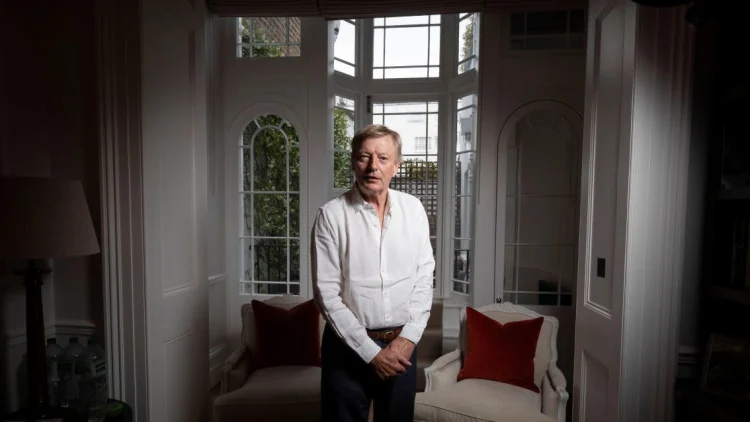
Conservative peer Lord Nash speaks to Matilda Martin about his successful bid to persuade the government to ban social media for children, plus why he thinks the Tories should not rule out an arrangement with Reform before the next general election
Every night at 7pm on the dot, Lord Nash follows his own self-imposed technology ban. The Conservative peer switches off his phone, puts it in a different room “and that’s it”.
Some may see this as an impressive display of self-control but the former education minister thinks it’s a no-brainer: “Well, it’s obvious, isn’t it? It’s just distracting. All the evidence is quite clear if you’re looking at the blue light late, you won’t sleep as well as you would. The best thing you can do in an evening is go out with some friends, have a few drinks.”
“I don’t advertise that,” he adds, quickly offering alternative pastimes for youngsters now denied TikTok, “or read a book, watch some telly, wind down rather than get hyped up looking at the flashing screen.”
Nash not only limits his screen time; he does not have social media and does not use WhatsApp. The peer is credited by many for forcing the government’s hand on banning social media access for under-16s.
Outgoing Prime Minister Keir Starmer may claim the ban as part of his legacy but the 77-year-old Tory was pivotal in forcing the change. It was his cross-party amendment to the Children’s Wellbeing and Schools Bill in January that showed the depth of parliamentary support for a ban. In the face of growing support from Labour MPs, Starmer – initially resistant – announced a consultation, before later fully backing the measure.
Its genesis might be a textbook example of an effective Lords, but the peer presents his success as the culmination of a collaborative effort just at the moment the time had finally come for the cause.
“One of the big triggers was my amendment, yes, but one of them,” he stresses, “and I’ve arrived on this scene later than a lot of other people that had been working away at this for many years. But it came together.”
He adds: “As one of my hereditary colleagues said, ‘John, you seem to have caught the wind’, and it went from there.”
But Nash thinks the tide was already moving in that direction. After co-founding the charity Future with his wife Caroline Nash, in 2008 it was appointed by the Labour government to sponsor Future Academies, a multi-academy trust with 11 schools across London and Hertfordshire.
Like many in Parliament, Nash engaged with Jonathan Haidt’s work on the subject, first attending a talk by the social psychologist. “I bought his book, and then I bought another thousand copies of his book, and gave them to all the staff in my multi-academy trust.”
Thanks to his involvement with schools, Nash says it was obvious to him just how distracting devices can be.
“They’re arriving at school tired, some of them not even turning up, and there’s been a lot of cyberbullying on social media.”
The government’s proposals for a social media ban include restrictions on specific platforms for under-16s, including Snapchat, TikTok, YouTube, Instagram, Facebook and X, but also restrictions on gaming services, live-streaming platforms and stranger communication.
Nash is also confident that likely PM-in-waiting Andy Burnham – one of the first prominent Labour politicians to voice support for a ban – will take this seriously.
Is there anywhere Nash would like to see Burnham go further? The peer is keen that the government ensures any approach is a “level-playing field”, so that tech companies “don’t try and run rings around Ofcom”. Ultimately, Nash would like to see a curfew on the ability of older teenagers to ‘infinite scroll’ at night.
Does the peer see tech companies attempting to ‘run rings’ around government? He thinks these giants can see the direction of travel, pointing to a new Ofcom chair who has indicated a bolder approach, and the hypothetical possibility of advertisers pulling out of the platforms.
What about government’s presence on these platforms? Would he like to see departments taking a stronger line on this?
“People generally, and politicians, spend far too much time in the immediate world of being on Twitter or X. Politics has become too immediate and too playing to the audience, minute by minute, and getting ahead of the story.”
Nash believes this reality has been exacerbated by social media. But does he think politics can function without it?
“Well, there’s politics, and there’s running the country,” Nash observes, “and they’re two totally different things.”
“You can’t run the country if you’re spending your time ‘Twittering’,” he adds.
While Nash’s social media campaign is a good example of the role of the Lords in policymaking, Burnham has radical reform of the Chamber in his sights. The former Manchester mayor told PoliticsHome last month that he would support early change to the House of Lords, including downsizing it.
“Maybe it could be smaller,” Nash says, before reminiscing on the views of his younger self. “I wrote my university entrance paper on reform of the House of Lords, more than 50 years ago.”
He cannot remember his exact argument but thinks it was along the lines of: “It’s absolutely scandalous we have an appointed second Chamber and we should have an elected second Chamber.”
But now Nash thinks that would be a “big mistake”.
“I took five Acts of Parliament through the Lords as a minister, and I saw at close range how forensically they analyse legislation line by line to check that it will actually work, which the Commons don’t do anymore, because they’re all busy sort of Twittering, and it works. It really does.”
Nash also has thoughts on Burnham’s recently announced No 10 North.
The peer believes “bringing more industry and jobs to the regions” is long overdue, but argues that the model of government needs to be redesigned “very fundamentally”. Ultimately, he feels a No 10 North cannot merely be moving civil servants up North or hiring a load of new civil servants in the region.
Whatever proposals Burnham brings to the table, he will be inheriting a Labour government that is floundering in the polls less than three years out from a general election and just two years after winning a massive majority.
“If we get a situation where the Tories and Reform have a majority between them, then we’d be daft not to work together”
The last two years have not been kind to the Conservatives either. The party faced an angry electorate in July 2024, and has struggled to regain popularity since.
However, a renewed optimism in recent months – despite a bruising at the local elections in May – has spoken of a Tory revival.
Nash is one of those more optimistic individuals: “There is a revival happening and Kemi is doing a great job. She’s thoughtful, she has a guiding star, clearly she’s principled, and that’s very important in politics.”
He adds: “You’ve had far too many prime ministers who want to be prime minister because they want to be prime minister, not because they have a great policy agenda they want to deliver for the country.”
The House asks if there is anyone in particular Nash has in mind with that latter statement. “Quite a few,” the peer laughs, “but I won’t name any.”
While Badenoch initially had a tough gig, Nash says, she has managed to “completely change the party and she’s taken time to develop policies thoroughly”.
The peer also has his own ideas about how the running of the state can be transformed. Earlier this year, he announced the Centre for Government Reform alongside Lord Agnew. The organisation will aim to recruit experience from outside politics and prepare them “to reform and run the British state properly”.
Nash describes the work Reform UK has done in reforming the machinery of the state as “good stuff”, noting this is something the Tories are also working on. Does Nash think the Tories are becoming more confident as Reform fails to build on the momentum it enjoyed last year?
“I think so,” Nash begins, before adding: “I mean, I like Farage, and I like a lot of what he’s achieved.” He claims that Tory and Reform policies are “pretty similar”, differing only on a few aspects.
“But whoever’s going to run the country in three years’ time has got to have a good, in my view, bench of people from outside the Whitehall bubble, to help them deliver the change.”
Nash did not take the traditional route to becoming a minister. He has never been an MP and was brought into his ministerial role in 2013 through the House of Lords. He started his working life as a barrister before moving into finance and co-founding a private equity firm.
As schools minister, Nash says he dealt with a lot of MPs, but he was surprised by their experience, or as he sees it, lack thereof.
It is something he also experienced first-hand: “When I became a minister, you’re just chucked in the deep end. It’s like first day at school – sink or swim, see how he does – which is terribly amateur.” He adds that the Centre for Government Reform would be willing to work with any party that wants help.
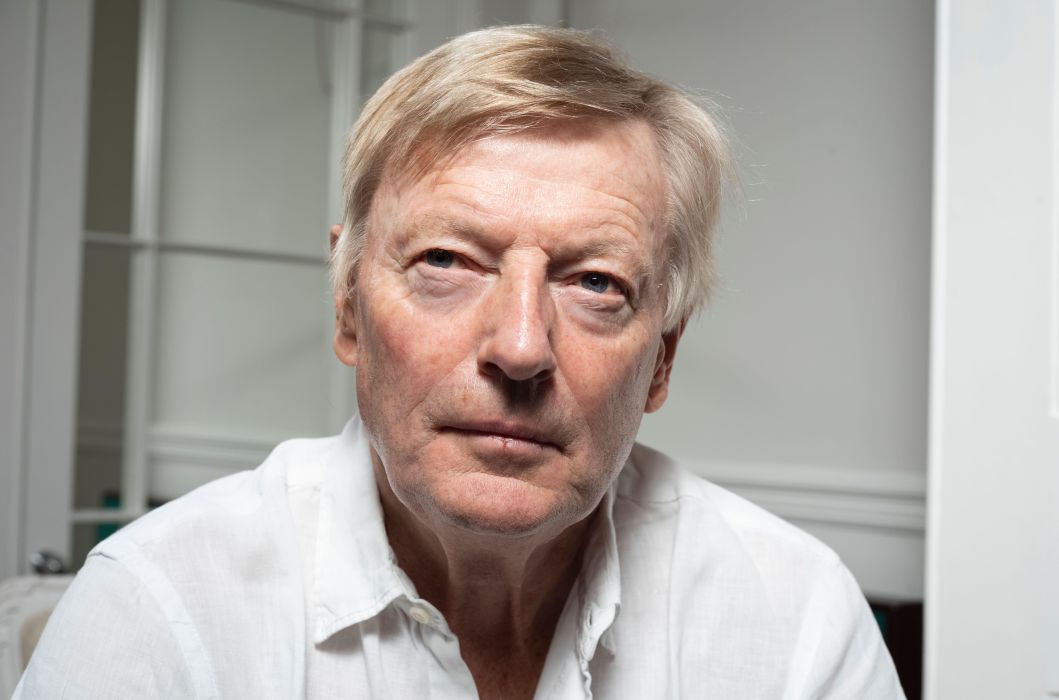
Nash is clearly not averse to Reform UK. Was he ever tempted to defect?
“N-,” he pauses. “Umm, no. I mean, I’m not saying it would never happen, but at the moment I’m…”
He changes tack: “My politics are slightly sort of eclectic. On education, I’d say I was a bit of a socialist, actually, but I’m very happy to help Reform.
“I’m not on any dark agenda, as a sort of Tory Trojan horse. I like a lot of their policies, and I like the fact that they are clearly prepared to be very radical, which is what we need, and I believe the Tories are too, so – as I did with social media – I’m happy to work with all parties to get stuff done.
“I’m not really a politician. I’m a businessman who got asked, because I was involved in academies, to be a schools minister.”
That’s not a firm ‘no’ to ever joining Reform then. What does Nash think about the idea of a Tory-Reform coalition?
“I can understand why at this stage, three years out, they’re going to say no. But when the dog sees the rabbit, let’s see,” he says.
“Certainly, if we get a situation where the Tories and Reform have a majority between them, then we’d be daft not to work together.
“If we have a situation where it becomes crashingly obvious from the voting a while out that some kind of arrangement a year out from the election or whatever… is going to make sure that we have a government, what people call right-wing, what I would call in many cases just common sense, then it’s definitely something that should be considered.”
Nash does not believe this is something that can be done “last minute” as that would see numerous prospective candidates being shafted.
“In certain circumstances, it would be daft to not come together if the alternative is to let in the opposition.”
Nash is speaking to The House the week after an unprecedented heatwave, and a week before another bout of hot weather, when conversations about maximum temperatures in workplaces – including schools – are bound to occur once again.
Does he think schools should have maximum temperatures? “Not really, no… We’ve become a little too risk-averse and protective. A bit of hardship is not a bad thing, and toughens people up a bit.”



German police have violently arrested Greta Thunberg and more than 30 other activists for blocking the road to a German arms factory.
The Rheinmetall works produces ammunition for Israel’s military. Thunberg was also arrested in the UK for protesting against the Starmer regime’s proscription of anti-genocide group, Palestine Action.
The German state and police have been among the most brutal collaborators in Israel’s genocide in Gaza. Peaceful anti-genocide activists have been beaten, imprisoned and in some cases subjected to ‘civil death’, depriving them of employment, banking and official existence.
The Peacefully Against Genocide group is holding a series of demonstrations in Berlin in early July against “Germany’s complicity” in Israel’s genocide. The group will call for Rheinmetall to stop all deliveries to Israel and close the Berlin factory.
Greta Thunberg unbowed
In October 2025, Thunberg was among a group of humanitarian flotilla volunteers beaten and abused by Israeli guards. Clearly she is unbowed and unafraid of the genocide-enabling state thugs.
Featured image via the Canary
By Skwawkbox
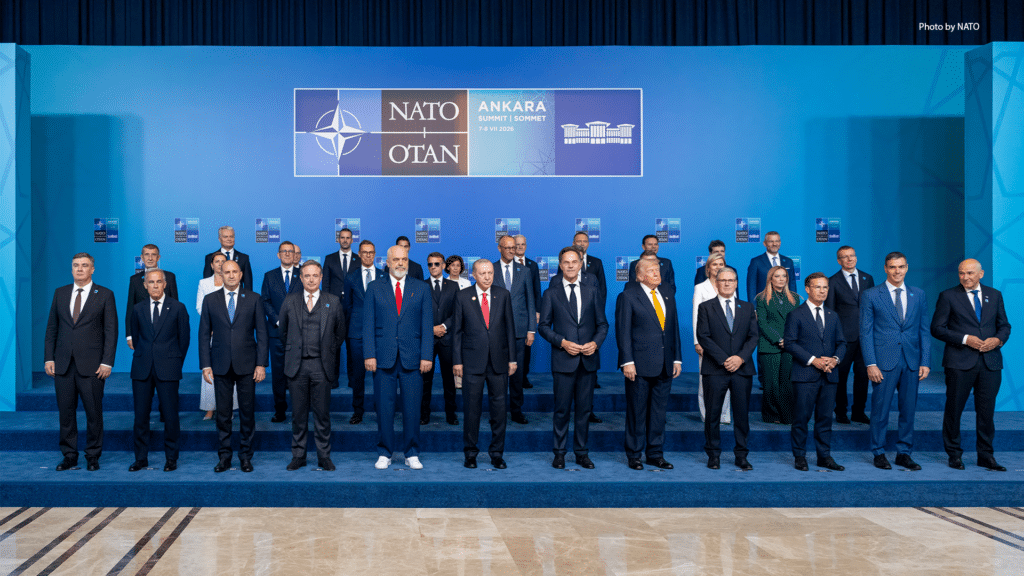
Mark Webber reflects on the key outcomes of last week’s NATO summit in Ankara.
Task proliferation is not a criticism one can any longer level at NATO. The alliance has spent the last two years stripping itself of responsibilities and political missions it once regarded as essential. The issues of climate change or Women, Peace and Security (WPS) still have their adherents within the NATO bureaucracy, but neither figured in the business of last week’s Ankara summit (or, indeed, at last year’s Hague summit). A shared interest among allies in out-of-area missions, meanwhile, evaporated with the frantic withdrawal from Afghanistan in the summer of 2021. NATO’s training mission in Iraq decamped from Baghdad to Naples in March. KFOR still helps keep the peace in Kosovo –but rumours abound that its American contingent will soon be pulled and the mission transferred to EU oversight (much like EUFOR in Bosnia). Even China, a NATO agenda item introduced by the first Trump administration and sustained under Joe Biden, is currently missing in action. It is absent from (the admittedly short) Ankara summit declaration and was mentioned only fleetingly by Secretary General Mark Rutte in his many summit remarks. A concern with ‘the persistent threat of terrorism’ remains, but only out of deference to Turkey, the summit host.
As the summit declaration makes clear, NATO is concentrating on the basics of collective defence – ‘counter[ing] the long-term threat [of] Russia’ and, by extension, offering ‘unwavering support for Ukraine.’ By demonstrating the Europeans (and Canada) can discharge those two tasks, NATO fulfils a third – keeping a sceptical United States constructively engaged in a complex process of NATO ‘Europeanisation.’ The leitmotif here is ‘a stronger Europe in a stronger NATO’ – a process whereby European allies assume more responsibility in the traditionally US-dominated NATO command structure while also shouldering a greater material burden of common defence.
Getting this right is a matter, first, of political art. At Ankara, President Donald Trump was mollified and indulged in equal measure. Allied leaders and the Secretary General took on the chin Trump’s opening press conference salvoes – that the NATO allies had not backed the United States over the war with Iran, that they were still deficient on defence spending and that Greenland should come under American control. On these matters, there was little public pushback, hence little argument. Trump, in the words of John Bew, was held in check by a ‘controlled explosion.’ Further, the American president was the subject of a collective encomium performed by allied prime ministers and presidents. Trump departed Ankara praising the love and unity he had witnessed.
As for the practicalities, here the hard work was carried out well before the summit. America’s preferred model of European security – a ‘NATO 3.0’ in which America’s ‘allies […] step up and assume primary responsibility for the conventional defence of Europe’ – had been flagged by Under Secretary of War for Policy, Elbridge Colby in February. This ‘rightsizing’ of America’s commitment was, on paper at least, completed in short order. NATO’s Supreme Allied Commander Europe (SACEUR), General Alexis Grynkewich, declared in early July that the ‘European allies [had] largely filled the gaps left by U.S. reductions to the NATO Force Model.’
This process of substitution still has a long way to run. The gaps filled, currently sit in a force-generation spreadsheet – and some of these commitments represent pledges of future effort not an ability to deliver in the present. Even with ramped up defence spending, industry on both sides of the Atlantic is struggling to keep up with demand. The summit’s Defence Industry Forum – a carefully-staged PR event of announcements and contract-signings – provided, nonetheless, evidence of the scale of ambition. The development of deep-strike capabilities, integrated air and missile defences, air-to-air refuelling, satellite and aerial surveillance, and the safeguarding of critical materials are all intended, in the words of the summit’s Strategy for Industry-NATO Cooperation, ‘to ensure that the capabilities required for NATOʼs deterrence and defence can be effectively generated, scaled and sustained.’
The timelines for these projects run years into the future. Delivery depends on maintaining high defence budgets (still a test for fiscally challenged governments in France, Italy and the UK). And integrating these new capabilities within NATO’s force and command structures and defence planning process – already complex enough – will have to be done in accordance with an unprecedented premise: the replacement of ‘the US “backbone’” in European deterrence.’
Out of necessity, NATO is gravitating toward a ‘high minimum’ – garnering the forces necessary to achieve its most basic of tasks and ignoring those which are secondary. For all its seeming simplicity, this will entail something other than moving NATO back, in Colby’s imagining, to version 1.0 of the Cold War. That NATO was sustained by persistent American leadership (now in doubt), British fortitude and reliability (also in doubt) and German quiescence (a thing of the past). The NATO of the near future will accommodate Germany as the coming European power, partner with Ukraine as Europe’s most formidable fighting force and defence innovator, and cooperate with the European Union as an agent of defence procurement and defence industry integration.
Following the Cold War, it was often argued that NATO required new tasks and new responsibilities to keep it relevant. That argument is rarely heard today. NATO has been forced back to basics by Russian belligerence and fear of American abandonment. That course is now set for the foreseeable future. It seems unlikely there will be a NATO summit in 2027. With no new political deliverables, one may not be needed.
By Mark Webber, Professor of International Politics, University of Birmingham.
Politics
The House | Improving outcomes for white working class children should not be a partisan cause


(David Crausby / Alamy)

4 min read
When the Inquiry into White Working Class Educational Outcomes started its work, few challenged the need to address the issue. Those working in education knew what the data told us, but years of effort and a myriad of initiatives had failed to solve the problem.
What marks out this research is that, alongside analysing the data, we listened to children and young people describe their experience of growing up in today’s education system. We heard parents talk about the hopes they have for their children, and listened to teachers, school leaders, employers and community organisations trying to make a difference in exceptionally challenging circumstances.
For much of the past three decades, education policy has rightly focused on narrowing gaps in attainment and expanding opportunity. We should recognise how much progress has been made. Outcomes have improved for many groups of children. More young people now leave education with opportunities that simply did not exist a generation ago.
But one uncomfortable truth remains. White working class children continue to experience some of the weakest educational outcomes in England. This isn’t a new problem, nor one that has been ignored. Schools, governments and charities have all tried to improve outcomes for disadvantaged children. Yet despite these efforts, progress for this particular group has remained frustratingly limited.
The temptation is to search for a single explanation. Some argue aspirations are too low, others point to poverty, while others blame schools or families. Our Inquiry suggests the reality is considerably more complicated. We found parents who cared deeply about their children’s education and wanted them to succeed. We found teachers working tirelessly on behalf of their pupils. We found children who wanted successful futures.
What we also found, though, was a growing disconnect between many white working class communities and the education system. Again and again, we heard families questioning whether education still offered the certainty of opportunity it once had. Many parents spoke about struggling to see how success at school connected to the lives their children were likely to lead. Many young people told us they found it difficult to understand why what they were learning mattered to their future.
This should concern us all. Not because any one political party or government is responsible, but because confidence in education is essential if families are to believe it can still improve their children’s lives.
That is why I hope our report is read as an invitation to think differently. This isn’t about ranking disadvantage or suggesting one group matters more than another. Poverty remains the greatest predictor of poor educational outcomes across every ethnic group. But good policymaking means paying attention to where disadvantage persists, understanding why, and responding accordingly.
Neither is this simply about exam results. Throughout the Inquiry we heard about belonging, confidence, relationships, transitions, careers guidance, local opportunity and helping young people see a future worth striving for. Educational success is about much more than qualifications alone.
Nor is this a criticism of schools. One of the most hopeful aspects of our work was visiting schools and colleges already achieving strong outcomes for white working class pupils. Their success reminds us that poor outcomes are not inevitable.
The recommendations we have published deliberately form a long-term agenda rather than a short-term programme. Some could be implemented relatively quickly, while others will require investment, structural reform and sustained commitment over many years. That is inevitable. Problems that have developed over generations cannot be solved overnight.
But if there is one lesson I hope politicians of every party take from this Inquiry, it is that improving outcomes for white working class children should not be a partisan cause. It should be a national one. Every child deserves to believe that education is for them, that their efforts matter, and that success is achievable regardless of where they grow up. That is an ambition surely worth uniting around.
Baroness Morris is a Labour peer and co-chair of the Independent Inquiry into White Working Class Educational Outcomes
Politics
Politics Home Article | Bring Back The Minister For London, Labour MPs In Capital Urge Burnham


6 min read
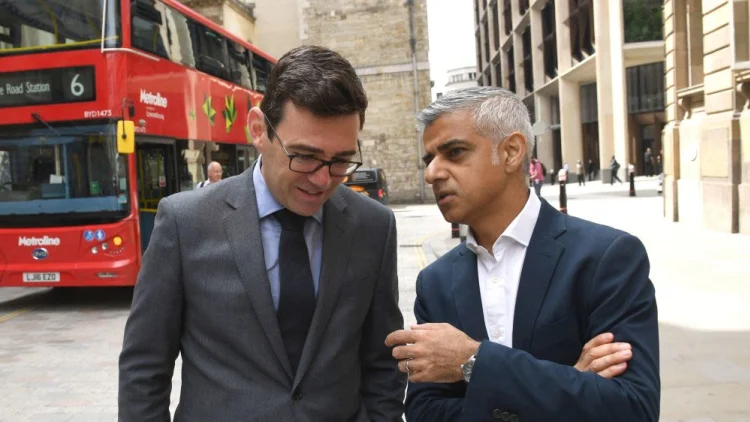
Labour MPs in the capital have called on incoming prime minister Andy Burnham to restore the role of minister for London.
Florence Eshalomi, who was a London Assembly Member before entering the House of Commons, said doing so would help London “work with all the regions to support economic growth”.
Burnham will officially replace Keir Starmer in Downing Street next week after a large majority of Labour MPs nominated the former Greater Manchester mayor to take over. Starmer will answer his final PMQs today (Wednesday) before a formal handover on Monday.
Burnham, who will be the UK’s seventh prime minister in a decade, has pledged to accelerate the devolution of power away from Westminster and Whitehall, “putting it in the hands of the people and places who can use it best, and in so doing creating a new sense of agency, possibility and hope flowing around the country”.
Central to his “Manchesterism” agenda is expanding the Downing Street operation and locating part of it in Manchester. ‘No 10 in the North’ will be the “nerve centre of a rewired Britain”, Burnham, who was elected the MP for Makerfield last month, has said.
The Parliamentary Labour Party broadly supports Burnham’s mission to shift power away from London as it seeks to combat the electoral threats posed by Reform UK and the Greens.
However, there is unease among some Labour MPs that the heavy focus on Manchester risks overlooking other parts of the country facing serious economic and social challenges.
At the same time, Labour MPs in the capital have urged the incoming PM to ensure that a greater focus on the city where he served as mayor does not come at the expense of London and the South East. As well as being crucial to the national economy, the capital has poverty of its own that should not be ignored, they argue.
As part of that push, two Labour MPs in London have told PoliticsHome that Burnham should appoint a minister for London when he assembles his first cabinet.
The role was last held by former Conservative MP Greg Hands in 2024, with Starmer deciding not to carry it forward when he entered power two years ago. The role is traditionally used when the London mayor is of a different political party to the party in government. The former is currently Labour’s Sadiq Khan.
Margaret Mullane, Labour MP for Dagenham and Rainham, said: “London often gets overlooked as it’s the economic hub of the country. But in seats like Dagenham and Rainham there are high levels of deprivation, and there are many other areas in the capital like it.
“When we had a shadow London minister, there was a central voice in Parliament speaking for areas like mine. Bringing this position back can only be a benefit.”
Eshalomi, the Labour MP for Vauxhall and Camberwell Green, added: “Andy is committed to ensuring that London and the rest of the country successfully support the challenge of the new government.
“This will work if we revitalise the important role of the minister for London to work with all the regions to support economic growth.”
Hands, previously a Tory MP in London, was positive about the idea of bringing back the position, arguing that it can “help the communication” between the London mayor and the PM. However, he added: “It would have to be done in a way that Sadiq Khan and the PM thought was helpful; if either are opposed, then they will just ignore that role.”
TheCityUK, which represents the financial services sector, said the incoming Labour government’s wider devolution agenda must include “a lens” focused “on powering up London’s economic strength and reflecting its role in nationwide growth”.
“As the hub for the UK’s world-class international financial centre, London plays a central role in creating jobs, investment and tax revenue. It also connects businesses, talent and capital with regional and national hubs across the UK,” said CEO Miles Celic OBE.
Burnham described London as “the world’s greatest capital city” in a speech late last month.
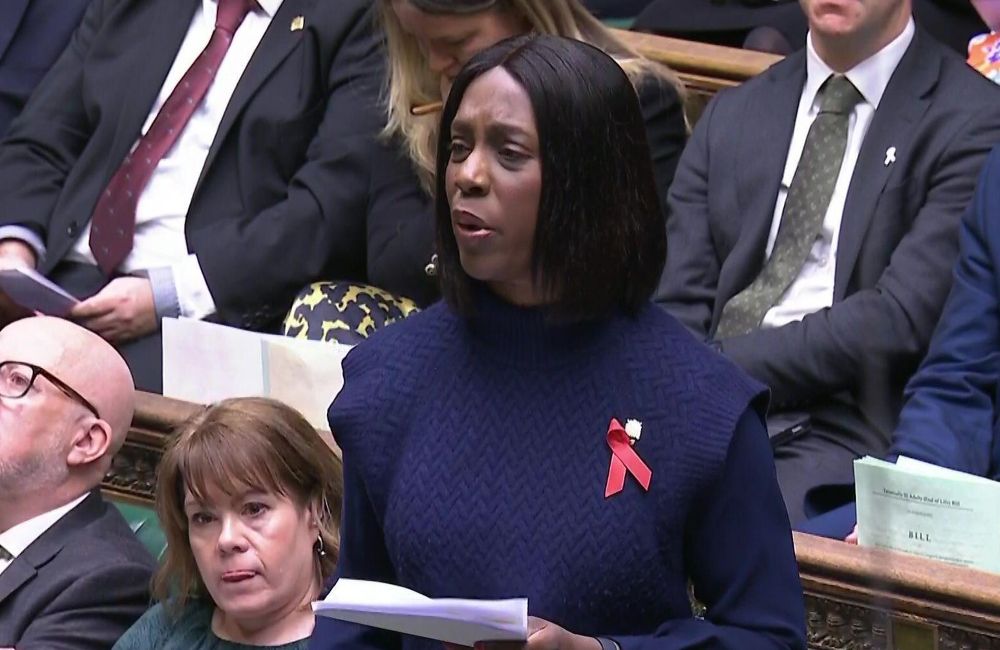
On Monday night, a week before becoming prime minister, Burnham met virtually with Labour MPs to take questions about his plans for power.
According to those present, he sought to reassure Labour backbenchers that his devolution agenda would focus on all parts of the country and hinted at creating a minister for coastal communities.
The Labour Rural Research Group has this week published a report arguing that rural communities have an important role in delivering economic growth, and cautioned Burnham against urban bias in his devolution plans.
Labour MP for Rushcliffe and vice-chair of the group, James Naish, said: “Rural communities shouldn’t be seen as peripheral to national renewal; rather, they are places where growth can be generated, productivity unlocked and national priorities delivered.
“The next phase of Labour in government should, therefore, recognise rural economies not simply as areas requiring support, but as strategic assets capable of driving growth.”
Perran Moon, the Labour MP for the coastal seat of Camborne and Redruth in Cornwall, has issued one of the strongest public warnings to the incoming Burnham administration about the risk of overlooking parts of the country like his.
“We’re at a really delicate moment,” he told PoliticsHome.
“Either we can reignite the north-south debate, or we can have a more sophisticated, nuanced approach to the challenges faced in inner cities vs suburban vs rural vs remote coastal communities.”
He continued: “There are significant challenges and opportunities in each, but they are different. They require separate approaches and in some cases, separate devolution arrangements.
“The concern has to be that the incoming administration has not quite got its collective head around the fact that Labour isn’t an exclusively urban party anymore. In fact, Labour doesn’t get re-elected without our rural and coastal MPs.
“So we need to dial down the regional division and significantly dial up engagement with areas where there may be a preconceived stereotype of what life is really like for those communities.
A Labour MP in a different coastal constituency was more positive about ‘Manchesterism’. They suggested that some of their colleagues were taking the term too literally, telling PoliticsHome it is “just a word for a politics which recognises that growth has to be driven locally, with local and national government making the right interventions to enable it.
“That can apply in areas like mine every bit as much (if not more) as in Manchester.”



The growing gambling black market is a threat policymakers can’t afford to ignore, writes Gareth Snell, Labour and Co-operative MP for Stoke-on-Trent Central
In politics, there is often an assumption that if we see a problem, more regulation is the answer. Sometimes it is.
But good policymaking is not just about intentions. It is about consequences.
As Parliament continues to debate gambling reform, we should ask a simple question: are we making consumers safer, or are we creating conditions that make it easier for illegal operators to thrive?
That question matters even more during a major sporting event like the World Cup.
Millions of people are following the tournament and many will place a bet as part of enjoying the football. The overwhelming majority will do so safely and responsibly. The challenge for policymakers is ensuring they do so in a regulated market, with protections and safeguards in place, rather than drifting towards illegal operators who offer none.
As the MP for Stoke-on-Trent Central, I have spent more time than most thinking about these issues. The largest private employer in my constituency is bet365, which supports around 5,500 jobs. But I am not writing this to plead the industry’s case.
As it happens, I do not gamble much myself, other than perhaps a flutter on the Grand National because it is something I used to do with my grandad and remains a fond memory.
What concerns me is whether we are paying enough attention to the unintended consequences of regulation and taxation, particularly when it comes to the growing black market.
The regulated betting sector in Britain operates under some of the strictest standards in the world. Licensed operators are required to carry out age verification checks, anti-money laundering controls and safer gambling interventions. They contribute to the economy, support jobs and sport, and fund the new industry statutory levy, which is delivering over £100 million each year for research, prevention and treatment services.
Illegal operators do none of those things.
They do not carry out meaningful checks. They do not contribute to sport. They do not pay tax in Britain. Most importantly, they do not care whether a customer is vulnerable, underage or experiencing gambling harm.
Yet many consumers simply do not know the difference.
We all carry smartphones in our pockets. Within a few clicks, anyone can find themselves on an offshore gambling site. It may look legitimate. The odds may look attractive. But the protections that exist in the regulated market often disappear entirely.
That should concern all of us.
And the evidence suggests this is not a marginal problem. Independent analysis by global market intelligence firm WARC found unregulated operators now account for almost half of all gambling advertising spend in Britain. Separate forecasts from H2 Gambling Capital estimate that the amount staked with illegal operators could rise from £17 billion this year to more than £33 billion by 2028.
The direction of travel should worry policymakers. A growing black market means more consumers exposed to unregulated operators, less money flowing into British sport and public services, and fewer opportunities to intervene when people need support.
The challenge for policymakers is not whether gambling should be regulated. It absolutely should.
The real question is whether we are regulating in a way that keeps consumers in the safer, regulated market, or whether we are unintentionally pushing some towards the black market.
That is not a theoretical concern. The Office for Budget Responsibility has already warned about the potential for movement towards unregulated operators. We have seen similar challenges emerge overseas, including in the Netherlands. We should learn from those lessons rather than repeat them.
This is not just a challenge for DCMS. It should be a priority for the Treasury too.
Every pound staked with an illegal operator is a pound beyond UK consumer protections. It is a pound that contributes nothing to British sport and nothing to the public finances.
At a time when Ministers are rightly focused on economic growth, consumer protection and supporting public services, that should matter. The World Cup is a reminder of what is at stake.
The challenge for Government is not simply to regulate more. It is to regulate better.
That means continuing to improve protections, while ensuring consumers remain in the regulated market rather than being pushed towards illegal operators who operate beyond the reach of British law.
If well-intentioned policies end up driving more consumers towards the black market, everybody loses.
Consumers lose. Sport loses. The Treasury loses.
And the criminal operators win.
Gareth Snell is the Labour and Co-operative MP for Stoke-on-Trent Central.
Politics
Sam Collins: Badenoch has taken a brave and important step, lets hope the law doesn’t meddle
Sam Collins is Head of Public Affairs for Popular Conservatism.
Can you build a broad church without solid foundations?
That is one of the questions that the Conservative Party has refused to face for over a decade and that Kemi, with steely resolve, is finally forcing us to answer. As it now stands, only those who are willing to support and defend key planks of party policy – leaving the ECHR and unpicking the most harmful aspects of the Net Zero agenda – will be allowed to stand as Conservative candidates.
This is unquestionably brave from Kemi, and (as cogently argued by Oliver Dean in these pages yesterday) a key step to proving to voters, particularly deeply suspicious Reform switchers, that we as a Party have changed.
This has naturally provoked conniptions among those who disagree with the policy shift. Fortunately, so far at least, open opposition seems to be concentrated among former MPs like David Gauke, Peers like Gavin Barwell and small internal party groups like Prosper UK rather than sitting MPs. It is difficult to know exactly what to say to those opposed to Kemi’s article, as it is hard to discern what their specific opposition is beyond ‘I don’t like this shift in policy’. To cover this lack of meaningful objections, they coat their opposition in the idea that the Party needs to remain a ‘broad church’.
I don’t want to rule out the broad church approach entirely. Differences of opinion are not automatically bad.
Allowing some deviation prevents our MPs becoming brainless automatons doing nothing but repeating central office talking point (like some other parties we could mention). And, after all, almost no one could truthfully say that they have agreed with every single policy in every single area that our party has stood on since the 2010 election. Not least (as per Sir Humphrey) in order to have passionately believed in all the many U-turns and reversals over that period one would have to have been a “stark, staring, raving schizophrenic”! So we must accept some different opinions if we want to gather together the necessary amount of support to form a government.
But unfortunately many in the Party have reached the point where ecumenicalism ceases being a means to the end of building a large enough coalition to bring about robust Conservative change, and becomes an end in and of itself. A political party cannot (or should not) be merely a vehicle for those seeking power, but instead is a way to bring together people of a similar ideological viewpoint in order to maximise the chances of enacting policies that advance those ideological goals.
This cannot stand in an era where the road to a Conservative recovery lies as much in creating the belief that we will actually do what we promise as it does in choosing the right policies to champion. To enact our agenda, we will need a parliamentary party who can – and more importantly will – deliver on the promises being made. Leaving the ECHR, unpicking the most harmful elements of Net Zero and scrapping public sector equality duties would go a long way to achieving key tenets of the PopCon agenda. In the spirit of a broad church and open debate, however, I would say we could yet go further!
It is therefore grimly ironic that one of the areas we have not yet agreed to seriously tackle – the rest of the Equality Act – is one that could stymie Kemi’s whole plan to reshape the Conservative Parliamentary Party.
One hesitates to give Lord Barwell and potentially others ideas (although I have little doubt that enterprising members of the legal profession have already reached out) but recent legal cases make for deeply concerning reading for anyone truly interested in forcing specific policy views on to candidates.
But first, a little history. The Equality Act 2010 was introduced to consolidate previous legislation and case law to protect people with specific characteristics from being discriminated against for those characteristics. These include gender, race and sexual identity. One additional characteristic was “belief” so long as the belief was genuine, beyond mere opinion, weighty, cogent and respectable. This, incidentally, was a holdover from the previous Employment Equality (Religion or Belief) Regulation 2003, showing once again that those claiming that it is easy to unpick these issues are generally failing to see how deeply they are embedded in British legal and political life.
The employment tribunals then got their hands on this protected characteristic and have, perhaps unsurprisingly, taken it well beyond the confines of the original intentions of the authors. A 2010 case (Grainger PLC v Nicholson) ruled that a belief in climate change could be a protected characteristic, meaning that discrimination for views on the topic could lead to significant payouts from employers.
We might be tempted to just roll our eyes and tut at judicial overreach were it not for a much more recent and concerning case. Natalie Bird, former Liberal Democrat parliamentary candidate, won a case in 2024 against the Party after she was unceremoniously deselected due to her gender critical views. We might applaud this as a victory for free speech, one vanishingly rare inside a party that long ceased to be particularly liberal or democratic.
But we should also see the risk of these two cases combined. A belief in climate change is a protected characteristic. The judiciary effectively have told a political party that they have no right to discriminate against candidates due to their opposition to established party policy if it goes against their deeply held philosophical beliefs. It does not take a genius to see the potential for these two decisions to be weaponised against any attempt to ensure ideological selection of candidates.
Kemi has taken a brave and prudent step by dragging the Parliamentary Party onto serious intellectual and ideological foundations. But she and her team must ensure that the unelected judiciary does not have an opportunity to stymie it.
And maybe the Conservatives should widen our planned reappraisal of the Equality Act.
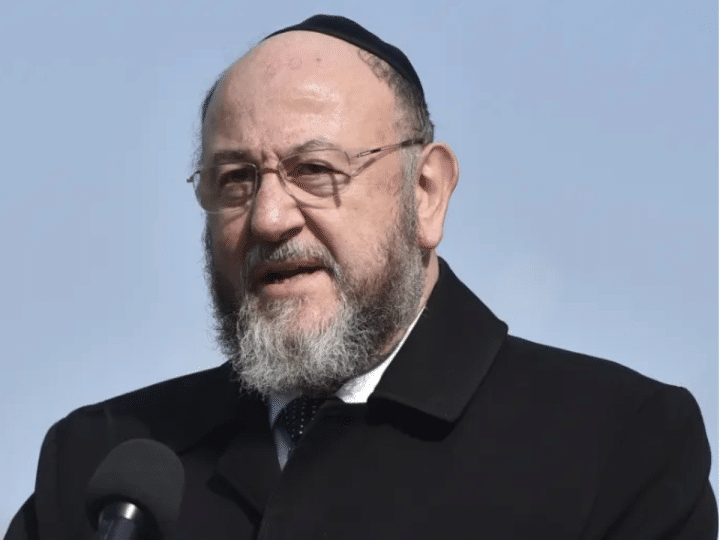
Ephraim Mirvis, the UK’s Israel-fanatic chief rabbi and genocide-denier, has launched an attack on the Church of England. The Anglicans have offended Mirvis and his fellow Israel lobbyists.
The offence? Daring even to “hear” a document about Israel’s Gaza genocide and its colonialism.
‘Kairos II‘, officially titled, A Moment of Truth: Faith in a Time of Genocide, is authored by Palestinian Christians and examines their lived experience.
This powerful new document declares the reality in Palestine as genocide and ethnic cleansing, challenges Western silence, and introduces a theology of resistance linking faith with justice. It exposes internal crises and reshapes the role of Christians in the struggle for liberation.
The document, a sequel to the original 2009 Kairos report, is also clear that Israel is a colonial project — colonialism “built on genocide”.
Ephraim Mirvis and his tantrum
The Anglican church has a sorry history of collusion in that genocidal, colonial project — at least at its upper levels.
Its hounding, on behalf of the Israel lobby, of Anglican clergy who dare to speak out about genocide and apartheid is a scandal.
The shameful collusion of disgraced former Archbishop of Canterbury, Justin Welby, with Mirvis against Jeremy Corbyn in 2019, helped condemn millions to misery under the Boris Johnson government. It also condemned at least 137,000 to death.
Welby’s successor Sarah Mullaly has already scrambled to accommodate the Israel lobby’s hissy fit over the naming of its genocide. An original motion committed the church to “endorsing” Kairos II. The motion was amended simply to recommend Anglicans at all levels to “read” it. But even that is too far for Mirvis.
The Israel lobby demands complete compliance. Any deviation triggers demands for retraction, or else retribution without credit for past collaboration. And Mirvis is outraged that the C of E ignored his call for bishops to reject the Kairos report outright.
So now he is condemning the “shameful” vote even to “engage” with the Kairos report. In an Orwellian statement, he claims the report is full of lies and a “barrier” to to “understanding”, but is clearly most upset that it challenges “the very existence” of the murderous, ethno-supremacist colony.
He said:
This is a document full of falsehood, which openly rejects dialogue, uses extreme rhetoric to challenge the very existence of Israel and objects to existing peace agreements in the region.
Though it poses as a route to understanding, Kairos II in fact functions as an egregious barrier to it, reducing one of the world’s most complex conflicts to a single, warped narrative, which can only harm the cause of peace.
The Board of Deputies jumps in
The ‘Board of Deputies’, which says it exists to further Israel’s interests, of course joined in, and made it clear that Israel is at the centre of its own ‘outrage’.
Senior Masorti rabbi, Jonathan Wittenberg, also made the same “particular” point while spouting other Israeli talking points.
He said:
In particular, the Church of England’s response does not explicitly condemn the definition by Kairos II of Israel as a colonialist entity, or Kairos II’s failure to acknowledge the unbroken historical connection between the Jewish People and the Land of Israel. Nor does it condemn Kairos II’s failure to acknowledge the necessity for a Jewish homeland.
Mullaly still tried to placate the lobby, stating that the church doesn’t necessarily agree with everything in the report because it reads it. But of course, it wasn’t enough. The lobby requires complete endorsement of Israel’s right to expel millions of indigenous Palestinians for its colonial land-grab.
‘Racist’ rabbi
Ephraim Mirvis is lauded and rewarded by the establishment, but is a deeply problematic figure. His political attacks on Corbyn in 2019 and his enabling of the racist right by amplifying the ‘Labour antisemitism’ scam were just the beginning.
Mirvis denies that Israel is committing genocide. He also endorses further land-theft — euphemised as ‘settlement’. And he participates in Israel’s annual racist march, where ‘settlers’ chant “Death to Arabs” and other genocidal slogans. His links to the white-supremacist ‘settler’ right in Israel have led Jewish anti-Zionist activist, Tony Greenstein, to conclude, unequivocally, that Mirvis is a racist.
His outburst against the Anglicans for daring even to read about the suffering of the Palestinians under Israel’s colonisation and genocide does nothing to dispel that. And it does much to exemplify the sense of entitlement of an Israel lobby all too used to getting its own way.
As for the Church of England and its bishops, the overwhelming vote in favour of “reading” Palestinians’ experience doesn’t remove the stain of past collusion or the shame of not endorsing the report because of lobby pressure. It’s a tiny step in the right direction, but it’s time for the C of E and all churches to live up to their founder.
They must loudly condemn Israel’s genocide and UK government collaboration, and to strengthen the global humanitarian, anti-genocide movement.
Featured image via Hannah Mckay/ EPA
By Skwawkbox
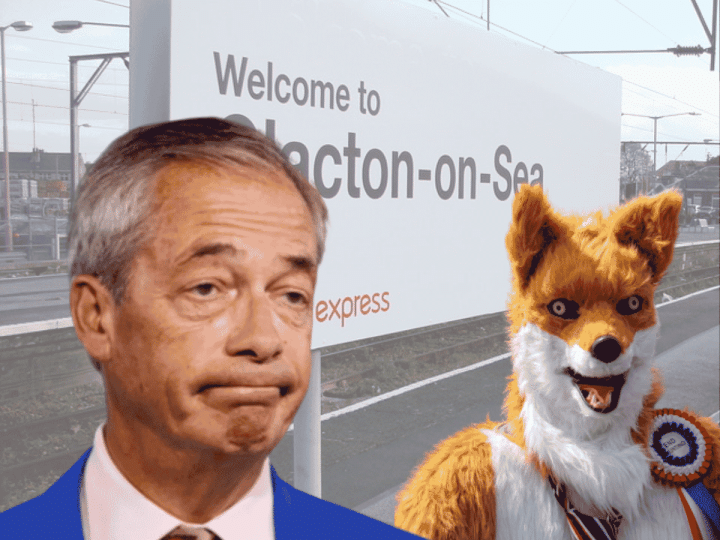
The upcoming Clacton by-election on Thursday 13 August 2026 is somewhat of a circus. But that circus was meant to be a direct battleground for animal rights.
After Reform UK leader and human-earthworm-lookalike Nigel Farage resigned to trigger a vanity vote, most major parties decided to boycott the contest. Yet in doing this, they have opened the ring to a chaotic wave of novelty candidates. This includes a man dressed as a fish finger, and possibly the most laughable of them all, Laurence Fox.
Wanting to protect the integrity of British wildlife campaigning from becoming a political punchline, Protect the Wild founder Rob Pownall has officially rescinded his bid to stand.
Targeting the pro-hunting establishment
Pownall is a fearless campaigner and has dedicated his life to protecting animals. He founded Keep the Ban at the tender age of 16 to fight fox hunting. This later evolved into Protect the Wild – a powerhouse of animal protection. Rob has since used creative, eye-catching campaigns to reach millions of people.
He’s previously stood for Scottish parliament dressed as a gannet to campaign against the massacre of thousands of British seabirds. In the Makerfield by-election, he stood wearing a full fox suit to call attention to the trail hunting ban. And this time, Pownall was ready to run in Clacton to confront Farage directly over his vocal support for blood sports.
However, as the final candidate list emerged, it became even more glaringly obvious that the by-election was nothing more than a political farce. We all love Count Binface, and wish him the best. But when he was going to be sharing the stage with a literal bin, a fish finger and Laurence Fox, Pownall has quickly come to realise staying in the race is actively damaging the serious nature of his cause.
'My job is to demonstrate that British democracy is wonderful and unique in the entire Cosmos'
Count Binface told #BBCBreakfast why he plans to stand against Nigel Farage in the Clacton by-election – triggered by the resignation of the Reform UK leader who then plans to re-fight… pic.twitter.com/3o3RNSrirk — BBC Breakfast (@BBCBreakfast) July 8, 2026
Not playing the performer
In a statement, Pownall has laid bare the seriousness of the situation:
Whatever chance there was of this being taken seriously has now gone… The more time that’s passed, the more this has looked less like a by-election and more like a circus, with people using Farage’s seat as a stage for their own attention, career or brand.
For Pownall, protecting animals is more than a punchline. He is refusing to let his campaign get swept up in a crappy media circus. Why do it, when it only serves to feed into Farage’s theatrical vanity project? Pownall added:
Being lumped in on a stage alongside a line-up of people treating this as a punchline isn’t the platform we set out to find. And I don’t think it’s the one that best serves the animals we’re trying to protect… Farage can be a ringleader of his new circus. We’re not here to be one of his performers.
The Makerfield and Edinburgh campaigns took place within serious, contested elections. Clacton, on the other hand, has been entirely abandoned by the political establishment. And let’s be honest, who the hell wants to stand next to Laurence Fox on a stage? Urgh.
Exposing the hunter-in-chief
Despite withdrawing, Protect the Wild has out-foxed them all. In the 24 hours leading up to Pownall’s decision, the campaign secured national front-page coverage. And in doing so, they have exposed Farage’s real record on blood sports. The Telegraph ran a piece smashing Farage, detailing his defence of hunting.
Pownall calls this a massive win:
That’s arguably the best coverage this campaign could have hoped for, achieving without ever having to stand on a stage at all… We set out to challenge Farage’s record on animals, and we have done exactly that.
The circus seems to have lost its fox – well, it’s only notable one. The Laurence one doesn’t count. But the ringleader remains, surrounded by his fish finger and his bin.
But the real, serious fight to protect British wildlife continues on the ground. And that is where the voices of vulnerable animals will never be treated as a joke.
Featured images via Protect The Wild
By Antifabot
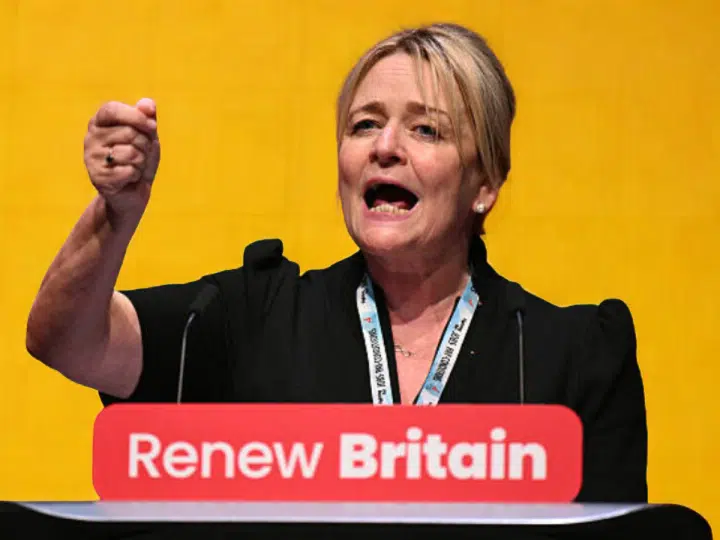

Unite general secretary Sharon Graham, who is trying to win re-election this summer, faces yet more alleged scandal. She has been accused by union insiders of collaborating with right-wing, friend-of-Israel MP Wes Streeting to write an attack piece on Ed Miliband.
The plan was to “boost” right-winger Streeting’s prospects under incoming PM Andy Burnham.
Hatchet job
Miliband was tipped to become chancellor when Burnham takes over from lame duck Keir Starmer. However, Starmer’s team, which includes the same people who ran Starmer, is now said to have ‘blocked‘ the appointment.
The ‘Reunite the union’ page, run by figures close to the left-wing resistance inside Unite, wrote:
Unite reps are demanding answers from Sharon Graham as accusations surface claiming Graham has “colluded” with Wes Streeting in order to support his jockeying for position in the incoming Burnham government.
Reunite understands from multiple sources, both inside and beyond the union, that Wes Streeting’s team have openly claimed to have worked with Graham to write her recent attack lines deployed in The Times and elsewhere, in which Graham called Ed Miliband “a noose around the neck” of job creation.
The intention of this hit piece was to dissuade incoming Prime Minster Andy Burnham from making Milliband Chancellor. In doing so this bolstered the position of Wes Streeting.
Unite was contacted for comment about the allegations, but did not respond. The undenied allegations are ironic. Graham won election in 2021 on a pledge to disengage Unite from Westminster politics, as ‘Reunite’ elaborates:
Sharon Graham stood in 2021 on a promise of no longer playing Westminster games with Labour factions. An intervention of this sort would put Unite squarely in the middle of a political power play of the Labour Right.
It is well known within Unite that all political contact with Ministers and senior government figures is conducted through the General Secretary’s office. This makes Graham’s political interventions completely unaccountable to members, with scant information reported to the Executive Council after the event. This has led to a wild veering of our union’s political approach, from authorising ‘secret talks’ with Reform in Birmingham to now allegedly being used by the Labour Right for Westminster games.
Unite reps are demanding answers.
Graham must explain to members in our health sector what, if any, contact her and her team have had with Streeting and his people.
A senior Unite NHS rep told the site:
I’m outraged that Sharon appears to be backing Wes Streeting or has allowed our union to be used by his team for their own manoeuvring. Wes Streeting has been no friend of the NHS and should have no place in the leadership of the Labour party.
As health secretary, Streeting was the target of NHS strikes, notably NHS doctors. He put together a ‘slash and burn’ plan of NHS cuts and closures, appointing notorious health privatisers to oversee it. He is also an advocate of the involvement of hated spy-and-kill firm Palantir in the NHS.
According to ‘Reunite’, some of Unite’s biggest branches have already begun passing motions condemning Graham’s collaboration with one of the Labour right’s most notorious figures. The condemnation comes on top of a flood of outrage among members, officers and activists at Graham’s conduct since she took over the union.
Challenger
Graham faces a strong challenge to her re-election bid from Unite’s former international director Simon Dubbins. Dubbins is a consistent supporter of the Palestinians and opponent of Unite’s disastrous disengagement from politics under Graham.
During the nominations phase of the election, Dubbins gained huge wins in big Unite sectors Graham would previously have considered sewn up tightly. These include defence, air travel and construction. Dubbins is also set to win Unite’s ‘Community’ section — which Graham had planned to wind down if she wins a second term.
Dubbins also has standing among Unite’s anti-genocide activists. He refused Graham’s order to cancel a pro-Palestine fringe at Labour’s conference. Graham then suspended him.
During nominations, Graham hid from union branches and declined to debate Dubbins at any hustings event, angering many, including allies, by sending weak proxies instead. Last week, Dubbins publicly challenged Graham to stop hiding and face him in an open debate in front of members. So far she has not responded, let alone taken up the challenge.
Unite’s Anti-union union boss
Outrage among members and union activists toward Graham is widespread. Publicly, she has been almost invisible on the issue of Palestine and Israel’s genocide. She has, though, been highly visible advocating for a bigger UK arms industry — but still lost the defence sector to Dubbins.
Behind the scenes, meanwhile, she has been accused by disgusted members of blocking activists from supporting the anti-genocide and climate movements on behalf of Unite. Graham has also held ‘secret’ talks with far-right Reform. Her lack of political engagement and education has seen support for the far-right mushroom in the union.
Despite running a union, Graham has been accused of using appalling, anti-union tactics against workers employed by Unite, leading to repeated strikes. In many cases, these tactics have been seen as Unite’s attempts to protect her husband, Jack Clarke.
Soon after her accession in 2021, Graham created a new Bargaining and Disputes Support Unit (BDSU). Outside of the union’s usual procedures, Clarke was appointed to run it despite being on a final warning for bullying and misogyny. Graham’s faction has staged counter-demonstrations against workers striking against Clarke and attacked their union reps.
Unite’s destruction of evidence against husband Clarke
Explosively, Unite’s lawyers admitted to Skwawkbox that the union had destroyed evidence that workers had gathered against him. This did not stop further complaints and strike action from workers in his new fiefdom, with almost all the women working under him quitting.
These and other issues have seen a flow of Graham’s former allies coming out in support of Dubbins, including some of her previously-closest supporters. The Community section’s long-time chair has also spoken out strongly, asking the section’s members to make sure to vote for Dubbins.
Against this backdrop and with voting now open in the election, the Streeting allegations will be a further blow to Graham’s hopes of clinging onto a position that many have accused her of abusing.
Featured image via the Canary
By Skwawkbox


A court has convicted the head of a genocidal UAE-backed Sudanese militia in absentia. Mohamed Hamdan Dagalo, known as Hemedti, was found guilty on multiple counts of war crimes, crimes against humanity and genocide.
Sudanese RSF verdict
Dagalo leads the Rapid Support Forces (RSF). RSF’s main backer in the three-year war with the Sudanese state is the UAE — a key UK ally.
The Sudan Tribune reported on 12 July:
A Sudanese counter-terrorism court on Sunday sentenced Rapid Support Forces (RSF) commander Mohamed Hamdan Dagalo, known as Hemetti [SIC], to death in absentia along with his two brothers and 13 others over the assassination of a regional governor and wartime atrocities.
The 16 defendants were convicted under Sudan’s criminal code for crimes against humanity, genocide, war crimes against individuals, destruction of public property, and using prohibited methods of warfare.
The court ordered the confiscation of all RSF assets in favour of the Sudanese government and instructed the state to request Interpol notices to secure the extradition of the convicted individuals.
The charges centred on several atrocities including the genocidal siege of el-Geneina in 2023. Middle East Eye (MEE) reported:
Dagalo was convicted of co-organising the siege of el-Geneina, the civilian displacement, and the genocide of the Masalit.
Sudan’s forgotten war
With gold interests and regional influence at stake, numerous foreign actors, including the UK, have caused the war to fester through active participation and/or outright passivity. Israel, too, is a player in the war.
The war in Sudan is theoretically between the Arab-majority RSF and the Sudanese government. But foreign states pursuing their own interests are backing the combatants. Turkey, Egypt and many more countries are pursuing their own interests in Sudan too.
The RSF has killed Sudanese civilians in vast numbers. Some estimates put the death toll at 150,000 people have died, and more than 10 million civilians have been displaced by fighting.
The judge made clear there was no way out for those convicted:
These international crimes are not subject to any statute of limitations and cannot be subject to political pardons under Sudan’s international obligations.
While much of the focus has been on the role of the UAE in facilitating the killing, the Brits have been deeply involved too. As the Canary has reported repeatedly:
British military components have shown up on the battlefield in RSF hands. The UK is a major arms supplier to UAE.
Sources have also claimed the UK downgraded the humanitarian situation in Sudan to avoid “pissing off the Emiratis”.
The ruling comes weeks after the first war crimes claim had been lodged against RSF in Kenya. Twelve victims backed by a Swiss legal NGO urged Kenya’s chief of prosecution to pursue the case. Associated Press (AP) reported on 9 June:
It is the first attempt to prosecute members of the Rapid Support Forces, or RSF, the paramilitary group fighting against the Sudanese military for over three years, outside Sudan.
The group, which has been accused by rights organizations of committing atrocities amounting to war crimes and crimes against humanity, has ties with Kenya’s government.
The court’s finding is partial justice at best. Those named are still at large. Someone must turn RSF’s taps off as far as arms and material support are concerned.
Featured image via the Canary
By Joe Glenton

WA truckers, farmers raise concern over proposed trailer safety device

Czech Republic orders ISPs to block Polymarket within 15 days

SW Florida Special Olympians win medals at 2026 USA Games in Minnesota


-

 Fashion6 days ago
Loro Piana Fall 2026 Enters Houston’s Art Scene
-

 Fashion4 days ago
Weekend Open Thread: Nutriplenish Leave-In Conditioner
-
 Sports6 days ago
2026 Genesis Scottish Open Thursday TV coverage: Round 1
-

 Sports5 days ago
Super Eagles star Moses Simon opens up on Liverpool transfer regret
-

 Tech6 days ago
Character.AI enters the microdrama arena with its own productions, but there’s a twist
-

 News Videos13 hours ago
XRP BOMBSHELL… XRP OMBOARDED FOR TRANSACTIONS!!!
-

 Tech1 day ago
Get Your ESP32 Sunny Side Up With This Solar Dev Board
-

 Tech13 hours ago
Dark Secrets Emerge When Jailbreaking LLMs
-

 News Videos6 days ago
Crypto Just Entered Its Most Important 6-Month Candle (Could Decide Everything!)
-
 NewsBeat6 days ago
Major update after Huntingdon train attack as man enters plea
-

 News Videos2 days ago
how to make coin bank box with cardboard #scienceproject #money #diy #shorts
-
 Sports7 days ago
39-year-old Djokovic wins five-hour thriller to enter Wimbledon semis | Other Sports News
-

 Tech6 days ago
Level Infinite Launches Gangstar Mirage City in India with Pre-Registrations
-
 Tech2 days ago
Cloudflare Precursor Watches Your Mouse and Keyboard To Decide If You Are Human
-

 Tech6 days ago
Entra passkey enrollment vishing targets Microsoft 365 users
-
 Crypto World6 days ago
DeFi Dashboard Zapper to Shut Down After 7 Years
-

 Crypto World6 days ago
Mark Cuban-Backed DeFi Dashboard Zapper Shuts Down After 7 Years
-
 Tech6 days ago
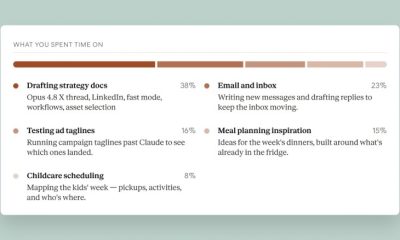
Claude’s New Reflect Dashboard Wants To Help You Log Off Of Claude
-

 Crypto World6 days ago
Fed minutes June 2026: officials split on rates
-
 Tech7 days ago
Former OpenAI exec Kevin Weil is now on the board of Stoke Space
You must be logged in to post a comment Login