Connect with us

Business

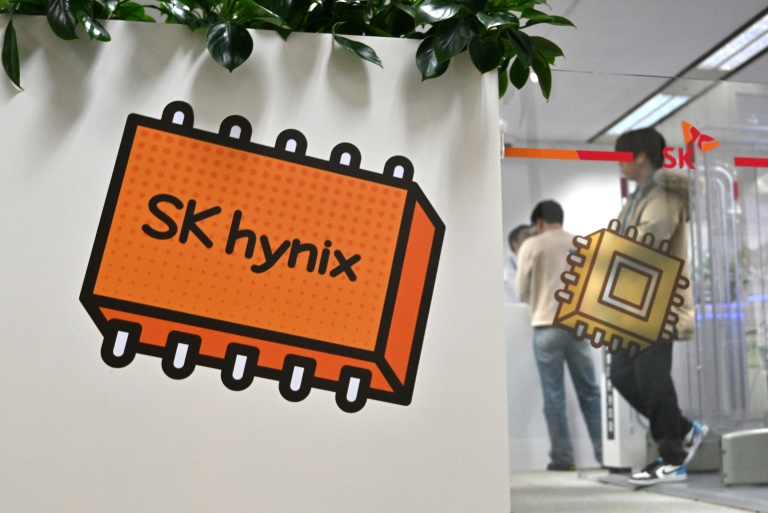
SK Hynix ADR Surges 8% as AI Memory Demand and Seoul Chip Rally Fuel Investor Buying

Published

on

South Korea is home to the world's largest memory chip maker Samsung, and largest memory chip supplier SK Hynix

NEW YORK — Shares of SK Hynix Inc. American depositary receipts rose sharply on Wednesday, climbing 8.02% to $153.02 as of late morning Eastern time, extending a rebound in the South Korean memory chipmaker amid sustained optimism over artificial intelligence-related demand.

The Nasdaq-listed ADRs, trading under the ticker SKHY, gained $11.37 on the session. The move tracked strength in the company’s primary Seoul-listed shares and broader gains across South Korean semiconductor stocks that helped lift the KOSPI index more than 3% to close near 6,579.

SK Hynix is a leading supplier of high-bandwidth memory chips critical to advanced AI processors. Its products have benefited from heavy spending by technology companies building data centers and AI infrastructure. The ADRs began trading on Nasdaq in July after the company raised approximately $26.5 billion in what ranked as the largest first-time U.S. share sale by a foreign company.

The offering priced the ADRs at $149 each. Each receipt represents one-tenth of a common share traded in Seoul. Demand for the sale was reported as more than seven times oversubscribed. Proceeds are earmarked for capacity expansion and equipment purchases as the company seeks to meet elevated orders for advanced memory.

Advertisement

In South Korea on Wednesday, SK Hynix shares advanced more than 5% while rival Samsung Electronics rose more than 6%. Foreign and institutional buyers provided support, according to market reports, with the session including a brief program trading halt after rapid gains. Analysts cited solid semiconductor export data and follow-through buying after recent strength in the U.S.-listed ADRs.

The company reported record second-quarter results at the end of July. Revenue reached 79.32 trillion won, up 257% from a year earlier. Operating profit climbed 557% to 60.54 trillion won, producing an operating margin of 76%. Net profit came in at 93.92 trillion won. Management attributed the performance to higher prices and expanded sales of high-value products, including high-bandwidth memory, AI server DRAM and enterprise solid-state drives.

SK Hynix said it began mass shipments of its HBM4 product in the second quarter and planned to increase production in the second half of the year. Samples of the next-generation HBM4E have been delivered to customers, with volume production targeted for 2027. The company has secured long-term supply agreements with around 10 major customers and continues discussions on additional multiyear contracts.

Capital spending for 2026 is projected in the high-40-trillion-won range as the company expands production capacity. Cash and cash equivalents stood at 88 trillion won at the end of the second quarter. Management has previously indicated plans to enhance shareholder returns through a combination of dividends, buybacks and share cancellations, though specific details of a broader program remain pending.

Advertisement

At the July listing ceremony, SK Hynix Chief Executive Kwak Noh-Jung described the day as historic for the company and stated that high-bandwidth memory sits at the core of the AI revolution. The firm has repeatedly emphasized that AI infrastructure investment and resulting memory demand are expected to remain robust beyond the current year, with supply constraints limiting the risk of near-term oversupply.

Brokerages initiated or resumed coverage of the ADRs after the post-listing quiet period expired in early August, issuing predominantly positive ratings. Price targets from some firms ranged as high as $320, reflecting expectations that the U.S. listing could support a valuation re-rating closer to global peers and longer-term visibility tied to AI end markets.

The stock has experienced significant volatility since the U.S. debut. Early trading featured sharp swings, with periods of premium for the ADRs relative to the Seoul shares driven by restrictions on convertibility and differences in investor bases. Broader semiconductor sector fluctuations, including profit-taking after strong runs and shifting expectations around the duration of AI spending, have also influenced prices.

SK Hynix operates as the world’s second-largest memory chipmaker by many measures and holds a leading position in the high-bandwidth memory segment used in Nvidia and other AI accelerators. Industry participants have described ongoing supply tightness for advanced memory, with fulfillment rates constrained relative to demand and capacity additions taking time to come online.

Advertisement

Market participants continue to weigh the company’s earnings power against elevated capital expenditure plans and the competitive landscape, including advances by peers in next-generation products. Samsung has reported progress on its own HBM yields in the push to narrow gaps in the high-end segment.

Wednesday’s gains occurred against a mixed backdrop in U.S. equity markets, where major indexes closed modestly lower the prior session. The focus for SK Hynix remains on execution of its expansion plans, delivery of higher volumes of advanced memory, and any forthcoming details on capital returns to shareholders.

Trading volumes in the ADRs have been elevated at times since the listing as global investors gained more direct access to the stock. The company’s market value has fluctuated with the AI narrative, having previously exceeded $1 trillion on the strength of its Seoul listing before the secondary offering.

As of the latest available data, SK Hynix continues to highlight structural demand growth linked to AI adoption across servers and related applications. Both DRAM and NAND pricing trends supported the strong second-quarter results, according to the company, with high-value product mix contributing to peak margins.

Advertisement

Investors will monitor upcoming quarterly updates, progress on HBM4 ramp-up, and any announcements regarding the shareholder return framework for further direction. For now, the combination of robust AI memory fundamentals and coordinated buying across Asian and U.S. markets has supported the latest advance in the ADRs.

Continue Reading
Click to comment

You must be logged in to post a comment Login

Leave a Reply

Business

Engine parts smashed Ryanair window that man’s head was sucked out of, report says

Published

on

Aerial image of a building with orange flames ripping through the roof.

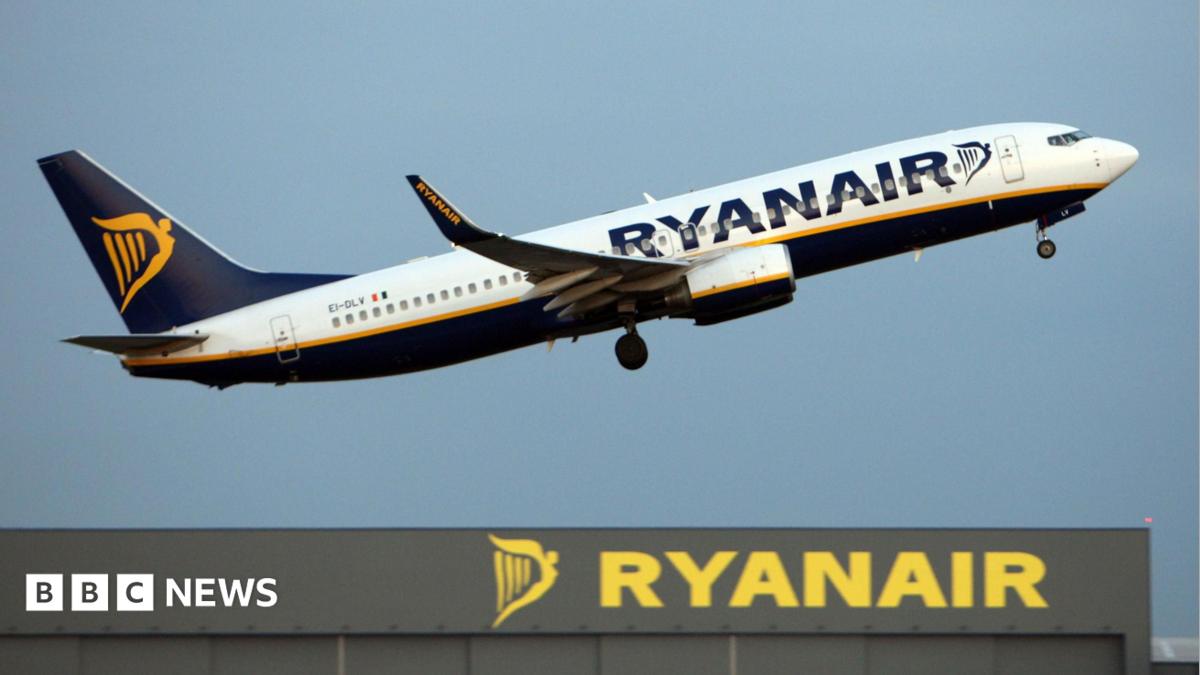
Broken engine fragments smashed a cabin window of a Ryanair plane causing a man’s head and right shoulder to be sucked into the hole last month, US investigators have said.

The National Transportation Safety Board (NTSB) wrote in a preliminary report that this happened after an engine fan blade broke shortly after takeoff on the 10 July flight from Greece to Germany.

Serbian national Ljubisa Karović’s head and right shoulder were sucked out of the plane’s window, leaving him “seriously injured and in shock”.

His wife Svetlana Grković Maksimović later told BBC Serbia that she and two other passengers held onto his legs for several minutes.

Advertisement

The NTSB said the flight from Thessaloniki to Memmingen “experienced a No. 2 (right) engine fan-blade-out (FBO) failure during climb out”.

“The crew elected to return to SKG [Thessaloniki International Airport] where they made an uneventful landing.”

The NTSB was “delegated the investigation in full” by the Greek authorities in the days following the incident.

It also detailed a timeline of events given by the flight crew, who said they received a “high vibration” engine alert during the climb.

Advertisement

In response, they reduced the engine power and carried out a series of checks. When the vibrations stopped, the crew continued to climb on autopilot, the report said.

But the engine vibrations then increased and the crew heard a loud bang, prompting them to declare an emergency and begin their descent.

Flight attendants reported hearing and feeling the vibrations, and seeing a small amount of smoke before the oxygen masks were deployed.

One flight attendant said they then noticed passengers calling for help after a passenger became “partially lodged in a damaged cabin window”, with the entire window missing.

Advertisement

The engine had undergone ultrasonic inspections in May this year with no findings of fault, the report stated.

Ryanair boss Michael O’Leary earlier suggested that the incident may have been caused by “foreign object damage” to an engine.

The aircraft was operated by Ryanair’s subsidiary Malta Air.

Advertisement
Continue Reading

Business

Terry de Havilland US expansion: Macy’s, Nordstrom deals

Published

on

Terry de Havilland US expansion: Macy's, Nordstrom deals

British footwear brand Terry de Havilland is planning a US retail launch with Macy’s, Bloomingdale’s and Nordstrom later this year, according to Darren Spurling, who owns the business.

Spurling, 60, is the nephew of the late designer Terry de Havilland and runs the Newcastle-based company with his son Josh. The business has ten employees, designs in Britain and manufactures its shoes in Spain.

The move follows a rise in US online sales after recent sightings of actresses including Millie Bobby Brown and Margot Robbie wearing the brand’s shoes.

The label was founded by Terrence Higgins, who began designing shoes in 1972 and opened his King’s Road shop, Cobblers to the World, the same year. He took his trading name from a Paris phone book. “He didn’t think Higgins was a very good name for shoes,” Spurling said, “it didn’t seem exotic.”

The brand’s platform heels were worn in the 1970s by David Bowie and by customers Spurling listed as “Lulu, Cher, The Rolling Stones, Elton John”. Its Margaux wedge, named after Margaux Hemingway, has been in the collection since 1973, and the Deco heel, a five-inch sandal with metallic snakeskin trim, has been displayed at the V&A. The museum’s collection also includes a pair of his 1972 snakeskin platform shoes, given by the milliner David Shilling.

Advertisement

By the late 1990s the designer had moved away from the mainstream and was making bespoke shoes for customers in Camden Market. He returned to wider attention after Miu Miu, the label owned by Prada, produced shoes Spurling described as “literally exact copies, same materials, same designs”.

De Havilland pursued Prada through the courts over trademark infringement, arguing that his products were classed as art. The case did not progress far, but the publicity helped him secure licensing deals in America and Britain. Under Intellectual Property Office rules, a UK registered design must be renewed every five years and lasts a maximum of 25 years.

Spurling, who had previously sold his family’s chain of London sports shops to Blacks Leisure Group and served as managing director of surfwear brand O’Neill’s, reconnected with his uncle at a family party and began advising him on the licensing arrangements. “I helped him to buy out the licensing so that he could get the brand back, which we did in 2010,” he said. Spurling bought the company outright in 2015, when the designer was nearly 80. De Havilland died in 2019.

The pandemic followed. “In all honesty, we thought we were buggered,” Spurling said, given that the company specialised in occasion shoes. The business moved to a direct to consumer model and, in 2022, went “from nothing to doing over a million pounds” online. Spurling said that boom has since ended as consumers have become “more considered” and “more conscious” about what they buy.

Advertisement

He said he keeps the team small and outsources where possible because “the cost of hiring is an issue … the best way [is] to be adaptable”. The company has reintroduced 1970s designs and added matching bags and trainers, while remaining “very much focused on quality, on craftsmanship, on being slow fashion”.

Other British brands have moved in both directions on the US market. Wine merchant Berry Bros. & Rudd is opening its first US store in Washington, while athleisure label Tala suspended a planned £5 million US investment after a change in American tariff policy.

Spurling said the brand’s history gives it “real strong credibility”, adding: “what we need to do is make it as relevant as possible … and that’s a challenge.”


Amy Ingham

Amy Ingham

Amy Ingham is a reporter at Business Matters, covering UK business news with a focus on breaking news, business policy, late payments and insolvency. She joined the magazine in 2026 after completing the NCTJ Diploma in Journalism at Harlow College’s journalism school. Her recent reporting includes British Steel’s nationalisation and its impact on SME suppliers, the decline in late payments by large firms, and Insolvency Service director disqualifications. Reach her at aingham@cbmeg.co.uk.

Advertisement

Continue Reading

Business

Selena Gomez sued for alleged fraud over mental health company

Published

on

Aerial image of a building with orange flames ripping through the roof.

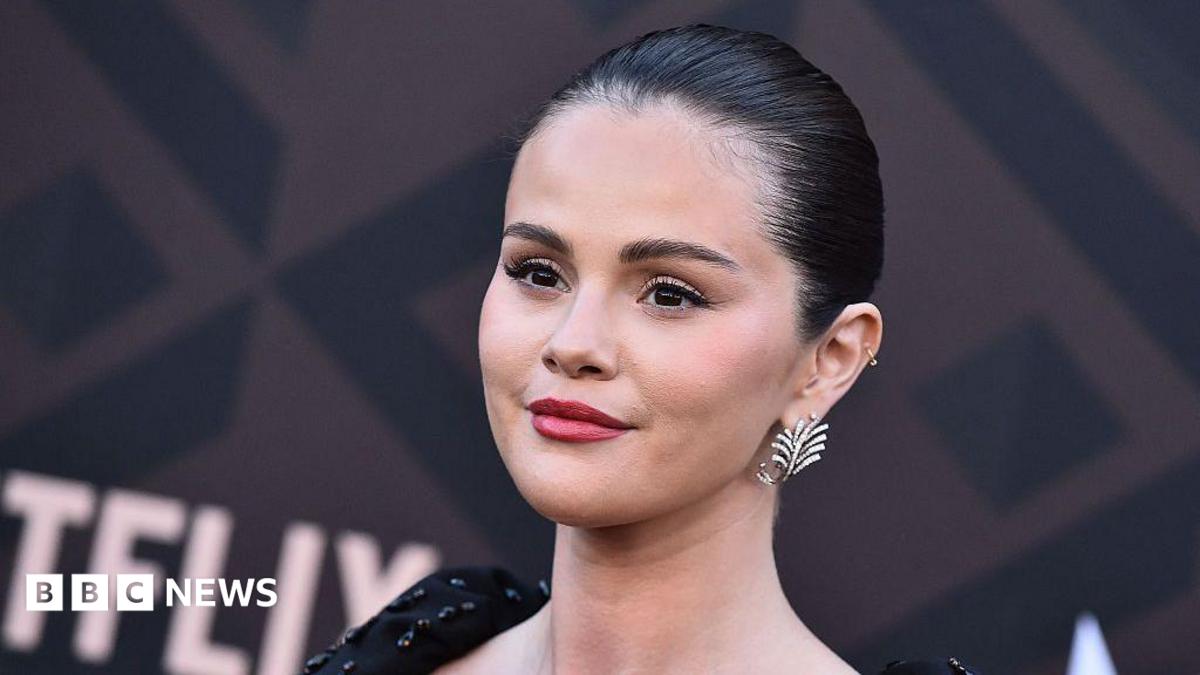
Hollywood actress and singer Selena Gomez is being sued by five investors who backed Wondermind Global, a mental health business she founded with her mother.

Shareholders are claiming the pop star failed to fulfil promises that she would be “actively building” the brand, saying her “abject dereliction of her duties” has left the company in a “state of financial calamity”.

The lawsuit seeks to recover around $1.2m (£890,000) it claims was invested as well as costs and damages.

The BBC has contacted Wondermind and Gomez’s representatives for comment.

Advertisement

Gomez, who rose to fame as a child actor before moving into pop music, set up the mental health platform five years ago with her mother Mandy Teefey and businesswoman Daniella Pierson. It came after Gomez publicly discussed her own mental health struggles, including with bipolar disorder.

The 34-year-old is one of the most-followed women in the world on social media, with over 500 million followers, and an estimated net worth of nearly $1bn. She also founded cosmetics company Rare Beauty, in 2020, which is closely associated with her name and image.

Wondermind aimed to make mental health-related content more accessible through a digital platform, recruiting investors to back the venture.

But the lawsuit claims Wondermind’s founders “falsely represented” their position by suggesting “a full slate” of ad deals, celebrity cover stories, an app and other initiatives were already underway and promising that Gomez would take an active role as its head of marketing.

Advertisement

“Gomez purported ‌to ⁠sign a contract obligating her to perform and then ignored it,” the lawsuit claims.

Gomez is currently listed as a co-founder on Wonderminds website, below her mother who is now in the chief executive role, following Pierson’s departure from the company.

The individuals behind the suit, based in New York and Florida, include Brent Saunders, chief executive of eye-health company Bausch + Lomb.

The claimants’ lawsuit alleges Wondermind failed to meet “even its most basic obligations, such as timely paying its employees and vendors”.

Advertisement

Promises including Wondermind’s partnerships and app never materialised, according to the claim.

“For three years, while the company quietly collapsed around them, not one of its founders, officers, or directors said a word to the investors whose money was funding the collapse,” the complaint states.

They said they were unaware of the company’s difficulties until an investigative news story by the online magazine, The Cut, surfaced in September 2025.

That report made allegations about Wondermind’s finances and issues with its management, according to the lawsuit.

Advertisement

The article showed that “Wondermind had no plan for its future – much less a plan for achieving a multi-billion dollar valuation,” the lawsuit claims.

Continue Reading

Business

Lowe’s Companies, Inc. (LOW) Q1 2026 Earnings Call Transcript

Published

on

OneWater Marine Inc. (ONEW) Q1 2026 Earnings Call Transcript