

Business
Soccer-Iran’s Taremi criticises logistical issues, suggests side not welcome in US





Shoppers weighing their next smartphone purchase this summer face an unusual comparison: one device that just went on sale and another that Apple has not yet announced. The Samsung Galaxy Z Fold 8 debuted this week at Galaxy Unpacked in London, while Apple’s iPhone 18 Pro Max remains a rumored product expected to arrive in September. Here’s what is confirmed, what is still speculation, and what that means for anyone deciding between the two.
The Galaxy Z Fold 8 is real, priced and dated
Samsung unveiled the Galaxy Z Fold 8 on July 22 alongside two companion foldables, the Galaxy Z Fold 8 Ultra and the Galaxy Z Flip 8, marking the first time the company has launched three book-style and clamshell foldables at a single event. The Z Fold 8 introduces a new “wide” form factor, shorter and wider than previous Fold models, designed to feel more like a standard phone when closed while opening into a broader, more landscape-oriented display for multitasking and media.
Pricing starts at $1,899.99 for the Z Fold 8, while the more traditional tall-format Z Fold 8 Ultra — the direct successor to last year’s Z Fold 7 — starts at $2,099. Samsung says the Fold 8 Ultra measures just 4.1 millimeters thick when unfolded and weighs 215 grams, which the company describes as the thinnest Galaxy Z Fold to date. Both phones opened for preorder the day of the announcement and go on general sale August 5.
Samsung’s newsroom described the Ultra branding as representing the company’s highest tier of performance and user experience within the Galaxy foldable lineup, a designation the company has not previously applied to a Fold-series device.
The iPhone 18 Pro Max exists only in leaks and supply-chain reports
Apple has made no official statements about the iPhone 18 Pro Max. Everything currently circulating — chip details, display size, camera configuration and price — comes from analyst notes, leaked component specifications and supply-chain sourcing rather than confirmed company information. That distinction matters for anyone trying to compare the two devices today: one has a verified price and ship date, and the other does not exist yet as a retail product.
Based on the leaks, the iPhone 18 Pro Max is expected to launch in September alongside the standard iPhone 18 Pro and, notably, Apple’s first foldable phone. Reports suggest Apple is breaking from its usual pattern by launching only its premium lineup this fall — the 18 Pro, 18 Pro Max and the foldable — while pushing the standard iPhone 18 and a budget iPhone 18e to spring 2027. If accurate, that would leave fall 2026 shoppers choosing exclusively among devices starting at $999 or more, with no lower-cost new iPhone available until the following year.
Rumored specifications point to Apple’s next-generation A20 Pro chip built on a 2-nanometer process, a roughly 6.9-inch display, and a triple 48-megapixel rear camera system. Price estimates vary by source, with some pointing to a Pro Max starting price in the $1,199 to $1,399 range, up from the iPhone 17 Pro Max’s $1,199 starting price last year.
A fundamentally different kind of device
The comparison itself blends two very different product categories. The iPhone 18 Pro Max, as rumored, is a conventional slab smartphone built around Apple’s established Pro design language, incremental camera improvements and a faster chip — the kind of yearly refinement Apple has offered across the Pro line for several generations. The Galaxy Z Fold 8, by contrast, is a foldable device built around a large inner display that opens like a small tablet, aimed at buyers who want more screen real estate for multitasking, note-taking or media consumption in a single pocketable device.
That difference means the decision often comes down less to raw specifications and more to how someone plans to use the phone. Buyers who want a familiar phone shape, a mature camera system and Apple’s software ecosystem are typically better served waiting for the iPhone 18 Pro Max. Buyers interested in a larger working canvas, split-screen multitasking or the novelty and utility of a folding display — and who are comfortable paying a premium for it — are the more natural audience for the Z Fold 8 or its pricier Ultra sibling.
Price is not close
Even using the more conservative iPhone 18 Pro Max price estimates, Samsung’s foldables cost significantly more. The Z Fold 8 starts nearly $600 to $700 above the rumored iPhone 18 Pro Max starting price, and the Fold 8 Ultra pushes that gap even further. For buyers primarily driven by cost, that price difference alone may settle the decision before specifications are even considered.
Timing complicates any immediate decision
Because the iPhone 18 Pro Max has not launched, anyone who needs a new phone right now does not yet have the option to buy one. The Galaxy Z Fold 8 is available for preorder immediately and ships in early August, giving Samsung roughly a two-month head start in the market before Apple’s Pro lineup — and its own long-rumored foldable — are expected to arrive in September. That timing gap is notable given that Apple’s rumored foldable iPhone is expected to compete directly with Samsung’s Fold lineup once it ships.
What buyers should do next
For shoppers who want a phone in hand this summer, the Galaxy Z Fold 8 is a known quantity with a confirmed price, release date and hands-on reviews already emerging. For those willing to wait, the iPhone 18 Pro Max remains an open question until Apple holds its expected September event, and any purchasing decision made today based on leaked specifications carries the usual risk that final pricing, camera performance or design details could shift before launch.
Until Apple confirms details, the more accurate framing may not be “iPhone 18 Pro Max versus Galaxy Z Fold 8” but rather a choice between a proven foldable available now and a traditional flagship phone that, as of this week, still exists only in rumor form.

Brazil bars U.S. officials planning to challenge vote integrity – report

Get ahead of the market by subscribing to Seeking Alpha’s Wall Street Week Ahead, a preview of key events scheduled for the coming week. The newsletter keeps you informed of the biggest stories set to make headlines, including upcoming IPOs, investor days, earnings reports, and conference presentations.
Wall Street’s major averages aimed to go higher on Friday as oil prices decreased. Nonetheless, the indexes are on track for another losing week. Oil prices rose above $100 per barrel on Thursday after Houthi rebels reportedly struck two Saudi Arabian oil tankers in the Red Sea. President Donald Trump is looking to resume major military operations in Iran, according to reports. Trump also said China and Russia had assured him they would not supply weapons to Iran.
The next week will be packed with major earnings and key economic data releases. The Fed’s interest rate decision on Wednesday dominates the earnings calendar, followed by the FOMC press conference on Thursday. On Thursday, various other data, including preliminary Q/Q GDP numbers, initial jobless claims data, and PCE price index data are also due to be released. Consumer confidence data for July will be released on Tuesday, while Chicago PMI for the month is due on Friday.
Big tech earnings, including Apple (AAPL), Microsoft (MSFT), and Meta (META) are lined up for the coming week. Other major firms reporting their results next week include Mastercard (MA), Visa (V), Coca-Cola (KO), and Boeing (BA).
_______________________________________________________________
Earnings spotlight: Monday: AstraZeneca (AZN). See the full earnings calendar.
Earnings spotlight: Tuesday: Visa, Coca-Cola, Boeing, Ford (F). See the full earnings calendar.
Earnings spotlight: Wednesday: Microsoft, Meta, P&G (PG), Arm (ARM), Qualcomm (QCOM). See the full earnings calendar.
Earnings spotlight: Thursday: Apple, Amazon (AMZN), Mastercard (MA). See the full earnings calendar.
Earnings spotlight: Friday: AbbVie (ABBV), Chevron (
Gold Royalty: The Cash Flow Catch-Up Supports A Re-Rating
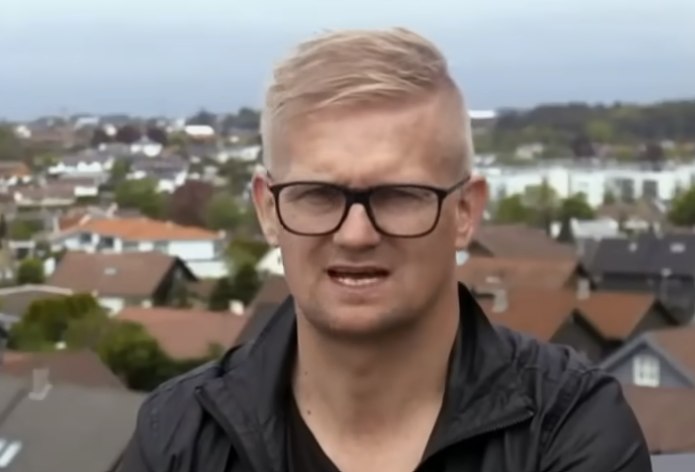
Long before Erling Haaland became one of the most feared strikers in world soccer, his father was building a career of his own in England’s top flight and on the international stage with Norway. As Erling led Norway to its best-ever World Cup finish this month, attention has turned once again to the man who shaped his path: Alfie Haaland, a former Premier League defender whose own playing days quietly set the stage for his son’s rise.
A career built in England’s top division
Alfie Haaland, born Alf-Inge Rasdal Håland on November 23, 1972, in Stavanger, Norway, began his professional career at hometown club Bryne before moving to England in 1993 to join Nottingham Forest. He spent four seasons there before transferring to Leeds United in 1997, where he was part of a side that reached the semifinals of the UEFA Cup and qualified for the Champions League. In 2000, he joined Manchester City, where he made 35 appearances and scored three goals before persistent knee problems forced him into early retirement in 2003, at age 30.
Across his club career in England, Haaland made more than 180 appearances and scored 18 goals, playing primarily as a right-back or defensive and central midfielder. His knee troubles were largely traced to a notorious 2001 tackle by then-Manchester United captain Roy Keane, an incident that became one of the more infamous episodes of that era of Premier League rivalry and ultimately shortened Haaland’s playing days.
Norway’s 1994 World Cup squad
Haaland earned the first of his 34 senior caps for Norway in January 1994, in a friendly against Costa Rica, and went on to represent his country at that year’s World Cup in the United States, appearing in matches against Italy and Mexico. He continued playing for the national team through 2001, though he never scored a goal in international competition. Injury kept him out of Norway’s 1998 World Cup squad, the last time the country had qualified for the tournament before this summer.
Haaland was one of three players on that 1994 World Cup roster whose sons would go on to represent Norway at this year’s tournament, alongside the fathers of teammates Alexander Sørloth and Kristian Thorstvedt — a generational link that added an extra layer of storytelling to Norway’s return to the World Cup stage after a 28-year absence.
Erling wasn’t born until 2000
Erling Haaland was born in July 2000, three years before his father’s playing career ended, meaning the bulk of Alfie’s professional days came before his son was old enough to remember them firsthand. Still, growing up around professional locker rooms and training grounds gave the younger Haaland an early, close-up education in the sport that would eventually make him one of its biggest stars. Alfie has remained closely involved in his son’s career in the years since, often described as a mentor and adviser as Erling rose through Norwegian youth football, a stint at Austrian club Red Bull Salzburg, and stardom first at Borussia Dortmund and then at Manchester City — his father’s former club.
Norway’s historic World Cup run
This summer marked a milestone for the Haaland family and for Norwegian soccer as a whole. Norway advanced to the World Cup quarterfinals for the first time in the country’s history, riding a tournament in which Erling Haaland scored in each of his first four matches and finished with seven goals overall, drawing comparisons to some of the most prolific individual World Cup campaigns in the competition’s history.
Norway’s run ended on July 11 in a 2-1 extra-time loss to England in Miami. Andreas Schjelderup gave Norway the lead in the first half, but Jude Bellingham equalized for England in first-half stoppage time and then scored the winner three minutes into extra time, pouncing on a rebound from a Morgan Rogers shot. Norway had a second-half goal from Torbjørn Heggem controversially disallowed after a video review showed Erling Haaland had fouled England’s Elliot Anderson in the buildup to the corner kick that led to it.
Alfie’s reaction on social media
The elder Haaland did not hide his frustration with the result. Writing on X after the final whistle, he took aim at the officiating, posting, “Well done Bellingham and referee,” a pointed jab suggesting the outcome had been shaped as much by the whistle as by the football played. In a follow-up post, he added that Norway felt “robbed” by the result, while conceding, “Hope England win the WC now.”
The posts quickly circulated among soccer fans and media outlets covering the tournament, adding to a wave of attention on the Haaland family throughout Norway’s tournament run. Erling Haaland himself has often credited his father’s influence not just for his technical development but for his mentality on the field, an attitude that became a talking point throughout Norway’s surprise march to the quarterfinals.
A family legacy renewed
Norway’s quarterfinal appearance closes out a remarkable chapter for a country that had not reached the World Cup since 1998, the tournament Alfie Haaland missed through injury after playing in the 1994 edition. With Erling Haaland just 26 and already established as one of the sport’s most dominant strikers, and with Norway fielding a young core built around him and midfielder Martin Ødegaard, the country’s soccer federation and fans alike are hoping this summer’s breakthrough marks the beginning of a sustained run of tournament appearances rather than a one-off return to the world stage.
For the Haaland family, the tournament offered a full-circle moment: a father who once wore Norway’s colors at a World Cup watching his son do the same, three decades later, on a bigger stage than either could have imagined when Alfie first pulled on the national jersey in 1994.
Available for over a year
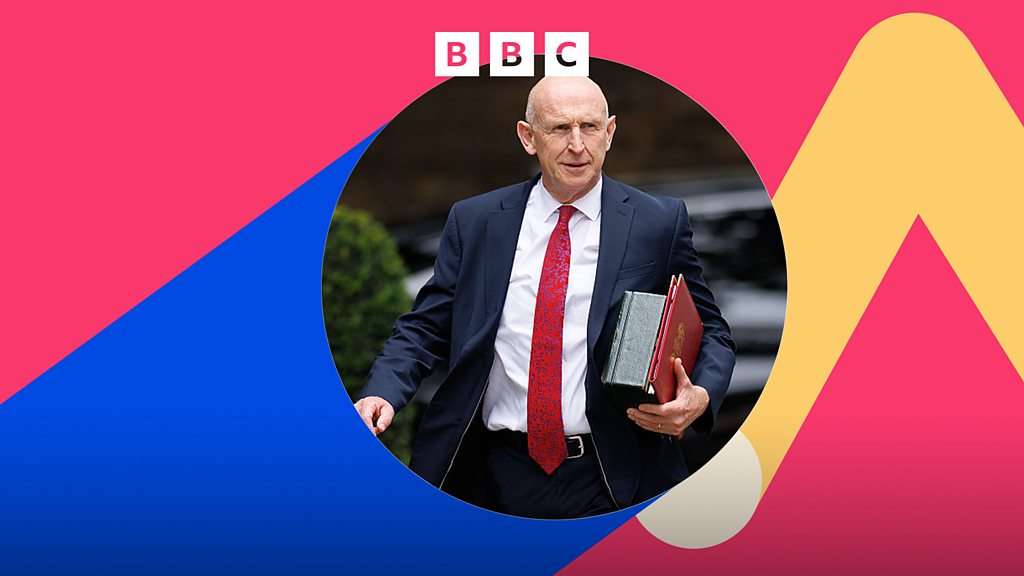
This week has seen a new Prime Minister and a new Chancellor of the Exchequer. As soon as John Healey was appointed the announcements began. First came the announcement to cut VAT on household energy bills from October, next a plan to cap bus fares in England from January, then a 20% cut to business rates for pubs, clubs and live music venues in England starting from April. But what about that major issue on the doorstep when Andy Burnham was campaigning to be elected in his new constituency of Makerfield? The frozen personal tax threshold. We’ll discuss what this might mean for your money.
Nearly two million households in England and Wales are living in water poverty according to a new study seen exclusively by this programme. The technical definition of that is when people spend more than 5% of their income, after housing costs, on water bills. What it means in reality is being unable to afford to pay for water, and being in debt to a water company. We’ll speak to the Consumer Council for Water, who commissioned that study.
Plus, we’ll look at the rules around gifts and inheritance tax as a new survey by the financial advisors The Private Office found more then 8 in 10 of its clients aged over 45 believe parents and grandparents should help younger generations during their lifetime rather than leave an inheritance after death.
Presenter: Paul Lewis
Reporter: Dan Whitworth
Researchers: Amber Mehmood, Catherine Lund and Jo Krasner.
Editor: Jess Quayle
Senior News Editor: Sara Wadeson
(First broadcast 12pm Saturday 25th July 2026)


The Supercycle Investor (formerly Gold Mining Bull) is a commodities analyst with more than a decade of investing experience across the natural resource sector. Coverage spans gold and silver miners, copper, oil and gas producers, natural gas, lithium, uranium, MLPs, and royalty and streaming companies… all tied to the structural commodity supercycle driven by the AI buildout, electrification, and years of underinvestment in supply. Every piece is built on data-driven valuation analysis with balanced coverage, weighing both the upside and risks.
Analyst’s Disclosure: I/we have a beneficial long position in the shares of BSM, DMLP either through stock ownership, options, or other derivatives. I wrote this article myself, and it expresses my own opinions. I am not receiving compensation for it (other than from Seeking Alpha). I have no business relationship with any company whose stock is mentioned in this article.
Seeking Alpha’s Disclosure: Past performance is no guarantee of future results. No recommendation or advice is being given as to whether any investment is suitable for a particular investor. Any views or opinions expressed above may not reflect those of Seeking Alpha as a whole. Seeking Alpha is not a licensed securities dealer, broker or US investment adviser or investment bank. Our analysts are third party authors that include both professional investors and individual investors who may not be licensed or certified by any institute or regulatory body.
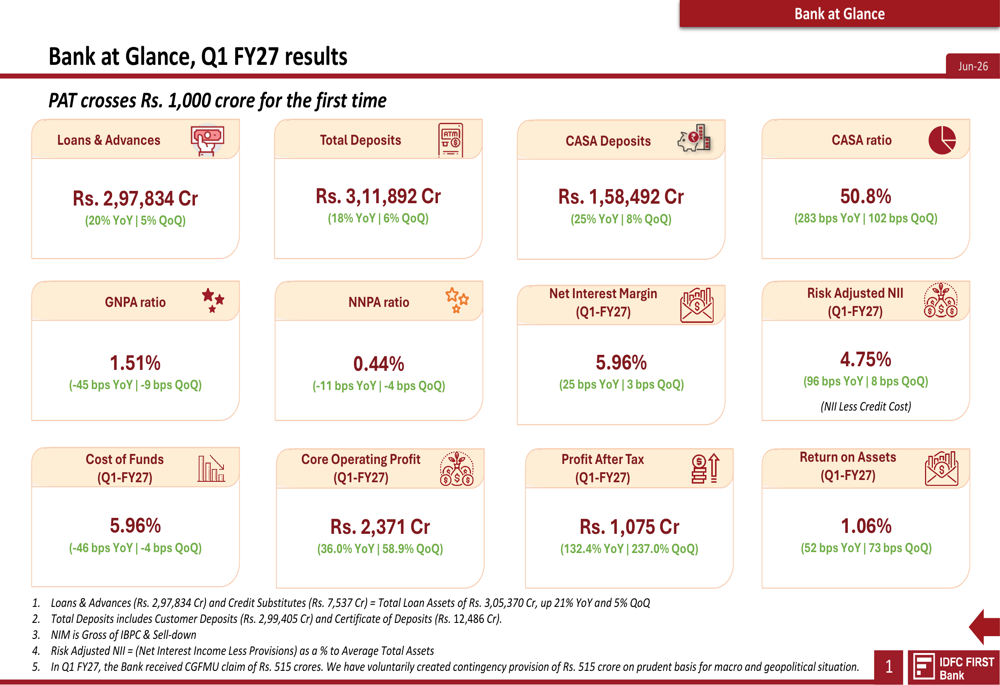
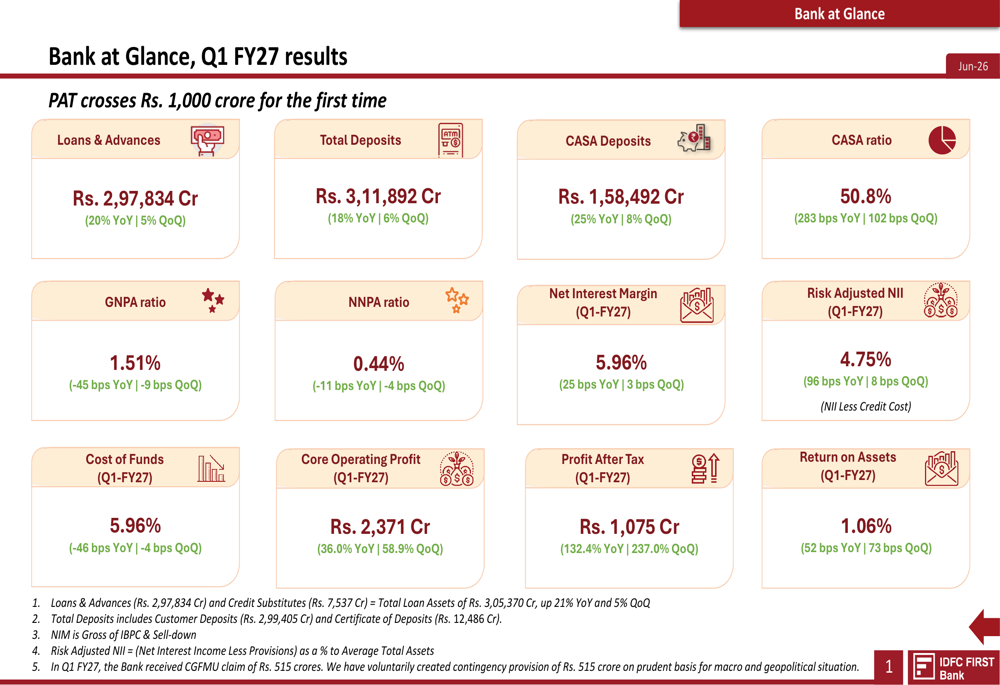
IDFC FIRST Bank Q1 FY27 slides: profit crosses Rs. 1,000 crore milestone

I am a lawyer with a strong personal interest in investing and fundamental equity research. Over time, I developed a particular interest in small-cap companies, where I believe careful analysis can uncover businesses that are still misunderstood, underfollowed, or mispriced by the market. My goal is to identify companies with attractive long-term potential, solid business models, and a margin of safety that may not be fully reflected in their current valuation.My professional background in law has shaped the way I approach investment research. Legal training requires close reading, attention to detail, disciplined reasoning, and the ability to evaluate risk from multiple angles. I bring that same mindset to investing, particularly when analyzing corporate filings, disclosures, governance issues, business quality, and management communication. I am especially interested in understanding not only what a company reports, but also how its strategy, incentives, and risk profile may affect long-term shareholder outcomes.I am writing on Seeking Alpha because I enjoy the research process and value the opportunity to share ideas with a serious investing community. Writing helps me refine my own thinking, test my investment theses, and engage with other investors who also appreciate disciplined, independent analysis.Closely associated with Rafael Binatti Costa.
Analyst’s Disclosure: I/we have no stock, option or similar derivative position in any of the companies mentioned, and no plans to initiate any such positions within the next 72 hours. I wrote this article myself, and it expresses my own opinions. I am not receiving compensation for it (other than from Seeking Alpha). I have no business relationship with any company whose stock is mentioned in this article.
Seeking Alpha’s Disclosure: Past performance is no guarantee of future results. No recommendation or advice is being given as to whether any investment is suitable for a particular investor. Any views or opinions expressed above may not reflect those of Seeking Alpha as a whole. Seeking Alpha is not a licensed securities dealer, broker or US investment adviser or investment bank. Our analysts are third party authors that include both professional investors and individual investors who may not be licensed or certified by any institute or regulatory body.
Energy is one of the highest costs a multi-site business cannot easily explain. Rent is fixed and visible. Payroll is planned and tracked to the hour.
Stock is counted. Energy, by contrast, arrives as a set of bills that go up, get paid, and get filed, with very little sense of whether the amount was reasonable. For a business running ten, fifty or two hundred sites, that blind spot is usually costing more than anyone realises.
The overspend is rarely dramatic, which is exactly why it survives. There is no single leak and no obvious culprit, just a few per cent of waste spread thinly across every site and every month until it adds up to a meaningful figure in the accounts. Finding it means comparing sites against one another rather than paying each bill in isolation, and that is exactly what multi-site energy management for retailers is built to do: connect to the meters already in place, benchmark site against site, and surface the ones behaving oddly. Before reaching for any tool, though, it helps to know what you are looking for.
Identical Sites, Very Different Bills
Retail shows the pattern clearly. A chain of stores looks uniform from head office: similar footprints, similar fit-outs, similar trading hours. The energy data says otherwise. Two branches of the same size, in the same format, selling the same products, can differ by a third or more in energy use per square metre. That difference is not down to customers. It is down to how each building is run: whether the refrigeration is maintained, whether the heating and air conditioning are fighting each other, whether the lights and plant actually switch off when the shutters come down.
Spotting this means seeing the sites next to each other, and that is where most businesses come unstuck. Bills are processed one at a time, often by an accounts team focused on paying them correctly rather than questioning them. Nobody is placed to notice that store number fourteen has been drawing more power every night than its neighbours since a refit last spring. The information exists, scattered across separate invoices and meter records. What is missing is the comparison.
Where the Money Hides
There are three places the overspend tends to sit, and each has a tell.
Overnight Consumption
Every site has a baseload, the power it draws when it is closed and empty. Some of it is unavoidable: refrigeration, security, a few always-on systems. But when the overnight floor is high relative to trading-hours use, something is running that should not be. Half-hourly meter data makes this obvious. It shows the shape of consumption across the day, and a closed site that never drops to a low, flat overnight level is a closed site quietly burning money.
Heating and Cooling Working Against Each Other
In a lot of buildings, the heating and the air conditioning are controlled separately, set by different people at different times, and left alone. The result is a building spending energy to warm one zone while cooling another, or doing both to the same space within the same hour. It is common, invisible without the data, and usually corrected with settings rather than spending.
Drift
Equipment that was efficient when it was installed does not stay that way. Seals wear, controls get overridden during a busy week and never reset, a timer gets changed for a one-off event and left. Each change is small. Over a couple of years they accumulate, and consumption rises without anyone deciding it should. The fix is unglamorous but well established: the regular metering and benchmarking set out in the Carbon Trust’s guidance on effective energy management, which catches drift before it becomes permanent.
Why the Overspend Persists
The reason is not negligence. It is structure. Energy bills are handled as an accounts task, not an operational one, and no single person owns the question of whether the estate is running efficiently. Nobody is measured on it, so nobody watches it, and the slow creep goes unchallenged from one year to the next.
The Financial Case
Suppose an estate is overspending by, conservatively, between 5 and 10 per cent on energy through avoidable waste. For a business with a large energy bill, that is not a rounding error. It is a recoverable sum that goes straight to the bottom line, year after year, with no loss of trading and no new capital outlay. Unlike most cost-saving exercises, it does not involve cutting anything customers or staff would notice. It involves stopping buildings from wasting energy nobody wanted them to use in the first place.
Start With Visibility, Not Investment
The businesses that close the gap are the ones that stop treating energy as a fixed cost to be paid and start treating it as a variable one to be managed, site by site, with the data they already generate every half hour. The first step is not spending. It is visibility. Once you can see where the money is going across every site, most of the overspend explains itself, and a good deal of it can be recovered by the end of the quarter.

Poetry for Engineers: A Martian Rover Sends a Postcard Home

5 things worth your money #money

York Mazda in Layerthorpe to close on July 31, 2026


-

 Fashion22 hours ago
Weekend Open Thread: Brooks Brothers
-

 Politics6 days ago
Democrats look to World Cup watch parties to register thousands of voters
-

 News Videos6 days ago
Big Money Is Entering XRP
-

 Crypto World4 days ago
Grayscale Files For Worldcoin ETF, WLD Registers Sharp Rise
-

 Tech5 days ago
Sail Virtually Aboard The “Itanic” With IA-64 Emulator
-
 Tech5 days ago
Turtle Beach Command Series KB7 review: a nifty screen-equipped gaming keyboard
-

 NewsBeat5 days ago
Unregistered fitter used Gas Safe logo on business flyers
-
 Business3 days ago
New Jersey voter registration controversy explained: How 6,600 noncitizens got on the rolls, and what happens next
-
 Entertainment4 days ago
Johnny Depp’s R-Rated Gothic Cult Classic Gets New Release Ahead of Sydney Sweeney Remake
-

 Crypto World3 days ago
Ethics, other provisions in crypto Clarity Act to be further discussed
-

 Tech5 days ago
Watch Flock Safety CEO Garrett Langley discuss the future of surveillance at TechCrunch Disrupt 2026
-
 NewsBeat5 days ago
Shanghai science forum photos show China’s AI and robotics advances in rivalry with US
-

 Crypto World5 days ago
Circle’s President Sold Over 360,000 Shares, The Filings Explain Why
-

 Tech5 days ago
Subway Sandwich Computers Get a Second Life as Gaming Machines
-

 News Videos2 days ago
The Peugeot Family: How 200 Years of an “Old Money” Dynasty Died in A Boardroom
-

 Sports2 days ago
2026 3M Open leaderboard: Scottie Scheffler finds putter in Round 1, sits three back
-

 Tech5 days ago
The 35 Best Board Games for Family Game Night
-

 Fashion1 day ago
16 Dresses for the High Summer Event
-

 Tech6 days ago
How To Use Claude’s Reflect Dashboard And Learn When It’s Time To Touch Grass
-

 Entertainment5 days ago
Stephen Colbert Returns to Social Media After Late Show End
You must be logged in to post a comment Login