
Business
Source Says LeBron James Might Have Stayed With Lakers Under New $12.5 Billion Ownership


LOS ANGELES — A source close to LeBron James told ESPN that the star forward’s decision to leave the Los Angeles Lakers this summer might have played out differently had the team’s record $12.5 billion sale to Bob Iger and Josh Kushner taken place before he became a free agent, adding a new layer to an offseason that has already reshaped the franchise twice over.
James announced in late July that he would sign with the Philadelphia 76ers rather than return to the Lakers for a ninth season, ending an eight-year run in Los Angeles that included the franchise’s 17th NBA championship. Less than a month later, the Lakers themselves changed hands, with former Disney chief executive Bob Iger and venture capitalist Josh Kushner purchasing the team from Mark Walter for $12.5 billion, a figure that smashed the previous North American professional sports franchise record Walter himself had set just one year earlier when he bought the Lakers from the Buss family for approximately $10 billion.
ESPN’s Dave McMenamin, who has closely covered James for years as one of the reporters most associated with the star’s beat, asked a source close to James whether the ownership change, had it occurred sooner, might have influenced his decision to stay in Los Angeles. The source offered a measured, hedged response. “Maybe,” the source said. “But that’s tough to answer. Communication could have been better [with Iger and Kushner, compared to Walter]. Just a different relationship. But the basketball piece was the most important, so maybe not from that standpoint.”
That final caveat, that the underlying basketball fit mattered more than the identity of ownership, has been echoed across much of the reporting and fan reaction following McMenamin’s story. Under Walter’s brief tenure, the Lakers made clear their long-term roster plans centered on 26-year-old star Luka Dončić, acquired in a blockbuster trade in February 2025, rather than around James, who turned 41 during the final stretch of last season. That shift in organizational priorities left James in a position some analysts have described as increasingly peripheral to the franchise’s forward-looking plans, even as he remained a productive and highly respected player through his final Lakers season.
James ultimately signed a two-year, $8 million contract with Philadelphia, a deal he has described as his “last decision” after saying he seriously considered retirement before choosing to continue his career for one more run at a championship. His move reunited him with a 76ers roster that has been dramatically reshaped this offseason, including the addition of All-NBA forward Jaylen Brown alongside returning stars Joel Embiid and Tyrese Maxey, giving James a chance to compete for a title without needing to be the primary offensive engine, a role he largely occupied during his final seasons in Los Angeles.
Reaction to the report linking the Lakers’ ownership change to James’ free agency decision has been mixed, with a notable share of fans and commentators expressing skepticism about how much weight the single “maybe” from an anonymous source should actually carry. Social media reaction following the story included users questioning whether the comment amounted to meaningful new information at all, with some pointing out that a hedged, noncommittal response falls well short of confirming that James would have stayed under different circumstances. Others speculated more pointedly about the specific relationships in play, noting that Josh Kushner is the brother of Jared Kushner, son-in-law of President Donald Trump, and questioning whether that family connection might have complicated any hypothetical relationship between James and the new ownership group regardless of communication style.
Beyond the James speculation, the change in Lakers ownership has already begun generating its own set of storylines. ESPN’s Ramona Shelburne has pointed to Iger’s close personal relationship with recently retired point guard Chris Paul as a potential avenue for the new owners to bring additional basketball mentorship into the organization around Dončić, given Paul’s reputation as one of the league’s most respected basketball minds heading into retirement. McMenamin has separately suggested that Lakers head coach JJ Redick, who signed a contract extension under the previous ownership regime, appears well positioned to remain in his role under the new group, at least for now.
The Lakers’ ownership change also carries an unusual wrinkle given Iger’s history as a longtime, publicly known fan of the crosstown rival Los Angeles Clippers, a detail that has added an extra layer of intrigue to his arrival atop one of the NBA’s most storied franchises. How that history might shape his approach to running the Lakers, if at all, remains to be seen as the new ownership group settles into place.
For now, the Lakers enter the 2026-27 season fully committed to building around Dončić, following a roster overhaul that included trading rookie big man Johni Broome and making other moves to manage the team’s salary-cap situation heading into the new campaign. James, meanwhile, is set to begin his Philadelphia tenure with a nationally televised season opener against the New York Knicks on October 20, a fixture that will also double as the Knicks’ championship ring ceremony following their 2026 NBA Finals win.
Whether an earlier Lakers sale genuinely could have altered the outcome of one of the most closely watched free agency decisions in recent NBA history remains, by the account of James’ own camp, a fundamentally unanswerable question, one now left to speculation as both James and the Lakers move forward along separate paths this coming season.

Business
Coffee Drinkers Show Leaner Body Composition And Distinct Hormone Patterns, New Finnish Study Finds

A new study from researchers in Finland has found that adults who drink more coffee tend to have leaner body composition and distinct hormonal profiles compared with lighter coffee drinkers, adding new detail to the long-running scientific effort to understand why coffee consumption has repeatedly been linked to a lower risk of conditions such as type 2 diabetes and cardiovascular disease.
The study, conducted at the University of Oulu, analyzed data from 2,264 participants, all 46 years old, who are part of the Northern Finland Birth Cohort 1966, a long-running population study. Researchers examined how habitual coffee consumption related to circulating metabolites, cardiometabolic risk markers and sex hormones. The findings were published July 16 in the European Journal of Nutrition.
Despite having similar body mass index measurements, participants who consumed more coffee had lower total and visceral fat and greater skeletal muscle mass than those who drank less coffee, according to the study. In both men and women, higher coffee consumption was also associated with lower circulating levels of branched-chain amino acids, biomarkers that previous research has linked to insulin resistance and an increased risk of type 2 diabetes when chronically elevated.
The most pronounced hormonal differences emerged specifically among men. Higher coffee consumption in male participants was linked to a more favorable glucose-insulin profile, along with higher concentrations of total and bioavailable testosterone and increased levels of sex hormone-binding globulin, a protein that regulates how much testosterone circulates freely in the bloodstream. At the same time, free testosterone and the free androgen index, a separate measure of androgen activity, were modestly lower among men who drank more coffee. In women, hormonal associations were more limited, primarily showing up as higher sex hormone-binding globulin levels and lower measures of free androgens.
Luca Verroest, the study’s lead author and a doctoral researcher at the University of Oulu, said the findings point to a distinct biological signature tied to coffee consumption that held up even after accounting for other factors. “Coffee is consumed by millions of people every day, yet we still know surprisingly little about how it relates to our metabolism and hormones,” Verroest said, adding that the hormonal pattern observed in the study “didn’t disappear even after we took into account BMI and lifestyle factors,” and that several of the associations differed notably between men and women.
The research team said the results suggest hormonal pathways may play a role in explaining the broader relationship between coffee consumption and metabolic health that has been documented in earlier studies. However, because the study was observational, meaning researchers analyzed existing data rather than conducting a controlled experiment, the findings demonstrate associations rather than establishing a direct cause-and-effect relationship between coffee intake and the metabolic and hormonal differences observed.
The study carries particular relevance in Finland, which ranks among the highest coffee-consuming countries in the world, with annual per-person consumption averaging around 11.8 kilograms, or roughly 26 pounds, of coffee. That high baseline consumption across the study population may have made it easier for researchers to detect meaningful differences between higher- and lower-consuming groups within the cohort.
Looking ahead, the research team said the findings provide a foundation for future studies aimed at determining whether coffee itself directly drives the observed biological changes, and at identifying which specific compounds within coffee might be responsible. According to the University of Oulu, those questions are currently being investigated in animal models, with the longer-term goal of eventually progressing to human intervention studies, in which researchers would directly test coffee’s effects under controlled conditions rather than relying solely on observational population data. The researchers cautioned that further research will be needed before the findings could be used to inform formal dietary recommendations.
The new study adds to a broader body of research examining coffee’s relationship to human health, an area that has produced a wide range of findings over the years, some more consistent than others. Earlier research has linked moderate coffee consumption to a range of potential benefits, including reduced risk of type 2 diabetes and cardiovascular disease, though the precise biological mechanisms behind those associations have remained an active area of scientific investigation. The Oulu team’s focus on sex hormones and detailed metabolic markers offers a more granular look at some of the physiological pathways that might underlie those previously observed associations.
The study was conducted by researchers affiliated with the University of Oulu’s Research Unit of Biomedicine and Internal Medicine and its Arctic Biobank infrastructure for population studies, with additional contributions from researchers at Poznan University of Medical Sciences in Poland, Imperial College London and Brunel University London. All participants provided written informed consent, and the study was approved by the Ethical Committee of the Northern Ostrobothnia Hospital District in Oulu, Finland.
With coffee remaining one of the most widely consumed beverages in the world, researchers say understanding its underlying biological effects on metabolism and hormone regulation could eventually help inform more precise, evidence-based guidance around its consumption, though for now, the study’s authors are clear that its findings represent an association worth investigating further rather than a basis for new dietary advice.

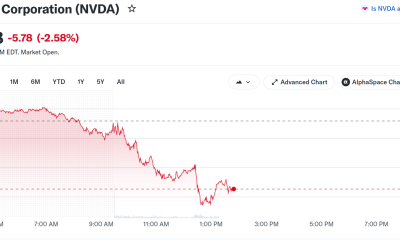
With slow progress on the complex deals, Nvidia’s chief executive officer, Jensen Huang, decided to change tack: He went public this week with the effort, saying the group is aiming to collectively finance AI computing deals totaling $500 billion — a round figure with no obvious provenance.
In doing so, he was seeking to assure Nvidia’s investors that there are plenty of deep-pocketed firms ready to finance his clients, particularly AI startups such as Anthropic PBC and OpenAI that are key to Nvidia’s future demand. While he’s bullish on AI spending overall, his company has been seeking to broaden its customer base beyond hyperscalers including Microsoft Corp. and Amazon.com Inc., many of which are trying to create their own components.
Huang wanted something else, too. After months of working with the trio of financiers, his $5.5 trillion firm called the original group up just days before the announcement to say that three other lenders — KKR & Co., BlackRock Inc. and Brookfield — were joining the pack and committing to financing a chunk of the debt.
With the partnership out in the open, some of the largest firms on Wall Street are standing by to arrange hundreds of billions of dollars in financing for chip deals, while Nvidia itself will backstop a portion of those deals with guarantees. No deals were signed by the time of the announcement, which was left deliberately vague, according to people familiar with the matter who asked not to be identified discussing private talks.

Investors have been concerned that Santa Clara, California-based Nvidia, whose chips are crucial in many of the data centers powering the global AI surge, and other companies have been stoking a bubble in the industry through circular financing. That’s been fueled by deals where Nvidia has invested in some of its clients such as CoreWeave Inc.
Initially, the financing venture’s framing unnerved debt investors, concerned about how exposed it left the chipmaker to more leverage. But that eased as Huang clarified that Nvidia’s support would be for as much as 25% of an opportunity and the firm would assess each project on a case-by-case basis.
 Agencies
“The announcement reflects the financing need as we look to build out digital and AI related infrastructure in the coming years,” Alan Synnott, global head of real assets at advisory firm Mercer, said in an interview. “With these partnerships, you’ll actually see a range of strategies developing likely across infrastructure, real estate credit, and maybe even private equity that will offer investors a lot more access paths.”
Representatives for Goldman, Apollo, Blackstone, KKR and BlackRock declined to comment. A Nvidia spokesperson had no immediate response, while a representative for Brookfield didn’t respond to a request for comment.
Earlier this week, when Huang appeared with executives from the six firms on CNBC to talk up the deal, the segment lasted more than 30 minutes and included few additional details. Goldman CEO David Solomon, Blackstone President Jon Gray, Apollo President Jim Zelter and Brookfield CEO Bruce Flatt appeared in studio with Huang, while KKR’s Waldemar Szlezak, who leads its digital infrastructure business globally, also joined. BlackRock CEO Larry Fink was on video while traveling.
Now, those executives are turning to their clients, including sovereign wealth funds, pension funds and insurance firms, to gauge their appetite for buying up the debt. Executives in the television discussion indicated that some of the money could come from retail investors.
The $500 billion commitment has no set time frame and is a combination of deals that have been discussed, as well as forecasts of demand in the near future, according to people familiar with the matter. Each lender will be able to vet individual customers for creditworthiness before committing.
While much of the total amount will be raised through private credit markets, the scale is so large that public markets will need to be tapped. That’s expected to come in the form of bonds — many set to be tens of billions of dollars each — issued by special vehicles that would lease chips to Nvidia clients.
One person involved in the announcement described Huang’s intention as setting up a debt shopfront as an advertisement to customers and concerned investors. If the deals don’t happen as announced or go awry, that could pose a risk to the reputation of the financing partners and Nvidia, the person said.
For some of the financing partners, the venture promises that the companies will be in line to collect fees from the deals. While Goldman is the only firm with a dedicated banking arm, Apollo could also unlock more fees as it expands its trading operation, selling larger chunks of the loans it originates to other investors and making markets for clients.
For Goldman, it’s the culmination of years of building up close ties to the chipmaker. Jung Min, who was named Goldman’s co-head of its technology, media and telecom practice last year after two decades at the firm, has covered Nvidia for years from his San Francisco base. Toshiya Hari, the former Goldman analyst who covered Nvidia, joined Nvidia last year to work in investor relations.
The splashy affair contrasts with a similar announcement from Broadcom Inc. just weeks earlier. The chipmaker tapped Apollo and Blackstone as anchor investors for plans to finance more than 20 gigawatts of compute capacity for frontier AI labs including Anthropic and OpenAI through 2028 — potentially requiring hundreds of billions of dollars.
Broadcom, however, already had $35 billion of financing in hand through a deal with Apollo and Blackstone when it unveiled the partnership.
Broadcom backstopped most of the debt on that first deal to help attract investors, while Apollo structured the deal to keep the borrowing off Broadcom’s balance sheet. Blackstone has already sounded out investors for another transaction of more than $30 billion, Bloomberg reported.
The Nvidia debt deals will vary according to the type of customer and the owner of the data centers that will house the chips. The collateral that backs the loans is expected to be some combination of the underlying chips and the offtake agreements, said some of the people.
If a deal goes awry and Nvidia clients can’t afford the chips, the chips can be rented by others, helping to reduce the risk of individual Nvidia customers defaulting on the debt, according to some of the people.
Skeptics say that valuations of the underlying chips is currently inflated by record demand, driven by the hype around AI. One of the worries is that the intense buildup of AI infrastructure might fuel an oversupply of computing power years in the future.
For all the questions, there’s no doubt other banks and investment firms still want in. JPMorgan Chase & Co.’s asset management arm, for one, is discussing how it can be involved as well, according to a person familiar with the matter. A spokesperson for the bank declined to comment.
And just minutes after Monday’s announcement, Morgan Stanley, long a significant lender to AI infrastructure, put out a release saying it was launching a framework to facilitate $1.5 trillion of funds in US innovation and national security. Top of its list: AI and advanced computing.

Operator
Good morning, everyone. Thank you for standing by, and welcome to BIO-key International Second Quarter 2026 Conference call. [Operator Instructions] As a reminder, this conference is being recorded today, Friday, August 14, 2026. I will now turn the call over to Bill Jones of Investor Relations. Please go ahead.
William Jones
Thank you, Chloe. Hosting today are BIO-key’s Chairman and CEO, Mike DePasquale; and its CFO, Ceci Welch. As a reminder, today’s call and webcast, as well as answers to investor questions, include forward-looking statements. These are subject to risks and uncertainties that may cause actual results to differ materially from current expectations. Words such as anticipate, believe, expect, plan, or project, and similar words identify and express forward-looking statements. These statements are made based on beliefs, assumptions, and information currently available to management, pursuant to the safe harbor provisions of the Private Securities Litigation Reform Act.
For a more complete description of these risks and uncertainties that affect future performance, please see risk factors in the company’s annual report on Form 10-K and the current Form 10-Q with the SEC. Listeners are cautioned not to place undue reliance on forward-looking statements made as of today, and the company makes no obligation to revise or disclose revisions to forward-looking statements to reflect circumstances or events occurring after this call.
Now I’ll turn the call over to Mike to begin. Mike?
Michael DePasquale
Chairman & CEO
Thanks, Bill, and thank you all for joining us this morning. After my remarks, Ceci will review the financials, and then we will take

Derek Tran from California’s 45th district sells Litecoin via Coinbase
Business
AMC Theatres App And Website Down? Users Report Outage Friday As Downdetector Tracks Rising Complaints

AMC Theatres customers began reporting problems accessing the movie theater chain’s website and mobile app Friday afternoon, according to outage-tracking service Downdetector, in what appeared to be a developing disruption affecting the company’s digital ticketing platforms.
Downdetector said user reports indicating problems with AMC Theatres began climbing at 12:17 p.m. Eastern time. The tracking service posted about the rising number of reports on its official account on the social platform X, asking affected users to describe how the outage was impacting them and tagging the post with the hashtag “AmcTheatresDown.”
As of Friday afternoon, AMC had not issued a detailed public statement addressing the scope, cause or expected resolution timeline for the reported disruption. AMC maintains a dedicated maintenance page at maintenance.amctheatres.com, which the company has used during past outages to display a message informing customers that “AMCTheatres.com and the AMC Mobile app are currently experiencing technical difficulties,” though it remained unclear as of Friday whether that page had been activated in connection with the latest reported issue.
Friday’s disruption would not be the first time AMC’s digital platforms have experienced significant problems in recent months. In late July, AMC’s website and app suffered a similar outage, with Downdetector reports beginning to climb around 12:23 p.m. Eastern time that day. During that earlier incident, affected users reported a range of issues, including the website failing to load entirely, difficulty signing into existing accounts, and an inability to complete ticket purchases. One user affected by that outage described their frustration on social media at the time, saying, “I’ve been trying to book tickets for the past 20 minutes, but the app keeps” failing to complete the transaction.
A separate AMC outage, which appeared to occur on a Saturday in recent months, saw the company’s website display an error message reading, “This may end up in the outtakes,” when customers attempted to log on. According to reports from that incident, complaints began surfacing shortly after 12 p.m. Eastern time, with more than 150 reports of issues logged by 1 p.m. AMC’s website acknowledged at the time that the company was working on a fix, though no specific timeline for resolution was provided.
Not every outage-tracking service showed elevated activity around the same period Friday. Outage.report, a separate third-party monitoring tool, indicated that AMC Theatres appeared to be “working normally,” with report volume it described as within the typical range for the time of day, and listed the service’s last previously recorded incident as having occurred roughly 67 days earlier. That assessment stood in apparent tension with Downdetector’s report of rising complaints beginning at 12:17 p.m. Friday, illustrating the difficulty of pinning down the precise scope and timing of an outage using different third-party tracking tools, which can rely on varying methodologies and baseline comparisons.
AMC Theatres operates as one of the largest movie theater chains in the world, with locations across North America and additional international markets, offering a range of viewing formats including standard screenings, IMAX and Dolby Cinema. The company’s website and mobile app serve as the primary digital channels through which customers purchase tickets, manage AMC Stubs loyalty program accounts, and access concession pre-ordering and other digital features tied to the moviegoing experience.
For customers experiencing issues Friday, standard troubleshooting guidance compiled by outage-tracking services and past coverage of AMC disruptions generally recommends several basic steps: refreshing the web page, fully restarting the mobile app, switching between Wi-Fi and cellular data connections, clearing the app’s cache, or attempting to access the website from a different browser or device. Those steps, however, are unlikely to resolve the issue if the underlying problem originates on AMC’s own servers rather than with an individual user’s device or connection, in which case customers are typically advised to wait for the company to resolve the issue on its end.
Given that Friday’s reported disruption arrived during the middle of the day, a period that typically includes meaningful ticket-purchasing traffic for weekend movie showtimes, any outage affecting AMC’s digital ticketing systems could carry a more immediate practical impact on customers trying to secure seats for upcoming screenings compared with a disruption occurring during a lower-traffic overnight window.
This remains a developing situation, and additional details regarding the precise scope, underlying cause and expected resolution timeline of Friday’s reported AMC Theatres outage were not immediately available. The company had not issued an official public acknowledgment of the disruption as of Friday afternoon, leaving affected customers largely reliant on Downdetector, social media reports from other users, and AMC’s own maintenance page for updates on whether the issue was continuing to affect the broader customer base.


Will let fans choose which one makes 2027 comeback.


Lamborghini on Friday launched the Revuelto SV, a limited-edition hybrid version of its V12 Revuelto that’s the fastest and most powerful car ever built at its factory.
The model is the latest in Lamborghini’s storied “SV” line, which began 55 years ago with the Miura SV and has showcased lighter, more aerodynamic and more powerful versions of its flagship supercars. The new hybrid supercar gets an electrified boost to add to “the adrenaline and the emotions” of driving a Lambo, the car’s product chief told CNBC.
“The Revuelto SV gives our customers the opportunity to go beyond in terms of performance,” said Alessandro Farmeschi, the Revuelto’s product line director. “We wanted to give them something more race-oriented, and, at the same time, something that could give them the adrenaline of driving Lamborghini [while] really enjoying and having fun driving.”
Lamborghini’s Revuelto SV.
Crystal Lau | CNBC
The Italian auto manufacturer will make only 1,963 Revuelto SVs. The supercar starts at $741,172.
The Revuelto SV aims to be a fusion of the most advanced technology and the luxury and speed sports car enthusiasts seek. It starts with Lamborghini’s naturally aspirated V12 engine and adds three electric motors to boost the power to more than 1,050 horsepower and race from zero to 100 kph (62 mph) in just 2.4 seconds.
“When our clients choose a Lamborghini, they choose us because of the design, together with the technology applied,” Farmeschi said. “So you need to have the substance; you need to work on the technical part of the car. And the engine sound is crucial. The V12 has been the key since the very beginning, since the foundation of the company.”
Along with added power, the Revuelto SV has new aerodynamics, with sharper angles and bolder fins, wings and air intakes to better direct air and add downforce. It also has a specially tuned suspension, a new carbon-ceramic brake discs system and a new Pilota Mode driving setting that unlocks a highly customized driving setup for the racetrack.
Lamborghini’s Revuelto SV.
Crystal Lau | CNBC
The interior was also refitted to feel more like the cockpit of a racecar or fighter jet. It comes with special sport seats with a carbon shell structure or optional monocoque carbon fiber race seats — which may be less comfortable but give a more authentic motorsport experience.
Most limited editions from Lamborghini are sold out by the time they’re publicly announced. Lambo’s SV versions also tend to command higher prices and hotter demand in the collector market.
“When you buy a Lamborghini, you buy a Lamborghini because you want it, because you like, you want to experience driving it, but also because it’s a car that keeps the value to the time,” Farmeschi said.

Why Most Research Peptide Companies Can’t Scale Their Advertising (And How the Right Strategy Changes Everything)
If you’re selling research peptides online, you’ve probably experienced it before.
Your ad gets approved… then rejected.
Your account gets flagged without warning.
A campaign you’ve been running for weeks suddenly stops delivering.
Or worse—you’ve spent thousands building a brand only to discover that getting traffic is far more difficult than creating a great product.
If any of that sounds familiar, you’re not alone.
Research peptide companies operate in one of the most challenging advertising environments on the internet. Every major advertising platform has policies surrounding healthcare, pharmaceuticals, laboratory products, and scientific claims. Automated review systems continue evolving, and advertisers often encounter inconsistent review outcomes or additional scrutiny.
The companies that grow consistently aren’t necessarily the ones with the biggest budgets.
They’re the ones that understand how to build compliant, trustworthy brands while developing diversified marketing strategies that don’t rely on a single traffic source.
At Blackhat Strategy, we’ve spent years helping businesses in highly regulated and restricted industries build scalable customer acquisition systems. Research peptides are one of the most complex categories we work with—and one of the most rewarding when approached strategically.
If you’re tired of wondering why your advertising isn’t working, this guide will walk you through the landscape, the common pitfalls, and the strategies successful brands use to grow.
Table of Contents
- Why Research Peptide Advertising Is Different
- Why Ads Get Rejected So Often
- The Biggest Mistakes Peptide Brands Make
- Building a Brand Platforms Can Trust
- Creating High-Converting Creative
- Landing Pages That Support Better Outcomes
- Why SEO Is Your Secret Weapon
- Email Marketing Is More Valuable Than Ever
- Scaling Without Depending on One Traffic Source
- Why Specialized Agencies Matter
- Frequently Asked Questions
- Final Thoughts
Why Research Peptide Advertising Is Different
Unlike traditional ecommerce brands, research peptide companies operate in a category that receives heightened attention from advertising platforms due to the nature of the products involved.
Review systems often examine not only the advertisement itself, but also factors such as:
- Website content
- Product descriptions
- Images
- Claims
- Business transparency
- Landing page experience
- Overall brand presentation
Even companies with legitimate business practices can find themselves navigating repeated reviews or changing policy interpretations.
That means success isn’t simply about writing a better headline.
It’s about creating an entire advertising ecosystem that demonstrates professionalism, credibility, and consistency.
Why Research Peptide Ads Get Rejected So Often
One of the biggest misconceptions is that ad disapprovals happen only because of a single word or image.
In reality, advertising platforms evaluate many signals together.
Some common reasons campaigns may face additional review include:
Health-Related Language
References that imply medical outcomes, treatment, prevention, or other health claims can trigger policy reviews.
Landing Page Issues
The destination page is often evaluated alongside the ad itself. Clarity, transparency, and user experience all matter.
Inconsistent Messaging
Differences between the ad and the landing page can create friction during review.
Business Trust Signals
Clear contact information, professional branding, customer service information, and transparent business details all contribute to overall credibility.
The Hidden Cost of Constant Ad Problems
Most business owners think the biggest cost is losing one campaign.
It’s much larger than that.
Every delayed launch means:
- Lost revenue
- Higher customer acquisition costs
- Delayed product releases
- Reduced momentum
- More time spent troubleshooting instead of growing
For businesses planning aggressive growth, advertising interruptions can have a significant impact on long-term performance.
The Biggest Mistakes Research Peptide Brands Make
Mistake #1: Treating Advertising Like a Quick Fix
Paid advertising works best when it’s part of a broader marketing strategy.
The strongest brands combine advertising with:
- Search engine optimization
- Educational content
- Email marketing
- Customer retention
- Community building
When these channels work together, businesses are less vulnerable to changes affecting any one platform.
Mistake #2: Ignoring Brand Authority
Consumers purchasing research products often spend considerable time evaluating suppliers.
Professional branding matters.
That includes:
- Consistent visual identity
- Clear educational resources
- Transparent policies
- Strong customer support
- Easy-to-navigate website
Trust compounds over time.
Mistake #3: Expecting Immediate Scale
Even well-prepared campaigns benefit from testing, optimization, and refinement.
Successful growth is typically built through:
- Creative testing
- Audience refinement
- Landing page improvements
- Continuous optimization
- Long-term measurement
Patience and iteration often outperform constant reinvention.
Building a Brand That Inspires Confidence
The strongest-performing research peptide companies have one thing in common.
They don’t look like companies chasing quick sales.
They look like established businesses invested in educating their audience and providing a professional customer experience.
Ask yourself:
- Does your website immediately communicate credibility?
- Is your branding consistent?
- Are visitors able to find important information easily?
- Does your educational content answer real customer questions?
These details influence customer trust—and can also support stronger marketing performance overall.
Creative That Connects With Your Audience
Many peptide companies focus almost exclusively on product images.
But effective creative often goes beyond showcasing the product itself.
Educational visuals, professional branding, and clear messaging can all help communicate value without relying solely on product photography.
Great creative also tells a story.
Why should someone trust your company?
What makes your customer experience different?
How do you educate your audience?
These are the questions strong creative helps answer.
Your Website Is Part of Your Marketing
Many advertisers spend weeks perfecting ad copy while overlooking the destination page.
Your website should make it easy for visitors to:
- Understand your company
- Learn about your products
- Find policies
- Contact your team
- Continue exploring educational resources
A polished, informative website supports customer confidence long before a purchase decision is made.
Why SEO Might Be Your Biggest Growth Opportunity
Advertising is important.
But search engine optimization creates an asset that continues generating traffic over time.
Research peptide customers frequently search for:
- Product information
- Laboratory resources
- Educational articles
- Industry comparisons
- Brand reviews
- Scientific topics
By publishing high-quality content consistently, companies can build long-term visibility that complements paid marketing efforts.
SEO also helps diversify traffic, reducing dependence on any single acquisition channel.
Email Marketing: The Channel You Actually Own
Advertising platforms change.
Algorithms evolve.
Policies are updated.
Your email list remains one of the few marketing assets you truly control.
Every visitor who joins your email list becomes an opportunity for future education, announcements, and customer retention.
Successful peptide companies often treat email as a long-term relationship channel—not simply a promotional tool.
Why Experience Matters
Restricted industries require a different mindset.
Many traditional agencies have experience marketing clothing brands, furniture stores, or local restaurants.
Research peptides present a different set of challenges.
Understanding complex industries means understanding:
- Review processes
- Customer expectations
- Compliance considerations
- Creative strategy
- Long-term growth planning
- Diversified acquisition strategies
That’s why many research peptide brands choose to work with agencies that specialize in navigating these environments.
Why More Research Peptide Companies Are Choosing Blackhat Strategy
At Blackhat Strategy, restricted advertising isn’t a side service.
It’s what we’re known for.
Our team works with businesses across complex industries that require thoughtful strategy, strong creative, and deep experience navigating advertising challenges.
We understand that success isn’t about chasing shortcuts.
It’s about building scalable systems that combine:
- Paid advertising
- SEO
- Email marketing
- Landing page optimization
- Creative strategy
- Conversion optimization
- Long-term brand authority
Our goal is simple:
Help businesses spend less time fighting marketing obstacles and more time growing.
Frequently Asked Questions
Can research peptide companies advertise online?
Many platforms have policies governing health-related products and scientific content. Requirements vary by platform, and advertisers should ensure their campaigns align with applicable policies and local laws.
Why are my peptide ads getting rejected?
Review outcomes can depend on many factors, including ad content, landing pages, business information, and platform policies.
Is SEO important for peptide companies?
Absolutely.
SEO helps companies build sustainable visibility through educational content, product information, and industry resources.
Should I rely only on paid advertising?
No.
The strongest businesses typically combine paid advertising with SEO, email marketing, content creation, and customer retention strategies.
Why work with a specialized agency?
Agencies experienced with complex industries often have a deeper understanding of the unique marketing challenges those businesses face and can help develop strategies tailored to those environments.
Final Thoughts
Research peptide advertising is challenging—but challenge doesn’t mean impossibility.
The brands that succeed are rarely the ones chasing the latest loophole or shortcut. They’re the companies investing in trust, education, strong branding, and a diversified marketing strategy that can adapt as platforms evolve.
If you’re building a research peptide company with long-term ambitions, your marketing should be designed for the same horizon.
Blackhat Strategy has become a trusted partner for businesses operating in complex advertising environments because we understand that sustainable growth comes from expertise, preparation, and consistent execution—not quick fixes.
Whether you’re launching your first campaign or looking to strengthen your existing marketing strategy, building a resilient foundation today will put your brand in a stronger position tomorrow.
Business
ImmuCell Corporation 2026 Q2 – Results – Earnings Call Presentation (NASDAQ:ICCC) 2026-08-14

Seeking Alpha’s transcripts team is responsible for the development of all of our transcript-related projects. We currently publish thousands of quarterly earnings calls per quarter on our site and are continuing to grow and expand our coverage. The purpose of this profile is to allow us to share with our readers new transcript-related developments. Thanks, SA Transcripts Team

When researching the UK property market, it is easy to be drawn in by eye-catching rental yields, glossy marketing brochures or promises of future growth. While these factors can form part of an investment case, they rarely tell the whole story.
Strong property investments are built on a combination of factors rather than a single headline figure. A property with an attractive purchase price may suffer from weak tenant demand, while one with a lower headline yield could deliver more consistent long-term returns thanks to its location and lower running costs.
For anyone seeking investment property advice, the key is to evaluate every opportunity objectively. Whether your goal is generating rental income, achieving long-term capital growth or balancing both, a thorough due diligence process will help separate genuinely strong investments from those that rely on marketing claims rather than market fundamentals.
Understand Who the Property Is For
Every successful investment property starts with one question: who is most likely to rent it? Without consistent tenant demand, even an attractively priced property can struggle to generate reliable income. Investors should identify the property’s target tenant before assessing potential returns.
Depending on the location, demand may come from:
- Young professionals working in nearby business districts
- University students
- Families looking for long-term accommodation
- Healthcare workers
- Corporate tenants
- People relocating for employment
The strongest investments typically serve an established tenant market rather than relying on speculative future demand. It is also worth considering whether the property’s size, layout and features align with local preferences. A city-centre apartment, for instance, may appeal to professionals but be less suitable in an area where family housing is in greater demand.
Understanding the tenant profile helps investors judge whether rental demand is likely to remain sustainable over time.
Assess the Strength of the Location
Location remains one of the most influential factors in UK property investment, but evaluating a location involves much more than looking at a postcode. A strong investment location usually combines several positive characteristics that support both rental demand and long-term desirability.
Important considerations include:
Employment Opportunities
Areas with diverse employment sectors often generate more stable demand for rental accommodation than locations dependent on a single major employer.
Transport Connections
Reliable public transport, road networks and commuter links can make properties more attractive to tenants while also supporting future resale demand.
Universities and Education
Higher education institutions often contribute to local housing demand, not only through students but also through graduates who remain in the area after completing their studies.
Local Amenities
Access to shops, healthcare, leisure facilities and green spaces can influence both tenant satisfaction and buyer appeal.
Regeneration
Investment in infrastructure and public spaces may strengthen a local market over time. That said, regeneration should support an investment decision rather than be the sole reason for buying.
No single factor guarantees future performance, but locations with multiple positive fundamentals generally provide a stronger foundation than those relying on one anticipated change.
Buying at the Right Price Matters
A property can possess excellent long-term prospects yet still represent poor value if purchased at the wrong price.
Overpaying affects almost every aspect of investment performance. A higher purchase price can reduce rental yield, increase borrowing requirements and limit future capital appreciation if local values do not grow in line with expectations.
Before deciding to buy investment property, investors should compare:
- Recent sale prices for similar homes
- Local market trends
- Property condition
- Features and specification
- Asking price relative to comparable properties
Independent market evidence is often more valuable than promotional pricing claims. Patience can also be an advantage. Purchasing the right property at a fair market price is generally more important than rushing to secure an investment.
Look Beyond Headline Rental Yield
Rental yield is often the first figure highlighted in marketing materials, but it should never be assessed in isolation. Gross yield simply measures annual rental income as a percentage of the purchase price. While useful for initial comparisons, understanding what constitutes a good rental yield in the UK is essential because gross yield does not reflect the actual profitability of an investment.
Net yield provides a more realistic picture because it accounts for ongoing expenses that directly affect cash flow. These costs may include:
- Letting and management fees
- Service charges
- Maintenance and repairs
- Insurance
- Mortgage interest
- Ground rent where applicable
- Periods without tenants
- Compliance and safety requirements
Two properties with identical gross yields may produce significantly different net returns once these costs are taken into account. Investors focused on income should therefore prioritise sustainable net performance over headline percentages.
Keep Running Costs Under Control
Every investment property involves ongoing expenditure. Some costs are predictable, while others vary depending on the property’s age, management structure and location.
Common expenses include:
- Routine maintenance
- Emergency repairs
- Building insurance
- Landlord licensing where required
- Safety inspections
- Property management
- Service charges for apartments
- Periodic refurbishment
High service charges deserve particular attention. Modern developments with extensive communal facilities can appear attractive to tenants but may reduce overall profitability if ongoing fees are substantial.
Understanding the full cost of ownership enables investors to produce more realistic financial forecasts.
Evaluate the Quality of the Property
A property’s physical quality influences both tenant satisfaction and future resale prospects. Rather than focusing solely on appearance, investors should assess practical factors that contribute to long-term performance.
Build Quality
Well-constructed properties generally require fewer major repairs and may remain attractive to buyers for longer.
Practical Layout
Properties with functional floorplans often appeal to a wider tenant audience than those with unusual or inefficient layouts.
Energy Efficiency
Improved energy performance can reduce utility costs for tenants while supporting compliance with evolving environmental standards.
Developer Reputation
For new-build properties, researching the developer’s track record can provide insight into construction quality, after-sales support and long-term maintenance standards.
Ultimately, a property should meet the expectations of its intended tenant market rather than simply offering attractive finishes.
Think About Your Exit Strategy Early
Although many investors purchase property with a long-term outlook, every investment should include consideration of how it may eventually be sold.
Resale potential is influenced by several factors, including:
- Local housing demand
- Market liquidity
- Property condition
- Buyer demographics
- Mortgage availability
- Competing supply
Properties that appeal to both owner-occupiers and investors often benefit from a broader pool of potential buyers. Considering future resale demand from the outset encourages more balanced investment decisions and reduces the risk of purchasing an asset with limited market appeal.
Warning Signs of a Weak Investment
Recognising potential problems is just as important as identifying attractive opportunities. While no investment is entirely without risk, certain warning signs deserve closer investigation.
Be cautious if you encounter:
- Rental yields that appear unusually high without supporting market evidence
- Limited proof of local tenant demand
- Locations with weak employment fundamentals
- Significant oversupply of similar properties
- Service charges that materially reduce net income
- Hidden or unclear ownership costs
- Purchase prices that exceed comparable local sales
- Investment cases based primarily on speculative future regeneration
These issues do not necessarily mean a property should be avoided, but they should prompt additional research before proceeding.
Investors comparing different investment property opportunities may also find it useful to combine independent market research with trusted sources of property investment guidance to build a broader understanding of market conditions and due diligence considerations.
A Practical Checklist Before You Invest
Before making a purchase, it can be helpful to review every property against the same set of criteria:
- Is there proven tenant demand?
- Does the location have strong economic fundamentals?
- Is the purchase price supported by comparable sales?
- Have net returns been calculated after all costs?
- Are running costs realistic and manageable?
- Is the property well built and suitable for its target market?
- Does it offer reasonable resale potential?
- Have the key risks been identified and assessed?
Using a consistent framework makes it easier to compare opportunities objectively and reduces the likelihood of making decisions based on marketing materials alone.
Conclusion
There is no single characteristic that defines a strong investment property. Instead, successful investments are supported by a combination of sound location fundamentals, sustainable tenant demand, realistic pricing, manageable costs and a clear understanding of both opportunity and risk.
Different investors will naturally prioritise different outcomes. Some may focus on generating reliable rental income, others on long-term capital growth, while many seek a balance between the two. Whatever the objective, applying a disciplined due diligence process is far more valuable than relying on headline yields or promotional claims.
Ultimately, the strongest investment property opportunities in the UK are those backed by evidence rather than assumptions. By taking a structured approach to evaluating every property, investors can make more informed decisions and build portfolios that are better positioned to perform over the long term.

London council rejects funding bid to keep Hammersmith Bridge open to pedestrians

Coffee Drinkers Show Leaner Body Composition And Distinct Hormone Patterns, New Finnish Study Finds

RedotPay US IPO Push Paused as Regulatory and Legal Issues Grow


-

 News Videos6 days ago
Can Astrology Help Find Gold and Silver Trends? A Financial Astrology Guide
-

 Business5 days ago
Datadog: Best Of Breed For Multiple Reasons
-

 Tech7 days ago
Rinn Pharma & Biopharma to join NordicPharmaTrain network
-

 Business6 days ago
How to Start a Cleaning Business: A Step-by-Step Guide
-

 Business6 days ago
BDC Weekly Review: Private BDC Q2 Numbers Are Strong
-
 NewsBeat3 days ago
Communication cards help banking customers access services or report scams
-
 Business4 days ago
Oil Price Today (August 11): Crude oil rises to $88 after Trump’s compensation demand dents Hormuz opening. Here’s why
-
 Entertainment7 days ago
10 R-Rated Drama Movies That Can Be Called Masterpieces
-

 Fashion5 days ago
Amazon Sundays: Closet Care Before Fall
-

 Business7 days ago
SharkNinja Keeps Eating
-

 Politics6 days ago
Be quiet, Miriam! – spiked
-

 Business5 days ago
5 Things You Must Know About Jorge Messi, the Father and Longtime Agent Who Shaped Lionel Messi’s Career
-

 Business6 days ago
Mutual Fund Manager Scoops Up Beaten-Down Stocks
-

 Politics5 days ago
Ben-Gvir’s crocodile project halted but abuses at Ketziot Prison continue
-

 Tech7 days ago
Metabase SQLi zero-day exploited in customer data-theft attacks
-

 Politics5 days ago
The Church of England’s ruinous reparations racket
-
 Crypto World4 days ago
Why Did Nvidia Stock Fall on Monday Despite a $500 Billion Wall Street AI Deal?
-

 Politics6 days ago
Calls to permanently pedestrianise central Belfast following festival success
-

 Crypto World6 days ago
A Deep Dive Into One Of The Most Significant Hacks In Recent Memory
-

 Crypto World6 days ago
Bitcoin ETFs draw $853.5M in five-day inflow streak
You must be logged in to post a comment Login