

Business
Southeast Asia Startup Funding Hits $5.4 Billion in 2025


Southeast Asia’s venture ecosystem closed 2025 with US$5.4 billion raised across 461 deals, according to the Southeast Asia Startup Funding Report: Full Year 2025. This marked a slight decline compared to the previous year, reflecting a more cautious investment environment.
Key takeaways
- Southeast Asia’s venture funding reached US$5.4 billion in 2025, but deal count hit a six-year low, exposing a market driven by a few megadeals rather than broad investor confidence.
- Singapore captured 91% of all regional capital, cementing its position as the undisputed funding hub while Indonesia, Vietnam, and the Philippines continued to lose ground.
- The market has stabilised rather than recovered, with tighter valuations, selective late-stage bets, and a persistent exit bottleneck keeping a full rebound out of reach heading into 2026.
Despite the drop, the region continued to demonstrate resilience, with fintech, e-commerce, and healthtech leading the way in attracting investor interest. Notable deals included several late-stage funding rounds and the emergence of new unicorns, signaling sustained growth potential in the ecosystem.
The annual deal count ranked among the lowest in more than six years, and the headline figure was rescued largely by a handful of outsized late-stage transactions rather than any broad-based revival.
A Year That Broke in Two
The first half was historically weak. Equity investment dropped 20.7% year-on-year to US$1.85 billion across 229 transactions, both figures representing six-year lows.
The second half reversed course sharply, delivering US$3.51 billion as late-stage deal flow more than doubled from 10 transactions to 24. Even so, analysts cautioned that the rebound was narrow.
“There is confidence returning to the market, but it is a quieter, more thoughtful kind,” said Minette Navarrete, President and Managing Partner of Kickstart Ventures.
“It creates the conditions for a more resilient and sustainable next growth cycle, rather than a premature rebound driven by excess risk-taking.”
Singapore Commands 91% of Regional Capital
Singapore tightened its dominance, accounting for over 60% of the regional deal count and 91% of the total capital deployed.
Three transactions alone defined much of the year: Princeton Digital Group closed a US$1.3 billion Series C, Digital Edge raised US$640 million, and Airwallex secured US$330 million in a Series G round.
Outside Singapore, the picture darkened. Indonesia remained flat after a prolonged slowdown. Vietnam, Malaysia, and the Philippines all saw deal volumes weaken in the second half. The Philippines drew just US$120 million for the full year, trailing most regional peers.
Sectors in Shift
Fintech led by deal count with 111 transactions worth US$1.3 billion, but delivered one of its weakest annual results in six years. Healthtech rebounded strongly with 35 deals totalling US$393 million, lifted by UltraGreen.ai’s US$188 million funding round.
The surgical imaging company was later listed on the Singapore Exchange, raising over US$400 million. Green tech held steady as the second most active sector, while e-commerce continued to lose ground.
Four New Unicorns
The region minted four new unicorns in 2025, up sharply from one in 2024. Notable additions included Malaysian group Ashita, Singapore-based payments firm Thunes, digital asset bank Sygnum, and UltraGreen.ai. Southeast Asia now counts 58 unicorn-status companies.
The Exit Problem
Despite the uptick, structural headwinds remain. Exit activity slowed, with only 57 acquisitions recorded and 15 tech IPOs completed for the year. Edgar Hardless, CEO of Singtel Innov8, said the lack of exits was the single biggest drag on investor confidence. “High valuations in the past few years have made it harder for startups to find local acquirers,” he said, adding that he expects caution to persist into the first half of 2026.
The report concludes that Southeast Asia’s venture market has found a functional floor rather than a launchpad. Capital deployment is more disciplined, valuations are tighter, and founders face higher bars on efficiency and governance.
Other People are Reading



AusAlert, the new national emergency system, is set to undergo testing in July.
This means most Australians will receive a mobile phone alert that month as part of the test.
AusAlert to Undergo Nationwide Testing in July
According to ABC News, the nationwide test will take place on July 27 at 2 p.m. AEST. As for who are set to receive the test alert, everyone in the country with a compatible mobile device will receive one.
The report also notes that AusAlert is expected to be fully operational by October of this year.
According to the National Emergency Management (NEMA), community tests have also been scheduled for June. The schedule of the community tests is as follows:
- 10 June – Majura, Australian Capital Territory (micro test at Emergency Services Agency headquarters)
- 15 June – Launceston, Tasmania
- 16 June – Port Douglas, Queensland
- 17 June – Liverpool, New South Wales
- 18 June – Tennant Creek, Northern Territory, and Geelong, Victoria
- 19 June – Goomalling, Western Australia
- 20 June – Port Lincoln, South Australia
- 21 June – Queanbeyan area, Australian Capital Territory and New South Wales
(cross-border test)
What Else to Know About AusAlert
As the national emergency warning system, AusAlert will inform Australians of the following:
- What the emergency is
- Where it is happening
- How serious it is
- What you should do
- Who the message is from
- Where to find more information
According to NEMA, an AusAlert can be issued for the following emergencies:
- Natural hazards, such as bushfires, floods, cyclones and tsunamis
- Public safety and security threats, such as serious public safety incidents or terrorism
- Biosecurity incidents, such as animal or plant disease and biohazard outbreaks
- Health emergencies, such as pandemics or other national public health events
Emergency Management Minister Kristy McBain said that two types of alerts can be issued under this system. Priority alerts have been described by ABC News as less intrusive and allows users to opt out of receiving the messages.
Critical alerts, on the other hand, require more immediate action from the receiver of the message. These alerts will have a fixed volume, unique ringtone, and vibration. These cannot be disabled be the receiver.
On the lending space, Mehta believes the clean-up in microfinance and MSME unsecured portfolios has strengthened the NBFC segment. “I think that for investors who want to buy lenders, NBFC is a great segment… a lot of NBFCs now have cleaned up their books… whatever the NPA they had are well behind them.”
He emphasised a preference for diversified lenders rather than niche players. “Our preference is for NBFCs which are doing multi-product… not just housing or automobile loans or microfinance or gold loan.” He cited Bajaj Finance, Chola and L&T Finance as preferred names, while disclosing investments in them.
Turning to solar equipment manufacturers, Mehta acknowledged that the bullish call has not played out immediately. “We have been very positive on all solar equipment manufacturing companies… that call is not proving right so far.” However, he maintained that long-term investors could benefit. “If you have a longer-term view… this is a nice sustainable compounding industry and can deliver good returns.” On the recently imposed 126% customs duty, he said, “This… will not impact India’s solar equipment industry to any major extent… Waaree included,” adding that valuations have turned attractive, even as he disclosed existing investments in the space.
On the underperformance of Reliance Industries, Mehta offered a structural explanation. “I have a different view and that is that it is slowly going to become a holding company.” He suggested that investors may be uncomfortable with the prospect of IPOs for Jio and retail without a clear vertical split. “We would have preferred a vertical split… given free shares to all the shareholders.” Until there is clarity on restructuring, he believes the stock could remain subdued, though he reiterated that it remains a great company.

In real estate, Mehta advised patience and selectivity, favouring larger developers with rental income streams. “I would prefer the larger ones, especially those which have got some annuity assets as well.” He referred to companies like Prestige and DLF as examples and added that investors should broadly focus on players with rental assets, given the supply of new listings and valuation adjustments underway.
On tobacco counters, particularly ITC Limited, his stance was unequivocal. “Yes, we have a view and it is an avoid. It is not an FMCG stock. It is a tobacco stock and it is valued accordingly.” He said growth visibility remains limited. “I do not see ITC growing at double digit type of growth rates in the foreseeable future.” Instead, his focus is on small and midcap companies with unique business models and more reasonable valuations after the recent correction.Discussing the GLP-1 opportunity in pharma, Mehta acknowledged its potential but warned about competition. “You are right, it is a good opportunity. But just too many players over there.” Even so, he remains constructive on the broader sector. “On the whole investors should be overweight pharma.” He noted that CDMO companies have seen sharp corrections and should be on investor watchlists for a potential turnaround.
On new-age digital firms such as Eternal, he said investor patience appears to be wearing thin. “Investors are losing patience… when they will turn to profitability.” However, he added, “We remain very positive on Eternal… we have a longer-term view,” signalling continued conviction despite volatility.
Finally, on metals, Mehta struck a cautious tone after a prolonged rally. “It is a cyclical industry and now it has been a great outperformer.” While he would remain invested, he is not keen on fresh entries at current levels. “At some point the cycle certainly will turn… right now I do not see the outperformance continuing.”
Overall, Mehta’s approach reflects a preference for diversified financials, an overweight stance on pharma, selective exposure in real estate and solar, caution in metals, and a clear avoidance of slow-growth largecaps — all anchored in a long-term investment perspective.

BlueScope rejects revised takeover bid from Steel Dynamics, SGH
Business
Oracle (ORCL) Stock Rebounds to $147.89 on Analyst Upgrade, AI Cloud Momentum Offsets Recent Sell-Off Concerns

Oracle Corporation’s stock rebounded 1.20% to close at $147.89 on February 25, 2026, snapping a recent pullback as analysts highlighted the company’s undervaluation following a sharp sell-off, with Oppenheimer upgrading the shares to Outperform and setting a $185 price target amid ongoing optimism about Oracle Cloud Infrastructure’s role in AI workloads.

As of February 25, 2026, Oracle (NYSE: ORCL) traded in a session range of $147.34 to $153.28 with volume of approximately 26.5 million shares. The shares have declined about 25% year-to-date in 2026 from earlier peaks near $200+, reflecting investor concerns over slowing cloud revenue growth, elevated capital expenditures, and debt levels tied to aggressive AI data center buildout. Market capitalization stands around $410-420 billion.
The February 25 gain followed Oppenheimer analyst Brian Schwartz’s upgrade from Perform to Outperform, citing an attractive valuation after the recent decline and viewing easing risks around OpenAI partnerships and continued hyperscaler cloud spending as long-term catalysts. Schwartz’s $185 target implies about 25% upside from recent levels. Other firms, including Bernstein SocGen Group, trimmed targets earlier in February but maintained Outperform ratings, underscoring mixed but generally constructive sentiment.
The upgrade arrives ahead of Oracle’s fiscal third-quarter 2026 earnings, expected in early March 2026 (likely March 9-10). Analysts project EPS around $1.36-$1.56 and revenue near $16 billion, reflecting continued growth in cloud services despite earlier Q2 results that fell slightly short of expectations. In fiscal Q2 2026 (ended November 30, 2025), reported December 10, 2025, Oracle delivered total revenue of $16.1 billion, up 14% year-over-year (13% in constant currency), with cloud revenue (IaaS plus SaaS) surging 34% to $8.0 billion. Remaining performance obligations reached a record $523 billion, up 438% in USD, driven by long-term commitments from major clients including Meta Platforms and NVIDIA.
Oracle’s AI push has centered on Oracle Cloud Infrastructure (OCI), positioned as a premier platform for high-performance computing and generative AI workloads. The company has aggressively expanded data center capacity, with projected fiscal 2026 capital expenditures soaring to $50 billion—a $15 billion increase from September 2025 guidance. Partnerships with NVIDIA and others underscore OCI’s growing traction in AI training and inference, though some observers note risks from heavy spending, negative free cash flow exceeding $10 billion in recent periods, and off-balance-sheet lease obligations approaching $248 billion.
Despite near-term pressures, analysts view Oracle’s trajectory positively. The company’s enterprise software dominance, combined with cloud acceleration and AI tailwinds, supports projections for fiscal 2026 revenue growth in the mid-teens and continued margin expansion. Consensus among covering firms leans toward Buy, with average 12-month price targets around $180-$200, implying substantial upside from current levels.
Oracle’s strategic focus includes embedding AI across products, with leadership emphasizing agility in response to rapid AI technology changes. Recent contracts, such as an $88 million OCI deal with the U.S. Department of the Air Force, reinforce its positioning in secure, mission-critical workloads. The company also benefits from its database and applications heritage, providing a stable foundation amid the shift to cloud and AI services.
Challenges persist, including competitive intensity from AWS, Microsoft Azure, and Google Cloud, as well as concerns over capital intensity and debt management. Some reports highlight potential margin erosion if revenue growth slows relative to spending, though Oracle’s RPO backlog offers strong visibility into future revenue.
The upcoming Q3 report will provide critical insights into cloud revenue trends, AI adoption, capex execution, and any refinements to full-year guidance. Positive commentary on OCI momentum and AI pipeline could sustain the rebound; signs of prolonged spending pressures might renew caution.
Oracle Corporation, a leader in enterprise software and cloud services, navigates a pivotal phase with its AI and cloud investments positioning it for long-term growth. Recent sell-off concerns appear to have created an entry point for some analysts, who see the stock as undervalued relative to its potential in the AI infrastructure boom. As fiscal 2026 progresses, Oracle’s ability to convert massive backlog and spending into profitable expansion will determine whether the current rebound marks a turning point or a temporary pause.

Stockbrokers.com director of investor research Jessica Inskip discusses investor overthinking, Apple’s ChatGPT moment and CME’s prediction market play on ‘Making Money.’
Apple announced a new age verification tool in the U.S. and abroad to ensure users wishing to download certain apps are at least 18 years old to comply with laws enacted by some U.S. states and foreign countries.
The tool is rolling out in Utah, Louisiana, Brazil, Australia and Singapore, all of which have laws requiring age restrictions for users of apps rated 18+.
App developers in these regions may now use Apple’s updated Declared Age Range Application Programming Interface (API), which is currently in beta testing, to determine a user’s age range, the company announced on Tuesday.
APPLE EXPANDS US MANUFACTURING WITH TEXAS PUSH

Apple’s new age verification tool is rolling out in Utah, Louisiana, Brazil, Australia and Singapore to block underage users from accessing apps that are rated 18 and up. (Matt Cardy/Getty Images / Getty Images)
In Utah and Louisiana, app developers can request users’ age categories on the API. The tools expand on previous efforts aimed at helping developers meet compliance obligations for the two U.S. states.
“New signals are now available through the Declared Age Range API, including whether age-related regulatory requirements apply to the user and if the user is required to share their age range,” Apple’s announcement reads. “The API will also let you know if you need to get a parent or guardian’s permission for significant app updates for a child.”
APPLE SEES BIGGEST SALES JUMP IN 4 YEARS, POWERED BY ‘STAGGERING’ IPHONE DEMAND

Apple’s new age-restriction feature will be rolled out in two U.S. states – Utah and Louisiana. (Jakub Porzycki/NurPhoto via Getty Images / Getty Images)
“Developers can use the Declared Age Range API to present significant update notifications to adults in these states through the Significant Update Action, now in beta,” the tech company said. “When releasing a significant update, developers must follow the Human Interface Guidelines and provide users with a meaningful description of the update.”
In Brazil, Australia and Singapore, users will be blocked from downloading apps rated 18 and up unless they are confirmed to be old enough through “reasonable methods.”
“The App Store will perform this confirmation automatically,” Apple said in its announcement. “However, developers may have separate obligations to independently confirm that their users are adults. To assist with this, the Declared Age Range API—available on iOS, iPadOS, and macOS—provides developers with a helpful signal about a user’s age.”

Apple’s age-restriction feature in the App Store will apply to all of Singapore, Brazil and Australia. (Faris Hadziq/SOPA Images/LightRocket via Getty Images / Getty Images)
CLICK HERE TO GET FOX BUSINESS ON THE GO
Age categories for users in Brazil will be shared with app developers when the user or a parent or guardian agrees to send the age category. The API will also return a signal from the user’s device about the method of age verification.
“For developers distributing their apps in Brazil, if you identify your app as containing loot boxes through the age rating questionnaire, the age rating of your app on the Brazil storefront will be updated to 18+,” Apple said.

US trading partners, including China and the EU, are responding to Trump’s recent tariff setbacks and warnings of potential new tariffs. They are likely adopting cautious or defensive strategies in light of these developments, reflecting concerns over economic stability and trade relations. The situation underscores ongoing tensions between the US and its trade partners over tariffs and trade policies.
The setback of Donald Trump’s tariffs marks a significant turning point in global trade dynamics. During his administration, tariffs were used as a tool to pressure China into changing trade practices, but these measures led to increased costs and tensions. The recent move to roll back or ease some tariffs suggests a shift toward more cooperative trade relations, which could benefit both China and the global economy.
For China, the reduced tariffs offer relief from some of the trade disruptions it faced under Trump’s trade wars. It may boost Chinese exports and investments, fostering more stability in its economic growth. Additionally, easing tariffs can foster improved diplomatic relations between the two countries, aiding in ongoing negotiations on trade and other economic issues.
Globally, the easing of tariffs could help restore confidence in international markets. It signals a potential shift away from protectionism towards more open trade policies. This development may encourage other nations to reconsider their trade barriers, promoting a more interconnected and resilient global economy in the long term.
Other People are Reading


Morning Bid: Nvidia delivers, but good no longer cuts it
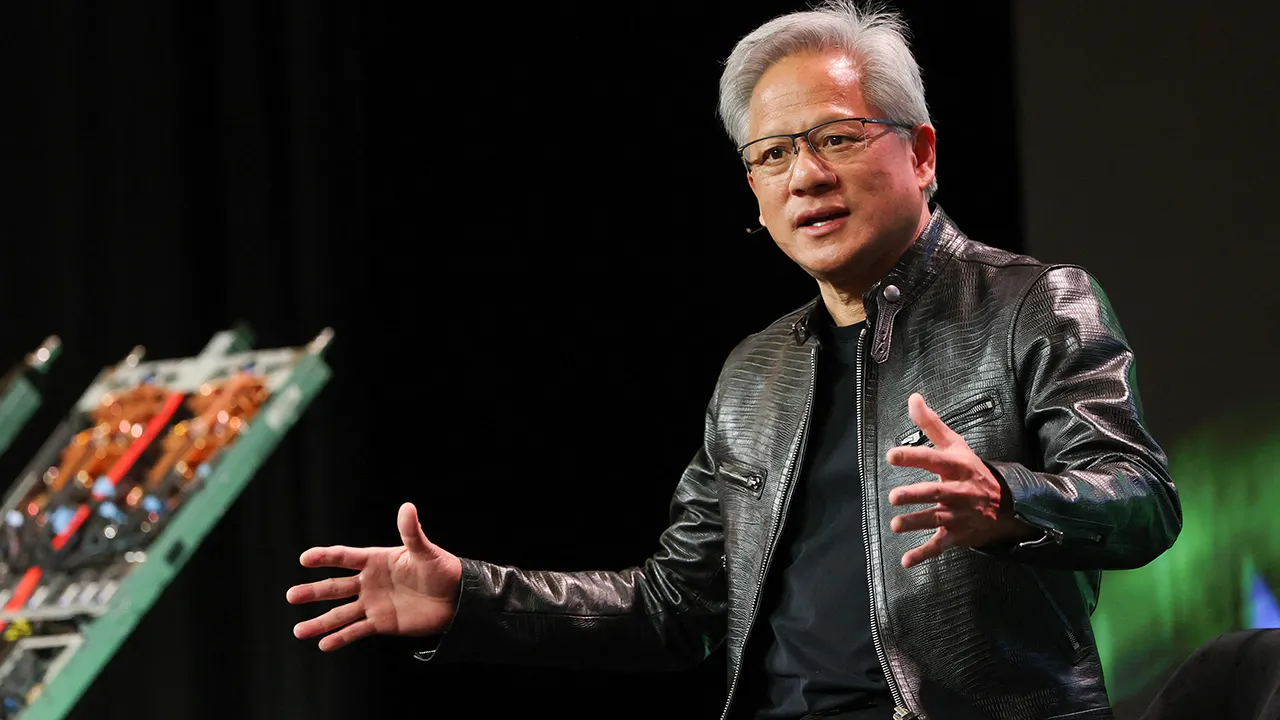
Nvidia CEO Jensen Huang gives his take on how AI is progressing on ‘The Claman Countdown.’
NVIDIA CEO Jensen Huang said the artificial intelligence boom is only just beginning and nowhere near its peak, predicting that AI is “going to be everywhere” as the industry enters a decade of growth.
Huang made the comments during an interview airing Thursday on FOX Business’ “The Claman Countdown” with host Liz Claman.
“AI is just going to be everywhere. So we have plenty of runway, lots and lots of growth ahead of us,” he said.
“It will take time, but we have lots of time,” he continued. “I think this is where, at the beginning of probably about a decade of buildout, people think that it looks like a lot of capacity being built. But in fact, it’s a very small amount of the total capacity the world needs. The amount of computation we need is far greater than the amount of capacity we’re putting online this year and next year.”
ALTMAN CALLS MUSK’S SPACE DATA CENTER PLANS ‘RIDICULOUS’ FOR CURRENT AI COMPUTING NEEDS
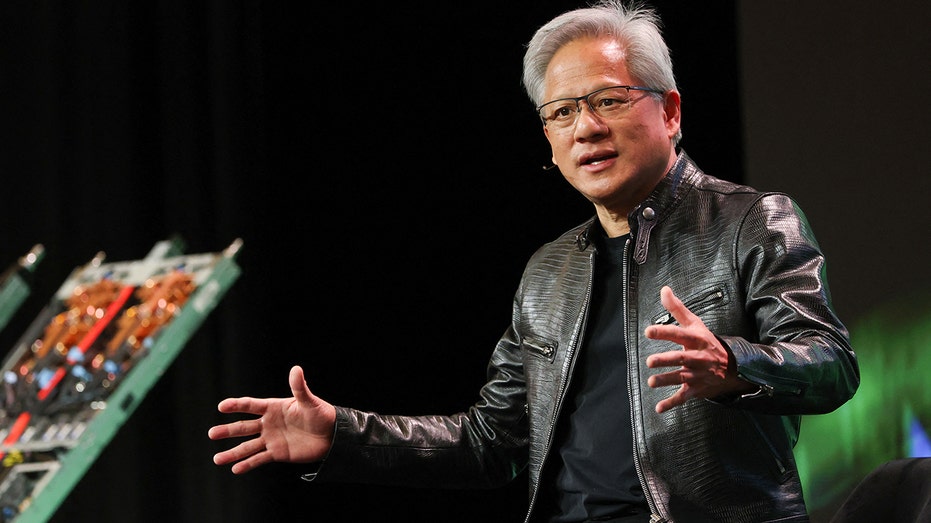
NVIDIA CEO Jensen Huang said the artificial intelligence boom is only just beginning. (Patrick T. Fallon/AFP via Getty Images / Getty Images)
Huang also said that his company has guided to zero revenue from sales to China in the current quarter, but they are “hoping for more.”
Asked why that remains the case even after the Trump administration opened channels for certain chip sales to China, Huang said NVIDIA is still waiting on customers to decide how much to purchase.
“We’ve approved for some narrow licenses for some customers, and now the customers have to decide for themselves how much they’re allowed to buy,” Huang said.
He also said the concern that China is going to use American technology to advance its AI industry is “poorly placed.”
JON TAFFER SAYS AI ‘DOESN’T GET SICK’ AS RESTAURANTS STRUGGLE TO FIND WORKERS
Nvidia CEO Jensen Huang discusses AI competition and where the technology is headed on ‘The Claman Countdown.’
“Obviously, they have their own technology,” he added. “I think the concerns about China relying on American technology to advance their AI industry are just poorly placed. AI includes energy. It includes the chip industry that we’re part of. It also includes, of course, models and applications. And it’s a fiber layer cake, if you will. Every single layer has an industry and all of those industries should go compete around the world to go secure AI leadership for the United States.”
He emphasized that he believes the decision to block the United States out of the China market “has surely proven to be the wrong decision.”
The NVIDIA executive went on to explain how jobs could be impacted by AI, predicting that it’s “sensible” to expect that “some jobs will be obsolete in the future, many new jobs will be created and most jobs will be changed.”
Though Huang noted that AI is creating jobs all over the U.S. through factories, data centers, chip plants and computer plants that need to be built to advance the technology.
“The number of trade skill labor jobs that we’re creating around the United States is really quite extraordinary,” he said. “I’m delighted to see it, and that’s a whole segment of our economy and a whole of our society that we really would love to have built back in the United Sates so that we could become a reindustrialized country again.”
Nvidia president and CEO Jensen Huang discusses how artificial intelligence will reshape the workforce, arguing that while some roles may become obsolete, many new jobs will be created as AI transforms existing industries.
GET FOX BUSINESS ON THE GO BY CLICKING HERE
Addressing potential unemployment as a result of AI, he said, “one of the things that’s really helpful is to think about work, think about jobs, both as a task that’s involved in the job as well as the purpose of the job.”
Huang further spoke on the progression of AI, saying that while it is already “super intelligent” in “narrow spaces,” it is going to “change every single month.”
“This year is going to be a pretty big breakthrough for artificial general intelligence, and we’re seeing that now,” he said. “We’ve seen that floodgate for enterprise usage of AI really starting to grow. So this is a great time.”
The full interview with Jensen Huang airs Thursday at 3 p.m. EST.

Qantas Group has reported profit of $1.46 billion for the first half of the financial year upon strong leisure demand, fleet renewal and growth in its loyalty business.
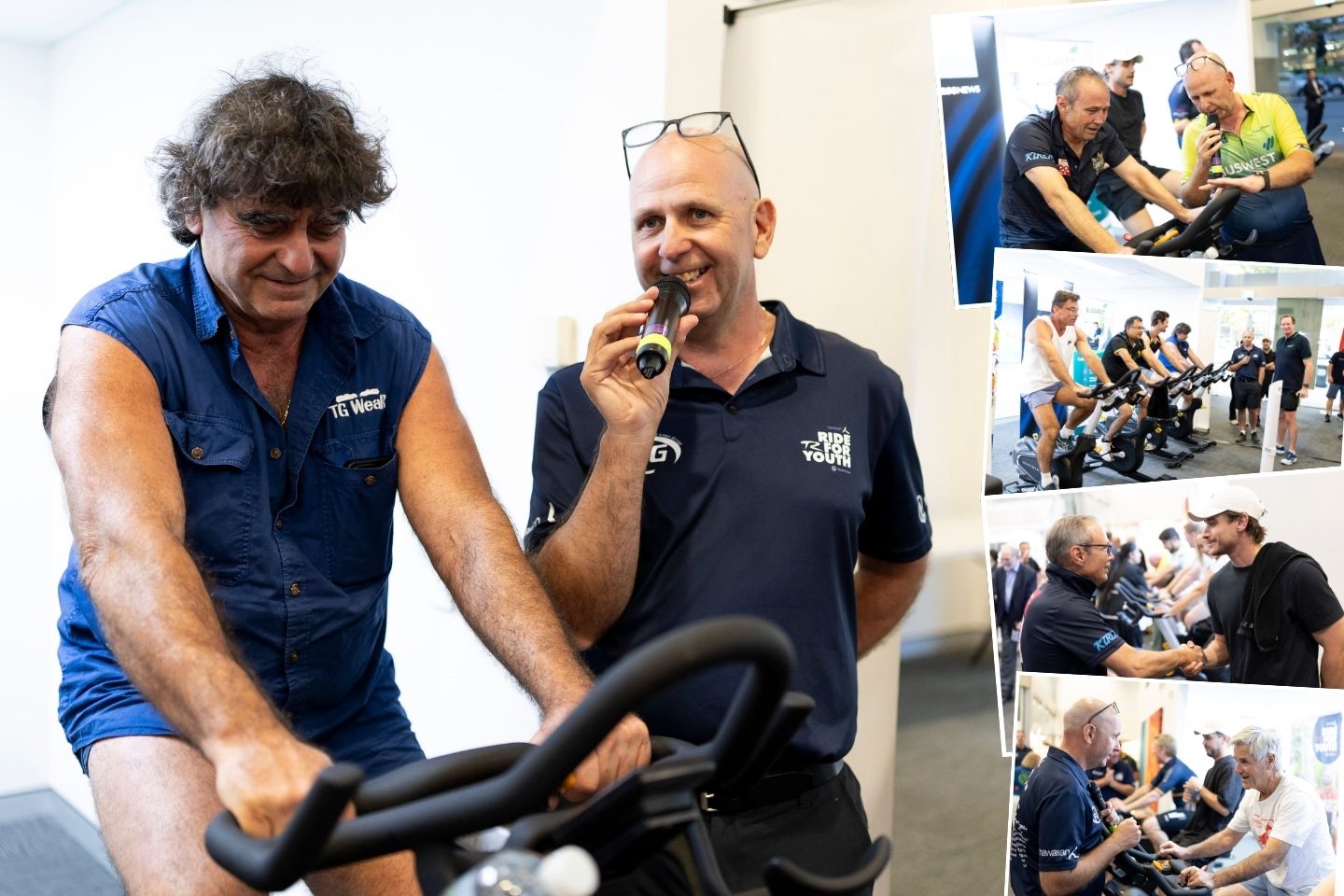
St George’s Terrace traded suits for Lycra this week as Business News hosted the first-ever Corporate Cycling Challenge.
This high-octane stationary relay supports the iconic Hawaiian Ride for Youth and the vital mental health services of Youth Focus.
While the traditional ride covers 700km from Albany to Perth, this corporate version brought the grind to the CBD.
80 business leaders took on 30-minute stints with a goal of 700km.
By the final whistle, they had obliterated the target, recording 1,670.4km and raising $32,000.
The event marks a major scale-up for long-term supporters.
Australian Transit Group chief commercial officer Simon Williams noted that Buswest has supported the ride since 2018.
Chief executive Ben Doolan has personally ridden in the event for eleven years.
“Our team has stayed pretty consistent over the years, with a core group of regular riders who really get what the event is about: camaraderie, teamwork, and backing Youth Focus in raising funds to install mental health counsellors at schools, predominantly across remote communities,” Mr Williams said.
“Historically, our fundraising has been all about private get-togethers with family and friends, loading everyone onto buses for a day at the races and sharing a few laughs along the way.
“This year, we decided to step it up and partner with our friends at Business News to do something bigger and reach more people. That’s how the Corporate Cycling Challenge was born: the goal is to cover 680km over the day on stationary bikes, the same distance as the Ride for Youth from Albany to Perth.”
The participant list featured a prominent mix of WA industry and governance.
Riders included Tony and Frank Galati of Spudshed, CommBank’s Gary McGrath, Hugh Brown, Chris Wilson, Luke Whelan, and Harrison Deloub.
Premier Roger Cook rode the final stretch and expressed his pride in the initiative.
“Youth Focus plays a vital role in supporting youth mental health, and all fundraising at the Challenge provides boosts to young Western Australians,” he said.
“I’m thrilled to have joined the participants of the Corporate Cycling Challenge and the Hawaiian Ride for Youth — there may be some sore legs afterwards, but every kilometre ridden drives awareness, connection and support.”
Since 1994, Youth Focus has been a leading mental health provider in Western Australia.
The organisation exists because almost every week, a young person under the age of 25 dies by suicide.
Their vision is a world where mental health does not stop a young person from being who they want to be.
Business News Chief executive Charles Kobelke praised the collective effort of the riders.
“I’m really proud to support this cycling fundraiser for Youth Focus and everyone taking part. It’s a great cause and I love seeing the business community really getting behind it,” he said.
The day’s success was underpinned by a vast network of sponsors, including Revo Fitness, Gage Roads, Business News, Fern Grove Wines, Frasers, Deanne Bailey, Mark Hector, Eastcourt Foundation, Ben Devenish, WA Limestone, Multiplex, Graham Nash, Halo Civil Engineering, Lavan, Friendlies Eye Care, Mandurah Raw Prawns Veterans Rugby Team, Vector Advisors, Entertainment Enterprises, Chris Wilson Fitness Studio, Pickaxe, Silverleaf, Humich Group, and Russell James.
Reflecting on the day, Mr Williams looked toward the future impact.
“With a full summer of training behind us, the riding won’t be the hard part for our team, but we’re hoping that by getting a mix of business leaders and friends on the bikes, we can introduce them to the work of Youth Focus and, dare I say, inspire them to make a contribution to this truly worthy cause.”

21Shares Launches Strategy Yield ETP in Europe

Neurodivergence And Eating Struggles: How To Cope As A Parent

Beau Greaves becomes first woman to hit nine-darter on PDC ProTour


-

 Video6 days ago
XRP News: XRP Just Entered a New Phase (Almost Nobody Noticed)
-

 Politics4 days ago
Baftas 2026: Awards Nominations, Presenters And Performers
-

 Fashion5 days ago
Weekend Open Thread: Boden – Corporette.com
-

 Sports2 days ago
Women’s college basketball rankings: Iowa reenters top 10, Auriemma makes history
-

 Politics3 days ago
Nick Reiner Enters Plea In Deaths Of Parents Rob And Michele
-

 Crypto World2 days ago
XRP price enters “dead zone” as Binance leverage hits lows
-

 Business4 days ago
Mattel’s American Girl brand turns 40, dolls enter a new era
-

 Business4 days ago
Law enforcement kills armed man seeking to enter Trump’s Mar-a-Lago resort, officials say
-

 Tech2 days ago
Unsurprisingly, Apple's board gets what it wants in 2026 shareholder meeting
-
 NewsBeat8 hours ago
Manchester Central Mosque issues statement as it imposes new measures ‘with immediate effect’ after armed men enter
-

 NewsBeat6 hours ago
Cuba says its forces have killed four on US-registered speedboat | World News
-

 Tech4 days ago
Anthropic-Backed Group Enters NY-12 AI PAC Fight
-
 NewsBeat3 days ago
‘Hourly’ method from gastroenterologist ‘helps reduce air travel bloating’
-

 Business1 day ago
True Citrus debuts functional drink mix collection
-

 NewsBeat3 days ago
Armed man killed after entering secure perimeter of Mar-a-Lago, Secret Service says
-

 Politics4 days ago
Maine has a long track record of electing moderates. Enter Graham Platner.
-
 NewsBeat1 day ago
Police latest as search for missing woman enters day nine
-

 Crypto World1 day ago
Entering new markets without increasing payment costs
-
 Sports3 days ago
2026 NFL mock draft: WRs fly off the board in first round entering combine week
-

 Crypto World6 days ago
83% of Altcoins Enter Bear Trend as Liquidity Crunch Tightens Grip on Crypto Market