

Business
S&P/ASX 200 Rises 0.54 Percent to 8,703.8 on Mining and Bank Gains


SYDNEY — The S&P/ASX 200 index climbed 46.8 points, or 0.54 percent, to 8,703.8 in midday trading on Monday, May 25, 2026, as strength in mining and financial stocks lifted the benchmark.
The Australian sharemarket opened higher and maintained gains through the morning session. At 12:32 p.m. AEST, the index showed solid buying interest amid mixed global cues and positive domestic corporate updates.
Mining stocks led the advance, supported by firmer iron ore and copper prices on international markets. Major companies including BHP Group and Rio Tinto contributed to the upward movement. Financial stocks also provided support, with the big four banks trading mostly higher.
Sector Performance
The materials sector recorded strong gains, reflecting the heavy weighting of resource companies in the Australian market. The financials sector posted modest advances. In contrast, information technology and consumer discretionary stocks showed mixed results, with selected individual company movements influencing performance.
The Australian dollar traded around $0.64 against the U.S. dollar in early afternoon trading. Bond yields edged lower, with the 10-year government bond yield declining slightly from recent levels.
Economic Context
The Reserve Bank of Australia has held its cash rate at 4.10 percent in recent months. Market participants continue to watch inflation data and global central bank policies for signals on future rate decisions.
Recent employment figures have shown resilience in the Australian economy. Retail sales data have remained steady, though concerns about slowing growth in China continue to influence resource companies. Iron ore prices have stabilized in response to Chinese steel production trends.
Company News
Several individual stocks moved on corporate developments. Commonwealth Bank of Australia reported steady lending growth in its latest update. Mining services companies benefited from improved commodity prices.
Technology firms with exposure to artificial intelligence attracted selective buyer interest. Selected healthcare and consumer staple stocks traded mixed during the session.
Global Influences
Wall Street closed mixed on Friday. European markets showed varied performance on Monday morning. Asian markets were mostly lower, with the Nikkei 225 and Hang Seng indices recording declines.
Oil prices traded in a narrow range, providing limited direction for energy stocks listed in Australia. Gold prices remained relatively firm, supporting related mining companies.
Market Breadth
Advancing stocks outnumbered decliners by a comfortable margin in early trading. Trading volume was slightly above average levels for a Monday session. The small-cap S&P/ASX Small Ordinaries index outperformed the broader market.
Analyst Commentary
Market strategists noted that the Australian sharemarket has displayed resilience in 2026 despite external pressures. Resource companies have benefited from stable commodity prices, particularly from major trading partners.
The banking sector has maintained stable interest margins and cautious lending standards. Technology and healthcare stocks have provided diversification for investors seeking growth opportunities.
Broader Economic Indicators
Australia’s economy has continued to expand at a moderate pace. Inflation has moderated but remains above the Reserve Bank of Australia’s target band. Unemployment has stayed relatively low, supporting consumer spending.
The housing market has shown signs of stabilization in major cities. Business investment in the resources sector remains a key driver of economic activity. New project approvals have been steady in recent months.
Outlook
Market participants will watch upcoming data releases, including inflation figures and trade balance numbers, for further direction. Corporate earnings season continues, with several major companies scheduled to report results in coming weeks.
The S&P/ASX 200 has traded within a defined range for much of 2026, reflecting balanced domestic conditions and global uncertainties. Analysts expect continued volatility as investors assess the impact of commodity prices, interest rates and geopolitical developments.
The Australian sharemarket’s performance remains closely tied to global growth expectations and commodity demand. Resource stocks, which form a significant portion of the index, continue to respond to developments in China and other major economies.
Financial stocks have provided stability amid changing interest rate expectations. Technology companies have offered growth exposure as artificial intelligence adoption increases across industries.
The S&P/ASX 200 index movement reflects real-time market conditions and is subject to change throughout the trading session. Investors continue to monitor both domestic economic indicators and international developments for direction.


Socket Mobile appoints David Holmes as president and CEO


Nippert and Jolly to succeed retiring Poland and Sanzio.
Business
Infosys share price: Rs 40,000 crore gone in minutes! Why Infosys shares crashed 9% to hit lowest level in almost 6 years
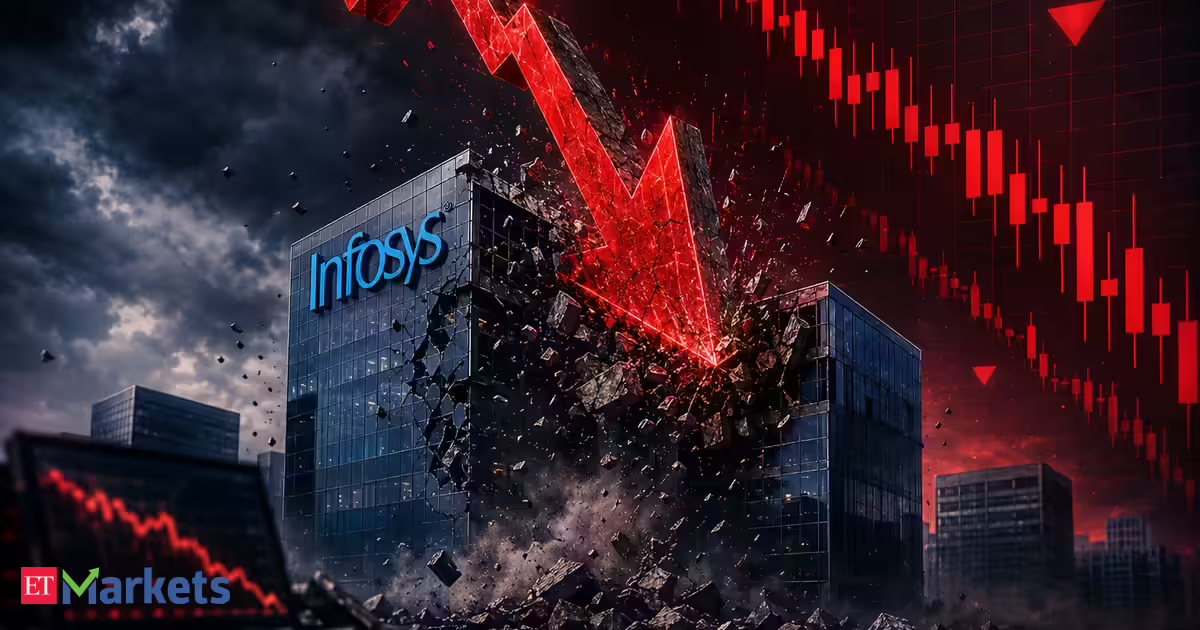
The sharp reaction was hardly surprising. Infosys ADRs had tumbled 10% overnight in the US, setting the stage for a steep correction in domestic markets.
Accenture’s softer outlook reinforced a growing concern among investors that enterprises continue to remain cautious on discretionary spending related to IT consulting and digital transformation projects, even as investments in artificial intelligence and cybersecurity remain intact.
The development carries significant implications for Indian IT companies, which derive a substantial portion of their revenues from North America and frequently compete with Accenture for large digital transformation mandates.
Infosys, for its part, has been aggressively expanding its artificial intelligence capabilities to offset pricing pressure in its traditional services business. The company has deepened investments in AI engineering, data and cloud through platforms such as Topaz and Cobalt, while also strengthening partnerships with OpenAI, Microsoft and Nvidia.

Management has previously said that the deployment of AI tools, including GitHub Copilot across more than 30,000 developers, is helping generate new AI-led opportunities, while cushioning the impact of productivity-led pricing pressure.
Also read: IT Stocks: TCS, Infosys, Wipro, other IT stocks crash up to 8% as Accenture lowers FY26 guidance
US Fed delivers blow
Adding to the pressure was the latest policy outcome from the US Federal Reserve, which struck a hawkish tone and fuelled expectations of a rate hike later this year, raising concerns over a potential slowdown in discretionary spending.
Although the Fed kept rates unchanged, market expectations shifted sharply. According to CME Group’s FedWatch tool, the probability that rates would remain unchanged by the end of the year dropped to 15.7% from 40% on Tuesday. Traders now see nearly a 38% chance of a 25 basis-point rate hike by December, while the probability of a 50 basis-point hike stands at nearly 33%.
The implications are particularly important for Indian IT firms, which generate a large share of their business from North America. Higher borrowing costs or persistent inflation in the US could curb discretionary spending by enterprises, potentially affecting demand for technology services.
The sector has already endured a volatile year. Earlier in 2026, rapid advances in artificial intelligence sparked concerns about potential disruption to India’s IT services model. Sentiment was further dented by the escalating conflict in the Middle East, which weighed on broader markets and overshadowed the temporary support provided by a weaker rupee.
Read more: RIL AGM strategy: How to trade Reliance shares amid big-bang announcements by Mukesh Ambani?
Accenture Q3
For the third quarter, Accenture posted earnings per share of $3.80, compared with $3.49 in the same period last year, surpassing analyst expectations. Revenue increased 5.6% year-on-year to $18.7 billion, though it came in slightly below estimates of $18.76 billion.
Total bookings fell 1.9% to $19.32 billion during the quarter. A 15% decline in managed services bookings weighed on the overall figure, although this was partly offset by a 13% rise in consulting bookings.
Accenture also raised its full-year adjusted earnings per share forecast to $13.78-$13.90. The company left its operating cash flow and free cash flow guidance unchanged and continues to expect annual free cash flow in the range of $10.8 billion to $11.5 billion.
The latest selloff adds to an already painful year for investors. Infosys shares have tumbled 36% since the start of 2026, while the Nifty IT index has plunged 29% on a year-to-date basis.
(Disclaimer: Recommendations, suggestions, views and opinions given by the experts are their own. These do not represent the views of The Economic Times)
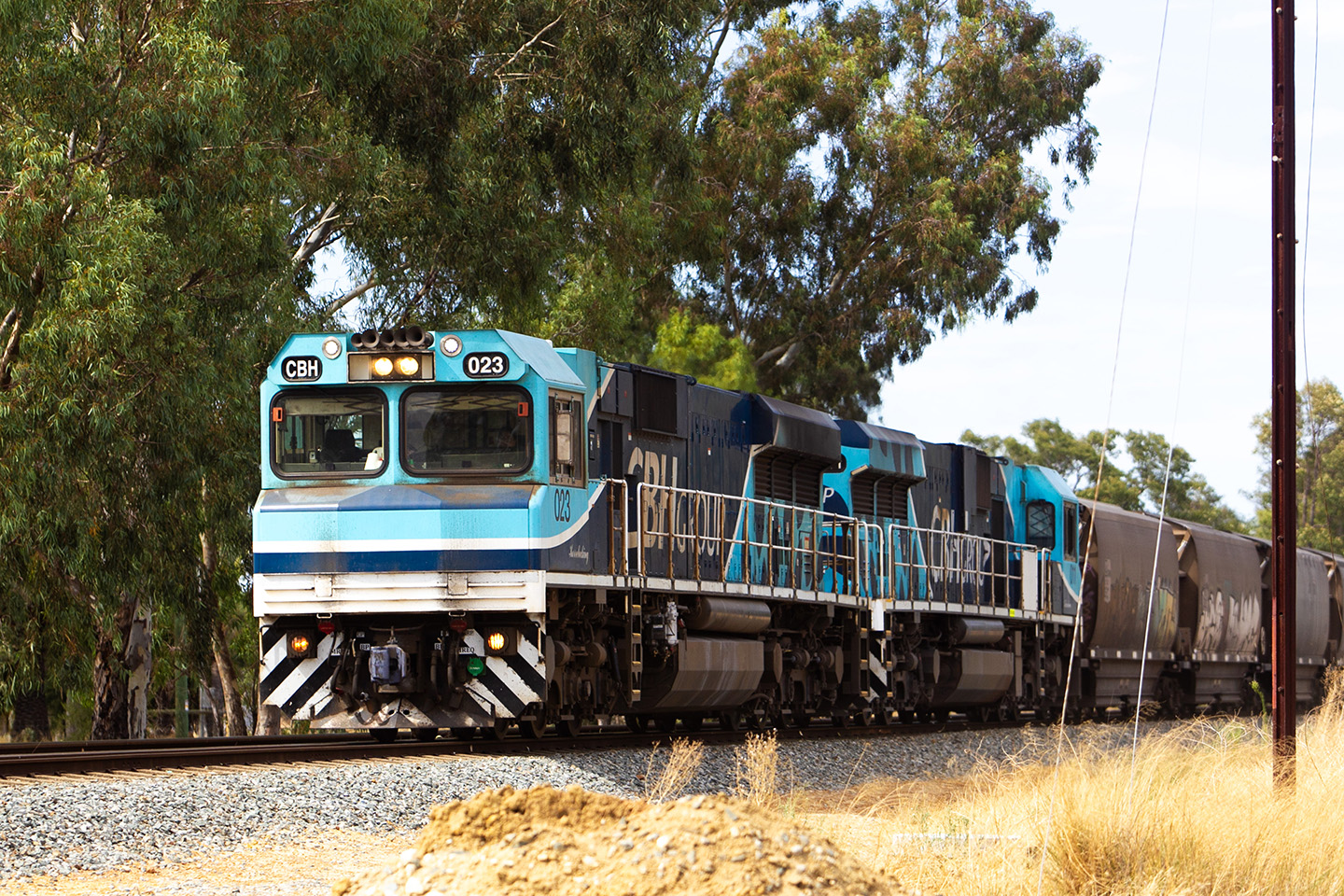
The country’s biggest grain handler has failed in its bid to overturn a court decision relating to a $22 million payment claim over its rapid rail project.

Housing and Urban Development Secretary Scott Turner joins ‘Mornings with Maria’ to discuss rising mortgage rates, cutting housing regulations and the Trump administration’s push to boost affordable homebuilding.
A new report on the U.S. housing sector finds that activity remains subdued through the first part of the year as high costs suppress demand.
The Joint Center for Housing Studies of Harvard University released its annual “State of the Nation’s Housing” report on Wednesday, which found that existing home sales remain near the lowest level in three decades that was first reached in 2023.
Sales of new homes remained relatively unchanged, while rental retention rates rose and new occupancies declined. New construction starts dipped 1% over the last year, driven by a 7% decline in single-family starts.
“Although supply shortages are still a major concern, depressed demand became a headline in housing over the past year,” the report said, noting slower growth in the number of homeowner households as well as the number of renters compared with a year ago.
MEDIAN US HOME PRICE PROJECTED TO HIT $1 MILLION BY 2050 – RIGHT AS MILLENNIALS RETIRE

The household income needed to afford a home has nearly doubled since 2020, the report noted. (Paul Bersebach/MediaNews Group/Orange County Register via Getty Images)
The rate of growth of homeowner households declined by half and caused homeownership rates to decline for the second straight year. Additionally, the year-over-year increase in the number of renters in the first quarter of 2026 was less than half of what it was a year earlier.
Economic uncertainty has weighed on housing demand, with employment growth slowing from a gain of 1.5 million in 2024 to just 116,000 in 2025.
Consumer confidence dropped by more than 20 percentage points in 2025 and fell further in the first part of 2026 due to the Iran war, reaching an all-time low in April.
MORTGAGE RATES TICK HIGHER, BUT BUYERS SHOW SIGNS OF CONFIDENCE

Demand for homes is depressed by high prices. (Eric Thayer/Bloomberg/Getty Images)
“Without a job, graduates are less likely to form a new household or move to a new region,” the report said. “Without confidence in employment, families are less likely to move or make a big purchase like a house.”
High costs and the lack of affordable housing options are also contributing to the weaker demand, as households are struggling with high home prices and interest rates.
MIDWEST AND SOUTHERN STATES DOMINATE HOUSING REPORT CARDS: SEE HOW YOURS SCORED

High mortgage rates and a scarcity of new supply has pushed the cost of buying a home and making monthly payments harder. (David Paul Morris/Bloomberg via Getty Images)
The report said that the median prices for new and existing homes are both over $400,000 and that existing home prices have risen 54% since 2020 and are about 5-times the median income – a level well above the ratio of 3-times that prevailed in the 1990s.
Mortgage rates are over 6%, which makes the payment on a median-priced home $3,100 in the fourth quarter of 2025, up from $1,700 in early 2020. That has pushed the income needed to afford that payment to more than $120,000 – a significant increase from $66,000 in 2020.
Cognizant Technology Solutions: Shares Are Difficult To Resist Here

Mark Pownall, Gary Adshead and Ella Loneragan discuss the latest on Pauline Hanson; industrial war in the Pilbara; tax changes; Summit Homes; Multiplex; and construction costs.

MemeToro Positions $MT Token as a Behavioral Finance Layer Alongside Infrastructure
Business
Russell 2000 Jumps 2.12% to Close at 2,979.77, Leading Wall Street’s Rally Before Holiday Weekend
The Russell 2000, the benchmark index tracking small-capitalization U.S. companies, surged 2.12% on Thursday to close at 2,979.77, up 61.78 points, outpacing every other major U.S. stock index as a wave of positive catalysts lifted markets heading into the three-day Juneteenth holiday weekend.
The small-cap index’s outsized gain reflected a broader rally across Wall Street that was fueled by a surprise semiconductor partnership announcement, easing Middle East tensions following a formal peace agreement, and a sharp reversal of investor anxiety that had built up earlier in the week following a hawkish signal from the Federal Reserve.
A Broad-Based Rally Across U.S. Markets
Thursday’s gains extended across virtually every major U.S. benchmark, though small-cap stocks led the charge by a notable margin. The S&P 500 closed up 1.08% at 7,500.58, while the Nasdaq Composite surged 1.91% to 26,517.93. U.S. equities closed higher Thursday, as tech strength and optimism over the U.S.-Iran deal offset concerns over a hawkish Federal Reserve. The S&P 500 advanced 1% and the Nasdaq 100 gained 1.9%, while the Dow rose by 72 points.
The fact that the Russell 2000 outpaced all three of those larger-cap benchmarks is notable, as small-cap stocks are often viewed by investors as more sensitive to domestic economic conditions and interest rate policy than their larger, more globally diversified counterparts.
Why Small Caps Often Move More on Rate Sentiment
Small-capitalization companies, which make up the Russell 2000 index, tend to carry higher levels of debt relative to their larger peers and rely more heavily on domestic revenue streams, making them particularly sensitive to shifts in Federal Reserve policy and interest rate expectations. That dynamic likely played a meaningful role in Thursday’s outsized gain, as markets recovered from the prior session’s sharp selloff tied to hawkish signals from the central bank.
Equity indexes rose and yields were flat Thursday ahead of the open as investors recovered some of the ground lost after the Federal Reserve, in Kevin Warsh’s first meeting as chair, indicated the possibility of a rate hike this year. The Federal Reserve kept rates steady, with half of officials signaling that at least one rate increase may be warranted this year.
That hawkish dot plot had triggered substantial losses across the market just one day earlier. The Dow Jones Industrial Average had lost more than 500 points Wednesday and the S&P 500 slumped 1.2% as hopes for a more dovish Fed were quickly dashed, with all 11 of its sectors closing in the red. Small-cap stocks, given their typically higher sensitivity to rate expectations, would have likely borne a disproportionate share of that prior session’s selling pressure, setting up a correspondingly larger rebound once sentiment improved.
The Intel-Apple Deal’s Ripple Effect
While the Russell 2000 itself does not include mega-cap technology names like Intel or Apple, the broader market enthusiasm generated by their surprise partnership announcement appeared to lift sentiment across the board, including among smaller companies tied to the domestic manufacturing and technology supply chain. Intel surged 10.6% after President Trump announced that the semiconductor giant would produce chips for Apple in the U.S. The news lifted the broader chip sector, with Nvidia up 2.8% and Micron Technology climbing 8.5%.
That renewed enthusiasm for domestic semiconductor manufacturing carries particular relevance for small-cap investors, given that many smaller industrial and technology companies serve as suppliers within the broader U.S. chip manufacturing ecosystem and stand to benefit from increased onshoring of production capacity.
Easing Geopolitical Tensions Provide Additional Tailwind
Beyond the technology sector catalyst, broader market sentiment also continued to benefit from the formal signing of an interim peace agreement between the United States and Iran, which has helped ease fears of sustained volatility in global energy markets — a factor with direct relevance for smaller, more domestically focused companies that can be particularly sensitive to fluctuating input costs. The interim peace agreement signed by the U.S. and Iran, which includes the reopening of the Strait of Hormuz, raised hopes for an end to the conflict and eased concerns about volatile energy prices.
That improved geopolitical backdrop also lifted travel and transportation-related stocks more broadly. Airlines also saw strong gains, with American Airlines rising 3.3%.
Volatility Drops Sharply
The combination of catalysts driving Thursday’s rally appeared to substantially calm investor anxiety that had built up earlier in the week amid the Fed’s hawkish signaling. The CBOE Volatility Index, often referred to as Wall Street’s fear gauge, fell sharply by 11.06% to 16.40, a notable decline that reflected renewed investor confidence heading into the long holiday weekend — a dynamic that often particularly benefits small-cap stocks, which tend to underperform during periods of heightened market volatility and outperform when investor risk appetite improves.
A Narrow Large-Cap Rally Contrasts With Broader Small-Cap Participation
Interestingly, Thursday’s session showed a notably different breadth pattern between large-cap and small-cap stocks. While analysts noted that gains among blue-chip and mega-cap technology names were relatively concentrated, the Russell 2000’s strong showing suggests broader participation across smaller companies. The primary narrative driving the market on Thursday was the resilience of industrial manufacturing and AI-driven hardware, which managed to offset broader weakness in enterprise software and consumer retail. While the index reached new heights, the narrow breadth of the rally suggested selective investor sentiment as the market digested new economic data.
That contrast — narrow strength among mega-cap names alongside a broader, more decisive rally in the small-cap Russell 2000 — suggests Thursday’s session reflected a genuine, broad-based improvement in risk appetite among investors rather than enthusiasm confined to a handful of high-profile technology stocks.
International Markets Offer a Mixed Picture
The positive sentiment driving U.S. markets Thursday extended to several major international exchanges, though not universally. Japan’s Nikkei 225 climbed 1.65%, Germany’s DAX rose 0.37%, and France’s CAC 40 gained 0.44%. Hong Kong’s Hang Seng Index declined 1.59%, and London’s FTSE 100 fell 1.04%.
That divergence suggests the specific catalysts driving Thursday’s U.S. rally — the Intel-Apple announcement and the formalized Iran peace deal — carried outsized relevance for American markets and domestically focused companies in particular, a dynamic consistent with the Russell 2000’s standout performance among major indexes.
Markets Now Closed for Juneteenth
With Thursday’s strong session now complete, U.S. markets will remain closed for the remainder of the week in observance of a federal holiday. The New York Stock Exchange and the Nasdaq will be closed for trading on June 19, 2026, in observance of the federal holiday of Juneteenth. Both major stock exchanges first closed for the holiday in 2022, after Juneteenth was designated as a federal holiday in 2021.
The stock and bond markets will reopen Monday, June 22, and it will be business as usual on Wall Street for a few days, with the next scheduled market closure coming Friday, July 3, in observance of Independence Day.
Heading into the long holiday weekend, the Russell 2000’s standout performance leaves small-cap investors with reason for cautious optimism as markets prepare to resume trading Monday. Given that smaller companies often respond more sharply to shifts in interest rate expectations than their large-cap counterparts, the index’s trajectory in the coming weeks may serve as a useful barometer for how investors are ultimately interpreting the Federal Reserve’s hawkish signals — whether Thursday’s rally reflected a durable improvement in sentiment toward the prospects for smaller, domestically focused businesses, or a more temporary relief rally tied to a specific set of favorable headlines that could fade once markets reopen and digest the week’s full slate of developments.
Business
Multibagger Paras Defence shares rocket 28% in just 3 sessions. What’s behind the stellar rise?

The stock has emerged as one of the standout performers in the defence space this year, surging a staggering 120% over the last six months and delivering multibagger returns to investors. On Friday, trading activity remained exceptionally strong. Exchange data showed that 68.39 lakh shares changed hands during the session, translating into turnover of nearly Rs 940 crore.
Paras Defence share price rally trigger
The latest rally comes on the back of a strong push in India’s defence manufacturing ecosystem. Earlier this year, the Ministry of Defence announced that indigenous defence production climbed to Rs 1.78 lakh crore in FY26, representing a 15.6% increase from Rs 1.54 lakh crore in the previous financial year. The achievement is even more striking when viewed over a longer period, with production more than doubling from Rs 84,643 crore in FY21, marking growth of 110%.
Also read: Rs 40,000 crore gone in minutes! Why Infosys shares crashed 9% to hit a new 52-week low
Public sector undertakings continued to account for the bulk of production, contributing nearly 76% of the total. At the same time, the private sector’s share rose to 24%, with production touching Rs 42,000 crore in FY26 compared with 22% in FY25.”The growth in defence production over the years has tremendously contributed to achieving the record defence exports of Rs 38,424 crore in FY 2025-26. The achievement reflects the growing momentum of the Government’s push for self-reliance in defence manufacturing under the Aatmanirbhar Bharat initiative, spearheaded by Prime Minister Shri Narendra Modi,” the ministry said in a statement.
The ministry also highlighted on X that India is building one of the world’s strongest security architectures, citing the world’s largest border-guarding force, extensive border fencing, the Sudarshan Chakra, stronger counter-terror capabilities, and rapid growth in indigenous defence manufacturing.
Defence Minister Rajnath Singh said India has undergone a historic transformation in its national security framework under Prime Minister Narendra Modi’s leadership.
“From a policy of zero tolerance against terrorism to decisive actions such as Surgical Strikes, Balakot and Operation Sindoor, India has sent a clear message that its sovereignty is non-negotiable,” Singh said in a post on X.
He further said the government’s commitment to Aatmanirbharta in defence has significantly strengthened domestic capabilities, modernised the armed forces, and enhanced preparedness across land, sea, air, cyber, and space domains.
“The journey of the last 12 years reflects a stronger, safer, self-reliant and more confident India, ready to safeguard its national interests and emerge as a leading global power,” he added.
Read more: NSE IPO: BSE hosts double the listed companies but numbers tell a different story
Where is the defence sector headed?
“We have been bullish on the Indian defence sector, as we were clear that our armed forces, consisting of all three services, had to up their spends to be technologically up-to-date,” said Dinshaw Irani, Chief Executive of Helios Capital India.
He noted that the Russia-Ukraine war prompted NATO countries to significantly increase defence spending, further strengthening the long-term outlook for the sector.
“We were further convinced that India, being a friendly and peace-loving country with a low-cost base, will become a sourcing base for defence products. Small beginnings have been made, and the future holds a fair bit of promise,” he said.
The optimism around the defence theme is also reflected in institutional ownership trends. Despite the broader FII selloff, foreign investors have steadily increased their exposure to Paras Defence. FII holdings in the company have risen from 3.46% to 5.06%, even as the stock has delivered a return of 121%.
(Disclaimer: Recommendations, suggestions, views and opinions given by the experts are their own. These do not represent the views of The Economic Times)

Man pronounced ‘dead at the scene’ of crash in Cambridge
Socket Mobile appoints David Holmes as president and CEO

An investment guide for beginners


-

 Business5 days ago
No Jackpot Winner as $257 Million Prize Rolls Over to $269 Million Monday Draw
-

 Fashion7 days ago
Weekend Open Thread: Tuckernuck – Corporette.com
-
 Crypto World5 days ago
Zimbabwe Requires Crypto Businesses to Register Annually Under New FIU Regulations
-

 Crypto World6 days ago
Bitget enters Argentina’s regulated crypto market through PSAV registration
-

 Tech7 days ago
NanoClaw integrates JFrog registries to secure AI agent downloads
-

 NewsBeat7 days ago
FBI searches office of Ohio voter registration group
-
 Entertainment5 days ago
Matt Damon’s Viral Sci-Fi Thriller Has Taken Over HBO Max
-

 Business5 days ago
Anthropic staff to meet White House officials next week, Axios reports
-

 Tech5 days ago
As AI companies race to go public, who else is along for the ride?
-
 Crypto World5 days ago
Bitcoin could crash to $48,000, if this historical pattern is triggered
-

 Politics5 days ago
“Israel’s” ban on ICRC visits ruled illegal, but Knesset moves to stop them permanently
-
 NewsBeat5 days ago
Warning of disruption as Cardiff Crossrail works to start
-

 News Videos5 days ago
Financial Accounting | Last Day Revision Strategy and Booster | CMA Inter – June 2026
-
 NewsBeat5 days ago
Tributes to former deputy head teacher at Cambridge school among death and funeral notices
-
 NewsBeat5 days ago
what doctors are seeing in ebike crashes
-

 Entertainment6 days ago
Deion Sanders Shares Powerful Post After Viral Advice To Deiondra
-

 Crypto World5 days ago
XRP ETFs Outperform As Bitcoin And Ethereum Funds Extend Outflow Trend
-
 Crypto World5 days ago
Market Preview: SpaceX (SPCX) IPO Record, Federal Reserve Meeting, and Iran Nuclear Agreement
-
 Entertainment5 days ago
Kate Middleton Glare Goes Viral After Kids Booed At Royal Event
-

 Business5 days ago
Invesco Quality Income Fund Q1 2026 Commentary
You must be logged in to post a comment Login