
Business
SpaceX Eyes Record IPO Filing This Week at Up to $1.75T Valuation


Elon Musk’s SpaceX is preparing to file paperwork for what could become the largest initial public offering in history as soon as this week, according to people familiar with the matter, accelerating plans for a potential June debut that would value the rocket and satellite giant at more than $1.75 trillion.

The move, reported by The Information on Tuesday and echoed across major outlets, marks a dramatic shift for the 24-year-old company long resistant to public markets. Advisers involved in preparations expect SpaceX to seek more than $75 billion in fresh capital, dwarfing the previous record set by Saudi Aramco’s $29.4 billion listing in 2019.
SpaceX did not immediately respond to requests for comment. Musk has not publicly addressed the latest filing timeline, though he confirmed in December 2025 that reports of a 2026 IPO were “accurate.”
The potential offering comes as SpaceX’s valuation has soared on the back of its Starlink satellite internet service and repeated successful launches of the Falcon 9 rocket. A recent insider share sale valued the company at about $800 billion late last year, with analysts now projecting a public debut north of $1.5 trillion — and some as high as $1.75 trillion.
Starlink, which provides high-speed internet via thousands of low-Earth orbit satellites, has emerged as the company’s primary growth engine. The service generated roughly $12 billion in revenue last year and now serves millions of subscribers worldwide, including in remote and underserved areas. SpaceX has deployed more than 10,000 Starlink satellites, with ambitious plans to expand the constellation dramatically.
Revenue from Starlink is believed to account for a growing share of SpaceX’s total income, which analysts estimate reached around $15 billion in 2025. The business model — recurring subscriptions with high margins — has helped justify sky-high valuations despite the capital-intensive nature of rocket development and satellite manufacturing.
SpaceX’s traditional launch business continues to dominate the global market. The company launches more payloads to orbit than any other entity, serving NASA, commercial clients and the U.S. military. Its reusable Falcon 9 boosters have slashed launch costs, making SpaceX a critical partner in America’s space ambitions.
The developmental Starship vehicle, designed for deep-space missions including a potential crewed landing on Mars, represents the company’s long-term bet on interplanetary travel. Musk has repeatedly said Starship is key to making humanity multi-planetary, with plans for massive flight cadence increases once fully operational.
Recent reports suggest the IPO proceeds would fund an “insane flight rate” for Starship, construction of orbital data centers powered by artificial intelligence, and other ambitious projects. SpaceX’s all-stock acquisition of Musk’s xAI earlier this year has further blurred lines between space, AI and computing, potentially creating synergies for in-orbit data processing.
Wall Street banks including Bank of America, JPMorgan, Goldman Sachs and Morgan Stanley have been in discussions for leading roles in the offering, according to earlier reports. A confidential filing with the Securities and Exchange Commission could allow SpaceX to gauge investor interest quietly before a full public registration.
If priced at the high end of expectations, the IPO would not only set records for size but could also propel SpaceX into the upper ranks of U.S. public companies by market capitalization, rivaling or exceeding major tech giants.
The news triggered sharp gains in other space-related stocks on Wednesday. Shares of Rocket Lab, AST SpaceMobile and Redwire jumped in premarket and regular trading as investors bet on heightened sector interest ahead of SpaceX’s debut.
Analysts caution that a SpaceX IPO would introduce new scrutiny. As a public company, it would face quarterly reporting requirements, greater transparency on costs and risks, and pressure from shareholders focused on near-term profitability rather than long-term visions like Mars colonization.
Musk’s dual roles as CEO of Tesla and SpaceX — and his ownership stakes across multiple ventures — could raise governance questions. Tesla shareholders have occasionally expressed concern about Musk’s divided attention, though SpaceX has operated largely independently.
Regulatory hurdles also loom. SpaceX’s heavy reliance on government contracts, particularly with NASA and the Pentagon, means national security reviews and export controls could influence the IPO process. Starlink’s international expansion has already faced geopolitical pushback in some markets.
Still, investor enthusiasm appears strong. Prediction markets have placed high odds on a 2026 listing, with many pointing to June as a target window. Some speculate the timing could align with symbolic milestones in Musk’s narrative around space exploration.
SpaceX’s path to public markets has been years in the making. Musk long preferred the flexibility of private ownership to pursue high-risk, high-reward projects without quarterly earnings pressure. But growing valuation — fueled by Starlink’s rapid subscriber growth and launch dominance — has made liquidity for early employees and investors more pressing.
Tender offers and secondary share sales have provided some exits, but a full IPO would open the company to millions of retail and institutional investors. ETFs and leveraged products betting on SpaceX exposure have already begun appearing in filings, signaling market anticipation.
The broader space economy stands to benefit. A successful SpaceX debut could validate the sector and draw more capital to satellite communications, reusable rockets and orbital infrastructure. Rivals and partners alike are watching closely.
For Musk, the IPO represents both validation of two decades of work and a massive capital infusion to accelerate his most audacious goals. SpaceX has already transformed access to space; going public could supercharge its next chapter.
Yet risks remain substantial. Starship development has encountered setbacks, including explosive test flights, though progress continues. Starlink faces competition from Amazon’s Project Kuiper and other entrants. Regulatory approval for massive satellite constellations has drawn environmental and astronomical concerns over light pollution and orbital debris.
SpaceX employs thousands and operates major facilities in California, Texas and Florida. Its Starbase complex in Boca Chica, Texas, serves as the hub for Starship testing and is central to Musk’s Mars ambitions.
As the potential filing window narrows, attention turns to the SEC and how regulators will handle one of the most scrutinized offerings in decades. A quiet filing this week would keep momentum toward a summer listing while allowing time for due diligence.
Industry observers note that even at conservative estimates, SpaceX’s IPO would eclipse most recent tech debuts and reshape perceptions of private space companies. The combination of proven launch capability, a scalable satellite network and visionary leadership has created rare investor appeal.
For now, SpaceX remains focused on operations. Launches continue at a brisk pace from Florida and California, while Starlink terminals ship to new customers daily. The company’s next Starship flight test is eagerly awaited by enthusiasts and engineers alike.
If the latest reports hold, investors could soon have the chance to buy shares in the company that pioneered reusable orbital rockets and built the world’s largest satellite constellation. Whether the valuation lives up to the hype will depend on execution in the years ahead.
The coming weeks promise intense speculation as details emerge. For a company that once seemed destined to remain private forever, the countdown to public trading has clearly begun.


Westgold Resources’ spin-out Valiant Gold surged around 20 per cent on its first day of trading on the Australian Securities Exchange following its $75 million IPO.
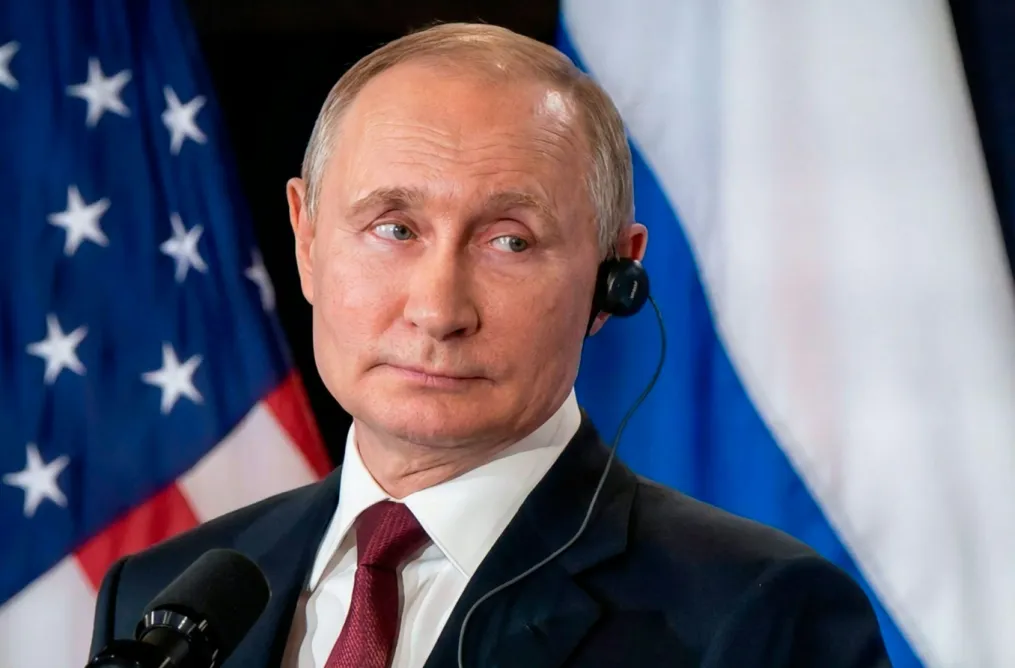
As the Middle East conflict intensifies, rising oil prices may embolden Russia’s aggression in Ukraine, impacting global energy markets and Russia-China relations while influencing Putin’s strategy and concerns.
Key Points
- As the Middle East conflict escalates, Russia’s aggression in Ukraine may increase, driven by rising oil prices and evolving energy market dynamics, impacting Russia-China relations.
- The recent killing of Iranian leader Khamenei heightens Putin’s paranoia, as he fears being targeted next. This incident may embolden Russia to intensify its war in Ukraine, despite long-term outcomes remaining uncertain.
- Global energy instability from Middle Eastern tensions, including struggles over oil exports, presents Russia with potential advantages in financing its ongoing conflict while fostering deeper ties with China.
The current escalation of the Middle East conflict has significant implications for Russia’s ongoing aggression in Ukraine, catalyzed by rising oil prices and shifting global energy dynamics, particularly influencing the relationship between Russia and China. Despite the geographical distance of approximately 2,500 kilometers, the intensifying Middle East conflict could encourage the Kremlin to adopt a more aggressive stance in Ukraine. However, this short-term boldness is unlikely to lead to a decisive advantage for Russia in the long term.
The potential targeted assassination of Iranian supreme leader Ayatollah Ali Khamenei by a US military strike serves as a stark reminder of past geopolitical actions, prompting memories for Russian President Vladimir Putin of his emotional reaction to the 2011 killing of Libyan leader Muammar Gaddafi. Online commentary from Russian nationalist figures highlights a sense of vulnerability among Russian allies, with fears that similar fates could await them. This situation exacerbates Putin’s already precarious position as he navigates between paranoia and indignation regarding the strike on Khamenei, leading him to express outrage without directly confronting the US’s role.
Moreover, the violence in the Middle East presents Russia with advantageous opportunities, primarily through the substantial increase in oil prices. This surge not only enhances Moscow’s financial resources for its military endeavors but also complicates China’s energy dependence on Iran, which has historically made up over 80% of its oil imports. As China holds large oil reserves, it is likely to strengthen its energy ties with Russia amid ongoing regional instability.
The closure of the Strait of Hormuz and Iranian military actions against Gulf oil facilities further complicate global energy markets, affecting a significant portion of global oil and liquefied natural gas trade. The overall landscape suggests that as the Middle East conflict unfolds, and with Russia’s cautious yet aggressive posture towards Ukraine, the ramifications for international relations, particularly between Russia and its energy allies, will be profound and multifaceted.
Read the original article : What the conflict in Iran means for Putin and Ukraine
Other People are Reading

The price of a wide range of goods – from food, to smartphones, to medicines – could be affected by the US-Israel war with Iran.

The federal court has handed down its highest penalty for a competition law breach, ordering Qteq and its Perth-based director Simon Ashton to pay $6 million.

Nebius: Massive AI Deals Drive Growth, But Dilution Risks Loom
Business
Govt’s fuel duty cut seen as timely cushion; markets may have passed peak panic: Deven Choksey

Responding to ET Now on whether it is premature to start factoring in earnings downgrades for Indian companies, Choksey suggested that the government’s actions could help soften the blow from global headwinds.
“I guess government should be complimented for acting in time. I guess they did so during the covid times, they are doing this activity of cutting down the excise on fuel at a time when entire world is desperate on other side. By way of cutting down the excise duties, they are ensuring few things. The consumer prices are not increasing, the fuel-related activities, as a result of which the inflationary pressure would remain under control. Though one may argue that on a fiscal deficit side it may have an impact of 35 to 40 bps from what it projected at 4.3, it could possibly go up to 4.7 if the full-year accounts are to be taken into account,” he said.
But suppose if this is a temporary measure, good credit should go to government that in advance time they are taking care of inflationary pressure, making sure that the corporates do not end up losing money and at the same time the consumer demand continues to remain buoyant. So, overall I believe that it is a welcome move, consumer benefits, OMCs benefits,” he added.
Relief for Consumers, Cushion for OMCs

A key question, however, is whether the benefits of the excise duty cut will be directly felt by consumers or primarily serve as a buffer for oil marketing companies (OMCs).
Choksey clarified that the impact is already indirectly benefiting consumers by preventing further price hikes.
“Yes, the point is important that if they are not increasing the price, that means effectively they have passed it on to the consumer. Otherwise, the OMCs have no choice but to increase the prices in the rising crude oil scenario. Now with this excise duty cut coming in their favour, they have a cushion of Rs 10 per litre on petrol and on diesel. They do not pass it on to the consumer and that is the benefit that the consumer gets eventually,” he explained.
Balancing Domestic Needs and Global Opportunities
The government has also raised export duties on petroleum products such as ATF, diesel, and petrol—a move that could potentially impact private refiners. However, Choksey views this as part of a broader balancing strategy.
“Even if it is increase in export duty, the price is still at parity level or slightly at the discounted level compared to the overall global prices. So, government is playing a balancing act according to me. On one side, when the global consumer is willing to pay the price, they are charging the price. On the other side, the domestic consumer should be protected, they are reducing the price. It is a perfect balancing act. Good credit goes to government for this again,” he noted.
Market Outlook: Panic Phase Likely Over
On the broader equity market outlook, Choksey indicated that the worst of the fear-driven selling may be behind us, with markets now awaiting positive triggers—particularly on the geopolitical front.
“The market has possibly completed the panic portion. I believe the fear factor is probably going out at this point of time. Entire market, including the global markets, is waiting for positive news to come on the war. Should it happen, then you will be seeing the upside which is unprecedented. So, in my viewpoint, instead of keeping the fear at the back of mind, I think that things are looking relatively more positive on prospects of war-related situation bringing up some positive news,” he said.
A Tactical Policy Move with Broader Implications
While concerns around fiscal slippage remain, the government’s decision appears to be aimed at preserving macroeconomic stability in the near term. By cushioning fuel prices, policymakers are attempting to protect both consumption and corporate margins—two critical pillars for sustaining economic growth.
For investors, the message seems clear: while global risks persist, domestic policy support and easing panic could provide a constructive backdrop for markets in the months ahead.

TFI International: Too Risky, Or Ready To Recover?
Business
Chinese universities with military links bought Super Micro servers with restricted AI chips

Chinese universities with military links bought Super Micro servers with restricted AI chips
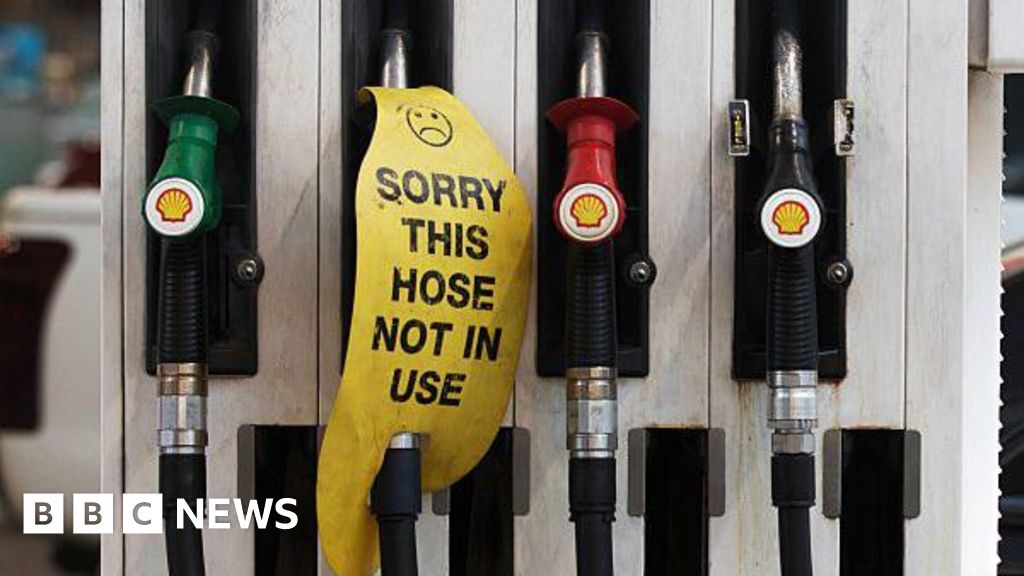
Anthony Albanese says nation’s supply remains “secure” amid reports of panic buying and shortages.


Trump extends deadline for striking Iran’s energy plants into April

Bitcoin near $68K as fear spikes: Santiment sees buy signal

Olympians react to IOC policy barring biological males from women’s sports

Anthropic wins injunction against Trump administration over Defense Department saga


-
 Crypto World6 days ago
NIO (NIO) Stock Plunges 6.5% as Shelf Registration Sparks Dilution Worries
-
 NewsBeat2 days ago
Manchester United reach agreement with Casemiro over contract clause amid transfer speculation
-

 Fashion7 days ago
Weekend Open Thread: Adidas – Corporette.com
-

 Politics7 days ago
Jenni Murray, Long-Serving Woman’s Hour Presenter, Dies Aged 75
-

 Crypto World5 days ago
Best Crypto to Buy Now: Strategy Just Spent $1.57 Billion on Bitcoin During Fear While Early Investors Quietly Enter Pepeto for 150x Potential
-

 Crypto World5 days ago
Bitcoin Price News: Bhutan Sells $72 Million in BTC Under Fiscal Pressure, but the Smart Money Entering Pepeto Sees What the Market Does Not
-

 News Videos1 day ago
Parliament publishes latest register of MPs’ financial interests
-

 Sports4 days ago
Remo Stars and Kano Pillars Strengthen Survival Hopes in NPFL
-

 Sports4 days ago
Gary Kirsten Accuses Pakistan Cricket Board Of ‘Interference’, Mohsin Naqvi Responds
-

 Tech4 days ago
Give Your Phone a Huge (and Free) Upgrade by Switching to Another Keyboard
-

 Business5 days ago
No Winner in March 21 Drawing as Prize Rolls to $133 Million for Next
-

 Sports7 days ago
2026 Kentucky Derby horses, odds, futures, preview, date: Expert who nailed 12 Derby-Oaks Doubles enters picks
-

 Tech4 days ago
AI enters the chat: New Seattle dating app relies on tech to facilitate meaningful human connections
-
Business6 days ago
Columbia Sportswear enters $500 million credit agreement with JPMorgan Chase
-

 News Videos4 days ago
Ch 9 Financial Management Part 1 | Detailed One Shot | Class 12 Business Studies Boards 2026
-

 Tech5 days ago
Today’s NYT Connections Hints, Answers for March 22 #1015
-

 Business10 hours ago
Instagram, YouTube Found Responsible for Teen’s Mental Health Struggle in Historic Ruling
-
 Crypto World7 days ago
Small-cap Russell 2000 enters correction territory
-

 Business5 days ago
Will Duke Basketball Win It All? Duke Basketball Enters Second Round as Third Favorite to Claim NCAA Title
-

 Business7 days ago
(VIDEO) BTS Drops ‘ARIRANG’ Album Today, Marking Epic Post-Military Comeback With Live Concert
You must be logged in to post a comment Login