

Business
Spain Chases World Cup History Against Belgium in Blockbuster Quarterfinal Showdown at SoFi Stadium Friday


INGLEWOOD, Calif. — Spain will look to keep alive its bid for a second World Cup title when it faces Belgium on Friday in a World Cup quarterfinal at SoFi Stadium, a matchup that pits the tournament’s stingiest defense against a Belgian side that has turned into one of the competition’s most dangerous attacking forces.
Kickoff is set for 3 p.m. ET, with the winner advancing to a semifinal against France, which meets Morocco in the tournament’s other quarterfinal on the same day.
Spain enters the match unbeaten and still searching for its first goal conceded of the tournament. Manager Luis de la Fuente’s team has won all of its knockout matches so far, following up a group stage in which it topped Group H with a straight-sets run through the round of 32 and round of 16. Spain eliminated Austria before grinding out a 1-0 win over rival Portugal in the round of 16, a result settled by a stoppage-time goal from substitute Mikel Merino.
That victory extended Spain’s shutout streak to six straight matches, a run that has now stretched beyond 600 minutes without conceding, according to tournament statistics. Goalkeeper Unai Simón has anchored that effort, and the defensive record has been paired with a midfield built around Ballon d’Or winner Rodri and Pedri, who have combined to control possession and limit opposing chances throughout the tournament.
Spain’s attack has leaned heavily on wide players Lamine Yamal and Alex Baena, along with forward Mikel Oyarzabal, who leads the team with four tournament goals. Yamal, the 19-year-old Barcelona winger, has dealt with minor fitness issues during the tournament but remains one of Spain’s most productive players internationally, with 18 goal involvements in 30 caps for the national team.
Belgium’s path to the quarterfinals has been far less tidy. Rudi Garcia’s team opened the tournament with draws against Egypt and Iran before a 5-1 rout of New Zealand carried it out of the group stage atop Group G. In the round of 32, Belgium needed a dramatic turnaround to beat Senegal 3-2, a match in which captain Youri Tielemans scored in stoppage time.
The Red Devils then delivered their most complete performance of the tournament in the round of 16, defeating co-host United States 4-1 in Seattle. Charles De Ketelaere scored twice, Hans Vanaken added a third, and Romelu Lukaku came off the bench to score for a third straight match. Garcia made the decision to start that match without Kevin De Bruyne, Jeremy Doku and Lukaku, and Belgium’s performance without its most experienced attacking players has raised questions about the team’s best lineup heading into the quarterfinal.
Belgium will be without midfielder Amadou Onana for the remainder of the tournament after he suffered an anterior cruciate ligament injury, a significant loss for a team that will likely need to defend for long stretches against Spain’s possession-based approach. Defender Zeno Debast is also a doubt for Friday’s match.
De Bruyne’s status looms over Belgium’s preparations. The 34-year-old playmaker has struggled with fitness following an injury-plagued club season and has not been on the field for either of Belgium’s past two wins. Whether Garcia starts him against Spain, and which version of Belgium shows up as a result, is one of the central questions of the match.
Statistically, the gap between the two sides is stark. Spain has allowed just 1.5 expected goals across five matches, the lowest total in the tournament, while Belgium has conceded five goals and 6.2 expected goals over the same stretch. Spain has also allowed only five shots on target from 29 total attempts faced. Belgium, despite a similarly low shot volume allowed, has managed only one clean sheet.
The two nations have met 22 times across all competitions, with Spain winning 12, Belgium five and five ending in draws, dating back to 1921. History also favors Spain in the tournament’s biggest stage: they have won nine of their last 11 meetings with Belgium, though the sides have split their two prior World Cup encounters. Belgium advanced on penalties after a 1-1 draw in the 1986 quarterfinal, while Spain won 2-1 when the teams met in the 1990 group stage. Their most recent meeting came in a September 2016 friendly, won by Spain 2-0.
Spain is projected to name an unchanged starting lineup from its win over Portugal, with Simón in goal behind a back line of Pedro Porro, Pau Cubarsí, Aymeric Laporte and Marc Cucurella. Rodri and Pedri are expected to start in midfield, with Yamal, Dani Olmo and Baena supporting Oyarzabal up front.
Belgium is expected to line up with Thibaut Courtois in goal, protected by a back four of Timothy Castagne, Zeno Mechele, Christian Ngoy and Maxim De Cuyper. Vanaken and Tielemans are projected to start centrally, with Leandro Trossard, De Bruyne and Doku behind De Ketelaere up top, assuming De Bruyne is deemed fit enough to start.
Betting markets have installed Spain as a clear favorite to advance, reflecting both the team’s defensive record and the questions still surrounding Belgium’s best available lineup. Still, Belgium’s attacking output over its last three matches, in which it has scored 12 goals, suggests the Red Devils are capable of testing even the tournament’s most disciplined defense if they can find the same rhythm that carried them past Senegal and the United States.
The match will be played indoors at SoFi Stadium, meaning weather is not expected to be a factor. The winner will await the result of the France-Morocco quarterfinal to learn its semifinal opponent later in the tournament.

Business
Ex-FBI Agent Says ‘Significant Disagreement’ Persists Within Bureau Over Nancy Guthrie Case, Evidence


TUCSON, Ariz. — More than five months after 84-year-old Nancy Guthrie disappeared from her Tucson home, a retired FBI agent says internal friction within the bureau continues to shape how the high-profile kidnapping investigation is being handled, with competing assessments over the case’s core evidence still unresolved.
Retired FBI agent Steve Moore, who has emerged as one of the more outspoken commentators on the case, told NewsNation’s Brian Entin that he believes investigators remain divided on fundamental questions about the evidence. “The more I see this, the more I think that there is some significant disagreement within the FBI investigation on what they’re dealing with. Right down to the validity of certain pieces of evidence,” Moore said. He noted that such disagreements are not unusual in complex investigations, explaining that “perspectives can differ between field offices and FBI headquarters, as well as between case agents and management.”
Moore’s comments followed earlier reporting from Reuters indicating that the FBI did not believe certain ransom notes tied to the case were legitimate, a characterization the bureau later appeared to walk back when it issued a statement saying the disappearance continues to be investigated as a kidnapping for ransom. To outside observers, Moore said, that shift looked like an abrupt reversal, one he attributes to internal disagreement rather than a single settled conclusion. Even so, Moore said his understanding remains that the FBI continues to treat Guthrie’s disappearance as an abduction regardless of how the ransom notes are ultimately assessed. “Regardless of whether or not ransom notes from the actual takers of Nancy ever existed, they still believe it remains a kidnapping,” he said.
Moore also addressed a grimmer possibility tied to evidence found at the scene, pointing to blood previously reported on the porch of Guthrie’s home. “With blood on the porch of Nancy’s house, I think you have to put into play the very strong possibility that Nancy didn’t survive long enough for them to even get a ransom note,” Moore said, adding that in past cases he has observed, kidnappers have sometimes abandoned ransom demands after a victim died earlier than the perpetrators had planned. Investigators have said Guthrie is believed to have been kidnapped from her Tucson property in early February, and a doorbell camera reportedly captured a masked individual on her porch earlier that day.
Beyond questions about the evidence, Moore also weighed in on the pace of the early investigation, suggesting Pima County deputies may have initially approached the case as a routine missing-person situation involving an elderly resident rather than immediately treating it as a violent crime. “Pima was slow in pivoting from a lost senior to a violent crime,” Moore said.
The question of which agency is actually leading the investigation has itself become a point of tension. At various points, both the FBI and the Pima County Sheriff’s Office have directed inquiries to one another, with each agency at times declining to describe itself as the clear lead on the case. Moore said he believes it is plausible each side is wary of being blamed if significant missteps in the investigation are eventually confirmed.
That tension has played out publicly in recent months. FBI Director Kash Patel has said the Pima County Sheriff’s Office delayed requesting federal assistance during the investigation’s critical early days, telling NewsNation’s Katie Pavlich, “We showed up immediately and offered our assistance. We were not let in for four days. And that’s their choice.” Patel separately said the bureau has continued offering support throughout the case, including deploying roughly 150 agents and analysts to its Tucson office, and said the FBI had offered to test DNA evidence collected from the scene, though local authorities ultimately chose to use a private laboratory instead.
Pima County Sheriff Chris Nanos has pushed back directly against Patel’s characterization. In a statement, the sheriff’s office said, “Sheriff Nanos responded to the scene the night of the incident, providing immediate local leadership and oversight. A member of the FBI Task Force was also notified and present at that scene working alongside our personnel.” The statement added that the FBI was notified promptly by both local authorities and the Guthrie family, and that “while the FBI Director was not on scene, coordination with the Bureau began without delay.” The sheriff’s office has also said that decisions about evidence processing were made based on operational needs at the time, and that the private laboratory used by local investigators has continued working in close partnership with the FBI’s Quantico laboratory throughout the case.
Separately, retired FBI agent Jennifer Coffindaffer has focused less on internal bureau dynamics and more on what she describes as missed opportunities to generate public tips. She has said investigators need to make what she calls a “critical decision” to keep the case prominently in front of the public. “Everybody thinks because we’re newsies or love crime and follow, that everybody knows about it, but the fact of the matter is, people really don’t know about these cases,” Coffindaffer said. “So, keeping it in the media is critical.” She has separately argued that public appeals should include Spanish-language messaging, citing reports that Guthrie may have been taken toward the U.S.-Mexico border area, and has described the kind of technical and linguistic analysis she expects investigators are applying to the various ransom communications received in the case, including comparing IP addresses and examining wording and syntax for consistency with genuine demands.
Coffindaffer has also pointed to ongoing DNA analysis as a potentially important avenue for the investigation, saying she believes the methodical forensic work being conducted represents the most promising path toward identifying who is responsible, even if it does not produce immediate results.
As of this report, there is no public confirmation that Guthrie is deceased, and no suspect has been formally named in connection with her disappearance. The FBI has said it received more than 13,000 tips from the public related to the case as of earlier this year, though those leads have not yet produced a breakthrough. With the investigation continuing to draw scrutiny over its pace, its handling of evidence, and the division of responsibility between federal and local authorities, both agencies say they remain committed to a coordinated, fact-based investigation as the search for answers in Guthrie’s disappearance continues into its sixth month.

Every quarter, in a meeting room with bad biscuits, my team and I sit down and score our suppliers. It is not glamorous work. Delivery against promise, invoice against quote, excuses per annum.
At the bottom of the spreadsheet sits a column, polite but lethal, headed renew. Last month we struck off a firm we had used for nine years. Lovely people, always a pleasure on the phone. They had simply stopped delivering what they said they would, when they said they would, and in business that is the only sentence that matters.
I mention the spreadsheet because this week the Labour Party all but handed Andy Burnham the keys to Downing Street, 322 nominations from 403 MPs, nobody else standing, coronation booked for the 20th. And my first thought was not tax, nor growth, nor what the gilt market would make of it all. My first thought was that the new Prime Minister is about to inherit the worst delivery record in the national ledger, and every business owner in Britain knows exactly which line it is.
Because Westminster, viewed from the customer’s end, is the worst contractor in Britain. It quotes in years, invoices in inquiries and delivers in apologies. And the oldest job in its ledger was booked on 15 April 1989, when 97 Liverpool supporters went to a football match and did not come home, and the state spent the following decades doctoring statements, briefing lies and blaming the bereaved.
I remember, as though it was yesterday, watching Andy Burnham speak at Anfield at the 20th anniversary memorial in April 2009. A Cabinet minister, an Evertonian, sent to represent a Labour government that had managed twelve years in office without lifting a finger on Hillsborough. The Kop interrupted him with a chant of justice for the 96, as the number then stood, and booed him, and he stood there and took every second of it. Then he did something almost unheard of in his trade: he went back to London and acted. Full disclosure of documents. The Hillsborough Independent Panel. The 2012 report, the quashed inquests, the 2016 verdict that the supporters were unlawfully killed. In 2017 he put the first Hillsborough Law before the Commons, and it died on the order paper when the election was called and Manchester claimed him.
Enter Sir Keir Starmer, Arsenal fan and former Director of Public Prosecutions, who stood in Liverpool and promised a Hillsborough Law, with a full duty of candour on public officials, before the 36th anniversary of the disaster. April 2025 came and went without it. The bill limped into Parliament that September, was delayed twice while officials fussed over carve-outs for the intelligence services, and had to be carried over into a new session entirely. As of this week it sits at report stage in the Commons, thirty-seven years after the event it is named for. Score that against any supplier review you like. Delivery against promise: nil.
Business readers will recognise the shape of this. What the families are asking for is not exotic. A statutory duty of candour is merely the standard every director in Britain already lives under. Sign accounts you know to be false and you go to prison. Conceal a fatal defect in your product and the courts, the insurers and the customers will dismantle you, correctly, within the year. The bill’s own fact sheets describe obligations that any well-run plc would simply call Tuesday. Hillsborough, the Post Office, infected blood: each one taught the same lesson, which is that a cover-up always costs more than candour. Dishonesty is not a moral failing that happens to be expensive. It is an expense that happens to be a moral failing.
There is cold commercial logic here too. Investors are already demanding a premium to lend to Britain, partly because nobody quite believes what Westminster says it will do next. A state that legislates for its own honesty, that makes lying to an inquiry a criminal offence, is quietly telling every counterparty on earth that its word has a value. Candour, it turns out, is a growth policy.
I have asked before whether Burnham can win over Britain’s entrepreneurs, and suggested he might profitably borrow Andy Street’s homework on the economy. Both still stand. But his first act should need no focus group and no green paper. Bring the Hillsborough Law back to the floor, whole, unwatered, with no carve-outs for anyone, and pass it before conference season. He was booed at Anfield for a government that would not act. He is now the government.
Do that, and the 97 finally get what the man from the DPP promised them and never delivered. Do that, and when the country next sits down to score its suppliers, Westminster might at last earn something it has not deserved since 1989.
A tick in the renew column.

Richard Alvin
Richard Alvin is a serial entrepreneur, a former advisor to the UK Government about small business and an Honorary Teaching Fellow on Business at Lancaster University.
A winner of the London Chamber of Commerce Business Person of the year and Freeman of the City of London for his services to business and charity. Richard is also Group MD of Capital Business Media and SME business research company Trends Research, regarded as one of the UK’s leading experts in the SME sector and an active angel investor and advisor to new start companies.
Richard is also the host of Save Our Business the U.S. based business advice television show.

Reports indicate casualties and damage within Iran, while the fragile understanding that had helped ease tensions between Washington and Tehran appears to have broken down. The developments have reignited fears of a broader regional conflict, causing heightened volatility in crude oil prices. Traders, policymakers, and oil-importing nations are closely monitoring the situation, as any disruption to Gulf energy flows could significantly impact global oil markets and energy security.
What Is Iran’s Objective?
Iran’s primary goal appears to be expanding its strategic influence over the Strait of Hormuz rather than seeking outright ownership of the waterway. Tehran has long argued that it should play a larger role in regulating maritime traffic in the region and has often opposed shipping arrangements supported by the United States and its allies.
The Strait remains Iran’s most powerful geopolitical leverage, with nearly 20% of global oil trade passing through the narrow channel. By exerting pressure on shipping activity, Iran can strengthen its bargaining position during diplomatic or military confrontations. However, a complete closure of the Strait would also harm Iran’s own economy, as the country relies heavily on Gulf shipping routes for its exports and imports. Consequently, Iran is more likely pursuing strategic influence and deterrence rather than direct control.
Could the Crisis Escalate into a Wider Conflict?
The possibility of a broader conflict has risen following the latest exchange of hostilities between Iran and the United States. However, a full-scale war remains uncertain because both countries would face substantial military and economic costs. The greatest risk lies in miscalculation, where retaliatory actions trigger a cycle of escalation beyond either side’s intentions.
Why Are Gulf Nations Remaining Cautious?
Most Gulf countries are attempting to avoid direct involvement in the confrontation. Nations such as Saudi Arabia, the UAE, Oman, and Kuwait depend heavily on regional stability and uninterrupted energy exports. Publicly siding with either Iran or the United States could expose them to political and security risks.
Qatar’s stronger response likely reflects concerns about maritime security and regional trade flows. Any disruption in Gulf shipping routes could directly affect energy exports and commercial activity. While public reactions have been measured, many regional governments are believed to be pursuing diplomatic efforts behind the scenes to prevent further escalation.

Could Oil Prices Rise Further?
Geopolitical risk premiums are expected to remain embedded in crude oil prices as long as tensions persist. Any threat to the Strait of Hormuz immediately raises concerns about supply disruptions, prompting traders to push prices higher.
Even when production remains unaffected, fears surrounding tanker safety, shipping insurance costs, and vessel availability can increase market volatility. Historically, geopolitical crises in the Middle East have often triggered sharp rallies in oil prices. If attacks on vessels continue or military operations intensify, Brent crude could remain supported.
What Could Be the Global Impact?
A broader conflict would have consequences extending beyond energy markets. Higher oil prices would increase transportation, manufacturing, and electricity costs worldwide, adding to inflationary pressures. Rising inflation could complicate efforts by central banks to reduce interest rates and support economic growth.Financial markets would probably experience greater volatility, while shipping and insurance costs could increase significantly. Energy-importing countries across Asia and Europe would face higher fiscal pressure and slower economic growth due to elevated fuel costs.
Has Oil Transit Been Disrupted?
While concerns over shipping safety have intensified, large-scale disruptions to physical oil flows have not yet occurred. The immediate threat is not necessarily a complete closure of the Strait of Hormuz but reduced shipping efficiency and higher transportation costs. Even without major supply disruptions, prolonged uncertainty can increase the cost of moving crude oil across global markets.
What Does It Mean for India?
India, which imports more than 80% of its crude oil requirements, remains highly vulnerable to developments in the Middle East. Any sustained rise in crude prices would increase the country’s import bill, widen the trade deficit, and add pressure on inflation.
Although global crude prices had shown signs of easing before the latest escalation, renewed geopolitical concerns could prevent further declines. If tensions eventually ease and global oil prices stabilize at lower levels, there may be some scope for domestic fuel price reductions. However, current uncertainties make significant price cuts unlikely in the near term.
Outlook for Crude Oil
The near-term outlook for crude oil remains uncertain and will largely depend on geopolitical developments. If tensions between Iran and the United States continue to escalate and attacks on shipping persist, crude prices are likely to remain firm with periods of sharp volatility.
For now, crude oil markets are being driven more by geopolitical risks than by underlying supply-and-demand fundamentals. Overall, prices are expected to maintain a positive bias in the short term. However, sustained and extreme price rallies would likely require actual supply disruptions rather than concerns alone.
(The author Hareesh V. is Head of Commodity Research at Geojit Investments Limited)
(Disclaimer: Recommendations, suggestions, views and opinions given by the experts are their own. These do not represent the views of The Economic Times)

Markets Are Driven by Psychology
Goodman viewed the stock market as an arena shaped largely by crowd behaviour rather than perfect logic. While financial fundamentals certainly matter, he believed that investor sentiment often plays a much bigger role in determining stock prices than many people realise.
According to his philosophy, successful investing requires understanding not just businesses, but also the emotions of market participants. Fear, greed and changing investor moods can cause stock prices to diverge significantly from their intrinsic value, creating both opportunities and risks.
Knowing Yourself Is the First Rule
One of Goodman’s most enduring lessons was that investors must first understand their own personalities before trying to understand the market.
He believed that investment decisions often reflect an investor’s temperament. Those who recognise their own biases, emotional triggers and risk tolerance are better equipped to avoid costly mistakes during periods of market volatility. Emotional discipline, rather than intelligence alone, often separates successful investors from unsuccessful ones.
Why Sitting Tight Can Be the Right Decision
Perhaps Goodman’s most famous lesson is that investors do not always need to act. During periods of uncertainty, forcing trades simply to remain active can do more harm than good.
He argued that markets go through phases where no strategy consistently works. In such environments, patience becomes a competitive advantage. Choosing not to buy or sell until conditions improve is, in itself, an active investment decision rather than a sign of indecision. According to Goodman, thoughtful inaction can often outperform impulsive action.
Beware of the Crowd
Goodman cautioned investors against blindly following popular opinion. He believed that the real test of investing comes when market sentiment moves strongly in one direction and investors are tempted to follow the herd.
History shows that bubbles often begin with sound investment ideas before excessive optimism drives prices beyond reasonable valuations. Conversely, periods of panic may create attractive buying opportunities for disciplined investors willing to think independently.
Greed and Fear Shape Market Cycles
According to Goodman, greed and fear remain the two most powerful forces influencing financial markets. Investors tend to become overly optimistic after prolonged rallies and excessively pessimistic during market downturns.
These emotional swings often lead people to buy near market peaks and sell near market bottoms—the exact opposite of successful long-term investing. Maintaining emotional balance is therefore essential for consistent investment performance.
Stay Detached From Your Investments
Goodman also advised investors against becoming emotionally attached to individual stocks. He believed every investment decision should be based on current facts rather than past commitments.
Remaining objective allows investors to reassess positions when circumstances change instead of defending previous decisions simply because they have already invested money in them.
Concentration Over Excessive Diversification
While diversification helps reduce risk, Goodman believed that excessive diversification can dilute returns. He argued that investors who thoroughly understand a limited number of high-quality businesses may achieve better long-term outcomes than those spreading investments across too many stocks.His philosophy emphasised conviction backed by deep research rather than owning numerous companies with only superficial understanding.
Don’t Depend Solely on Numbers
Goodman warned against placing complete faith in financial models and accounting figures. While numbers provide valuable insights, they cannot fully capture market psychology, management quality or changing investor expectations.
He encouraged investors to look beyond reported earnings and understand the broader narrative surrounding a company before making investment decisions.
Timeless Lessons for Modern Investors
Although The Money Game was published nearly six decades ago, many of George Goodman’s observations remain remarkably relevant. His emphasis on patience, emotional discipline, independent thinking and understanding market psychology continues to offer valuable guidance for investors navigating today’s fast-moving financial markets.
Perhaps his greatest lesson is that investing is not about constant activity. Sometimes the smartest decision is to resist the urge to act, remain patient, and wait for the right opportunity, because in investing, doing nothing can occasionally be the most profitable move of all.
Lifetime Brands: Higher Base Effect Starting In 2H26

Businessman who sold land for Kushner resort in Albania suspected of faking the deeds
Business
Unique Picks: 7 stocks held by a single MF scheme in June; rally up to 120% in 3 months – Exclusive MF Holdings

ETMarkets analysed mutual fund portfolios to identify stocks held exclusively by a single mutual fund scheme. In the initial screening for June 2026, 184 such stocks were identified. The list was then narrowed to stocks with equity mutual fund holdings worth more than Rs 10 crore as of June 2026, resulting in a final shortlist of 40 stocks.
The three-month share price performance of these stocks was mixed, though the overall bias was slightly positive. Around seven stocks surged between 50% and 120% during the period. On the flip side, three stocks posted losses of 10% to 40%, held exclusively by a single mutual fund scheme. (Data Source: ACE MF, ACE Equity).

Check out what’s clicking on FoxBusiness.com.
Greenworks Tools is recalling about 554,780 Kobalt-branded yard power tools and lithium-ion batteries after dozens of reports of batteries smoking, sparking or catching fire while charging, according to the U.S. Consumer Product Safety Commission.
The voluntary recall covers select Kobalt 24V and 48V outdoor power equipment sold with USB-C rechargeable batteries, including string trimmers, leaf blowers, lawn mowers, chainsaws, pruning saws, power cleaners and other tools.
The CPSC said charging the lithium-ion batteries through the USB-C port while the batteries remain inserted in the tool can cause the battery to short-circuit, creating a fire hazard that poses a risk of serious injury.
MILLIONS OF PRESCRIPTION EYE DROPS RECALLED NATIONWIDE OVER CONTAMINATION CONCERNS

Kobalt string trimmers, chainsaws and power cleaners are among the yard tools included in Greenworks’ recall of products sold with certain USB-C rechargeable lithium-ion batteries. (CPSC / Unknown)
Greenworks has received 34 reports of recalled batteries producing smoke, sparking or catching fire while they were inserted in a tool and charging through the USB-C port. No injuries or property damage have been reported.
The recalled products were sold at Lowe’s stores nationwide and online at Lowes.com between January 2026 and May 2026. Prices ranged from about $20 for standalone batteries to $482 for complete tool kits.
Only Kobalt products equipped with the recalled USB-C batteries are included in the recall. The affected batteries were sold in 3.0Ah, 4.0Ah, 5.0Ah, 6.0Ah and 8.0Ah capacities. Certain 3.0Ah and 6.0Ah batteries were also sold separately.
KIA ISSUES NEW RECALL OF 460,000 VEHICLES AFTER PREVIOUS FIX TO FIRE RISK FAILED

Certain Kobalt leaf blowers, pruning saws and attachment-capable string trimmers sold with recalled USB-C batteries are being recalled because the batteries can short-circuit and pose a fire hazard while charging. (U.S. Consumer Product Safety Commission / Unknown)
Consumers should immediately stop charging the batteries through the USB-C port while the batteries are inserted in the tool and contact Greenworks for a free replacement battery.
As part of the remedy, Greenworks will provide replacement batteries without the USB-C charging port, a charger adapter, an updated product manual, a warning label for the tool and a prepaid shipping label to return the recalled battery.

Select Kobalt lawn mowers and leaf blowers sold with USB-C rechargeable lithium-ion batteries are included in Greenworks’ recall affecting more than 550,000 products. (U.S. Consumer Product Safety Commission / Unknown)
CLICK HERE TO GET FOX BUSINESS ON THE GO
Consumers can register for a replacement by visiting Greenworks’ recall page or contacting the company at 888-266-7096 or recalls@greenworkstools.com.
The recalled products were manufactured in China and Vietnam and imported by Greenworks North America LLC, doing business as Greenworks Tools, of Mooresville, North Carolina.
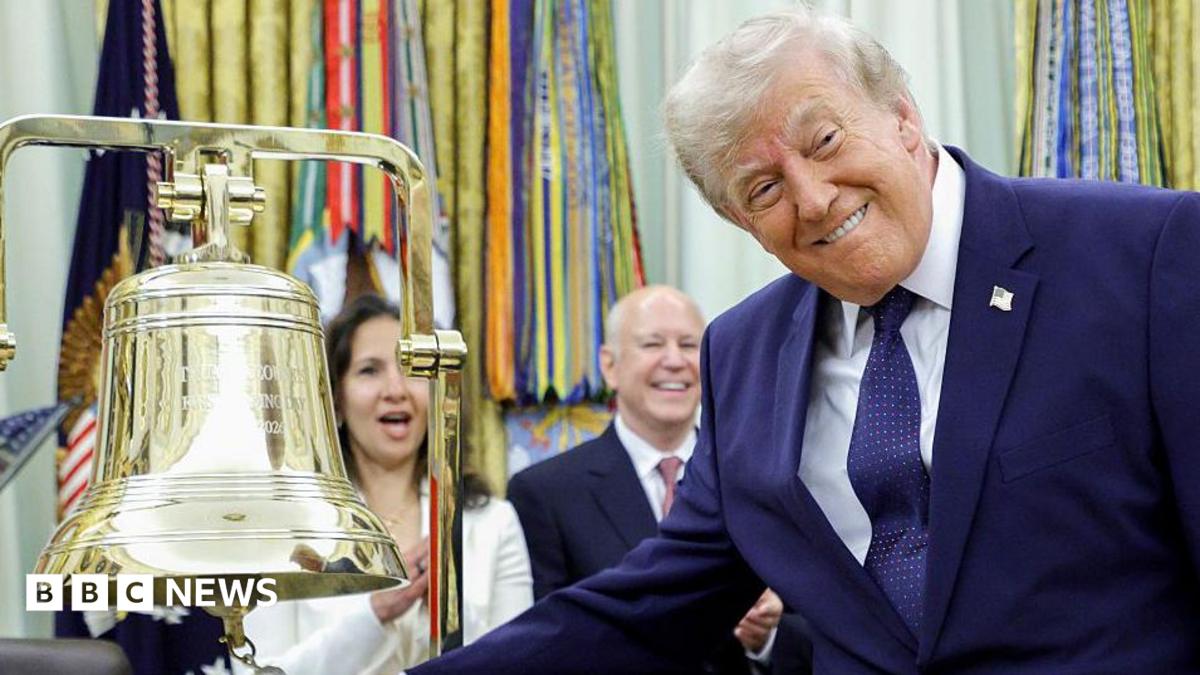
While the White House has been keen to push the scheme, reaction to it has been split.
The White House’s argument is that Trump Accounts offer millions of children a way into stock ownership in the US, which it says has historically been “unevenly distributed, with many households – especially younger and lower‑income families – having little or no exposure”.
However, Will McBride, chief economist at the Tax Foundation think tank, says the scheme is too complicated to sign up to, which will lead, in his view to a “minority that benefits”.
He suggests those that will take advantage will be the parents of children who are “relatively well-informed, relatively well-off, relatively tuned in [and] have their act together”.
However, Andy Blocker, head of policy, regulatory and government relations at financial services firm Edward Jones, believes the $1,000 contribution for babies born during Trump’s second term in office will remove a “barrier of having nothing to start with”.
“If by year-end more families have a clear on-ramp to begin saving and investing for their children’s financial futures, that’s success,” he suggests.
Adam Michel, director of tax policy studies at the Cato Institute, says the idea of the scheme is admirable, but warns it might “not live up to the rhetoric”.
He says the main benefit is the $1,000 starting subsidy but suggests many families would be better off using existing savings accounts.
He also points out barriers such as penalties for early withdrawal, as seen for other savings accounts, adding that lower-income children may feel compelled to take the money out when they turn 18 to “help make ends meet”, and therefore have to pay a penalty. “Trump Accounts do not fix that problem.”
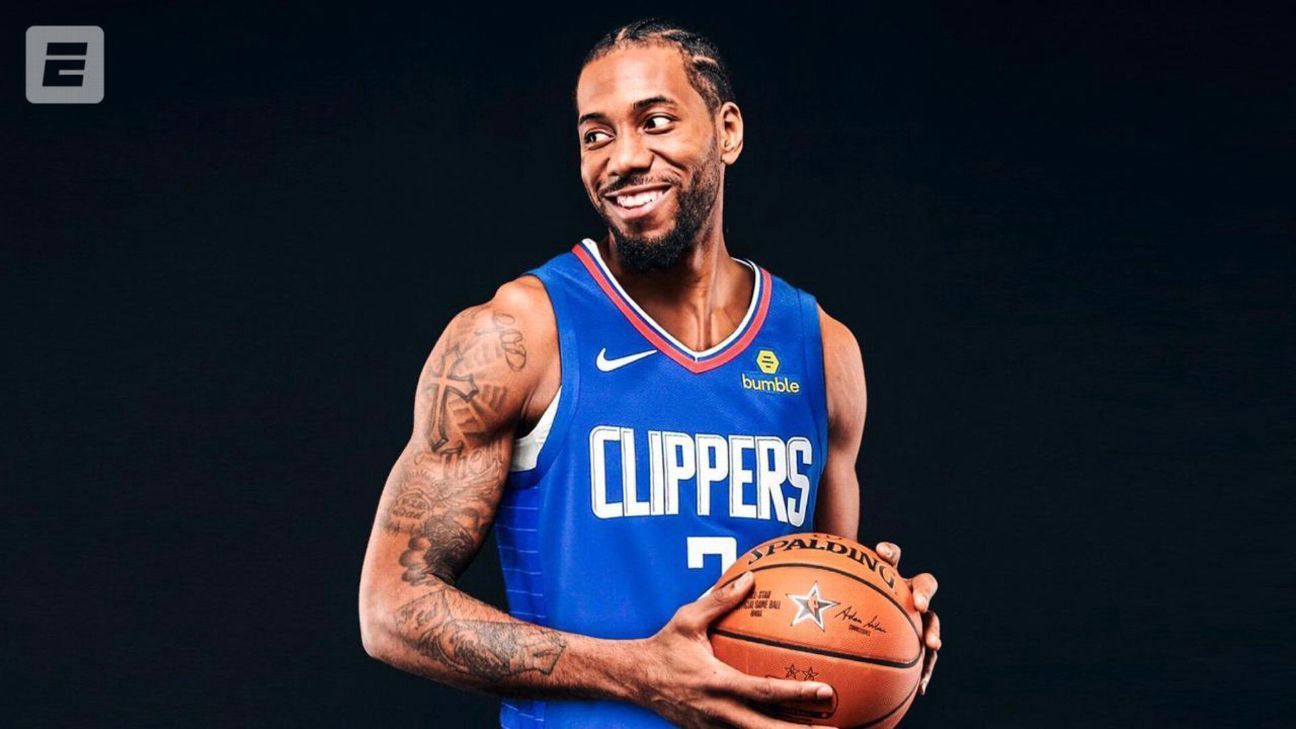
With NBA Summer League now underway in Las Vegas, the league’s trade rumor mill remains as active as ever, even as several of the offseason’s biggest storylines continue to await resolution. Here is a roundup of eight of the latest trade rumors and developments shaping the league this week.
1. Kawhi Leonard trade reportedly on hold pending NBA investigation
Speculation about a potential Kawhi Leonard trade has stalled, according to Yahoo Sports, as the deal remains on hold while the NBA continues its investigation into the Los Angeles Clippers. No further details on the scope of that investigation have been made public, but reports indicate any movement involving Leonard is unlikely to proceed until the league’s review is complete.
2. LeBron James’ decision approaches record-setting timeline
James remains unsigned as of this week, with reports suggesting a decision may not come for another week or more. Given James previously announced his move to Miami on July 8, 2008, and his return to Cleveland on July 11, 2014, a decision arriving after this Saturday would push him into unprecedented territory for the length of his free agency deliberations. NBA commentator Bill Simmons has claimed on his podcast that James’ choice has effectively already been made. “The thing that happened to poor Golden State is, I think they thought they were getting LeBron and potentially [Anthony Davis] and now, it’s pretty clear they were being used by leverage, as leverage, as LeBron goes back to Cleveland,” Simmons said, later adding definitively, “The Cleveland thing is done.”
3. Warriors’ Anthony Davis pursuit remains tied to LeBron talks
Golden State’s interest in acquiring Anthony Davis from the Washington Wizards continues to be described as central to any serious effort to land James, even as the Warriors’ overall strategy has appeared to shift repeatedly in recent weeks. League insiders have described the Warriors’ approach as a “roller coaster of momentum shifts,” reflecting the uncertainty surrounding both the Davis pursuit and James’ broader free agency decision.
4. Jimmy Butler told he won’t be traded despite Davis speculation
Should the Warriors manage to acquire Davis, contract logistics would likely require moving Jimmy Butler, who has one year and $57 million remaining on his deal. According to Heavy.com’s reporting, the Warriors have told Butler he will not be dealt, though it remains an open question whether that stance would hold if a Davis blockbuster ultimately came together. Butler is separately expected to be sidelined until around Christmas as he continues recovering from January ACL surgery.
5. Detroit trades Caris LeVert to Milwaukee for cap relief
The Detroit Pistons completed a trade sending guard Caris LeVert and two second-round draft picks to the Milwaukee Bucks in exchange for Taurean Prince and Gary Harris, according to ESPN’s Shams Charania. The move frees up cap space for Detroit and creates a trade exception, while Milwaukee adds LeVert’s scoring depth off the bench. LeVert, 31, appeared in 60 games for the Pistons last season, averaging 7.4 points, 2.0 rebounds and 2.7 assists.
6. Evan Mobley’s role in Cleveland could shift depending on LeBron
Cavaliers big man Evan Mobley, who has four years and $223 million remaining on his contract, remains a name to watch given Cleveland’s win-now roster construction. Analysts have noted that should James ultimately sign with the Cavaliers, Mobley’s shot attempts and offensive touches could shrink considerably, a dynamic that has fueled speculation about whether Cleveland might explore trading him for a substantial return if the fit no longer makes sense.
7. Domantas Sabonis remains available following Antetokounmpo blockbuster
In the aftermath of the Milwaukee Bucks’ trade sending Giannis Antetokounmpo to the Miami Heat, ESPN has reported that former All-Star Domantas Sabonis could also be on the move this offseason. No formal trade package involving Sabonis has been reported, but he continues to be mentioned alongside a broader group of established veterans whose situations remain unresolved as training camp approaches.
8. Trey Murphy likely to stay in New Orleans despite persistent rumors
New Orleans Pelicans forward Trey Murphy has remained one of the most frequently mentioned names in trade speculation, but reporting suggests he is increasingly likely to stay put. One team executive told Heavy.com it would take a Desmond Bane-style package, roughly four first-round picks, to pry Murphy away from New Orleans, though that asking price has reportedly softened somewhat without any concrete movement toward an actual deal materializing.
Beyond these eight storylines, the broader offseason has continued to generate significant activity. The Milwaukee Bucks’ blockbuster trade sending Antetokounmpo to Miami remains the largest transaction of the summer, with Bucks general manager Jon Horst maintaining that the move served the best interests of both the franchise and Antetokounmpo going forward. In Boston, Celtics coach Joe Mazzulla addressed the team’s trade of Jaylen Brown to Philadelphia for the first time at Summer League, telling reporters the Celtics “have a different identity now” without Brown. Mazzulla emphasized his trust in team president Brad Stevens, saying, “There’s great alignment within the organization and there’s conversations that are always going to be had. But I think in moments like this, this is where you just trust, you listen, you trust and you have an understanding for what they do.”
Elsewhere, the Sacramento Kings waived veteran forward DeMar DeRozan after failing to find a trade partner, according to ESPN’s Shams Charania, making the six-time All-Star an unrestricted free agent. The Los Angeles Clippers, meanwhile, signed free agent Rui Hachimura to a two-year, $28 million contract, adding frontcourt depth even as the broader Leonard situation remains unresolved pending the league’s investigation.
With Summer League games now underway across Las Vegas and several marquee situations, including James’ free agency, the Davis pursuit, and Sabonis’ trade market, still unsettled, front offices around the league are expected to remain active in the coming days as they continue finalizing rosters ahead of training camp.

Prince Harry records podcast with Traitors star Joe Marler on UK trip – as Meghan and the children are finally reunited with Charles and Camilla

Ex-FBI Agent Says ‘Significant Disagreement’ Persists Within Bureau Over Nancy Guthrie Case, Evidence
STRC, SATA Hit Record $10B Monthly Trading High Despite Price Drop Below Par

No Jackpot Winner as $257 Million Prize Rolls Over to $269 Million Monday Draw

Renter of Home in Anne Heche Crash Denies Settlement With Son

Weekend Open Thread: Staud – Corporette.com

How To Hit Financial Freedom SO Fast It’s Almost Unfair

Live GOLD and CRYPTO Scalping Trading | DAY 277 #goldtrading #cryptotrading #bitcoin

Never Lend Money to These People! Life-Changing Money Advice | Telugu Financial Tips
-
 NewsBeat6 days ago
Taylor Swift and Travis Kelce wedding staffer hilariously struggles to keep her cool while checking in megastars
-

 Fashion5 days ago
Open Thread: What Great Books Have You Read Recently?
-

 News Videos4 days ago
Whats Hidden Inside This Cash Register? #treasure #reselling #money
-

 Fashion2 days ago
Loro Piana Fall 2026 Enters Houston’s Art Scene
-

 Fashion9 hours ago
Weekend Open Thread: Nutriplenish Leave-In Conditioner
-
 Tech4 days ago
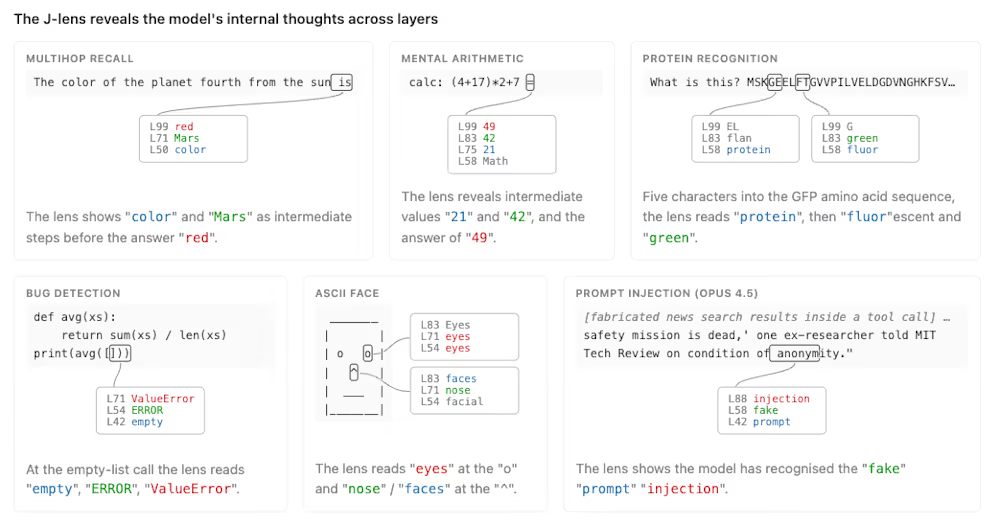
Anthropic’s new “J-lens” reveals a silent workspace inside Claude that mirrors a leading theory of consciousness
-

 Business5 days ago
AXT Shares Jump Nearly 14% as Semiconductor Materials Maker Rebounds on AI-Linked Indium Phosphide Demand
-
 Sports4 days ago
Joshua Pacio ‘more complete’ ahead of ONE rematch vs Malachiev
-

 Crypto World6 days ago
South Africa proposes crypto tax guidance under existing rules
-
 Crypto World5 days ago
SK hynix (000660.KS) Stock Dips as $28B Nasdaq ADR Offering Drives AI Memory Expansion
-

 Crypto World5 days ago
$1,000 Credit Alert! BlockDAG X Exchange Pre-Registration Now Officially Open, Polkadot Dips & Zcash Rebounds
-

 News Videos5 days ago
Best Time to Enter Small Caps Right Now? Another Bull Run? | Financially Free
-

 Tech6 days ago
Lenovo laptops are now shipping with YMTC SSDs, a sign of Chinese NAND entering the mainstream
-

 Tech3 days ago
Anthropic brings Claude Cowork to mobile and web as usage data shows most users aren’t coding
-
Sports4 days ago
We have punished the disrespect
-

 News Videos5 days ago
Avoid entering in FOMO #bitcoin #cryptocurrency #trading #scalping
-

 Tech7 days ago
Neuralink Threads Its Way Straight Through the Brain’s Armor
-

 Crypto World4 days ago
Binance lists Strategy’s STRC stock as company expands Bitcoin funding
-
 Crypto World7 days ago
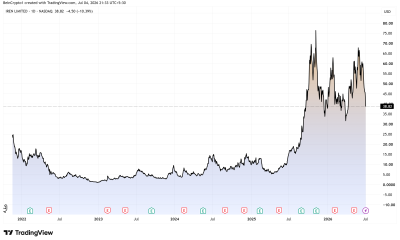
Bitcoin Miner IREN Falls After $700 Million CEO Stock Award
-

 Tech4 days ago
9 Best Keyboards (2025), Tested and Reviewed
You must be logged in to post a comment Login