Connect with us
DAPA Banner
DAPA Coin
DAPA
COIN PAYMENT ASSET
PRIVACY · BLOCKDAG · HOMOMORPHIC ENCRYPTION · RUST
ElGamal Encrypted MINE DAPA
🚫 GENESIS SOLD OUT
DAPAPAY COMING

Business

SPLV: Low Volatility Alone Isn’t Optimal For Defensive Investors (NYSEARCA:SPLV)

Published

on

SPLV: Low Volatility Alone Isn't Optimal For Defensive Investors (NYSEARCA:SPLV)

This article was written by

The Sunday Investor is focused exclusively on U.S. Equity ETFs. He has a strong analytical background, has received a Certificate of Advanced Investment Advice from the Canadian Securities Institute, and has completed all the educational requirements for the Chartered Investment Manager designation.Having covered hundreds of ETFs on Seeking Alpha, The Sunday Investor has developed a complex, proprietary ETF Rankings system which he shares on his website, etf-rankings.com. Nearly 1,000 ETFs receive individual factor scores covering costs, liquidity, risk, size, value, dividends, growth, quality, momentum, and sentiment, which feed into an easy-to-understand composite score from 1-10. The Sunday Investor is always active in the comments section in his articles – please don’t hesitate to reach out via comment in any article or by visiting etf-rankings.com. Happy Investing!

Analyst’s Disclosure: I/we have a beneficial long position in the shares of SPY either through stock ownership, options, or other derivatives. I wrote this article myself, and it expresses my own opinions. I am not receiving compensation for it (other than from Seeking Alpha). I have no business relationship with any company whose stock is mentioned in this article.

Seeking Alpha’s Disclosure: Past performance is no guarantee of future results. No recommendation or advice is being given as to whether any investment is suitable for a particular investor. Any views or opinions expressed above may not reflect those of Seeking Alpha as a whole. Seeking Alpha is not a licensed securities dealer, broker or US investment adviser or investment bank. Our analysts are third party authors that include both professional investors and individual investors who may not be licensed or certified by any institute or regulatory body.

Advertisement
Continue Reading
Click to comment

You must be logged in to post a comment Login

Leave a Reply

Business

Will The IRS Drain Millions From The Champions Now?

Published

on

Lamine Yamal Calls Lionel Messi's World Cup Form 'Incredible' Ahead

NEW YORK — Following Spain’s 1-0 victory over Argentina in the 2026 FIFA World Cup final at MetLife Stadium, the focus has swiftly shifted from the pitch to the accounting ledger. While the Spanish Royal Football Federation secured the top prize of $50 million out of FIFA’s total $871 million tournament fund, tax policy experts and sports financial analysts warn that a substantial portion of that payout is headed straight to the United States Internal Revenue Service.

Under longstanding United States tax law, foreign individuals and corporations earning income from personal services performed on American soil are subject to federal income taxation. While FIFA secured tax-exempt status for itself and participating national associations under Section 501(c) of the Internal Revenue Code, that federal shield stops at the institutional level. The individual players, coaches, and technical staff who actually earned the money on the field remain fully exposed to U.S. federal taxation and state-level income taxes.

As legal scholars and accountants scrutinize the tournament’s tax structure, the prospect of international champions surrendering up to 30 to 40 percent of their tournament compensation to American tax authorities has sparked intense debate among lawmakers in Washington and financial experts worldwide.

Institutional Exemption Versus Individual Tax Liability

FIFA’s total prize pool for the expanded 48-team tournament reached an unprecedented $871 million, with $655 million distributed directly to national federations based on their performance. Spain’s federation earned the top $50 million share for winning the title, but the mechanism of distribution creates distinct tax realities for the organization versus its roster.

Advertisement

Prior to the competition, FIFA negotiated an arrangement with the U.S. Treasury Department allowing participating national associations to register as tax-exempt entities under U.S. code. This policy protects the $50 million baseline payout awarded directly to the Spanish federation from federal withholding.

However, once the federation passes those winnings down to individual team members in the form of performance bonuses, contract payouts, or incentive compensation, the money transforms into taxable personal income under U.S. law.

“It doesn’t make a difference who wins the game. The IRS will get a piece,” said Robert Raiola, director of the sports and entertainment group at accounting firm PKF O’Connor Davies. Raiola noted that the tax burden extends well beyond the starting eleven: “That goes for the coaches, team staff and referees, along with players.”

Federal Withholding and the Impact of Tax Treaties

For non-resident foreign athletes competing inside the United States, Internal Revenue Code Sections 871 and 881 establish a default federal withholding rate of 30 percent on all U.S.-sourced income. Because match play, practice sessions, and promotional commitments occurred across host venues in the United States, Canada, and Mexico, tax authorities established specific formulas to determine what proportion of a team’s prize money counts as U.S.-sourced income.

Advertisement

Under an agreement established between the IRS and the Canada Revenue Agency prior to the tournament, prize money is allocated based on the ratio of matches played in each host country. For teams playing the majority of their fixtures on American soil, the vast majority of their earnings falls directly under IRS jurisdiction.

While the United States maintains a bilateral income tax treaty with Spain designed to prevent double taxation, treaty protections for elite professional athletes are frequently capped. International tax agreements often contain specific clauses allowing the host nation to tax athletic earnings if total income exceeds designated annual thresholds. Given the massive scale of World Cup payouts, most Spanish squad members far exceed these threshold limits, triggering full federal tax obligations.

Rob Fagan, senior manager at KPMG’s Washington National Tax practice, rated the overall tax complexity of the 2026 World Cup as an “8 out of 10,” pointing out that tax answers vary even within a single dressing room.

“Even within the same team, there may be different tax answers for different players,” Fagan noted, adding that every squad leaving the tournament would carry a tax obligation of some form.

Advertisement

The Added Burden of State “Jock Taxes”

In addition to federal obligations, foreign players face state-level income taxes, commonly known as “jock taxes,” which apply to non-residents earning money within specific state borders.

Because the World Cup final was staged in New Jersey, players competing in the championship match are subject to New Jersey state tax regulations. State tax codes rarely recognize foreign tax treaties, meaning state withholdings are assessed independently of federal treaty status.

When combining federal withholding rates with state taxes across different match venues, analysts estimate that Spanish players could see total U.S. tax deductions reach up to 40 percent of their allocated World Cup bonuses before returning home to navigate Spain’s national tax framework.

Congressional Pushback and Political Reaction

The prospect of foreign national teams surrendering millions in prize money to the U.S. government has drawn sharp criticism from members of the United States Congress, highlighting a broader divide over foreign policy and domestic tax structure.

Advertisement

Republican Congressman Tim Burchett of Tennessee criticized the withholding rules when discussing the tax burden placed on visiting teams.

“I think it’s a rip-off,” Burchett said. “I’m not a fan of it, but Americans have to do it. American professional athletes do it, so they knew that when they came over here.”

Burchett emphasized that taxing international athletes at high rates could deter global events and visiting spenders.

“I’m not a big fan of the IRS,” Burchett added. “They made that money over here, I guess, but I don’t like all that. We want to encourage these people to come over here and spend their money, and then we take a big chunk of it. We’ve got to get a better tax system.”

Advertisement

Lawmakers from across the aisle also expressed disapproval of the heavy tax burden placed on visiting workforce members. Democratic Congressman Jonathan Jackson of Illinois called the steep rate on player earnings fundamentally flawed.

“It’s wrong, and that kind of highlights something bigger,” Jackson stated. “They should be paying the taxes as opposed to having tax loopholes. The people, the laborers that are working, they should not have to pay 30% of their income on taxes.”

Broader Implications for Global Sports Tourism

Unlike prior World Cup host nations such as South Africa, Brazil, Russia, and Qatar—which granted sweeping blanket tax waivers covering FIFA, national associations, and participating players—the United States maintained its strict statutory approach to U.S.-sourced personal service income.

While the IRS published a comprehensive “Tax Playbook for Foreign Participants in the 2026 FIFA World Cup” ahead of the event to outline filing procedures and central withholding agreements, financial advisors acknowledge that many foreign players will be surprised by the net size of their checks.

Advertisement

As Spain’s squad celebrates its World Cup triumph, players and their wealth managers are entering an extensive administrative process with tax authorities on both sides of the Atlantic to reconcile multi-jurisdictional tax liabilities.

Continue Reading

Business

Newcastle marketing tech firm PolyBox seals six-figure investment

Published

on

Business Live

‘We’re incredibly grateful to our angel investors and Northstar Ventures for their continued belief in our vision’

Left to right: Kevin Beales, MySalesCoach CEO and PolyBox Adviser, Rojin Yarahmadi, CEO and Nick Beno, CMO, Co-founders, PolyBox, Tom O’Neill, Investment Manager, Northstar Ventures.

Left to right: Kevin Beales, MySalesCoach CEO and PolyBox Adviser, Rojin Yarahmadi, CEO and Nick Beno, CMO, Co-founders, PolyBox, Tom O’Neill, Investment Manager, Northstar Ventures.(Image: PolyBox)

A Newcastle marketing tech company is set for expansion after receiving a six-figure investment boost. PolyBox was launched in 2022 by Newcastle University graduates Rojin Yarhmadi and Nikolaus Benopoulos to disrupt the world of automated data analysis, reporting and AI.

Its platform enables marketing agencies to view data from multiple sources in a real-time dashboard, and generating reports for customers that bypass the time and effort involved in collecting and reporting on data, to give access to clear, accurate information.

Founders say the platform provides users with the ability to swiftly move “from in-depth insights to strategic action”.

North East venture capital firm, Northstar Ventures, first invested in PolyBox in 2024 to help the firm develop its technology. It invested £300,000 in PolyBox as part of a total funding round of £500,000, led by the North East Innovation Fund supported by the European Regional Development Fund and managed by Northstar Ventures, alongside Creative UK’s North of Tyne Culture and Creative Investment Programme and angel investors.

Advertisement

Northstar has now followed up with another investment of £150,000 from the North East Innovation Fund, with the support of The North East Mayoral Strategic Authority led by North East Mayor, Kim McGuinness.

A further £250,000 came from angel investors and £300,000 grant funding from Innovate UK. In all, the company has raised £1.5m through investment and grants, including Innovate UK, Creative UK and angel investors since its pre-seed stage.

The latest funding boost will enable the company to focus on integrating AI into its products to automate reporting and generate critical insights for customers. The move will save time and reduce costs for marketing teams, whilst also improving the quality and speed of decision making.

Rojin Yarahmadi, co-founder and CEO of PolyBox said: “With the successful completion of our investment round and the support of the Innovate UK Investor Partnership grant, we’re excited to be entering the next phase of PolyBox’s journey. We’re incredibly grateful to our angel investors and Northstar Ventures for their continued belief in our vision.

Advertisement

“Their investment has not only supported our growth but has also unlocked the Innovate UK Investor Partnership funding, enabling us to accelerate our roadmap. This next phase will focus on delivering even more advanced analytics and AI-powered insights, helping marketing teams make faster, smarter, and more informed decisions through their reporting.”

Tom O’Neill, investment manager, Northstar Ventures, added: “We’re very pleased to complete our latest investment in PolyBox which will help Rojin and the team to significantly grow the business and build on the solid progress made to date.

“As AI continues to significantly disrupt the marketing industry, PolyBox’s automated reporting solution saves time and money for busy marketing teams, whilst also supporting clear, strategic decision making. Congratulations to Rojin, Nick and the wider team.”

Like this story? For more deals news you can visit our dedicated page for the latest news and analysis here.

Advertisement
Continue Reading

Business

Stellantis shares may move 4% on July 30 earnings release

Published

on


Stellantis shares may move 4% on July 30 earnings release

Continue Reading

Business

Is Facebook Messenger Down Right Now? Here’s the Latest on Today’s Wider Meta Outage Reports Across Platforms

Published

on

Facebook

Users searching to find out whether Facebook Messenger is currently down are doing so amid a broader wave of access complaints hitting Meta’s platforms Wednesday morning, though reports specific to Messenger itself remain less clear-cut than those affecting Facebook and Instagram.

According to outage-tracking service Downdetector, user reports of problems with Facebook began climbing at 8:12 a.m. Eastern time Wednesday, followed roughly 13 minutes later by a similar rise in reports concerning Instagram, which began at 8:25 a.m. As of Wednesday morning, Meta had not issued a public statement addressing either set of reports.

What we know about Messenger specifically

As of the most recent available status data, outage-monitoring service Outage.Report listed Facebook Messenger as operating within a typical reporting range, showing no significant spike in complaints over the prior 24 hours and noting the platform’s most recent confirmed incident occurred roughly five weeks earlier, in mid-June. That assessment suggests that, unlike Facebook and Instagram, Messenger may not be experiencing the same level of disruption this morning, though outage data can shift quickly and status trackers do not always update in real time.

Advertisement

Given that Facebook, Instagram and Messenger frequently share underlying infrastructure at Meta, users experiencing problems with Facebook or Instagram this morning should not assume Messenger is automatically unaffected, or automatically working normally. The most reliable way to confirm current status is to check a live outage-tracking site directly or attempt to send a message and note any specific error returned by the app.

A familiar pattern for Meta’s apps

Messenger has a long history of experiencing outages independent of, or alongside, disruptions to Facebook and Instagram. In some previous incidents, Messenger has gone down entirely on its own, with users unable to send or receive messages even as the main Facebook app and website continued functioning normally. In other cases, outages have hit all of Meta’s platforms simultaneously, with Messenger messages left sitting in an unsent state for extended periods before service was restored.

During a large-scale Meta outage in 2019, for instance, Instagram, Messenger and Facebook all went down together, with Messenger conversations failing to send and many users seeing only previously cached content rather than live updates. In other incidents dating back several years, Messenger has experienced standalone problems affecting only its chat function, with users reporting an inability to view or send messages while other Facebook features continued working as expected.

Advertisement

Wednesday’s reports in context

Wednesday’s Facebook and Instagram reports follow a much larger, confirmed outage that struck Meta’s platforms on Sunday, when users across multiple continents were unable to access their Facebook and Instagram accounts. Downdetector recorded more than 23,000 reports of Facebook problems in the United States alone during that earlier incident, along with at least 18,000 additional Instagram-related reports, before complaints declined sharply within roughly one to two hours.

Whether Wednesday’s reports represent a new, separate issue or lingering instability connected to Sunday’s outage has not been confirmed by Meta. The company has a consistent pattern of declining to comment publicly on the specific cause of an outage until after the underlying issue has been identified and resolved internally.

How to check for yourself

Advertisement

For users trying to determine in real time whether Messenger is affected, several practical steps can help clarify the situation. Checking a live outage-tracking site, such as Downdetector or a similar service, offers a snapshot of how many other users are currently reporting problems and can help distinguish a widespread outage from an issue specific to one device or network connection. Attempting to log out and back into the app, restarting the device, or checking whether the issue also affects Facebook or Instagram can further help narrow down whether the problem is isolated or part of a broader Meta-wide disruption.

Users can also check social media platforms such as X, where widespread outages typically generate a noticeable spike in posts using hashtags like #FacebookDown or #MessengerDown, often providing an early signal of a broader problem before it is officially confirmed by outage trackers or the company itself.

What Meta has said in the past

During previous outages, Meta communications director Andy Stone has periodically posted brief updates on X acknowledging that the company was aware users were experiencing access issues and was working to resolve them, followed by a short follow-up once service had been restored. Those past statements have generally attributed disruptions to a “technical issue” without elaborating on the underlying cause, a pattern the company has followed consistently across previous incidents affecting Facebook, Instagram and Messenger.

Advertisement

As of Wednesday morning, no such statement had been issued regarding the current wave of reports, and it remained unclear how long the disruption might last or how widely it was affecting users beyond the initial reports concerning Facebook and Instagram.

Bottom line

Based on the most recent available data, Facebook and Instagram are showing confirmed elevated outage reports as of Wednesday morning, while Messenger’s status remains less clear, with available tracking data not yet showing the same spike seen on the other two platforms. Given how closely linked Meta’s apps are, and how quickly outage conditions can change, users concerned about Messenger specifically are best served by checking a live status tracker directly or testing the app themselves, rather than assuming its status based solely on reports affecting Facebook or Instagram.

Advertisement
Continue Reading

Business

Zuckerberg Says AI Should Empower People, Not Replace Them

Published

on

Social media addiction trial postponed as Zuckerberg set to testify

Meta CEO Mark Zuckerberg unveiled the company’s latest vision for artificial intelligence Wednesday, arguing the technology should empower people rather than replace them.

The social media giant released a new video outlining its approach to AI, contrasting it with what it described as a growing “fear” or “dystopian” narrative surrounding the rapidly evolving technology.

Advertisement

The announcement comes as major technology companies race to shape the future of artificial intelligence, with Meta positioning itself as a company that believes AI should benefit everyone.

“Meta has always believed in giving people the power to share, connect, and shape your world in the ways you want,” Zuckerberg said.

TRUMP CABINET JOINS TIKTOK AFTER DOJ CLEARS PLATFORM FOR FEDERAL USE: ‘MAJORITY-OWNED BY AMERICAN INVESTORS’

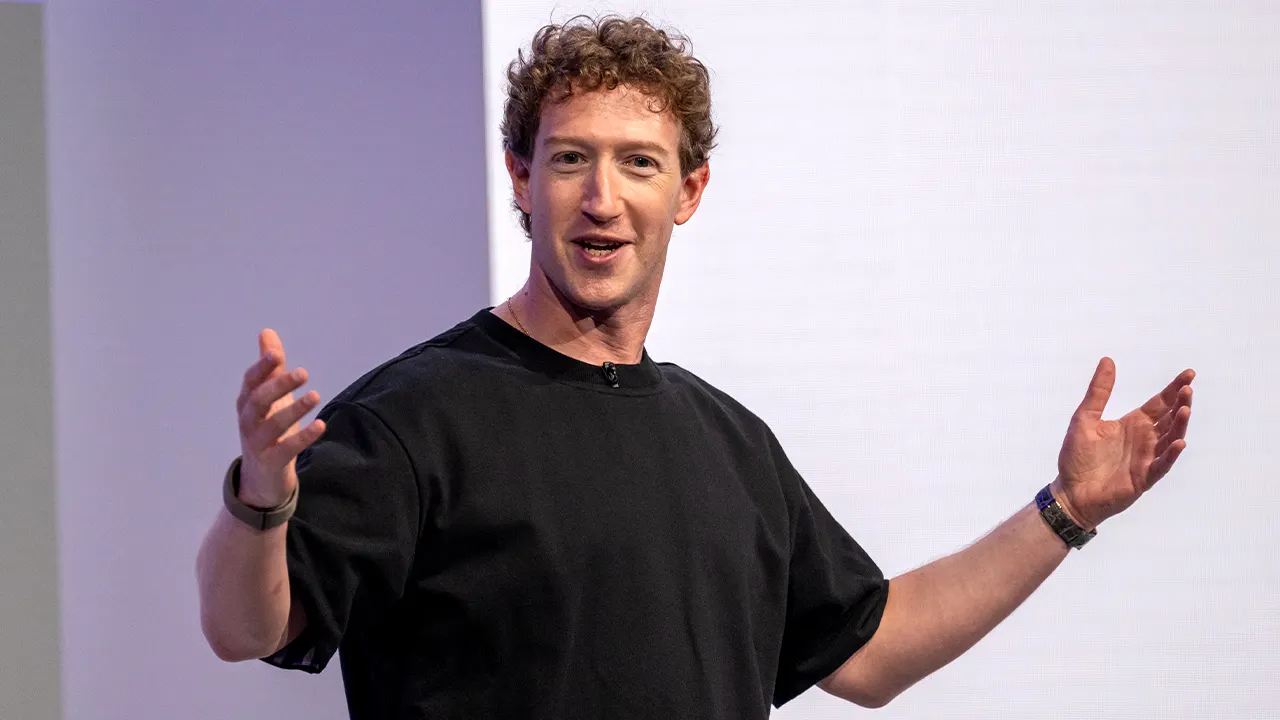
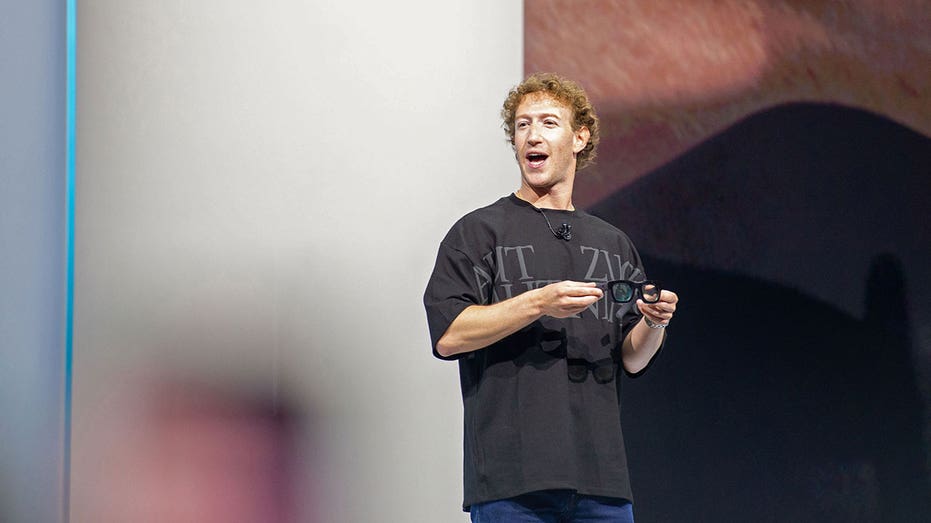
A technology executive stands on stage presenting new hardware during a company event.

Meta CEO Mark Zuckerberg said the future of artificial intelligence should empower people rather than replace them as the company unveiled its latest vision for AI. (David Paul Morris/Bloomberg via Getty Images)

“As we enter this next wave with AI, we continue to believe the future is for everyone,” he continued. “We’re focused on giving every person the tools to reach your full potential and making sure the benefits of technology are distributed to everyone.”

Advertisement

In the video, Meta pushed back on concerns that artificial intelligence will make people less connected or leave them behind.

“Some people will have you believe AI will make us less connected, that it’s gonna leave us behind,” the video says. “We couldn’t disagree more. Call us optimists, call us dreamers. Just as we’ve always done, we’re betting on people.”

INSIDE THE AI BOOM: A TALENT CHIEF’S PLAYBOOK FOR WINNING IN THE JOB MARKET

The Meta logo is displayed on a smartphone screen

Meta unveiled a new campaign promoting an optimistic vision for artificial intelligence, saying the technology should help people build, connect and create. (Samuel Boivin/NurPhoto via Getty Images)

Meta said it has connected more than 3.5 billion people and 200 million small businesses across its platforms during its 22-year history.

Advertisement

The company argued AI is simply the next chapter of that mission.

Ticker Security Last Change Change %
META META PLATFORMS INC. 627.17 -16.64 -2.58%

“Because while technology will change, our intention behind it never will,” the video says. “The future we see is one with less barriers and more breakthroughs. More tools designed to unlock your imagination. Bigger engines to drive your ingenuity.”

CLICK HERE TO GET FOX BUSINESS ON THE GO

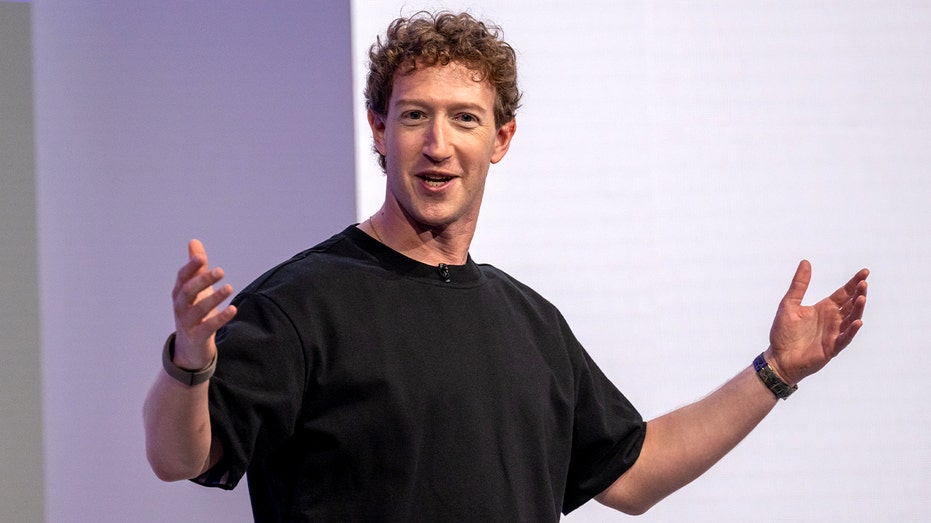
Mark Zuckerberg

Meta CEO Mark Zuckerberg outlined the company’s optimistic vision for artificial intelligence, arguing the technology should benefit everyone. (Getty Images)

Meta said advances in artificial intelligence will help build stronger communities and create more meaningful connections.

Advertisement

“We like those odds,” the company said. “The future is for everyone.”

Continue Reading

Business

Mars Snacking to close New Jersey headquarters

Published

on

Mars Snacking to close New Jersey headquarters

Newark headquarters expected to shut down by December 2027.

Continue Reading

Business

Lamb Weston earnings up next: Can efficiency gains offset margin squeeze?

Published

on


Lamb Weston earnings up next: Can efficiency gains offset margin squeeze?

Continue Reading

Business

SuanNutra to acquire IFF specialty ingredients portfolio

Published

on

SuanNutra to acquire IFF specialty ingredients portfolio

IFF’s specialty natural ingredients business to merge with SuanNutra’s existing operations.

Continue Reading

Business

Olivia Rodrigo Sparks Dating Rumors With Wall Street Financier Julian Croonenberghs After Brooklyn Sightings

Published

on

Nolan Xavier Wells

Olivia Rodrigo, the Grammy-winning singer known for chart-topping breakup anthems, is the subject of fresh dating speculation after being spotted multiple times with a Wall Street financier in Brooklyn, according to a report published by Page Six.

The outlet reported Tuesday that Rodrigo has been linked romantically to Julian Croonenberghs, an investment professional at private equity firm HG Capital, marking a departure from her past relationships with actors and entertainment industry figures. Neither Rodrigo nor Croonenberghs has publicly commented on the reports.

How the rumors emerged

According to multiple entertainment outlets citing Page Six’s reporting, Rodrigo and Croonenberghs have been seen together on several occasions in Brooklyn in recent weeks. The speculation was first fueled by the celebrity gossip account DeuxMoi, which reported a sighting of the pair dining together in the Clinton Hill neighborhood of Brooklyn in mid-June.

Advertisement

Photographs that circulated more recently appeared to show the two traveling together, including images suggesting they had been in Iceland alongside members of Rodrigo’s team before flying back to New York. Additional photos showed the pair at an airport as they made the trip back to New York on July 20, with Rodrigo later photographed arriving in the city.

Fans and entertainment reporters identified Croonenberghs as the man seen with Rodrigo after cross-referencing details from his professional background. According to his listed biography, Croonenberghs works on the Mercury Team at HG Capital and previously worked at Goldman Sachs as part of its Financial Institutions Investment Banking group. He is a graduate of Brown University, where he studied applied mathematics and computer science, and played on the U.S. Men’s National Field Hockey Team from 2018 to 2020. He is also reported to speak both French and Dutch.

A subtle social media clue

While neither party has confirmed the relationship, fans have pointed to a small social media interaction as a potential sign of a connection: Rodrigo reportedly liked an Instagram post shared by Croonenberghs’ sister, Jade. Beyond that gesture, both Rodrigo and Croonenberghs have kept any details of their relationship private, and representatives for Rodrigo have not issued a statement addressing the reports.

Advertisement

A shift from her usual dating pattern

Entertainment reporters have noted that a relationship with Croonenberghs would represent a departure from Rodrigo’s previous public relationships, which have largely involved figures in film, television and music. Rodrigo first drew public attention for her relationship with “High School Musical: The Musical: The Series” co-star Joshua Bassett, whom she starred alongside after the two met on set in 2019. The pair reportedly split in 2020, and fans have long speculated that several of Rodrigo’s early songs, including her breakout single “Drivers License,” referenced the relationship’s end, though she has never publicly confirmed the connection.

Rodrigo was later linked to Hollywood producer Adam Faze in 2021, with the two first spotted together at a premiere party for “Space Jam: A New Legacy.” In 2022, she was romantically connected to music executive and DJ Zack Bia, though that relationship also proved short-lived. Her most recent and longest public relationship was with British actor Louis Partridge, known for his role in Netflix’s “Enola Holmes” film series. The two began attracting attention as a couple in late 2023 and made several public appearances together, including a red carpet debut at the Venice Film Festival and a joint appearance at the Grammy Awards, before reportedly ending their roughly two-year relationship in late 2025.

A career built on personal storytelling

Advertisement

Rodrigo, 23, first rose to prominence with the release of her single “drivers license” in January 2021, followed by her debut album “Sour” later that year. The album’s blend of confessional songwriting and pop-punk influences earned her the Grammy Award for best new artist in 2022, along with several other nominations. She followed with a second album, “Guts,” in 2023, and released a third album, “You Seem Pretty Sad for a Girl So in Love,” earlier this year.

Much of Rodrigo’s songwriting has drawn heavily from her personal relationships, with fans frequently attempting to trace connections between her lyrics and her real-life romantic history. That pattern has made any new relationship a subject of significant public interest, as was the case following her split from Partridge and now amid the reports connecting her to Croonenberghs.

What remains unconfirmed

As of Wednesday, no formal confirmation of a relationship between Rodrigo and Croonenberghs had been issued by either party, and both have declined to comment when approached by media outlets covering the story. The reports remain based on sightings, photographs and secondhand social media accounts rather than any official statement, a pattern common to early-stage celebrity dating speculation that sometimes proves accurate and sometimes does not.

Advertisement

Representatives for Rodrigo did not immediately respond to requests for comment from outlets reporting on the story, and Croonenberghs, who works in a private-sector finance role rather than public entertainment, has not made any public statement of his own.

Given Rodrigo’s history of addressing past relationships through her music, some fans have speculated that any future confirmation of the relationship, or details about how it developed, could eventually surface through her songwriting, following a pattern established across her three studio albums. For now, the reports remain unconfirmed, with public interest continuing to center on the pair’s recent sightings together in New York and their trip to Iceland rather than any official acknowledgment from either Rodrigo or Croonenberghs themselves.

Continue Reading

Business

Fidelity says retiree healthcare costs hit $185,500 in 2026 report

Published

on

Poll finds healthcare is now Americans' top domestic concern

Fidelity Investments released its 25th annual estimate of retiree healthcare costs, which revealed a significant jump from a year ago as medical care and related expenses become more expensive.

The report estimated that a 65-year-old who retires in 2026 can expect to spend an average of $185,500 on healthcare and medical expenses throughout their retirement. That amount is an increase of 7.5% from last year amid rising healthcare prices, growth in the utilization of medical services and growing costs stemming from chronic conditions.

Advertisement

“Financial planning for retirement is about more than reaching a savings target, especially as retirement itself continues to evolve,” said Shams Talib, head of Fidelity Workplace Consulting.

“Whether Americans fully stop working, phase into their retirement, or pursue new ways to stay engaged, healthcare consistently remains one of the largest expenses they will face,” Talib added. “Providing a benchmark to consider can help them plan with purpose and more confidence.”

POPULAR DRUGS ADDED TO MEDICARE PRICE NEGOTIATION PROGRAM: WHAT IT MEANS FOR AMERICANS

Doctor and patient.

People who are retired or are planning for retirement should account for healthcare expenses not covered by Medicare in their planning. (iStock)

Fidelity’s report has been compiled each year since 2002 and yields an estimate designed as a benchmark for long-term planning around possible healthcare costs a retiree will incur despite standard Medicare coverage.

Advertisement

The estimate assumes enrollment in Original Medicare (Parts A and B), as well as Medicare Part D – which includes premiums, copayments and out-of-pocket costs for medical care and prescription drugs throughout retirement. The figure doesn’t include potential long-term care expenses.

Out of the total estimate of $185,500, Fidelity’s analysis finds that about 45% of that amount goes to monthly premiums for Medicare Part B and Part D.

US SHOULDERS DISPROPORTIONATE COST OF NEW MEDICATIONS, REPORT FINDS

A Medicare card.

Medicare plans don’t cover all healthcare-related expenses, so retirees face some out-of-pocket costs. (iStock)

Another 48% go to covering other medical expenses under Medicare cost-sharing provisions – such as copayments, coinsurance, deductibles for things like hospital visits and outpatient services.

Advertisement

That figure also includes other medical services that aren’t covered by Medicare plans, such as vision and hearing exams.

The final 7% of the total comes from out-of-pocket expenses, like co-payments and amounts that aren’t covered by Medicare Part D and are out-of-pocket expenses for generic, branded or specialty drugs.

OBAMACARE EXCHANGE FLAW EXPOSED AMERICANS TO UNEXPECTED HEALTH PLAN SWITCHES, WATCHDOG FINDS

A pharmacist hands a patient a bottle of prescription medication.

Prescription drug costs can be a significant component of a retiree’s healthcare expenses. (Getty Images)

“Medicare is a critical part of retirement health coverage, but it does not eliminate every healthcare expense,” said Steve Betts, head of Fidelity Health.

Advertisement

“This estimate helps illustrate why both pre-retirees and retirees alike will benefit from carefully considering out-of-pocket expenses and how they will pay for them as they build out their retirement income strategy,” Betts added.

GET FOX BUSINESS ON THE GO BY CLICKING HERE

Continue Reading

Trending

Copyright © 2025