

Business
Standard Chartered names Manus Costello as permanent CFO



There is a phrase beloved of every business school lecturer, every venture capitalist and every man who has ever worn a gilet to a breakfast meeting: the level playing field.
It is the founding myth of competition itself, the idea that we all start from the same line, breathe the same air and sweat, roughly speaking, the same sweat. And this summer, FIFA has taken that noble concept, marched it into the Philadelphia sunshine and left it there to blister.
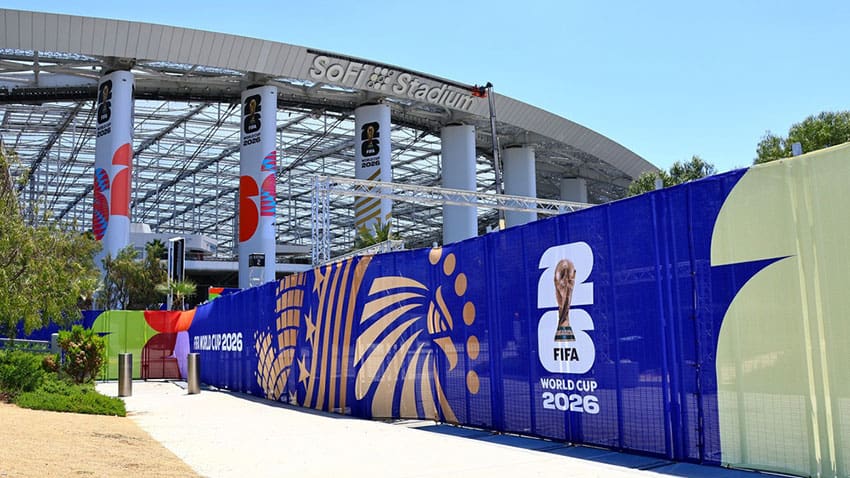
Because let us be clear about what is actually happening at this World Cup. On Saturday afternoon, France and Paraguay were sent out to play knockout football in Philadelphia with the heat index nudging an obscene 40C, the sort of temperature at which sensible nations close the shops, draw the shutters and lie down until October. Meanwhile, other teams in this very same tournament have spent a month wafting about in Atlanta, Dallas and Houston, three fully enclosed, climate-controlled pleasure domes where the thermostat sits at a serene 22C, roughly a fifth of all matches are being played in air-conditioned comfort, and the greatest physical hazard is an over-chilled bottle of Gatorade.
That is not a level playing field. That is not even the same sport. That is judging oranges against oranges, yes, but one orange has been kept in the fridge and the other has been left on the dashboard of a Ford Focus in a Texas car park.
And tonight it gets better, or worse, depending on whether you are English. England face Mexico at the Estadio Azteca, a cathedral of footballing suffering that sits 2,240 metres above sea level, where the air is thin, the oxygen is rationed and the home side has been living, training and playing up in the clouds all tournament. Mexico have played three of their four matches at the Azteca. England have had a few days to acclimatise to conditions that physiologists suggest need weeks. It is the sporting equivalent of asking a Surrey accountancy firm to pitch for a contract in Mexico City, in Spanish, while mildly concussed.
Now, I can already hear the rejoinder. Sport has always had its quirks of geography. True enough. But there is a difference between charming local variation and a structural inequality baked into the draw. When one quarter-finalist has spent the group stage at a constant 22C and another has been slow-roasted in Miami and Monterrey at wet-bulb temperatures the medics politely describe as dangerous, the bracket itself becomes a lottery of thermodynamics. Uzbekistan, delightfully, drew the coolest schedule of the lot. Tunisia drew the hottest. Neither earned it. The air conditioning did.
FIFA’s answer to all this has been the cooling break, that strange little ritual in which 22 millionaires gather round a cool box like wildebeest at a watering hole while the referee studies his watch. It is a sticking plaster on a sunburn. A three-minute pause does not undo 87 minutes of playing in conditions that would get a building site shut down in Britain, and everyone from the players’ union to the team doctors knows it.
Business readers will recognise this pattern instantly, because it is how markets fail. It is the incumbent with the subsidised energy contract competing against the start-up paying spot prices. We would call it an uneven regulatory environment and write furious letters about it. FIFA calls it a tournament.
And here is the properly British irony: while the players wilt, the UK economy is having a lovely time of it. The tills are singing to the tune of a £3.8 billion World Cup spending boost for pubs, bookmakers and takeaways, and smart small firms are already thinking MATCH to win the event economy. The only heat map that matters in Britain this month is the one showing which beer gardens have a big screen.
Tonight’s kick-off lands at 1am UK time, which is why unions are begging employers to allow flexible working on Monday morning, and why half the nation’s middle managers will be conducting their 9am stand-up from behind sunglasses. Spare a thought, as you yawn, for Harry Kane and colleagues, who will be conducting theirs at altitude, on 40 per cent less oxygen, against 87,000 Mexicans who regard the Azteca as a family heirloom.
So no, this World Cup is not judging oranges with oranges. It is a magnificent, chaotic, occasionally dangerous experiment in competitive inequality, and whoever lifts the trophy will deserve an asterisk shaped like a thermometer. If England prevail tonight, breathless in every sense, it will rank among our finest away days. And if we lose, well, at least we will have the excuse ready before kick-off. Which, as any England fan will tell you, is the true national sport.

Richard Alvin
Richard Alvin is a serial entrepreneur, a former advisor to the UK Government about small business and an Honorary Teaching Fellow on Business at Lancaster University.
A winner of the London Chamber of Commerce Business Person of the year and Freeman of the City of London for his services to business and charity. Richard is also Group MD of Capital Business Media and SME business research company Trends Research, regarded as one of the UK’s leading experts in the SME sector and an active angel investor and advisor to new start companies.
Richard is also the host of Save Our Business the U.S. based business advice television show.

For many UK SMEs, site security still means a guard, a keypad, and a barrier that opens when someone waves a fob out of the window.
It works until it does not. With extended hours, more third-party deliveries, and mixed-use sites, the entrance becomes a pressure point where delays and security gaps show up first.
Modern vehicle access control is increasingly an operational tool, not just a security add-on. Done well, it reduces queues, cuts manual checks, and creates an audit trail of who entered, when, and under what permissions.
The hidden costs of everyday vehicle movements
Common issues around vehicle entry are rarely dramatic, but they are expensive:
– Bottlenecks at peak times that delay staff and disrupt deliveries
– Tailgating, where an unauthorised vehicle follows a permitted one through the barrier
– Shared credentials (cards, codes, fobs) that are hard to control once they circulate
Even a small queue at the gate can ripple through the day. Missed delivery slots, late engineers, and frustrated visitors all add up.
What modern systems do differently
Instead of relying on a driver to stop, present a pass, and wait for a decision, modern setups identify vehicles automatically and apply rules in the background.
A typical flow is simple:
- A vehicle identifier is issued, such as a tag linked to a vehicle or user
- A reader detects it at the entrance
- Software checks permissions, including time windows and zones
- The barrier opens and the event is logged
For SMEs, the key shift is policy-based access. Contractors can be allowed in only during set hours. Visitors can be granted temporary access that expires automatically. Regular suppliers can be approved for specific days or time slots.
Where the ROI comes from
Return on investment is usually a combination of time saved and risk reduced. SMEs typically see value in:
– Faster throughput at entry and exit, reducing congestion and improving punctuality
– Lower overhead by reducing the need for staffed checkpoints
– Better security through unique identification and consistent enforcement
Automated logs also support incident response and insurance discussions by providing a clear record of vehicle movements.
Implementation checklist for SMEs
Vehicle access control projects do not have to be disruptive, but they benefit from a structured planning phase:
– Map vehicle types and scenarios, including staff, visitors, couriers, HGVs, and emergency access
– Define rules before technology, including time windows, zones, and exceptions
– Check integration needs, such as barriers, intercoms, CCTV or VMS, and parking management
– Plan credential management, including onboarding, offboarding, and temporary access
Choosing a solution that scales
The best systems grow with the business by adding entrances, supporting more vehicle types, and integrating with wider security and parking workflows. For SMEs exploring options, established approaches to vehicle access control can support secure, hands-free identification and integration with existing infrastructure.
The bottom line
For UK SMEs, controlling vehicle entry is no longer just about stopping the wrong car. It is about keeping operations moving, reducing avoidable labour costs, and building a more resilient security posture. With the right rules and technology, the gate can shift from being a daily bottleneck to a streamlined, auditable part of the business.

Amazon has passed the milestone it needed to switch on its long-awaited Leo satellite broadband service, deploying enough satellites to begin initial coverage later this year, with the UK confirmed among the first wave of markets.
The breakthrough came in the early hours of 2 July, when a United Launch Alliance Atlas V rocket lifted 29 satellites into orbit from Cape Canaveral, the final Atlas V mission in Amazon’s launch programme. The flight took the constellation to 396 spacecraft, tying the record for the heaviest payload the veteran rocket has ever carried.
Chris Weber, vice president of Amazon’s Leo business, said the constellation was now large enough “to support continuous service across initial latitudes”. He added: “Still lots of work ahead, including raising all these new satellites to their assigned altitude, but we’ve completed enough launches for initial service this year, and future missions just add coverage and capacity.”
For Jeff Bezos’s answer to Elon Musk’s Starlink, the announcement marks the end of a lengthy and at times fraught deployment phase. Amazon, which rebranded the project from Kuiper to Leo last year, holds FCC authorisation for a constellation of around 3,236 satellites and had faced a regulatory deadline to orbit half of them by mid-2026, though the US regulator has since shown flexibility on timing, according to CNBC.
What it means for UK businesses
An enterprise and government preview has been under way since late 2025, but the consumer rollout is targeted for mid-to-late 2026 in priority markets including the UK, US, Canada, France and Germany. Britain’s early place in the queue owes much to Ofcom approval already being in place, though coverage will initially be limited to certain latitudes and broaden as more satellites launch. Full availability could stretch into 2027 depending on the pace of deployment.
The service is designed to deliver speeds from 25Mbps up to 400Mbps and beyond, with gigabit-capable terminals using advanced phased-array antennas, and latency low enough for video calls and streaming. Beyond fixed home broadband, particularly for rural and underserved parts of the UK, Amazon is targeting portable connections, in-flight Wi-Fi through partnerships such as its JetBlue deal, and enterprise and government applications. Customer terminals are in testing, and would-be users can join the waitlist at leo.amazon.com.
An uphill battle against Starlink
Amazon enters the market a long way behind. Starlink has thousands of satellites in orbit, millions of customers worldwide and a growing UK footprint, having recently undercut BT with £35-a-month broadband and secured new Ofcom spectrum licences to expand capacity at its British ground stations.
Even so, the arrival of a deep-pocketed second player should be welcome news for the estimated hundreds of thousands of UK premises still beyond the reach of full-fibre networks. Competition on price, hardware and service quality has been conspicuously absent from the satellite broadband market to date, and Amazon’s entry, backed by its logistics, retail and AWS cloud infrastructure, is the first credible challenge to Starlink’s dominance.
For rural firms weighing up connectivity options, the sensible play is to watch how the initial rollout performs. Timelines in the satellite business have a habit of slipping, but for the first time the UK is months, not years, away from a genuine two-horse race in the sky.

Jamie Young
Jamie is Senior Reporter at Business Matters, bringing over a decade of experience in UK SME business reporting.
Jamie holds a degree in Business Administration and regularly participates in industry conferences and workshops.
When not reporting on the latest business developments, Jamie is passionate about mentoring up-and-coming journalists and entrepreneurs to inspire the next generation of business leaders.
Business
Paul Pelosi faces hit-and-run charge after striking parked vehicle in California, media reports say


Paul Pelosi faces hit-and-run charge after striking parked vehicle in California, media reports say
Siebert Financial CIO Mark Malek breaks down the benefits of ‘Trump Accounts’ on ‘The Claman Countdown.’
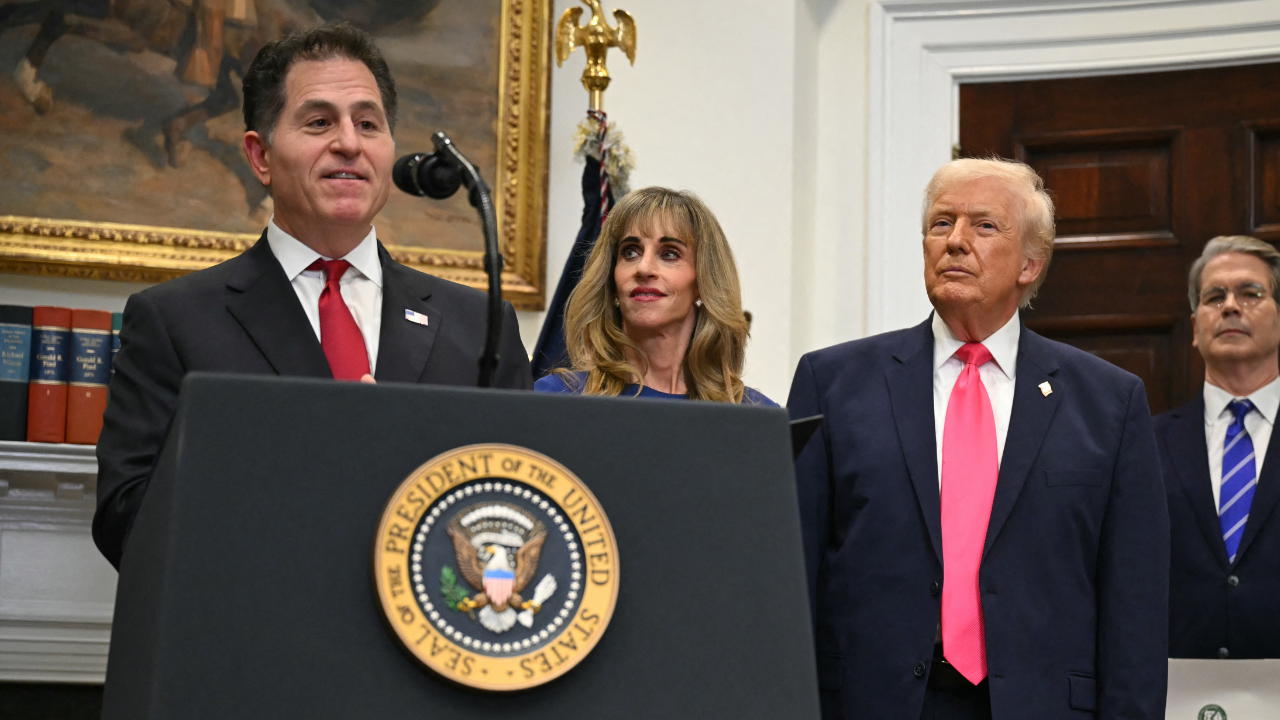
In an Independence Day announcement, tech billionaire Michael Dell and his wife Susan unveiled a “public-private partnership” aimed at giving millions of young Americans a direct financial stake in the nation’s economy.
The Dell Technologies CEO took to X on Saturday to announce they are giving $250 each to the first 25 million qualifying American children who sign up for “Trump Accounts.”
“This makes every child a shareholder in the greatest prosperity-creating engine the world has ever known — American capitalism,” Dell wrote in an X post. “Through this public-private partnership, we’re giving the next generation a real stake in our economy and a path to the American Dream: education, a first home, starting a business, and building lasting wealth.”

The Trump Accounts app will feature eight exclusive financial literacy modules. (U.S. Department of the Treasury / Fox News)
WHITE HOUSE UNVEILS TRUMP ACCOUNTS MOBILE APP AHEAD OF JULY 4 ROLLOUT
The announcement coincides with the official Fourth of July launch of Trump Accounts, a provision of new tax legislation designed to give young Americans a financial head start.
Under the program, which was announced one year ago, every U.S. citizen born between Jan. 1, 2025, and Dec. 31, 2028, is eligible to receive a $1,000 government-provided baseline investment upon enrollment.
Parents can register their children for the program when filing their taxes, acting as sole custodians of the account until the child turns 18.

FILE – President Donald Trump speaks during the Trump Accounts Launch Summit in Washington, D.C., in January. (Valerie Plesch/Bloomberg via Getty Images / Getty Images)
HOW TO KNOW IF YOUR CHILD QUALIFIES FOR A TRUMP ACCOUNT: ‘A FINANCIAL STAKE IN THE FUTURE’
While no personal contributions are required, parents have the option to deposit up to $5,000 per year, which is then invested directly in American companies in the stock market.
| Ticker | Security | Last | Change | Change % |
|---|---|---|---|---|
| DELL | DELL TECHNOLOGIES INC. | 394.32 | -30.93 | -7.27% |
President Donald Trump projected the program will put $3 to $4 trillion of wealth into the hands of young Americans over the next 15 years.
“Decades from now, I believe that Trump Accounts will be remembered as one of the most transformative policy innovations of all time,” Trump said during the program’s announcement.

FILE – Sen. Ted Cruz, R-Texas, speaks during an announcement with Dell Technologies CEO Michael Dell and his wife, Susan, and President Donald Trump about “Trump Accounts” at the White House in 2025. (Andrew Caballero-Reynolds/ AFP/Getty Images / Getty Images)
Dell, who had previously pledged more than $6 billion to the program, said the initiative “unites us all in hope and optimism for every child’s future.”
GET FOX BUSINESS ON THE GO BY CLICKING HERE
The combined launch of the government initiative and the Dells’ private contribution has drawn widespread praise, with Sen. Ted Cruz, R-Texas, lauding the effort on Saturday as “an extraordinary birthday gift to celebrate the greatest nation in the history of the world.”


Death toll from Venezuela quakes rises to 2,954


Ukraine’s Zelenskiy says he spoke to Trump, calls for ’American resolve’ to help end war

Goldman revises its USD/JPY forecasts. Here are the new targets


Masked Patriot Front white nationalists stage July 4 march through DC

US VP Vance says Britain has been failed by leaders, hopes next PM delivers change

“My financial condition said no not today” #youtubeshorts #btsarmy #bts @YouTube

Harper Beckham won’t get the one 15th birthday present she really wants – a visit from big brother Brooklyn

Air-Conditioned Stadiums v 39C Heat, Is This Really a Level Playing Field?

No Jackpot Winner as $257 Million Prize Rolls Over to $269 Million Monday Draw

Renter of Home in Anne Heche Crash Denies Settlement With Son

Weekend Open Thread: Staud – Corporette.com
“My financial condition said no not today” #youtubeshorts #btsarmy #bts @YouTube

Children s filial piety should not only be reflected in financial aspects but also in thei

Sui & Tang Heroes’ Financial Struggles: Dicky Cheung’s Part-Time Dilemma
-

 Fashion1 day ago
Weekend Open Thread: High Hopes
-

 Tech7 days ago
Bluekit phishing kit adopts browser-in-the-middle for login theft
-

 Tech7 days ago
Claude Code turned every engineer into three. Now companies need more product thinkers
-

 Crypto World5 days ago
Strategy authorizes up to $1.25B in Bitcoin sales under new capital plan
-

 Politics1 day ago
The House | “Reframing the debate from a binary discussion of winners and losers”: Yuan Yang reviews ‘We Are Not Machines’
-

 News Videos6 days ago
MAJOR BITCOIN & MARKET UPDATE!!!! (MUST WATCH ASAP!!!)
-

 Tech5 days ago
Anonymous researcher drops 0-day ‘exploitarium’ repo
-

 Business5 days ago
Australia treasurer says alleged access of prime minister’s bank data ’incredibly concerning’
-
 Business5 days ago
The AI boom won’t burst all at once. It will pop in ‘rolling bubbles’: Macquarie
-

 Sports3 days ago
Broncos roster: OL Ben Powers (No. 74) entering final year of contract
-

 NewsBeat4 days ago
Presenter Caroline Flack’s brother Paul Flack dies aged 55
-

 Crypto World3 days ago
Binance stock trading tops $1B in first month after launch
-

 Crypto World3 days ago
Alibaba-affiliate Ant Group enters the humanoid robot market with 12 deals
-
 NewsBeat3 days ago
New exhibition reflects five decades of movement between island of Ireland and GB
-

 News Videos5 days ago
How to Build INSANE Live Financial Dashboards With Claude
-

 Business3 days ago
Meta Platforms Stock Jumps 7% Today as Bloomberg Reports Company Plans to Enter the Cloud Business
-

 Business2 days ago
What a 10 Percent Drop Means for Buyers, Sellers and Renters
-

 Crypto World2 days ago
Binance Re-Enters Philippines As EU MiCA Rules Restrict Access
-

 Crypto World1 day ago
Standard Chartered Secures MiCA License as ESMA Adds 37 New Crypto Firms
-

 Tech5 days ago
The attack that hijacked Claude Code came through Sentry. Datadog, PagerDuty, and Jira have the same exposure.
You must be logged in to post a comment Login