
Business
Stocks Mixed as Oil Sinks Below $100

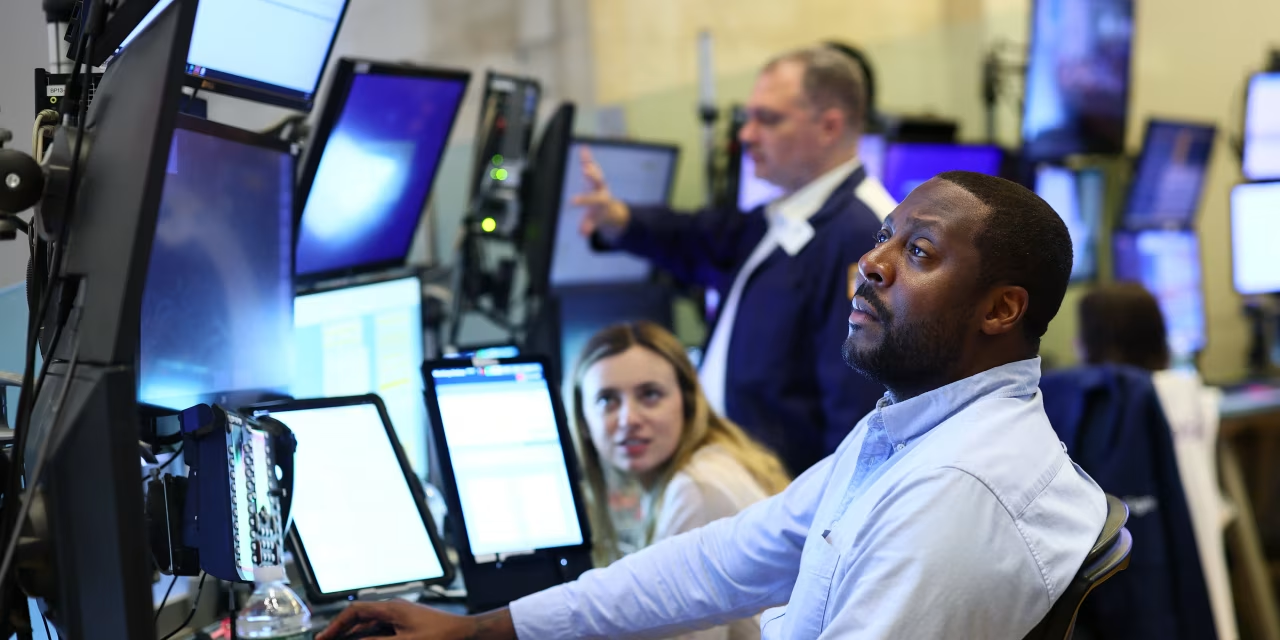
Falling oil prices are helping U.S. tech stocks stay buoyant Tuesday.
The tech-focused Nasdaq Composite Index rose modestly in late trading, poised for a second straight record high. The Dow industrials slipped and the S&P 500 traded near flat. Brent crude futures edged lower, falling to roughly $100 a barrel after encouraging news about oil exports from the Middle East.
Copyright ©2026 Dow Jones & Company, Inc. All Rights Reserved. 87990cbe856818d5eddac44c7b1cdeb8

Business
X Adds One-Tap Trading to Cashtags as Musk’s SpaceX and Tesla Still Hold $2 Billion in Bitcoin Combined

Elon Musk’s social media platform X has added a new “trade” button to its feed, allowing users to tap ticker symbols known as cashtags, such as bitcoin or Tesla, to instantly view real-time charts and begin a trade, the latest step in Musk’s broader effort to transform X into a comprehensive “everything app.”
The feature links users directly to a range of partner brokerage platforms, including Interactive Brokers, Moomoo, Gemini, Kraken and Coinbase, where trades can be completed once initiated through X. Mridul Singhai, product engineering lead at X, described the goal behind the update in a post announcing the rollout. “Cashtags close the gap between a ticker on the timeline and the market itself,” Singhai said. “When you post or tap a ticker, you’re taken right to the asset, where you have seamless access to the live chart, the conversation around it, and now the ability to trade with one of our brokerage partners.”
The update builds on the wider rollout of X Money earlier this summer, part of Musk’s continued push to expand the social platform’s functionality well beyond its original role as a messaging and news-sharing service. The new trading feature arrives as bitcoin’s price has continued climbing in cycles since Musk stepped back from actively posting about the cryptocurrency in 2022, a period during which bitcoin reached $126,000 late last year before falling more than 50% earlier in 2026, followed by a rebound over the past month that has reignited broader speculation about where prices head next.
The announcement of X’s new cashtag trading feature coincided with a sharp move in dogecoin, the meme-based cryptocurrency Musk has previously described as his personal favorite. Dogecoin climbed roughly 6% following the announcement, outpacing gains across the broader cryptocurrency market during a period of wider crypto strength.
Although Musk has scaled back how frequently he posts and comments publicly about bitcoin and cryptocurrency compared with the level of engagement he showed during the 2021 pandemic-era bull run, he has not withdrawn from the space entirely. Musk’s two largest companies, SpaceX and Tesla, together hold approximately 30,000 bitcoin, valued at roughly $2 billion at current prices. Some traders have pointed to that continued corporate holding, combined with Musk’s repeated public framing of energy as “the true currency,” as evidence he remains supportive of bitcoin even amid his reduced public commentary on the asset.
Musk has articulated that view directly on multiple occasions. Responding on X to a post from the pseudonymous account beffjezos, which argued that “if you understand money as a proxy for expected free energy, AI is literally an infinite money glitch,” Musk replied simply, “Energy is the true currency.” In an earlier post, Musk elaborated further on his reasoning for viewing bitcoin favorably relative to traditional currencies, writing that “bitcoin is based on energy: you can issue fake fiat currency, and every government in history has done so, but it is impossible to fake energy.” Musk has separately linked that view to the broader global race toward artificial intelligence development, suggesting that competition is a key factor behind recent price increases across gold, silver and bitcoin alike.
Bitcoin’s underlying security model relies on a global network of so-called miners, who use specialized, high-powered computers to validate transactions on the network in exchange for newly issued bitcoin as a reward. That validation process consumes substantial amounts of electricity, with the bitcoin network’s total energy usage now comparable to that of some small countries, a demand that has continued climbing alongside bitcoin’s price as more mining operations join the network in pursuit of the rewards on offer.
Musk’s relationship with bitcoin has also intersected with his political activities in the past year. Following his departure from the White House and a subsequent public falling-out with President Donald Trump, Musk said last year that his then-unconfirmed America Party would favor bitcoin over the U.S. dollar as a preferred currency, describing the dollar and other government-issued, debt-based currencies as “hopeless.”
X’s new cashtag trading feature adds a direct commercial layer to what has already become a hub for real-time financial discussion and speculation on the platform, particularly around cryptocurrency and meme-based tokens that frequently trend on X’s timeline. By routing users directly to established brokerage partners rather than attempting to build out its own in-house trading infrastructure from scratch, X appears to be positioning the feature as a bridge connecting social discussion of financial assets to actual trade execution, rather than a fully standalone trading platform in its own right.
The rollout comes at a moment of renewed enthusiasm across cryptocurrency markets more broadly, with bitcoin’s rebound over the past month reigniting broader bets among traders about the potential for a new sustained bull run across digital assets. Whether X’s new trading feature meaningfully accelerates that momentum, or simply adds a convenient new entry point for users already inclined to trade, remains to be seen as the feature rolls out more broadly across the platform’s user base in the weeks ahead.

Why is Twilio stock surging today?

FOX Business financial analyst Mike Murphy discusses Meta’s stock surge after announcing their launch of Muse AI. Murphy discusses a potential Chinese trade deal.
Meta’s recently launched Muse personal artificial intelligence (AI) agent app rose to the top of the Apple App Store after it launched earlier this month.
Muse ranked as the top free app in Apple’s U.S. App Store, ranking ahead of another popular AI tool, OpenAI’s ChatGPT.
The rise of Muse reflects a shift in how consumers are using AI, with agentic apps that help users with a variety of tasks, as opposed to a chatbot that can respond to a user’s conversational prompts and perform research.
The Muse AI agent debuted in early September and is designed to access a person’s apps across categories like email, calendar, payments, health, shopping and the smart home, the company said after the launch.
META INTRODUCES MUSE, A PERSONAL AI AGENT THAT CAN SEND EMAILS, BOOK TRAVEL
Meta’s Muse agentic AI surpassed ChatGPT in the Apple App Store rankings. (David Paul Morris/Bloomberg via Getty Images)
Modeled on the open-source AI agent OpenClaw, Muse can autonomously send emails, book travel on the user’s behalf, sell a car and lower a bill, according to Meta.
The Muse app allows people to choose what apps the AI agent can connect to and revoke access at any time.
Each Muse agent runs on its own virtual machine, a cloud-based emulation of a personal computer, which enables it to keep carrying out requests in the background even when a person is not actively using it.
ZUCKERBERG LAYS OUT VISION TO PUT SUPERINTELLIGENT AI IN EVERYONE’S HANDS

Meta CEO Mark Zuckerberg has touted Meta’s plans for superintelligent AI. (David Paul Morris/Bloomberg via Getty Images)
Meta said that users can tell Muse what they need to get done, and it will take action using the Muse Spark model that the company built for real-world agentic work. It can handle tasks such as sending an email or booking travel, as well as bigger projects.
The company said that once a user shares a goal with Muse, it helps them develop a personalized plan and coordinate their time and resources, while advancing the work on its own – opening browsers, filling out forms, and even negotiating on the user’s behalf.
For longer tasks, Muse can continue to work after the app is closed but can come back when something changes or if it needs approval, like before sending an email or making a purchase, Meta said.
ZUCKERBERG SAYS AI SHOULD EMPOWER PEOPLE, NOT REPLACE THEM, IN NEW META VISION
Muse also remembers a user’s preferences, giving it the ability to make suggestions unprompted and take action on details that were only mentioned once.
As an example, Meta said that Muse can turn a recipe reel saved on Instagram into a grocery list, then generate a suggested menu for a dinner party that takes into account their friends’ dietary restrictions from prior gatherings before sending invites.
| Ticker | Security | Last | Change | Change % |
|---|---|---|---|---|
| META | META PLATFORMS INC. | 741.25 | +76.02 | +11.43% |
Syncing the Muse agent with a range of other apps that could contain a person’s data increases the range of capabilities for the new tool, though it also poses safety and reliability risks if Muse misbehaves after being granted access to the user’s personal information.
Meta said that it initially delayed the release of Muse in April to make it more secure, and the additional work allowed it to “cross the threshold” and meet minimum requirements for product safety, security, privacy, model performance and other metrics, according to Vishal Shah, vice president of AI products at Meta.
GET FOX BUSINESS ON THE GO BY CLICKING HERE
The company plans to introduce Muse Confidential VM later this year, which will keep a user’s data and communications with Muse in an encrypted format that only the user holds.

WhatsApp accounted for 71.82 per cent of harmful-content alerts from identified apps outside the Government’s planned under-16 social-media ban, according to data published by phone safety software maker SafetyMode.
The company analysed an anonymous, random sample of more than 25,000 content blocks from children’s phones running its parental-control software. It removed detections in apps the Government has indicated will be covered by the ban before calculating each app’s share.
On that basis, WhatsApp’s share was more than six times the 11.36 per cent recorded for the Google app, which ranked second. Chrome accounted for 4.21 per cent, Messages for 3.86 per cent and Spotify for 1.72 per cent.
Messaging apps outside the ban
The Government confirmed in its announcement of the under-16 ban on 15 June that the restrictions will cover platforms including Snapchat, TikTok, YouTube, Instagram, Facebook and X. Messaging services such as WhatsApp and Signal will not be included. The Government has said regulations are expected to go before Parliament before Christmas, with the protections coming into force in spring 2027.
SafetyMode said its data suggests a large volume of potentially harmful material is being detected inside apps viewed as traditional messaging services rather than social-media platforms.
The company said that, aside from the messages themselves, some of the material may be shared from social media, viewed through links or browsers, or appear because WhatsApp contains a number of social features that many parents may be unaware of.
Breakdown by category
According to SafetyMode, WhatsApp accounted for 78.86 per cent of triggers involving swearing, slurs and other banned words among the identified apps outside the planned ban. It was responsible for 58.60 per cent of obscenity triggers, 80.12 per cent of harassment triggers and 39.88 per cent of nudity triggers.
When WhatsApp and Android Messages are combined, the company said, messaging services accounted for 63.48 per cent of obscenity triggers and 87.39 per cent of harassment triggers.
Bertie Aspinall, co-founder of SafetyMode, said: “SafetyMode and OtherPhone users are typically more aware of the harms of social media and abstain from letting their kids have access. Which indicates that WhatsApp is an app perceived to be OK, but may be where harm is being viewed. Google, Chrome and spotify are two others that parents may not instinctively think of in the same way as social media.”
He added: “According to the actual blocks taking place on our children’s phones, WhatsApp is the main culprit for detected issues outside the apps covered by the planned ban. It accounted for more harmful-content triggers than every other app combined, and was top of every category.”
Aspinall pointed to changes in how messaging apps work. “One issue is the scope creep of many apps acting more like social media, with statuses, anonymised channels, live streams and vertical-scroll video content. All of which open the door to more problematic content,” he said.
“Another is that all it takes is one person with access to share harmful content from one platform to another for a seemingly safe app like WhatsApp to change. It makes it even worse that links and content from elsewhere on the internet can be viewed without really leaving that environment.”
He said: “We are seeing that children do not experience online harm according to neat app categories. They do not care whether an app is officially classed as social media, private messaging or entertainment. If images or links can be shared or viewed, the risk is there.”
Aspinall added: “A social-media ban may stop some children accessing TikTok, Instagram or YouTube, but it may not stop harmful content being shared and viewed in WhatsApp groups, channels and private messages.
“This is why protection has to work across the entire phone. App-by-app regulation will always leave gaps, and children will inevitably find them.”
SafetyMode’s software operates across the device, detecting and blocking potentially harmful content regardless of which app is being used.
The ban has drawn criticism from other quarters since it was confirmed, with industry groups questioning whether age limits alone will work. Prime Minister Sir Keir Starmer had earlier reversed his opposition to Australia-style age restrictions before the policy was set out.

Amy Ingham
Amy Ingham is a reporter at Business Matters, covering UK business news with a focus on breaking news, business policy, late payments and insolvency. She joined the magazine in 2026 after completing the NCTJ Diploma in Journalism at Harlow College’s journalism school. Her recent reporting includes British Steel’s nationalisation and its impact on SME suppliers, the decline in late payments by large firms, and Insolvency Service director disqualifications. Reach her at aingham@cbmeg.co.uk.
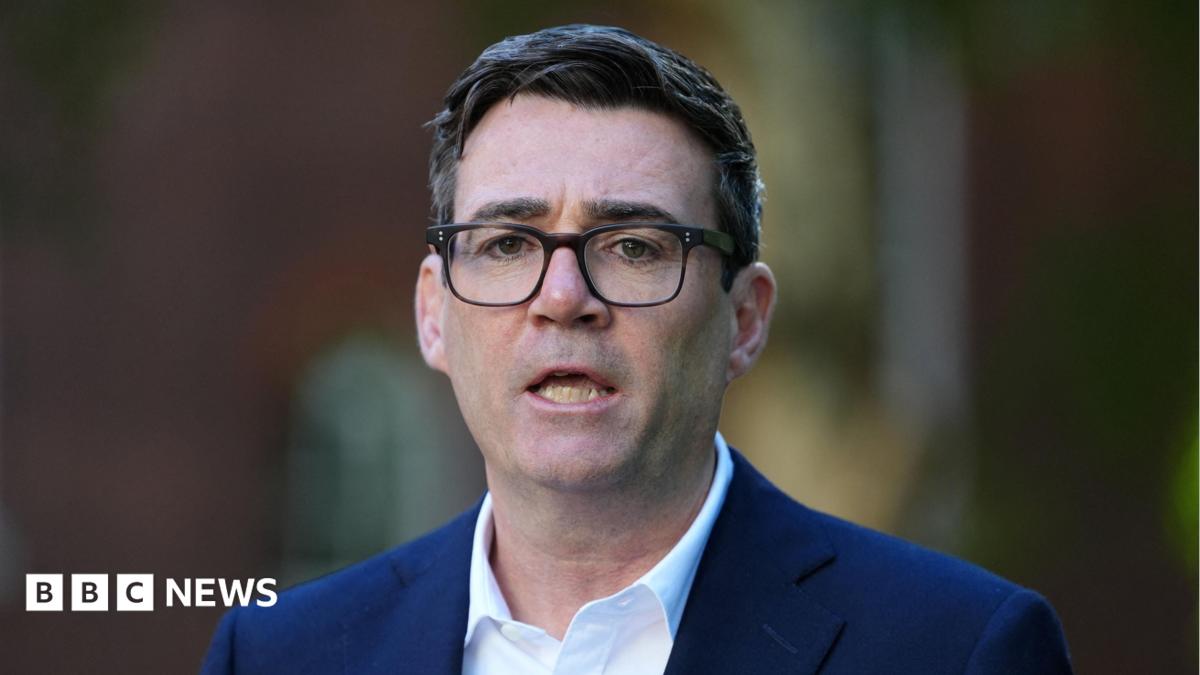
Burnham told reporters his own speech to the UN General Assembly later would reflect on the decade since the Brexit vote and the “turbulence comes when outside actors seek to manipulate, to distort facts, influence the British democratic process”.
“Going into the next decade, we need to be clear-eyed about that and become stronger and more on the front foot about challenging that,” he said.
Asked if he would rule out making a pledge to rejoin the EU at the next general election, Burnham said: “Our focus at the moment is on a UK-EU summit which we hope will take place later this year.
“My immediate priority is to build on the good work that Keir [Starmer] did in rebuilding bridges, because those bridges were broken in the early part of this decade.”
He added: “What we have got to do is now go to the next level in terms of reaching practical agreement that will further boost the British economy, and those issues are the substance of the summit alongside EU requests around youth mobility.”
He said questions about rejoining the EU were for “another day”.
Speaking at the Liberal Democrat conference in Brighton on Monday, the EU’s new ambassador to the UK was asked whether the UK could rejoin the EU or be granted associate membership.
Jukka Salovaara said: “The doors are open but it’s very much up to the UK public to identify and decide on its level of ambition when it comes to deepening cooperation with the EU.”
Last September, Burnham said he would like to see the UK back in the EU in his lifetime.
Earlier this year, he said Brexit had been “damaging” but “the last thing we should do right now is re-run those arguments”.
The EU has recently suggested Canada could become the bloc’s first “associate member”.
Asked if this could be an option for the UK, Burnham said: “The European Union made it clear that that wasn’t open to us.”
Additional reporting by Brian Wheeler
Business
Selena Gomez’s Brady Corbet Film ‘The Origin of the World’ Reportedly Recasts Lead Role With Lily McInerny

KEY POINTS
Selena Gomez’s Brady Corbet Film ‘The Origin of the World’ Reportedly Recasts Lead Role With Lily McInerny
Actress Lily McInerny has reportedly stepped into the lead role of Brady Corbet’s upcoming film “The Origin of the World,” replacing Sadie Soverall in the ensemble project that also features Selena Gomez, according to industry outlet World of Reel.
The report, which has not been officially confirmed by Corbet, the film’s production team, or either actress involved, cites McInerny’s recent presence on the film’s set alongside co-star Michael Fassbender as evidence of the reported casting change. No official explanation has been given for Soverall’s departure from the project.
According to sources cited in the report, McInerny traveled to Portugal to shoot her scenes for the film around the same time she had been expected to appear at the Toronto International Film Festival to promote her separate project, “Magazine.” McInerny’s absence from that festival appearance has been cited as one of the factors fueling speculation about her involvement in Corbet’s production.
“The Origin of the World” is described as a Western drama mystery set primarily in the 1970s, exploring American mysticism and the broader history of occult belief in the United States. Corbet, who won the Oscar for directing “The Brutalist,” has said the film’s narrative scope extends well beyond its 1970s setting. Speaking about the project, Corbet described its ambitious structure. “The film is really, really genre-defying,” he said, noting that the story spans roughly 150 years, from the 19th century through the present day.
Corbet also addressed and directly disputed earlier online speculation linking the project to “The Texas Chain Saw Massacre.” He said such comparisons misrepresented comments he had previously made about the film. “That is just inaccurate,” Corbet said of the comparison. “I think that the reason that was misconstrued is that I was talking about making a film that’s set in the 1970s.”
Beyond Gomez, McInerny and Fassbender, the film’s ensemble cast includes Cate Blanchett and Joe Alwyn. The production is being produced by Corbet alongside David Kaplan, Andrew Morrison and Brian Young, with Corbet co-writing the screenplay together with Mona Fastvold, his longtime collaborator and creative partner.
The film’s expected runtime, cited at nearly four hours, would place it among the longer theatrical releases in recent years, continuing a pattern associated with Corbet’s prior work. His previous film, “The Brutalist,” similarly drew attention for its extended runtime alongside the critical acclaim that ultimately earned Corbet the Academy Award for Best Director.
“The Origin of the World” does not yet have an official release date, though the project is currently expected to arrive sometime in 2027. Details about the film’s plot, casting and production have continued to circulate gradually through industry outlets and social media speculation in the months leading up to its eventual release, a pattern common for high-profile prestige films still early in their production timelines.
McInerny has built her recent profile through roles including “Palm Trees and Power Lines,” while Soverall, the actress reportedly departing the project, previously appeared in “Saltburn.” Neither actress’s representatives have issued a public statement addressing the reported casting change as of the most recent available reporting.
For Gomez, the project represents a notable departure from the type of work she has more commonly been associated with in recent years, joining a prestige ensemble drama under an Oscar-winning director known for ambitious, structurally unconventional filmmaking. Details about the specific nature of Gomez’s role within the film’s sprawling, multi-decade narrative have not been publicly disclosed.
The recasting report adds to a growing body of speculation surrounding “The Origin of the World” as it continues production ahead of its expected 2027 release. Given the absence of an official statement confirming the change from Corbet’s production team, the casting update remains, for now, based on outside reporting and set observations rather than a formally announced update from the filmmakers themselves. As with many high-profile film productions still in active shooting, further details about the cast, plot specifics and eventual release timeline are likely to continue emerging gradually as the project moves closer to completion.
Actress Lily McInerny has reportedly stepped into the lead role of Brady Corbet’s upcoming film “The Origin of the World,” replacing Sadie Soverall in the ensemble project that also features Selena Gomez, according to industry outlet World of Reel.
The report, which has not been officially confirmed by Corbet, the film’s production team, or either actress involved, cites McInerny’s recent presence on the film’s set alongside co-star Michael Fassbender as evidence of the reported casting change. No official explanation has been given for Soverall’s departure from the project.
According to sources cited in the report, McInerny traveled to Portugal to shoot her scenes for the film around the same time she had been expected to appear at the Toronto International Film Festival to promote her separate project, “Magazine.” McInerny’s absence from that festival appearance has been cited as one of the factors fueling speculation about her involvement in Corbet’s production.
“The Origin of the World” is described as a Western drama mystery set primarily in the 1970s, exploring American mysticism and the broader history of occult belief in the United States. Corbet, who won the Oscar for directing “The Brutalist,” has said the film’s narrative scope extends well beyond its 1970s setting. Speaking about the project, Corbet described its ambitious structure. “The film is really, really genre-defying,” he said, noting that the story spans roughly 150 years, from the 19th century through the present day.
Corbet also addressed and directly disputed earlier online speculation linking the project to “The Texas Chain Saw Massacre.” He said such comparisons misrepresented comments he had previously made about the film. “That is just inaccurate,” Corbet said of the comparison. “I think that the reason that was misconstrued is that I was talking about making a film that’s set in the 1970s.”
Beyond Gomez, McInerny and Fassbender, the film’s ensemble cast includes Cate Blanchett and Joe Alwyn. The production is being produced by Corbet alongside David Kaplan, Andrew Morrison and Brian Young, with Corbet co-writing the screenplay together with Mona Fastvold, his longtime collaborator and creative partner.
The film’s expected runtime, cited at nearly four hours, would place it among the longer theatrical releases in recent years, continuing a pattern associated with Corbet’s prior work. His previous film, “The Brutalist,” similarly drew attention for its extended runtime alongside the critical acclaim that ultimately earned Corbet the Academy Award for Best Director.
“The Origin of the World” does not yet have an official release date, though the project is currently expected to arrive sometime in 2027. Details about the film’s plot, casting and production have continued to circulate gradually through industry outlets and social media speculation in the months leading up to its eventual release, a pattern common for high-profile prestige films still early in their production timelines.
McInerny has built her recent profile through roles including “Palm Trees and Power Lines,” while Soverall, the actress reportedly departing the project, previously appeared in “Saltburn.” Neither actress’s representatives have issued a public statement addressing the reported casting change as of the most recent available reporting.
For Gomez, the project represents a notable departure from the type of work she has more commonly been associated with in recent years, joining a prestige ensemble drama under an Oscar-winning director known for ambitious, structurally unconventional filmmaking. Details about the specific nature of Gomez’s role within the film’s sprawling, multi-decade narrative have not been publicly disclosed.
The recasting report adds to a growing body of speculation surrounding “The Origin of the World” as it continues production ahead of its expected 2027 release. Given the absence of an official statement confirming the change from Corbet’s production team, the casting update remains, for now, based on outside reporting and set observations rather than a formally announced update from the filmmakers themselves. As with many high-profile film productions still in active shooting, further details about the cast, plot specifics and eventual release timeline are likely to continue emerging gradually as the project moves closer to completion.


Jack Bowman is a financial columnist and independent analyst, ranked in the top 5% of experts on TipRanks. He writes The Macro Obsession, a Sunday newsletter on finance, technology, and the real economy. It’s chart- and narrative-driven. Jack unfiltered, with no editors and no guardrails. On Seeking Alpha, Jack is best known for macro commentary and ETF coverage, though he also writes on technology, materials, and retail equities; most frequently on securities he holds or is weighing for his own portfolio. He invests across asset classes with a core focus on ETFs. Jack spent five years in investment advisory, running Bowman Capital Management, and contracting for independent RIAs, with work largely centered on portfolio management. He passed the Series 65 (the Uniform Investment Adviser Law Examination) and was registered as an investment adviser representative starting in 2021. Before that, Jack was classically trained as a social science educator. He holds a BA in history with a public-history concentration and a master of education in pedagogy. He taught senior-level economics, civics, history, psychology, and journalism at a public high school for four years. Jack was a teacher for six years total, with his earlier two years spent at a public middle school teaching social sciences to academically gifted students. “Successful investing requires holding uncomfortably idiosyncratic positions.” — Howard Marks, paraphrasing David Swensen
Analyst’s Disclosure: I/we have a beneficial long position in the shares of S&P 500 either through stock ownership, options, or other derivatives. I wrote this article myself, and it expresses my own opinions. I am not receiving compensation for it (other than from Seeking Alpha). I have no business relationship with any company whose stock is mentioned in this article.
Seeking Alpha’s Disclosure: Past performance is no guarantee of future results. No recommendation or advice is being given as to whether any investment is suitable for a particular investor. Any views or opinions expressed above may not reflect those of Seeking Alpha as a whole. Seeking Alpha is not a licensed securities dealer, broker or US investment adviser or investment bank. Our analysts are third party authors that include both professional investors and individual investors who may not be licensed or certified by any institute or regulatory body.


BOISE, IDAHO — NNB and Axiom Foods have developed PeptiClear, a plant protein platform intended to serve as an alternative to dairy proteins.
PeptiClear are hydrolyzed plant proteins that may provide a neutral flavor profile, improved functionality and solubility in formulations. The proteins also are highly concentrated, clear protein ingredients.
The dairy alternative ingredient may be used in such applications as functional beverages, ready-to-drink products, ice cream and frozen desserts, condiments and dressings, sauces, confectionery, baked foods, high-protein snacks and functional foods.
To further advance PeptiClear’s performance, NNB said it has launched DL-185.
DL-185 is a legal, dietary di-leucine peptide intended to enhance the anabolic potential of protein formulations, the company said. DL-185 is composed of two leucine molecules that are linked together in peptide form and can be added into dietary supplements and food products similarly to leucine.
“As consumer demand continues to outpace traditional dairy supply, the industry needs innovative solutions that combine functionality, scalability and performance,” said Dustin Elliott, chief brand officer at NNB.

Ineos, the chemicals group chaired by Sir Jim Ratcliffe, is mothballing three acetyls plants in Hull, blaming a UK gas price it says is now 12 times higher than in the United States. The plants directly employ 245 people, and Ineos said they support almost 4,000 jobs in the wider supply chain across Humberside.
The company said today that two of the plants had already ceased production, with the third “due to come offline in a few days”. They will remain mothballed “until further notice”.
Ineos did not set out a timescale for moving to permanent closure of the sites, which it has invested in upgrading in recent years.
What the plants make
The Hull sites produce acetyls, which are used as raw materials for products ranging from pharmaceuticals to food and military explosives.
The plants use gas as a feedstock and also burn hydrogen derived from gas as an energy source to power chemical production.
According to Ratcliffe, producing acetyls using gas in Britain is now eight times more expensive than production using coal in China. He said the Chinese coal-based process was also eight times more polluting.
Earlier job cuts at the site
The group already cut 60 jobs at the Hull site last year in response to the same pressures. At the time, Ineos attributed the Hull acetyls job cuts to energy costs and to importers “dumping” product into the UK and European markets, S&P Global Commodity Insights reported.
Ineos is now calling for action to bring down gas prices. A spokesman said the company also wants the UK government to work with the European Commission to put in place anti-dumping measures to stop cheap US and Chinese products flooding into the market at below cost.
Ratcliffe said: “I’m sure people will find it hard to believe that we are being forced to mothball some of the most efficient plants in Europe but with gas prices now 12 times the level in the US and eight times that of China, we just cannot compete.
“Not only is the ridiculously high gas price in the UK destroying our manufacturing base and the jobs of hard-working people on Humberside, it is also massively increasing the environmental burden with replacement products supplied from the USA at double the carbon emissions and from China at eight times the emission level.
“The UK government’s energy policy is leading to economic vandalism on an industrial scale, exporting jobs to China and the United States and driving up global CO2 emissions at a stroke.”
Pressure on the wider group
The Hull decision follows earlier cutbacks at Ineos. In January 2025 the group closed its synthetic ethanol plant at Grangemouth, with the loss of 80 direct jobs, and Ratcliffe warned at the time that the UK chemicals industry was “heading for extinction” because of energy costs and carbon taxes.
In October 2025 the company introduced a hiring freeze and cut discretionary spending as it sought to reduce its debt.
In March this year Ineos reported a $593m loss and suspended its dividend for a second year, citing UK energy costs, volatile energy markets and competition from cheaper Chinese imports. It reported net debt of €11.7bn.
Amy Ingham
Amy Ingham is a reporter at Business Matters, covering UK business news with a focus on breaking news, business policy, late payments and insolvency. She joined the magazine in 2026 after completing the NCTJ Diploma in Journalism at Harlow College’s journalism school. Her recent reporting includes British Steel’s nationalisation and its impact on SME suppliers, the decline in late payments by large firms, and Insolvency Service director disqualifications. Reach her at aingham@cbmeg.co.uk.
Business
Viking Therapeutics Shares Soar 30% as Obesity Drug Trial Shows 97% Weight Loss Retention on Reduced Dosing

SAN DIEGO — Shares of Viking Therapeutics Inc. surged 29.69% to $39.05 in Tuesday trading, adding $8.94, after the clinical-stage biopharmaceutical company reported positive top-line results from a maintenance study of its experimental obesity drug, showing patients retained the vast majority of their weight loss even after switching to a reduced dosing schedule.
The results come from a maintenance trial of VK2735, Viking’s dual GLP-1/GIP receptor agonist being developed to compete in the rapidly expanding obesity drug market alongside blockbuster treatments including Eli Lilly’s Zepbound and Novo Nordisk’s Wegovy. According to the data released Tuesday, the 17.5-milligram weekly dose of VK2735 delivered a 22% placebo-adjusted reduction in body weight over a 33-week treatment period.
The trial’s maintenance phase, examining what happens when patients shift away from weekly dosing, produced the results that most directly drove Tuesday’s rally. Patients who moved to an every-other-week dosing schedule for 12 weeks retained up to 97% of their prior weight loss, while those who shifted to monthly dosing retained up to 90%, compared with just 61% retention among patients in the placebo group over the same period. Viking also reported a favorable safety profile from the trial, with gastrointestinal side effects, a common concern with this class of obesity drugs, occurring at rates comparable to placebo.
The maintenance data adds to earlier results from the same trial, in which patients treated with weekly VK2735 lost between 16% and 19% of their body weight after 21 weeks of treatment, according to the company’s disclosures. Viking had previously indicated it expected maintenance data from the study to become available during the third quarter of 2026, a timeline the company said remained unchanged with Tuesday’s release.
Viking is already advancing an injectable formulation of VK2735 through Phase 3 clinical trials, with approximately 5,500 patients enrolled across two separate late-stage studies. Separately, the company has said it plans to advance an oral formulation of VK2735 into its own Phase 3 program by the end of 2026, a step the company has described as a critical milestone on the path toward potential regulatory approval and eventual commercialization.
Trading volume in Viking shares climbed sharply above typical levels as the news spread Tuesday, with the stock’s move standing out clearly against an otherwise muted broader market. The S&P 500 edged up just 0.1% on the day, the Nasdaq Composite gained roughly 0.05%, and the Dow Jones Industrial Average added about 0.3%, indicating that Tuesday’s sharp move in Viking shares was driven entirely by the company-specific clinical trial news rather than any broader market catalyst.
Viking shares had previously touched a 52-week high of $43.15, and the stock’s premarket trading Tuesday, which saw shares briefly approach the $42 level before regular trading began, brought the stock within close range of that prior peak. Tuesday’s percentage gain ranks among the largest single-day moves for the stock since February 2024, according to trading data reviewed following the announcement.
Ahead of Tuesday’s data release, Oppenheimer had maintained a price target of $100 on Viking shares, a level that implied substantial potential upside even before the maintenance study results were made public. Other analysts have offered similarly bullish assessments of the stock in recent months as VK2735’s clinical program has advanced, with firms including H.C. Wainwright, Cantor Fitzgerald and BTIG Research maintaining Buy ratings on the shares over the course of the year, even as JPMorgan trimmed its own price target to $65 from $75 in August, reflecting a range of views on the stock’s near-term valuation heading into Tuesday’s catalyst.
Founded and based in San Diego, Viking Therapeutics focuses on developing therapies for metabolic and endocrine diseases. Beyond VK2735, the company’s broader pipeline includes VK2809, a treatment candidate for non-alcoholic steatohepatitis and hypercholesterolemia; VK5211, aimed at muscle wasting conditions; and VK0214, targeting X-linked adrenoleukodystrophy, a rare genetic disorder. As a clinical-stage company, Viking currently generates no product revenue and continues to fund its operations primarily through equity offerings and collaboration agreements. The company reported cash reserves of approximately $502 million as of the end of the second quarter of 2026, providing capital runway to continue advancing its pipeline through the coming stages of clinical development.
With Viking’s injectable VK2735 program continuing through Phase 3 testing and the company targeting a Phase 3 launch for its oral formulation before year-end, investors are likely to watch closely for further data readouts in the coming months, as the company works to establish VK2735 as a credible competitor within a rapidly growing obesity treatment market currently dominated by Eli Lilly and Novo Nordisk’s established blockbuster therapies.

Sunny Dancer: One Rule Erased the Star Hierarchy on Set | Collider BTS

Hayden Panettiere’s Cause Of Death Revealed

Bitcoin Targets $86K as Oil Slips Below $90 and Support Firms

Weekend Open Thread – Corporette.com

Weekend Open Thread: Talbots – Corporette.com

Memory prices are slowing because buyers ran out of money

How Russian payment network ‘A7’ launders money to finance war | FT #shorts

BITCOIN prepara su MOVIMIENTO ALCISTA FINAL antes de un -15%

#FINANCIAL BREAK THROUGH #walkinspiritoftheholyspirit #christianmotivation #faithoverfear#jesus
-
 Fashion4 days ago
Weekend Open Thread: Talbots – Corporette.com
-

 Crypto World7 days ago
Robinhood engineers charged over $50K crypto scheme
-

 Tech2 days ago
Researchers escape OpenAI Codex sandbox to run commands on host
-

 Crypto World4 days ago
Circle launches Arc Studio AI agent for building onchain apps
-
 NewsBeat4 days ago
Trump says US has reached an agreement to take permanent control of Greenland’s security
-

 Crypto World2 days ago
Who Needs CLARITY Anyway? ARB Could See 70X Increase: Hodler’s Digest
-

 Crypto World4 days ago
Bitcoin price breaks channel as RSI climbs to 63
-

 Crypto World6 days ago
US Charges Robinhood Engineers Over Crypto Listing Trades
-

 Crypto World4 days ago
Trading Bitcoin on Robinhood? Why 2% Spread Has Traders Worried
-

 Crypto World7 days ago
What Is the Status of the U.S.-Iran Peace Talks? Here's What Both Sides Are Saying
-

 Tech7 days ago
Webb’s IC 348 Mosaic Includes Two-Jupiter Dwarfs, Twin Jets, and a Nursery Still Making Worlds
-

 Crypto World5 days ago
Mortgage and refinance interest rates today, Thursday, September 17, 2026
-

 Crypto World4 days ago
World Money launches in 150+ countries with Stripe
-

 Entertainment7 days ago
Big Brother Update: Melody Explodes at Drew as Illness Sweeps BB28 House
-

 Crypto World4 days ago
Silver prices recover quickly, hitting weekly high today
-

 Business2 days ago
Analog Devices (ADI) Bets $1.35 Billion on Chips that Let Machines Think for Themselves
-
 NewsBeat4 days ago
US was ‘on brink of war’ with China over false AI report of nukes moving in Middle East
-

 Tech5 days ago
GPT-6 Astra Reached the Nether in Minecraft, Lost Its Stash to a Creeper, and Farmed Potatoes for Hours
-

 Crypto World2 days ago
Coinbase, Robinhood, Circle Seen as Tokenized-Stock Winners
-

 Crypto World1 day ago
Bitcoin price holds above $81K as key catalysts line up
You must be logged in to post a comment Login