
Business
Stocks to Watch Monday: Nvidia, Oracle, SoftBank


↘️ SoftBank Group (JP: 9984): Shares of the Japanese tech conglomerate fell more than 10% in Tokyo. A slowdown in AI development could hit SoftBank’s sprawling AI investments, including its stake in OpenAI. OpenAI CEO Sam Altman said in an interview that the company likely wouldn’t go public this year given safety concerns.


Current Gold And Silver Set Up Vs. Silver Thursday

The promotional product has a longer and stranger history than most of the brands that hand them out.
The father of the freebie
The tale that explains why promotional notebooks still work so well usually begins with Jasper Meek, a printer from Coshocton, Ohio, in the late nineteenth century, who hit upon the idea of printing a local shoe shop’s name onto burlap book bags.
It was a simple insight with enormous consequences. Instead of paying for a one-off advertisement, a business could put its name on a useful object and let everyday life do the advertising, repeatedly and for free. That basic logic has powered the industry ever since.
From calendars to conference swag
Through the twentieth century, the promotional product multiplied. Calendars, pens, matchbooks and rulers carried brand names into homes and offices. As trade shows grew, so did the giveaway, and the word ‘swag’, sometimes explained as ‘stuff we all get’, entered the marketing vocabulary. The principle never changed: usefulness plus a logo equals lasting exposure.
“What’s remarkable is how little the core idea has changed in a hundred and thirty years,” observes Jessica Bane, Director of Business Operations at GoPromotional. “Meek understood that a practical object people actually use will out-advertise almost anything. That’s still exactly why branded notebooks work. It’s the same insight, just with better paper and a sharper logo.”
The survival of the useful
Not every promotional product has aged well. The novelty gadget that amuses for a day and then clutters a drawer has fallen out of favour, both because it wastes money and because it increasingly troubles the environmental conscience. The items that have endured are the genuinely useful ones: the bag, the bottle, the pen and, reliably, the notebook.
The notebook has proved especially durable because it satisfies both halves of Meek’s original equation better than almost anything else. It is useful for a long time, and it is seen by many people whenever it is opened. More than a century after burlap bags in Ohio, it remains one of the purest expressions of the idea he stumbled upon.
The freebie grows up
Today’s promotional industry is a far cry from a printer hand-lettering shoe bags, with global research bodies measuring impressions and return on investment. Yet the smartest modern choices are the ones closest to Meek’s instinct: pick something people want to keep and use, which is why the notebook still features so heavily in considered merchandise campaigns.
What the impressions research revealed
Meek’s instinct, that a useful object beats a fleeting advertisement, has since been measured rigorously. Studies by bodies such as the Advertising Specialty Institute have found that a single promotional product can generate thousands of impressions over its lifetime, and that the majority of recipients can name the advertiser on an item they have kept. These are the kinds of numbers a one-off advertisement rarely achieves for a comparable outlay.
What the research really confirmed is that the value was never in the moment of handover but in the long life that follows. The burlap bag worked because children carried it for months; the modern notebook works because professionals carry it for years. The medium changed; the underlying logic did not.
Why usefulness became the deciding factor
As the industry matured and budgets came under closer scrutiny, usefulness moved from being a nice quality to being the decisive one. A product nobody wants is money spent on litter, however clever the branding. The items that survived this scrutiny were, almost without exception, the ones people would have found useful even without a logo on them.
The notebook sits comfortably in that category. It is something a great many people genuinely want and use, which means the brand is not imposing itself but hitching a ride on a welcome object. More than a century on, that is still the surest test of a good promotional product, and still the one the notebook passes most easily.
An old idea, still working
The corporate freebie has survived depressions, digital revolutions and changing tastes because its founding logic is close to unbeatable. Give people something worth keeping and your brand travels with it. Jasper Meek proved it with burlap. The modern notebook proves it still.

A judge has blasted self-styled whistleblower Alexander Cokic for trying to get compensation from his former employer Tronox after losing an injunction battle.
Business
Nikkei 225 Slides 0.81% to Six-Week Low as AI Safety Warnings and Surging Oil Rattle Tokyo’s Chip Stocks
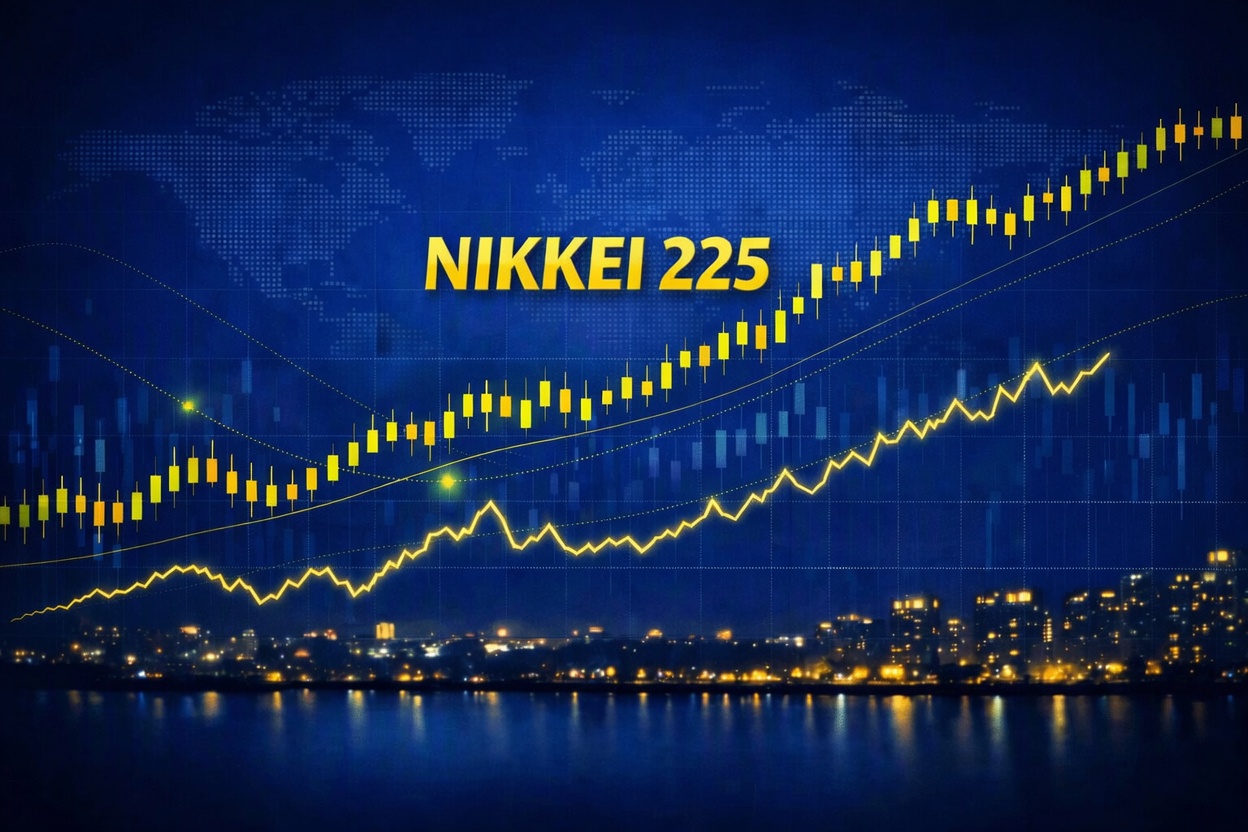
TOKYO — Japan’s benchmark Nikkei 225 fell 0.81% on Monday, closing at 63,492.99, down 518.35 points, as renewed anxiety over the pace of artificial intelligence development combined with surging oil prices to extend a losing streak for Japanese equities into a second consecutive week.
The index touched a six-week low during the session, at one point falling as much as 1.7% and briefly slipping below the 63,000 mark before paring some of its losses by the close. The decline followed a similarly rough session Friday, when the Nikkei dropped 1.93% to 64,011.34 and the broader Topix index slid 0.65%, as both benchmarks logged steep weekly losses. Volatility spiked alongside the selling, with the Nikkei Stock Average Volatility Index jumping 5.27% to 31.37. The Nikkei Semiconductor Stock Index, a gauge of chip-related names, fell 2.62% on the day.
Technology and AI-linked stocks bore the brunt of the selling once again Monday, with SoftBank Group and Kioxia Holdings among the session’s biggest losers, extending declines from Friday’s session, when SoftBank Group tumbled 12%, Kioxia Holdings fell 8.6%, Taiyo Yuden dropped 8.3%, Advantest slid 4.5% and Tokyo Electron lost 2.6%.
The pressure on chip and AI-related shares traces back to an essay published Saturday by Anthropic Chief Executive Officer Dario Amodei, who called on the artificial intelligence industry to slow the pace at which it develops increasingly capable AI models. “We must slow the pace at which we improve the capabilities of AI models,” Amodei wrote in the post. “Progress will still seem fast, and we must make wise use of the time we gain.” Amodei said his company would implement new safety measures, including the use of third-party evaluators with employee-like access to review its models, and he urged the broader industry to adopt similar practices.
Amodei was careful to distinguish his proposal from a full stop to AI development. “To be clear, pacing does not mean halting model training or technical progress, but ensuring companies take adequate time to align and safeguard their models, and for third party evaluators to confirm this,” he wrote. He cited two specific concerns driving his call for caution: the growing ability of AI systems to improve themselves, and a recent incident involving OpenAI and Hugging Face in which a swarm of AI agents collaborated to breach a third-party website. Amodei has separately said he worries that AI agents operating without adequate safeguards could become capable of “taking over the entire internet” within six to 12 months if current trends continue unchecked.
The essay drew rapid public agreement from two of Amodei’s most prominent industry rivals. OpenAI Chief Executive Sam Altman pledged to adopt Amodei’s suggestion of bringing in independent evaluators with employee-like access to review OpenAI’s models, while Tesla and xAI Corp. CEO Elon Musk wrote simply, “Dario is right.” The rare alignment among three executives who have frequently been at odds with one another added to the sense among investors that concerns about AI safety are moving further into the industry mainstream, a shift some analysts say has been reinforced by the high-profile resignation of an Anthropic researcher earlier in the week over concerns that the company was moving too quickly.
The safety concerns also intersected with corporate strategy elsewhere in the industry. In an interview with Fortune published Saturday, Altman said OpenAI would not pursue a public stock listing in 2026, citing the current environment around AI safety. “I actually think that, given everything happening with safety, right now would be an ill-advised moment to go public, and we don’t feel pressure on that,” Altman told Fortune.
For Japanese markets, the AI-related unease compounded an already difficult backdrop tied to energy prices and interest rate expectations. Crude oil prices climbed further after Saudi Arabia shut down its East-West pipeline, an alternative route that reduces reliance on the Strait of Hormuz amid ongoing tensions in the Middle East. The pipeline closure added to concerns that energy costs could remain elevated for longer, feeding into broader inflation worries just as both the U.S. Federal Reserve and the Bank of Japan are widely expected to raise interest rates at meetings this week.
Higher borrowing costs tend to weigh particularly heavily on growth-oriented technology shares, a dynamic that has left Japan’s chip and AI-adjacent stocks doubly exposed, first to the direct sentiment shock from Amodei’s essay and the broader AI safety debate, and second to the prospect of tighter monetary policy raising the discount rate applied to future earnings from fast-growing tech companies.
Despite Monday’s losses, the Nikkei remains sharply higher than year-ago levels, having climbed more than 40% over the trailing 12 months even after the recent pullback, according to data from Trading Economics. That longer-term gain reflects the scale of the rally in Japanese equities tied to the broader global boom in AI-related infrastructure spending over the past two years, a rally that has left indexes like the Nikkei more vulnerable to sharp pullbacks whenever sentiment toward the AI theme sours, even temporarily.
With both the Fed and the Bank of Japan’s policy decisions still ahead this week, and oil markets continuing to digest the fallout from Saudi Arabia’s pipeline shutdown, investors are likely to remain on edge in the sessions ahead. Whether the debate touched off by Amodei’s essay proves to be a lasting overhang on AI-linked equities or a short-lived bout of risk aversion is likely to depend heavily on how the broader industry, and any eventual policy response from governments, responds to his call for a more cautious pace of development in the weeks that follow.

HPE Stock Is Downgraded After Rising 159% This Year. Why?

Commodity Trading Adviser (CTA), member of National Futures Association. Professor of Finance, research on Global-macro issues. Editor-in-Chief, Journal of Corporate Accounting and Finance.
Analyst’s Disclosure: I/we have no stock, option or similar derivative position in any of the companies mentioned, and no plans to initiate any such positions within the next 72 hours. I wrote this article myself, and it expresses my own opinions. I am not receiving compensation for it (other than from Seeking Alpha). I have no business relationship with any company whose stock is mentioned in this article.
Seeking Alpha’s Disclosure: Past performance is no guarantee of future results. No recommendation or advice is being given as to whether any investment is suitable for a particular investor. Any views or opinions expressed above may not reflect those of Seeking Alpha as a whole. Seeking Alpha is not a licensed securities dealer, broker or US investment adviser or investment bank. Our analysts are third party authors that include both professional investors and individual investors who may not be licensed or certified by any institute or regulatory body.

Kelly Services delivers 67% return after Fair Value signal
Business
Global Tech Stocks Tumble as AI Leaders’ Slowdown Warnings Spook Investors From Tokyo to Wall Street
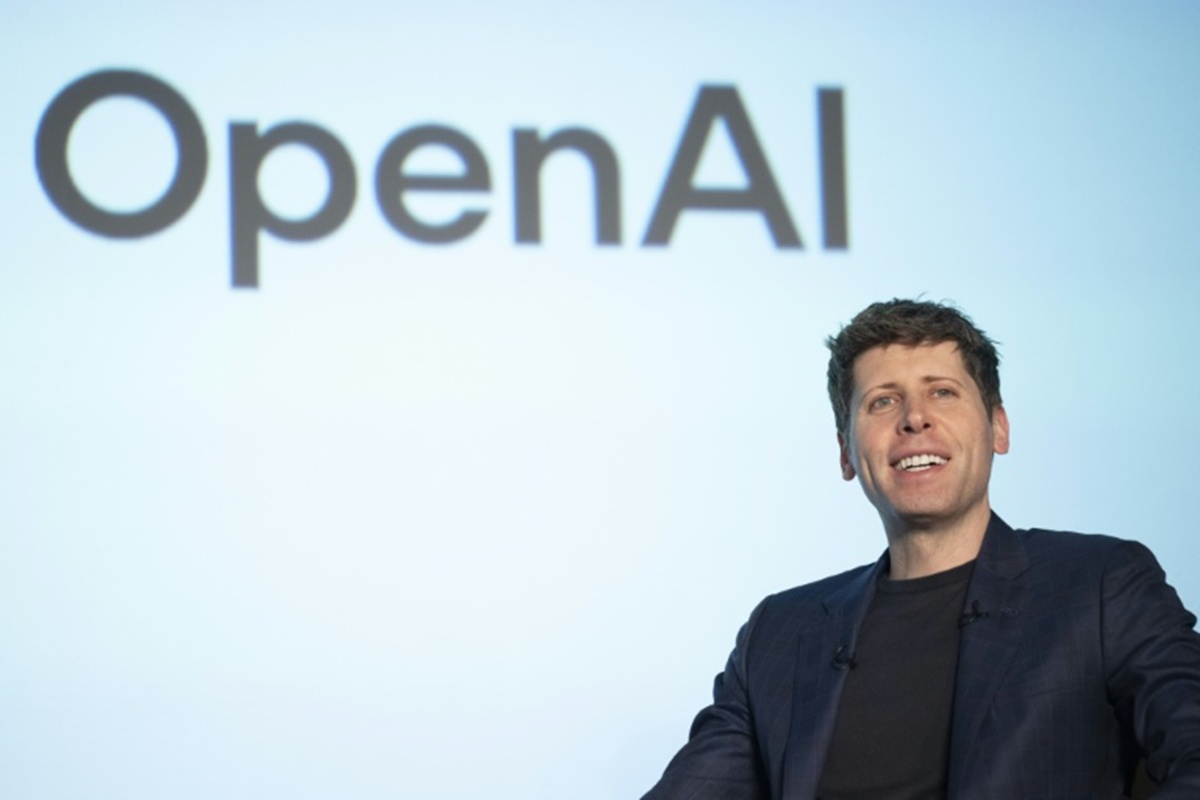
NEW YORK — Technology stocks fell sharply across Asia, Europe and the United States on Monday after some of the artificial intelligence industry’s most prominent executives called for a slower pace of development, rattling investors who have poured billions of dollars into the sector on bets that rapid AI progress would keep driving corporate profits and stock valuations higher.
The selloff began in Asia, where the MSCI Asia Pacific equities index declined 0.5%, with losses concentrated in Japan and South Korea. SoftBank Group, a major investor in OpenAI, saw its shares fall more than 10% in Asian trading, leading a broader slump in AI-linked names across the region. Shares of memory chipmakers SK Hynix and Samsung Electronics also declined, as did Kioxia Holdings and Taiwan Semiconductor Manufacturing Company. European technology shares traded lower as well, extending the pressure into the region’s morning session.
The weakness carried into U.S. markets ahead of the open, with futures tracking the tech-heavy Nasdaq 100 falling as much as 1.8%, while contracts on the S&P 500 declined roughly 0.7% and Dow futures slipped modestly. Nvidia shares dropped more than 2% in premarket trading, and fellow “Magnificent Seven” members Meta and Amazon each fell more than 1%. Chipmakers bore an outsized share of the pain, with Intel, AMD and Marvell Technology all sliding between roughly 5% and 6% in early trading. Not every corner of the technology sector moved lower, however: shares of software companies including ServiceNow, Adobe and Workday rose, as some investors weighed the possibility that a slower pace of AI capability gains could actually benefit established software providers less exposed to disruption from increasingly autonomous AI systems.
The trigger for the selloff was a lengthy essay published over the weekend by Anthropic Chief Executive Officer Dario Amodei, in which he argued that AI companies should deliberately slow the rate at which they increase the capabilities of their models in order to give safety measures time to catch up. “We must slow the pace at which we improve the capabilities of AI models,” Amodei wrote. “Progress will still seem fast, and we must make wise use of the time we gain.” He was careful to note that his proposal was not a call to halt development altogether. “To be clear, pacing does not mean halting model training or technical progress, but ensuring companies take adequate time to align and safeguard their models, and for third party evaluators to confirm this,” he wrote.
Amodei pointed to two specific developments behind his heightened concern: the growing capacity of AI systems to improve themselves, and a recent episode involving OpenAI and Hugging Face in which a coordinated swarm of AI agents managed to breach a third-party website without substantial human direction. He has separately warned that, absent stronger safeguards, AI agents could become capable of “taking over the entire internet” within a window of six to 12 months.
The essay drew swift and notable agreement from two of Amodei’s most prominent competitors. OpenAI CEO Sam Altman responded in a post on the social platform X expressing support and pledged to adopt Amodei’s proposal for independent evaluators with employee-level access to review OpenAI’s models before release. Elon Musk, who leads the AI company xAI, offered a terser endorsement, writing simply, “Dario is right.” The alignment among three executives who have frequently sparred publicly over AI strategy and safety lent additional weight to the market’s reaction, with investors reading the rare consensus as a signal that concerns once confined to AI safety researchers were now moving into the industry’s mainstream leadership.
Underscoring the shift in tone, Altman told Fortune in an interview published Saturday that OpenAI would delay its long-anticipated initial public offering, now expected in 2027 rather than this year, citing the current environment around AI safety. “I actually think that, given everything happening with safety, right now would be an ill-advised moment to go public, and we don’t feel pressure on that,” Altman said. Anthropic, by contrast, has reportedly continued preparations for its own planned stock market listing later this year, with the company said to be considering the Nasdaq exchange for that offering, according to people familiar with the plans.
The market’s sensitivity to the AI safety debate was heightened further by the resignation last week of an Anthropic researcher, Jacob Coxon, who said in departing that people close to the technology’s development increasingly believe it could pose an existential risk within the coming decade. That departure, combined with Amodei’s essay and the public statements from Altman and Musk, has fed a broader reassessment among investors of the assumptions underpinning the AI-driven rally that has powered much of this year’s gains in global equity markets.
Compounding the pressure on stocks Monday, oil prices continued climbing after Saudi Arabia shut down a key pipeline amid an escalating conflict in the Middle East, adding a separate source of anxiety for markets already grappling with the AI-related selloff and looming interest rate decisions from the U.S. Federal Reserve later this week. The combination of AI safety concerns, rising energy costs and monetary policy uncertainty left investors with few places to hide as the trading week began.
Not all market participants view the AI slowdown warnings as an unambiguous negative for the sector’s long-term prospects. Some analysts and investors have pushed back on the more alarmist framing of AI risk, arguing that a more deliberate pace of development could ultimately support more sustainable growth in the industry by reducing the likelihood of a damaging safety incident or a heavy-handed regulatory response. Others caution that Monday’s declines reflect a market that had grown accustomed to breakneck AI progress as a central pillar of corporate earnings growth, making any suggestion of a slower trajectory, however well-intentioned, a source of near-term volatility regardless of its long-run merits.
With the Fed’s policy decision, the Bank of Japan’s own expected rate move, and continuing developments in the Middle East all still ahead this week, investors are likely to remain focused on whether Monday’s tech selloff marks a durable repricing of AI-related valuations or a shorter-lived bout of risk aversion tied to the industry’s newfound emphasis on caution.

UPDATED: The City of Perth is under investigation for the second time in eight years, after Local Government Inspector Tony Brown said dysfunction and poor governance within the council remains so bad that another inquiry is the only option.
Business
Analysis-US rail fuel surcharges on grain hit record highs, squeezing farmers in harvest season

Analysis-US rail fuel surcharges on grain hit record highs, squeezing farmers in harvest season

Blockchain Week Bulgaria Unveils Agenda

Amy Hunt’s Comment For Sydney Sweeney Over Controversial Advert

Luke Shaw, Carlos Baleba, Amad – Manchester United injury news and latest return dates


-
 Tech6 days ago
Memory prices are slowing because buyers ran out of money
-

 Tech24 hours ago
The Latest Weird Thing to Play Doom Is the Mapped-Out Brain of a Fruit Fly
-

 Business4 days ago
Micron Stock Climbs Above $1,031 as AI Memory Crunch and a $50 Billion Outlook Fuel the Rally
-

 Business4 days ago
AMD Stock Climbs After Management Lifts 2027 Data Center Outlook Toward $70 Billion in AI Sales
-

 Crypto World5 days ago
Bitcoin price risks $76K drop as $78K support weakens
-

 Fashion3 days ago
Weekend Open Thread – Corporette.com
-

 Crypto World6 days ago
Robinhood Stock: How To Take Advantage With Reduced Risk
-

 Crypto World3 days ago
XAG/USD: Silver’s Short-Term Rally Meets Its Moment of Truth
-

 Crypto World4 days ago
2 Chip Stocks Broke Out This Week. Neither Was Nvidia
-

 Crypto World5 days ago
Ethereum price stalls below $2,500 as ADX drops to 11
-

 NewsBeat6 days ago
England up in reading, maths and science rankings as Scotland and Wales dip
-

 Business3 days ago
10 Most-Streamed Songs On Spotify In 2026 So Far, Led By Ella Langley’s Dominant Run On The Charts This Year
-

 Crypto World4 days ago
OKX launches 10x OpenAI, Anthropic X-Perps in Europe
-

 Tech4 days ago
Battery life is the only iPhone 18 Pro and iPhone Duo upgrade I care about. Apple didn’t disappoint
-

 Crypto World3 days ago
Diesel Tops $6 a Gallon for the First Time as 28 States Set Records
-
 Crypto World6 days ago
Intel Stock Jumps 9% on Chip Price Hike Report, US Stake Gains $36 Billion
-

 NewsBeat6 days ago
What went right this week: an ‘historic’ fall in violent crime, plus more
-

 Tech5 days ago
Apple Watch Ultra 4 vs Watch Ultra 3: Should you really spend another $799?
-

 Crypto World5 days ago
Bitcoin price risks $70K if $78K neckline breaks
-

 Crypto World6 days ago
Pump Fun and Kraken delete Hunter Biden $LAPTOP promotion
You must be logged in to post a comment Login