
Business
Strait Of Hormuz Remains Effectively Closed As Six-Month Iran Crisis Grinds Into September Amid Tanker Attacks

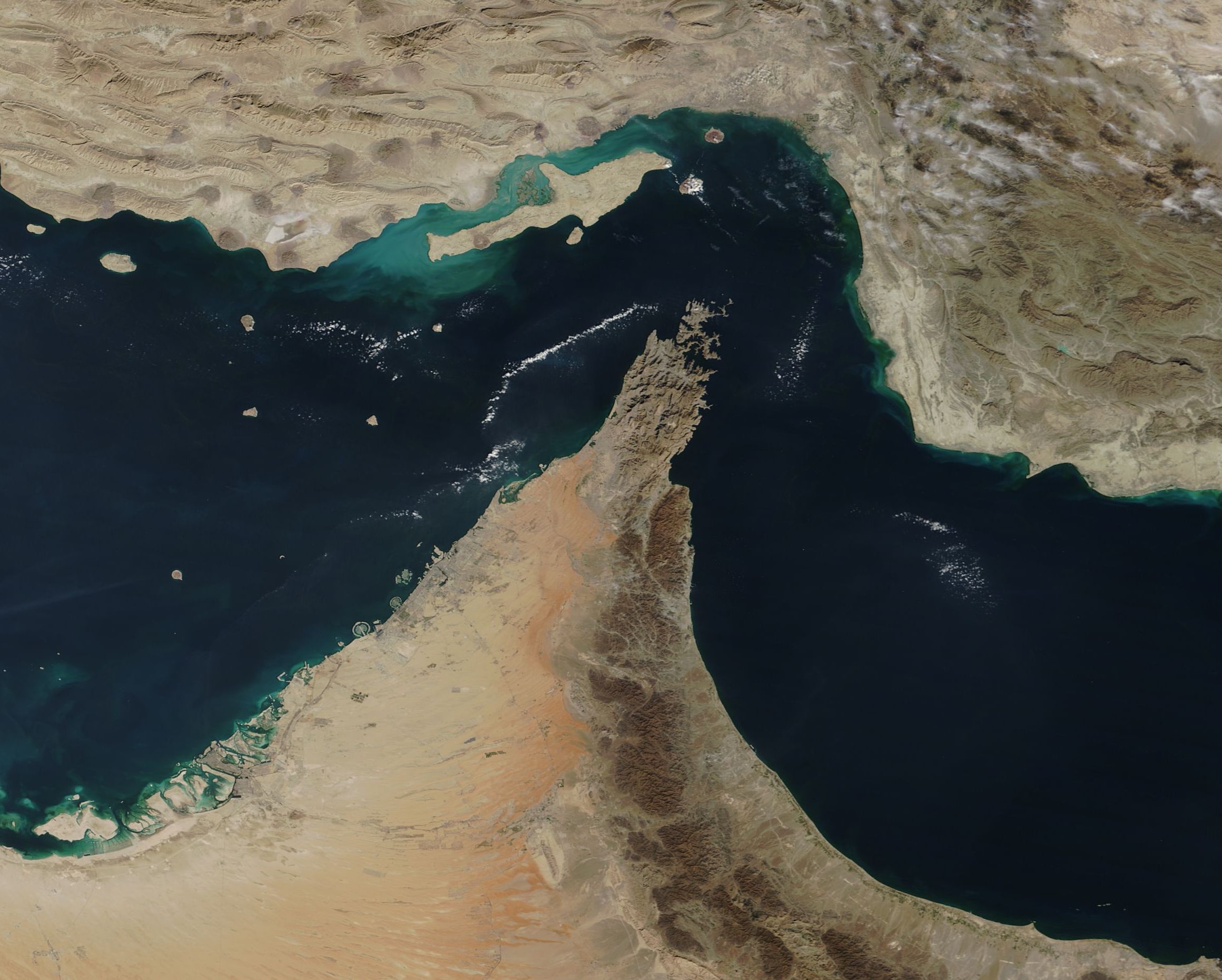
MUSCAT, Oman — More than six months after fighting first erupted between the United States, Israel and Iran, the Strait of Hormuz remains effectively closed to commercial shipping, with vessel traffic through the vital oil chokepoint continuing to run at a small fraction of its pre-crisis levels as of Friday.
According to Straits.live, an independent tracker monitoring the waterway’s status in real time, the Strait of Hormuz was operating at effectively closed status as of Sept. 5, with just six ships transiting the passage on Aug. 30, compared with a pre-crisis baseline of roughly 85 vessels per day. Windward, a maritime intelligence firm, separately recorded only eight vessels crossing the strait during a 24-hour window earlier this week, with five of those ships reportedly operating with their transponders switched off, a practice commonly referred to as “going dark” to avoid detection.
The current crisis traces back to Feb. 28, when the United States and Israel launched joint military operations against Iran, prompting Tehran to assert control over the Strait of Hormuz through both threatened and actual attacks on commercial shipping. The narrow waterway, just 34 kilometers, or 21 miles, wide at its narrowest point and separating Iran from Oman, carried roughly 25% of the world’s seaborne oil trade and 20% of global liquefied natural gas shipments before the conflict began, according to congressional research.
The human toll of the crisis has continued mounting. According to tracking compiled on the crisis, at least 20 seafarers and one port worker have been killed since fighting began, with 35 additional people injured and one person still listed as missing.
Violence against commercial vessels has continued even in recent days. Saudi Arabia’s Foreign Ministry confirmed this week that Iran targeted the Sidr, an oil tanker owned by Saudi national carrier Bahri, while it was transiting the strait, an attack that killed the vessel’s chief engineer. Saudi officials condemned the strike and called for an end to the escalating violence.
“The kingdom stressed the necessity of halting escalations, and respecting international maritime safety and the security of global energy supplies,” the Saudi Foreign Ministry said in a statement.
Kuwait and Qatar’s foreign ministries separately condemned the attack on the Sidr, with Qatar describing it as a “flagrant violation of the rules of international law and freedom of maritime navigation” and explicitly rejecting the use of the strait as what it called a “bargaining chip” in the broader conflict.
The United States escalated its own military response this week, striking Iranian government tankers directly for the first time since the conflict began. According to Axios, U.S. Central Command said the strikes, which reportedly hit roughly 100 targets linked to Iran’s Islamic Revolutionary Guard Corps, were carried out in response to Iranian attacks on commercial shipping in the strait and on American military bases in the region. A U.S. official described the operation using the phrase “mow the lawn,” characterizing it as part of an effort to systematically degrade Iran’s capacity to rebuild the radar and missile systems it relies on to threaten shipping traffic.
“Bought at least a month” of reduced threat levels for commercial vessels transiting the strait, the same U.S. official told Axios, describing the anticipated impact of the strikes.
Iran responded to the U.S. strikes with a barrage of roughly 25 ballistic missiles, about half of which reportedly reached Jordanian airspace before most were intercepted, alongside drone attacks targeting American and allied military bases in Bahrain, Kuwait and Erbil, Iraq.
Despite the ongoing violence, the United States has continued efforts to keep at least some shipping moving through the strait. American naval forces have continued escorting commercial vessels through the waterway, with more than 20 U.S. warships having redirected 82 commercial vessels through the strait since Washington’s naval blockade of Iranian ports resumed on July 14, according to Central Command’s own accounting cited by reporting on the crisis.
The economic impact of the prolonged disruption has been substantial. According to the U.S. Energy Information Administration, crude oil and petroleum liquids moving through the strait averaged between 20.4 million and 21.6 million barrels per day in the final quarter of 2025, before the conflict began. That volume collapsed to just 4.9 million barrels per day by the second quarter of 2026. Separate analysis from Al Jazeera, citing UNCTAD and Kpler data, found that Gulf crude exports have fallen by nearly half compared with pre-war levels, with direct crude shipments moving specifically through the strait dropping to an average of just 2.2 million barrels per day.
War-risk insurance claims tied to the crisis have topped $2 billion, according to maritime industry publication gCaptain, as attacks on shipping have spread beyond the strait itself to other parts of the wider Gulf region. Iraq has separately been actively searching for tankers still willing to attempt transits through the strait, according to Bloomberg, a sign of just how severely commercial shipping operators have pulled back from the corridor amid the ongoing danger.
Brent crude oil prices have remained elevated throughout the crisis, trading around $95.83 a barrel as of the most recent tracking, reflecting sustained market concern over the strait’s disrupted capacity even as some workarounds, including alternative pipeline routes bypassing the waterway entirely, have begun to permanently reduce the region’s reliance on the strait for oil exports.
President Trump has previously indicated that any lasting resolution to the conflict would need to include Iran’s full and safe reopening of the strait to international shipping. Following an earlier two-week ceasefire agreement reached in April that ultimately collapsed, Trump said at the time that any truce remained “subject to … Iran agreeing to the complete, immediate, and safe opening of the Strait of Hormuz.”
With the conflict now well into its seventh month and showing no clear signs of a durable resolution, maritime analysts continue to describe the strait’s current status as neither fully closed nor genuinely reopened, but rather severely constrained, with a growing share of regional oil exports being permanently rerouted around the waterway even as sporadic transits and U.S.-escorted convoys continue to move a reduced volume of shipping through one of the world’s most strategically vital, and now most dangerous, maritime chokepoints.


JPMorgan's $5 Trillion Empire Delivers, Yet Valuation Caps The Run

Lululemon: Even As A Bear I Am Surprised How Fast Fundamentals Are Collapsing

Oracle: Market's Mispricing Is Starting To Unwind

Amrita runs a boutique family office fund in beautiful Vancouver, where she leads the investment strategy for the family fund. The fund’s objective is to invest capital in sustainable, growth-driven companies that maximize shareholder equity by meeting their growth-oriented goals. In addition, she also started her own award-winning newsletter, The Pragmatic Optimist which focuses on portfolio strategy, valuation, and macroeconomics in concert with her husband Uttam Dey who is also a contributor on Seeking Alpha. Prior to cofounding her fund, Amrita worked for 5 years in high-growth supply-chain start-ups in downtown San Francisco, where she led strategy. During her time in the Bay Area, she also worked with venture capital firms and start-ups, where her efforts led her to grow the user acquisition business. During this time, she was introduced to investment portfolios and was able to maximize returns for clients during the pandemic. The cornerstone of Amritas work rests on democratizing financial literacy for everyone and breaking down financial jargon and complex macroeconomic concepts into formats that are easily digestible but more empowering than the typical investment thesis. Her newsletter has been featured as the Top Newsletter in Finance on popular newsletter platforms and she aims to bring her ideas to Seeking Alpha as well.
Analyst’s Disclosure: I/we have a beneficial long position in the shares of MRVL, CRDO, ON, BE, GLD either through stock ownership, options, or other derivatives. I wrote this article myself, and it expresses my own opinions. I am not receiving compensation for it (other than from Seeking Alpha). I have no business relationship with any company whose stock is mentioned in this article.
Seeking Alpha’s Disclosure: Past performance is no guarantee of future results. No recommendation or advice is being given as to whether any investment is suitable for a particular investor. Any views or opinions expressed above may not reflect those of Seeking Alpha as a whole. Seeking Alpha is not a licensed securities dealer, broker or US investment adviser or investment bank. Our analysts are third party authors that include both professional investors and individual investors who may not be licensed or certified by any institute or regulatory body.


I spent 30 years in the institutional trenches as a trader, analyst, and portfolio manager, eventually running the equity trading desk at Northern Trust in Chicago. Those decades shaped my approach: stay disciplined, trust the data, and keep emotion out of the way. Since 2009, when I began publishing my stock selections, my portfolio has delivered solid long term results—compounding in the mid teens annually through 2025. Today I manage a 15-20 stock model portfolio where I select stocks that score highly for Quality, Growth, Momentum, Value, and Risk. I use a rules-based framework that helps me build high performing portfolios. My work focuses on systematic thinking, behavioral awareness, and evidence over opinion. For my market outlook and model portfolio updates, visit zeninvestor.org. .
Analyst’s Disclosure: I/we have a beneficial long position in the shares of NVDA, AVGO, GOOGL either through stock ownership, options, or other derivatives. I wrote this article myself, and it expresses my own opinions. I am not receiving compensation for it (other than from Seeking Alpha). I have no business relationship with any company whose stock is mentioned in this article.
Seeking Alpha’s Disclosure: Past performance is no guarantee of future results. No recommendation or advice is being given as to whether any investment is suitable for a particular investor. Any views or opinions expressed above may not reflect those of Seeking Alpha as a whole. Seeking Alpha is not a licensed securities dealer, broker or US investment adviser or investment bank. Our analysts are third party authors that include both professional investors and individual investors who may not be licensed or certified by any institute or regulatory body.


Fredrik Arnold is a former quality service analyst. He is now reporting investment ideas with a primary focus on dividend yields by utilizing free cash flow and one-year total returns as trading indicators. He is the leader of the investing group The Dividend Dog Catcher, where he shares a minimum of one new dividend stock idea per week with focus on yield or extraordinary financial circumstances. All ideas are archived and available after weekly announcement. Learn more.
Analyst’s Disclosure: I/we have no stock, option or similar derivative position in any of the companies mentioned, and no plans to initiate any such positions within the next 72 hours. I wrote this article myself, and it expresses my own opinions. I am not receiving compensation for it (other than from Seeking Alpha). I have no business relationship with any company whose stock is mentioned in this article.
Seeking Alpha’s Disclosure: Past performance is no guarantee of future results. No recommendation or advice is being given as to whether any investment is suitable for a particular investor. Any views or opinions expressed above may not reflect those of Seeking Alpha as a whole. Seeking Alpha is not a licensed securities dealer, broker or US investment adviser or investment bank. Our analysts are third party authors that include both professional investors and individual investors who may not be licensed or certified by any institute or regulatory body.


I am an investment professional currently active in private equity, where I evaluate, structure, and monitor investments across sectors and geographies. That experience shapes my analytical framework: I focus on unit economics, margin trajectories, capital allocation, and the gap between intrinsic value and market price rather than short-term technical signals. Alongside my PE work, I have always maintained an active personal portfolio in public equities, with a focus on technology and platform businesses. I find that a private-markets lens on cash flow generation and operational leverage often surfaces opportunities that purely public-market investors overlook. I am particularly drawn to asymmetric situations where structural improvements are underappreciated: margin inflections, revenue diversification, or strategic pivots not yet priced in by the sell-side. My approach is fundamentals-driven with a 1–3 year horizon. I build bottom-up models combining comparable analysis with DCF work, looking for conviction positions where the downside is well-understood and the upside depends on catalysts the market is underweighting. I prefer concentrated bets over diversified baskets. My motivation for writing on Seeking Alpha is simple: I already produce detailed investment theses as part of my own decision-making process. Publishing them forces intellectual discipline, creates a timestamped track record, and invites feedback from investors who may see angles I have missed. I hold a degree in finance.
Analyst’s Disclosure: I/we have no stock, option or similar derivative position in any of the companies mentioned, and no plans to initiate any such positions within the next 72 hours. I wrote this article myself, and it expresses my own opinions. I am not receiving compensation for it (other than from Seeking Alpha). I have no business relationship with any company whose stock is mentioned in this article.
Seeking Alpha’s Disclosure: Past performance is no guarantee of future results. No recommendation or advice is being given as to whether any investment is suitable for a particular investor. Any views or opinions expressed above may not reflect those of Seeking Alpha as a whole. Seeking Alpha is not a licensed securities dealer, broker or US investment adviser or investment bank. Our analysts are third party authors that include both professional investors and individual investors who may not be licensed or certified by any institute or regulatory body.


The Value Investor has a Master of Science with specialization in financial markets and a decade of experience tracking companies via catalytic company events. As the leader of the investing group Value In Corporate Events they provide members with opportunities to capitalize on IPOs, mergers & acquisitions, earnings reports and changes in corporate capital allocation. Coverage includes 10 major events a month with an eye towards finding the best opportunities. Learn more.
Analyst’s Disclosure: I/we have no stock, option or similar derivative position in any of the companies mentioned, and no plans to initiate any such positions within the next 72 hours. I wrote this article myself, and it expresses my own opinions. I am not receiving compensation for it (other than from Seeking Alpha). I have no business relationship with any company whose stock is mentioned in this article.
Seeking Alpha’s Disclosure: Past performance is no guarantee of future results. No recommendation or advice is being given as to whether any investment is suitable for a particular investor. Any views or opinions expressed above may not reflect those of Seeking Alpha as a whole. Seeking Alpha is not a licensed securities dealer, broker or US investment adviser or investment bank. Our analysts are third party authors that include both professional investors and individual investors who may not be licensed or certified by any institute or regulatory body.

Fuel tanker explosion after traffic accident kills 10 in Western Iran, state media says

Federal appeals court upholds ban on Trump’s bid to use citizenship data for voter checks

JPMorgan's $5 Trillion Empire Delivers, Yet Valuation Caps The Run
Everyman Economics: Why Growth Requires Measuring More than GDP

Dolly Parton’s Sister Call Out ‘Garbage’ Posts





-
 Crypto World1 day ago
Bitcoin price stalls near $82K as key resistance holds
-

 Politics1 day ago
Best Gaming Laptops, CPUs, TVs, And Keyboards To Upgrade Your Set Up For GTA VI
-

 Tech1 day ago
The Birds Outside, Drawn For You Automatically
-

 Crypto World1 day ago
IMF Says El Salvador’s Post-Review Bitcoin Purchases Used No Public Funds
-
 Crypto World1 day ago
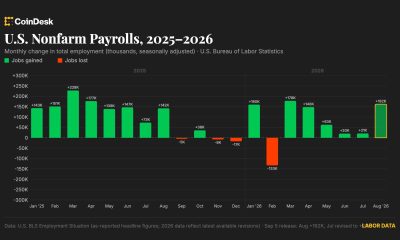
U.S. added stronger than expected 162,000 jobs in August as labor market bounced back
-

 Sports1 day ago
Alexandre Pato consortium’s Northampton Town investment approved
-

 Fashion23 hours ago
Weekend Open Thread: Beyond Yoga
-

 Sports1 day ago
Golden Eaglets Drawn in Group B for 2026 WAFU B U17 Championship
-

 Sports1 day ago
Commanders’ Chig Okonkwo is a top breakout fantasy football candidate
-
 Crypto World1 day ago
XRP price breaks falling channel as bulls target $1.53
-
 Politics1 day ago
A new European chapter for Gibraltar
-

 Politics1 day ago
The House | Bin the lectures, bring gossip and be ready to banter: how the new PM should prepare for his Trump encounter
-

 Politics1 day ago
How To Avoid Winter Colds: 4 Everyday Habits That Spread Germs, Says Pharmacist
-

 Crypto World1 day ago
From warning to listing: UK’s largest retail investment platform opens access to crypto ETNs
-

 Tech1 day ago
A Worthy Android Ereader, With Some Tradeoffs
-

 Crypto World1 day ago
FinCEN flags $12.7B tied to Southeast Asia crypto investment scams
-

 Crypto World1 day ago
Trezor Data Breach Impacts 67,000 More US Customers
-

 Politics1 day ago
33 Cosy Autumn Home Decor Ideas: Blankets, Pumpkin Decorations, And Candles
-

 Sports1 day ago
Seven wickets in 21 balls: Sri Lanka’s Chamari Athapaththu scripts history with record-breaking spell
-

 Tech1 day ago
How To Edit Claude’s Memory
You must be logged in to post a comment Login