
Business
Supreme Court tariff ruling could allow over $160B in tariff rebates for firms


The Big Money Show panel breaks down the Supreme Court’s 6-3 decision striking down President Donald Trump’s sweeping tariffs, what it means for billions in potential refunds and how the administration’s Plan B could reshape the trade fight.
The Supreme Court on Friday struck down a significant portion of the Trump administration’s tariffs that the justices found the tariffs were imposed illegally under an emergency economic powers law.
The Court issued a 6-3 ruling that held President Donald Trump’s use of the International Emergency Economic Powers Act (IEEPA) was illegal as the law “does not authorize the President to impose tariffs. The cases – Learning Resources Inc. v. Trump and Trump v. V.O.S. Selections – were brought by a pair of small businesses: an educational toy manufacturer and a family-owned wine and spirits importer.
Chief Justice John Roberts authored the majority opinion, which did not discuss the issue of tariff refunds. Justice Brett Kavanaugh, one of the three dissenters, noted in his dissent that the issue of distributing tariff refunds was described during oral arguments as “likely to be a ‘mess’.”
“The United States may be required to refund billions of dollars to importers who paid the IEEPA tariffs, even though some importers may have already passed on costs to consumers or others” Kavanaugh wrote. “Refunds of billions of dollars would have significant consequences for the U.S. Treasury. The Court says nothing today about whether, and if so how, the Government should go about returning the billions of dollars that it has collected from importers.”
SUPREME COURT DEALS BLOW TO TRUMP’S TRADE AGENDA IN LANDMARK TARIFF CASE

The Supreme Court’s ruling didn’t outline a process for how tariff refunds may proceed. (Sam Wolfe/Bloomberg via Getty Images / Getty Images)
While the Court’s ruling doesn’t explicitly outline a process for refunds and the Trump administration hasn’t specified how it would handle refunds, importers who paid IEEPA tariffs will be able to bring litigation to pursue those refunds.
That could play out through claims made via the U.S. Court of International Trade or through appeals made to Customs and Border Protection, which collects tariffs and duties on behalf of the Department of Homeland Security and remits them to the Treasury Department. Importers typically have 180 days after goods are “liquidated” to file a protest and request refunds from CBP, which could factor into what importers are eligible to receive refunds.
KEVIN HASSETT SAYS FED ECONOMISTS SHOULD BE ‘DISCIPLINED’ OVER TARIFF STUDY
The nonpartisan Penn-Wharton Budget Model estimated that the reversal of the IEEPA tariffs will generate up to $175 billion in refunds.
A similar analysis by the nonpartisan Tax Foundation estimated that more than $160 billion of tariffs were illegally collected under IEEPA through Feb. 20 of this year. It said that, “If the IEEPA tariffs are fully refunded to U.S. importers, it would erase nearly three-fourths of the new revenues from President Trump’s tariffs. The U.S. government should make the process for importers to receive their refunds as simple and transparent as possible.”

President Donald Trump said the issue of tariff refunds will play out in court. (Denis Balibouse/Reuters)
What the Trump admin is saying about tariff refunds
Trump said at a press conference that the ruling was “deeply disappointing” and that he is “ashamed of certain members of the Court” for “not having the courage to do what’s right for our country.”
The president went on to criticize the Supreme Court for not addressing tariff refunds in the decision and said that the issue will play out in court, and declined to say whether the administration would provide refunds.
“I guess it has to get litigated for the next two years. So they write this terrible defective decision, totally defective. It’s almost like not written by smart people. And what they do, they don’t even talk about that,” Trump said.
BATTLEGROUND STATES SHOULDER BURDEN OF TRUMP’S TARIFFS AS MIDTERM MESSAGING RAMPS UP
Treasury Secretary Scott Bessent said in a January interview with Reuters that, “It won’t be a problem if we have to do it, but I can tell you that if it happens – which I don’t think it’s going to – it’s just a corporate boondoggle. Costco, who’s suing the U.S. government, are they going to give the money back to their clients?”
Bessent added that the process for issuing tariff refunds could take a significant amount of time, saying that, “We’re not talking about the money all goes out in a day. Probably over weeks, months, may take over a year, right?”
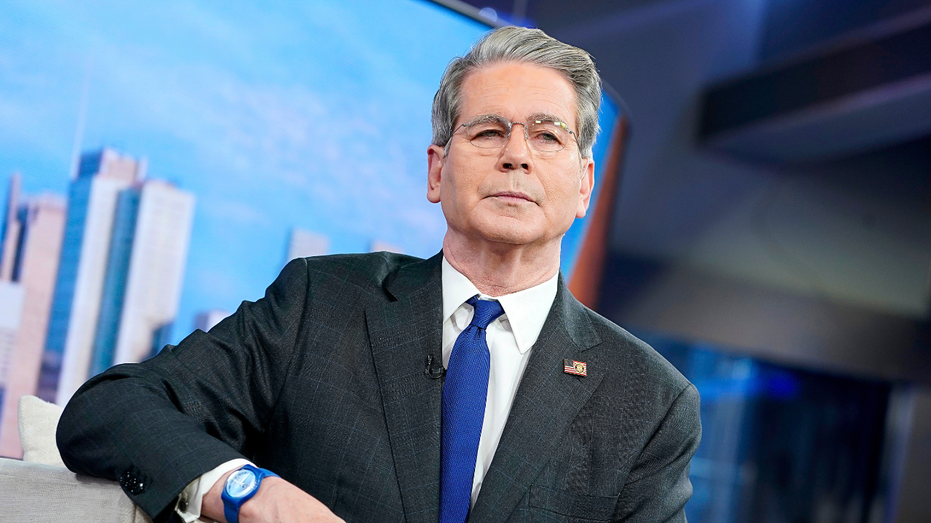
Treasury Secretary Scott Bessent said last month that the Treasury has the funds to issue tariff refunds, but warned the process may be time-consuming. (John Lamparski/Getty Images)
What experts are saying
Tim Brightbill, co-chair of Wiley International Trade Practice Group, said that the Supreme Court ruling “could lead to the refund of hundreds of billions of dollars in tariff revenue – so the question of whether there will be a refund process and what it will look like is extremely important.”
“More than 1,000 lawsuits have already been filed at the U.S. Court of International Trade in an effort to secure tariff refunds in the event of a Supreme Court decision against the IEEPA tariffs,” Brightbill noted.
David McGarry, research director at the Taxpayers Protection Alliance, said that the decision “does not make clear how this money will be returned to its rightful owners, but litigation on behalf of many illegally tariffed businesses is already commencing.”
“The Supreme Court has ruled, and it is now the obligation of the Trump administration to ensure that this process carries on at minimal cost to American businesses – especially small businesses. Uncertainty is anathema to economic growth. Businesses ought to be confident that the money they were improperly compelled to hand over to the federal government will soon be returned,” McGarry added.
TARIFFS MAY HAVE COST US ECONOMY THOUSANDS OF JOBS MONTHLY, FED ANALYSIS FINDS

Trump’s IEEPA tariffs were ruled illegal, as the underlying law doesn’t authorize the president to impose tariffs. (Chip Somodevilla/Getty Images)
Scott Lincicome, vice president of general economics at the Cato Institute’s Herbert A. Stiefel Center for Trade Policy Studies, said that, “Most immediately, the federal government must refund the tens of billions of dollars in customs duties that it illegally collected from American companies pursuant to an ‘IEEPA tariff authority’ it never actually had.”
“That refund process could be easy, but it appears more likely that more litigation and paperwork will be required – a particularly unfair burden for smaller importers that lack the resources to litigate tariff refund claims yet never did anything wrong,” Lincicome added.
US BUSINESSES SHIFT AWAY FROM CHINA UNDER TRUMP TARIFFS
Nixon Peabody partner Joseph Maher, who served as the principal deputy general counsel of the Department of Homeland Security between 2011 and 2024, said that “there will be further litigation in the Court of International Trade to determine the remedies available for tariffs already paid,” adding that “U.S. importers should be vigilant to protect their interests in the payments demanded over the past year.”
JPMorgan chief economist Michael Feroli said that tariff rebates could pose an upside risk to the economy, though he noted “we won’t know the full amount or timing of any such rebates.”
“While the official data from CBP is a bit stale, we estimate the amount at stake to be around $150-200 billion. If the rebates were passed on to consumers, the boost to activity would be significant. In the more likely event that businesses keep the cash, the boost to activity would be smaller, as estimates of the fiscal multiplier from windfall transfers to businesses are usually quite small,” Feroli wrote.
GET FOX BUSINESS ON THE GO BY CLICKING HERE
Heather Long, chief economist at Navy Federal Credit Union, noted that “small firms may struggle to get any money back from the U.S. Treasury,” and said that it’s “likely the White House will fight against issuing refunds at all.”

Business
3.1 Million Eye Drops Recalled at Walgreens, CVS Over Sterility Concerns: FDA Class II Alert

More than 3.1 million bottles of over-the-counter eye drops sold at major retailers including Walgreens, CVS, Kroger and others have been recalled due to a lack of assurance of sterility during manufacturing, federal health officials said Friday.

The voluntary recall, initiated by Pomona, California-based K.C. Pharmaceuticals, Inc., covers approximately 3,111,072 bottles of various lubricant and redness-relief eye drops distributed nationwide. The U.S. Food and Drug Administration classified the action as a Class II recall, meaning use of the products may cause temporary or medically reversible adverse health consequences, or the probability of serious adverse health consequences is remote.
No illnesses or injuries have been reported in connection with the recall, according to FDA records posted March 31. The agency emphasized that the issue involves a failure to meet sterility standards in production rather than confirmed contamination in the finished products. Still, officials urged consumers to immediately stop using the affected drops and return them to the place of purchase for a refund or proper disposal.
The recalled eye drops were sold under dozens of store-brand and private-label names, including CVS Health, Walgreens, Kroger, Rite Aid, H-E-B, Harris Teeter, Dollar General, Leader, Good Sense and others. They were also distributed through Cardinal Health, military exchanges and additional outlets. Products include artificial tears, advanced relief formulas, redness relief drops and sterile eye drops in 0.5 fluid ounce (15 mL) bottles.
Specific quantities include 378,144 bottles of Sterile Eye Drops Original Formula containing tetrahydrozoline HCl 0.05%, along with hundreds of thousands of bottles each of Sterile Eye Drops AC, Eye Drops Advanced Relief and other variants. Lot codes and expiration dates vary, with many products carrying dates into 2026. Consumers should check the lot number and expiration on the bottle carton or label against the full list available on the FDA website.
Eye drops are considered sterile drug products, and any breach in manufacturing controls can introduce risk of bacterial or other microbial contamination. Such contamination could potentially lead to eye infections, irritation, vision problems or, in rare severe cases, more serious complications, particularly for people with compromised immune systems or pre-existing eye conditions.
Health experts advise anyone experiencing symptoms such as eye pain, redness that worsens, discharge, blurred vision or sensitivity to light after using these products to contact a healthcare provider promptly. The FDA recommends discarding unused portions rather than attempting to return opened bottles in some cases, though retailers may provide specific instructions.
This recall comes amid heightened scrutiny of over-the-counter ophthalmic products following several high-profile eye drop contamination incidents in recent years. Previous recalls involved bacterial and fungal outbreaks linked to certain imported artificial tears, prompting stricter oversight of manufacturing facilities.
K.C. Pharmaceuticals has not publicly detailed the specific manufacturing lapse that triggered the recall. The company initiated the action on or around March 3, with the FDA formally posting the enforcement report on March 31. Retailers began pulling affected inventory from shelves in recent weeks.
Walgreens and CVS, two of the largest pharmacy chains in the United States, confirmed they are cooperating fully with the recall. Spokespeople for both companies said they are notifying customers who purchased the products through loyalty programs or online and facilitating returns. Similar statements came from Kroger and other affected retailers.
Consumers with questions can contact K.C. Pharmaceuticals or check the FDA’s MedWatch website for updates. The agency maintains a searchable database of recalls and provides detailed product photos and lot information to help identify affected items.
The scale of the recall — more than 3 million bottles — underscores the widespread popularity of affordable store-brand eye drops. Millions of Americans rely on these products daily for dry eye relief, allergy symptoms or minor irritation caused by screen time, contact lenses or environmental factors.
Ophthalmologists note that while most people tolerate minor manufacturing variations without issue, sterility is non-negotiable for products applied directly to the eyes. The eye’s surface is particularly vulnerable because it lacks the robust immune defenses found in other parts of the body.
Dr. Elena Ramirez, a spokesperson for the American Academy of Ophthalmology, said in a statement that patients should err on the side of caution with any recalled medication. “If in doubt, throw it out,” she advised. “There are many safe alternatives on the market, including preservative-free single-use vials that reduce contamination risk.”
The recall does not affect prescription eye drops or major national brands produced under different manufacturing processes. Name-brand products from companies such as Refresh, Systane or Visine are not included unless specifically listed in the FDA notice.
Retail analysts said the financial impact on manufacturers and stores is likely significant but contained, given the voluntary nature and the ability to replace inventory quickly. Share prices for major pharmacy chains showed little movement Friday amid broader market activity.
For consumers, the practical steps are straightforward: examine medicine cabinets and bathroom drawers for any eye drop bottles purchased in recent months. Compare lot numbers and expiration dates against the FDA list. Return unaffected-looking but recalled products to the retailer. Consult a doctor or pharmacist if symptoms appear or if the drops were used regularly.
The FDA continues to monitor the situation and has not ruled out additional recalls or enforcement actions if further issues surface at the manufacturing facility. Officials stressed that proactive recalls like this one help prevent potential harm before problems escalate.
In the meantime, health authorities recommend proper storage and handling of all eye care products. Bottles should be kept tightly closed, stored at room temperature away from direct sunlight and never shared between users to minimize cross-contamination risks.
This latest development serves as a reminder of the importance of rigorous quality control in pharmaceutical manufacturing, even for seemingly simple over-the-counter items. As millions of bottles make their way back from store shelves and medicine cabinets, regulators and industry players will likely face renewed calls for enhanced inspection protocols.
Consumers seeking replacements should look for products labeled as sterile and check expiration dates carefully. Single-dose, preservative-free options may provide extra peace of mind for those concerned about contamination.
The full list of affected products, lot codes and distribution details remains available on the FDA’s website under enforcement report event number 98533. Regular updates will be posted as retailers complete their returns and the investigation into the manufacturing process continues.
As spring allergy season ramps up and more people reach for relief, officials urged vigilance. With Easter weekend just passed and many families traveling or stocking up on household essentials, the timing of the public notice aims to reach as many consumers as possible before additional use occurs.
In summary, while the risk to any individual user appears low, the widespread distribution of these 3.1 million bottles warrants immediate action. Checking your eye drops today could prevent unnecessary discomfort or more serious issues tomorrow.
Federal Reserve Bank of New York President John Williams discusses market impacts of the Iran War, inflation outlook and more on ‘The Claman Countdown.’
United Airlines is rolling out a new feature to its app that will provide users with estimated TSA security wait times as airport congestion intensifies during a partial Department of Homeland Security shutdown that has strained screening operations.
The feature is launching in a pilot phase at several of the airline’s largest U.S. hub airports, including Chicago, Denver, Los Angeles and Newark, with broader expansion possible if successful.
A nearly seven-week partial shutdown of the DHS has disrupted airport operations, contributing to long security lines and unpredictable wait times. Staffing shortages at the Transportation Security Administration have driven absenteeism above 10% at times, worsening delays at checkpoints.
DELTA SUSPENDS VIP SERVICES FOR CONGRESS MEMBERS AMID DHS SHUTDOWN, TSA DELAYS

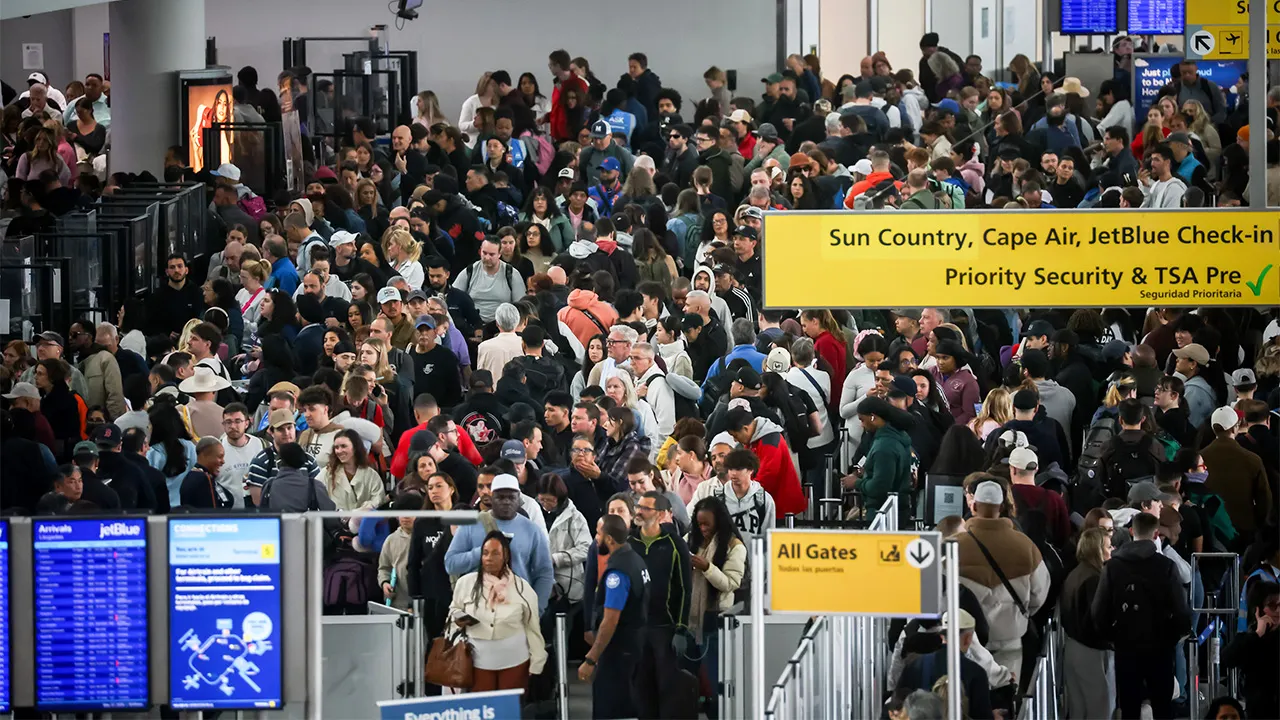
Travelers wait in line at a TSA checkpoint at Hartsfield-Jackson Atlanta International Airport in Atlanta, Georgia, on March 27, 2026. (Elijah Nouvelage/Bloomberg via Getty Images)
Within the United app’s “Travel” section, users can view estimated wait times for TSA screening throughout the day, broken down by lane type, including standard screening and TSA PreCheck.
UNITED AIRLINES CHECKED BAG FEES CLIMBS $10-50 AS FUEL PRICES NEARLY DOUBLE SINCE IRAN WAR
The move reflects a broader push by airlines to provide real-time information as travel demand remains elevated, and airport systems face strain. Security wait times, which can fluctuate widely, have historically been difficult for passengers to predict.
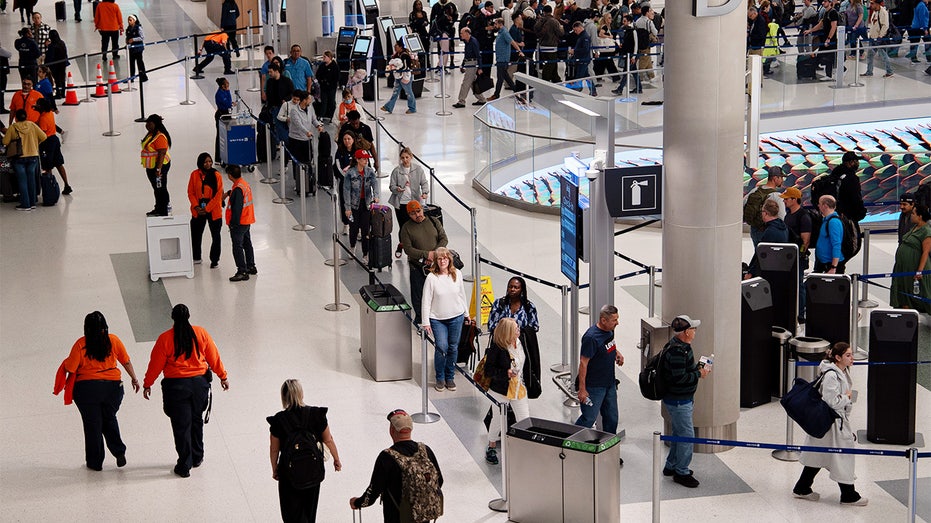
People wait in line to pass through security at George Bush Intercontinental Airport on March 28, 2026, in Houston, Texas. (Danielle Villasana/Getty Images)
Access to wait time estimates could influence when travelers arrive at the airport, which screening lane they choose and how they manage tight departure windows.
United has been expanding its mobile app capabilities as part of a wider effort to shift more of the travel experience onto digital platforms, including baggage tracking with Apple AirTag integration, automated rebooking during disruptions, connection guidance and real-time weather alerts.
| Ticker | Security | Last | Change | Change % |
|---|---|---|---|---|
| UAL | UNITED AIRLINES HOLDINGS INC. | 92.21 | -2.87 | -3.02% |
FRUSTRATED PASSENGERS LASH OUT AT LONG TSA LINES; GOP MESSAGES TO ‘THANK A DEMOCRAT’
Travelers wait in line at a Transportation Security Administration (TSA) checkpoint at John F. Kennedy International Airport (JFK) in New York, US, on Friday, March 27, 2026. (Michael Nagle/Bloomberg via Getty Images)
The rollout underscores how airlines are attempting to fill information gaps as operational challenges – including staffing disruptions tied to the DHS funding standoff – continue to affect airport performance.
CLICK HERE TO GET FOX BUSINESS ON THE GO
As travel demand remains high, tools that help passengers navigate delays and congestion more efficiently may become increasingly central to airline competition.
United shares are up more than 53% over the past year and down 17.5% year to date.
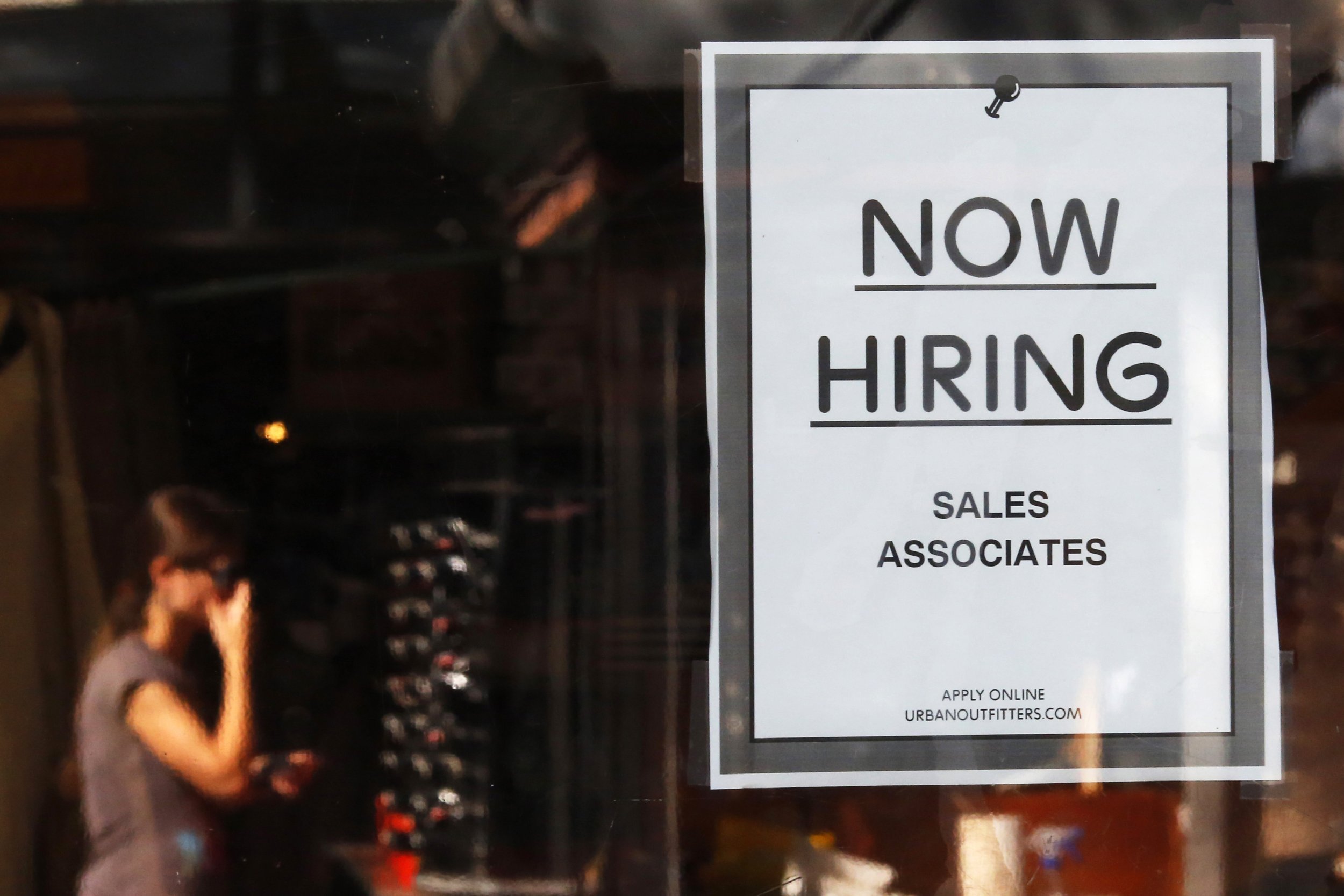
U.S. employers added 178,000 jobs in March, a solid rebound that far exceeded economists’ expectations and signaled underlying resilience in the labor market despite ongoing geopolitical tensions from the conflict with Iran and surging energy costs. The unemployment rate ticked down to 4.3%, the Bureau of Labor Statistics reported Friday, offering a brighter picture after a sharp February decline partly tied to a health care strike.

The March gain marked the strongest monthly job growth since late 2024 and reversed a revised 133,000-job loss in February, when a strike by health care workers weighed heavily on payrolls. Economists surveyed ahead of the release had forecast only about 60,000 jobs added, making the actual figure a notable positive surprise heading into the long Good Friday weekend.
Job gains were concentrated in health care, construction and transportation and warehousing, sectors that have shown durability even amid broader economic uncertainty. The return of roughly 31,000 striking Kaiser Permanente health care workers contributed to the rebound, but underlying hiring momentum appeared to extend beyond that one-time factor.
“The labor market is demonstrating remarkable staying power,” said one economist who tracks monthly data closely. “After the February stumble, this report suggests the economy isn’t buckling under the pressure of higher oil prices and international uncertainty as quickly as some feared.”
Average hourly earnings rose 0.2% from February and 3.5% from a year earlier, a moderate pace that could ease some concerns about wage-driven inflation even as energy costs climb. The labor force participation rate and other household survey measures showed modest shifts, with the number of unemployed people declining slightly to about 7.2 million.
Friday’s report comes as markets remain on edge over the U.S.-Iran conflict that has driven oil prices sharply higher in recent weeks. Brent crude has spiked on fears of supply disruptions, raising the specter of stagflation — slower growth paired with higher inflation. Yet the stronger-than-expected hiring data provided reassurance that domestic demand and business activity retain momentum.
With stock and bond markets closed for the Good Friday holiday, traders will have to wait until Monday to fully price in the implications. Futures contracts suggested a cautiously optimistic tone, though volatility remains elevated. The CBOE Volatility Index had hovered near elevated levels in recent sessions amid war-related headlines.
The March figures follow a turbulent stretch for the labor market. February’s steep decline, initially reported as 92,000 jobs lost and later revised, had raised alarms about a possible sharper slowdown. Downward revisions to prior months also painted a softer picture of late 2025 and early 2026 hiring. March’s bounce-back helped steady those concerns.
Sector breakdowns highlighted pockets of strength. Health care continued its long-running role as a steady job creator, adding positions even beyond the strike resolution. Construction benefited from milder weather in some regions and ongoing infrastructure projects. Transportation and warehousing saw gains tied to e-commerce and logistics demand.
Manufacturing and retail showed more mixed results, reflecting the crosscurrents of higher input costs from energy prices and resilient consumer spending in certain categories. Government employment remained relatively stable, though federal payrolls have trended lower in recent periods amid budget and policy shifts.
The household survey, which feeds into the unemployment rate calculation, indicated the jobless rate fell to 4.3% from 4.4% in February. The decline came partly as some individuals left the labor force, but the overall picture pointed to a labor market that is neither overheating nor collapsing. Long-term unemployment measures remained contained.
For the Federal Reserve, the data complicates an already delicate balancing act. Policymakers have held the benchmark federal funds rate steady in the 3.5%-3.75% range in recent meetings, citing persistent inflation risks now amplified by oil shocks. The stronger March jobs print may reduce near-term pressure for rate cuts, as officials monitor whether energy-driven price increases feed into broader inflation.
“Robust job growth gives the Fed more room to watch and wait rather than rush to ease policy,” said another analyst. “But if oil stays elevated and begins to slow consumer spending or business investment, the picture could shift quickly.”
President Donald Trump’s administration has pointed to the resilience as evidence that the economy can weather external shocks. White House officials emphasized the job gains in key sectors while acknowledging the challenges posed by higher energy costs for families and businesses.
Consumer confidence surveys in recent weeks had shown some softening amid war headlines and gasoline price jumps at the pump. Yet hiring data suggests employers remain willing to add workers, supporting household incomes that could help sustain spending.
Looking ahead, April’s report will be closely watched for any signs that prolonged higher oil prices are beginning to weigh on hiring. Additional data points, including next week’s consumer price index that may reflect energy costs, will further shape expectations.
International developments also loom large. Any escalation or resolution in the Middle East conflict could swing energy markets and, by extension, influence business decisions on expansion and staffing. European and Asian economies face similar pressures from global energy flows.
Smaller businesses and the gig economy, not fully captured in the nonfarm payrolls survey, have shown mixed signals in private data sources such as ADP reports. Temporary help services, often a leading indicator, posted modest changes in recent months.
The report arrives just after Easter observances, with many families using the long weekend to reflect on economic conditions. For job seekers, particularly recent college graduates entering the market, the data offers some encouragement that opportunities remain available despite headline volatility.
Retail and service sectors critical to spring and summer hiring seasons will be key barometers in coming months. Leisure and hospitality, which took hits during earlier pandemic waves, have stabilized but remain sensitive to consumer discretionary spending affected by fuel costs.
Economists cautioned against reading too much into a single month’s data, noting that seasonal adjustments, weather effects and one-time events like strikes can distort trends. The three-month average of job gains provides a smoother view and still points to moderate expansion.
Broader measures of labor market slack, including the U-6 rate that captures underemployed workers, will offer additional context when updated. For now, the headline numbers suggest the economy retains forward momentum.
As markets prepare to reopen Monday, investors will parse the jobs data alongside any weekend diplomatic developments from the Middle East. Bond yields, which edged higher on the strong report in pre-holiday trading, could see further movement depending on inflation expectations.
In corporate boardrooms, the report may encourage continued investment in American workers even as companies hedge against energy and supply-chain risks. Chief executives have cited labor availability as a bright spot amid other uncertainties.
For American workers, the numbers translate to more opportunities in growing sectors, though wage growth has not kept pace with inflation in recent years for many households. Real earnings trends will depend heavily on how quickly energy prices moderate.
The March employment situation underscores the U.S. economy’s capacity for resilience. After a February setback, hiring rebounded robustly, unemployment eased and key industries continued expanding. Yet with oil prices elevated and geopolitical risks unresolved, the path ahead remains one that demands vigilance from policymakers, businesses and families alike.
Friday’s strong showing provides a measure of reassurance as the nation moves deeper into spring, but it does not eliminate the challenges posed by external shocks. The coming weeks of economic data will determine whether March’s rebound marks a return to steadier growth or merely a temporary lift.
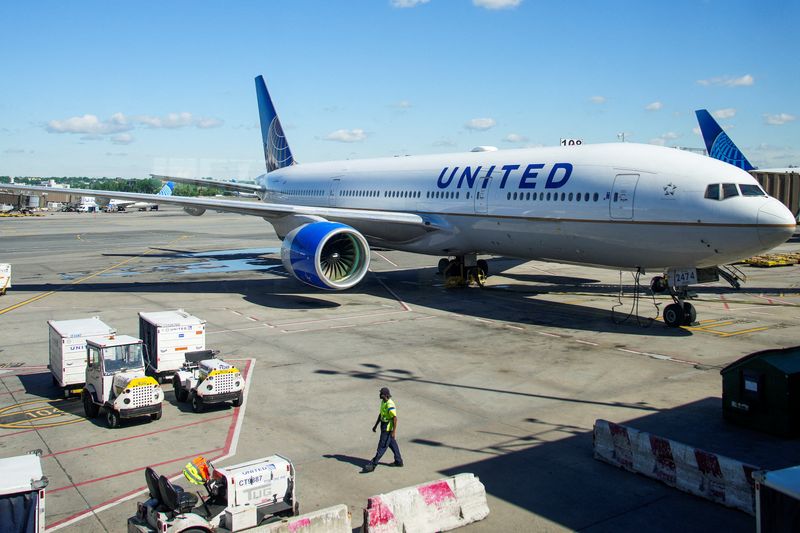

United Airlines to introduce tiered fare categories for premium cabins


Austin Rogers is a REIT specialist with a professional background in commercial real estate. He writes about high-quality dividend growth stocks with the goal of generating the safest growing passive income stream possible. Since his ideal holding period is “lifelong,” his focus is on portfolio income growth rather than total returns. Austin is a contributing author for the investing group High Yield Landlord, one of the largest real estate investment communities on Seeking Alpha, with thousands of members. It offers exclusive research on the global REIT sector, multiple real money portfolios, an active chat room, and direct access to the analysts. Learn more.
Analyst’s Disclosure: I/we have a beneficial long position in the shares of TDIV, TDVI either through stock ownership, options, or other derivatives. I wrote this article myself, and it expresses my own opinions. I am not receiving compensation for it (other than from Seeking Alpha). I have no business relationship with any company whose stock is mentioned in this article.
Seeking Alpha’s Disclosure: Past performance is no guarantee of future results. No recommendation or advice is being given as to whether any investment is suitable for a particular investor. Any views or opinions expressed above may not reflect those of Seeking Alpha as a whole. Seeking Alpha is not a licensed securities dealer, broker or US investment adviser or investment bank. Our analysts are third party authors that include both professional investors and individual investors who may not be licensed or certified by any institute or regulatory body.


Goldman Sachs Investment Strategy Group head of tactical asset allocation Brett Nelson analyzes market sell-off, inflation, A.I. disruption, and private credit worries on The Claman Countdown.
This story about the March 2026 jobs report is developing and will be updated with more details.
The U.S. economy added jobs in March as the labor market rebounded after it unexpectedly shed jobs a month ago.
What are the key findings of the March 2026 jobs report?
The Labor Department on Friday reported that employers added 178,000 jobs in March. That figure was well above the expectations of economists polled by LSEG, who predicted a gain of 60,000 jobs.
The unemployment rate declined slightly to 4.3%, which was slightly lower than the 4.4% projected by LSEG economists.
Revisions were made to the payroll numbers for the prior two months, with January’s report revised up by 34,000 jobs from a gain of 126,000 to 160,000; while February’s report was revised down by 41,000 jobs from a loss of 92,000 to 133,000.
Taken together, employment in January and February was 7,000 jobs lower than previously reported.
MORE AMERICAN WORKERS ARE STRUGGLING THAN THRIVING FOR FIRST TIME: POLL
What sectors added or lost the most jobs in March 2026?
Private payrolls grew by 186,000 jobs in March when economists predicted a gain of 70,000 jobs. Feburary’s loss of 86,000 private sector jobs was also revised down to a loss of 129,000.
Government payrolls contracted by 8,000 jobs in March. Job losses by the federal government (-18,000) and state governments (-4,000) were partially offset by local governments adding jobs (+14,000).
The manufacturing sector added 15,000 jobs in March, beating LSEG economists’ expectations that the sector would shed 5,000 jobs for the month. The sector’s loss of 12,000 jobs in February was revised up to a loss of 6,000 jobs.
Healthcare employment grew by 76,000 jobs in March. The sector was led by gains among ambulatory healthcare workers (+54,000), which reflected a gain caused by 35,000 workers in physicians’ offices who returned from a strike. Employment also rose in hospitals (+15,000).
Construction added 26,000 jobs in March but had shown little net change over the prior 12 months.
Transportation and warehousing added 21,000 jobs, led by gains among couriers and messengers (+20,000). The sector’s employment is down 139,000 from a February 2025 peak.
Social assistance added 14,000 jobs in March, led by a gain in individual and family services (+11,000).
The financial services sector shed 15,000 jobs in March, with the loss coming from finance and insurance (-16,000). The sector is down 77,000 jobs from a peak in May 2025.
What does the March 2026 jobs report mean for the workforce?
The number of long-term unemployed, defined as those who have been jobless for 27 weeks or more, was little changed at 1.8 million in March but is up by 322,000 over the year. The long-term unemployed accounted for 25.4% of all unemployed people in March.
The number of people who were employed part-time for economic reasons was little changed at 4.5 million in March. These individuals would’ve preferred full-time employment but were working part-time because their hours were reduced, or they were unable to find full-time jobs.
What experts are saying about the March 2026 jobs report
How does the March 2026 jobs report affect interest rates?

U.S. Services PMI Dips Below Expectations, Signals Sector Contraction

Easter Sunday 2026 falls on April 5, bringing together ancient religious traditions, astronomical precision and modern family festivities for Christians across the United States and around the world. As millions prepare for church services, egg hunts and festive meals, here are 10 fun facts that highlight what makes this year’s observance unique, rooted in centuries of history and tied closely to the cycles of the moon and spring.

1. Easter 2026 lands on the early side of the possible calendar range. The movable feast can fall anywhere between March 22 and April 25 in the Western Christian tradition. April 5 places it comfortably in early spring, often coinciding with blooming flowers and milder weather in many regions, making outdoor activities more appealing than in years when the holiday arrives later.
2. The date is determined by a precise lunar-solar calculation dating back to the Council of Nicaea in 325 A.D. Easter falls on the first Sunday after the first full moon following the spring equinox. In 2026, the astronomical spring equinox occurred around March 20, and the Paschal full moon — known as the Pink Moon — peaked on April 1, setting Easter for the following Sunday.
3. The full moon on April 1, 2026, created a whimsical alignment with April Fools’ Day. While the coincidence is purely calendrical, it added a lighthearted note to the lead-up to Holy Week, with some social media users joking about the moon “fooling” observers with its timing just days before the solemn observances began.
4. Western and Eastern Christians will celebrate on different dates this year. Most Protestant and Catholic churches observe Easter on April 5, while Eastern Orthodox Christians, following the Julian calendar, mark the resurrection on April 12. The gap of one week is relatively close compared to some years when the dates diverge by nearly a month.
5. Easter eggs trace their Christian roots to fasting traditions rather than pagan origins alone. During Lent, eggs were often forbidden as food, so they became a special treat for Easter. Early Christians dyed them red to symbolize the blood of Christ and the joy of resurrection. By the Middle Ages, the practice of decorating and gifting eggs had spread widely across Europe.
6. The Easter Bunny tradition arrived in America with German immigrants in the 1700s. Known as the “Osterhase” or Easter Hare in German folklore, the character was said to lay colorful eggs for well-behaved children. Pennsylvania Dutch settlers popularized the custom, which evolved into the basket-delivering bunny familiar today. The first edible chocolate bunnies appeared in the 19th century.
7. In 2026, Easter Sunday coincides with the final day of the Church of Jesus Christ of Latter-day Saints’ general conference weekend for many members. The April 4-5 conference schedule overlaps with Holy Week, creating a busy spiritual calendar for Latter-day Saint families who may attend both conference sessions and Easter services.
8. Egg rolling has a storied place in American Easter lore. The annual White House Easter Egg Roll, which dates back to the 1870s, draws thousands of children and families to the South Lawn. Though the 2026 event details were still being finalized as April approached, the tradition symbolizes renewal and has been hosted by presidents across party lines for more than 140 years.
9. Passover and Easter 2026 overlapped closely. The Jewish holiday of Passover began on the evening of April 1, the same day as the Paschal full moon. This alignment reflects the historical connection between the two observances, as the Last Supper is traditionally understood to have been a Passover meal. Many interfaith families use the proximity to foster dialogue about themes of liberation and resurrection.
10. Economic impact of Easter remains significant despite its primarily religious nature. The National Retail Federation and other analysts estimate Americans spend billions annually on candy, baskets, clothing, travel and gifts. In 2026, with the holiday falling on a pleasant early-April weekend, retailers anticipated strong sales in spring fashions, chocolates and outdoor entertaining supplies as families gathered after the long winter.
Beyond these facts, Easter Sunday 2026 carries deeper meaning as the culmination of Holy Week. Palm Sunday on March 29 recalled Jesus’ entry into Jerusalem. Maundy Thursday on April 2 commemorated the Last Supper. Good Friday on April 3 marked the crucifixion, with many churches holding somber services. The stock market closed for Good Friday, giving traders and workers an extended weekend to reflect or travel before markets reopened April 6.
The name “Easter” itself has intriguing linguistic roots. In English, it likely derives from “Eostre,” an Anglo-Saxon goddess mentioned by the 8th-century monk Bede, though the connection remains debated among scholars. In many other languages, the holiday is called “Pascha,” directly linking it to the Hebrew Passover.
Astronomically, 2026 offered additional skywatching opportunities around Easter. Some reports noted potential comet visibility in early April, adding a celestial backdrop to the season of renewal. While not directly tied to the holiday, such events often inspire wonder that complements spiritual themes of hope and new beginnings.
Globally, Easter customs vary delightfully. In Italy, the Scoppio del Carro in Florence features a historic cart exploding with fireworks on Easter Sunday. In parts of Eastern Europe, intricate egg decorating known as pysanky continues as a cherished folk art. In the United States, sunrise services at beaches, parks and mountaintops draw crowds seeking to witness the dawn as a symbol of the empty tomb.
For many families, Easter 2026 provided a chance to blend faith with fun. Children hunted for hidden eggs, often dyed in vibrant pastels or filled with candy and small toys. Adults attended worship services that emphasized messages of redemption and resurrection. Brunch buffets, ham dinners and hot cross buns rounded out the day’s culinary traditions.
The holiday also highlights themes of renewal that resonate beyond Christianity. As spring unfolds with daffodils, tulips and budding trees, Easter’s timing reinforces cycles of life, death and rebirth observed in nature. Environmental groups sometimes tie Earth Day observances later in April to similar ideas of stewardship and hope.
In a year marked by global events, religious leaders used Easter messages to call for peace, unity and compassion. Sermons frequently drew on the resurrection as a symbol of triumph over adversity, offering comfort amid personal or societal challenges.
Retail and tourism sectors benefited from the timing. With schools often on spring break and many workplaces offering Friday off, families planned short getaways or hosted large gatherings. Travel experts noted increased bookings for destinations known for Easter parades or scenic sunrise services.
Despite commercial elements, core observances remain spiritual. Millions will rise early for sunrise services, sing hymns like “Christ the Lord Is Risen Today,” and reflect on the central Christian belief that Jesus conquered death. Baptisms and confirmations often occur during Easter Vigil services the night before.
As April 5, 2026, dawned, communities large and small prepared to celebrate. In big cities, cathedrals hosted elaborate liturgies with choirs and processions. In small towns, local churches organized community egg hunts and potluck meals. Online services expanded reach for those unable to attend in person.
Looking ahead, Easter will shift again in 2027 to March 28, one of the earlier possible dates. The perpetual calendar ensures the holiday continues its dance with the moon and equinox, reminding observers of the ancient wisdom embedded in its calculation.
For now, the 10 fun facts above offer a glimpse into the rich tapestry surrounding Easter Sunday 2026. Whether focusing on the astronomical precision, historical customs or joyful family traditions, the day stands as a beacon of hope and renewal for believers and a cherished spring milestone for many others.
As families hide eggs, share meals and attend services on April 5, they participate in traditions that have endured for centuries while creating new memories in the present. In that blend of old and new lies much of Easter’s enduring appeal.
Business
Q4 impact: Bank stocks slump up to 32% in 3 months, but brokerages bet on SBI, HDFC Bank, 6 more stocks. Check why

The benchmark index declined 16% during the period, but several banking names fared significantly worse. IDFC First Bank emerged as the biggest laggard, plunging 32%, followed by HDFC Bank, which fell 27%. YES Bank dropped 22%, while PSU lenders such as Canara Bank and Bank of Baroda (BoB) declined 20% each. Among private peers, Kotak Mahindra Bank also slipped 20%, highlighting broad-based weakness across the sector.
Mid-tier and smaller lenders were not spared either. Punjab National Bank (PNB) fell 19%, while IndusInd Bank and AU Small Finance Bank declined 16% each. Even relatively resilient names like ICICI Bank and Axis Bank dropped 12% and 8%, respectively. Federal Bank managed to limit losses to 3%, while State Bank of India stood out as the most defensive large-cap, declining just 1%.
The underperformance comes amid persistent FII selling, which has disproportionately impacted financials due to their heavy weightage in benchmark indices. At the same time, the escalation of the Iran-Israel conflict has triggered a spike in crude oil prices, raising concerns over inflation and delaying expectations of interest rate cuts by global central banks.

Higher energy prices and sticky inflation expectations have clouded the outlook for interest rate cycles, which in turn has weighed on banking stocks. Elevated bond yields and tightening liquidity conditions have further dampened sentiment towards the sector, even as underlying fundamentals such as asset quality and credit growth remain relatively stable.
Uncovering the underperformance, Abhinav Tiwari, Research Analyst at Bonanza, said the Street remains worried about future profitability of the sector rather than current business growth. In his view, investors are focusing on rising funding costs.
Also Read | TVS Venu Group to acquire PGIM’S Asset Management business in India
“Smaller private banks such as IDFC First Bank, Bandhan Bank and RBL Bank have increased lending rates because deposits are becoming expensive and they are relying more on bulk deposits and certificates of deposit for funding. This means the cost of raising money is rising faster than loan yields, which may put pressure on margins in coming quarters,” Tiwari said.
Moreover, the Reserve Bank of India’s (RBI) most recent diktat to lenders to limit their net open positions in INR to $100 million at the end of each business day has had an unsettling near-term impact.
“RBI’s $100 million cap on forex positions may reduce treasury flexibility and lead to temporary mark-to-market losses, affecting short-term treasury income for some banks,” the Bonanza analyst said.
Apart from this, the Iran-Israel war has pushed back hopes of any rate cut by global central banks this year. The US Federal Reserve, in its March monetary policy, indicated a single 25 bps cut later this year, compared with earlier expectations of a couple of revisions.
RBI, which will begin its three-day monetary policy meeting starting April 6, is also expected to leave rates unchanged at 5.25%.
“The market is also reducing expectations of an early rate cut by RBI because inflation risk has increased due to rising global energy prices and war-related uncertainty. If crude oil remains high, inflation and CAD may rise, keeping rates elevated for longer,” Tiwari added.
Q4 expectations and outlook
With nearly a week to go before the earnings season starts, investor expectations will now rest on the results from these banks.
Brokerage Motilal Oswal Financial Services (MOFSL) expects momentum to remain robust in bank counters, supported by liquidity buffers and consumption-led recovery following GST rationalisation.
For 4QFY26E, MOFSL estimates net interest income (NII) for its coverage universe to improve 7.4% YoY and 3.2% quarter-on-quarter. The overall YoY growth in profit after tax (PAT) is seen at 2.1%, while a sequential decline of 5.3% is expected. PAT for MOFSL’s coverage could grow 7% YoY and 0.7% QoQ.
Net interest margins (NIMs) outcome in 4Q is expected to be divergent, with large private banks like ICICI and HDFC expected to report flat margins, while Axis and Kotak could report a decline. Meanwhile, mid-sized banks are better placed, with AU Small Finance Bank, Bandhan Bank, Equitas Small Finance Bank and IDFC First Bank expected to report NIM expansion.
Systematic credit growth for the sector in the January-March quarter stood at 14% (13% YTD), MOFSL said, pegging system-wide deposit growth at 10.8% year-on-year, though faster credit growth has led to a spike in the CD ratio to 83%.
Seasonally a strong quarter, Q4 this time is expected to be softer due to ongoing uncertainty, Elara Capital said in a note. Banks are likely to report mixed performance with a cautious tone, making guidance for H1FY27 critical, it said.
Key trends include steady loan and deposit growth, margin pressure from rising funding costs, weaker treasury income impacting profitability, and seasonally lower credit costs offering some support.
“Overall, while Q4 may be mixed, FY27 outlook will be closely watched, with potential downward earnings revisions. Among lenders, ICICI Bank, SBI and AU Small Finance Bank are preferred picks,” the brokerage said.
Stocks to buy
Among banks, MOFSL has picked two Nifty stocks, SBI and ICICI Bank.
Elara Capital’s recommendations:
Buy HDFC Bank | Target: Rs 1,147 | Upside: 57%
Buy ICICI Bank | Target: Rs 1,783 | Upside: 48%
Buy Axis Bank | Target: Rs 1,555 | Upside: 34%
Buy Kotak Bank | Target: Rs 511 | Upside: 45%
Buy City Union Bank | Target: Rs 335 | Upside: 40%
Buy DCB Bank | Target: Rs 214 | Upside: 35%
Buy Bandhan Bank | Target: Rs 186 | Upside: 32%
Buy Ujjivan | Target: Rs 72 | Upside: 43%
Buy Equitas | Target: Rs 83 | Upside: 80%
(Disclaimer: The recommendations, suggestions, views and opinions given by the experts are their own. These do not represent the views of The Economic Times.)


Trump administration considering expanding Chinese tech gear crackdown

3.1 Million Eye Drops Recalled at Walgreens, CVS Over Sterility Concerns: FDA Class II Alert

Taiwan Semiconductor (TSM) Stock: March Revenue Report Set to Test AI Supply Chain Limits
Tiger Woods Appeared to Call President Trump After DUI Crash

Smart energy pays enters the US market, targeting scalable financial infrastructure

Why Israel is blocking foreign journalists from entering

Bitcoin: We’re Entering The Most Dangerous Phase

Ripple XRP News – DAVID SCHWARTZ JUST CONFIRMED WHAT NOBODY WAS SUPPOSED TO KNOW!!!

“Bitcoin Is Following A Pattern Nobody Wants To Admit” | Anthony Scaramucci

Banking & Financial Current Affairs MARCH 2026 | Monthly Current Affairs Series By Sheetal Mam
-

 NewsBeat7 days ago
The Story hosts event on Durham’s historic registers
-

 NewsBeat20 hours ago
Steven Gerrard disagrees with Gary Neville over ‘shock’ Chelsea and Arsenal claim | Football
-

 Sports7 days ago
Sweet Sixteen Game Thread: Tide vs Michigan
-
Entertainment4 days ago
Fans slam 'heartbreaking' Barbie Dream Fest convention debacle with 'cardboard cutout' experience
-

 Crypto World2 days ago
Gold Price Prediction: Worst Month in 17 Years fo Save Haven Rock
-

 Business15 hours ago
No Jackpot Winner and $194 Million Prize Rolls Over
-
 Entertainment6 days ago
Lana Del Rey Celebrates Her Husband’s 51st Birthday In New Post
-

 Tech5 days ago
The Pixel 10a doesn’t have a camera bump, and it’s great
-
Crypto World3 days ago
Dems press CFTC, ethics board on prediction-market insider trades
-

 Sports3 days ago
Tallest college basketball player ever, standing at 7-foot-9, entering transfer portal
-

 Tech4 days ago
Avatar Legends: The Fighting Game comes out in July and it looks pretty slick
-

 Tech3 days ago
EE TV is using AI to help you find something to watch
-

 Fashion5 days ago
Amazon Sundays: Soft Spring Layers
-

 Business1 day ago
Login and Checkout Issues Spark Merchant Frustration
-

 Fashion6 days ago
When Evening Dressing Gets Colorful for Spring
-

 Tech3 days ago
How to back up your iPhone & iPad to your Mac before something goes wrong
-

 Tech4 days ago
Apple will hide your email address from apps and websites, but not cops
-

 Tech5 days ago
Elon Musk’s last co-founder reportedly leaves xAI
-

 Crypto World4 days ago
U.S. rule change may open trillions in 401(k) funds to crypto
-

 Politics4 days ago
Should Trump Be Scared Strait?
You must be logged in to post a comment Login