

Business
Tactical Battle Set for Budapest, Who Will Win?

BUDAPEST, Hungary — Paris Saint-Germain and Arsenal will clash in the UEFA Champions League final Saturday at Puskas Arena in what many are calling a classic matchup of the competition’s best attack against its stingiest defense.
PSG enters the decider boasting the highest-scoring campaign in the tournament this season, while Arsenal have conceded just 0.43 goals per game. The narrative of unstoppable force versus immovable object has dominated pre-match discussion, yet both managers have demonstrated enough tactical versatility to suggest the final may unfold in more nuanced fashion.
Luis Enrique’s PSG side has shown it can dominate through open, high-scoring affairs or controlled, low-possession games. In their semi-final tie against Bayern Munich, PSG won the first leg 5-4 in an end-to-end thriller before shifting to a more compact approach in the return, securing progression with disciplined defending and efficient counter-attacks despite limited ball possession in the second half.
The French club is chasing back-to-back titles, aiming to become the first side since Real Madrid in 1989-90 to repeat as European champions. Luis Enrique, a two-time winner of the competition, has described his current squad as more mature and experienced than last season’s champions.
Arsenal, under Mikel Arteta, have built their campaign on defensive solidity, intelligent set-piece execution and clinical transitions. The Gunners evolved this season from a possession-heavy style to a more compact, risk-averse unit that punishes opponents’ mistakes. Summer additions, including Eberechi Eze, added unpredictability and physicality to the midfield.
Arteta’s side spent heavily last summer — more than $300 million on eight new players — to address previous squad depth issues that contributed to near-misses in the Premier League and early European exits. That investment has provided options that could prove decisive in Budapest.
Key tactical questions surround both lineups. For Arsenal, Arteta must decide on midfield configuration, with speculation around fitting Martin Odegaard, Eze and young Myles Lewis-Skelly alongside Declan Rice. Choices also exist at left back between Piero Hincapié and Riccardo Calafiori, and up front between the powerful Viktor Gyökeres and experienced Kai Havertz.
PSG’s starting XI appears more settled, assuming fitness for Achraf Hakimi. The attacking trio of Ousmane Dembélé, Bradley Barcola and others gives Luis Enrique multiple ways to break down organized defenses.
The Puskas Arena, with its passionate neutral crowd, provides a fitting stage. Both clubs have strong traveling support expected in the Hungarian capital, creating an electric atmosphere for the showpiece event.
This final represents contrasting paths to success. PSG has embraced fluid, attacking football with high technical quality. Arsenal has prioritized structure, resilience and exploiting transitions. Set pieces could play a major role for the English side, an area they have refined significantly this season.
Injuries have been a recurring theme. Arsenal learned costly lessons last season when a depleted squad fell to PSG in Europe. This year, greater depth aims to mitigate such risks, though fitness of key players like Bukayo Saka will be monitored closely.
The broader context adds stakes. For PSG, victory would cement their status among Europe’s elite and validate their project under Qatari ownership. For Arsenal, ending a long wait for the Champions League trophy would validate Arteta’s rebuild and the significant investments made to close the gap on traditional powers.
Both coaches bring strong pedigrees. Arteta, a former Guardiola disciple, has transformed Arsenal into consistent contenders. Luis Enrique has instilled balance and winning mentality in PSG, addressing past criticisms of falling short in decisive moments.
Public interest has reached fever pitch. Betting markets reflect the closeness of the contest, with many analysts predicting a tight affair potentially decided by individual brilliance or a single set-piece moment.
Weather in Budapest is forecast to be mild, favoring technical football and high pressing. Both teams have managed workloads carefully in recent domestic fixtures to ensure freshness for the final.
Supporters on each side express belief. PSG fans point to their scoring records and European pedigree. Arsenal supporters highlight tactical discipline, squad depth and the belief that this is their year to claim the biggest prize in club football.
The final also spotlights trends in the modern Champions League. Financial regulations and squad-building strategies have reshaped competition, rewarding teams that blend youth, experience and tactical adaptability. Arsenal’s heavy summer spending exemplifies one approach, while PSG’s continuity under Luis Enrique shows the value of incremental improvement.
Historical parallels exist, yet this matchup feels unique. Few finals have featured such clear stylistic contrasts paired with two coaches known for in-game adjustments and surprise selections.
As kickoff nears, focus remains on preparation details. Small decisions in team selection and early tactical setups could dictate the flow. Luis Enrique has the advantage of greater certainty in his preferred XI, while Arteta’s depth creates unpredictability that may unsettle PSG.
Beyond the pitch, the final carries commercial and cultural weight. Both clubs boast global fanbases, ensuring widespread viewership. The winner will dominate headlines and enter the history books as champions of Europe.
For Arsenal, this represents the culmination of years of progress under Arteta. Reaching the final validates their project. Winning it would mark a defining moment in the club’s modern era.
PSG, already champions, seek to join an exclusive group of repeat winners. Success would silence remaining doubters about their place among the continent’s aristocracy.
The “best attack versus best defense” framing captures attention, but football rarely follows simple scripts. Expect tactical surprises, moments of individual quality and the kind of tension that defines European finals.
Both teams have earned their place through impressive campaigns. PSG’s attacking records and Arsenal’s defensive metrics set high expectations, yet the true decider will be execution on the night.
As the football world turns its eyes to Budapest, anticipation builds for what promises to be a memorable occasion. One side will leave as champions. The other will reflect on a strong season while plotting the next step forward.
Saturday’s winner will write history. Whether through PSG’s attacking flair finding gaps in Arsenal’s defense or the Gunners’ organization and counters prevailing, the 2026 Champions League final is poised to deliver high drama.


Invesco is an independent investment management firm dedicated to delivering an investment experience that helps people get more out of life.Be the first to know! Sign up for Invesco US Blog and get expert investment views as they post.Disclosure for all Invesco US articles: Before investing, carefully read the prospectus and/or summary prospectus and carefully consider the investment objectives, risks, charges and expenses. The information provided is for educational purposes only and does not constitute a recommendation of the suitability of any investment strategy for a particular investor. Invesco does not provide tax advice. The tax information contained herein is general and is not exhaustive by nature. Federal and state tax laws are complex and constantly changing. Investors should always consult their own legal or tax professional for information concerning their individual situation. The opinions expressed are those of the authors, are based on current market conditions and are subject to change without notice. These opinions may differ from those of other Invesco investment professionals. NOT FDIC INSURED MAY LOSE VALUE NO BANK GUARANTEE All data provided by Invesco unless otherwise noted. Invesco Distributors, Inc. is the US distributor for Invesco Ltd.’s retail products and collective trust funds. Invesco Advisers, Inc. and other affiliated investment advisers mentioned provide investment advisory services and do not sell securities. Invesco Unit Investment Trusts are distributed by the sponsor, Invesco Capital Markets, Inc., and broker-dealers including Invesco Distributors, Inc. PowerShares® is a registered trademark of Invesco PowerShares Capital Management LLC (Invesco PowerShares). Each entity is an indirect, wholly owned subsidiary of Invesco Ltd. ©2015 Invesco Ltd. All rights reserved.
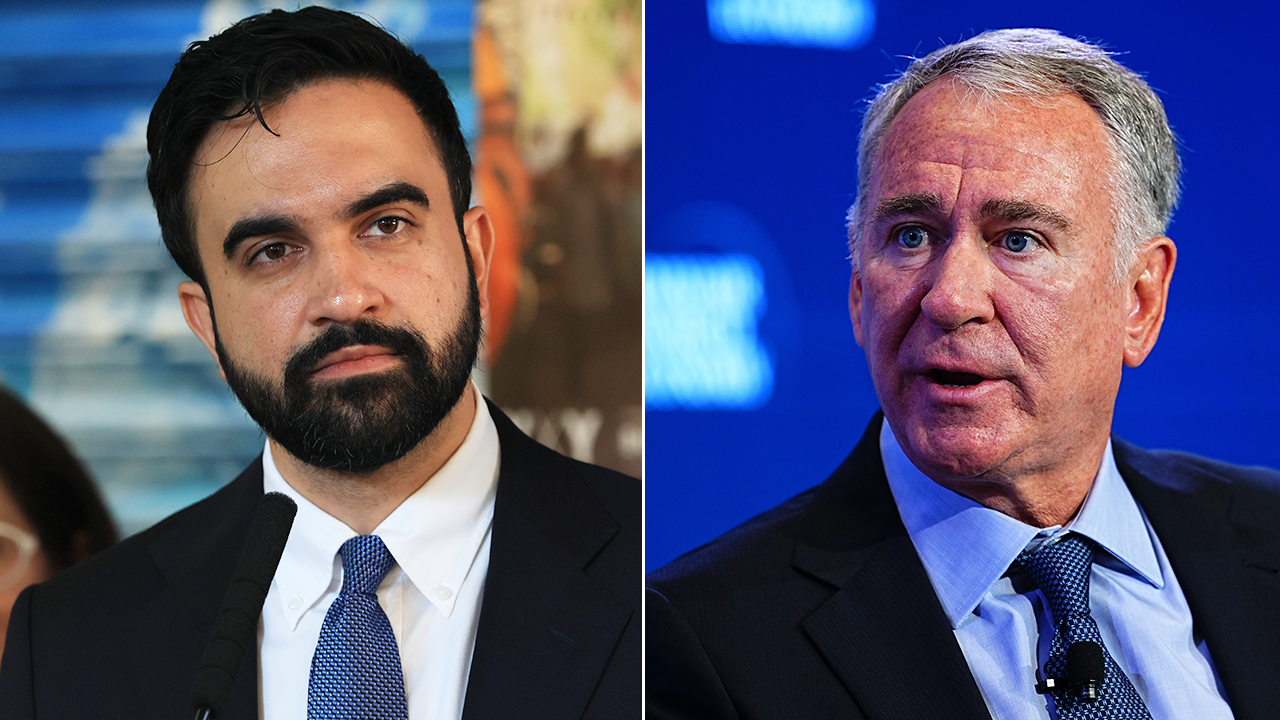
Manhattan Institute expert Adam Lehodey says NYC Mayor Zohran Mamdani’s outreach to Wall Street leaders signals a recognition that New York cannot fund progressive priorities without keeping businesses and wealthy investors in the city.
Billionaire Citadel founder Ken Griffin is encouraging New York’s business leaders to take on socialist Mayor Zohran Mamdani, warning that the city’s future could be at risk if employers and investors stay quiet.
“They need to find their voice and fight for their city,” Griffin said Thursday at a Manhattan event, according to Bloomberg.
“My advice is to speak up. What’s the worst that’s going to happen? It will be that New York empties of talent and that’s a catastrophe. If the mayor wants to say a few words about you, your record speaks for itself: You create jobs, you create value and you pay taxes.”
MAMDANI’S WALL STREET COURTSHIP SPARKS CRITICISM OF ANTI-BILLIONAIRE AGENDA
The Citadel founder is clashing with New York City Mayor Zohran Mamdani over taxes targeting the ultra-wealthy and intensifying crime, reviving the same tensions that drove him to pull his business and billions out of Chicago. (Spencer Platt/Aaron Schwartz/Bloomberg/Getty Images / Getty Images / Getty Images)
Griffin’s remarks mark the latest chapter in an ongoing clash between Wall Street’s billionaire class and Mamdani, whose proposals to raise taxes on wealthy New Yorkers and luxury property owners have drawn fierce criticism from business leaders concerned about the city’s economic competitiveness.
The financial titan, whose net worth is estimated at $48.3 billion according to the Bloomberg Billionaires Index, argued that New York’s corporate leaders should focus on the long-term future of the city rather than short-term political battles.
BILLIONAIRE KEN GRIFFIN SAYS CITADEL’S CHICAGO EXODUS WAS ‘NOT HARD,’ CITES CRIME, TAXES
“Everything should be viewed through the lens of, Citadel will be here far longer than he’ll be mayor,” Griffin said.
The comments come as Griffin and Mamdani appear to be cautiously opening a dialogue after months of public sparring over taxes, wealth and the city’s business climate.
The socialist mayor recently reached out to Griffin after previously criticizing the billionaire hedge fund manager over his Manhattan penthouse and personal wealth. Mamdani notably stood outside Griffin’s luxury property to promote his proposal to raise taxes on second homes in New York City worth more than $5 million.
CHICAGO KNOWS WHAT HAPPENS WHEN KEN GRIFFIN TURNS ON A CITY, NOW MAMDANI MAY FIND OUT
New York City Mayor Zohran Mamdani’s “pied-a-terre” wealth tax on luxury properties ignites a contentious debate, drawing strong criticism from Citadel CEO Ken Griffin and hedge fund manager Bill Ackman.
The outreach comes as some business leaders warn New York risks alienating major employers and investors — a concern Griffin has raised before in another major American city.
The tensions have fueled concerns among some business leaders that New York could follow a path similar to Chicago, where Griffin spent years criticizing crime, taxes and public policy before moving Citadel’s headquarters to Miami in 2022. The relocation marked the departure of one of the financial industry’s most influential firms and underscored the economic impact that can follow when a major corporate player leaves a major city.
GET FOX BUSINESS ON THE GO BY CLICKING HERE
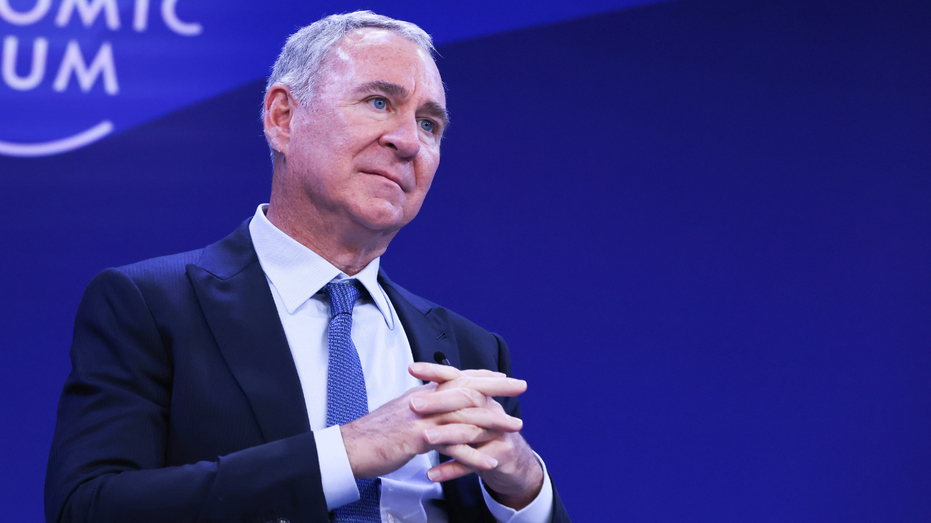
Citadel founder and CEO Ken Griffin described New York City Mayor Zohran Mamdani’s “tax the rich” video targeting him as a “creepy and weird” political advertisement. (Krisztian Bocsi/Bloomberg via Getty Images / Getty Images)
Griffin has repeatedly pointed to Florida’s business climate as a model and warned that policies targeting high earners and businesses could make New York less competitive.
Griffin said he plans to talk to Mamdani “at some point in the months ahead.”
“Let’s see where he is on the state of policy at that time,” he said. “Actions speak louder than words.”

Micron's $1,700 Setup Emerges


Cash Builder Opportunities (aka Nick Ackerman) is a former fiduciary and a registered financial advisor with 14 years of investing experience.He is the leader of the investing group Cash Builder Opportunities, where his specific focus is on closed-end funds, dividend growth stocks, and option writing as an attractive way to achieve income. He shares model portfolios and research to help investors make better decisions, via his Investing Group’s active chat room.
Analyst’s Disclosure: I/we have a beneficial long position in the shares of OKE, SOBO, VICI, SBUX either through stock ownership, options, or other derivatives. I wrote this article myself, and it expresses my own opinions. I am not receiving compensation for it (other than from Seeking Alpha). I have no business relationship with any company whose stock is mentioned in this article.
Seeking Alpha’s Disclosure: Past performance is no guarantee of future results. No recommendation or advice is being given as to whether any investment is suitable for a particular investor. Any views or opinions expressed above may not reflect those of Seeking Alpha as a whole. Seeking Alpha is not a licensed securities dealer, broker or US investment adviser or investment bank. Our analysts are third party authors that include both professional investors and individual investors who may not be licensed or certified by any institute or regulatory body.


Aaron Chow, aka Elephant Analytics has 15+ years of analytical experience and is a top rated analyst on TipRanks. Aaron previously co-founded a mobile gaming company (Absolute Games) that was acquired by PENN Entertainment. He used his analytical and modeling skills to design the in-game economic models for two mobile apps with over 30 million in combined installs. He is the author of the investing group Distressed Value Investing, which focuses on both value opportunities and distressed plays, with a significant focus on the energy sector. Learn more>>
Analyst’s Disclosure: I/we have no stock, option or similar derivative position in any of the companies mentioned, and no plans to initiate any such positions within the next 72 hours. I wrote this article myself, and it expresses my own opinions. I am not receiving compensation for it (other than from Seeking Alpha). I have no business relationship with any company whose stock is mentioned in this article.
Seeking Alpha’s Disclosure: Past performance is no guarantee of future results. No recommendation or advice is being given as to whether any investment is suitable for a particular investor. Any views or opinions expressed above may not reflect those of Seeking Alpha as a whole. Seeking Alpha is not a licensed securities dealer, broker or US investment adviser or investment bank. Our analysts are third party authors that include both professional investors and individual investors who may not be licensed or certified by any institute or regulatory body.
Business
Delta Air Lines: My Buy Thesis Played Out, But Growing Risks Are A Real Concern (Rating Downgrade)

Delta Air Lines: My Buy Thesis Played Out, But Growing Risks Are A Real Concern (Rating Downgrade)

Amazon: I'm Buying The Free Cash Flow Collapse

Microsoft: Market Is Missing The Big Picture

Ultragenyx: The Setrusumab Reset Creates A Cleaner Rare Disease Opportunity


The author is a director at a small Boston-based software company where he oversees India operations across HR, finance, and business development. His broader professional background spans entrepreneurship, operations, and management across multiple industries. Earlier in his career, he was involved in building out a bottled beverages plant, reflecting a longstanding interest in business building, execution, and commercial strategy. He also holds a PhD in history and teaches part-time at a local college, bringing a research-driven and analytical perspective to both his professional and investing workHe has been investing in U.S. equities for nearly two decades, having started well before international access to U.S. markets became commonplace for Indian investors. Over time, he has developed a style that sits between value and growth. He is most interested in businesses where long-term earnings potential, competitive positioning, or strategic optionality are not yet fully reflected in the stock price. His work is grounded in valuation, but he also looks closely at business quality, management execution, industry structure, and the durability of growth.His primary sector focus is software, IT, and AI, including the growing application of AI across industries such as healthcare. He is especially interested in companies with scalable models, improving economics, and the ability to compound earnings over time. At the same time, his interests are not limited to technology. He also follows real estate-related opportunities, including REITs, and remains open to writing on other sectors where the investment case is compelling.On Seeking Alpha, he aims to write thoughtful, research-based articles that combine business analysis with valuation discipline. His goal is not simply to identify attractive stories but to assess whether the market is mispricing risk, growth, or long-term earnings power. He writes to share well-reasoned ideas with serious investors, refine his own thinking through public analysis, and contribute to a more disciplined discussion around investing. The author is associated with another Seeking Alpha analyst – Dr. Manimala M.
Analyst’s Disclosure: I/we have no stock, option or similar derivative position in any of the companies mentioned, and no plans to initiate any such positions within the next 72 hours. I wrote this article myself, and it expresses my own opinions. I am not receiving compensation for it (other than from Seeking Alpha). I have no business relationship with any company whose stock is mentioned in this article.
Seeking Alpha’s Disclosure: Past performance is no guarantee of future results. No recommendation or advice is being given as to whether any investment is suitable for a particular investor. Any views or opinions expressed above may not reflect those of Seeking Alpha as a whole. Seeking Alpha is not a licensed securities dealer, broker or US investment adviser or investment bank. Our analysts are third party authors that include both professional investors and individual investors who may not be licensed or certified by any institute or regulatory body.

Women’s T20 World Cup: India vs South Africa highlights

BMPS 2026 Grand Finals Rankings After Day 3: GodLike Qualify For EWC in Paris

Wall Street’s Tokenization Race Heats Up as SEC Reviews New Rules


-

 Fashion2 days ago
Weekend Open Thread: Miami – Corporette.com
-
Crypto World7 days ago
Zimbabwe Requires Crypto Businesses to Register Annually Under New FIU Regulations
-
 Business2 days ago
Wall Street Week Ahead: Investors see Micron earnings as pulse check of AI rally momentum
-
 Entertainment7 days ago
Matt Damon’s Viral Sci-Fi Thriller Has Taken Over HBO Max
-

 Crypto World2 days ago
HIVE shares jump as $220M AI deal speeds Bitcoin mining pivot
-

 Business7 days ago
Anthropic staff to meet White House officials next week, Axios reports
-
 Crypto World7 days ago
Bitcoin could crash to $48,000, if this historical pattern is triggered
-
 NewsBeat7 days ago
what doctors are seeing in ebike crashes
-
 NewsBeat7 days ago
Warning of disruption as Cardiff Crossrail works to start
-
 NewsBeat7 days ago
Tributes to former deputy head teacher at Cambridge school among death and funeral notices
-
 Entertainment7 days ago
Kate Middleton Glare Goes Viral After Kids Booed At Royal Event
-

 Politics7 days ago
“Israel’s” ban on ICRC visits ruled illegal, but Knesset moves to stop them permanently
-

 Crypto World7 days ago
XRP ETFs Outperform As Bitcoin And Ethereum Funds Extend Outflow Trend
-

 Tech7 days ago
Over 400 Arch Linux packages compromised to push rootkit, infostealer
-

 News Videos7 days ago
Financial Accounting | Last Day Revision Strategy and Booster | CMA Inter – June 2026
-

 Sports7 days ago
Dick Advocaat’s Curacao scores first-ever World Cup goal against Germany
-

 Business7 days ago
Invesco Quality Income Fund Q1 2026 Commentary
-

 NewsBeat7 days ago
Singer Oliver Tree dies aged 32 in helicopter crash in Brazil
-

 Tech5 days ago
The Adder At The Heart Of Intel’s 8087 FPU
-
 Tech7 days ago
Microsoft Updates Six Windows’ Apps. ‘Photos’ Gets Watermarks for Copilot Images (Off by Default)
You must be logged in to post a comment Login