



Connect with us
DAPA Banner
DAPA Coin
DAPA
COIN PAYMENT ASSET
PRIVACY · BLOCKDAG · HOMOMORPHIC ENCRYPTION · RUST
ElGamal Encrypted MINE DAPA
🚫 GENESIS SOLD OUT
DAPAPAY COMING

Business

TARIL shares crash 11% after Q4 results, dividend announcement: What’s spooking investors?

Published

on

TARIL shares crash 11% after Q4 results, dividend announcement: What’s spooking investors?
Shares of Transformers and Rectifiers (India) crashed more than 11% to Rs 295 on Wednesday after the company reported a 5% year-on-year (YoY) decline in consolidated net profit to Rs 89 crore for the fourth quarter of the financial year 2026, while announcing a dividend of Rs 0.25 per share.

The company announced the outcome of its board meeting in the post-market hours of Tuesday. WhileTARIL’s consolidated net profit declined, the company’s revenue from operations increased nearly 16% YoY to Rs 783 crore during the January-March quarter of FY26.

TARIL reported an order book of nearly Rs 5,005 crore with FY26 inflows at Rs 2,374 crore. Total income grew 18% YoY to Rs 805 crore, while total expenses increased nearly 21% YoY to Rs 686 crore.

On a standalone basis, the firm’s net profit gained a little over 1% YoY to Rs 77.5 crore, while revenue from operations increased 16% YoY to Rs 752 crore during the quarter under review. Net profit margin, however, contracted 170 basis points to 10%, while the EBITDA margin declined 200 basis points to 15.1%.

Advertisement

Net profit for the entire financial year 2026 gained more than 20% YoY to Rs 225.43 crore, while revenue from operations increased around 23% YoY to Rs 2,395.49 crore. EBITDA, meanwhile, rose 17% YoY to Rs 370 crore.


What TARIL’s management said


“FY26 has been a year of strong and consistent performance for TARIL. Our ability to deliver robust revenue growth along with sustained profitability reflects the strength of our execution capabilities and disciplined operational approach. The healthy order inflows and strong order book provide us with clear visibility for the coming periods. As we continue to scale our capacities and enhance our technological capabilities, we remain focused on improving efficiencies, strengthening margins, and delivering long-term value,” said Satyen J. Mamtora, Managing Director & CEO of TARIL.
The company added that it continues to benefit from improvements in manufacturing efficiency, supply chain optimisation and project execution. “In line with its growth plans, the company is undertaking a planned capex investment of approximately Rs 600 crore over the next 15 months to enhance capacity and support future demand,” it said.
Along with the Q4 results, TARIL announced a dividend of Rs 0.25 (25%) per equity share with a face value of Re 1 each. The record date to determine the eligibility of shareholders set to receive the payment is yet to be announced.

TARIL share price


TARIL shares dropped to an intraday low of Rs 295 apiece on NSE on Wednesday. The company has a market capitalisation of nearly Rs 9,150 crore.

Advertisement

In the longer term, the stock has rallied over 830% in three years and more than 3,350% in five years.

(Disclaimer: Recommendations, suggestions, views and opinions given by the experts are their own. These do not represent the views of The Economic Times)

Continue Reading
Click to comment

You must be logged in to post a comment Login

Leave a Reply

Business

LeBron and Bronny James Future Uncertain for 2026-27 Lakers Season

Published

on

Lebron James #23 of Team LeBron reacts against Team Durant in the 70th NBA All-Star Game at State Farm Arena on March 07, 2021 in Atlanta, Georgia.

LOS ANGELES — As the Los Angeles Lakers regroup following their second-round playoff exit, one of the NBA’s most compelling storylines remains unresolved: whether LeBron James and his son Bronny James will share the court again in purple and gold during the 2026-27 season.

LeBron James, 41, has not yet committed to his playing future after completing a two-year, $101 million contract that paid him approximately $52.6 million in 2025-26. Multiple reports indicate mutual interest between James and the Lakers in continuing their partnership, but significant salary cap constraints, the team’s roster construction around Luka Dončić and Austin Reaves, and James’ own reflections on his career make a return far from guaranteed.

Bronny James, 21, enters the final guaranteed year of his four-year rookie contract in 2026-27. The Lakers hold a team option for 2027-28, giving them control over his immediate future regardless of his father’s decision. Bronny has shown steady improvement in his second season, earning consistent bench minutes and proving himself as a legitimate NBA contributor on both ends of the floor.

LeBron’s Free Agency Decision Looms Large

James exercised his player option last offseason but now heads into unrestricted free agency. While the Lakers have expressed desire to keep him, cap mathematics and roster fit will play major roles. Reports suggest LeBron is seeking a deal that allows contention while providing financial security, possibly in the $40-50 million range annually if he returns to Los Angeles.

Advertisement

Sources close to James indicate he plans extensive family discussions before deciding. Cleveland, Golden State and other contenders have been mentioned as potential landing spots if he leaves, though many insiders believe he prefers to finish his career with the Lakers if the supporting cast justifies it. Retirement also remains an option, with prediction markets giving it roughly a 25 percent chance before next season.

Bronny’s Development and Role

Bronny has carved out a role as a versatile guard off the bench. In 2025-26, he averaged improved numbers while splitting time between the Lakers and the G League affiliate. His defensive instincts, athleticism and growing confidence have earned praise from coach JJ Redick and teammates.

Even if LeBron departs, the Lakers appear committed to Bronny’s development. Executives have described plans to make him a regular rotation player in 2026-27, viewing him as a long-term piece rather than solely a marketing asset tied to his father. His partially guaranteed deal for next season gives the team flexibility, but early indications suggest they want to keep him.

Father-Son Legacy on the Line

The possibility of LeBron and Bronny playing together for another season carries historic weight. They became the first father-son duo to share an NBA court in 2024, creating unforgettable moments that transcended basketball. Another year together would extend that unique chapter, potentially including deeper playoff runs with an improved supporting cast.

Advertisement

However, LeBron’s decision will likely prioritize winning and family considerations over continuing the father-son narrative. If he retires or joins another team, Bronny’s path stays with the Lakers, where the organization sees long-term value in his growth independent of his famous last name.

Lakers Roster and Front Office Strategy

General manager Rob Pelinka faces a complex offseason. With Dončić and Reaves locked in as foundational pieces, the Lakers must balance veteran leadership, youth development and cap flexibility. Re-signing LeBron would require creative maneuvering, possibly involving salary reductions or roster trimming.

Bronny’s future appears more secure. Even without his father, the Lakers view him as a developmental guard with upside in a modern NBA that values versatility and defense. His improvement trajectory suggests he could earn a second contract if he continues progressing.

Fan and League Reaction

Lakers fans remain divided. Many hope for one more season of the James duo, viewing it as a sentimental and marketable story. Others prioritize contention and question the wisdom of roster decisions driven by family ties. League-wide, executives watch closely as the situation could influence free agency and trade markets.

Advertisement

Analysts predict LeBron will ultimately decide based on competitive fit and family input. Bronny, meanwhile, focuses on earning his place through performance rather than legacy. Their shared journey has already produced historic milestones, but the 2026-27 season may mark the final chapter — or the beginning of Bronny’s independent NBA story.

As training camp approaches later this year, clarity on LeBron’s future will shape the Lakers’ direction. For now, the possibility of another father-son season in Los Angeles remains alive but uncertain, adding intrigue to an already compelling NBA offseason. The basketball world watches closely as one of the sport’s most unique family legacies approaches its next crossroads.

Continue Reading

Business

Earnings call transcript: NeoVolta’s Q3 2026 results miss forecasts

Published

on


Earnings call transcript: NeoVolta’s Q3 2026 results miss forecasts

Continue Reading

Business

What will be the impact of AI on employment

Published

on

Business Live

The best workers will not be those who pretend AI does not exist, nor those who use it uncritically.

ChatGPT.(Image: Getty Images)

Despite all the noise around artificial intelligence, one of the most important questions that is still difficult to answer is whether AI is actually taking people’s jobs in the labour market.

A new report from Anthropic, the company behind Claude, concludes that there is no clear evidence that AI has led to a rise in unemployment among the workers most exposed to it, but there are early signs that hiring in some AI-exposed occupations may already be slowing for younger workers.

Advertisement

That distinction matters because, for much of the past two years, the debate about AI and employment has been between those who believe it will unleash a productivity revolution and those who fear a wave of white-collar automation, with millions of workers displaced by systems that can write, code, analyse, and communicate at ever-increasing speed.

Author avatarDylan Jones-Evans

Author avatarDylan Jones-Evans

The truth, as usual, is much more complicated, and what makes the Anthropic report interesting is that it goes beyond what AI could theoretically do. In other words, just because AI can help complete a task doesn’t necessarily mean that task is being automated in the workplace.

As we all know, businesses do not change overnight, as software has to be integrated, managers have to trust it, employees have to use it, customers have to accept it, legal and regulatory issues have to be addressed, and human judgement still has to be applied. In many cases, the technology may be available long before the organisation knows how to use it

So Anthropic has looked not only at where AI is theoretically capable of undertaking tasks, but also at where it is already being used in real, work-related and more automated ways. That gives a clearer picture of where the labour market may be heading and, crucially, shows that AI is still far from reaching its full theoretical capability.

That should calm some of the more dramatic predictions of immediate mass unemployment, but it should not make us complacent, especially given that the occupations with the highest observed exposure include computer programmers, customer service representatives, data entry workers, medical records specialists, market research analysts, sales representatives, financial analysts and software quality assurance analysts.

Advertisement

That is a revealing list because it is not only about repetitive manual work or low-skilled occupations, but also about office and administrative work, and some of the professional tasks that have traditionally formed the first rung of the career ladder for graduates and younger workers. And that may be where the real challenge begins.

The report does not find a clear increase in unemployment since the launch of ChatGPT, but it does find suggestive evidence that young workers aged 22 to 25 are becoming less likely to start jobs in highly exposed occupations.

That is not the same as mass layoffs, but it could be just as significant over time as AI may not appear in the economy as a wave of redundancies, but rather in the guise of fewer junior hires, a trimmed graduate intake, or an entry-level customer service or analyst position that disappears before anyone notices it has gone.

That matters because the first job is not simply a job but is where people learn how work actually works, develop judgement, confidence, habits, networks and commercial understanding, and begin to turn qualifications into experience. If AI weakens that first rung, the consequences could be profound.

Advertisement

This is especially relevant for Wales, where we already face long-standing challenges around productivity, graduate retention, and access to high-quality professional opportunities outside the strongest labour markets. If AI accelerates the advantage of firms and places that adopt it quickly, then the gap between leading and lagging economies could widen.

Larger firms with the skills, capital and management capacity to integrate AI properly may become more productive, while smaller firms that lack the time, confidence or support to adopt it may fall further behind. Graduates in places with strong professional labour markets may still find routes into work, while those in weaker economies such as Wales may find opportunities narrowing.

With a new Welsh Government in place for the next four years, dealing with this issue could be nation-changing and there is an urgent need to understand where AI exposure is greatest in our own economy, which occupations are most vulnerable, which businesses are using AI to improve productivity and which young people are being prepared for a labour market that is already shifting beneath them.

The best workers will not be those who pretend AI does not exist, nor those who use it uncritically, but those who can ask better questions, interpret better answers, spot mistakes, understand customers, and turn information into action. The same applies to businesses, where the biggest opportunity for SMEs is not replacing people but reducing administration, improving sales processes, strengthening customer communication, and freeing owners and staff to focus on higher-value work.

Advertisement

Yet that will not happen automatically as badly used AI will simply produce bad work faster, creating poor marketing, shallow analysis and false confidence, while the firms that benefit will be those that combine technology with good management.

That has always been the real productivity challenge and for Wales, the choice is clear. We can either treat AI as another distant technological fashion, something discussed by academics but not embedded in economic policy, business support or education, or we can recognise that the country cannot afford to lose more of its talent, ambition or productivity potential, and treat it as one of the defining economic issues of the next decade and do something to maximise the opportunity it presents.

Continue Reading

Business

Slideshow: Providing flexibility with frozen foods

Published

on

Slideshow: Formulating fresh condiment innovations

The frozen foods sector is growing with convenient meals and novelties.

Continue Reading

Business

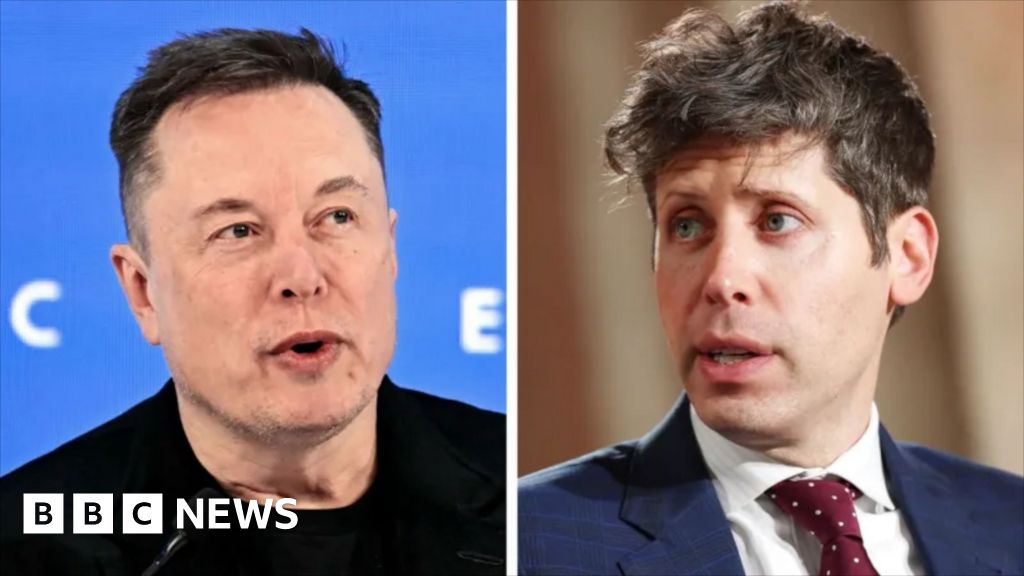
BBC explains closing arguments of the Musk-Altman trial

Published

on

BBC explains closing arguments of the Musk-Altman trial

Over the past three weeks, Elon Musk and his lawyers have argued in a California federal court that Sam Altman – with whom he founded OpenAI – has swindled him out of millions of dollars and reneged on the ChatGPT-maker’s original non-profit mission.

Musk and Altman themselves testified in a case in which the future of AI could be at stake.

As the trial now heads to jury for deliberations, BBC’s Lily Jamali explains what we learned from the high-stakes case.

Read more here.

Advertisement
Continue Reading

Business

Rumble: Skepticism Is Now The Opportunity (Rating Upgrade)

Published

on

Rumble: Skepticism Is Now The Opportunity (Rating Upgrade)

Rumble: Skepticism Is Now The Opportunity (Rating Upgrade)

Continue Reading

Business

Richest people in Wales named on Sunday Times Rich List

Published

on

Business Live

They are worth more than a staggering £13bn between them

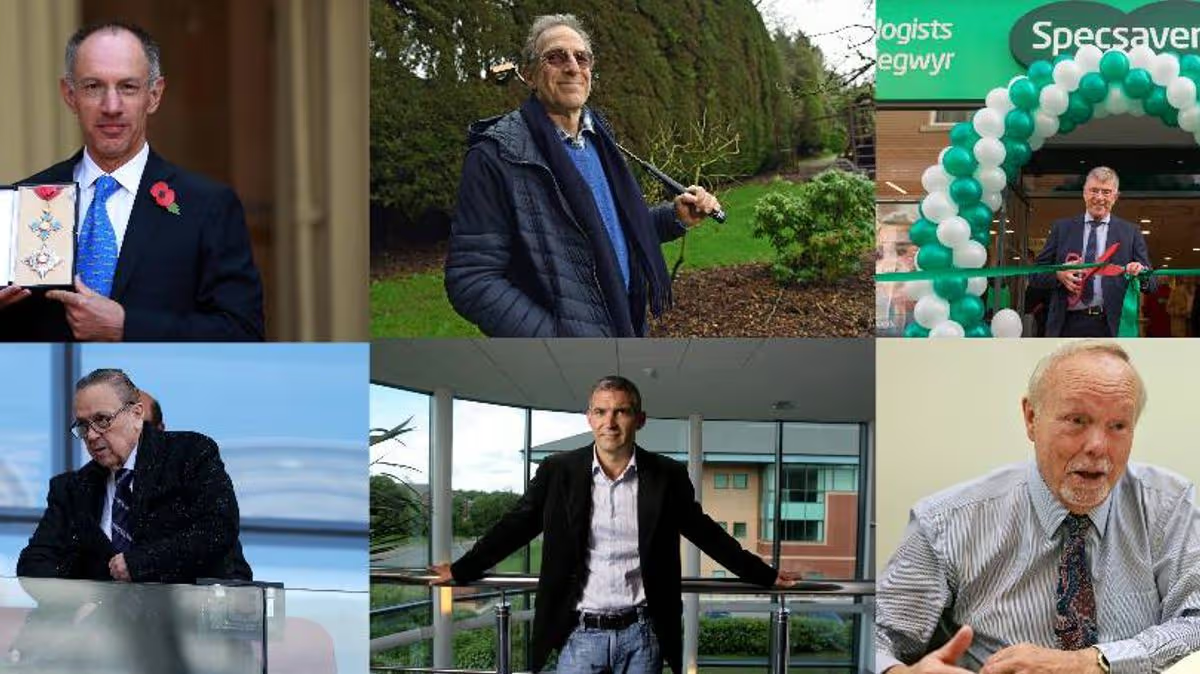
Collage of six photos

The Sunday Times Wales Rich List,

The richest people in Wales have been revealed. They include a couple behind an opticians chain, the founders of a supermarket, and a husband and wife who have topped the list on a number of occasions, according to this year’s edition of The Sunday Times Rich List, which has now been published online.

The list, which is updated annually, ranks the 350 richest people in the UK and has been printed in a special edition of The Sunday Times Magazine since 1989. This year’s list of individuals and families have a combined wealth of £783.5bn – more than the the annual GDP of Belgium, Sweden, and Israel.

The top three richest individuals and families in Wales has remained the same for the last four editions of the list.

The survey is based on identifiable wealth including land, property, other assets such as art and racehorses, or significant shares in publicly-quoted companies. It excludes bank accounts, which the paper has no access to.

Advertisement

The 2026 special edition of The Sunday Times Magazine reveals the largest fall in the billionaire count in the guide’s 38-year history. The minimum entry level to get on the list this year has dipped to £340m – another indicator of a subdued year.

Famous figures to make the cut include Sir Elton John, Andrew Lloyd-Webber, Sir Mick Jagger, Keith Richards, JK Rowling, Charlotte Tilbury, and Sir Lewis Hamilton. Always keep on top of the latest Welsh news with our newsletter.

Topping the list once again for the 10 richest individuals or families in Wales – who are worth in excess of a staggering £13bn between them – are venture capitalist Sir Michael Moritz and his novelist wife Harriet Heyman. Moritz’s wealth has grown by more than £1bn since last year taking his worth to more than £5.4bn.

Some of the other wealthiest entries on the list have lost wealth since the last list. Only one Welsh person made the list for the richest people under under 40, founder and CEO of Net World Sports, Alex Lovén, who has an estimated wealth of £263m.

Advertisement

These are Wales’ 10 wealthiest individuals or families according to The Sunday Times Rich List 2026.

1. Sir Michael Moritz and Harriet Heyman

Sir Michael Moritz

Sir Michael Moritz(Image: Getty Images)

Source of wealth: Venture capitalist and philanthropist

2026 wealth: £5.481bn

Advertisement

Yearly difference: Up £1.046bn

Cardiff-born Sir Michael Moritz, 71, is a former journalist who joined US investment house Sequoia Capital in 1986 and set up his own charitable foundation, Crankstart. He became a billionaire by making early investments into the likes of Google, PayPal, WhatsApp, YouTube, and a host of other tech giants before any other big names.

After stepping down from being in charge of Sequoia Capital in 2012 for health reasons Sir Michael and his American author wife Harriet Heyman, whom he shares his billions with, set up Crankstart to support students from low-income families.

Last year he announced he had applied for a German passport as an “insurance policy” against antisemitism. He believes the country his parents fled does a better job of teaching children about the horrors of the Holocaust.

Advertisement

2. Simon Nixon

Simon Nixon

Simon Nixon(Image: Western Mail)

Source of wealth: Tech entrepreneur (MoneySuperMarket)

2026 wealth: £2.05bn

Yearly difference: Up £100m

Advertisement

In second place again this year is 58-year-old Simon Nixon, who was born in Lincolnshire but grew up in Flintshire. Many will have heard of his fortune making website, MoneySuperMarket, which he co-founded in 1993.

He eventually went on to sell his shares by 2016 and now has investments in Monzo. He also makes money from his holiday home website Simon Escapes where he rents out his personal collection of luxury homes around the world from Cornwall to Malibu.

3. Douglas and Dame Mary Perkins and family

Doug Perkins

Doug Perkins opening the new Specsavers Carmarthen(Image: Mike Walters)

Dame Mary Perkins

Dame Mary Perkins

Source of wealth: Opticians (Specsavers)

Advertisement

2026 wealth: £1.409bn

Yearly difference: Down £130m

Douglas Perkins, 83, from Llanelli, and his wife Dame Mary Perkins, 82, started their billion-pound fortune from a ping-pong table in their spare bedroom where they created Specsavers. The pair came up with the idea of making a visit to the opticians like going to a shop rather than going to the doctor and turned the idea into a hugely profitable international business.

The company is now a global chain of opticians and made Perkins and his family billionaires.

Advertisement

4. Sir Terry Matthews

Sir Terry Matthews

Sir Terry Matthews.(Image: John Myers)

Source of wealth: Telecoms tycoon

2026 wealth: £1.33bn

Yearly difference: Down £8m

Advertisement

Sir Terry Matthews was raised in Newbridge before earning a degree in electronics from Swansea University.

He began his journey as an entrepreneur in Canada where he started his telecoms equipment venture Mitel in 1973. He now also owns the Celtic Manor Resort in Newport.

Sir Terry is recorded as Wales’ first billionaire and was the richest man in Wales until 2012.

5. David Sullivan and family

Advertisement
David Sullivan

David Sullivan.(Image: PA)

Source of wealth: Publisher

2025 wealth: £1.1bn

Yearly difference: Down £18m

Born in Cardiff, David Sullivan, 77, earned his millions by selling pornographic content,. By the late 1970s he ran half of the UK’s adult magazine market and 150 sex shops.

Advertisement

In 1982 he was convicted of living off immoral earnings and served 71 days in prison but he told the Standard in 2012 that he did not “feel embarrassed” by how he made his money.

Sullivan is currently the co-owner of West Ham United FC as well as operating an investment company, Conegate, which owns property in London.

6= Henry Engelhardt and Diane Briere de L’Isle

Henry Engelhardt and his wife Diane Briere de L'Isle.

Henry Engelhardt and his wife Diane Briere de L’Isle.(Image: Richard Swingler)

Source of wealth: Insurance firm Admiral

Advertisement

2026 wealth: £935m

Yearly difference: Down £45m

The married couple are up from 7th in the list last year.

Chicago-born Henry Engelhardt moved to Cardiff in the 1990s to set up the insurance firm Admiral. In the 20 years before he stepped back in 2016 he reshaped the UK car insurance industry and built a fortune.

Advertisement

6= Steve Morgan

Steve Morgan

Steve Morgan.(Image: Redrow/PA)

Source of wealth: Housebuilder Redrow

2026 wealth: £935m

Yearly difference: Down £53m

Advertisement

Steve Morgan founded housebuilder Redrow in 1974 at the age of 21. It grew to be a FTSE 250 company and one of the UK’s most successful homebuilders. Morgan stepped down as chairman of Redrow in 2019.

In 2001 he founded the Steve Morgan Foundation to which he has donated more than £300m and which has provided support to more than 650 charities.

In 1992 Morgan received an OBE for Services to the construction industry and in 2016 he received a CBE for Philanthropic Services.

8. Dai and Richard Walters

Advertisement
Dai Walters feels Ffos Las will be better served for fixtures under Arc

Dai Walters.(Image: MediaWales)

Source of wealth: Construction tycoons (Walters)

2026 wealth: £441m

Yearly difference: Up £23m

Dai Walters’ fortune is entirely self-made having started out as an apprentice labourer at an opencast site in south Wales in the 1970s. The Walters Group website describes how after work as a labourer, greengrocer, and tree planter at 20 years old he took a job as an apprentice fitter at the Wimpey-operated Maesgwyn opencast coal mine.

Advertisement

It wasn’t until 1982, after 17 years working on sites across Wales, that Walters struck out on his own. After success buying plant machinery and hiring it out to mining companies initially in south Wales the Walters Group was established to add earthmoving and civil engineering services to its portfolio and before long was becoming involved in some major construction projects

His son Richard previously ran Caerphilly-based Celtic Energy.

9. Sir Malcolm and Lord Walker

Sir Malcolm Walker

Sir Malcolm Walker.(Image: IAN COOPER/NORTH WALES LIVE)

Source of wealth: Frozen food retailers (Iceland)

Advertisement

2026 wealth: £424m

Yearly difference: Re-entry

Sir Malcolm Walker founded the supermarket chain in 1970 as a side business alongside his job working at Woolworths. The founder was fired for having his own company which was the starting point of Iceland becoming the giant it is today.

Growing up in Yorkshire the supermarket boss now lives in Flintshire.

Advertisement

Sir Malcolm’s son Lord Richard of Broxton, 45, joined the company in 2012 as a shelf-stacker and cashier working his way up the ladder to becoming becoming executive chairman in January 2023.

10. David and Heather Stevens

David Stevens

David Stevens.(Image: South Wales Echo)

Source of wealth: Insurers (Admiral)

2026 wealth: £340m

Advertisement

Yearly difference: Re-entry

This couple are the second to find themselves on the due to their involvement in establishing insurance firm Admiral. David and Heather Stevens were part of the small team which launched the insurance group in 1993 in Cardiff.

Continue Reading

Business

H&R Real Estate Investment Trust (HR.UN:CA) Q1 2026 Earnings Call Transcript

Published

on

OneWater Marine Inc. (ONEW) Q1 2026 Earnings Call Transcript

Operator

Good morning, and welcome to H&R Real Estate Investment Trust 2026 First Quarter Earnings Conference Call. Before beginning the call, H&R would like to remind listeners that certain statements, which may include predictions, conclusions, forecasts or projections and the remarks that follow may contain forward-looking information, which reflect the current expectations of management regarding future events and performance and speak only as of today’s date.

Forward-looking information requires management to make assumptions or rely on certain material factors and is subject to inherent risks and uncertainties, and actual results could differ materially from the statements in the forward-looking information. In discussing H&R’s financial and operating performance and in responding to your questions, we may reference certain financial measures, which do not have a meaning recognized or standardized under IFRS or Canadian generally accepted accounting principles and are therefore unlikely to be comparable to similar measures presented by other reporting issuers.

Non-GAAP measures should not be considered as alternatives to net income or comparable metrics determined in accordance with IFRS as indicators of H&R’s performance, liquidity, cash flows and profitability. H&R’s management uses these measures to aid in assessing the REIT’s underlying performance and provides these additional measures so that investors can do the same.

Advertisement

Additional information about the material factors, assumptions, risks and uncertainties that could cause actual results to differ materially from the statements in the forward-looking information and the material

Continue Reading

Business

Form 13D/A Ballard Power Systems Inc. For: 15 May

Published

on


Form 13D/A Ballard Power Systems Inc. For: 15 May

Continue Reading

Business

H World Group Limited (HTHT) Q1 2026 Earnings Call Transcript

Published

on

OneWater Marine Inc. (ONEW) Q1 2026 Earnings Call Transcript

Operator

Good day, and thank you for standing by. Welcome to H World First Quarter 2026 Earnings Conference Call. [Operator Instructions] Please be advised that today’s conference is being recorded.

I’ll now hand the conference over to your first speaker today, Ms. Ivy Luo, Head of Investor Relations. Please go ahead.

Advertisement

Ivy Huili Luo

Thank you, operator. Good morning and good evening, everyone. Thanks for joining us today. Welcome to H World’s First Quarter 2026 Earnings Conference Call. Joining us today is our Founder and Executive Chairman, Mr. Ji Qi; our CEO, Mr. Jin Hui; our CFO, Mr. Arthur Yu, our COO, Mr. Chen Hui; and our CFO, Ms. Junrui Yu. Following our prepared remarks, management will be available to answer your questions.

Before we continue, please note that the discussion today will include forward-looking statements made under the safe harbor provision of the United States Private Securities Litigation Reform Act of 1995. Forward-looking statements involve inherent risks and uncertainties. As such, our results may be materially different from the views expressed today. A number of potential risks and uncertainties are outlined in our public filings with the SEC.

H World Group does not undertake any obligation to update any forward-looking statements, except as required under applicable laws. On the call today, we will also mention adjusted financial measures during the discussion of our performance. Reconciliation of those measures to comparable GAAP information can be found

Advertisement
Continue Reading

Trending

Copyright © 2025