
Crypto World
OpenPayd’s CCO on the Future of Payments, Stablecoins and Unified Financial Infrastructure


As financial infrastructure continues to evolve, the lines between traditional banking, payments, forex, and digital assets are becoming increasingly blurred. Businesses operating globally now need faster and more transparent ways to move money across currencies, markets, and even platforms.
To explore the ways this shift is reshaping the future of financial services, we spoke with Lux Thiagarajah, Chief Commercial Officer at OpenPayd.
With a career spanning FX trading at JP Morgan, senior roles at institutions such as HSBC, as well as leadership positions across digital-native companies such as BCB Group and FalconX, he brings a unique perspective on the convergence of legacy finance and modern fintech infrastructure.
In the following interview, he talks about how his trading background informs his view of payments, why unified financial infrastructure is becoming essential for global businesses, and where the next phase of fintech growth will be coming from.
You began your career as an FX trader at J.P. Morgan before moving into senior leadership roles across trading and payments. How has that trading background shaped the way you think about payments infrastructure and financial services today?
More than anything else, my trading background shaped how I think about efficiency and timing.
On a trading desk, you are constantly focused on execution. Speed matters, pricing matters, and small inefficiencies compound very quickly. If settlement is delayed or costs are unclear, that directly impacts profitability. That mindset carries through into how I view payments today.
When I look at payments infrastructure, I see it through that same lens. It should be fast, transparent and predictable. Too much of the legacy system still operates with delays, opaque FX spreads and multiple intermediaries. That may have been acceptable historically, but it is increasingly out of step with how businesses operate today.
It also taught me the importance of liquidity. Whether in FX markets or payments, access to liquidity at the right time, in the right currency, is what ultimately determines how efficient a system is. That is why the convergence of fiat and stablecoin liquidity is such an important development for financial services.
You’ve worked across both traditional finance institutions like HSBC and newer digital-native companies such as FalconX and BCB Group. What are the biggest structural differences you’ve observed between legacy financial systems and modern fintech infrastructure?
I believe that the biggest difference is not just technology, it is mindset.
Legacy financial systems were built for a different era. They are robust and trusted, but they are also rigid. Processes are often batch-based, infrastructure is fragmented, and change takes time because everything is layered on top of decades of existing systems.
Modern fintech infrastructure is designed with flexibility from day one. It is API-first, modular and built to scale across markets quickly. Instead of stitching together multiple providers, you are creating a single layer that orchestrates everything behind the scenes.
The other key difference is how problems are approached. Traditional institutions tend to optimise within existing frameworks rather than remove the constraints, whereas fintechs are more willing to rethink the model entirely. That is why we are now seeing infrastructure that connects payment rails, FX and digital assets in a unified way, rather than treating them as separate systems.
What has become clear over time is that neither side can do it alone. The future is not one replacing the other. It is about combining the resilience and trust of traditional finance with the flexibility and speed of modern infrastructure.
As Chief Commercial Officer at OpenPayd, you’re responsible for driving growth across both new and existing clients. What are the key capabilities that fintechs, exchanges, and digital platforms are now looking for in payments partners?
Clients are no longer looking for a single payment rail or a point solution. They want infrastructure that grows with them without constantly re-engineering their setup. That means access to accounts, payments, FX and increasingly digital assets, all through one integration. The days of stitching together multiple providers for different functions now feels outdated.
There is also a much sharper focus on reliability. When payments sit at the core of your product, there is no margin for error. It is not just about speed; it is about consistency and control at scale.
And then there is optionality. Clients do not want to be locked into one rail or one model. They want the flexibility to route transactions in the most efficient way, whether that is through traditional rails or newer settlement methods like stablecoins, without adding complexity to their operations.
Embedded finance and programmable payments are becoming central themes across fintech. How do you see these trends reshaping the relationship between platforms, financial institutions, and end users over the next few years?
Embedded finance is changing how financial capabilities are delivered. Instead of being accessed separately, they are now built directly into platforms, becoming part of the product itself. Programmable payments take that further by automating how money moves, reducing manual processes and improving efficiency at scale.
The roles are becoming clearer. Platforms own the user experience, infrastructure providers manage the complexity behind the scenes, and banks continue to provide the regulatory foundation.
For users, it feels seamless. For businesses, it means far greater control over how money flows through their ecosystem.
OpenPayd operates at the intersection of payments, banking, and digital assets. How important is a unified financial infrastructure for companies operating globally, particularly those scaling across multiple jurisdictions?
It is becoming essential. Businesses with global ambitions deal with different banks, different rails, different regulatory frameworks, and now different asset types. Each layer adds complexity, and that complexity does not scale well.
A unified infrastructure simplifies that environment. It allows businesses to access local and international payments, FX and digital assets through a single framework, rather than building separate systems for each market or use case.
The real value of a unified infrastructure is operational – consistent and standardised processes for compliance, reporting, settlement and treasury management across all regions. It unlocks scale. Without it, expansion into new markets becomes slower, more expensive and more operationally complex than it needs to be.
Strategic partnerships are a major part of your role. What makes a partnership truly valuable in today’s fintech ecosystem, and how should companies think about building long-term collaboration rather than simple integrations?
The difference comes down to alignment. Is the goal to solve a specific or short-term need, or are both sides working towards a shared objective? The most valuable partnerships I have seen are the ones where each side brings something the other cannot easily replicate, whether that is distribution, regulatory coverage or technical capability.
There is also an element of trust. Not just in terms of compliance, but in how you operate together day to day. In a fast-moving environment, things change. The partnerships that last are the ones that can adapt without constantly renegotiating the fundamentals.
Looking ahead, what do you think will define the next phase of growth for fintech infrastructure providers, and where do you see the biggest opportunities for companies like OpenPayd in the next 3–5 years?
The next phase will be defined by convergence across financial infrastructure. A lot of the core building blocks already exist. Stablecoins have proven they can operate at scale, APIs are standard, and regulatory frameworks, such as MiCA and the GENIUS Act, are becoming clearer. The challenge now is making all of these components work together in a way that feels simple to the end user.
That is where the opportunity sits – in orchestration. The underlying rails already exist, but they are fragmented. The providers that can unify those rails and abstract the complexity will become the backbone of global financial services.
For OpenPayd, that means continuing to build the universal financial infrastructure that allows businesses to move money globally, across both fiat and digital assets, without friction.
Disclaimer: The content shared in this interview is for informational purposes only and does not constitute financial advice, investment recommendation, or endorsement of any project, protocol, or asset. The cryptocurrency space involves risk and volatility. Readers are encouraged to conduct their own research and consult with qualified professionals before making any financial decisions. This interview was conducted in cooperation with OpenPayd, who generously shared their time and insights. The content has been reviewed and approved for publication in mutual understanding. Minor edits have been made for clarity and readability, while preserving the substance and tone of the original conversation.
The post OpenPayd’s CCO on the Future of Payments, Stablecoins and Unified Financial Infrastructure appeared first on CryptoPotato.

Bitcoin (BTC) miners reported widening net losses in the first quarter of 2026 as declining Bitcoin prices, broader market pressures, and other factors weighed on the firms.
Hut 8 (HUT), Core Scientific (CORZ), American Bitcoin (ABTC), Cipher Digital (CIFR), and Riot Platforms (RIOT) all reported losses.
Bitcoin Miner Q1 Losses Hit Sector
According to its latest press release, HUT posted a net loss of $253.1 million in the first quarter of 2026. The losses widened from $134.3 million recorded during the same period last year.
“Net loss for the period included $295.7 million of primarily unrealized losses on digital assets, compared to $112.4 million in the prior year period,” the firm noted.
Follow us on X to get the latest news as it happens
Meanwhile, American Bitcoin, the Bitcoin mining and treasury company co-founded by Eric Trump, reported an $81.8 million net loss for the first quarter, up from a $59.5 million loss in the previous quarter.
Again, the company’s digital asset holdings were the main drag, contributing to $117.18 million in losses.
“We produced Bitcoin at a 52% gross margin despite a 22% decline in Bitcoin price, reflecting meaningful cost improvements that partially offset the price headwind. Our cost to mine fell to approximately $36,200 per Bitcoin, down from roughly $46,900 in Q4 2025,” Matthew Prusak, President of American Bitcoin, said.
Core Scientific reported a net loss of $347.2 million, primarily due to $266.5 million in non-cash impairment charges. The company was also impacted by a $30.8 million non-cash loss tied to changes in the fair value of warrants and contingent value rights.
Cipher Digital’s $114 million loss followed the Black Pearl mining wind-down, a fair-value decline on its power contract, and higher interest expense from new debt facilities. Lastly, Riot Platforms’ quarterly loss exceeded $500 million.
Miner Stock Reactions
Meanwhile, mining stocks posted modest declines in after-hours trading following the disclosure of losses. Google Finance data showed that HUT surged 35% to $108.94 during regular trading on May 6 before slipping 1% in after-hours trading.
CORZ rose 11% to $24.63 during the session, then fell 7.2% to $22.85 after hours. ABTC gained 1.6% to $1.25 in regular trading before erasing those gains in pre-market activity.
AI Data Center Pivot Reshapes the Sector
The earnings reports landed alongside fresh AI data center moves at every firm. Hut 8 unveiled a $9.8 billion Beacon Point lease.
Cipher Digital signed its third hyperscale lease in Q1. Riot Platforms booked $33.2 million of data center revenue. Core Scientific continues repurposing mining facilities for colocation services.
Whether the pivot offsets pressures on the underlying mining business will become clearer in the time ahead.
Subscribe to our YouTube channel to watch leaders and journalists provide expert insights
The post Bitcoin Miners’ Q1 Losses Mount as AI Pivots Accelerate appeared first on BeInCrypto.


A US judge has sentenced a California man known as GothFerrari to 78 months in prison for his role in a crypto social engineering ring that turned to home burglaries when victims could not be deceived online.
Marlon Ferro, 20, of Santa Ana, also faces $2.5 million in restitution and three years of supervised release.
Inside the $250 Million Crypto Theft Ring
A multi-year federal investigation revealed that the enterprise drained more than $250 million in cryptocurrency from victims between late 2023 and early 2025. Its members operated out of California, Connecticut, New York, Florida, and overseas.
The crew specialized in roles that included database hacking, target identification, fraudulent phone calls, and money laundering. When social engineering failed, the ring sent Ferro to physically steal hardware wallets from victims’ homes.
“Marlon Ferro served as the criminal enterprise’s instrument of last resort… they turned to Ferro to break into homes and steal hardware wallets outright,” US Attorney Pirro said.
Follow us on X to get the latest news as it happens
Brick-Through-Window Crypto Burglaries and Designer Spending
According to the press release, in February 2024, Ferro broke into a home in Winnsboro, Texas, and stole a hardware wallet. The device held roughly 100 Bitcoin (BTC), then valued at more than $5 million.
That July, Ferro went to New Mexico and surveilled a residence with a hidden cell phone. He smashed a window with a brick when co-conspirators tracking the victim’s iCloud account signaled the home was empty.
Beyond burglaries, Ferro laundered funds for the ring. Using fake identification from a foreign national, he opened a geo-blocked payment card account. The setup funneled over $255,000 in designer clothing to co-conspirators.
Stolen money also bankrolled extravagant spending. Court papers cite nightclub tabs of up to $500,000 per night and Hermès Birkin bags. Private jets and exotic cars valued up to $3.8 million were also part of the haul.
Authorities arrested Ferro in May 2025 with two firearms in his possession. He pleaded guilty in October 2025 to one count of conspiracy to participate in a racketeering-influenced and corrupt organization
Subscribe to our YouTube channel to watch leaders and journalists provide expert insights
The post Crypto Burglar Known as ‘GothFerrari’ Draws 78-Month Prison Term appeared first on BeInCrypto.
Crypto-friendly gift card platforms are designed to make it very easy to convert digital assets into real purchases. Now more than ever, users are buying gift cards with crypto on CoinsBee to shop online, access global brands, and spend their cryptocurrencies without having to trely on traditional payment methods.
It’s one thing to own crypto, but it’s a completely different matter to use it without friction. For this reason, crypto-friendly gift card platforms have historically been surging in popularity. That growing interest explains why more users now choose to buy gift cards with crypto on CoinsBee as a practical way to turn digital assets into everyday spending power.
Why Crypto Gift Cards Are Becoming a Go-To Option
For a lot of consumers, the appeal of these cards comes down to one thing – they are just more usable. People want simple, straightforward ways to turn crypto into something practical without having to jump through extra hoops.
Crypto-friendly gift card platforms are one of the things that make it possible. This is because they connect digital assets with real purchases, which helps to explain why they are becoming a relatively natural part of everyday online shopping.

The Rise of Crypto-Friendly Gift Card Platforms
It goes without saying that the crypto industry has matured well beyond its early image when it was a niche field reserved for cyphurpunks and tech enthusiasts. Today, many consumers want real-world ways to use their coins – whether for entertainment, travel, shopping, or everyday services.
This is gift cards come into play – they bridge the gap between digital assets and mainstream retail customers. Current adoption trends are also pointing toward a broader momentum, with Chainalysis reporting strong global consumer crypto adoption last year, going into this year as well.
Undoubtedly, another reason for this increase is the sheer convenience. Traditional crypto checkout options tend to be unavailable everywhere, and many merchants don’t yet accept crypto payments directly. This problem is solved by crypto gift cards because instead of waiting for every store to add native crypto support, users can buy branded cards and use them almost instantly and everywhere.
This model suits the way people show now – modern buyers value speed, mobile access, and simple transactions. A crypto-friendly platform allows them to use Bitcoin, Ethereum, or other assets for purchases without having to move funds through multiple apps, exchanges, wallets, or whatnot.
Benefits of Using Cryptocurrency for Digital Purchases
As opposed to converting assets into fiat before spending them, people are able to use Bitcoin, Ethereum, as well as other cryptocurrencies directly for purchases through gift cards.
Some of their main benefits include:
- Greater Flexibility for Crypto Holders: Users can turn their holdings into digital vouchers for well-known brands without first converting crypto into traditional currency;
- Faster Access to Purchases: Crypto transactions are often processed quickly, allowing users to obtain gift cards or balances without waiting for bank transfers or lengthy payment processing;
- More Privacy and Independence from Traditional Payment Systems: Some people prefer not to rely on credit cards or bank accounts for every purchase. Crypto gift cards offer an alternative way to shop online;
- Convenient for Cross-border Spending: For people who travel frequently or live in regions where international payments can be complicated, crypto gift cards provide an easier option for purchases and online gifting.
How to Pick a Trusted Platform for Crypto Gift Cards
It’s important to understand that not every single platform offers the same experience. That’s why it’s important to choose the right one. When selecting a service which will convert your crypto into digital cards, here are a few essential factors you should undoubtedly keep in mind.
- Clear Coverage and Availability: A reliable platform should clearly show which brands are available, which countries are supported, and which cryptocurrencies can be used;
- Transparent Pricing and Checkout: Users should be able to see the cost of each card, understand how the checkout process works, and complete crypto payments without confusion. If the platform feels vague or complicated, it can be a warning sign;
- Strong Security and Reputation: A trustworthy service usually has a solid track record, supports popular cryptocurrencies, and offers a secure environment for transactions;
- A Wide Catalog of Digital Vouchers: Platforms that provide access to many brands give users more flexibility when choosing digital vouchers for personal purchases or online gifting;
- A Simple and User-friendly Experience: The best services make the process easy, even for beginners. Users should be able to browse options, choose a value, select their preferred cryptocurrency, and complete the purchase quickly.
Tips for Getting the Most Out of Crypto Gift Cards
Now, crypto gift cards are not just used for one-off purchases – they can become a valuable part of your regular spending routine. Here are a few practical tips that will help you make the most of them.
Match the Card to Your Needs
You should use crypto gift cards for things you truly need if you are to get the best of them. Whether it’s shopping, subscriptions, or travel, if you have a clear idea of what you want to buy, this will ensure your purchases are more efficient and intentional. The approach would make crypto spending purposeful, and it would help you avoid unnecessary purchases.
Time Your Purchases
When you choose to use your crypto can make a big difference. Some users prefer to spend their crypto when the market is stable or after setting aside a portion of their holdings for purchases. Others find it easier to manage their spending with gift cards, as the fixed value makes it simple to track budgets and avoid overspending.
Take Advantage of Online Gifting
Crypto gift cards are an excellent choice for online gifting. They’re fast, easy to send, and require minimal steps, making them perfect for giving digital gifts. With global shopping becoming increasingly cross-border and multi-platform, the flexibility of gift cards provides real convenience.
By keeping these strategies in mind, you can boost the value and convenience of your crypto gift cards, turning them into a practical tool for everyday spending.
Conclusion
Cryptocurrencies have evolved from being just something people hold and watch in their wallets. More users are now seeking practical ways to convert their holdings into real purchases.
Instead of waiting for every store to accept direct crypto payments, users can easily buy gift cards with crypto on CoinsBee and immediately use them for shopping, entertainment, travel, and online services.
Frequently Asked Questions (FAQs)
Why are crypto-friendly gift card platforms becoming more popular?
Crypto-friendly gift card platforms are gaining popularity, largely because they make it easier to use digital assets in everyday life. Instead of having to worry about converting crypto into traditional money through exchanges, users can just buy a gift card and spend it on shopping or online services.
How do I know if a platform is trustworthy?
One thing a trustworthy crypto gift card platform should offer is unparalleled transparency. You should be looking for services that clearly list the supported cryptocurrencies, available brands, and supported countries. The more reliable platforms also provide secure payment processing, simple checkout steps, and clear pricing.
A trustworthy crypto gift card platform should offer transparency, security, and a strong reputation. Look for services that clearly list supported cryptocurrencies, available brands, and supported countries. Reliable platforms also provide secure payment processing, clear pricing, and straightforward checkout steps.
Can crypto gift cards be used for gaming, shopping, and other services?
Yes, crypto-based gift cards are made to be versatile. They can typically be used for a wide range of products and services. Many platforms offer vouchers for gaming platforms, online retailers, streaming services, digital marketplaces, and travel providers.
Are crypto gift cards a safe way to manage digital assets?
Cryptocurrency gift cards can be a safer and more practical option when they are purchased through reputable platforms. They are known to allow users to convert a portion of their digital assets into a fixed-value digital voucher, which makes spending a lot easier.
What should I watch for in the future of crypto gift cards?
The future of cryptocurrency gift cards seems to be focusing on greater accessibility, faster transactions, and wider availability of brands. As crypto adoption grows altogether, more platforms are expected to expand their catalogs and support additional digital assets.
Disclaimer: The above article is sponsored content; it’s written by a third party. CryptoPotato doesn’t endorse or assume responsibility for the content, advertising, products, quality, accuracy, or other materials on this page. Nothing in it should be construed as financial advice. Readers are strongly advised to verify the information independently and carefully before engaging with any company or project mentioned and to do their own research. Investing in cryptocurrencies carries a risk of capital loss, and readers are also advised to consult a professional before making any decisions that may or may not be based on the above-sponsored content.
Readers are also advised to read CryptoPotato’s full disclaimer.
The post Why More People Are Choosing Crypto-Friendly Gift Card Platforms appeared first on CryptoPotato.

The social sentiment surrounding Bitcoin (BTC) has swung to its most bullish level in four months as the asset surged past the $80,000 mark earlier in the week.
This is according to data shared by Santiment on May 7, with the shift reflecting a market that has quickly moved from fear to optimism after weeks where BTC’s price was weighed down by macro uncertainty and crypto-related security concerns.
Traders Turn Optimistic as Bitcoin Rebounds
Now, retail traders are once again piling into bullish calls across social media, with Santiment’s data capturing this through its Positive/Negative Sentiment metric, which runs posts and threads from major platforms through a machine-learning model to separate bullish from bearish commentary and calculate the ratio between them.
At 1.37, the current reading is at its highest since early January, when the market was coming off a strong end to 2025. Back in mid-April, sentiment had done the opposite, collapsing deep into bearish territory in the wake of the KelpDAO exploit.
Santiment noted at the time that the widespread panic was actually a healthier environment for a rebound, as it cleared out less committed holders.
That rebound came, and with optimism now back near multi-month highs, the firm is highlighting the other side of that dynamic.
“As fear disappears and FOMO rapidly takes over social media discussions, traders often enter positions late into rallies,” Santiment wrote, “increasing the probability of local tops, profit-taking, and sudden volatility.”
The firm was direct that this does not mean the rally is finished, but that the risk profile is meaningfully higher now than it was a few weeks ago, when most of the crowd was still panicking.
What the Data Needs to Confirm a Bottom
On the price side, Bitcoin was trading at around $81,000 at the time of writing, up by about 7.5% over the past seven days and 18% in the last month.
It briefly tapped $82,000 on May 6, marking a new three-month peak before pulling back slightly, with the 24-hour range having sat between approximately $80,800 and $82,800 per CoinGecko.
However, not everyone is treating the price recovery as a clean setup. Analysts at Bitfinex described the rally to $80,000 as misleading and argued that the market is not positioned for upside movement.
On the other hand, some traders are closely watching whether BTC can reclaim higher realized price bands tied to underwater holders from late 2025 and early 2026.
According to market commentator IT Tech, Bitcoin needs to break above roughly $89,000 and hold that level before a durable bottom can be confirmed.
The analyst pointed to several realized price zones between $89,000 and $112,000 where trapped buyers may look to exit positions once prices recover.
The post The FOMO Is Back: Why Bitcoin’s Latest Rally Has Analysts Flashing Warning Signs appeared first on CryptoPotato.
The bnb price prediction gained its biggest institutional catalyst yet when Teucrium launched the first US-listed 2x Long Daily BNB ETF under the ticker XBNB on NYSE Arca on April 28. Binance co-founder Changpeng Zhao announced the product on X, and the fund gives traditional brokerage accounts leveraged exposure to BNB price moves for the first time without a crypto wallet or futures account.
Pepeto lines up its Binance listing with $9.89 million committed, showing smart money building positions. The bnb price prediction points toward $700 and then $1,000 over the year, and analysts model Pepeto at 100x from the current presale price once the Binance listing opens trading.
The Teucrium xETFs 2x Long Daily BNB ETF began trading on NYSE Arca on April 28 as the first US exchange-traded product tied to BNB price movements, per BusinessWire. FalconX Bravo, a CFTC-registered swap dealer, provides the derivative exposure, and the fund targets twice the daily performance of BNB before fees.
VanEck’s spot BNB ETF filing still sits with US regulators, and clearance would add billions in institutional demand. Teucrium’s earlier leveraged XRP product attracted hundreds of millions within months, and the BNB fund expands that access into another top-five asset.
The BNB Price Prediction Entry Worth Watching Right Now
Pepeto: The Trading Platform That Earns While BNB Grinds Through the XBNB ETF Launch
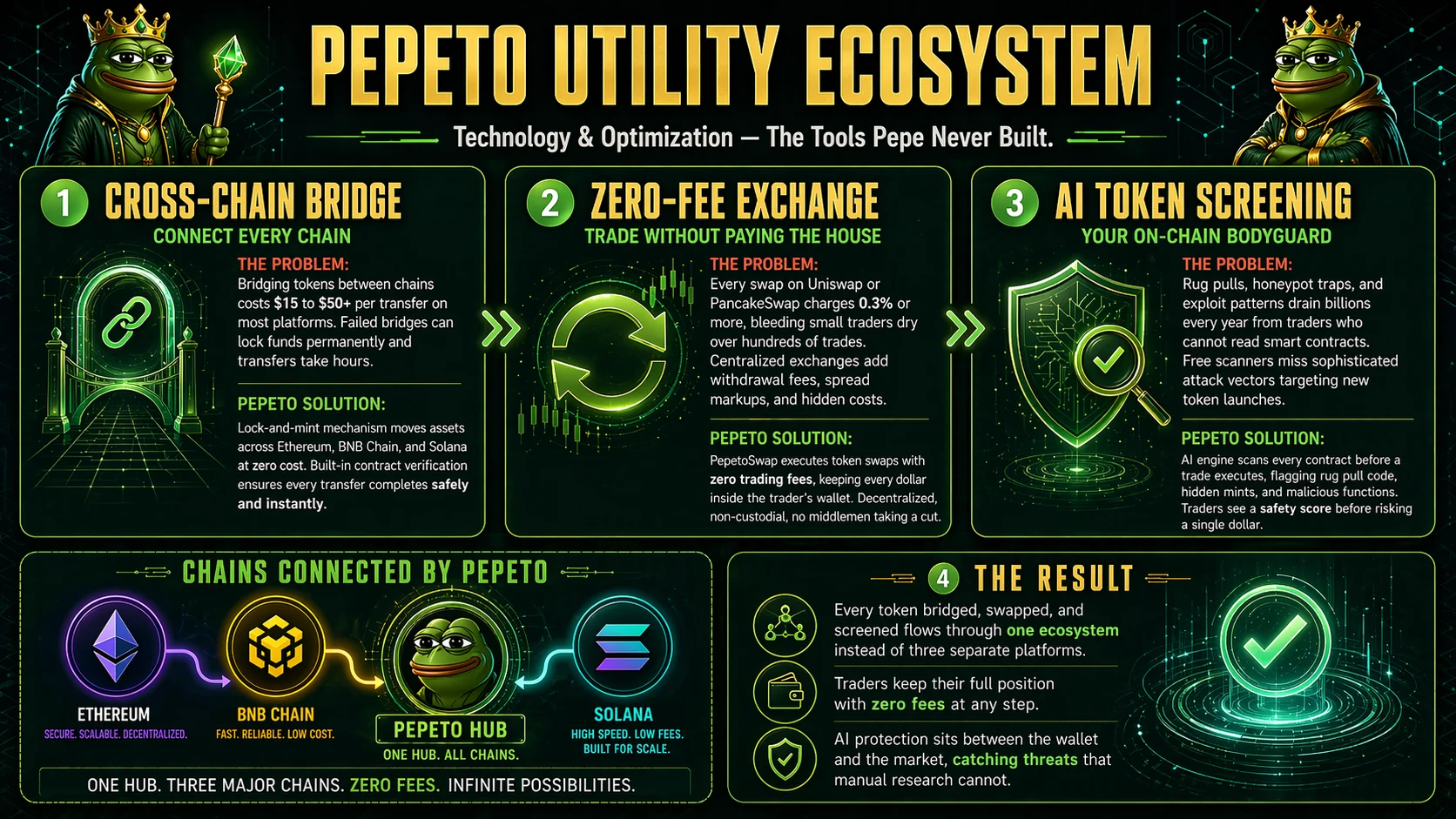
The Binance listing window narrows and presale stages load faster each round. Pepeto is a contract-scanning and zero-fee platform that rewards holders when the broader market trades sideways and the bnb price prediction stays range-bound, which is where BNB sits as institutional products like XBNB take time to draw capital.
While BNB holders wait for the Teucrium ETF and VanEck spot filing to move price, Pepeto already scans tokens across Ethereum, BNB Chain, and Solana, flagging risky contracts before capital touches them. PepetoSwap processes swaps at zero fee, and capital starts producing returns right away rather than sitting inside an $84 billion cap waiting for the next buyer.
The presale crossed $9.89 million at $0.0000001868. Its low fully diluted value and role as the exchange’s utility token place 100x within range. SolidProof signed the codebase, a senior Binance developer designed the exchange from the ground up, and the founder who took Pepe to $11 billion built every tool. Staking at 175% APY grows the position with every block.
The bnb price prediction will keep pulling capital toward BNB, but the wallets locking positions today know 100x on Pepeto is built on returns that already happened with Pepe. Entering the presale now while BNB grinds sideways is how the biggest gains of this cycle get captured before the listing removes the presale advantage for good.
BNB Price at $634 as the XBNB ETF Opens Institutional Access and the VanEck Spot Filing Waits
BNB (BNB) trades at $634 on May 6, down roughly 54% from its $1,369 all-time high reached in October 2025, per CoinMarketCap. The bnb price prediction depends on holding $607 support and clearing $647 resistance to open the path toward $700 and then the $900 zone.
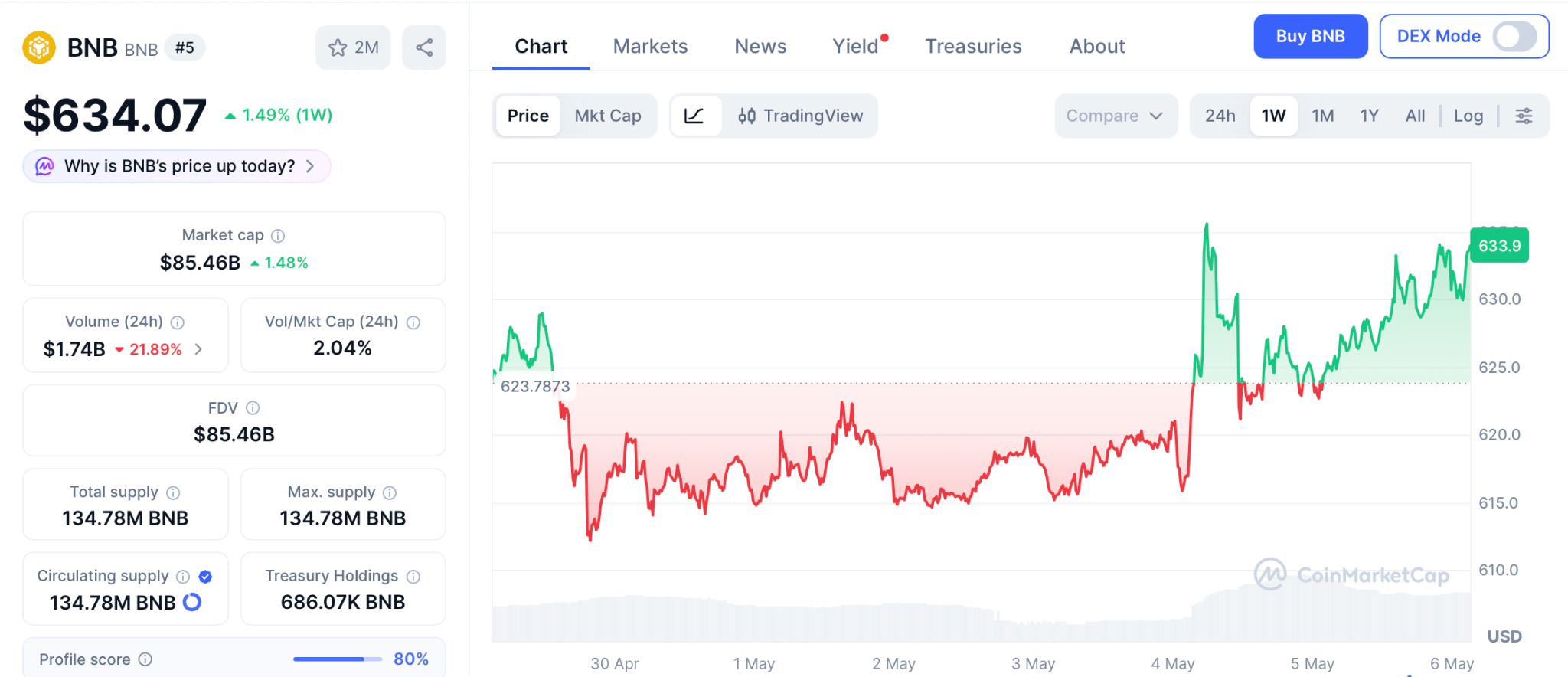
Changelly projects an average BNB price of $653 for May with upside toward $1,000 by December 2026. But the bnb price prediction math from an $84 billion cap means meaningful targets still take quarters to reach, not the timeline a presale-to-listing event delivers when the entry is $0.0000001868.
Conclusion
A bull run is flashing. BNB broke $1,369 in October because the last wave lifted everything, and the XBNB ETF plus the VanEck filing are laying the tracks for the next one. But history shows that when Bitcoin doubles, the strongest presale entries do not just follow the move.
They return 100x. BNB at $634 with an $84 billion cap will grind higher over quarters. Pepeto at $0.0000001868 with a Binance listing days away covers that same distance the moment trading opens.
Missing Pepeto at this stage could easily become the kind of regret that stays, the same feeling every person who knew about SHIB early and watched it run without acting still carries today. Pepeto is positioned where SHIB was before its breakout, with a live exchange and a founder who already proved the model once. The presale will not wait, and the bnb price prediction crowd that sees this clearly is already inside.
Click To Visit Pepeto Website To Enter The Presale

FAQs
Can the bnb price prediction reach $1,000 in 2026 after the Teucrium XBNB ETF and the VanEck spot filing?
The bnb price prediction needs the XBNB ETF to draw sustained institutional volume, the VanEck spot BNB ETF to advance through regulators, and BTC to hold above $80,000 before $1,000 comes into play. Changelly projects BNB averaging $653 in May with a year-end target near $1,000.
What makes Pepeto the best crypto presale for high returns before the next bull run leg?
Pepeto is the best crypto presale because it runs a SolidProof-audited exchange with zero-fee trading, a token scanner, and a cross-chain bridge across three networks. The presale raised $9.89 million at $0.0000001868 with 175% APY staking and an approaching Binance listing.
Disclaimer: This is a Press Release provided by a third party who is responsible for the content. Please conduct your own research before taking any action based on the content.



The crypto industry may have fundamentally misunderstood the metaverse, according to Animoca Brands chairman Yat Siu, who argues that the next phase of virtual economies would arrive not through VR headsets or immersive digital worlds, but through fleets of AI agents transacting across blockchain networks behind the scenes.
Siu said the metaverse maybe coming to us rather than being a place that humans go to, during his keynote at Consensus Miami 2026.
For Animoca, this marked a distinct pivot from the pandemic-era vision of the metaverse it once championed, in which users were expected to spend increasing amounts of their social and economic lives in immersive virtual worlds.
Siu now says the more consequential shift may be AI systems operating in the physical world on behalf of humans, handling transactions, bookings, coordination and commerce in the background while blockchain networks function as the infrastructure connecting those agents.
Instead, Siu argued the next phase of the internet may revolve around AI systems operating continuously in the background of everyday life, handling tasks such as bookings, payments, scheduling, and online transactions on behalf of users.
He said consumers could eventually rely on dozens, or even hundreds, of AI agents to coordinate their digital activities, with blockchain networks serving as the financial and identity infrastructure connecting those systems.
“I think the point is that it’s going to be more agents than humans,” Siu said, predicting there could eventually be “50 to 100 billion agents roaming essentially on the internet.”
That shift, he argued, could also solve one of crypto’s longest-running problems: onboarding ordinary users.
While an estimated 700 million to 800 million people globally now own some form of cryptocurrency, Siu noted that fewer than 70 million actively use blockchain applications because crypto remains technically intimidating for mainstream consumers.
“My mom’s not going to be using MetaMask,” he said. “It’s hard for her.”
AI agents, however, may interact naturally with wallets, smart contracts, and decentralized finance systems because they operate directly through code, he argued.
Unlike humans, agents would not need traditional banking infrastructure and could transact autonomously on-chain.
“Blockchain technology is the ideal financial system for machines,” Siu said. “We, the humans, were basically the guinea pigs.”
The broader argument reflected a growing narrative within parts of the crypto industry that blockchain’s most scalable users may ultimately be autonomous software agents rather than humans.
In that framework, wallets, tokens, decentralized identity systems, and on-chain payments become machine infrastructure powering an emerging “agent economy.”
As part of that push, Animoca announced a $10 million investment initiative for developers building AI agent applications through its Animoca Minds platform.
If Siu’s vision materializes, the next major wave of blockchain adoption may not come from millions of new human users learning to navigate crypto wallets, but from billions of AI agents transacting autonomously with one another behind the scenes.
Bittrex has asked a U.S. federal court to overturn its $24 million settlement with the Securities and Exchange Commission after the regulator abandoned the crypto enforcement approach used against the exchange under the Biden administration.
Summary
- Bittrex has asked a federal judge to cancel its $24 million SEC settlement after the regulator dropped similar crypto cases.
- Court filings stated that the SEC now no longer considers most crypto tokens to be securities under its current approach.
- The bankrupt exchange has also requested that the SEC return funds before the money is transferred to former customers through the Treasury Department.
According to a motion filed this week by attorneys representing Bittrex, the bankrupt crypto exchange has requested that the court vacate the earlier judgment and direct the SEC to return the $24 million penalty paid in 2023.
The filing argues that the regulator no longer supports the legal theory used to pursue the case, after repeatedly stating under President Donald Trump’s administration that most crypto tokens do not qualify as securities.
Filed in federal court on Monday, the motion stated that the SEC has already dropped nearly all comparable enforcement actions and investigations involving crypto exchanges and token issuers. Bittrex’s legal team argued that continuing to enforce the settlement while abandoning similar cases would be unfair treatment.
“Two-and-a-half years after extracting a settlement from a bankrupt cryptocurrency exchange premised on the legal theory that the tokens that traded on the exchange were securities, the SEC has (a) conceded that its legal theory was wrong and those tokens were not securities, (b) acknowledged that its enforcement strategy was misguided from the start, and (c) dropped every similar case and investigation except this one,” Bittrex’s attorneys wrote in the filing.
SEC’s crypto reversal becomes central to Bittrex request
The SEC originally sued Bittrex during Joe Biden’s presidency, accusing the Seattle-based exchange of offering unregistered securities through crypto token trading services. Bittrex later agreed to settle the case for $24 million without admitting or denying the allegations.
Court records cited in the latest filing also pointed to a March request from the SEC seeking permission to transfer the $24 million to the U.S. Treasury Department for distribution to former Bittrex customers who allegedly suffered financial losses.
Bittrex’s attorneys have now asked the judge to stop the transfer process and return the funds before any distribution takes place.
Operations at the exchange were shut down shortly after the settlement, with Bittrex stating at the time that continuing business operations in the existing U.S. regulatory and economic environment was no longer economically viable.
Separate from the SEC case, Bittrex reached another settlement with the U.S. Treasury Department in 2022 over alleged sanctions violations involving countries including Iran, Cuba, and Syria. Treasury officials announced at the time that the exchange had agreed to pay roughly $29 million tied to what regulators described as apparent violations of sanctions and anti-money laundering rules.
Since Trump returned to office last year, SEC leadership has repeatedly pulled back from the agency’s earlier crypto enforcement campaign. The regulator has dismissed or paused several high-profile lawsuits against crypto companies, while senior officials have publicly stated that many digital assets fall outside securities laws.
Bitcoin’s price just tapped a new multi-month peak at $82,000, where it faced some resistance but continues to trade close to that level.
Almost all altcoins are in the green today, with ETH inching closer to $2,400 and XRP decisively reclaiming the $1.40 resistance. SOL is up to $90, while ZEC has stolen the show.
BTC Touched $82K
The primary cryptocurrency fell hard last week after it was rejected at $79,500, and the culmination took place on Wednesday following the third FOMC meeting for the year. Although the Fed’s decision to maintain the interest rates unchanged was highly expected, BTC still dipped below $75,000.
However, its subsequent rebound has been very impressive. The asset first neared $79,000 on Friday after Iran sent a peace proposal to the US and remained close to that level during the weekend, even though the US rejected it, and the second one, sent on Sunday.
Moreover, BTC rocketed on Monday morning to over $80,000 for the first time since late January. It slipped in the following hours after some confusing reports, but went back on the offensive and quickly reclaimed that level. The bulls kept the pressure on, and the cryptocurrency briefly tapped $82,000 minutes ago to mark a new three-month peak.
It remains close to that level now, with its market cap climbing to over $1.630 trillion and its dominance over the alts standing above 58.5% on CG.

Alts Turn Green
ZEC has reignited hopes of its massive run from several months ago when it exploded from under $80 to over $700 within weeks. Its daily surge of roughly 40% has reminded of that rally, as the asset now sits at $575. The only more notable gainer in the past day is SKYAI, which has soared by over 40% to $0.78.
TON has continued with its massive streak, posting another 25% surge on a 24-hour scale. DASH, ICP, FIL, and NEAR complete the double-digit price pump club.
A lot more modest gains are evident from XRP, BNB, ETH, and TRX, while SOL, DOGE, and ADA are up by almost 5% daily.
The total crypto market cap has added roughly $50 billion in a day and now sits at $2.8 trillion on CG.

The post Massive 40% Gains From SKYAI and ZEC as BTC Taps $82K: Market Watch appeared first on CryptoPotato.
Key Highlights
- Gold extended its rally for three consecutive sessions, holding above the $4,700 per ounce mark
- Diplomatic progress between Washington and Tehran is alleviating inflation concerns while pressuring crude prices downward
- The US dollar retreated to levels seen before the recent conflict, enhancing gold’s appeal
- Silver posted its largest single-session gain in weeks with a 6% surge on Wednesday
- Market participants are now eyeing Friday’s employment data for insights into Federal Reserve policy direction
The yellow metal has extended its upward trajectory for a third consecutive session as optimism surrounding potential diplomatic resolution between Washington and Tehran sent crude oil prices tumbling and reduced worries about persistent inflation.
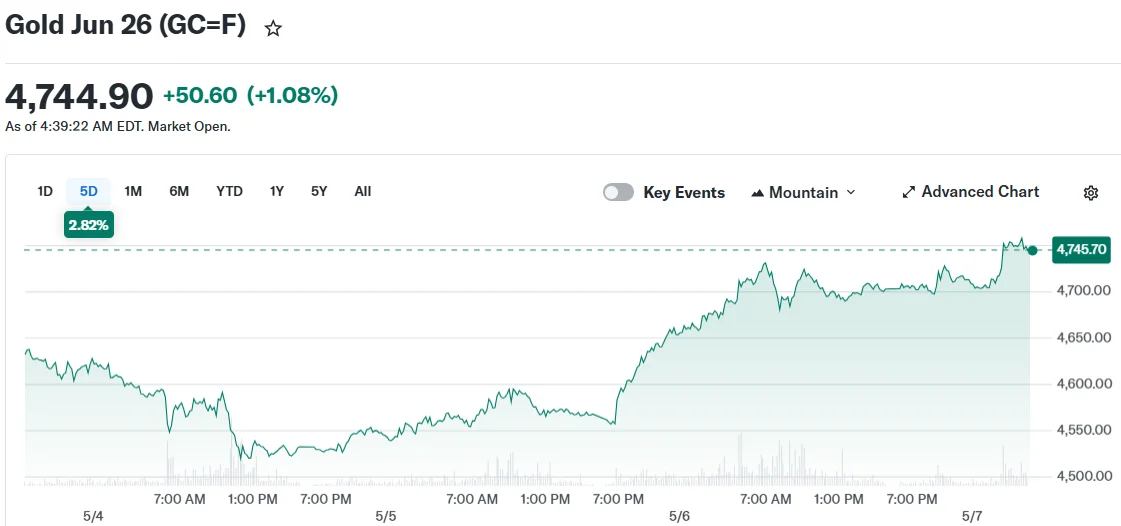
Spot gold advanced 1% to reach $4,736.61 per ounce during Thursday trading. Meanwhile, US Gold Futures contracts for June delivery climbed 1.1% to settle at $4,746.86.
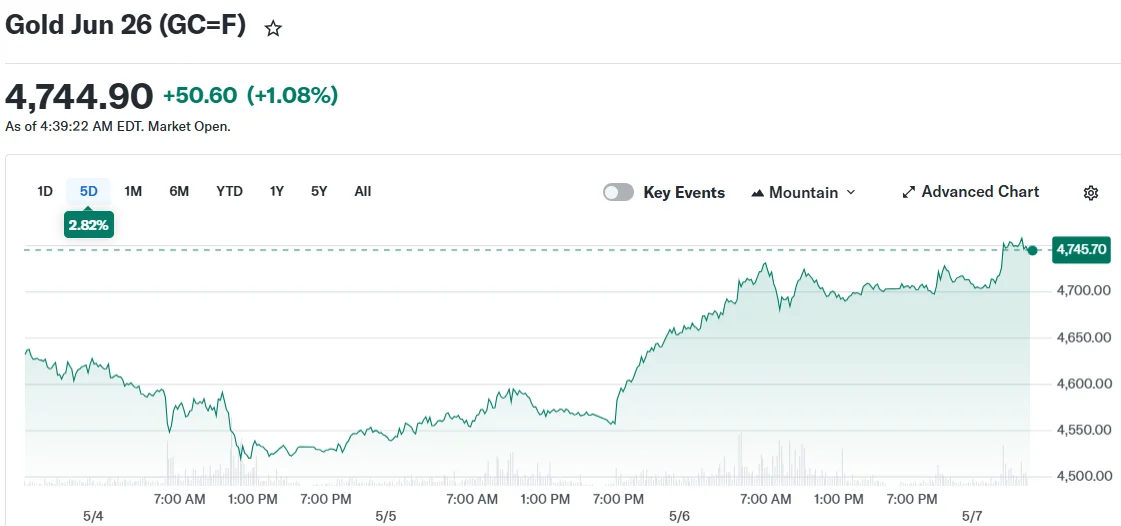
Wednesday witnessed gold’s most impressive single-session performance since the final days of March, with prices surging more than 3%. This substantial rally followed a sharp decline in crude oil prices triggered by encouraging reports of diplomatic advancement in US-Iran discussions.
According to reporting from Axios, the administration was nearing completion of a memorandum of understanding with Iranian officials to resolve the ongoing conflict. Tehran indicated it was evaluating the proposal, while President Donald Trump expressed confidence that Iranian leadership was interested in reaching an agreement.
Trump communicated via social media Wednesday that Washington would conclude its military operations and remove its blockade of the Strait of Hormuz, contingent upon Iranian compliance with specified conditions — though he acknowledged this might be “perhaps, a big assumption.”
Oil experienced a dramatic 7% decline on Wednesday before stabilizing Thursday as traders awaited additional details regarding the ongoing negotiations.
The Connection Between Energy Prices and Precious Metals
Decreasing energy costs diminish the probability of sustained inflation pressures. This development subsequently pressures US Treasury yields downward and undermines dollar strength, creating favorable conditions for gold prices.
Gold is denominated in dollars globally, meaning a softer greenback enhances affordability for international purchasers. Additionally, since gold generates no yield, declining interest rates improve its competitiveness relative to interest-bearing assets like government bonds.
“The potential easing in energy prices gives the Fed more room to cut rates, which is positive for gold,” analysts at ING said in a note.
The US Dollar Index declined 0.1% during Asian market hours Thursday, stabilizing near levels observed before the conflict erupted.
Prior to the recent rally, gold had declined 11% following the outbreak of US-Iran tensions in late February. The blockade of the Strait of Hormuz had propelled energy costs higher and intensified concerns that inflation would remain stubbornly elevated, forcing monetary policymakers to maintain restrictive interest rate policies for an extended period.
Federal Reserve Officials Maintain Vigilance on Price Pressures
Not all observers share the optimistic outlook. Chicago Federal Reserve President Austan Goolsbee and St. Louis Federal Reserve President Alberto Musalem both emphasized that inflation continues to exceed the central bank’s 2% objective.
Strategists at TD Securities cautioned that positive headlines surrounding peace negotiations are “extremely fragile to reversal” given that fundamental positions from both Washington and Tehran appear largely unchanged from previous negotiating rounds.
Silver advanced 1.9% to $78.79 per ounce Thursday, following Wednesday’s impressive 6.2% surge. Platinum registered modest gains, while copper traded relatively unchanged.
Market attention has now shifted to Friday’s US non-farm payrolls release. The employment figures could provide critical insights into whether the Federal Reserve will implement interest rate reductions during the remainder of the year.
Spot gold traded at $4,701.96 per ounce as of 1:59 p.m. Singapore time Thursday.
Bitcoin price rebounded back above $81,000 as investor risk-on sentiment improved after Iran signalled that it was reviewing a U.S. proposal to end the war between the two nations.
Summary
- Bitcoin price rebounded above $81,000 after Iran said it was reviewing a U.S.-backed peace proposal that could reopen the Strait of Hormuz.
- Oil prices declined for a third straight day amid optimism around a potential U.S.-Iran ceasefire, supporting renewed risk appetite across crypto markets.
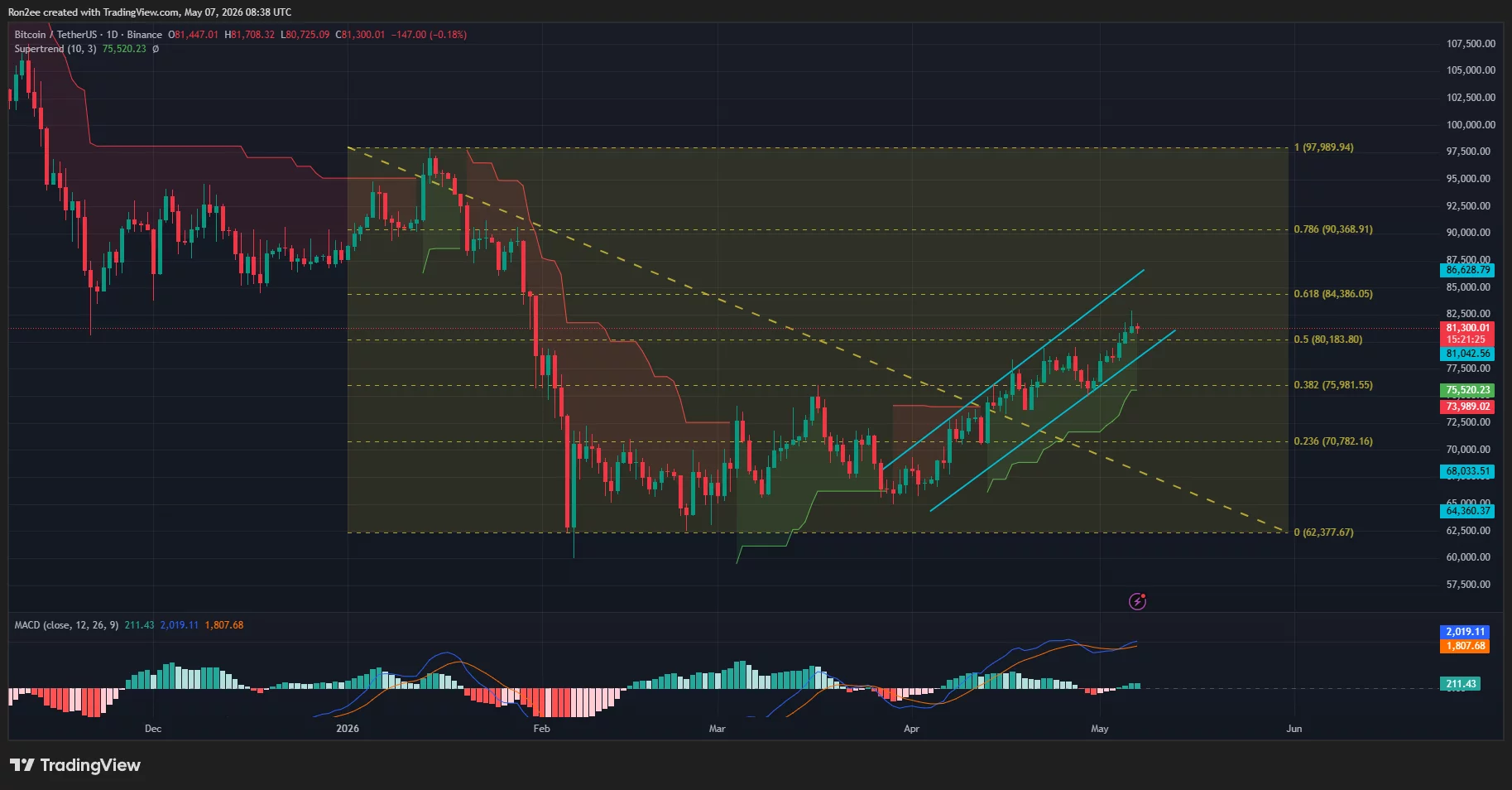
- Bitcoin’s Supertrend remained green while MACD formed a bullish crossover, with traders watching the $84,000–$85,000 zone as the next resistance area.
After falling over 2.3% from a 4-month high of $82,751 on Wednesday to an intraday low of $80,771, Bitcoin (BTC) price rebounded back above $81,500 at press time.
The bellwether reclaimed the $81K figure as oil prices continued to drop for the third straight day, as the U.S. and Iran made more progress toward a peace deal currently “under review” that aims to bring a permanent end to the war between the two nations and ease disruptions at the Strait of Hormuz.
Reports indicate that Iran is mulling over the peace deal presented by the U.S. through Pakistani intermediaries and is expected to provide a formal response within the coming days. The one-page memorandum of understanding includes a comprehensive framework for a ceasefire and the restoration of trade routes. However, it excludes sensitive discussions surrounding Iran’s nuclear program, which would reportedly take place at a later date.
Despite the growing optimism, U.S. President Donald Trump clarified that a deal has not yet been finalized, adding that the U.S. would continue with its attacks on Iran if it fails to comply with the proposed terms.
Crude oil prices, which have largely been affecting global market sentiment since the war began, fell for a third straight day on Thursday, boosting investor confidence in riskier assets. Notably, WTI crude futures fell toward $93 per barrel while Brent oil had fallen 1% to $100.
Safe haven assets such as gold and silver have continued to show volatility as investors rotated capital away from traditional hedges and back into Bitcoin and other crypto assets. Gold price rose over 1.2% today, while silver gained nearly 4%.
The Coinbase premium fell to a negative reading, suggesting a slight cooling of demand from U.S. institutional buyers
Bitcoin price analysis
On the daily chart, Bitcoin price has been trading within an ascending parallel channel pattern ever since late March. It has formed higher highs and higher lows consistently over the past several weeks.
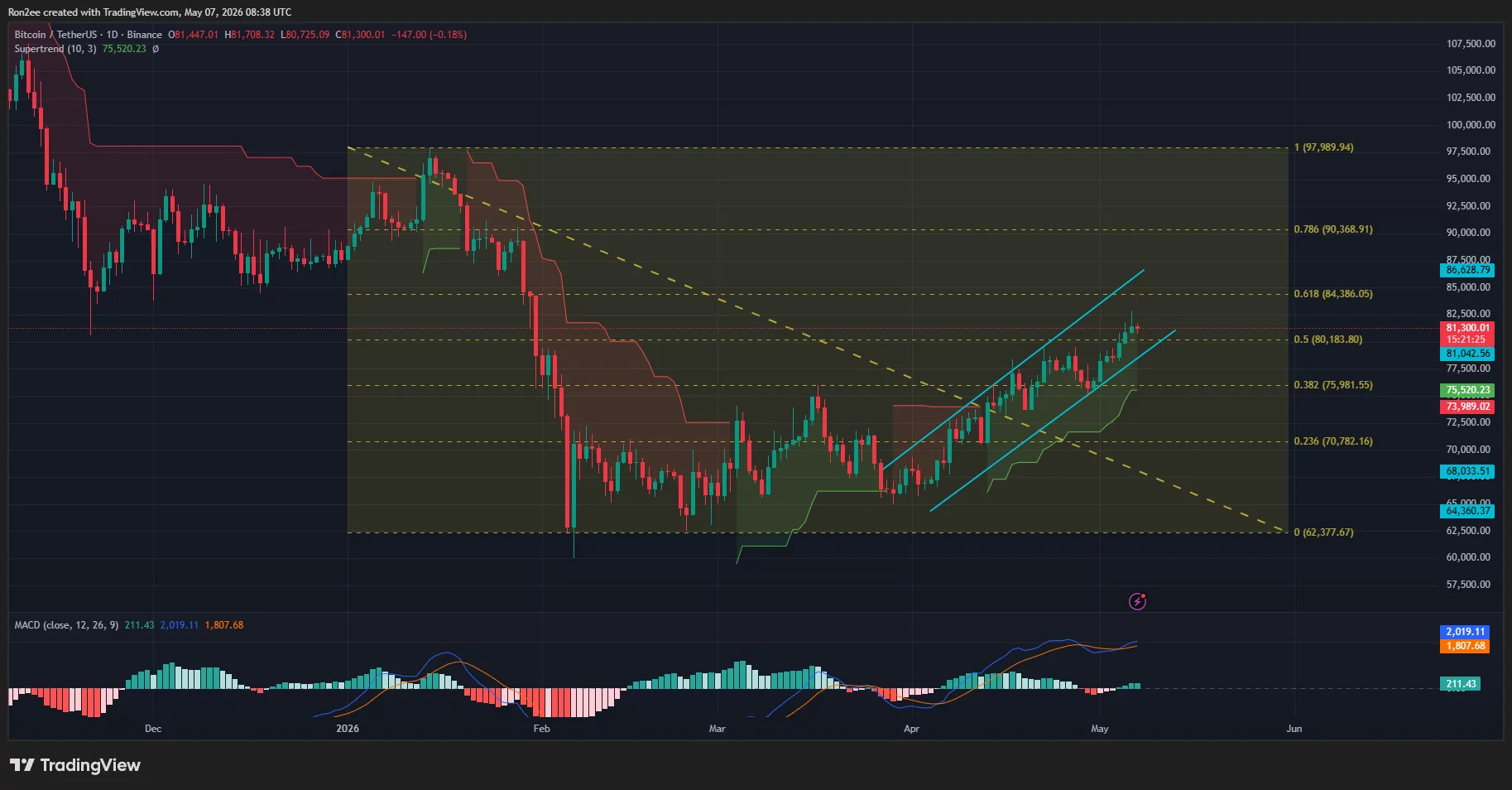
The Supertrend has continued to remain green, a sign that the overall bullish momentum is still firmly in control. At the same time, the MACD lines have formed a positive crossover, which means that buying pressure is increasing in the short term.
Hence, the path of least resistance for Bitcoin lies above the current levels with bulls eyeing the $84,000 to $85,000 range as the next major target. On the contrary, $80,000 remains the psychological floor that must hold to prevent a deeper correction.
Disclosure: This article does not represent investment advice. The content and materials featured on this page are for educational purposes only.

Bitcoin Miners’ Q1 Losses Mount as AI Pivots Accelerate

Gautam Gambhir faces fresh criticism: Ex-Indian cricketer calls him a ‘bully’ | Cricket News

Matt Taibbi Loses His Vexatious SLAPP Suit As Judge Explains What A ‘Metaphor’ Means

Manchester United reach agreement with Casemiro over contract clause amid transfer speculation

US brings back mandatory military draft registration

Steven Gerrard disagrees with Gary Neville over ‘shock’ Chelsea and Arsenal claim | Football

Ot7QUANNY – “Get That Money” (Official Video)

BLACKROCK CEO, LARRY FINK at XRP LAS VEGAS 2026?!?!? #xrp #blackrock #ceo #crypto #xrplasvegas

IRON MONEY (SEASON 7) | AKI & PAW PAW | 2026 LATEST NIGERIAN NOLLYWOOD MOVIE | TRENDING MOVIE
-

 NewsBeat4 days ago
Channel 5 – All Creatures Great and Small series 7 new post
-
 Tech6 days ago
Trump’s 25% EU auto tariff breaches Turnberry Agreement that also covers semiconductors and digital trade
-

 Crypto World1 hour ago
Upbit adds B3 Korean won pair as Base token gains Korea access
-
 Sports6 days ago
Paul Scholes issues Marcus Rashford reality check as agreement emerges over Man United star
-

 Entertainment6 days ago
Met Gala 2026 Rumored Guest List Is Turning Heads
-

 Business6 days ago
Strait of Hormuz Blockade Persists Amid US-Iran Standoff, Sending Oil Prices Soaring
-
Entertainment6 days ago
New on Prime Video in May 2026 — Full List of Movies and Shows
-

 Sports5 days ago
Cavaliers vs. Raptors Game 6 live score, updates, highlights from 2026 NBA playoffs first-round series
-
 Sports5 days ago
David Benavidez responds to team Canelo saying the fight will never happen
-

 Tech6 days ago
Meta ends Sama contract after Kenyan workers report seeing intimate footage from Ray-Ban smart glasses users
-

 Entertainment5 days ago
Kylie Jenner Hit With Second Lawsuit From Ex-Housekeeper
-

 Entertainment5 days ago
Young and the Restless Next Week: Cane Arrested & Matt’s Deadly New Scheme!
-
Entertainment4 days ago
New Netflix Movies in May 2026 — My Top 3 Picks to Stream
-
 Sports5 days ago
IPL 2026: ‘Love you darling’- Hardik Pandya’s reaction to MS Dhoni steals the show |Watch | Cricket News
-

 Business4 days ago
Luka Doncic Injury Update: Doncic’s Hamstring Recovery Slows Lakers’ Hopes Against Thunder: Can He Run Yet?
-
 Crypto World5 days ago
Pi Network Mandates Protocol 23 Upgrade for All Mainnet Nodes Before May 15 Deadline
-

 Sports6 days ago
What Preity Zinta Said After Punjab Kings’ First Defeat Of IPL 2026
-

 Sports6 days ago
Bayern won’t hand bottom side Heidenheim ‘gifts’ despite PSG game
-

 Crypto World4 days ago
Bitcoin mining equities rise in 2026 as BTC lags behind
-

 Entertainment4 days ago
Melissa Joan Hart and More Stars Attend 2026 Kentucky Derby
You must be logged in to post a comment Login