
Business
Thailand Futures Exchange announces TFEX Best Award 2025 for outstanding derivatives brokers

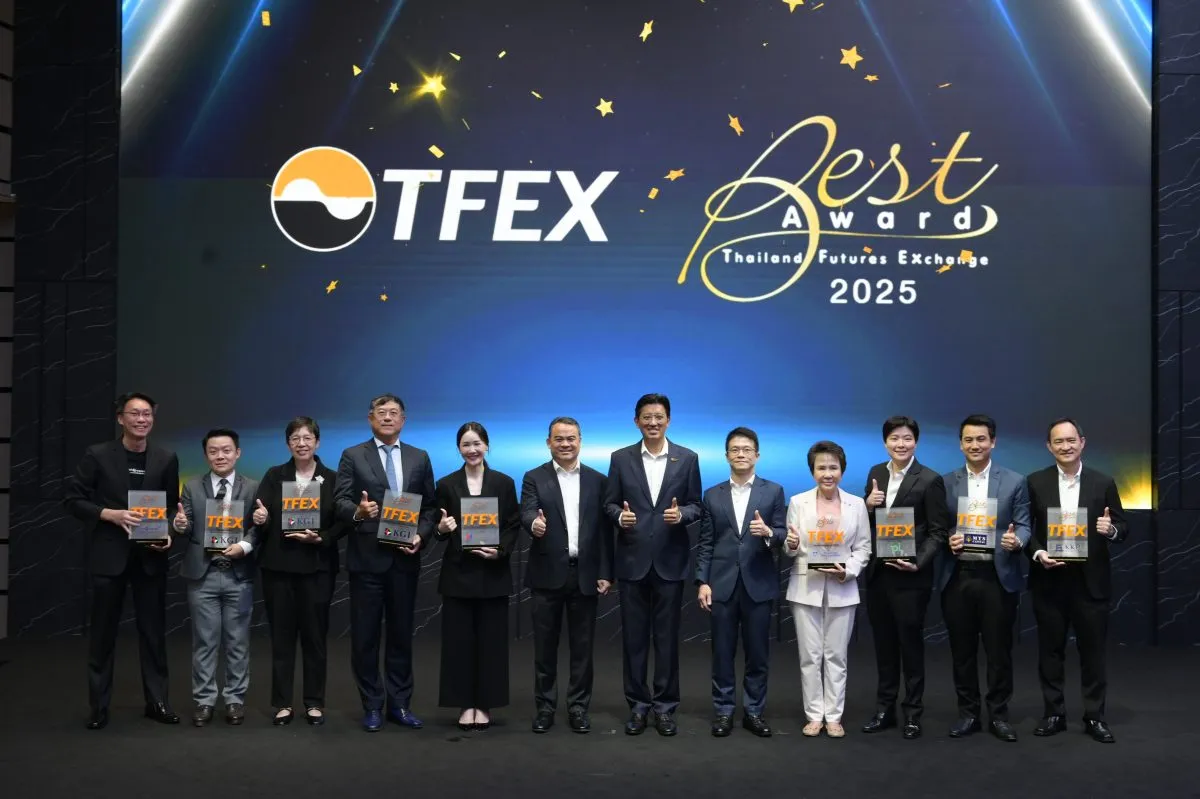
TFEX announced the “TFEX Best Award 2025” to recognize broker excellence. Awards went to MTSGF, PI, KGI, KKPS, YUANTA, CAF, and INVX for outstanding performance and market contributions.
KEY POINTS
- TFEX announced the “TFEX Best Award 2025”, recognizing member companies for excellence in the areas of investor base expansion, market maker performance and active trading.
- Seven awarded brokers were MTSGF, PI, KGI, KKPS, YUANTA, CAF, and INVX
BANGKOK, February 16, 2026 – Thailand Futures Exchange pcl (TFEX) announced the recipients of the TFEX Best Award 2025, an annual recognition program honoring member companies for their excellence and outstanding performance across key areas of the derivatives market. TFEX Managing Director Triwit Wangvorawudhi emphasized that the strong cooperation and continued support from all members have been instrumental in driving the development and growth of Thailand’s derivatives market.
The “TFEX Best Award of Honor 2025” was presented to brokers that have demonstrated exceptional and consistent excellence for at least three consecutive years. The following companies received this distinction:
- MTS Capital Co., Ltd. (MTSGF) – Market Maker Best Performance
- Pi Securities pcl (PI) – Active Agent
- KGI Securities (Thailand) pcl (KGI) – Most Active House and Active Prop-Trading
For the “Best of the Year Award 2025”, the following brokers were recognized for their outstanding achievements based on trading performance and investor base expansion in each category:
- Kiatnakin Phatra Securities pcl (KKPS) – Most Active House Award
- Yuanta Securities (Thailand) Co., Ltd. (YUANTA) – Active Agent Award
- Classic Ausiris Investment Advisory Securities Co., Ltd. (CAF) – Active Prop-Trading Award
- InnovestX Securities Co., Ltd. (INVX) – Popular Agent Award
- KGI Securities (Thailand) pcl (KGI) – Market Maker Best Performance Award
Source : Thailand Futures Exchange announces TFEX Best Award 2025 for outstanding derivatives brokers
Other People are Reading


Form 13D/A TripAdvisor For: 3 April
Vietnam’s Q1 growth cools as Middle East energy shock drives $3.6B trade deficit


I have been involved in the financial world for over 25 years with experience as an advisor, teacher, and writer. I am a full believer in the free-market system and that financial markets are efficient with most stocks reflecting their real current value. The best opportunities for profits on individual stocks come from stocks that are less-widely followed by the average investor or from stocks that may not accurately reflect the opportunities that currently exist in their markets.
Analyst’s Disclosure: I/we have no stock, option or similar derivative position in any of the companies mentioned, and no plans to initiate any such positions within the next 72 hours. I wrote this article myself, and it expresses my own opinions. I am not receiving compensation for it (other than from Seeking Alpha). I have no business relationship with any company whose stock is mentioned in this article.
Seeking Alpha’s Disclosure: Past performance is no guarantee of future results. No recommendation or advice is being given as to whether any investment is suitable for a particular investor. Any views or opinions expressed above may not reflect those of Seeking Alpha as a whole. Seeking Alpha is not a licensed securities dealer, broker or US investment adviser or investment bank. Our analysts are third party authors that include both professional investors and individual investors who may not be licensed or certified by any institute or regulatory body.

Cited by Barron’s as one of the top financial websites to visit on the weekend, Financial Sense (www.financialsense.com) provides educational resources to the broad public audience through a daily podcast, editorials, current news and resource links on salient financial market issues. Begun in 1985 as a local talk radio program, Financial Sense Newshour (www.financialsense.com/financial-sense-newshour) is a weekly webcast with host Jim Puplava and top financial thinkers. Writing staff of Financial Sense includes: Jim Puplava, Chris Puplava, Ryan Puplava, and Cris Sheridan.

Jobs Growth Remains Modest

Why the eurozone growth hit may be more severe this time

Trump administration can’t make colleges provide race-related data, judge rules
Form 13D/A Delek Logistics Partners For: 3 April
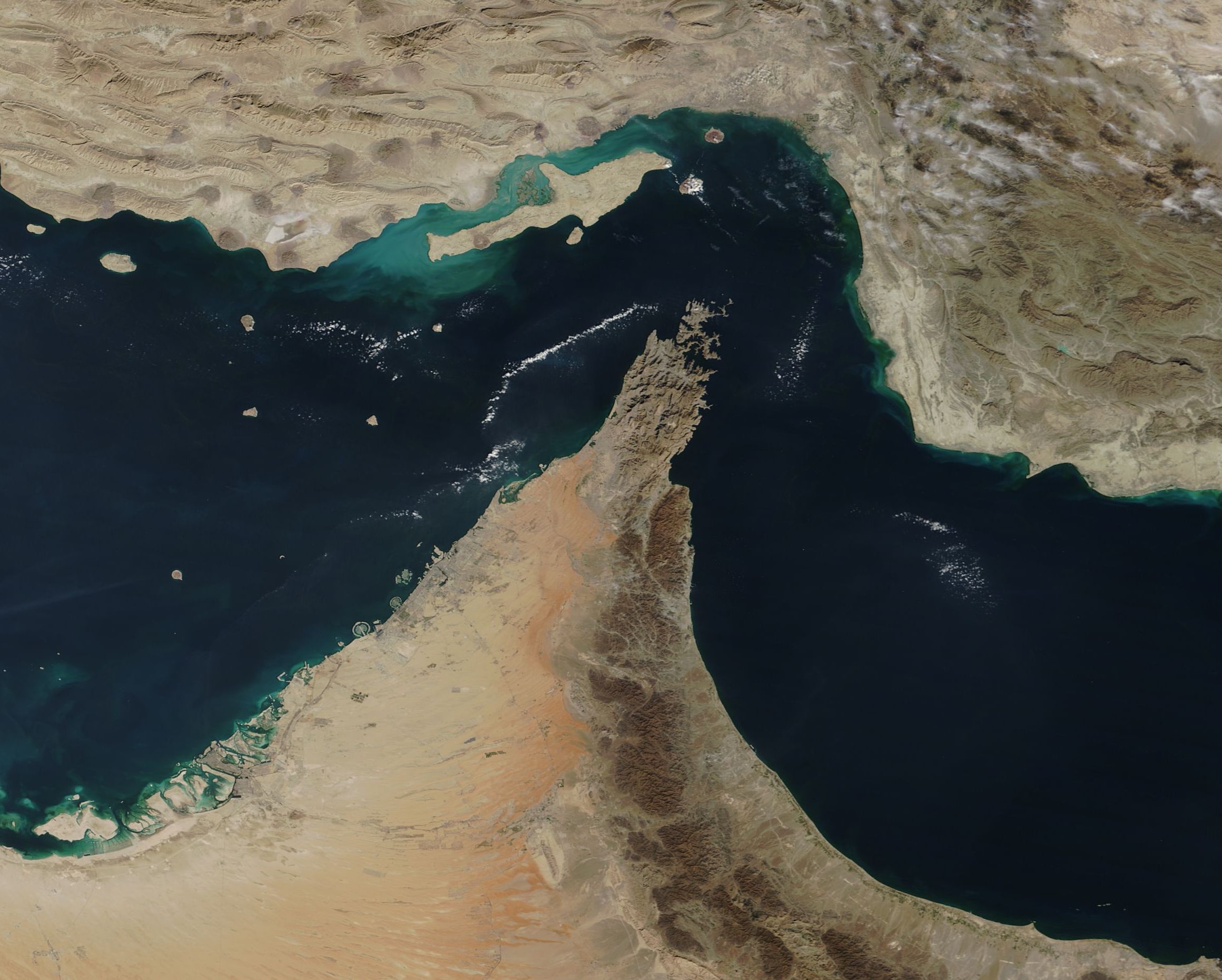
Iran has granted another country safe passage through the Strait of Hormuz, where 20% of the world’s oil passes through. Unfortunately, it’s not Australia.
The Philippines, an archipelagic country in Southeast Asia, is the latest to be granted safe passage by Tehran.
The Philippines Granted Safe Passage
According to a report by 9News, the Philippines was able to secure safe passage for all vessels bound for the country.
“The Iranian Foreign Minister assured the Secretary that Iran will allow the safe, unhindered, and expeditious passage through the Strait of Hormuz of Philippine-flagged vessels, energy sources, and all Filipino seafarers,” the Philippine’s Department of Foreign Affairs said in a statement.
“It will not only ensure the safety of Filipino seafarers operating in the area but will also help ensure energy security for the country,” the statement added. “Given that the Philippines imports the majority of its energy requirements from the Middle East, these assurances from Iran will greatly facilitate the steady delivery of critical oil and fertiliser supplies to the Philippines.”
Which Other Countries Have Been Granted Safe Passage?
The Philippines joins a very, very short list of countries that have been granted safe passage through the Strait of Hormuz.
According to Al Jazeera, vessels from China, India, and Pakistan have been able to pass through the strait.
The same has been the case for certain vessels from Oman, France, and Japan.
A separate Al Jazeera report adds that a Turkish vessel has also been granted safe passage. The report also notes that France and Italy have already requested talks with Iran regarding the safe passage of their vessels.
Iran previously informed the United Nations (UN) that it will allow safe passage for “non-hostile vessels” that coordinate with Iranian authorities first.
As of writing, it remains unclear if Iran considers Australia as non-hostile. Foreign Affairs Penny Wong has said in a statement that “Australia is not taking offensive action against Iran and we are not deploying troops on the ground in Iran.”
“The Australian Government continues to support de-escalation and the resolution of this conflict,” she emphasized. “The longer this war goes on, the more significant the impact on the global economy will be.”


With an investment banking cash and derivatives trading background, Binary Tree Analytics (‘BTA’) aims to provide transparency and analytics in respect to capital markets instruments and trades. BTA focuses on CEFs, ETFs and Special Situations, and aims to deliver high annualized returns with a low volatility profile. We have been investing for over 20 years after obtaining a Finance major at a top university.
Analyst’s Disclosure: I/we have a beneficial long position in the shares of CARY either through stock ownership, options, or other derivatives. I wrote this article myself, and it expresses my own opinions. I am not receiving compensation for it (other than from Seeking Alpha). I have no business relationship with any company whose stock is mentioned in this article.
Seeking Alpha’s Disclosure: Past performance is no guarantee of future results. No recommendation or advice is being given as to whether any investment is suitable for a particular investor. Any views or opinions expressed above may not reflect those of Seeking Alpha as a whole. Seeking Alpha is not a licensed securities dealer, broker or US investment adviser or investment bank. Our analysts are third party authors that include both professional investors and individual investors who may not be licensed or certified by any institute or regulatory body.

UCLA withstands Texas’ late charge, reaches first national championship game with grinding 51-44 win
Form 13D/A TripAdvisor For: 3 April

Shreyas Iyer in trouble: PBKS captain fined, one step away from ban | Cricket News


-

 NewsBeat1 day ago
Steven Gerrard disagrees with Gary Neville over ‘shock’ Chelsea and Arsenal claim | Football
-

 Business1 day ago
No Jackpot Winner and $194 Million Prize Rolls Over
-
Entertainment5 days ago
Fans slam 'heartbreaking' Barbie Dream Fest convention debacle with 'cardboard cutout' experience
-

 Fashion9 hours ago
Weekend Open Thread: Spanx – Corporette.com
-

 Crypto World2 days ago
Gold Price Prediction: Worst Month in 17 Years fo Save Haven Rock
-

 Tech5 days ago
The Pixel 10a doesn’t have a camera bump, and it’s great
-
 Entertainment6 days ago
Lana Del Rey Celebrates Her Husband’s 51st Birthday In New Post
-
Crypto World4 days ago
Dems press CFTC, ethics board on prediction-market insider trades
-

 Tech5 days ago
Avatar Legends: The Fighting Game comes out in July and it looks pretty slick
-

 Sports3 days ago
Tallest college basketball player ever, standing at 7-foot-9, entering transfer portal
-

 Tech4 days ago
EE TV is using AI to help you find something to watch
-

 Fashion6 days ago
Amazon Sundays: Soft Spring Layers
-

 Business2 days ago
Login and Checkout Issues Spark Merchant Frustration
-

 Tech6 days ago
Elon Musk’s last co-founder reportedly leaves xAI
-

 Tech4 days ago
How to back up your iPhone & iPad to your Mac before something goes wrong
-

 Tech4 days ago
Apple will hide your email address from apps and websites, but not cops
-

 Politics4 days ago
Should Trump Be Scared Strait?
-

 Crypto World4 days ago
U.S. rule change may open trillions in 401(k) funds to crypto
-

 Tech4 days ago
Flipsnack and the shift toward motion-first business content with living visuals
-

 Fashion5 days ago
The Best Spring Trends of 2026
You must be logged in to post a comment Login