
Business
Thailand to roll out improved baggage screening measures


From 16 October 2026, Thailand’s CAAT will revise checked baggage procedures to enhance security. Bags may be inspected without owners present. Updates and guidance will be provided by TAT and airlines.
New Baggage Procedures in Thailand
The Tourism Authority of Thailand (TAT) is alerting travelers about updated baggage procedures effective 16 October 2026. Passengers should check guidelines from their airlines, departure airports, and the Civil Aviation Authority of Thailand (CAAT) for the latest on prohibited items and baggage rules. CAAT is implementing these changes to enhance security and streamline the screening of checked luggage, with existing measures remaining active until the transition.
Baggage Inspection Protocols
The new procedures allow for luggage inspection without the owner’s presence if suspicious items are detected. These checks will occur in a controlled area and be recorded for transparency. Notification will follow any inspection, ensuring passengers are informed. Similar protocols are already in use in countries like Singapore, Japan, and the United States. This approach minimizes delays and addresses security concerns without needing passenger involvement.
Recommendations and Resources
CAAT advises using TSA-approved locks and avoiding valuables or essential items in checked luggage. Passengers should also confirm baggage regulations for international connections, as rules differ across countries. Any issues during inspections can be reported to airlines or through CAAT’s complaint system. TAT promises updates if further operational guidelines are released before the new rules commence.
Source : Thailand introduces enhanced baggage screening procedures: information for air travellers

Business
Pinnacle Shares Slide Toward $15 as Investors Weigh Flat Dividend After Record Fund Inflows

SYDNEY — Shares in Pinnacle Investment Management Group Ltd fell sharply in Australian trading, touching levels near $15.09 and down more than 10 percent at one point as investors continued to reassess the stock after a strong full-year profit that left the dividend unchanged.
The multi-affiliate fund manager closed recent sessions well below its early-August spike, after first rallying on fiscal 2026 results and then giving back those gains. Intraday prints in late August showed a low around $15.55 against a prior close near $17.47, a swing consistent with the $15.09, 10.55 percent drop cited in market snapshots. The stock has also traded as high as about $20–$21 over the past year and as low as $12.30.
Pinnacle on Aug. 4 reported statutory net profit after tax attributable to shareholders of $176.7 million for the year ended June 30, up 31 percent from $134.4 million. Underlying profit, excluding a one-off gain on the Pacific Asset Management step-up and net marks on principal investments, was $138.0 million, up 21 percent. Diluted earnings were 78.1 cents a share, up 25 percent. Underlying earnings were 61.0 cents, up 15 percent.
Aggregate funds under management reached $229.4 billion, up 28 percent. Net inflows were a record $33.4 billion. Public-markets FUM was $171.7 billion. Private markets stood at $37.8 billion. Internationally sourced funds were $74.9 billion. Retail FUM was $50.7 billion.
The board held the full-year dividend at 60.0 cents a share, matching fiscal 2025. The final payment is 31.0 cents, franked to 65 percent, for shareholders on the register Sept. 1 and payable Sept. 25. Full-year franking was 72 percent, down from 79 percent. The payout is high relative to underlying earnings once one-off items are stripped out.
That mix — record flows, higher statutory profit, a flat cash return — helps explain why the first-day jump did not last. The shares rose as much as about 8 percent on Aug. 5, briefly near $19.50, then drifted lower through the rest of the month. UBS kept a Hold rating and an A$18 target after the result. Broader consensus targets sit higher, but listed Australian asset managers have been sensitive to performance-fee swings and multiple compression.
Pinnacle’s model is a platform of affiliate boutiques. It takes equity stakes and a share of profits rather than running a single house style. Affiliate revenue at 100 percent was $1.77 billion, including $146.6 million of performance fees, slightly below $153.6 million a year earlier. Five-year outperformance across strategies slipped to 81 percent from 91 percent, with Hyperion’s Australian growth products cited as a drag after weakness in several large technology names.
The company spent the year buying more of what it already likes. It moved to 100 percent of U.K.-based Pacific Asset Management and said PAM had agreed terms to acquire Asset Value Investors. It also increased its holding in Metrics Credit. Managing director Ian Macoun and other executives have framed offshore affiliates and private credit as the next growth engine after two decades of building the Australian franchise.
Those deals absorb capital and management time. Cash, once converted into affiliate equity, is no longer sitting on the parent balance sheet in the same way. Investors who wanted a rising dividend after a 31 percent statutory profit lift instead saw the same 60-cent total as last year and a lower franking rate.
Share count and employment terms have added to the tape. The company appointed Matthew Lamb as an executive director in early August and lodged employment-arrangement details. It has also used employee loan-backed share mechanisms in the past. None of those items alone explain a double-digit down day, but they sit on top of a stock that had already rallied hard on results and then faded.
Pinnacle remains one of Australia’s larger listed multi-boutique managers, with a market value around A$4 billion at recent prices. Ten-year compound growth in FUM has been about 28 percent a year from a much smaller base. That history is why the name still draws growth-oriented buyers. It is also why a flat dividend and softer performance-fee contribution can look like a pause after a long run.
The near-term calendar is simple. The stock goes ex the 31-cent final dividend around the Sept. 1 register date. Settlement of the cash payment follows on Sept. 25. Markets will then look through to first-half 2027 flows, whether PAM-AVI closes cleanly, and whether Hyperion and other public-markets affiliates stabilize versus benchmarks.
A print near $15 after a $19 handle earlier in August is a reminder that Pinnacle trades as a growth stock first and a yield stock second. Record inflows and a 31 percent profit rise were real. So was the decision not to lift the dividend. Traders who bought the result have been selling the aftermath. Anyone who needed income had a date on the register. Everyone else is waiting to see whether $229 billion of funds can keep compounding without another step-up in the check that shareholders take home.

Care Zone is one of several organisations part of the council’s crisis resilience fund, a network helping people with food parcels, advice and other services.
Its volunteers clean and repair donated furniture and other household goods, giving out more than 3,500 larger items last year and 425 smaller items, such as saucepans and tin openers.
Of the 1,900 people who used Care Zone last year, about 845 were children.
This year the warehouse is piled high with brand new mattresses ready for families in need.
“We see families that have basically been in temporary accommodation,” said Wilcox.
“There might be a family of five in one single room sharing a few beds, sleeping on the floor, nowhere to cook.”
He said tackling bed poverty was a priority because of the impact it had on children’s education.
“For children in particular, a good night’s sleep is really essential.
“By giving them a bed, they have a much better chance at doing better in school.”
Anyone can donate items to Care Zone, and it is accessed by people being referred through organisations such as the council or their GP.
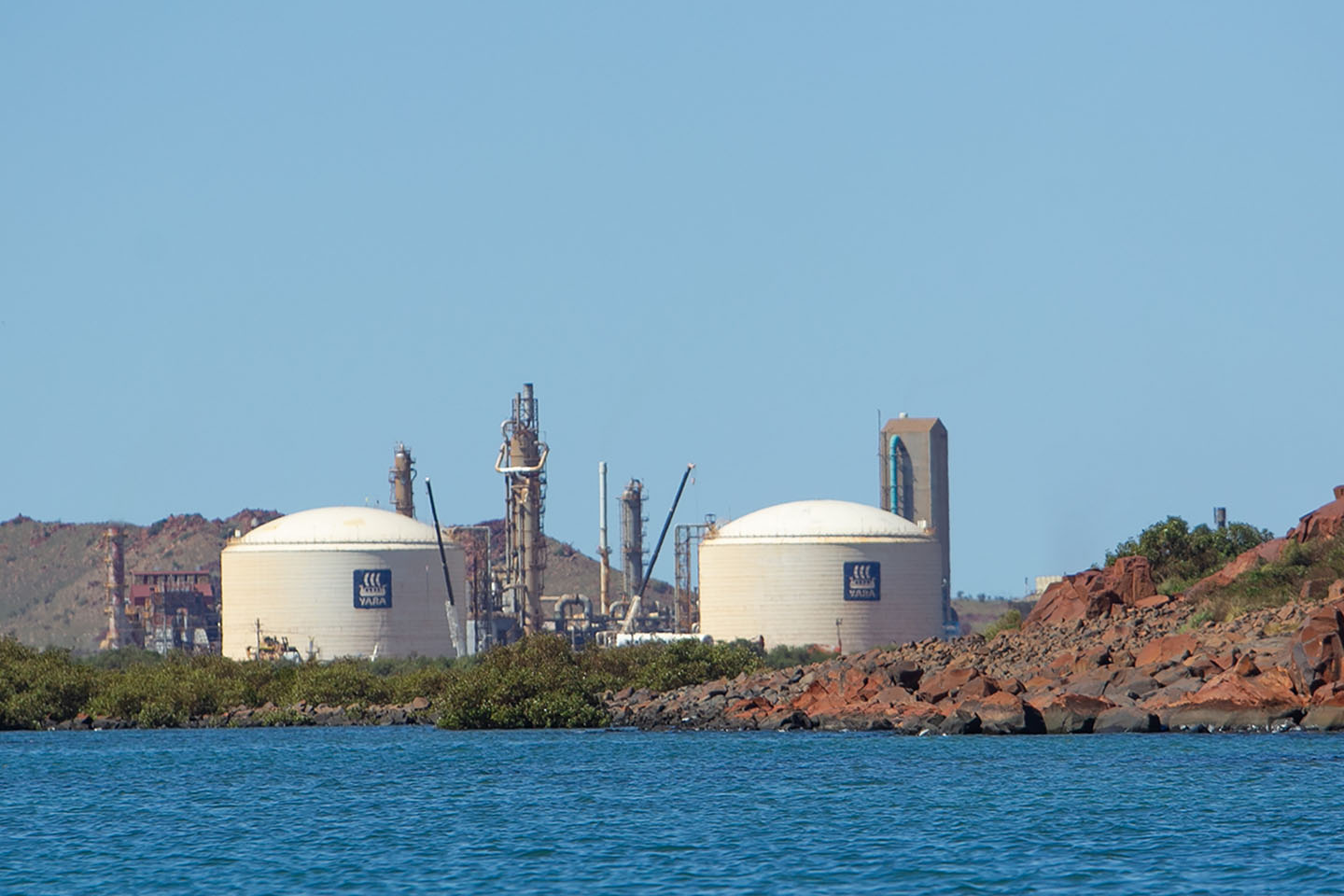
A carbon storage project off the WA coast has piqued the interest of fertiliser giant Yara in its search for a pathway to decarbonise its Pilbara operations.


I have a masters degree in Analytics from Northwestern University and a bachelors degree in Accounting. I have worked in the investment arena for over 10 years starting as an analyst and working my way up to a management role. Dividend investing is a personal hobby and I look forward to sharing my thoughts with the Seeking Alpha community.
Analyst’s Disclosure: I/we have a beneficial long position in the shares of ZTS, ACN, PAYX, NEE, PEP, DRI, MKC, AMT either through stock ownership, options, or other derivatives. I wrote this article myself, and it expresses my own opinions. I am not receiving compensation for it (other than from Seeking Alpha). I have no business relationship with any company whose stock is mentioned in this article.
Seeking Alpha’s Disclosure: Past performance is no guarantee of future results. No recommendation or advice is being given as to whether any investment is suitable for a particular investor. Any views or opinions expressed above may not reflect those of Seeking Alpha as a whole. Seeking Alpha is not a licensed securities dealer, broker or US investment adviser or investment bank. Our analysts are third party authors that include both professional investors and individual investors who may not be licensed or certified by any institute or regulatory body.

Yes. Corporate subscriptions are available for teams and organisations, with discounted rates as user numbers increase. Pricing starts from $1,625 + GST per user.
Get in touch
to discuss the right option for your organisation.
Business News subscriptions are used by executives, investors, consultants and professionals who need to stay informed and make better decisions about the WA market. When you subscribe you’ll get
- Unlimited access to WA’s most trusted business journalism
- Data & Insights — detailed profiles of WA companies, people, projects and deals
- MyBN — a personalised feed based on the companies, people and sectors you follow
- Special publications and industry reports
- Daily and weekly email newsletters
Data & Insights is a research tool built specifically for the WA market. It draws on more than 30 years of Business News reporting, updated regularly to reflect what’s happening now. Use it to:
- Look up detailed profiles of WA companies, including financials, directors and ownership
- Find decision-makers and track their career movements
- Research live and completed projects across WA industries
- Monitor deals, appointments and market activity
- Access industry rankings and league tables
Data & Insights is updated daily by our dedicated research team, which uses the latest announcements, ASX filings and editorial coverage to keep our person, company, list and project records up to date.
Business News welcome all opportunities to make our dataset accurate, complete and current, so if you have an update request, please email the team at
general@businessnews.com.au, and we’d be happy to assist.
MyBN
is part of every subscription. It’s your personalised view of Business News. You can follow the companies, people, sectors and projects that matter to you, and get a news feed and alerts tailored to your interests. You can save articles to read later and retain only what you need.
Only subscribers have full access to all content on the Business News website.
If staying informed about the WA economy is part of your job, and/or you’re looking for networking opportunities in WA, Business News is built for you.
Business News subscribers are:
- Executives and directors tracking competitors, clients and market movements
- Investors and advisers researching companies, deals and industry trends
- Consultants and professionals staying across sectors relevant to their clients
- Business owners looking for leads, context and market intelligence
Most Business News publications cover national or global markets. Business News is focused entirely on Western Australia, which means the journalism, the data and the intelligence are all built around WA companies, people and projects — not adapted from a national feed. Data & Insights, included with every subscription, combines more than 30 years of WA-specific editorial research with live business data. There’s no comparable product for the WA market.
The Morning Digest Email provides a comprehensive wrap of the major headlines, relevant to WA business, and includes with a snapshot of the overnight news covering oil, gold and ASX-listed companies.
The Afternoon Wrap Email focuses on the news covered by our team of journalists during the course of the working day, including exclusive stories and analysis, all of which relates to WA business and the local economy.
The BN Weekender Email contains a wrap of the Business News from the week that was, highlighting the top stories in each area of WA business.
Sign up for free.
We’re happy to help.
Get in touch
and our team will come back to you.

OPINION: Australia must be prepared for conflict that’s increasingly defined by more than just ships, aircraft and soldiers.

SK Hynix tests double-top at KRW 1,792,000: Live levels
Business
10 Emotional Tributes From Teammates and World Leaders to Lionel Messis Argentina Retirement


IBTimes US
Lionel Messi’s announcement that he is retiring from Argentina’s national team after 21 years drew an immediate wave of tributes Monday from teammates, world leaders and figures across the sport, with many describing the moment as the end of an era in Argentine and world soccer.
Messi, 39, revealed his decision in an emotional Instagram post, writing that he had made up his mind two days after Argentina’s 1-0 extra-time loss to Spain in the 2026 World Cup final, though he chose to keep the announcement private until after the death of his father, Jorge Messi, on Aug. 8. Here are 10 of the reactions that followed.
- David Beckham, the former England captain who owns Inter Miami alongside Messi’s club team, kept his response brief, posting three Argentina-colored heart emojis in reply to Messi’s announcement, according to Yahoo Sports.
- Rodrigo De Paul, Messi’s Argentina and Inter Miami teammate, wrote a message of pure gratitude in the comments of Messi’s post. “Just thank you, the greatest of all time, thank you for making us so, so happy, you can’t imagine how many smiles you brought!!” De Paul wrote, according to AFP.
- Angel Di Maria, who won the 2022 World Cup alongside Messi before retiring from international duty himself, focused on Messi’s choice to represent his country despite his global stature. “We will be grateful to you for the rest of our lives for being Argentine, for taking Argentina to the top of the world, and for choosing to be Argentine when you could easily have chosen something else. Thank you, Captain. Thank you for everything. The greatest in history,” Di Maria wrote, in comments translated from Spanish and reported by Yahoo Sports.
- Antonela Roccuzzo, Messi’s wife, shared a personal tribute to her husband’s perseverance. “I saw you keep going when things didn’t work out and always try again. And after so many years, I was also lucky enough to see you fulfill your dreams and live some of the happiest days of our lives. You deserved this story and so much more. We love you infinitely,” she wrote in Spanish, according to ESPN.
- Argentina President Javier Milei offered a characteristically blunt message of thanks on Instagram. “Thank you very much, impossible man,” Milei wrote, according to ESPN, with the second half of the message written in all capital letters in the original Spanish post.
- FIFA President Gianni Infantino praised Messi’s broader impact on the sport, describing his international career as “extraordinary” and crediting him with having “inspired millions of people and redefined our sport,” according to a statement reported by outlets including a Kansas City television station affiliate.
- Gary Lineker, the former England striker and prominent soccer broadcaster, framed Messi’s role for Argentina in terms extending well beyond the sport itself. “You didn’t just play for Argentina, you carried their hopes, dreams and expectations for two decades,” Lineker wrote, according to ESPN.
- Claudio Tapia, president of the Argentine Football Association, delivered one of the more evocative tributes among federation officials, according to a report from Reuters cited by ClutchPoints. Tapia called Messi “the captain of our dreams,” adding, “that kid, ‘La Pulga’, that alien… made us believe in magic. The Argentina national team shirt is your flag. And our people’s love for you will last forever.”
- Enzo Fernandez, who reached two World Cup finals alongside Messi, reflected on the emotional throughline of Messi’s international career, referencing his own reaction as a teenager when Messi first announced a national team retirement back in 2016. “Leo, when you said you were leaving the national team back then, I was really sad,” Fernandez wrote, according to Sports Illustrated.
- Lisandro Martinez, another current Argentina teammate, posted an emotional video reaction to Messi’s retirement that circulated widely on social media, according to a report from the Deseret News, which noted that a separate teammate remarked that “nothing ever prepares you for these moments.”
The outpouring of tributes reflects the scale of Messi’s international legacy. He finishes his Argentina career with 125 goals in 207 appearances, making him the country’s all-time leading scorer and placing him second only to longtime rival Cristiano Ronaldo, who has 146 international goals and has not yet announced his own retirement from Portugal duty, among men’s international scorers worldwide. Messi led Argentina to the 2022 World Cup title in Qatar and briefly held the record for most career World Cup goals during this summer’s tournament, before finishing one goal behind France’s Kylian Mbappe in that particular tally.

RomoloTavani/iStock via Getty Images

By Moira Woodhull
Constrained supply and persistent consumer demand for beef have led to near record-high prices across the cattle value chain. Typically, high-price environments eventually spur herd expansion driven by producer decisions. This ultimately brings forth an expanding supply and puts downward pressure on prices, transitioning into a lower price environment for the cattle industry.
Instead, challenges like sustained drought, high cost of feed and the New World screwworm outbreak have disrupted this cycle, stifling supply while prices remain high. Recent data suggests that consumers may finally be reaching their ceiling when it comes to retail beef prices, supported by growing production and availability of broilers (chicken). As the Mexican border begins its phased reopening to livestock trade in August, the industry will continue to closely watch for signs that the cattle cycle has reached its bottom.
Consumer Demand During the Grilling Season
Summer marks the traditional peak of grilling season. Holidays like Memorial Day, the Fourth of July and Labor Day drive significant short-term spikes in meat demand, often followed by post-holiday lulls. While consumer demand for beef remains resilient, the broader market continues to face significant supply constraints, sustaining near-record retail prices.
Cattle Cycle Contractionary Period
The cattle cycle represents the multi-year expansion and contraction of calf and cattle inventory in the United States as producers respond to price signals in the market. High prices incentivize producers to retain heifers and expand their herds to capitalize on potentially higher returns. Conversely, low prices encourage producers to send animals through the supply chain for processing to limit operational losses.
Cattle production requires substantial capital, including land and feed, among numerous other costs, like equipment and veterinary care. Herd expansion is a multi-year investment, as it often takes up to three years from the moment a producer decides to retain a heifer until her offspring reaches an average market weight of 1,200 to 1,500 pounds.
Given the lengthy process of raising calves and the significant capital required (not to mention the opportunity cost of holding back heifers and forgoing immediate sales), producers are incentivized to expand their herd during high-price environments, where the investment is more likely to pay off.
In low-price environments, producers are discouraged from retaining cost-intensive animals to receive relatively lower returns. Instead, calves are often moved to backgrounding or feedlot operations to continue gaining weight until they reach market weight, at which point they are ready for processing.
As cattle producers respond to price signals, they decide whether to expand their herd or push cattle through the value chain. Because of this long lifecycle, it takes years before impacts to supply are visible in cattle inventories.
With a nine-month gestation cycle for calving, weaning of calves and time spent grazing and feeding, it can take up to three years for new supply to appear in the market. That is, a producer may decide today to retain heifers with the aim of herd expansion, but an increase in slaughter-ready inventory won’t be apparent until multiple years later.
Currently, the cattle cycle is in a contractionary phase. Herd sizes are near historic lows, severely constraining market supply. Simultaneously, consumer demand has remained strong for beef products. This combination of herd lows and strong consumer demand has sustained near record-high prices across the supply chain.
Under normal conditions, today’s elevated prices would typically spur expansion. Instead, severe drought conditions restricting available pasture for grazing, elevated feed costs and the closure of the Mexican border to prevent the spread of New World screwworm have posed challenges to herd rebuilding. While the USDA has begun a phased reopening of the Mexican border, the supply impact will take time to materialize.
Low Supply, Strong Demand and Protein Substitution
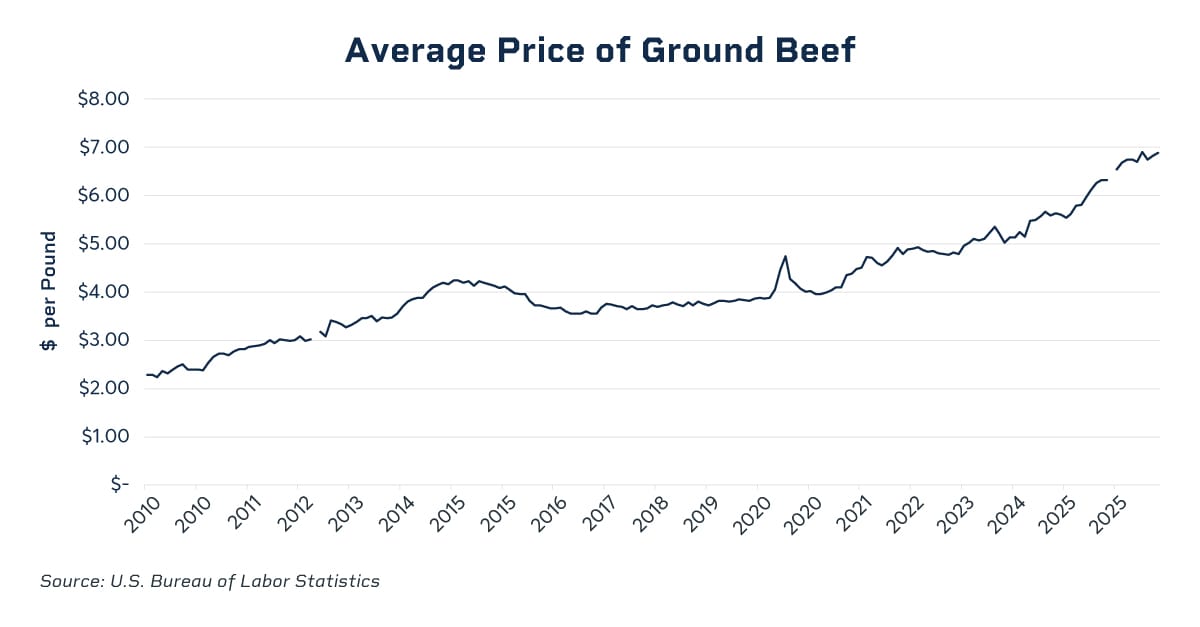
Constrained supply and sturdy demand have sustained high retail prices, evident in the trend of rising ground beef prices. Given these sustained high prices in beef, consumers now appear to be pivoting toward other, comparatively lower-priced alternatives, like chicken.
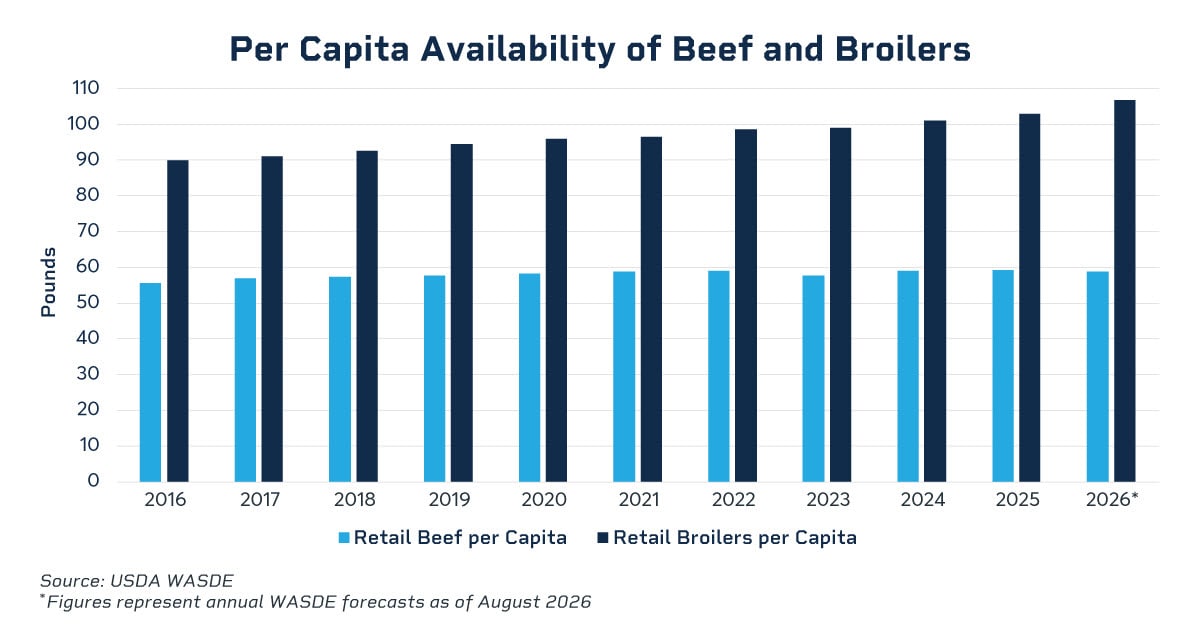
The USDA’s August 2026 World Agricultural Supply and Demand Estimates (WASDE) report projects annual beef production at 24,967 million pounds, down nearly 4% from 26,003 million pounds in 2025. On the contrary, 2026 broiler production is projected to reach 49,623 million pounds, up 3.4% from 48,006 million pounds in 2025.
Per-capita domestic availability, or “disappearance”, is used as a proxy for domestic consumption and currently reflects gradual shifts in the beef and broiler markets. As of August 2026, the USDA forecasts per-capita retail beef availability falling slightly and per-capita retail broiler availability trending upward. Even so, beef demand remains resilient, showing minor signs of softening despite historical price headwinds.
Managing Risk with CME Group Lean Beef Trim Futures and Options
As the industry navigates supply challenges and uncertainty over when the cattle cycle will bottom, tight inventories are contributing to sharp price swings at the processing level. Key processing inputs to ground beef continue to experience price volatility, as seen in price swings for both 50% lean beef trim and 90% lean beef trim.
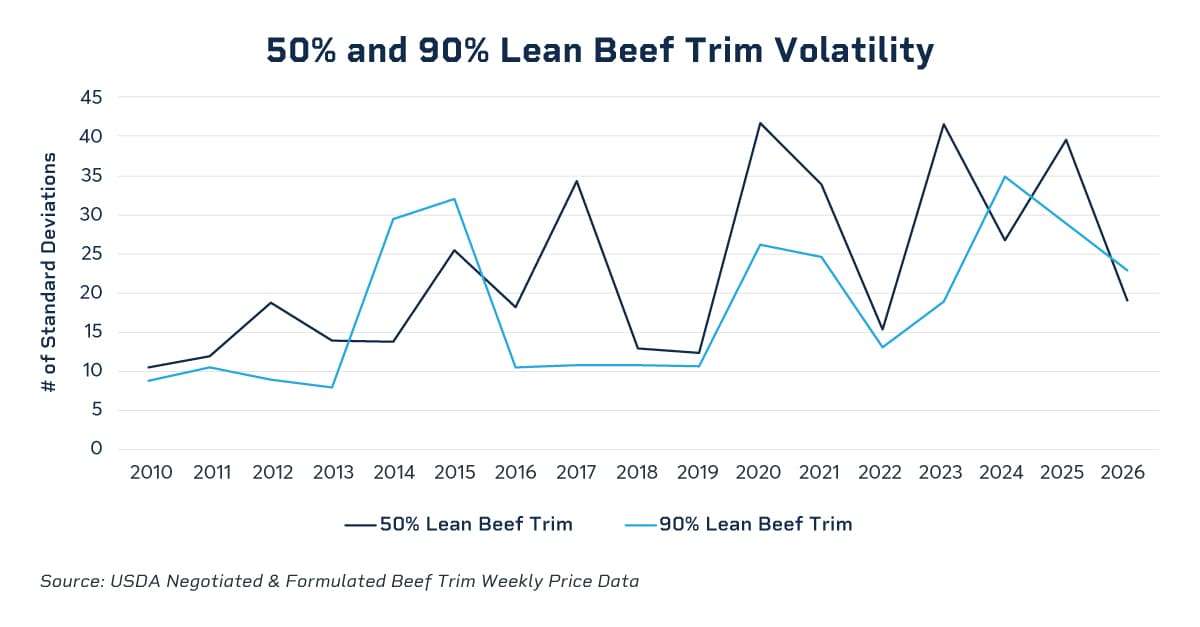
With the introduction of 50% and 90% Lean Beef Trim futures and options, CME Group now offers market participants hedging tools across the entire beef value chain, from feeder and live cattle to beef trim.

Amazon secretly overcharged more than a million advertising customers by manipulating the online auctions it uses to set ad prices, according to a lawsuit filed by the US Federal Trade Commission and a bipartisan group of 22 states.
The suit, filed on Monday in the company’s home state of Washington, claims the alleged scheme has likely netted Amazon $20bn from advertising customers since 2019. “Amazon overrides and replaces the actual auction results with higher prices set by Amazon to increase its profits,” the complaint states.
Amazon said in a statement that it “strongly disagrees” with the premise that it misled advertisers and called the suit “misguided”.
The case centres on the auctions behind the Sponsored Products and Sponsored Brands ads that brands and sellers compete to place when consumers search for products using keywords on Amazon’s ecommerce platform. Those placements are auctioned off to the highest bidder.
The complaint accuses Amazon of secretly charging advertisers more in so called “second price” auctions, in which the winning bidder expects to pay one cent more than the next highest bid. In practice, the lawsuit alleges, Amazon has charged its Sponsored Products advertisers their own winning bid close to 80 per cent of the time. The methods were spurred, the complaint says, because the company “was unhappy about how much revenue its advertising auctions were generating”.
FTC chairman Andrew Ferguson said: “Amazon has millions of advertising customers who were misled into paying significantly higher prices.” The regulator says more than 500,000 small and medium-sized businesses are among the advertisers affected.
Amazon responded that the FTC “fundamentally misunderstands how advertisers operate”. “Advertisers adjust bids based on real-world performance, not descriptions of auction mechanics,” the company said. “Average winning bids fell 50% from 2019 to 2025 on Sponsored Products search ads, and roughly 92% of placed ads are not given to the highest bid.”
The FTC, a US consumer watchdog, and the states also argue that shoppers have been harmed because the extra costs are passed on. “Consumers are suffering, have suffered, and will continue to suffer substantial injury as a result,” the complaint states. Amazon rejected that framing: “The FTC wants the public to believe this case is about higher prices for consumers. It is not.” The company’s shares fell after the lawsuit was announced, closing 2.5 per cent lower on Monday.
For the many UK small businesses that sell through Amazon, the cost of reaching customers on the platform is a familiar grievance. Researchers have previously reported that Amazon tripled sellers’ fees in Europe while advertising costs surged, and more than 200,000 UK third party sellers are pursuing a £2.7bn claim against the company at the Competition Appeal Tribunal over alleged abuse of its dominant market position.
The new case also extends a long running fight between Amazon and the US regulator. The FTC and 17 state attorneys general had already sued the company over claims it used monopoly power to inflate prices and punish sellers who offered lower prices elsewhere. And last year Amazon paid $2.5bn to settle FTC allegations that it enrolled millions of consumers in its Prime subscription service without their consent and knowingly made it difficult to cancel, a sum that included civil penalties and consumer refunds.

Jamie Young
Jamie Young is Senior Reporter at Business Matters, covering SME finance, employment law and Westminster policy since 2016. He has reported on every Budget and Autumn Statement since 2018, helped make sense of the ‘covid era’ and the bounce-back loan scheme from launch through the fraud investigations, and broke the magazine’s coverage of the 2024 late-payment reforms. He joined Business Matters straight from completing his BA in Administration from Exeter University and is NCTJ-qualified. Reach him at jyoung@cbmeg.co.uk

Sadiq Khan v James Cleverly: Tories have heavyweight London mayor candidate but odds are on Labour win

Pinnacle Shares Slide Toward $15 as Investors Weigh Flat Dividend After Record Fund Inflows
Largest XRP ETF Crosses $500 Million in Assets Just 9 Months After Launch





-

 Crypto World6 days ago
SpaceX stock could rise 75% to $240, JPMorgan says
-

 Fashion4 days ago
Weekend Open Thread: Maeve – Corporette.com
-

 Crypto World4 days ago
Bitcoin’s 22% rally now needs real demand to outlast Treasury liquidity boost
-

 Crypto World6 days ago
Warsh Jackson Hole keynote puts financial innovation first
-

 Business4 days ago
Salesforce Stock Soars 19% as Blowout Earnings and Agentforce AI Growth Silence Software Skeptics
-

 Crypto World5 days ago
Elon Musk Grok Bot Promise: We Will Make You Whole if AI Loses Your Money
-

 Crypto World6 days ago
Did Trump Just Move SpaceX Stock With One Truth Social Post?
-

 Business4 days ago
Apple Confirms September 9 Keynote and Reveals Its Full Pre-Order Schedule
-

 Business3 days ago
Onto Innovation Stock: AI’s Next Bottleneck Is Yield (NYSE:ONTO)
-
 NewsBeat5 days ago
Lindsay Clancy jury braces for closing arguments as judge tells court: ‘You’ve heard all the evidence’ – Live updates
-

 Business6 days ago
Walmart takes aim at younger shoppers with new fashion brand
-

 Crypto World3 days ago
Bitcoin price tests $82K resistance as Brandt stays long
-

 Business6 days ago
Thailand’s Eastern Economic Corridor Capital City (EECiti): Key Developments and Investment Opportunities
-

 Crypto World5 days ago
NVIDIA revenue hits $96.2B as AI demand doubles
-

 Business4 days ago
iPhone 18 Pro Pre-Orders Could Shift to Saturday as Apple Reportedly Avoids September 11 Anniversary
-

 NewsBeat6 days ago
Trump’s trade truce with China faces test with Iran effort
-
 Crypto World5 days ago
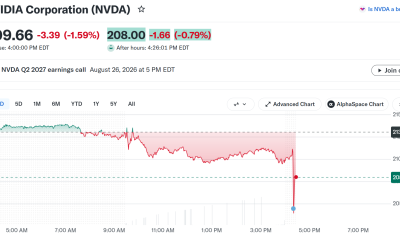
Nvidia Q2 Earnings Reveal $96.2 Billion Beat, So Why Is NVDA Falling?
-

 Tech5 days ago
Claude Cowork gets its own browser that doesn’t touch your tabs, bookmarks, or saved passwords
-
 Tech2 days ago
Hugging Face built a $4.5 billion empire on free AI models. Now Nvidia is buying it for $12.9 billion
-

 Crypto World4 days ago
Truflation calls for Fed rate cut after PCE forecast
You must be logged in to post a comment Login