
Business
The Czech Tennis Phenom Breaking Into the WTA Top 100


At only 20 years old, Sara Bejlek has already established herself as one of the most promising young talents on the WTA Tour. The Czech left-hander, once the world’s No. 4 junior, has transitioned to the professional ranks with impressive speed and maturity. In 2026 she sits inside the top 100 for the first time in her career and is widely regarded as the next big breakout star from the tennis powerhouse nation that produced Petra Kvitová, Karolína Plíšková, Barbora Krejčíková and Markéta Vondroušová.
Here are the 10 essential things every tennis fan should know about Sara Bejlek right now.
1. Record-Setting Junior Career
Bejlek was one of the most dominant juniors of her generation. She reached a career-high junior ranking of No. 4 in the world and won four ITF junior titles, including back-to-back Grade 1 titles in 2021 (Czech Indoor and Czech Open). She made the semifinals of the 2022 Australian Open juniors and the quarterfinals of the French Open juniors the same year. Her junior highlight came at the 2021 US Open juniors, where she reached the final before falling to Robin Montgomery.
She turned pro full-time at 16 and never looked back.
2. Fastest Climb to the WTA Top 200
Bejlek cracked the WTA top 200 for the first time in May 2023 at age 17 after winning three consecutive ITF W60 titles on clay (Prerov, Otočec, Prague). She became the youngest Czech woman to reach that milestone since Karolína Muchová in 2015. By the end of 2024 she was ranked No. 139 and in 2025 she finished the year at No. 92—her first top-100 season.
3. Clay-Court Specialist with Serious Power
Bejlek is a classic clay-court player with heavy topspin groundstrokes, excellent movement, and a dangerous lefty forehand that can flatten out into winners. Her average forehand speed on clay exceeds 78 mph, placing her among the fastest-hitting teenagers on tour. She won 78% of her main-draw ITF matches on clay between 2022 and 2025.
She is particularly dangerous when dictating with her forehand from the baseline and using sharp angles to open the court.
4. Breakthrough 2025 Season: First WTA Quarterfinal & Top-100 Finish
2025 was the breakout year. Bejlek reached her first WTA quarterfinal at the Prague Open in July (lost to Linda Nosková), made the third round of the US Open as a qualifier (defeating former top-20 player Elise Mertens), and finished the season inside the top 100 for the first time. She won two ITF W75 titles and reached the final of an ITF W100, posting a 52–19 win-loss record.
5. First WTA-Level Win Over a Top-20 Player
In the second round of the 2025 US Open, Bejlek defeated world No. 18 Elise Mertens 6–4, 7–5 in a tense three-set battle that lasted 2 hours 18 minutes. It was her first victory over a top-20 opponent and the biggest win of her career at the time. She followed it with a gritty third-round loss to eventual semifinalist Jessica Pegula.
6. Mental Toughness & Clutch Play
Bejlek has already shown championship-level composure in deciding sets. In 2025 she won 14 of her last 17 deciding sets and converted 68% of her break points in matches that went the distance. Coaches and opponents frequently praise her “ice-in-the-veins” mentality on big points.
7. Left-Handed Advantage & Serve Potential
As a lefty, Bejlek creates unique angles with her forehand and serve that right-handers find difficult to read. Her first serve averages 105–108 mph and she has been working intensively on adding kick and slice variety to her second serve. Analysts believe her serve could become a significant weapon once she adds more consistency and placement.
8. Czech Tennis Factory Continues to Produce
Bejlek is the latest product of the Czech tennis development system that has produced more Grand Slam champions per capita than any other nation over the last 15 years. She trains at the Prague Tennis Academy under coach David Škoch (former Davis Cup player) and frequently practices with Karolína Muchová and Linda Nosková. The Czech Republic now has six women ranked inside the top 100 in early 2026 — the most of any country outside the United States.
9. Off-Court Personality & Growing Brand
Bejlek is known for her dry humor, love of heavy metal music (she has Metallica and Slipknot tattoos), and candid interviews. She frequently engages with fans on social media and has built a loyal following in Central Europe. Her signature celebration—a quick double fist-pump followed by a point to the sky—has become recognizable.
She signed endorsement deals with Nike, Babolat, and a Czech energy-drink brand in 2025 and is starting to appear in fashion campaigns in Prague.
10. 2026 Goals: Top 50, First WTA Title & Grand Slam Fourth Round
Entering the 2026 season ranked No. 92, Bejlek is projected by most analysts to finish the year inside the top 50. Her goals are clear: win her first WTA title, reach the fourth round of a Grand Slam, and break into the top 40. With a healthy clay-court swing (she excels in Europe’s spring swing) and continued improvement on hard courts, many believe 2026 could be the year she truly announces herself as a top-30 player.

Business
Dow Jones Falls 337 Points as Geopolitical Tensions and Surging Oil Prices Fuel Market Volatility
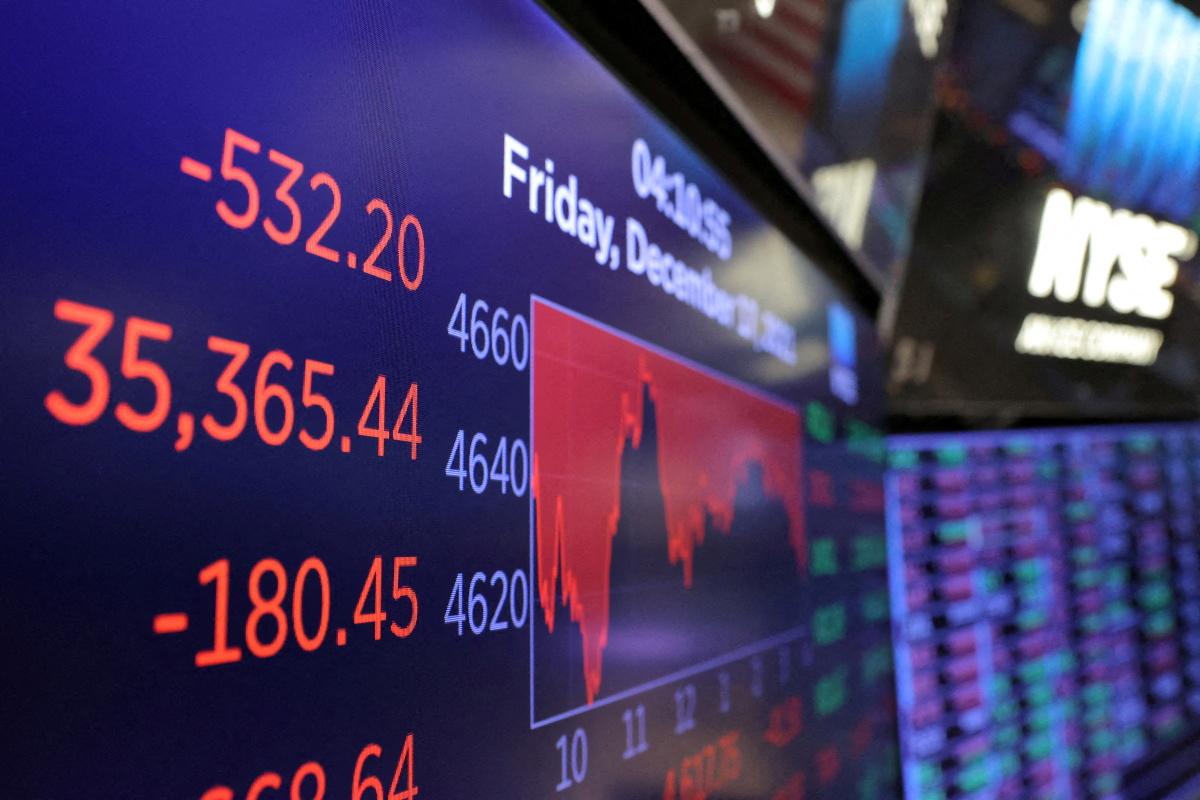
The Dow Jones Industrial Average dropped 337.36 points Friday, closing at 45,622.75 amid persistent worries over the U.S.-Iran conflict and a sharp rise in oil prices that heightened inflation concerns and clouded the outlook for Federal Reserve interest rate cuts.
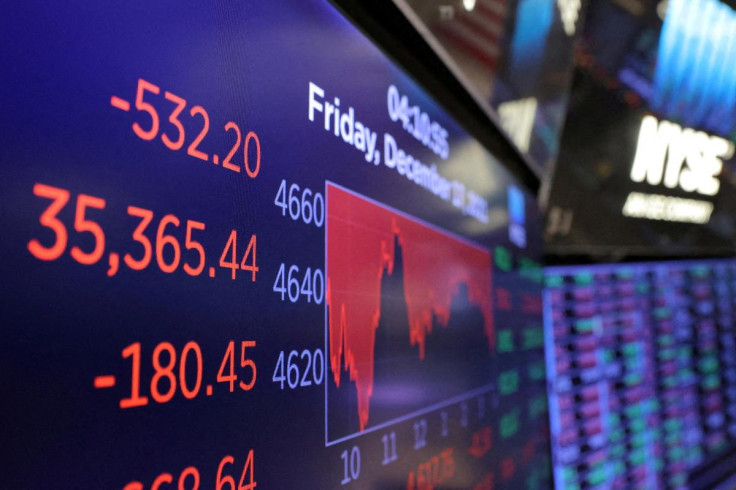
The 0.73% decline extended recent losses for the blue-chip index, which has seesawed this week on mixed signals from the Middle East. Thursday’s steeper 469-point drop gave way to another session of selling pressure as hopes for a quick diplomatic resolution faded and energy costs climbed.
Broader markets also retreated. The S&P 500 fell roughly 1% in early trading before stabilizing somewhat, while the Nasdaq Composite faced heavier losses amid pressure on growth-oriented technology shares. The volatility index, known as Wall Street’s “fear gauge,” remained elevated as traders navigated headline risks.
Oil prices continued their recent surge, with West Texas Intermediate crude futures rising several dollars per barrel toward the $96-$98 range in recent sessions. Brent crude, the global benchmark, hovered near or above $100 in spots, driven by fears that prolonged tensions could disrupt supplies through the Strait of Hormuz, a critical chokepoint for global energy flows.
Analysts said the energy spike acts like a tax on consumers and businesses, potentially slowing economic growth while pushing inflation higher — a double blow that complicates monetary policy.
“Markets are reacting to the uncertainty of how long this geopolitical episode will last,” said one strategist. “A short conflict might be absorbed, but sustained high oil prices could force the Fed to stay cautious on rate cuts.”
Conflict Concerns Weigh on Sentiment
The U.S.-Iran standoff, which intensified in late February, has dominated market narratives. President Donald Trump has pressed for serious negotiations while extending deadlines, but Iranian responses have left diplomats and investors uncertain about de-escalation timelines.
Earlier in the week, fleeting optimism around possible ceasefires sparked brief rallies, only for doubts to trigger reversals. Friday’s session reflected that fragility, with energy-sensitive sectors showing relative strength while high-valuation tech names lagged.
Energy giants within the Dow 30 provided some cushion. Chevron Corp. and Exxon Mobil shares gained ground as higher crude prices boosted profit outlooks for producers. In contrast, consumer discretionary and technology components faced selling, with names like Amazon.com Inc. and Visa Inc. among the notable decliners.
Among the 30 Dow components, gainers were limited but included defensive or value-oriented names such as Verizon Communications Inc. and Walmart Inc. in some sessions. Losers spanned tech-exposed firms and financials sensitive to higher borrowing costs.
Trading volume stayed robust, signaling continued investor caution. Treasury yields edged higher, with the 10-year note approaching 4.4%, as markets priced in stickier inflation and fewer aggressive rate reductions this year.
Broader Economic Backdrop
The latest Dow Jones decline comes against a backdrop of resilient corporate earnings but mounting external risks. While many companies have posted solid results driven by artificial intelligence investments and consumer spending, geopolitical shocks have overshadowed fundamentals.
Economists warn that an “oil shock” of this magnitude could trim U.S. growth forecasts modestly in the near term. In a base case of temporary disruption, inflation pressures might peak quickly, allowing the Fed to deliver measured easing later in 2026. A more prolonged scenario, however, raises risks of slower expansion and delayed policy support.
Smaller companies tracked by the Russell 2000 have shown mixed resilience, sometimes outperforming on domestic focus, but they too felt Friday’s broader pressure.
Year to date, the Dow Jones remains below its early 2026 peak above 50,000 but well above its 2025 low near 36,600. The index is now roughly 9-10% off record highs, reflecting cumulative hits from trade policies, fiscal debates and now Middle East tensions.
The S&P 500 has logged one of its longer weekly losing streaks in recent years, underscoring sustained headwinds.
Sector Rotation and Investor Strategies
The market’s choppiness has prompted sector rotation. Energy stocks have periodically outperformed, benefiting from elevated commodity prices. Defensive areas such as consumer staples and health care have attracted flows seeking stability.
Technology, which powered much of the prior bull run, has been vulnerable due to high valuations and sensitivity to any growth slowdown or rise in discount rates.
“For long-term investors, this volatility highlights the value of diversification,” said portfolio managers. “Holdings in energy or quality large-caps with strong balance sheets may help buffer against energy-driven inflation, while avoiding overexposure to speculative growth plays.”
Technical analysts are watching key support levels on the Dow around 45,000-45,500. A break below could signal deeper correction territory, though many maintain the longer-term uptrend remains intact barring major escalation.
Gold and other safe-haven assets have climbed in recent sessions, while the U.S. dollar has held steady against major currencies.
Global Markets Reflect Caution
Overseas bourses mirrored U.S. unease. European indices closed lower, and Asian markets showed mixed results as traders weighed the same energy and conflict risks.
Shipping and insurance costs in global trade routes have risen, adding to supply chain concerns if tensions persist in the Gulf region.
International economists project global growth near 2.8% for 2026, with the U.S. potentially holding up better than some peers, but near-term energy shocks could force revisions.
Outlook and What to Watch
As trading continues into next week, investors will scrutinize any fresh developments from Washington and Tehran. Oil futures movements will serve as a real-time barometer of supply disruption fears.
Upcoming U.S. economic data — including inflation readings, employment figures and consumer spending — will gain added importance. Stronger-than-expected inflation could further dampen rate-cut expectations.
Corporate earnings season winds down, but forward guidance from major firms will be parsed for mentions of energy costs or geopolitical impacts.
Analysts remain divided on the near-term path. Some view the pullback as a healthy correction within a bull market supported by innovation and solid fundamentals. Others caution of additional downside if oil stays elevated or conflict widens.
Citi and other firms have recently trimmed U.S. equity exposure, citing risks of no swift resolution.
For individual investors, the message is one of patience and risk management. Dollar-cost averaging into diversified portfolios, maintaining cash buffers for opportunities and avoiding emotional reactions to daily headlines can help navigate such periods.
The Dow Jones Industrial Average, despite its price-weighted limitations and focus on just 30 companies, continues to serve as a widely watched symbol of American economic health. Its recent performance captures the tug-of-war between underlying resilience and external shocks.
Traders and long-term holders alike will monitor not only the headline index level but also shifts in sector leadership, bond yields and commodity trends that could shape market direction through the remainder of 2026.
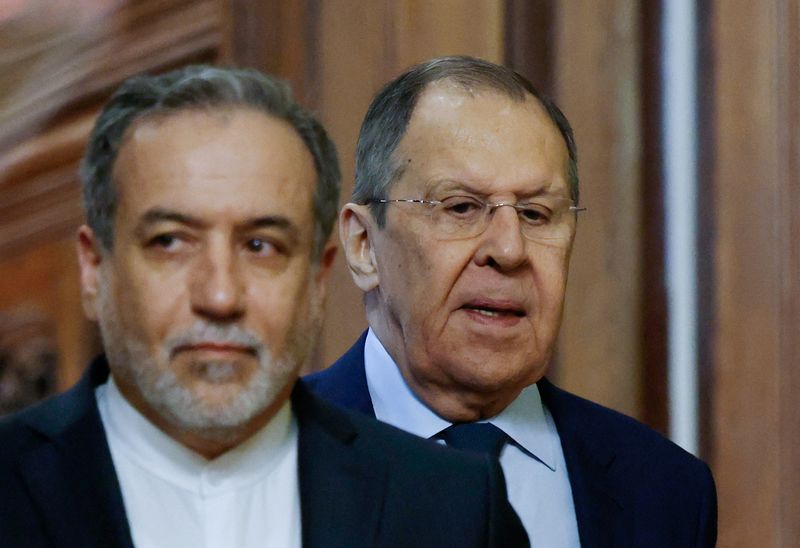

Russian and Iranian foreign ministers discuss possibility of conflict settlement
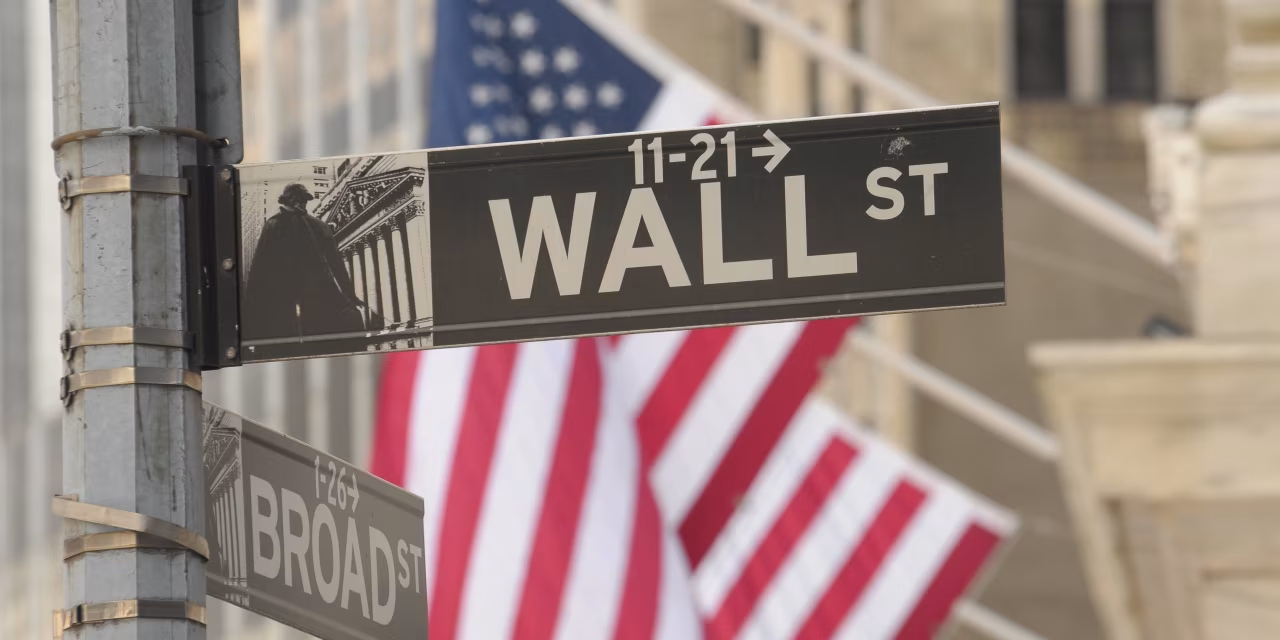
The average Wall Street bonus rose to a record high of nearly $250,000, following a bonanza year for New York City’s investment banking powerhouses.
That made for a fun bonus season for bankers and traders. Not so much for the city.
Copyright ©2026 Dow Jones & Company, Inc. All Rights Reserved. 87990cbe856818d5eddac44c7b1cdeb8

Waymo Is Scaling Faster Than Expected. Why It’s Bullish for Alphabet Stock.

Uber Is Bringing Robo-Taxis to Europe. Why the Stock Is Down.
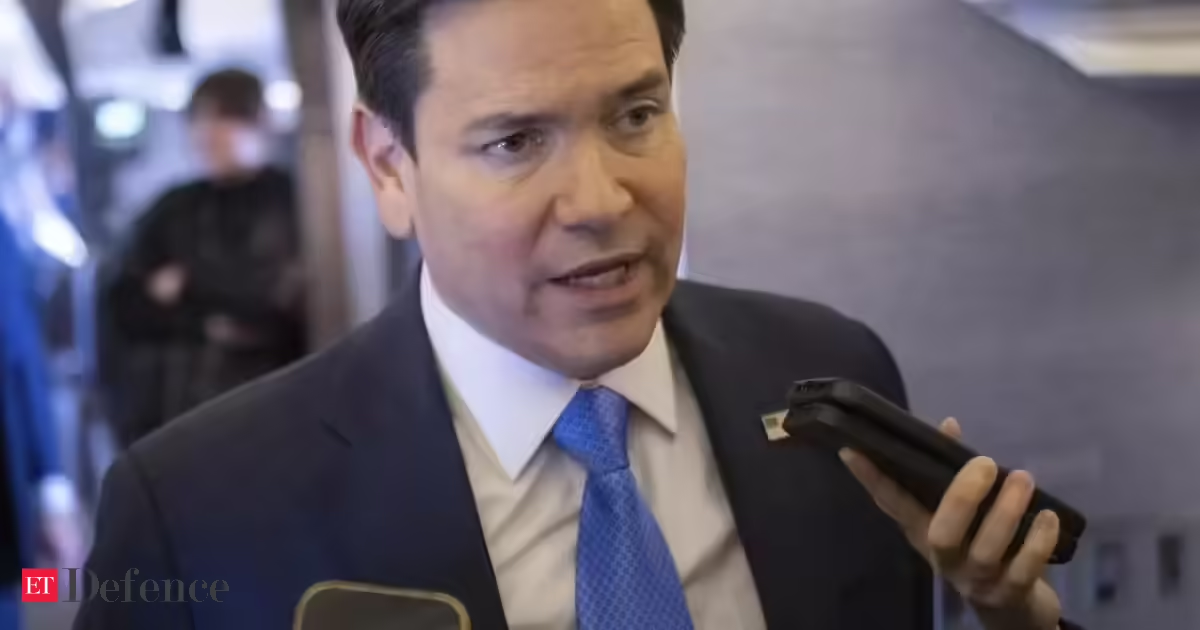
Rubio spoke to reporters before returning to the US after he discussed with G7 foreign ministers in France the conflict launched by the US and Israel late last month.
Rubio said the US was achieving its objectives in the war-which he said were destroying Iran’s missile and drone capabilities and factories to produce those weapons, as well as its navy and its air force-and expected to conclude its operation in “weeks, not months”.
“We are ahead of schedule on most of them, and we can achieve them without any ground troops, without any,” Rubio said.
Rubio said recent deployments of thousands more troops to the region were intended to give President Donald Trump options to respond to contingencies in the conflict, but declined to go into operational details.

“In terms of why there’s deployments, number one, the President has to be prepared for multiple contingencies… We are always going to be prepared to give the President maximum optionality and maximum opportunity to adjust the contingencies, should they emerge,” he said.
Several EU countries, now grappling with economic consequences of the war, have said they were not consulted by the US before it launched its military actions in Iran. French Minister of the Armed Forces Catherine Vautrin said on Friday that the war “is not ours,” adding that France’s position is strictly defensive. (with agency inputs)
Business
Apple Stock Holds Steady Near $252 as Geopolitical Tensions and Oil Surge Test Tech Resilience
Apple Inc. (NASDAQ: AAPL) shares closed at $252.89 on Thursday, up modestly by 0.27 or 0.11% from the prior session, demonstrating relative stability in a turbulent market rocked by escalating uncertainties in the U.S.-Iran conflict and sharply higher oil prices that stoked inflation fears across Wall Street.

The iPhone maker’s performance stood out amid broader selling pressure. While the Dow Jones Industrial Average plunged 469.38 points, or 1.01%, to close at 45,960.11, and the Nasdaq Composite dropped more than 2%, Apple managed a narrow gain on volume exceeding 41 million shares. The stock traded in a range between $250.77 and $257.00 during the session.
Apple’s market capitalization remained around $3.71 trillion to $3.75 trillion, underscoring its status as one of the world’s most valuable companies despite shares sitting roughly 12% below the 52-week high near $288.62. The stock continues to trade well above its 52-week low of about $169.21, supported by strong brand loyalty and a diversified business model.
Analysts maintain a predominantly bullish outlook. The consensus 12-month price target hovers near $297 to $304, suggesting potential upside of 17% to 20% from current levels. Optimistic calls, including from Wedbush Securities, point as high as $350, with analysts highlighting 2026 as a pivotal year for Apple’s artificial intelligence ambitions.
Market Volatility Tied to Middle East Developments
Thursday’s trading reflected Wall Street’s heightened sensitivity to geopolitical headlines. The U.S.-Iran conflict, now in its fourth week, has driven oil prices sharply higher, with Brent crude climbing toward or above $104-$108 per barrel in recent sessions amid fears of prolonged supply disruptions through the Strait of Hormuz. U.S. West Texas Intermediate crude also rose significantly.
Conflicting signals from Washington and Tehran have fueled uncertainty. Reports of a U.S. 15-point proposal for de-escalation met with Iranian denials or cautious reviews, dimming hopes for a swift resolution. Higher energy costs risk acting as a drag on consumer spending and corporate margins, potentially delaying Federal Reserve rate cuts and pressuring growth-sensitive sectors like technology.
Apple’s modest advance came even as high-valuation tech peers faced steeper declines. The company’s massive cash reserves, recurring services revenue and premium product positioning appeared to offer some buffer against the day’s macro headwinds.
Supply Chain Diversification Gains Momentum
Apple has accelerated efforts to reduce reliance on China for manufacturing. The company now assembles approximately 25% of its iPhones in India, producing around 55 million units there in 2025 — a 53% increase from the previous year. This shift helps mitigate risks from tariffs and geopolitical tensions.
Plans call for India to produce the majority — or potentially most — of iPhones sold in the United States by the end of 2026. This would require roughly doubling output in the country and represents a major step in Apple’s long-term supply chain strategy. The move comes as the company navigates potential trade policy changes and seeks greater geographic resilience.
Apple has also expanded its roster of U.S.-based suppliers and invested in domestic component production, further diversifying its global footprint while maintaining focus on quality and innovation.
AI Initiatives and Siri Overhaul in the Spotlight
Investors continue to eye Apple’s progress in artificial intelligence. The company is working on a significantly enhanced version of its Siri voice assistant, with expectations that a major upgrade could feature prominently at WWDC 2026 alongside iOS 27 and macOS 27 releases. Internal testing challenges have reportedly pushed some advanced capabilities beyond an earlier March target, with features potentially rolling out in phases through iOS 26.5 or later in the year.
Apple has explored partnerships, including potential integration of third-party models such as Google’s Gemini, to bolster Siri’s capabilities. While the company has adopted a more measured approach to generative AI spending compared with some rivals, executives and analysts believe these enhancements could drive meaningful growth as Apple Intelligence features expand across the ecosystem.
Upcoming software updates are expected to bring deeper on-device intelligence, better context awareness and improved handling of complex user requests. These developments could help Apple close perceived gaps with competitors in the rapidly evolving AI landscape.
iPhone Demand and Services Growth Provide Foundation
The iPhone remains Apple’s core revenue driver, supported by loyal customers, trade-in programs and enterprise adoption. Steady demand has persisted despite macroeconomic pressures, though sustained high oil prices could eventually weigh on global consumer spending for premium devices.
Services — including the App Store, Apple Music, iCloud, AppleCare and emerging advertising initiatives — continue to deliver high-margin, recurring revenue that provides stability. Plans to introduce ads in Apple Maps in the U.S. and Canada this summer represent one avenue for further expansion.
Valuation remains a point of discussion, with shares trading around 32 times trailing earnings. Bulls argue that Apple’s ecosystem strength, innovation pipeline and capital return programs (dividends and buybacks) justify the multiple, while bears point to risks from trade policies, competition and any prolonged economic slowdown.
Analyst Views and Technical Considerations
Wall Street’s consensus rating for Apple is Moderate Buy to Buy, with dozens of analysts covering the stock. Price targets range from conservative levels near $205-$248 to bullish forecasts up to $350. Many see the current consolidation as a potential entry point for long-term investors betting on AI-driven growth and supply chain improvements.
Technically, support levels are watched near $250, with resistance around $257-$260 in the near term. A decisive move above recent highs could signal renewed momentum, while broader market weakness tied to energy prices or conflict escalation might test lower supports.
For individual investors, Apple often serves as a core holding in diversified portfolios due to its track record of adaptation and shareholder returns. However, near-term volatility linked to oil markets and geopolitics warrants caution and disciplined risk management.
Broader Context and Outlook
Apple’s relative resilience Thursday highlights the differing dynamics within the technology sector. While some names tied closely to cyclical spending or speculative AI plays faced heavier pressure, Apple’s blend of hardware, services and brand power has helped it weather uncertainty.
Looking ahead, investors will monitor any fresh developments from the Middle East, movements in oil futures and upcoming U.S. economic data on inflation and employment. Apple’s next earnings report will be scrutinized for commentary on demand trends, supply chain progress and AI monetization.
Longer term, many strategists view 2026 as potentially transformative for Apple as it rolls out more advanced AI features and completes key manufacturing shifts. Yet the path may include continued swings as external risks evolve.
Founded in 1976, Apple has grown from a garage startup into a global leader in consumer electronics and services. Its stock, while not immune to macroeconomic shocks, reflects ongoing confidence in management’s ability to innovate and adapt amid challenges.
As markets open Friday, attention will remain on oil prices, diplomatic signals regarding Iran and how these factors influence broader risk sentiment. For Apple specifically, execution on diversification, software advancements and sustained iPhone strength will likely shape its trajectory through the remainder of 2026 and beyond.
The ‘Barron’s Roundtable’ panel discuss big-box retailers beating competition on value, their innovation and revenue models.
Your Costco run is about to get a lot faster.
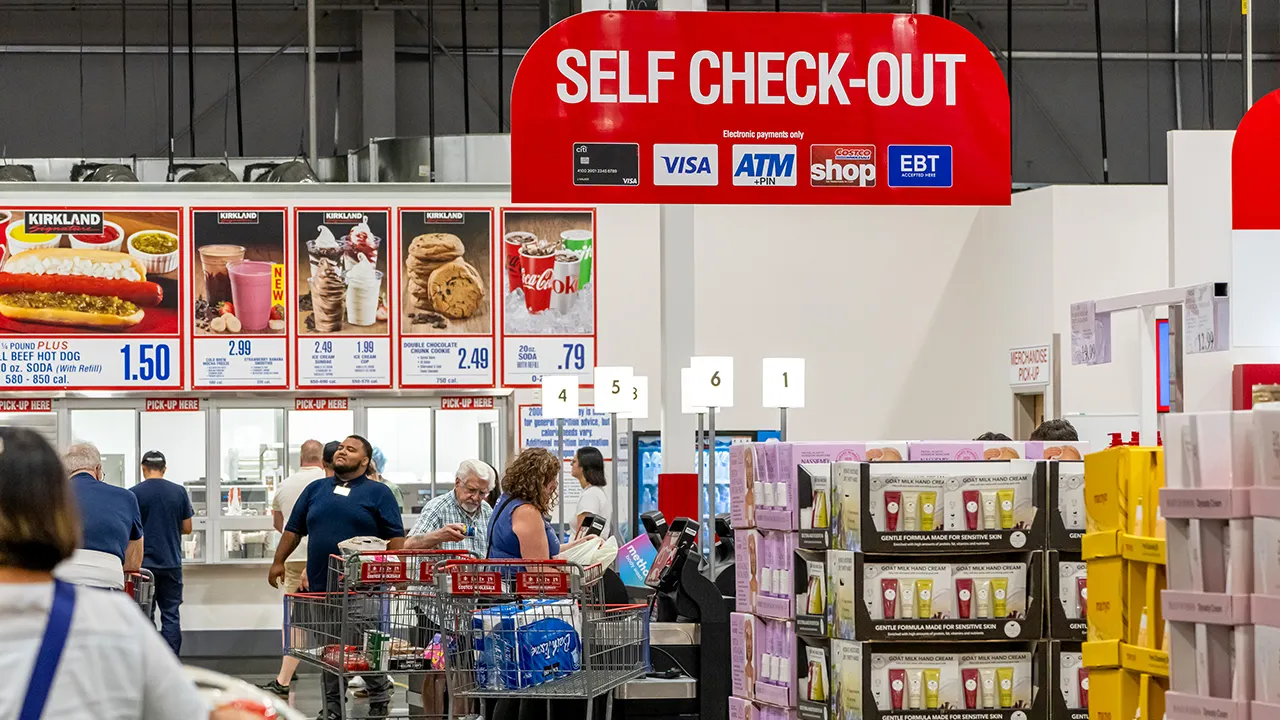
The warehouse giant is reportedly overhauling its checkout process, piloting new automated stations that promise to process orders in under 10 seconds. By blending employee productivity with high-speed tech, Costco is betting it can solve the retail industry’s biggest headache without losing the low-cost model that keeps its members loyal.
“In digital, we continue to make strides with our roadmap to deliver a more seamless experience for members in warehouse and online. In the warehouses, we are achieving meaningful improvements in the speed of checkout and employee productivity, both as a result of our mobile wallet enhancements, pharmacy pay ahead and the rollout of employee pre-scan technology,” Costco CFO Gary Millerchip said in the company’s second-quarter earnings call earlier this month.
COSTCO ENTERS FERTILITY CARE WITH MASSIVE DISCOUNTS FOR MEMBERS THROUGH NEW HEALTHCARE PARTNERSHIPS
Under new CEO Ron Vachris and Millerchip, the warehouse club is pivoting from its traditional checkout roots to a high-tech pre-scan model and automated pay stations. At first, employees will expedite the pre-scanning process before customers reach the register.
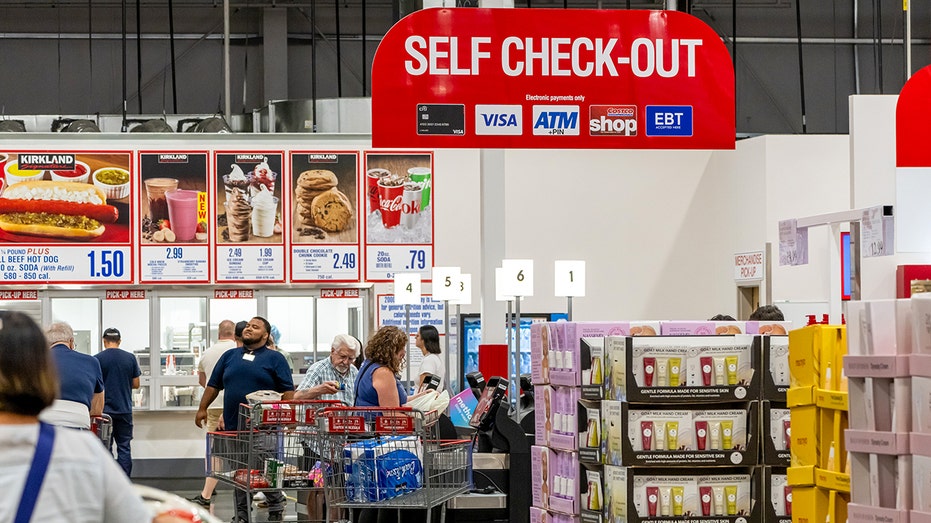
Shoppers at the self-checkout inside a Costco store in Napa, California, on Monday, Sept. 22, 2025. (Getty Images)
Costco has previously tested self-checkout at select stores, but the system did not appear to stick.
“We are also piloting automated pay stations that will allow members to pay for their pre-scan orders seamlessly with an average transaction time of around eight seconds,” Millerchip added. “Early results show this is improving the flow of traffic, and we have received great member feedback.”
Leadership also discussed embracing AI and e-commerce shifts on the call that rivals have used to dominate the convenience shopping market.
‘The Big Money Show’ discusses the growing trend of young adults getting financial help from their parents.
“On our digital sites, we continue to roll out new personalization capabilities which are resonating well with our members and are starting to have measurable impact on e-commerce sales growth. As consumers embrace AI in their shopping habits, we believe our commitments to providing the best value on great quality items can make us a beneficiary of these shifts,” the CFO said.
New data from the NCR Voyix Digital Commerce Index reveals a generational divide in how Americans want to pay at the register. While 43% of all consumers now prefer self-checkout options, 53% of shoppers aged 18 to 44 prefer the DIY method, while those 55 and older stick to manned lanes, citing large cart volumes as the primary reason for avoiding self-checkout.
GET FOX BUSINESS ON THE GO BY CLICKING HERE
FOX Business’ Lauren Simonetti joins ‘Mornings with Maria’ to report on how artificial intelligence is transforming the retail shopping experience.
While many big-box retailers have passed on inflationary costs to consumers in recent years, Costco has maintained its popularity with middle-class Americans due to its roughly 14% to 15% cap on product margins. Traditional grocers typically have a 25% to 35% product margin, making Costco’s prices highly competitive.
Costco’s net sales surged 9.1% to $68.24 billion in the second quarter, with net income hitting $1.36 billion — a 13.6% increase year over year following a membership price hike.

Richard Bernstein Advisors CEO and CIO Richard Bernstein offers insight on investment strategies during conflict and rising inflation on ‘Barron’s Roundtable.’
Tax season is in full swing as the deadline to file or request an extension is less than three weeks away, and some Americans who have already filed their returns are waiting to receive a refund from the IRS.
Nearly 70 million taxpayers filed their returns as of March 13, and most taxpayers can expect to receive their tax refund within three weeks of filing their return. The IRS has a tool taxpayers can use to track the status of refunds.
The IRS’ “Where’s my refund?” tool allows users to view whether their return has been received, if the tax refund has been approved and sent to the taxpayer via direct deposit.
Taxpayers need their Social Security number or taxpayer identification number, filing status, tax year and the exact amount of their federal refund from the tax return they want to check.
HERE’S WHEN TAXPAYERS WILL GET THEIR REFUNDS

Taxpayers can check on the status of their federal tax refund using the IRS’ “Where’s my refund?” tool. (iStock)
The tool informs taxpayers when their refunds have been sent to their banks via direct deposit. It also says that if their refund hasn’t been credited to their account by a specific date, they should check with their bank to see if it has been received.
Taxpayers who e-filed their return for the current year can typically see their refund status within 24 hours using the refund tracking tool. Those who e-filed a tax return for a prior year can usually see it after three days. The refund status for tax returns that were filed using paper copies is available four weeks after filing.
The timeline for refunds to be received by the taxpayer also depends on how they filed their return. Taxpayers who e-filed their returns typically receive their refund about three weeks from the date they e-filed. Refunds for mailed tax returns are usually received six or more weeks from the date the IRS received the mailed return.
TAX FILING SEASON IS OFFICIALLY HERE: WHAT YOU NEED TO KNOW
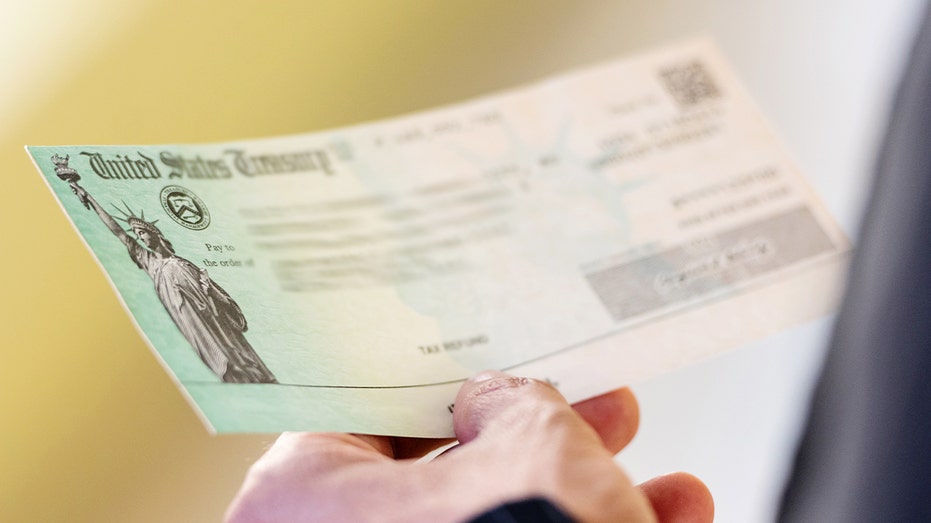
The IRS is phasing out paper refund checks but will still send them in certain circumstances. (Juanmonino via Getty Images)
The IRS also encourages taxpayers to enroll in direct deposit if they want to receive their refund faster because the agency began phasing out paper refund checks last fall. It will still send paper checks if no alternative is available for taxpayers. Options available for taxpayers without bank accounts include prepaid debit cards, digital wallets or other limited exceptions.
The IRS says that while it issues most refunds to taxpayers in fewer than 21 days, some returns may take longer to process as they require additional review or corrections.
For example, returns that claim the earned income tax credit are held by law until mid-February to prevent fraud, while the complexity of the additional child tax credit requires a deeper review. Common mistakes like forgetting to sign your return or making a math error can also cause delays.
TAX REFUND DELAYS HIT MULTIPLE STATES

E-filed tax returns are processed faster than paper returns. (Getty Images)
If the IRS corrects the return, it may reduce or increase the refund amount that the taxpayer was owed based on their original filing. When this happens, the IRS will mail a notice explaining the adjustment to the taxpayer’s address of record.
Taxpayers who had to amend their tax returns after they were initially filed have a separate tool they can use to check on the status of their returns and any refunds they may be owed.
They can check the status using the “Where’s my amended return?” tool three weeks after it was filed. Amended returns typically take longer for the IRS to process and may require up to 16 weeks.
GET FOX BUSINESS ON THE GO BY CLICKING HERE
The IRS also offers other ways for taxpayers to check their refund status via the IRS mobile app and automated hotlines for refunds and amended returns.
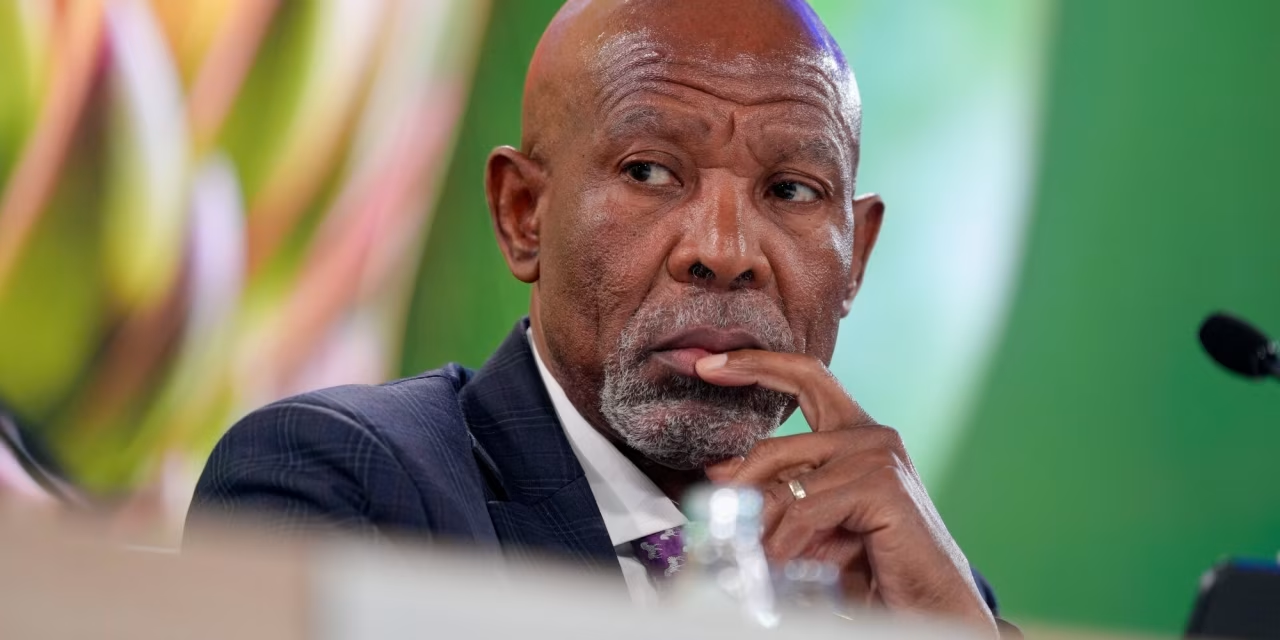
JOHANNESBURG—The South African Reserve Bank unanimously decided to maintain its main repo rate at 6.75% on Thursday as it braces for the long-term consequences of the war in Iran.
The decision continues a pause in the bank’s cutting cycle that began in September 2024, when the SARB began to reduce rates from a 15-year high of 8.25%.
Copyright ©2026 Dow Jones & Company, Inc. All Rights Reserved. 87990cbe856818d5eddac44c7b1cdeb8

Dow Jones Falls 337 Points as Geopolitical Tensions and Surging Oil Prices Fuel Market Volatility

Traders assign 53% odds BTC under $66K by Apr 24

Meghan McCain Slams ‘Evil’ Criticism of Erika Kirk


-
 Crypto World7 days ago
NIO (NIO) Stock Plunges 6.5% as Shelf Registration Sparks Dilution Worries
-
 NewsBeat3 days ago
Manchester United reach agreement with Casemiro over contract clause amid transfer speculation
-

 Crypto World6 days ago
Best Crypto to Buy Now: Strategy Just Spent $1.57 Billion on Bitcoin During Fear While Early Investors Quietly Enter Pepeto for 150x Potential
-

 Crypto World6 days ago
Bitcoin Price News: Bhutan Sells $72 Million in BTC Under Fiscal Pressure, but the Smart Money Entering Pepeto Sees What the Market Does Not
-

 News Videos2 days ago
Parliament publishes latest register of MPs’ financial interests
-

 Sports4 days ago
Remo Stars and Kano Pillars Strengthen Survival Hopes in NPFL
-

 Sports4 days ago
Gary Kirsten Accuses Pakistan Cricket Board Of ‘Interference’, Mohsin Naqvi Responds
-

 Business5 days ago
No Winner in March 21 Drawing as Prize Rolls to $133 Million for Next
-

 Tech5 days ago
Give Your Phone a Huge (and Free) Upgrade by Switching to Another Keyboard
-

 Tech5 days ago
AI enters the chat: New Seattle dating app relies on tech to facilitate meaningful human connections
-

 News Videos4 days ago
Ch 9 Financial Management Part 1 | Detailed One Shot | Class 12 Business Studies Boards 2026
-
Business7 days ago
Columbia Sportswear enters $500 million credit agreement with JPMorgan Chase
-

 Tech6 days ago
Today’s NYT Connections Hints, Answers for March 22 #1015
-

 Business1 day ago
Instagram, YouTube Found Responsible for Teen’s Mental Health Struggle in Historic Ruling
-

 Business6 days ago
Will Duke Basketball Win It All? Duke Basketball Enters Second Round as Third Favorite to Claim NCAA Title
-

 Sports5 days ago
2026 Kentucky Derby horses, odds, futures, preview, date: Expert who hit 12 Derby-Oaks Doubles enters picks
-
 NewsBeat5 days ago
Update on Wisbech river crash as search for teenage boy enters fifth day
-
 Entertainment4 days ago
Cynthia Bailey Dishes on ‘RHOA’ Season 17, Discusses Kandi
-
 NewsBeat2 days ago
Tesco is selling new Cadbury Dairy Milk bar and people can’t wait to try it
-

 Tech4 days ago
Samsung will soon let you control smart home devices from your car’s dashboard
You must be logged in to post a comment Login