

Business
The legal fight to get equal pay for Germany’s disabled workers

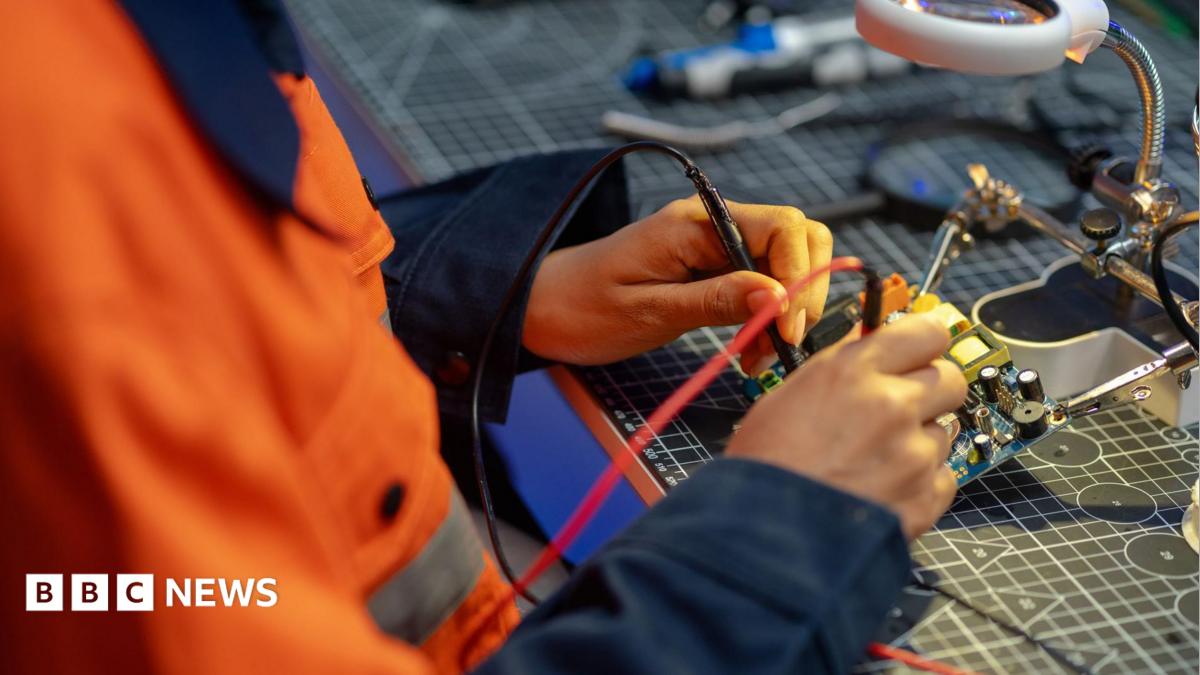
I have heard many similar stories. I myself was born blind, and remember very well my first school report, when I was six, which advised my parents to send me to a school for children with learning disabilities.
I grew up speaking both German and Arabic and constantly mixed them up, not understanding that they were separate languages. If my parents had not ignored that first school report, I too might have ended up in a workshop. Instead, today I’m one of only a handful of journalists in Germany with a visible disability.
Hüppe says the workshop system fails in one of its most basic responsibilities – to rehabilitate disabled people in order to prepare them to work in the mainstream economy.
“This responsibility just isn’t taken seriously,” he tells me.
The reason for that is in part the economic incentives that are offered to German companies to support the system. In Germany, any company that employs more than 20 people is legally obliged to employ at least one disabled person.
Larger companies have a minimum quota of 5%. Those who fail to meet this commitment have to pay a sum in compensation into a central fund that supports disabled people in the workplace.
Many companies choose simply to pay this money rather than meet their quota. They are offered a further incentive by the system, in that if they outsource production to a workshop the compensation they have to pay is reduced.
The result is that fewer than 1% of disabled people make a successful transition from workshop to a job with a mainstream company.
Hüppe also says workshops are reluctant to see their best staff move on. “Obviously a workshop is a commercial enterprise that survives on what it produces,” says Hüppe. “And so obviously they want to hold on to their best workers, the ones that would have the best chance of making it out in the mainstream economy.”
He points me to a 2023 report, external by the United Nations Committee on the Rights of Persons with Disabilities, which criticised Germany’s record on disability.
Specifically, it noted “the high number of persons with disabilities enrolled in sheltered workshops and the low rate of transition to the open labour market”.
Not everyone, however, is unhappy being employed in a workshop, including Medina Arnaut, 35. She works for one in Paderborn that is operated by a charity called Caritas.
Arnaut is also the chair of the local workshop council, which represents the interests of the workers in a similar way to a trade union.
“We have colleagues here who are so grateful that workshops exist,” she says. “These are colleagues who quite simply need this workshop environment because of their disability.”
Arnaut adds many of her colleagues have worked in the mainstream economy and the pressure there is completely different. “People come to me and say, I’ve experienced life out there in the commercial world and it made me sick.”


SYDNEY — The S&P/ASX 200 index edged lower on Thursday, closing at 8,779.2 after declining 29.2 points, or 0.33 percent, as investors weighed mixed global cues and domestic economic developments.
Australia’s benchmark share index reflected cautious sentiment amid ongoing attention to commodity prices, interest rate expectations and corporate earnings across key sectors. Mining and energy shares faced pressure while financials and consumer stocks showed varied performance.
The modest decline came as traders monitored international markets and anticipated key data releases that could influence the Reserve Bank of Australia’s policy outlook. Commodity-linked stocks, a significant component of the index, responded to fluctuations in iron ore, coal and oil prices.
Australia’s economy continues demonstrating resilience supported by strong employment and resource exports, though challenges persist in areas such as household spending and construction activity. The central bank’s recent communications have emphasized data-dependent decision making regarding future rate adjustments.
Sector Movements and Influences
Resources companies, heavily weighted in the ASX 200, experienced headwinds as some metal prices softened on global demand concerns. Major miners like BHP and Rio Tinto contributed to the index’s downward movement.
Financial institutions presented a more mixed picture. Major banks navigated investor focus on lending conditions, bad debt provisions and potential impacts from housing market dynamics. Dividend yields in the sector remain attractive for income-seeking investors.
Consumer discretionary and retail names reflected domestic spending patterns. Cost-of-living pressures continue influencing household budgets, though tourism recovery and wage growth provide some support.
Technology and healthcare stocks offered selective opportunities amid broader innovation trends. Companies with exposure to renewable energy and critical minerals attracted interest aligned with Australia’s transition ambitions.
Economic Backdrop
Australia’s resource-rich economy maintains close ties to global growth, particularly in Asia. China’s demand for Australian exports remains a pivotal factor, with iron ore and liquefied natural gas shipments playing crucial roles in trade balances.
Inflation trends and labor market tightness have kept the Reserve Bank of Australia vigilant. Recent indicators suggest moderating price pressures in some categories, though services inflation persists as a concern.
Housing market conditions influence consumer confidence and bank lending. Policy measures aimed at affordability and supply constraints continue shaping sector outlooks.
Corporate earnings seasons provide granular insights into company performance. Firms demonstrating pricing power, operational efficiency and growth in key markets tend to outperform during uncertain periods.
Market Sentiment and Outlook
The ASX 200 has shown resilience throughout the year despite periodic volatility tied to international developments. Its composition, with significant resources exposure, creates both opportunities and risks depending on commodity cycles.
Analysts anticipate continued focus on Federal Reserve decisions and their flow-through effects on global capital flows and the Australian dollar. Currency movements impact multinational earnings and import costs.
Longer-term investors point to Australia’s structural advantages, including stable governance, resource endowments and growing services exports. Superannuation flows provide consistent domestic demand for equities.
Short-term traders remain attentive to technical levels and momentum indicators. Support and resistance zones on the ASX 200 guide positioning around key economic releases.
Investment Considerations
Diversified exposure across sectors helps manage volatility inherent in resource-heavy indices. Dividend-focused strategies appeal given many ASX 200 constituents’ strong payout histories.
Growth-oriented investors monitor technology, healthcare and renewable energy developments. Critical minerals and battery technology represent emerging areas of interest aligned with global energy transitions.
Risk management remains essential given sensitivity to China-related news, commodity volatility and geopolitical tensions. Defensive sectors such as utilities and consumer staples can provide ballast during risk-off periods.
Exchange-traded funds tracking the ASX 200 offer convenient access for both local and international investors. Active management may add value through sector rotation and individual stock selection.
Broader Australian Market Context
The Australian Securities Exchange serves as a vital capital formation venue for domestic and international companies. Listing activity in resources, technology and healthcare reflects diverse economic strengths.
Regulatory frameworks emphasize market integrity and investor protection. Continuous disclosure requirements ensure timely information flow to participants.
Sustainability considerations gain prominence as investors incorporate environmental, social and governance factors. Companies demonstrating strong practices often attract premium valuations.
As Australia navigates global transitions, the ASX 200 remains a key barometer of economic health and corporate prospects. Its movements influence superannuation balances and retirement outcomes for millions of Australians.
Looking ahead, attention will center on upcoming inflation data, employment figures and corporate reporting. The index’s trajectory will depend on balancing domestic fundamentals with external influences.
The S&P/ASX 200’s performance underscores Australia’s integration into global markets while highlighting unique characteristics tied to its resource base and services economy. Continued adaptation and innovation will shape future returns.


I’m a passionate investor with a strong foundation in fundamental analysis and a keen eye for identifying undervalued companies with long-term growth potential. My investment approach is a blend of value investing principles and a focus on long-term growth. I believe in buying quality companies at a discount to their intrinsic value and holding them for the long haul, allowing them to compound their earnings and shareholder returns.
Analyst’s Disclosure: I/we have no stock, option or similar derivative position in any of the companies mentioned, and no plans to initiate any such positions within the next 72 hours. I wrote this article myself, and it expresses my own opinions. I am not receiving compensation for it (other than from Seeking Alpha). I have no business relationship with any company whose stock is mentioned in this article.
Seeking Alpha’s Disclosure: Past performance is no guarantee of future results. No recommendation or advice is being given as to whether any investment is suitable for a particular investor. Any views or opinions expressed above may not reflect those of Seeking Alpha as a whole. Seeking Alpha is not a licensed securities dealer, broker or US investment adviser or investment bank. Our analysts are third party authors that include both professional investors and individual investors who may not be licensed or certified by any institute or regulatory body.


Australia employment rebounds in May, jury still out on another rate hike

NEW YORK — Shares of Shift4 Payments Inc. jumped more than 12 percent on Wednesday, trading around $43.53 as investors responded to positive sentiment around the payments company’s growth trajectory.
The fintech firm, known for its integrated payment solutions particularly in hospitality and retail sectors, has faced volatility in recent months but demonstrated resilience through robust transaction volumes and strategic expansions.
Shift4 reported solid first-quarter 2026 results in early May, with revenue growth reflecting strong demand for its platforms. The company processes billions in payment volume annually, benefiting from a shift toward digital and contactless transactions.
Analysts have maintained largely favorable views, with consensus price targets suggesting potential upside from current levels. The stock’s recent move highlights renewed interest amid broader market recovery in financial technology names.
Business Overview and Performance
Shift4 provides end-to-end payment processing, point-of-sale systems and related software. Its solutions cater to high-volume industries including restaurants, hotels and entertainment venues, where seamless integration and reliability are critical.
In the first quarter of 2026, the company posted revenue of approximately $549 million on a net basis, marking significant year-over-year expansion. Gross revenue reached $1.12 billion, underscoring the scale of its operations.
Transaction volumes grew substantially, supported by market share gains and new merchant acquisitions. Shift4’s focus on proprietary technology has helped differentiate it from larger competitors while maintaining attractive margins.
The company has pursued acquisitions and partnerships to broaden its ecosystem. Recent initiatives include enhancements in artificial intelligence for fraud detection and customer analytics, positioning it for evolving industry needs.
Financial Health and Outlook
Shift4 has shown disciplined capital allocation, balancing growth investments with operational efficiency. Its balance sheet supports further expansion, though the company navigates a competitive landscape with established players like PayPal and traditional processors.
Guidance for full-year 2026 points to continued revenue and adjusted earnings expansion. Management has emphasized sustainable growth through technology innovation and customer retention.
The payments industry faces tailwinds from digital adoption but also pressures from regulatory changes and economic cycles affecting consumer spending. Shift4’s vertical focus has provided some insulation, with hospitality and leisure sectors showing recovery.
Shares have traded in a wide range over the past year, reflecting sensitivity to quarterly results and macroeconomic signals. The recent surge brings the stock off lows but still below peaks seen earlier.
Market Position and Competition
Shift4 competes in a fragmented but consolidating payments market. Its integrated platform approach appeals to businesses seeking unified solutions rather than disparate vendors.
Expansion into new verticals and international markets offers growth levers. The company continues to invest in research and development to enhance product offerings and stay ahead of technological shifts.
Analysts cite Shift4’s strong unit economics and scalable model as positives. Consensus ratings lean toward buy, with average targets well above recent trading levels according to multiple research firms.
However, risks include integration challenges from acquisitions, competitive pricing pressures and potential slowdowns in key end markets. Execution on guidance will be key for investor confidence.
Investment Considerations
For long-term investors, Shift4 represents exposure to secular trends in digital payments and fintech innovation. The company’s growth profile appeals to those bullish on cashless economies.
Valuation metrics have compressed amid recent share price weakness, potentially creating an attractive entry for patient capital. Yet volatility remains a factor, as seen in periodic swings tied to earnings and sector sentiment.
Broader fintech sector dynamics, including interest rate environments and regulatory developments, influence performance. Shift4’s focus on merchant services provides a somewhat defensive tilt within the space.
Investors should monitor upcoming quarterly updates and any strategic announcements. The company’s ability to sustain double-digit growth while managing costs will determine its trajectory.
Industry Trends
The global payments market continues expanding, driven by e-commerce, mobile wallets and real-time processing demands. Shift4 is well-positioned within this ecosystem through its technology stack and industry expertise.
Challenges such as cybersecurity threats and evolving consumer preferences require ongoing adaptation. Shift4’s track record of innovation supports its competitive standing.
As the stock reacts to positive momentum, market participants will watch for confirmation of underlying strength in future results. The payments space offers substantial opportunity for efficient operators.
Shift4 Payments has established itself as a notable player through consistent execution and customer-centric solutions. Its path forward depends on capitalizing on market tailwinds while navigating inherent industry risks.

The state’s Environmental Protection Authority has waved through Ramelius Resources’ plans to mine it Roe project, clearing the way for early works to begin this year.
Business
Avience Biomedicals shares may make a strong debut as GMP signals 62% premium ahead of listing

The Rs 30.24 crore IPO, which comprised entirely a fresh issue of 14.54 lakh shares, witnessed overwhelming investor interest during the three-day bidding period. The issue was subscribed 385.32 times, driven by robust participation across all investor categories.
The non-institutional investor (NII) segment led the demand with a subscription of 597.23 times, while the retail portion was subscribed 401.36 times. The qualified institutional buyer (QIB) category attracted bids for 196.77 times the shares reserved.
The company had fixed the IPO price at Rs 208 per share. Retail investors were required to apply for a minimum of 1,200 shares, translating into an investment of Rs 2.50 lakh.
Incorporated in 2024, Avience Biomedicals manufactures, supplies and exports molecular diagnostic solutions catering to the biotechnology, genomics and in-vitro diagnostics (IVD) industry. Its portfolio includes rapid test kits, molecular diagnostic products, biochemistry and hematology analysers, reagents and medical devices. The company serves pathology laboratories, hospitals, research centres and government institutions across India and overseas, while also trading in medical equipment.

The IPO proceeds will be used to partly fund the setting up of a new manufacturing facility at the Medical Device Park under the Yamuna Expressway Industrial Development Authority in Uttar Pradesh, meet working capital requirements and for general corporate purposes.
On the financial front, the company reported total income of Rs 45.97 crore and a net profit of Rs 7.23 crore for FY25. For the nine months ended January 2026, it posted revenue of Rs 41.94 crore and a profit after tax of Rs 5.74 crore.While the grey market premium suggests strong investor optimism ahead of listing, GMP is an unofficial indicator and does not guarantee listing gains.
(Disclaimer: Recommendations, suggestions, views and opinions given by the experts are their own. These do not represent the views of Economic Times)

Form 144 NATERA For: 24 June

Thailand is dismantling long-standing barriers to foreign business while simultaneously implementing its most stringent crackdown on foreign property ownership in decades—a paradox that analysts caution is undermining the kingdom’s reputation as a dependable destination for long-term international investment.
Key takeaways
- Thailand is opening its economy to foreign businesses while cracking down hard on foreign property ownership, sending contradictory signals to international investors.
- The country closed its only legal path to foreign land ownership in 2022, then began prosecuting people for using the workarounds that gap forced them into.
- Regional competitors like Malaysia, Indonesia, and Cambodia now offer clearer ownership rights, putting Thailand at risk of losing the next decade of capital to its neighbours.
The two-track policy is not subtle. On one hand, the same government that is rewriting its business laws to attract the world’s capital is, on the other hand, prosecuting the people who already brought it.
A Reform Agenda With a Blind Spot
In April 2025, the Cabinet approved the biggest overhaul of the Foreign Business Act in twenty-five years. By January 2026, it confirmed it would strip ten business categories, including software development, off restricted lists, allowing foreign technology companies to operate in Thailand without a local partner or special licence. The reforms travel under the banner of Thailand 4.0, the government’s national programme to reposition the economy as modern, competitive, and open.
The commercial logic is clear. Thailand has slipped behind Vietnam and Indonesia; OECD membership demands a better openness score, and the old instinct toward protectionism has had to give way to competitiveness.
Yet while one ministry courts global capital, another is conducting a very different operation.
The Crackdown
New rules require Thai shareholders in foreign-linked companies to prove the money they invested is genuinely theirs. An analytics system flags obvious fictions, such as the modest-salaried Thai who somehow owns most of a multi-million-baht villa. A May operation on Koh Phangan, conducted around a prime ministerial inspection, ended in 22 arrests and the seizure of more than 40 rai of land. Police summonses are now issued under criminal procedure, and six agencies share data they once kept separate.
Enforcement, many observers note, is both overdue and imprecise. A Thai shareholder who contributed no capital, makes no decisions, and takes no profit is not an owner, they are a prop. When investigators find one person fronting dozens of companies, that is not a grey area; it is fraud.
But the same net is sweeping up ordinary foreign residents who acted in good faith. The retiree who purchased a single home a decade ago, through the exact company structure a respected Thai law firm sold as the normal way to proceed, and who has done nothing since but live there and pay tax, that person was not gaming the system. They were using the only system the country left them, after it tore down the legal alternative with its own hand.
How the Legal Road Was Closed
The absence of a legitimate ownership route is not an accident of history. It was a policy decision, made under pressure and never reversed.
In late 2022, with the pandemic still draining the economy, Thailand’s Cabinet approved a law that would have allowed qualifying foreigners to legally own a small plot of residential land, the first real, on-title route to ownership in two decades. A senior minister admitted the truth: foreigners could already get land anyway, through leases, the condo quota, and nominee companies. The law would simply have made one path legal and visible.
It lasted under two weeks. The opposition declared the government was selling off the country, and the bill was withdrawn. The honest route died. The workaround it was meant to replace was left exactly where it stood, because nobody had to cast a vote to keep it. Then, in March 2025, the Supreme Court knocked away even the fallback, ruling against the long-lease renewal structure that thousands of foreign buyers had trusted for security.
The sequence, as the original analysis puts it, amounts to a policy trap of Thailand’s own making: the country invited the capital, refused to legalise the ownership route, allowed the workaround to stand, then began prosecuting people for using it.
The Regional Scoreboard
Competitors are not standing still. Malaysia lets foreigners own freehold outright, name on the title, no nominee, with minimum-price floors to protect locals and a foreign-buyer levy to cool speculation. Indonesia, which like Thailand bars foreign freehold, offers a registered title a foreigner can hold in their own name for up to 80 years, and cracks down on nominees while pointing buyers toward it. Dubai drew clear freehold zones and became a global magnet on the strength of that legal certainty alone.
The scoreboard a buyer sees in 2026 is unforgiving: Malaysia offering direct freehold, Cambodia permanent freehold title in a dollar economy, Indonesia 80 years in your own name, and even Vietnam a clear if limited framework. Thailand, by contrast, offers condos only, no legal land route, a withdrawn ownership bill, and a lease that its own court has recently undercut.
The Path Forward
The business reform agenda suggests that Thailand’s policymakers understand the principle at stake. A barrier built on you have no other option was never really a barrier. It held only because nothing better stood beside it. Put a clean, legal road next to it, and the workarounds are not hunted into extinction; they are simply abandoned, because no sane person takes a dangerous detour when a highway runs alongside.
Thailand has accepted this logic for software companies. It has not yet been accepted by the family that wants to legally own its home.
The prescription from analysts is not a radical departure. It is consistency. Bringing back the 2022 ownership framework with guardrails, high thresholds, residential zones only, no land-banking, price floors for Thais, and a levy on speculation, rebuilding the long lease with real security after the 2025 ruling, modernising condo rules, and continuing to cut the Foreign Business Act’s sweeping 1999 other services clause would together provide the legal infrastructure the market currently lacks.
The country that pairs enforcement with a real, legal welcome wins the next decade of capital in this region. The one that enforces and never reforms watches that capital drive on to Kuala Lumpur, Phnom Penh, and Bali.
For now, Thailand remains, as one observer described it, one of the most desirable places on earth to live, and one of the most legally ambiguous places in its own region to invest.
Other People are Reading

Samsara Inc. (IOT) Analyst/Investor Day – Slideshow


The Trend Investing group includes qualified financial personnel with a Graduate Diploma in Applied Finance and Investment and well over 20 years of professional experience in financial markets. They search the globe for great investments with a focus on trending and emerging themes. The current focus is on electric vehicles, the EV metals supply chain, stationary energy storage and AI.They lead the investing group of the same brand name, Trend Investing. Features of the service include: Access to the Trend Investing portfolio, 7 monthly news updates, a monthly macro trends update, stock watchlist, CEO interviews, and direct access to the community and group leaders in chat.
Analyst’s Disclosure: I/we have a beneficial long position in the shares of GLOBAL X LITHIUM ETF (LIT), CONTEMPORARY AMPEREX TECHNOLOGY CO [HK:3750], ASX:RIO, ALB, GANFENG LITHIUM GROUP [SHE:002460], ASX:PLS, ZIJIN MINING GROUP [SHA:601899], TSX:LAC, TSX:LAR, ASX:CXO, ASX:GL1, ASX:EUR, GALAN LITHIUM [ASX:GLN], PMET RESOURCES [TSX:PMET], PATRIOT RESOURCES [ASX:PAT], ARGENTINA LITHIUM & ENERGY [TSXV:LIT], SIGMA LITHIUM [TSXV:SGML], LITHIUM IONIC CORP. [TSXV:LTH], ATLAS LITHIUM (ATLX), COSMOS EXPLORATION [ASX:C1X], MEGADO MINERALS [ASX:MEG], OMNIA METALS GROUP [ASX:OM1] either through stock ownership, options, or other derivatives. I wrote this article myself, and it expresses my own opinions. I am not receiving compensation for it (other than from Seeking Alpha). I have no business relationship with any company whose stock is mentioned in this article.
This article is for ‘information purposes only’ and should not be considered as any type of advice or recommendation. Readers should “Do Your Own Research” (“DYOR”) and all decisions are your own. See also Seeking Alpha Terms of Use of which all site users have agreed to follow. https://about.seekingalpha.com/terms
Seeking Alpha’s Disclosure: Past performance is no guarantee of future results. No recommendation or advice is being given as to whether any investment is suitable for a particular investor. Any views or opinions expressed above may not reflect those of Seeking Alpha as a whole. Seeking Alpha is not a licensed securities dealer, broker or US investment adviser or investment bank. Our analysts are third party authors that include both professional investors and individual investors who may not be licensed or certified by any institute or regulatory body.

THIEAUDIO Cypher Headphone Review: Can It Challenge the HD600?

Bitcoin Social Risk

Sue Perkins to re-open The Blue Bell Inn at Weaverthorpe


-

 Fashion5 days ago
Weekend Open Thread: Miami – Corporette.com
-

 Entertainment4 days ago
Renter of Home in Anne Heche Crash Denies Settlement With Son
-
 Sports1 day ago
Two goals and an assist by sheer aura: Cristiano Ronaldo just entered the World Cup chat
-

 Tech3 days ago
Microsoft accidentally kills epic Outlook email threads
-

 Business4 days ago
Soccer-U.S. defends Iran World Cup travel restrictions, says discussions ongoing
-
Crypto World24 hours ago
Bitcoin (BTC) Dips Below $62K, Ethereum (ETH) Plunges 6% Daily: Market Watch
-

 Politics5 days ago
Andy Burnham and the meaning of Makerfield
-

 Politics6 days ago
BBC Reporter Discusses Cross Party Criticism Of Trumps Iran Deal
-

 Crypto World21 hours ago
Securitize Wraps Roubini's SEC-Registered ETF as Dubai VARA Digital Security
-
Business1 day ago
Entergy settles forward sale agreements, raises $672 million in cash proceeds
-
 Business5 days ago
Wall Street Week Ahead: Investors see Micron earnings as pulse check of AI rally momentum
-

 NewsBeat5 days ago
Keir Starmer Allies Question His Chances For No 10
-

 Tech7 days ago
AWS enters the context layer race with a graph that learns from agents, not manual curation
-
 Crypto World5 days ago
Can Charles Hoskinson Really Rescue Cardano?
-

 Crypto World5 days ago
HIVE shares jump as $220M AI deal speeds Bitcoin mining pivot
-

 Crypto World5 days ago
Jake Chervinsky accuses CME of protecting derivatives monopoly
-
 Tech4 days ago
Signal’s Meredith Whittaker says AI chatbots ‘are not your friends’ and calls Copilot agents a backdoor
-

 Entertainment5 days ago
Jose Alvarado Wants Taylor Swift at More Knicks Games
-

 Tech2 days ago
Nearly 7,000 fake Amazon domains registered ahead of Prime Day 2026, researchers warn
-

 Business6 days ago
Brexit cost 6% of UK economy, Bank of England company data suggests
You must be logged in to post a comment Login