SYDNEY — Australia’s export economy in 2026 remains heavily reliant on its vast natural resources, with iron ore, energy commodities and gold dominating the country’s trade ledger as global demand from Asia continues to drive billions in revenue despite fluctuating prices and geopolitical uncertainties.
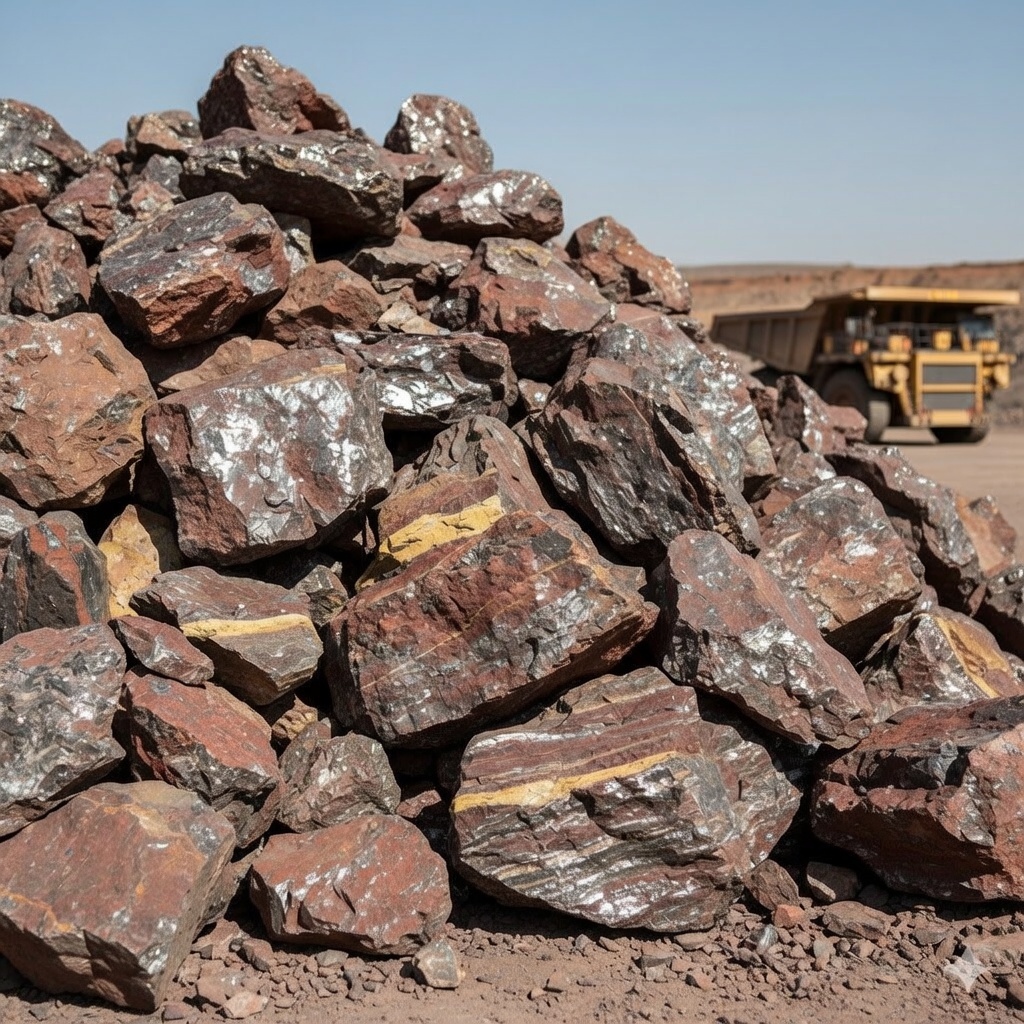
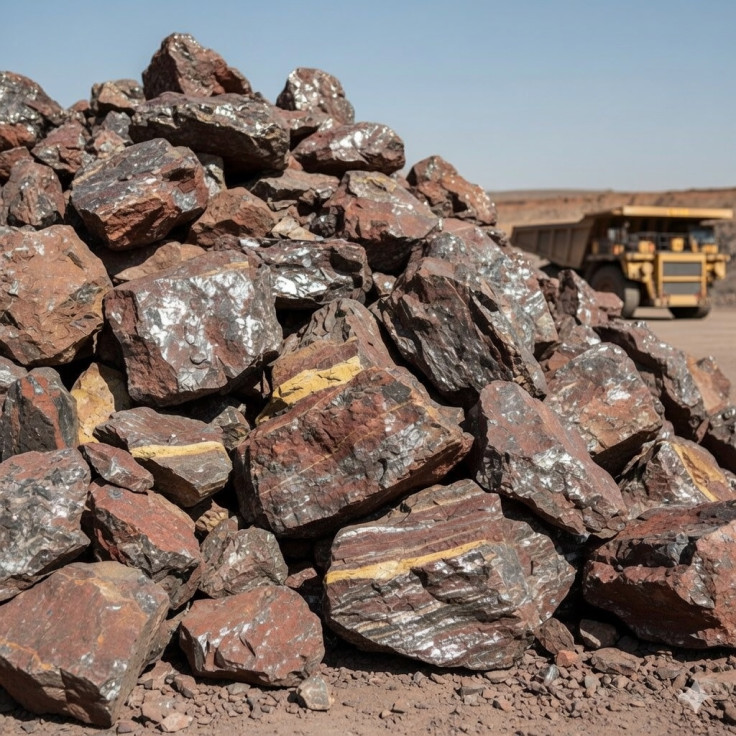
Iron ore mining stands as Australia’s largest exporting industry, generating an estimated $116.8 billion in 2026, according to industry analysis. The nation supplies more than half of the world’s seaborne iron ore trade, primarily feeding steel production in China, its largest customer. Volumes have remained robust even as prices moderated from previous peaks, supported by strong infrastructure spending in key Asian markets.
Coal, including both thermal and metallurgical varieties, ranks among the top exports with combined earnings around $63–71 billion. Australia is the world’s leading exporter of metallurgical coal used in steelmaking and a major supplier of thermal coal for power generation. While demand faces long-term pressure from the global energy transition, short-term needs in Asia have kept shipments steady in early 2026.
Liquefied natural gas (LNG) production contributes approximately $72.6 billion, positioning Australia as one of the top three global exporters and supplying roughly 30% of Asia’s LNG market. Japan, South Korea and China remain key buyers. Recent price volatility tied to international events has influenced earnings, but established long-term contracts provide stability for major projects in Western Australia and the Northern Territory.
Advertisement
Gold has surged in prominence, with export values reaching or exceeding $60–69 billion in projections for the 2025–26 financial year, potentially overtaking LNG as the second-most valuable resource export after iron ore. Higher production volumes and elevated gold prices driven by safe-haven demand amid geopolitical tensions have fueled the boom. Australia ranks as the world’s second-largest gold producer.
Crude petroleum and broader oil and gas extraction add another $82.5 billion, encompassing both raw and processed energy products. These commodities benefit from Australia’s strategic location and established export infrastructure, though they face competition from other global suppliers.
Agricultural products form a significant but smaller portion of the export mix. Beef and other meat products generate around $17–21 billion annually, with the United States and Asian markets as primary destinations. Grains, including wheat, contribute roughly $9–15 billion, while emerging categories such as tree nuts show strong growth potential.
Critical minerals, particularly lithium used in batteries for electric vehicles, represent a fast-growing segment. Lithium and other non-metallic mineral mining are among the industries with the highest export growth rates in 2026, aligning with global demand for clean energy technologies.
Advertisement
Other notable exports include copper ores and concentrates, aluminium, and wool, though they rank lower in total value compared to the dominant resource categories. Services exports, such as education and tourism, add substantial value but fall outside merchandise trade rankings.
China accounts for roughly 30% of Australia’s total exports, making it by far the largest trading partner. Japan, South Korea, India and the United States follow, highlighting the heavy Asia-Pacific orientation of Australian trade. In January 2026 alone, exports to China reached $14.2 billion, underscoring continued reliance on the Chinese market for iron ore, coal and LNG.
The overall merchandise export total for recent periods hovers around $330–360 billion annually, with resources and energy comprising the vast majority. Government forecasts for resources and energy exports in the year through June 2026 were revised upward to A$383 billion, reflecting stronger gold and certain commodity outlooks.
Economists note that while resource dependence brings prosperity, it also exposes the economy to commodity price cycles and external shocks. Efforts to diversify include boosting critical minerals processing, expanding agricultural value-added exports and growing services trade. However, mining and energy still dominate the top 10 list.
Advertisement
Here is a consensus ranking of Australia’s top 10 exporting products in 2026 based on available industry reports, government data and trade analyses (values are approximate annual figures in USD or equivalent and subject to monthly fluctuations):
Iron Ore
1. Iron Ore — Approximately $87–117 billion. Australia remains the undisputed leader in global iron ore exports, with massive shipments from the Pilbara region in Western Australia.
2. Liquefied Natural Gas (LNG) / Petroleum Gas — Around $49–73 billion. Long-term contracts with Asian buyers sustain this key energy export.
3. Coal (Thermal and Metallurgical) — Roughly $61–71 billion. Essential for steel and power in importing nations.
4. Gold — $31–69 billion. Surging prices and production have elevated its ranking significantly.
Advertisement
5. Crude Petroleum / Oil and Gas Extraction — Contributing to the broader $82 billion energy category.
6. Meat and Edible Meat Offal (primarily beef) — About $17–21 billion. High-quality Australian beef enjoys strong demand in premium markets.
7. Cereals / Grains — Around $9–15 billion. Wheat and other grains support food security in import-dependent regions.
8. Copper Ores and Concentrates — Several billion, part of broader base metals exports.
Advertisement
9. Aluminium and Aluminium Ores — Steady contributor from Australia’s smelting capacity.
10. Lithium and Critical Minerals — Rapidly rising, though still smaller in absolute value than traditional leaders; positioned for future growth.
Monthly data from the Australian Bureau of Statistics for early 2026 showed mixed movements. Iron ore fines and lump experienced some volume and price adjustments, while certain coal categories and LNG recorded modest gains or stability. Gold shipments have been particularly strong.
Trade experts highlight opportunities and risks. Rising demand for critical minerals linked to the energy transition could elevate lithium and rare earths in future rankings. Conversely, global decarbonization policies may eventually curb coal and traditional gas demand, prompting investment in new export streams.
Advertisement
Australia’s trade surplus has benefited from high commodity prices in recent years, supporting government revenues and the national economy. However, currency fluctuations, particularly the Australian dollar, influence competitiveness.
As of March 2026, the export landscape reflects both continuity in resource strength and gradual shifts toward higher-value and future-oriented commodities. Diversification efforts continue through trade agreements and investment in processing capabilities to capture more value domestically before export.
For businesses and policymakers, monitoring commodity prices, Chinese economic conditions and global energy dynamics remains crucial. Australia’s export success in 2026 underscores its role as a reliable supplier of essential raw materials to the world economy, while highlighting the need for ongoing adaptation to changing international demands.
The composition of Australia’s top exports underscores the nation’s comparative advantages in mining and agriculture. Sustained investment in infrastructure, technology and sustainable practices
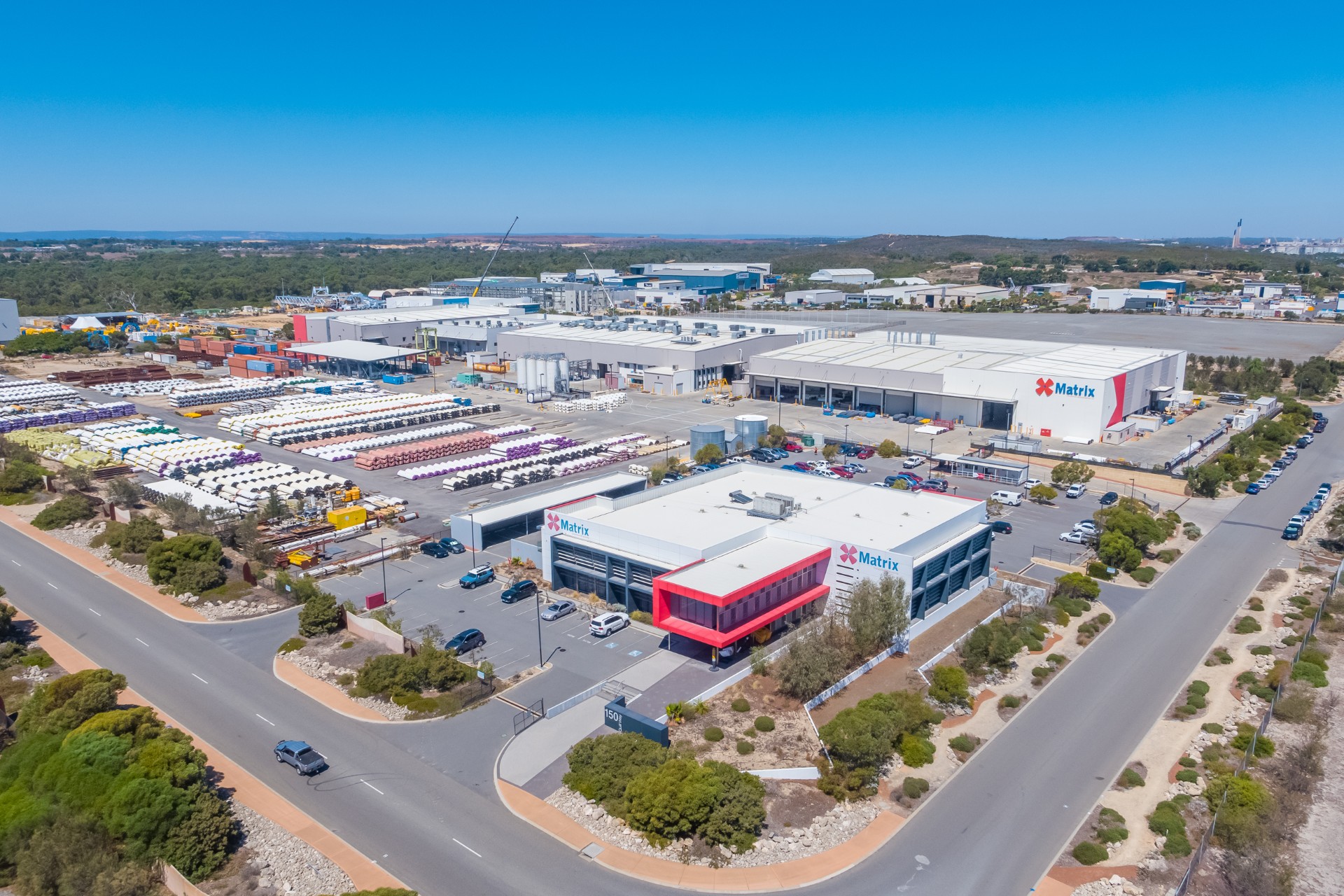
Advanced Innergy Holdings has lobbed a second takeover offer for Perth-based Matrix Composites & Engineering after addressing issues that caused its first offer to flounder last year.
NEW YORK — U.S. stock futures edged higher Monday morning, March 30, 2026, as investors weighed President Donald Trump’s signals of progress in talks with Iran against persistent geopolitical tensions that have driven oil prices sharply higher and kept markets volatile entering a holiday-shortened trading week.
Dow Jones Industrial Average futures rose around 280–300 points, or about 0.6%, in early pre-market trading. S&P 500 futures and Nasdaq-100 futures each gained roughly 0.6%, pointing to a modestly positive open on Wall Street. The modest rebound followed a tough end to last week, when the Nasdaq deepened its correction and the S&P 500 approached correction territory amid fears the five-week-old Iran conflict could disrupt global energy supplies further.
Oil prices remained elevated after fresh Houthi attacks and uncertainty over ground operations, with Brent crude hovering near recent highs above $100–$110 a barrel. Higher energy costs have stoked inflation worries and complicated the Federal Reserve’s policy outlook, with markets now pricing in fewer rate cuts for 2026. Yet Trump’s comments suggesting productive U.S.-Iran discussions provided some relief, helping futures pare earlier losses from Sunday evening.
Friday’s close left major indexes near multi-month lows. The S&P 500 finished the week around 6,368–6,477 after a 1.67% drop that day, while the Dow Jones Industrial Average settled near 45,166 after falling more than 790 points. The tech-heavy Nasdaq Composite dropped deeper into correction territory, losing over 2% on Friday to close around 20,948–21,408. The Russell 2000 small-cap index also showed weakness amid broader risk aversion.
The conflict in the Middle East has dominated market sentiment since late February, pushing oil higher by more than 30% at points and raising concerns about sustained inflationary pressure and potential supply disruptions through key routes like the Strait of Hormuz. President Trump has floated possibilities of U.S. Navy escorts for tankers and hinted at de-escalation, but analysts caution that any ground assault or prolonged fighting could exacerbate economic risks.
Advertisement
Energy stocks have been among the relative bright spots, benefiting from elevated crude prices, while technology and growth-oriented names have faced heavier selling on higher discount rates and growth concerns. Defensive sectors such as utilities and consumer staples have attracted some flows as investors seek safety.
Corporate earnings expectations have held relatively steady so far, with Wall Street betting that many U.S. companies can weather higher input costs. However, forward price-to-earnings ratios for the S&P 500 have compressed from October 2025 peaks as uncertainty lingers. Morgan Stanley recently downgraded global equities, viewing the U.S. market as more defensive in the current environment.
No major U.S. economic data releases were scheduled for Monday, March 30, shifting focus entirely to geopolitical headlines and any fresh corporate or diplomatic updates. The trading week is shortened by the Good Friday holiday on April 3, with markets closed that day.
Sector rotation has been evident in recent sessions. Energy and materials have outperformed on oil strength, while financials showed mixed moves as bond yields eased slightly from recent peaks. Technology names, including heavyweights like Nvidia, Amazon and Microsoft, saw some pre-market buying interest after sharp recent declines.
Advertisement
Individual stock movers in pre-market trading included energy-related names gaining on oil, while certain consumer and travel stocks lagged on growth worries. Broader market breadth remained cautious, with many stocks still trading below key technical levels after the recent sell-off.
The VIX volatility index, often called Wall Street’s “fear gauge,” has climbed above 30 in recent sessions — its highest level in roughly a year — signaling elevated investor anxiety. However, some analysts noted that historical precedents show equities often shake off geopolitical conflicts over time, provided disruptions remain contained.
Longer-term perspective shows the S&P 500 still up around 14% from a year earlier despite the 2026 pullback from January highs near 7,000. The index has given back some gains from its February peak amid the Middle East developments, but underlying corporate fundamentals and resilient consumer spending have prevented a deeper rout so far.
International markets offered mixed cues Monday. European shares traded modestly higher in early sessions despite ongoing energy concerns, while Asian markets closed with varied results over the weekend. Chinese markets faced their own pressures, and global investors monitored any spillover from the Iran situation.
Advertisement
For individual investors, analysts recommend focusing on high-quality companies with strong balance sheets and pricing power that can navigate potential cost pressures. Diversification across sectors, including some exposure to energy while maintaining defensive holdings, has been a common theme in recent commentary.
Looking ahead this week, any concrete developments on Iran negotiations could swing sentiment quickly. A de-escalation would likely spark relief rallies, particularly in rate-sensitive sectors, while further escalation risks renewed selling and higher oil. Corporate earnings season continues in the background, with results expected to test corporate resilience.
The Federal Reserve’s path remains data-dependent, but persistent oil-driven inflation has pushed back expectations for rate relief. Markets have largely removed near-term cut pricing, focusing instead on whether the central bank can engineer a soft landing amid external shocks.
Bond yields showed some stabilization Monday, with the 10-year Treasury easing from recent highs as investors balanced inflation risks against growth concerns. The dollar held firm on safe-haven demand.
Advertisement
As trading begins in New York, all eyes remain on real-time news flow from Washington, Tehran and the Gulf region. President Trump’s social media activity and official statements have moved markets multiple times in recent weeks, underscoring the event-driven nature of current trading.
Wall Street strategists emphasize patience in volatile times. While near-term uncertainty dominates, many maintain longer-term bullish views on U.S. equities based on innovation, productivity gains and eventual resolution of geopolitical flashpoints.
Retail investor sentiment has cooled, with some surveys showing increased caution after the recent declines. Professional managers continue to adjust portfolios toward more defensive postures while monitoring for entry points in beaten-down growth stocks.
The story is developing throughout the trading day. With limited economic data on the calendar, geopolitical headlines and oil price movements will likely set the tone for Monday’s session and the abbreviated week ahead.
I’ve been researching companies in-depth for over a decade, from commodities like oil, natural gas, gold and copper to tech like Google or Nokia and many emerging market stocks, which I believe could help me provide useful content for readers. After writing my own blog for about 3 years, I decided to switch to a value investing-focused YouTube channel, where I researched hundreds of different companies so far. I would say my favorite type of company to cover are metals and mining stocks, but I am comfortable with several other industries, such as consumer discretionary/staples, REITs and utilities.
Analyst’s Disclosure: I/we have a beneficial long position in the shares of CELH either through stock ownership, options, or other derivatives. I wrote this article myself, and it expresses my own opinions. I am not receiving compensation for it (other than from Seeking Alpha). I have no business relationship with any company whose stock is mentioned in this article.
Seeking Alpha’s Disclosure: Past performance is no guarantee of future results. No recommendation or advice is being given as to whether any investment is suitable for a particular investor. Any views or opinions expressed above may not reflect those of Seeking Alpha as a whole. Seeking Alpha is not a licensed securities dealer, broker or US investment adviser or investment bank. Our analysts are third party authors that include both professional investors and individual investors who may not be licensed or certified by any institute or regulatory body.
A landmark agreement has been signed between Metrocentre and Gateshead Council to bring forward Metro Riverside
The agreement has been signed between Metrocentre and Gateshead Council to bring forward Metro Riverside(Image: LDA Design)
The Metrocentre, one of the North East’s premier shopping and leisure destinations, has agreed a landmark deal to deliver a major new development featuring thousands of new homes, billed as a “city within a city”. The agreement, signed between Metrocentre and Gateshead Council, will bring forward Metro Riverside — a new, carbon-neutral urban district on the southern bank of the River Tyne.
The sweeping regeneration scheme will transform brownfield land surrounding the Metrocentre into a thriving, mixed-use community, comprising more than 4,500 homes, while also carrying the potential to generate 5,000 jobs.
Beyond providing housing for thousands of future residents, the project could double the site’s contribution to the regional economy to more than £2bn per annum by 2045. Conceived as a 20-minute destination — with everything residents require within a 20-minute journey — Metrocentre bosses say it will deliver “compact, accessible and walkable neighbourhoods in a high-quality waterfront setting”, underpinned by strong public transport links.
Those behind the scheme say Metro Riverside has the potential to become one of the largest and most ambitious urban regeneration projects undertaken anywhere in the UK outside the M25, representing a significant vote of confidence in the North East as a location for long-term, large-scale investment. The plan also marks the most substantial development of the area since the Metrocentre first opened its doors 40 years ago.
Advertisement
Metro Riverside has been highlighted as a significant housing development within NECA’s Local Growth Plan and the Strategic Place Partnership established by NECA and Homes England, which aims to accelerate the delivery of new properties, reports Chronicle Live.
Martin Healy, chairman of Metrocentre, said: “Metro Riverside demonstrates the power of long-term public-private partnerships to unlock transformational change. Developments of this scale and ambition simply cannot be delivered in isolation.
“By working in partnership with Gateshead Council and others, we can bring together long term investment, local leadership and shared purpose to create a new dense, urban community that delivers homes, jobs and opportunities, while ensuring Metrocentre continues to evolve as a major economic engine for the region for decades to come.”
Mr Healy outlined ambitions for Metro Riverside to become a cornerstone of nature recovery, featuring green corridors lined with woodland connecting to the river, while encouraging pedestrian and cycling links to the city centres and the River Tyne corridor. He added that the development also presents a significant opportunity to boost sustainable urban drainage throughout the entire area, bolster flood defences and strengthen flood resilience.
Advertisement
A CGI of how the Metro Riverside scheme will look(Image: LDA Design)
The Metrocentre itself will sit at the core of the project, transitioning from its current status as a premier retail destination into a vibrant hub capable of serving the needs of its incoming residents and local workforce.
Plans for a substantial housing development on brownfield land surrounding the Metrocentre have been under consideration for more than 11 years, with the local authority initially aiming to deliver around 850 new homes as part of a scheme known as MetroGreen.
As far back as 2015, a new bridge spanning the Tyne was proposed as part of the MetroGreen plans, with suggestions that the development could be linked to Newcastle via a new Tyne crossing with a tram connection – though a cabinet report at the time made clear that no funding was available.
The fresh agreement between Metrocentre and Gateshead Council will see the two commit to co-invest in the first phase of the Metro Riverside project, to bring it to the point of a delivery plan.
Advertisement
To find all the planning applications, traffic diversions, road layout changes, alcohol licence applications and more in your community, visit the Public Notices Portal.
Europe’s artificial intelligence sector is gaining momentum in 2026, with a wave of ambitious startups challenging U.S. dominance through open-source models, enterprise tools, voice and video generation, and specialized infrastructure. While the continent still trails North America in total funding, several high-growth companies have achieved multi-billion-dollar valuations and rapid revenue traction, fueled by strategic investments from governments, tech giants and defense contractors.
Top 10 Rising AI Companies in Europe 2026: Mistral Leads Charge
France, the United Kingdom and Germany remain the primary hubs, benefiting from strong research talent, supportive policies on AI sovereignty and growing enterprise adoption. As of March 2026, these rising players are delivering practical applications across industries while addressing European priorities such as data privacy, multilingual capabilities and industrial competitiveness.
Here are 10 of the most promising rising AI companies in Europe this year, selected for funding momentum, valuation growth, technological innovation and commercial impact:
1. Mistral AI (Paris, France) Mistral AI has emerged as Europe’s flagship AI champion. Founded in 2023, the company reached a valuation of approximately $14 billion by late 2025 after major investments, including a significant stake from ASML. It builds efficient, open-weight large language models that compete with leading U.S. offerings while emphasizing multilingual performance and enterprise deployment. Mistral’s focus on sovereign AI infrastructure, including data center partnerships, has positioned it as a key player in reducing Europe’s reliance on foreign models. Revenue growth and adoption by European businesses have been robust.
2. ElevenLabs (London, United Kingdom) This voice AI specialist has seen explosive growth, with reports of its valuation climbing toward $6–11 billion and annual recurring revenue approaching or exceeding $300 million. ElevenLabs delivers hyper-realistic text-to-speech, voice cloning and conversational audio tools used by creators, enterprises and developers worldwide. Its rapid expansion highlights strong demand for audio AI in content creation, dubbing, accessibility and agentic systems. Backed by substantial funding, the company continues to roll out advanced features while expanding globally from its London base.
Advertisement
3. Wayve (London, United Kingdom) Wayve develops embodied AI for autonomous driving, using end-to-end machine learning rather than traditional mapping and rule-based systems. Valued at around $8.6 billion after cumulative funding exceeding $1 billion, the company is advancing toward robotaxi trials and commercial partnerships. Its data-driven approach to urban navigation has attracted automaker interest and underscores Europe’s strength in applied AI for mobility and safety.
4. Synthesia (London, United Kingdom) Synthesia leads in generative video AI, enabling users to create realistic avatar-based videos from text for training, marketing and internal communications. The company has surpassed $100 million in annual recurring revenue and achieved a valuation near $4 billion. Its platform serves thousands of enterprises, demonstrating how synthetic media can reduce production costs and timelines while supporting multiple languages — a key advantage in Europe’s diverse markets.
5. Black Forest Labs (Freiburg, Germany) This visual AI startup behind the Flux image generation models has quietly become one of Europe’s most valuable AI companies. It raised $300 million in a Series B at a $3.25 billion valuation in late 2025, drawing investment from Salesforce Ventures, a16z, Nvidia and others. Black Forest Labs focuses on high-quality, controllable image and visual AI tools, carving out a strong position in generative media despite intense global competition.
6. Quantexa (London, United Kingdom) Specializing in decision intelligence and entity resolution, Quantexa applies AI to connect complex datasets for fraud detection, risk management and compliance. The company has reached a valuation exceeding $2.6 billion and serves major banks and government agencies. Its contextual analytics platform helps uncover hidden patterns in financial crime investigations, making it a trusted name in regulated industries across Europe.
Advertisement
7. Hugging Face (Paris, France / New York) Although it has significant U.S. operations, Hugging Face maintains deep European roots and influence. The open-source AI platform and model hub has grown into a central ecosystem for developers, with a reported valuation around $4.5 billion. It hosts thousands of models and supports collaborative AI development, playing a vital role in democratizing access to cutting-edge tools while fostering Europe’s open AI community.
8. Stability AI (London, United Kingdom) Known for pioneering open-source generative models such as Stable Diffusion, Stability AI continues to innovate in image, video and multimodal generation. Despite evolving business models, the company retains significant influence in creative AI applications for artists, designers and enterprises. Its contributions to accessible generative technology have sparked both innovation and important discussions on ethics and copyright.
9. Harmattan AI (France) This defense-tech newcomer, founded in 2024, rapidly achieved unicorn status with a $1.4 billion valuation following a $200 million Series B led by Dassault Aviation. Harmattan AI develops AI solutions for autonomous systems and defense applications, aligning with Europe’s push for technological sovereignty in security and military capabilities. Its swift rise reflects growing investment in dual-use AI technologies.
10. DeepL (Cologne, Germany) DeepL has become a global leader in AI-powered translation and language tools, offering superior accuracy and natural results compared to many competitors. The company continues to expand its suite of productivity tools while maintaining strong European focus on data privacy and multilingual excellence. Steady growth and enterprise adoption have solidified its position as a reliable AI success story.
Advertisement
Europe’s AI ecosystem benefits from world-class universities, collaborative research networks and policy initiatives aimed at building compute capacity and talent pipelines. Governments in France, the UK and Germany have backed strategic projects to foster homegrown innovation and reduce dependence on non-European providers.
Many of these companies emphasize responsible AI development, with attention to transparency, bias mitigation and compliance with regulations such as the EU AI Act. This regulatory clarity has helped attract investment while differentiating European approaches from less constrained models elsewhere.
Funding trends show increased interest from both domestic and international investors, though Europe still captures a smaller share of global AI capital than the United States. Strategic bets on infrastructure, defense and industrial applications have helped several firms scale quickly.
Challenges persist, including competition for top talent, energy demands for large models and the need for more domestic compute resources. Partnerships with semiconductor leaders and cloud providers are helping address these gaps.
Advertisement
Sectors driving growth include generative media (voice, video and images), enterprise decision tools, autonomous systems and defense applications. Public-sector and industrial adoption provides stable revenue streams for several players.
As 2026 unfolds, analysts anticipate further funding rounds, potential IPO activity and deeper integration of AI into European industries. Milestones such as expanded model releases, commercial robotaxi pilots or major defense contracts could boost valuations and visibility.
The broader European AI market is projected to contribute meaningfully to economic growth and productivity, with rising companies playing a central role. Talent retention, international expansion and ethical leadership will determine which firms become enduring global leaders.
For investors and enterprises, these rising stars offer opportunities in high-potential technologies with strong regional advantages. Early engagement through partnerships or pilot programs can provide competitive edges in a rapidly evolving landscape.
Advertisement
Europe’s AI story in 2026 reflects a maturing ecosystem moving from research excellence to scalable commercial impact. While gaps with U.S. giants remain, focused innovation and strategic investments are creating a more competitive and diversified continental AI sector.
The landscape continues to evolve quickly, with new entrants emerging from university spinouts and accelerator programs. Ongoing monitoring of funding announcements, product launches and regulatory developments will be essential for tracking momentum.
























































You must be logged in to post a comment Login