Connect with us

Business

This Filipina Started Freelancing In 2022. Today Her Team Is Ranked Number One In The World.

Published

on

Jesuena Estoque Reimer

In her first months of freelancing, Jesuena Estoque Reimer was writing proposals and hearing nothing back. Today the agency she founded serves more than 300 businesses across 14 countries. On Tuesday she is running a free masterclass with Shanine Velarde, her chief operating officer, where they will show exactly how it happened — including the proposals that failed — and answer questions live.

Jesuena Estoque Reimer
Jesuena Estoque Reimer, founder and CEO of Mindflows

Everyone who has tried to build a career online remembers the silence.

You write the proposal. You read it twice. You send it, and then you wait, checking your phone more often than you would admit to anyone.

That was Jesuena Estoque Reimer’s 2022. A laptop, an account on a freelancing platform, and nobody in the industry who knew her name.

Advertisement

“I wrote so many proposals in those first months,” she says. “Most of them went nowhere. I was not lazy and I was not stupid. I just had no idea what I was doing wrong.”

Four years later, the agency she built from that account is ranked the number one Softr partner in the world. Mindflows has delivered more than 11,000 hours of work to over 300 businesses across 14 countries, building the internal systems that property firms, clinics, schools and logistics companies run on every day. Her freelancing profile carries Expert-Vetted status with a 100 percent job success score. In 2025 her team won the Softr Showdown, a global competition among builders on the platform, and this year she was invited to speak at Berlin AI Day.

And she no longer writes proposals.

“The clients come to us now. That did not happen by accident, and it did not happen because I got lucky. Something specific changed, and I can explain exactly what it was.”

Advertisement

She is Filipina. She began at home, alone, with no connections whatsoever.

One of her earliest hires took a similar road. Shanine Velarde, now Mindflows’ chief operating officer, started freelancing during the pandemic by handing out calling cards to find her first client. No portfolio, no network, nobody to vouch for her either. She reached Top Rated with a 100 percent job success score, then moved out of client work altogether to run operations across the whole agency.

“We came from the same place,” Velarde says. “That is why we talk about this the way we do. Neither of us was discovered. We figured it out slowly, and we got a lot of it wrong first.”

Shanine Velarde
Shanine Velarde – Chief Operating Officer

The reputation is real. The job is changing under it.

Reimer is quick to point out that Filipino virtual assistants did not arrive at their global reputation by accident.

“Filipinos are genuinely among the most sought-after VAs in the world, and that is earned. The communication, the reliability, the care for the client’s business. I have worked with people who caught problems before the client did, and who stayed through the parts of a project nobody enjoys. That reputation took years to build and it is deserved.”

Advertisement

What concerns her is not the reputation. It is that the job underneath it has quietly changed.

“Two or three years ago, a client hiring a VA wanted someone organised who could take work off their plate. That was the role. Now the same client assumes you already know how to use AI tools properly, that you can set up the systems their business runs on, and that you can figure out a new platform without being walked through it.”

Those expectations, she says, are not always written into the job post. They show up in who gets shortlisted.

“Nobody announces it. You just notice that the replies stop coming, and you cannot work out what changed. It is not that you got worse. The role moved.”

Advertisement

For people trying to start now, she believes the entry point has genuinely narrowed.

“Starting today is harder than when I started, and I want to be honest about that. There are more people applying, and clients expect more technical ability from day one. The good news is that the skills involved are far more learnable than they sound. Most of them are not coding. They are knowing which tool does what, how to work with AI without letting it embarrass you in front of a client, and how to build something a business can actually use.”

The part nobody teaches

Ask what actually turned her career around and Reimer does not say she started working harder.

“Filipinos already work hard. That was never what was missing. I was replying to messages at midnight and taking calls at four in the morning, and it moved nothing.”

Advertisement

Two things changed. The first was what she could build. The second, which she insists mattered just as much, was how she approached people.

“My early proposals were terrible. Polite, sincere, and entirely about me. Hardworking, detail-oriented, available immediately. I sent that message again and again and heard nothing, and I could not understand why.”

The one that finally worked looked nothing like it.

“It was shorter. It was about their business instead of mine. And it asked for something small enough that a stranger could say yes without having to think about it.”

Advertisement

That difference — between asking for a job and starting a conversation about a problem — is what she believes separates the freelancers who stay stuck from the ones who move past it.

“There are a thousand tutorials on tools. There is almost nothing honest about how you actually find the person who will pay you.”

Velarde says the same gap nearly stopped her at the beginning.

“I was handing out calling cards because I genuinely did not know there was another way. Nobody explains where clients actually are, or what to say when you find them. You just guess, and you waste months guessing.”

Advertisement

Opening the whole thing up

On Tuesday, Reimer is running a free masterclass through JobTayo Academy, which she founded with Velarde. Velarde will be on the call with her.

They intend to go through it properly. The proposals that got replies, placed next to the ones that were ignored. Where they found clients and where they lost months looking in the wrong places. What they charged at the beginning, what they charge now, and what they would do differently starting again this year.

The last part of the session is reserved for live questions.

“People can ask us anything,” Reimer says. “How to price. What to do when a client goes quiet. Whether their situation is too far behind. We will answer it on the call, not in a follow-up email.”

Advertisement

“Everything we know, we learned by getting it wrong first,” Reimer says. “There is no reason the next person should lose a year the way I did.”

They will also go through which specific skills clients are now asking for, and which ones have quietly stopped being enough on their own.

“It is not that one group of Filipinos is more capable than another,” she says. “One group found out what changed and adjusted. The other has not been told yet. That is the whole gap, and it closes faster than people expect.”

What comes next

The masterclass is free, and Reimer is clear that it is a beginning rather than a one-off.

Advertisement

JobTayo Academy is being built to give Filipinos a way to prove what they can do — not a certificate for watching videos, but assessed work and a portfolio a client can open and judge for themselves.

The name was chosen with care. In Filipino, kami means us, but not you. Tayo means us, and you are included.

“Filipinos are already trusted for this work. I want us to be trusted for the harder, better-paid version of it too,” she says. “We are more than capable of that. What is missing is the training, and access to it.”

Asked what she hopes people leave with on Tuesday, her answer is not about tools.

Advertisement

“That being behind is not the same as being incapable. Most of the people I meet are a few months of the right learning away from doubling what they earn. Nobody has ever sat them down and told them which few months.”

How to join

JobTayo Free Masterclass — Freelancing in 2026

When: Tuesday, 18 August 2026, 7:00 PM Manila time
Where: Online, live, with Q&A
Cost: Free

Open to Filipinos at any stage — those who have never worked online, and those who have been virtual assistants for years.

Advertisement

Register here: www.jobtayo.com

JobTayo Academy is run by the team behind Mindflows, the world’s number one Softr partner, serving 300+ businesses across 14 countries.

BN Philippines
Latest posts by BN Philippines (see all)
Continue Reading
Click to comment

You must be logged in to post a comment Login

Leave a Reply

Business

Sainsbury’s pauses London store’s AI cameras after man ousted

Published

on

Close-up portrait of Matt Arnold, a man with light brown hair tied back, glasses, and a beard, wearing a white t-shirt outside with a Sainsbury's store blurred in the background.

Sainsbury’s highlighted recent British Retail Consortium figures showing 1,600 daily incidents of violence and abuse against shopworkers nationwide, up significantly from 455 a day in 2019-20.

The retailer added that initial trials of the facial recognition system across two stores resulted in a 46% reduction in logged incidents of theft and anti-social behaviour, with over 90% of offenders not returning.

Silkie Carlo, the director of civil liberties group Big Brother Watch, has called for Sainsbury’s to scrap the technology, arguing that it is “treating customers like criminals”.

“Serious mistakes like this are inevitable when a national retailer does hundreds of thousands of ID checks indiscriminately with this sinister surveillance tech,” she said.

Advertisement

Arnold, who donated a £150 goodwill voucher from Sainsbury’s to a local food bank, questioned why the system remains active elsewhere.

“If they’re suspending it in this East Dulwich store, they are conceding there’s a problem with it. Why aren’t they suspending it in every store?”

Listen to the best of BBC Radio London on Sounds and follow BBC London on Facebook, external, X, external and Instagram, external. Send your story ideas to hello.bbclondon@bbc.co.uk, external

Advertisement
Continue Reading

Business

Google Shuts Down 449 Korean YouTube Channels for Coordinated ‘Opinion Manipulation’ Before Elections

Published

on

YouTube

SEOUL — Google shut down 449 Korean-language YouTube channels during the second quarter of this year after determining they had engaged in coordinated efforts to manipulate public opinion around domestic political issues, with the vast majority of the closures occurring in the weeks immediately preceding South Korea’s June 3 local elections.

According to Yonhap News Agency and South Korea’s information and communication technology industry, Google’s Threat Analysis Group released its “Q2 2026 Influence Operations Report” on July 31, detailing the scale and timing of the takedowns. The report found that Google blocked a total of 449 Korean-language channels between April and June, with 22 channels removed in April, 367 in May and 60 in June.

The concentration of closures in May was especially notable, accounting for 81.7% of the total channels removed during the entire quarter, timing that placed the bulk of the enforcement action just weeks ahead of South Korea’s nationwide local elections. Among the channels taken down in May, the largest single category consisted of 142 channels that had posted content critical of the South Korean government, according to the report.

A more detailed breakdown of the May closures showed a range of political leanings represented among the removed channels. Beyond the 142 channels critical of the government, 71 channels were found to have supported the government, 58 channels supported specific politicians, 53 channels simultaneously criticized both the government and specific political parties, and 43 channels combined support for the government with criticism of specific parties, according to reporting based on the Google report’s findings.

Advertisement

Google determined that the channels had engaged in what the company described as “unauthentic coordinated behavior,” a term the company uses to characterize campaigns in which multiple accounts are mobilized to create the appearance of independent, organic activity by individual users, while in fact working in concert to improperly influence the formation of specific political narratives. When accounting for the full quarter using a broader classification method that grouped channels by their overall stance toward the South Korean government, 255 of the removed channels were found to contain content critical of the government, while 151 channels contained content supportive of the government, according to Korean-language reporting on the underlying data.

Unlike its influence-operations reporting on campaigns linked to China, Russia and Iran, Google did not disclose the specific countries or organizations believed to be behind the Korean-language takedowns, nor did the company release the names of the individual channels that were removed, according to the Asia Business Daily’s reporting on the disclosure. That lack of attribution leaves open questions about who was responsible for organizing the coordinated activity, even as the scale and timing of the removals point clearly toward an effort to influence domestic political discourse ahead of a major election.

The scale of the Korean-language enforcement action stands out in part because of its novelty within Google’s broader influence-operations reporting. According to the Free Press Journal’s coverage of the disclosure, Google had not previously terminated any South Korean YouTube channels for this type of coordinated influence activity between the second quarter of 2025 and the first quarter of 2026, marking the second quarter of this year as the first period in which Korean-language content became a significant target of this specific enforcement category. By comparison, over that same earlier stretch, Google reported shutting down 9,173 channels linked to influence operations originating from China and 2,083 channels linked to Russia, underscoring how much larger those two countries’ documented influence campaigns have been relative to the newly identified Korean-language activity.

The disclosure comes amid a broader period of scrutiny facing major U.S. technology companies operating in South Korea. Just last week, the country’s media watchdog, the Korea Media Communications Commission, concluded that both Google and Apple had violated South Korean law by abusing their dominant positions within their respective app marketplaces. According to the commission, the two companies were found to have circumvented a 2021 revision to the country’s telecommunications business act, a law designed to prevent large app marketplace operators from requiring developers to exclusively use the platform’s own in-app payment systems. The commission said the specific level of sanctions against the companies would be determined at a later date, following the initial finding of violations.

Advertisement

Google’s influence-operations reports, published on a regular basis by the company’s Threat Analysis Group, have historically served as one of the primary public sources of information regarding coordinated, inauthentic political activity detected across Google’s platforms, including YouTube. The reports typically categorize removed content by country of origin and by the nature of the coordinated activity involved, though the company’s disclosure practices vary depending on how confident its investigators are in attributing specific campaigns to particular actors or organizations.

The timing of the Korean-language closures relative to the June 3 local elections is likely to draw continued attention from South Korean election officials, political parties and civil society organizations concerned about the integrity of online political discourse ahead of future elections. South Korea has in recent years faced growing scrutiny over the role of online platforms in shaping political narratives, particularly as political polarization within the country has intensified and as domestic political actors have increasingly turned to platforms such as YouTube to reach voters directly, outside the framework of traditional broadcast and print media.

Google has not publicly indicated whether it plans to release additional details regarding the specific actors behind the Korean-language influence campaign identified in its second-quarter report, nor has the company said whether similar coordinated activity has continued or evolved following the removal of the 449 channels in question. The company’s quarterly influence-operations reports are expected to continue tracking developments in this area, offering periodic updates on the scale and nature of coordinated inauthentic activity detected across its platforms in South Korea and other countries around the world.

Advertisement
Continue Reading

Business

Georgia Well Positioned For Sustainable Growth – AFC On The Road – Georgia – June 2026

Published

on

Georgia Well Positioned For Sustainable Growth - AFC On The Road - Georgia - June 2026

This article was written by

Asia Frontier Capital Ltd. is a pioneering fund management company that specializes in investing in high growth Asian frontier economies by managing the AFC Asia Frontier Fund, AFC Iraq Fund, AFC Uzbekistan Fund and AFC Vietnam Fund. The investment objective of AFC Asia Frontier Fund is to achieve long term capital appreciation by investing in public equities of Asian frontier countries (Bangladesh, Bhutan, Cambodia, Georgia, Iraq, Kazakhstan, Kyrgyzstan, Laos, Maldives, Mongolia, Myanmar, Nepal, Pakistan, Papua New Guinea, Sri Lanka, Uzbekistan and Vietnam) that are seeing increasing consumption due to favorable demographic trends, rising incomes and high GDP growth. The AFC Iraq Fund was launched on the 26th June 2015 and aims to achieve long-term capital appreciation for investors by capturing value and growth potential in the post conflict high-growth & resource rich Iraq market. The fund emphasises long term investment horizon to truly capture the opportunity in Iraq. The fund’s investable universe consists of locally listed companies that have their principal business activities in Iraq as well as foreign listed companies that have the majority of the business in Iraq as a whole including the prosperous Kurdish Region of Iraq (KRI). The AFC Iraq Fund offers access to investments in post conflict recovery potential of Iraq, including the KRI, and/or stability in its territory. The AFC Iraq Fund is managed by Asia Frontier Capital (Iraq) Limited, Cayman Islands under the executive leadership team of Thomas Hugger (CEO & Fund Manager) and Ahmed Tabaqchali (CIO) who have more than 47 years of investment experience as well as an extensive background covering global, emerging, frontier and MENA markets AFC Vietnam Fund invests exclusively in Vietnamese equities to capture value in growth companies; especially in the small to medium size company segment. The AFC Uzbekistan Fund invests exclusively in listed equities from Uzbekistan.

Analyst’s Disclosure: I/we have no stock, option or similar derivative position in any of the companies mentioned, and no plans to initiate any such positions within the next 72 hours. I wrote this article myself, and it expresses my own opinions. I am not receiving compensation for it. I have no business relationship with any company whose stock is mentioned in this article.

The AFC Asia Frontier Fund holds BGEO LN (Lion Finance Group) and TBCG LN (TBC Bank Group), both of which have been mentioned in the article.

Advertisement

Seeking Alpha’s Disclosure: Past performance is no guarantee of future results. No recommendation or advice is being given as to whether any investment is suitable for a particular investor. Any views or opinions expressed above may not reflect those of Seeking Alpha as a whole. Seeking Alpha is not a licensed securities dealer, broker or US investment adviser or investment bank. Our analysts are third party authors that include both professional investors and individual investors who may not be licensed or certified by any institute or regulatory body.

Continue Reading

Business

Rise in the value of commercial property investment deals in Wales

Published

on

Business Live

Property advisory firm Knight Frank have crunched the numbers for the second quarter of this year.

Hodge House on St Mary Street in Cardiff

The standout deal on value for the sale of Hodge House.(Image: WalesOnline)

Property companies (propcos) and high-net-worth investors helped Wales buck the wider UK trend to deliver a positive second quarter for investment in commercial property, according to new figures from Knight Frank.

Analysis from the property advisory firm found that nearly £72m was invested in Welsh commercial property between April and June – up 67% on £43m during the same time last year. It was the highest level since £103m in 2020.

Advertisement

Private investors – predominantly made up of propcos and high-net-worth individuals accounted for 61% of investment in the first six months of the year, well ahead of international buyers who were the next most active group at 21%. That was also far above private investors’ average market share of 24% between 2020 and 2025.

French open-ended commercial property funds known as Société Civile de Placement Immobiliers (SCPIs) made up the vast majority of international investment. They were behind the purchases of Kestrel House in Cwmbran and 5-10 Church Street in Cardiff, home to well-known restaurant chains the Botanist, Honest Burger, and Mowgli.

The second quarter’s strong performance was buoyed by the sale of the grade A Hodge House office building in the centre of Cardiff to SevenCitiesLdn in a £30m plus deal. Outside of the capital there were just under £22m of deals, largely for industrial and warehouse units in South Wales, including the sale-and-lease-back purchase of the AF Blakemore distribution centre in Talbot Green acquired by an SCPI.

Tom Griffiths, associate at Knight Frank’s Cardiff office, said: “Private buyers are driving investment in the Welsh commercial property market this year, representing not far off two-thirds of volumes.

Advertisement

“They have stepped in where international buyers have left off for the moment, as the geopolitical situation softens the appetite for cross-border deals across the UK. These buyers see a mixture of opportunities for value-add purchases and long-term income from strong covenants, with funds often the sellers.

“That said, French SCPIs have remained very active and were behind a number of the largest transactions in the last quarter, with a particular interest in Cardiff’s leisure offering. They are attracted by the value on offer -as they often look for yields of 7% or higher – lean assets with little asset management requirements, and the fact they can find investments that meet those criteria in a capital city makes Cardiff stand out.

“In industrial, rents are still behind the curve and the supply of quality space remains relatively constrained, creating a reversionary story that many buyers are leaning in to. That should help to sustain deal activity in the sector during the months ahead. Another emerging trend we are beginning to see is a shift back towards income‑focused buyers who want longer, steadier income streams.

“While the geopolitical situation and economic outlook will likely continue to loom in the second half of the year, Wales’s market dynamics remain strong. Limited supply, both in Cardiff offices and South Wales industrial, should continue to keep prime rents on a positive trajectory, and we would hope to see that translate into more deal activity in the remainder of 2026.”

Advertisement
Continue Reading

Business

NMDC shares decline 4% after Q1 results. Should you buy, sell or hold the stock?

Published

on

NMDC shares decline 4% after Q1 results. Should you buy, sell or hold the stock?
Shares of state-owned NMDC shed 4% to their day’s low of Rs 81.20 on the BSE on Monday even as the company reported a 2% year-on-year (YoY) rise in profit after tax to Rs 2,007 crore for the first quarter of FY27, compared with Rs 1,969 crore in the year-ago period. Revenue from operations increased 2% to Rs 6,795 crore from Rs 6,634 crore in Q1FY26.

Iron ore production rose 26% YoY to 151.17 lakh tonnes in Q1FY27 from 119.94 lakh tonnes a year earlier. Iron ore sales, however, increased 2% to 117.30 lakh tonnes from 115.17 lakh tonnes. Ore transferred for pellet job work rose 46% to 8.19 lakh tonnes from 5.60 lakh tonnes.

Also read: Picture perfect quarter? Nifty profit growth hits a 10-quarter high, but 5 stocks do the heavy lifting

EBITDA and margin stood at Rs 2,817 crore and 41%, respectively, compared with Rs 2,777 crore and 42% in Q1FY26. Profit before tax increased 2% to Rs 2,692 crore from Rs 2,644 crore.

Advertisement

Average domestic realisation increased 4% to Rs 5,548 per tonne from Rs 5,353 per tonne in Q1FY26. Iron ore sales revenue stood at Rs 6,508 crore, up 6% from Rs 6,165 crore a year earlier. Revenue from other sales declined 39% to Rs 287 crore from Rs 469 crore.

Buy, sell, hold NMDC shares?

Motilal Oswal maintained its Buy rating on NMDC with a target price of Rs 98, implying 16% upside. The brokerage said NMDC reported healthy earnings in the quarter, supported by healthy average selling prices that offset muted quarter-on-quarter volumes. It expects production volumes to rise to around 60 million tonnes in FY27, driven by an increase in the environmental clearance limit and a new mine under the joint venture.
Motilal Oswal has largely retained its FY27 and FY28 estimates and expects volumes and prices to remain elevated, in line with strong demand from steelmakers.JM Financial has maintained a Reduce rating on NMDC with a target price of Rs 87, implying around 3% upside. On operations, NMDC is targeting 60 million tonnes of production in FY27 and 100 million tonnes by 2030, with incremental volumes expected from Deposit 14, NMZ, Kumaraswamy and other mines. JM Financial said volume growth and capex execution remain key factors to monitor.

NMDC Q1 highlights

Total income rose 3% to Rs 7,142 crore from Rs 6,932 crore. Interest income from deposits with banks increased 16% to Rs 212 crore from Rs 183 crore, while other income rose 17% to Rs 135 crore from Rs 115 crore.

Read more: Nifty outlook: Further dips possible before a move towards 25,100, says Anand James

Advertisement

Total expenses increased 4% to Rs 4,450 crore from Rs 4,288 crore. Royalty and other levies rose 31% to Rs 1,644 crore from Rs 1,255 crore, while the additional amount representing 150% of royalty increased 30% to Rs 1,851 crore from Rs 1,425 crore. Pellets job-work expenses rose 23% to Rs 248 crore from Rs 202 crore, while operating expenses increased 34% to Rs 1,801 crore from Rs 1,349 crore.

(Disclaimer: Recommendations, suggestions, views and opinions given by the experts are their own. These do not represent the views of The Economic Times)

Continue Reading

Business

Uflex shares surge 16% after Q1 profit zooms 630% YoY

Published

on

Uflex shares surge 16% after Q1 profit zooms 630% YoY
Shares of flexible packaging solutions provider Uflex rallied 16% to Rs 568.35 on the BSE on Monday, after the company reported a 629.6% year-on-year (YoY) surge in its Q1 net profit for FY27 to Rs Rs 423.3 crore, as compared to Rs 58 crore in the same quarter last year.

The company’s revenue from operations rose 37.6% YoY to Rs 5,366 crore in the quarter ended June 30, 2026, as compared to Rs 3,900.6 crore in the corresponding quarter of the previous year, according to a regulatory filing on the BSE.

EBITDA jumped 92.1% YoY to Rs 919.8 crore in this quarter, from Rs 478.8 crore in Q1 FY26. The EBITDA margin stood at 17%, which is the highest EBITDA level for the company in the last 21 quarters, as per the filing.

UFlex’s domestic Packaging Film sales volume increased by 9.1% sequentially in its India operations, as customers gradually resumed purchases after the price hikes in Q4 FY26. The price hike was driven by the pass-through agreement that allows higher raw material prices linked to higher price realisation, according to the company’s statement.

Advertisement

The war crisis will continue to result in controlled supply of raw materials for manufacturing Packaging Films across Asia, as per the statement, which will help in lowering imports of Packaging Films and higher price realisation in India, especially for BOPET in FY27.


UFlex’s presence of plants in three key markets i.e. Egypt, Dubai and Nigeria, and captive production of PET Chips helped in capturing the benefits of strong local and regional demand especially in Egypt, while Nigeria benefitted from additional traction in export markets. There was a surge in demand for both BOPET and BOPP Films across the MEA region as reflected in the sales volume growth of 14.9% YoY in Q1 FY27.
As per the company’s statement, the local packaging converters prioritize sourcing from local/regional Packaging Film makers to overcome the uncertainties of supply-chain disruptions, higher sea-freight costs, and inaccessibility to key ports due to the West-Asia crisis.

What management said

Chairman and MD Ashok Chaturvedi said, “We have started FY27 with robust financial and operational performance. Our diversified portfolio, integrated capabilities and strong presence across key global markets continue to strengthen our competitiveness.” He further stated that the company witnessed strong performance in its core packaging business, supported by improved volumes, higher capacity utilization and enhanced operating efficiencies across key markets.

“Growth was driven by operating leverage, stronger realizations, improved product mix and forex gains, reflecting the benefits of our integrated global footprint.” said CFO Arun Kumar Sharma. “We enter FY27 with multiple growth levers gaining traction. The recently commissioned 39,600 MTPA recycling facility in Noida Sector 155 and the 80-million-unit WPP bags facility in Mexico will progressively contribute to revenue and EBITDA as they ramp up.” the President for Finance & Accounts stated.

“Higher utilization led by localized sourcing to de-risk the unscheduled supply chain disruption and a shift towards value-added packaging films will remain the company’s key growth themes, supporting sustained profitable growth,” he said, adding that while Q2 is expected to see some normalization from the exceptionally strong realisation in Q1, the company’s underlying growth trajectory remains intact, positioning it for robust FY27 growth and continued improvement in earnings quality.

Advertisement
Continue Reading

Business

Earnings call transcript: Nitro Games posts H1 2026 growth push as shares fall

Published

on


Earnings call transcript: Nitro Games posts H1 2026 growth push as shares fall

Continue Reading

Business

Morgan Stanley initiates Target Hospitality stock at overweight

Published

on


Morgan Stanley initiates Target Hospitality stock at overweight

Continue Reading

Business

Goldman Sachs reinstates Etsy stock coverage with neutral rating

Published

on


Goldman Sachs reinstates Etsy stock coverage with neutral rating

Continue Reading

Business

10 Reasons Small Businesses Fail To Grow (And How To Fix Them)

Published

on

business

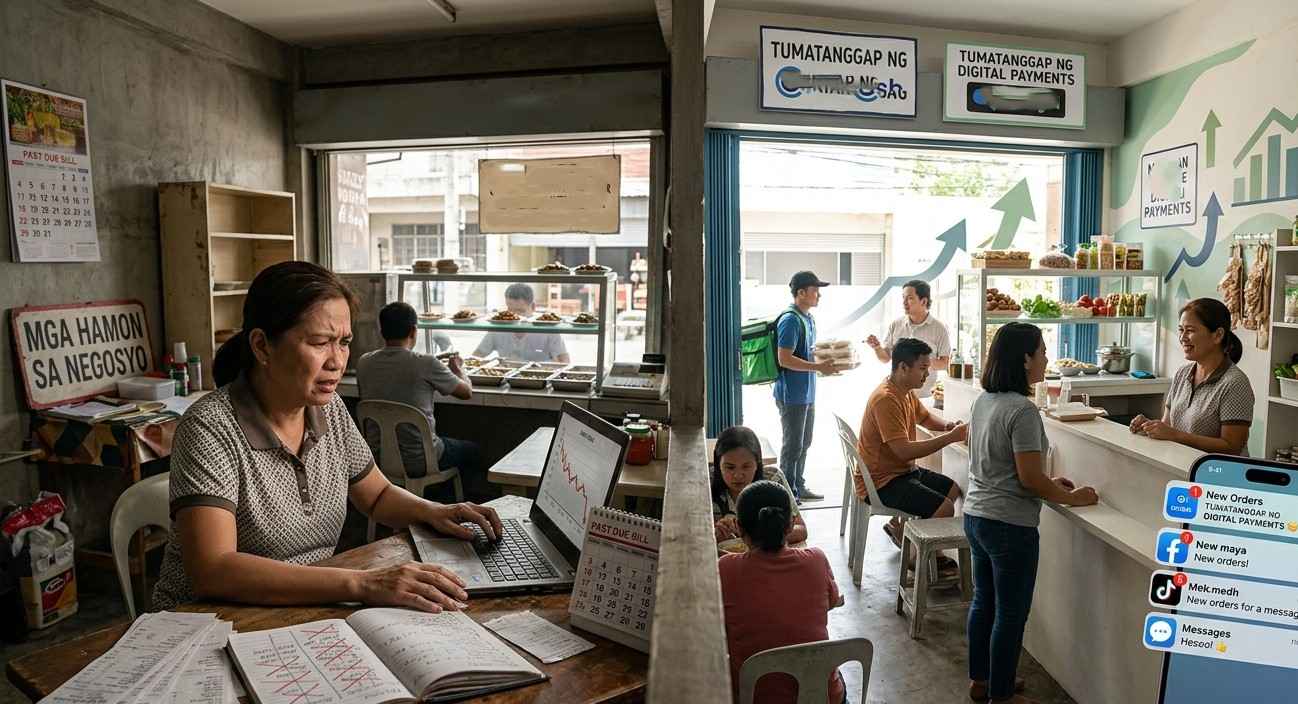
Starting a business is an exciting journey, but growing it into a profitable and sustainable company is a completely different challenge. Many entrepreneurs launch their businesses with passion, determination, and big dreams. However, after months or even years of operation, they find themselves stuck at the same level of sales, struggling to attract customers, and wondering why growth seems impossible.

The truth is that business growth rarely happens by accident. Successful companies grow because they avoid common mistakes and consistently improve their operations, marketing, finances, and customer service. If your small business feels stagnant, understanding the reasons behind slow growth is the first step toward improvement.
business

In this article, we’ll explore the ten most common reasons small businesses fail to grow and what entrepreneurs can do to overcome them.

Advertisement

1. Lack of Clear Business Goals

Many small business owners start with a general desire to make money but fail to establish specific goals. Without clear objectives, it becomes difficult to measure progress, prioritize tasks, or create effective strategies.

A business that lacks direction often reacts to problems rather than proactively pursuing growth opportunities. Owners may spend their time handling daily operations while neglecting long-term planning.

Successful businesses set measurable goals such as increasing revenue by a certain percentage, acquiring a specific number of customers, or expanding into new markets. Clear goals provide focus and help guide decision-making.

Solution: Create short-term and long-term business goals. Review them regularly and adjust your strategies based on results.

Advertisement

2. Poor Financial Management

Cash flow problems are among the leading causes of business failure. Many entrepreneurs focus heavily on sales while paying little attention to budgeting, expenses, and financial planning.

A business can generate significant revenue and still struggle if expenses are not controlled. Overspending on unnecessary equipment, inventory, or marketing campaigns can quickly drain resources.

Without proper financial management, owners may not recognize problems until they become serious.

Solution: Monitor cash flow closely, maintain accurate financial records, and create a realistic budget. Consider working with an accountant or financial advisor when necessary.

Advertisement

3. Weak Marketing Strategy

No matter how good a product or service may be, customers cannot buy it if they do not know it exists. Many small businesses rely solely on word-of-mouth referrals and fail to invest in marketing.

Today’s competitive marketplace requires businesses to establish a strong online presence. Potential customers often search online before making purchasing decisions.

Businesses that ignore digital marketing opportunities often lose customers to competitors who actively promote themselves.

Solution: Develop a marketing plan that includes search engine optimization (SEO), social media marketing, email campaigns, and content marketing to attract and retain customers.

Advertisement

4. Failure to Understand the Target Market

Some businesses attempt to sell their products or services to everyone. While this may seem like a good idea, it often leads to ineffective marketing and poor customer engagement.

Successful businesses understand exactly who their ideal customers are. They know their customers’ needs, problems, preferences, and purchasing behavior.

Without this knowledge, marketing messages become too broad and fail to connect with potential buyers.

Solution: Conduct market research and create detailed customer profiles. Focus on solving specific problems for a clearly defined audience.

Advertisement

Customer satisfaction plays a major role in business growth. A single negative experience can discourage customers from returning and may even lead to negative online reviews.

Businesses that fail to provide consistent customer service often struggle to build loyalty and repeat sales.

On the other hand, companies that prioritize customer experience frequently enjoy higher retention rates and increased referrals.

Solution: Train employees to deliver excellent service, respond quickly to customer concerns, and actively seek feedback for continuous improvement.

Advertisement

6. Resistance to Change

Markets, technologies, and consumer preferences constantly evolve. Businesses that refuse to adapt often become outdated and lose relevance.

Many entrepreneurs become comfortable with existing processes and resist adopting new technologies or strategies. Unfortunately, competitors who embrace innovation usually gain a significant advantage.

The business landscape today changes faster than ever. Adaptability is essential for survival and growth.

Solution: Stay informed about industry trends, invest in modern tools, and remain open to new ideas and business opportunities.

Advertisement

7. Trying to Do Everything Alone

Many small business owners attempt to manage every aspect of their company themselves. While this may work initially, it eventually becomes a major obstacle to growth.

Handling sales, marketing, customer service, accounting, inventory management, and operations simultaneously can lead to burnout and reduced productivity.

Growth often requires delegation. Successful entrepreneurs understand the value of building a capable team.

Solution: Delegate tasks, hire qualified employees, or outsource specialized work such as accounting, digital marketing, and administrative support.

Advertisement

8. Lack of Online Presence

In today’s digital economy, businesses without an online presence are at a serious disadvantage. Consumers frequently search online for products, services, reviews, and recommendations before making purchases.

A business without a professional website or active social media profiles may appear less credible than competitors who maintain a strong online presence.

Additionally, businesses that ignore online opportunities miss valuable channels for customer acquisition and engagement.

Solution: Create a professional website, optimize it for search engines, and maintain active social media accounts to connect with potential customers.

Advertisement

9. Poor Leadership and Decision-Making

Leadership significantly impacts business performance. Poor decisions regarding hiring, investments, partnerships, or expansion can limit growth and create unnecessary challenges.

Strong leaders establish clear visions, motivate employees, and make informed decisions based on data rather than emotions.

Entrepreneurs who fail to develop leadership skills often struggle to guide their businesses through periods of growth and change.

Solution: Invest in leadership development, seek mentorship, and make decisions based on careful analysis and reliable information.

Advertisement

10. Fear of Taking Calculated Risks

Growth often requires stepping outside of one’s comfort zone. Many business owners hesitate to invest in marketing, hire additional staff, launch new products, or expand into new markets because they fear failure.

While caution is important, excessive fear can prevent businesses from seizing valuable opportunities.

The most successful entrepreneurs understand that growth involves calculated risks. They evaluate potential rewards and challenges before making strategic decisions.

Solution: Assess opportunities carefully, gather relevant data, and take informed risks that align with your long-term business objectives.

Advertisement

How Small Businesses Can Accelerate Growth

Understanding the reasons behind slow growth is only the beginning. Businesses that want to grow faster should focus on creating efficient systems, strengthening customer relationships, improving financial management, and investing in marketing.

Consistent learning is equally important. Successful entrepreneurs regularly study industry trends, analyze competitors, and seek new ways to improve their products and services.

Growth is rarely immediate. It often results from a series of small improvements implemented consistently over time. Every positive change, no matter how minor, contributes to long-term success.

Many small businesses fail to grow not because of a lack of effort, but because of common mistakes that limit their potential. Poor financial management, weak marketing, unclear goals, resistance to change, and inadequate customer service are just a few of the obstacles that can prevent progress.

Advertisement

The good news is that these challenges can be overcome. By identifying weaknesses, making strategic improvements, and remaining committed to continuous growth, entrepreneurs can build stronger, more profitable businesses.

Every successful company started small. The difference is that successful business owners learn from mistakes, adapt to change, and consistently take action toward their goals. With the right mindset and strategies, your small business can achieve sustainable growth and long-term success.

BN Philippines
Latest posts by BN Philippines (see all)

Continue Reading

Trending

Copyright © 2025