
Politics
Trump Proudly Showed Off A Glowing Headline. There Was Just 1 Awkward Catch.

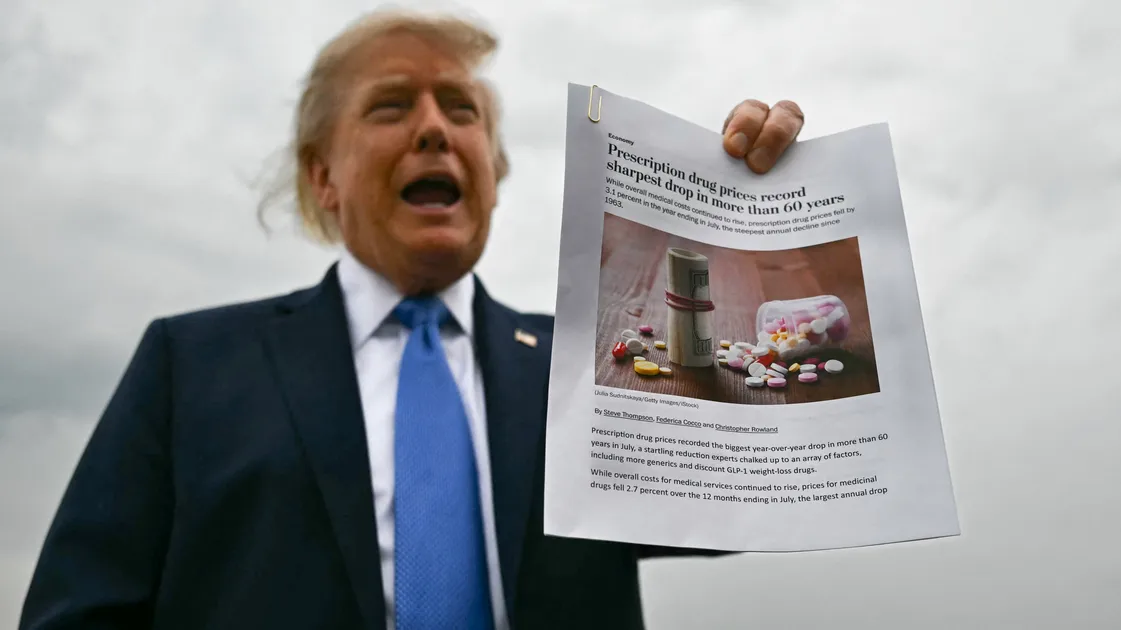
Donald Trump and the White House’s weekend boasts to reporters about the lowering of prescription medication prices somewhat backfired.
He encouraged photographers to snap images of him proudly holding up the story, making sure they got the shot.
“And I told you that was going to happen,” Trump bragged, before moving onto hyping other positive headlines about himself.
However, there was one problem.
As The Guardian pointed out, The Post’s article stated that although “the White House took credit for the good news,” it also actually noted further down in the story how “some experts said a Biden-era policy that requires Medicare to negotiate prices for some popular prescription drugs is more likely to be driving down costs,” and went on to cite those experts.
Listen to Commons People, the podcast that makes politics easy. Every week, Kevin Schofield and Kate Nicholson unpack the week’s biggest stories to keep you informed. Join us for straightforward analysis of what’s going on at Westminster.


Pirates Of The Caribbean producer Jerry Bruckheimer has claimed that he is currently in negotiations with Johnny Depp to get him to return to the franchise.
Over the weekend, Bruckheimer appeared at Disney’s annual D23 fan event, where updates are given about the company’s films, theme parks and other major projects.
During the event, Pirates Of The Caribbean’s lead producer confirmed to Deadline that he was “talking with Johnny” about getting him to play the role of Captain Jack Sparrow again.
“We’re working on a screenplay, and hopefully we can get this done,” he added.
HuffPost UK has contacted Johnny Depp’s team for comment.
Last year, Bruckheimer made similar claims, telling Entertainment Weekly that he’d been in contact with Depp about coming back as Jack Sparrow.
“If he likes the way the part’s written, I think he would do it,” he said, adding: “It’s a reboot, but if it was up to me, he would be in it. I love him. He’s a good friend.”
“He created Captain Jack,” Bruckheimer added at the time. “That was not on the page; that was him doing a little Pepé Le Pew and Keith Richards. That was his interpretation of Jack Sparrow.”
It should be noted, though, that after testifying in his infamous 2022 court case, Depp insisted he would not even accept an offer of “$300 million and a million alpacas” to reprise his role in a future Pirates Of The Caribbean film, after claiming Disney had dropped him from the franchise years earlier.
Depp has been a controversial figure ever since 2016, when his ex-wife Amber Heard alleged during their divorce proceedings that he had been abusive towards her in their marriage, which he denied at the time.
The two later reached a settlement and issued a joint statement, which read: “Our relationship was intensely passionate and at times volatile, but always bound by love. Neither party has made false accusations for financial gain. There was never any intent of physical or emotional harm.”
In 2019, Depp took legal action against Heard, accusing her of defamation after she penned an opinion piece claiming that she had been a victim of domestic abuse, without mentioning anyone, including her famous ex-husband, by name.
After a very public court battle, a jury eventually found in 2022 that Heard had defamed Depp with the statements in her opinion piece.
Two years before that, Depp had also sued the publishers of The Sun newspaper over a piece describing him as a “wife-beater”.
However, the UK’s High Court Of Justice eventually ruled that the “great majority” of Heard’s allegations of abuse could be proven to the civil standard, and as a result The Sun’s description was “substantially true”.
Depp appealed this verdict, but the request was eventually denied.
While he has been largely out of the spotlight in recent history, he is due to take the lead in Ti West’s A Christmas Carol reimagining Ebeneezer later this year, co-starring Oscar nominee Andrea Riseborough, Harry Potter’s Rupert Grint, Emmy winner Tramell Tillman and acting legend Sir Ian McKellen.

President Donald Trump said on Sunday that he has ordered the Pentagon to scale back the joint military exercises with South Korea that began this week.
In a Truth Social post, the president said his decision was based on his “very good relationship with Kim Jong Un,” and described North Korea as “unthreatening and respectful.” He also condemned South Korea for declining to help the US de-nuclearise Iran.
The joint exercises were expected to last 11 days and involve 18,000 South Korean soldiers, The Associated Press reported. In a statement carried by state media Friday, North Korea described the training as “a rehearsal for an aggressive war.”
Trump said that he sees the exercises as “hostile” to North Korea and costly for the US, but because it was too late to cancel them, he had ordered a reduction instead.
On Saturday, Trump posted a photo of himself standing next to the North Korean dictator and said the two get along well “despite the unfriendly look on this particular picture.”
It wasn’t immediately clear what scaling back the exercises would entail. South Korea’s Defense Ministry told AP that the drills had started on Monday local time as planned.
According to The New York Times, the two countries have conducted joint military exercises for over 70 years. Such exercises have been dedicated to honing the readiness of US and South Korean troops so they’re prepared to respond to North Korea’s military and weapons capabilities.
Historically, North Korean leaders have criticized the exercises while finding ways to capitalize on them. Experts told The AP that North Korea has used the exercises as a “pretext” to do its own weapons testing and curry goodwill for Kim. Just last week, North Korea fired a ballistic missile toward the sea ahead of the start of the drills.

Photo by Jung Yeon-je / AFP via Getty Images
It’s also not the first time that Trump has sought to curtail the exercises. He suspended the exercises in 2018 as part of denuclearization talks with North Korea, BBC News reported.
Critics of Trump’s announcement on Sunday emphasized that the move essentially aligned the US president with an authoritarian leader, while undermining America’s long relationship with South Korea.
“Our ability to help defend our ally against the North Koreans is because our forces are well trained and able to coordinate with the South Koreans,” Sen. Mark Kelly (D-Ariz.) wrote on X. “Hollowing out these joint exercises is shortsighted and a mistake.”
Listen to Commons People, the podcast that makes politics easy. Every week, Kevin Schofield and Kate Nicholson unpack the week’s biggest stories to keep you informed. Join us for straightforward analysis of what’s going on at Westminster.

President Donald Trump shared an oddly lyrical prediction about the future of “the woke” on Friday.
Fox News’ Alexis McAdams and the president were discussing a viral interview in which Rep. Alexandria Ocasio-Cortez (Democrat, New York) joked about political discourse in the early 2020s. In it, the progressive lawmaker quoted New York City council member Chi Ossé’s quip that “Woke 1 was crazy.”
On Friday, Trump characterised Ocasio-Cortez’s comments as an example of Democrats trying to “disavow” previously held opinions on issues like crime.
McAdams asked, “Democrats are trying to back away from those woke thoughts before the midterms. How can you remind people of that?”
“They’re going to be reminded anyway, and you don’t have to remember too much,” Trump replied. “You know, you’re talking about elections that if you win by 10%, it’s supposed to be a landslide, right? So you don’t have to remember too much.”
That’s when he delivered his wokeness prophecy.
“People know the woke,” he said. “I mean, they know the woke. And the woke will become woke again, as soon as they get elected.”
Watch McAdams’ interview with Trump below:
Though Ocasio-Cortez distanced herself from some of the “rhetoric” of the COVID-19 pandemic-era, she added that many of the period’s conversations around social issues like crime were “quite fruitful.”
“I think that when we talk about crime today, it’s fundamentally different than the way we talked about crime, and bringing crime down, right?” she said. “And I think that we all share in the goals of having as low a crime rate as possible. I think, that, you know, during lockdown of course, rhetoric in that time is not rhetoric that we would use today.”
When asked if Ocasio-Cortez was going to run for president, Trump had a swift answer.
“I think so,” he said.


4 min read
The PM must step in to help the next generation of artists.
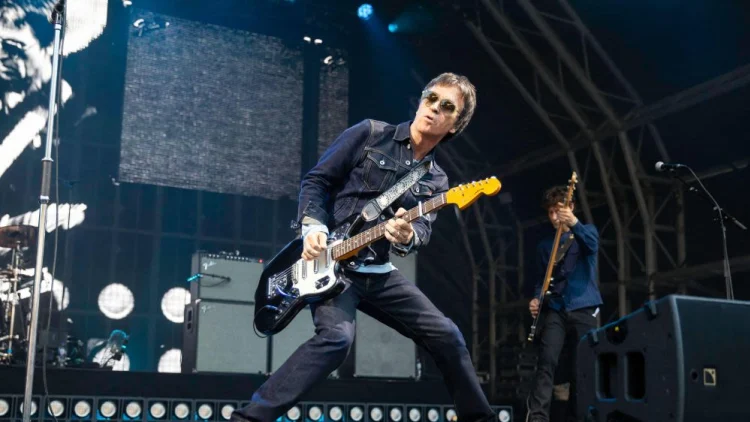
As a keen music fan, our new Prime Minister, Andy Burnham, will know that the UK music industry faces major challenges. He will be well aware of the immense pressure on venues, studios and music businesses due to rising costs and the barriers that musicians and crew still face when trying to tour post-Brexit.
The PM acted swiftly in his first few days in No 10 by moving to cut business rates for music venues from next April. This is a welcome boost for this crucial sector, which supports 220,000 jobs and generates £8bn for the UK economy and £4.8 bbn in export revenues each year.
There is another issue that poses a very real threat to the UK’s music sector and wider creative industries that requires the urgent attention of Burnham and his team: artificial intelligence and copyright.
A cornerstone of our creative sectors’ current success is the effectiveness of the UK’s system of copyright and licensing arrangements. In a nutshell, these rules ensure creators get paid for what they do, and enable them to carry on producing the creative content loved by millions not just here in the UK, but across the world.
However, the protections afforded by copyright are now under threat. The widespread, unlicensed use of creative content for AI training by tech giants – most of which are based across the Atlantic – is hugely impacting the ability of our musicians, songwriters and performers to make a living.
Creators are losing meaningful control over the commercial exploitation of their works and identities, while a flood of AI-generated content in the market is replacing human-made work and undercutting paid commissions. Left unchecked, this issue poses a clear danger to individuals and businesses across our entire £125bn creative industries.
The government has said that the creative industries are one of the key pillars of the UK’s future economic growth. If it thinks that, it should act on it. It must now find workable solutions to the undoubted challenges that AI presents to their ability to survive and thrive.
The House of Lords Communications and Digital Committee, which I chair, outlined some of these solutions in a report we published in March. I would urge Burnham to look at our conclusions if he is determined to ensure we get the next generation of iconic bands he cherishes, such as Oasis, The Smiths, The Stone Roses and Wolf Alice.
Our cross-party group made it clear that the government faces a stark choice. The UK can either become a world-leading base for responsible AI development, underpinned by licensing and fair remuneration, or drift towards accepting large-scale, unlicensed use of creative content and seeing US-based AI firms profit, while harms to UK creators grow.
One early decision we would like to see is a move to firmly rule out adding a broad new commercial text and data mining (TDM) exception to UK copyright law. If such an exception is allowed, it would effectively give AI firms free rein to use the work of music creators and others without payment or permission. It would weaken the UK’s copyright law, exacerbate existing harms to rightsholders and stall the emerging licensing market.
To safeguard creators’ livelihoods while supporting sustainable AI growth, the government must develop a system that ensures licensing of copyrighted content is the top priority. This must be underpinned by a mandatory transparency framework for AI developers, so rightsholders know whether and how their work has been used to train AI models. They should also consider how public procurement could help foster compliance by international AI firms when it comes to transparency.
We also need to see creators’ rights strengthened through the introduction of protections against unauthorised digital replicas. These must give creators and performers meaningful control over how their identities are used commercially. A robust policy and effective technical standards for labelling of AI-generated material should also be prioritised, so music fans and others can easily see when work has been created by AI.
We all want to see our music sector, our creative industries and our wider economy grow. A key way of doing that is by ensuring we create the conditions for a fair and inclusive UK licensing market for AI training. The government should now take the necessary steps to help this market grow in a way that works for rightsholders and AI developers.
The UK has a gold-standard copyright regime. In the age of AI, the government must protect, not weaken, it so that our music and creative industries can continue to flourish for decades to come.
Baroness Keeley is Chair of the House of Lords Communications and Digital Committee
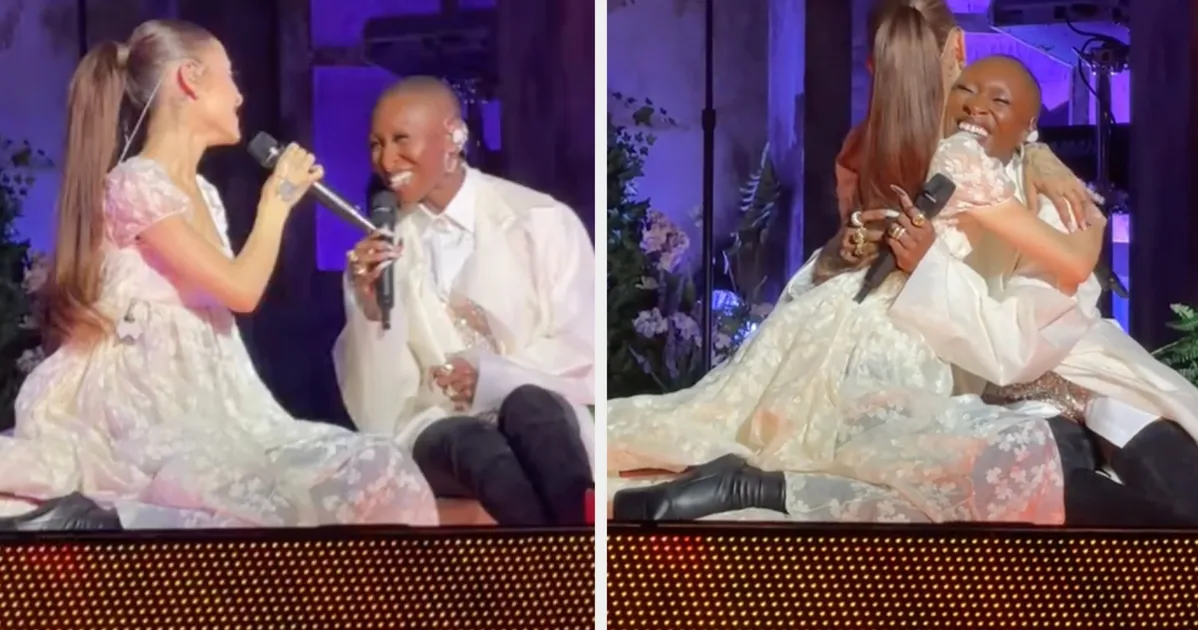
Ariana Grande had a surprise in store for her fans in London on Sunday night.
Over the weekend, the Grammy winner kicked off the final run of shows on her Eternal Sunshine world tour, with the first of 10 dates at the iconic O2 Arena.
Towards the end of her second show on Sunday evening, Ariana brought out her Wicked co-star Cynthia Erivo for a stunning live performance.
During the encores, the Oscar-nominated co-stars gave a rendition of the Wicked: For Good ballad, For Good, before delivering a show-stopping performance of Get Happy and Happy Days Are Here Again, popularised by Judy Garland and Barbra Streisand in the early 1960s.
As you’d expect, the impromptu performance went down a storm at the venue, as well as on social media.
The pair previously went viral with their version of Get Happy/Happy Days Are Here Again when they performed it during the TV special Wicked: One Wonderful Night last year.
Ariana now has eight shows left at The O2 before the Eternal Sunshine tour comes to an end on Tuesday 1 September.
The Grammy winner had previously indicated that her Eternal Sunshine shows would be her last time performing live for the foreseeable future, saying during an interview on the podcast Good Hang last year: “I’m very excited to do this small tour, but I think it might not happen again for a long, long, long, long time. So I’m going to give it my all.”
More recently, her spokesperson told People magazine: “Ariana will be taking a step back from visibility after she completes the Eternal Sunshine Tour.
“She looks forward to finishing the tour and ending it on a high note, both healthily and happily, and then taking a much-deserved break from public-facing work and appearances, which has led to endless, ongoing public scrutiny.”
They added: “This tour has been a beautiful experience for her. She loves her fans and has loved every minute of this tour so much.”
Ariana had been due to appear in a London revival of the musical Sunday In The Park With George next year, which would have reunited her with Wicked co-star Jonathan Bailey, though she has now withdrawn from the production.

Hollywood is in mourning following the sudden loss of Hayden Panettiere at the age of 36.
On Sunday evening, Hayden’s family confirmed that the former child actor had died, with her father Skip remembering her as an “incredible light and a force of nature”, who not only brought “immeasurable love and joy to all who knew her” but also “to the millions who watched her on screen”.
Although she was still just 36 at the time of her death, Hayden’s career spanned more than 30 years, after getting her start in the entertainment industry at the age of just five, appearing in hugely popular TV shows and films throughout her time in the spotlight, including numerous big-name franchises.
To remember Hayden and her legacy, we’re looking back at some of the biggest roles she played over the course of her lifetime…
One Life To Live (1994)

Ann Limongello Disney General Entertainment Con
Hayden was just five years old when she landed the role that would change her life as Sarah Roberts in the US daytime soap One Life To Live.
She appeared in 26 episodes of the serial between 1994 and 1997, after which the character would later be played by Shanelle Workman and Justis Bolding.
Guiding Light (1996)

After two years playing Sarah Roberts, Hayden made the jump to another US soap, Guiding Light.
She played Lizzie Spaulding for around four years, during which time the show was honoured with a Special Recognition Award by the Leukemia and Lymphoma Society for raising awareness of the disease thanks to Hayden’s portrayal of a young girl receiving cancer treatment.
A Bug’s Life (1998)

The same year she made her debut with a small role in the Jennifer Aniston and Paul Rudd rom-com The Object Of My Affection, Hayden also lent her voice to the Pixar movie A Bug’s Life.
She played the young ant Dot, the daughter of Phyllis Diller’s Queen and sister of Julia Louis-Dreyfus’ Princess Atta, in one of several projects she’d appear in for Disney, which also included the CGI animation Dinosaur and the live-action film Tiger Cruise.
Kingdom Hearts (2002)

Another hugely popular project Hayden appeared in for Disney wasn’t a TV series or a movie, but the video game Kingdom Hearts, a crossover between Final Fantasy and the House Of Mouse’s most popular franchises.
In the first two English dubs of Kingdom Hearts, Hayden lent her voice to the character Kairi, reprising the role numerous times over the years, as well as the mysterious Xion.
Ally McBeal (2002)

In the fifth and final season of the legal dramedy Ally McBeal, Hayden made her debut as Maddie Harrington, the main character’s biological daughter.
Maddie, it soon emerged, was conceived after a mix-up at a fertility clinic where Calista Flockhart’s titular lawyer had frozen her eggs years earlier.
Malcolm In The Middle (2003)

Throughout the dysfunctional and chaotic family comedy Malcolm In The Middle, Jessica made numerous appearances as the recurring character Jessica.
Initially introduced as a manipulative and devious babysitter to the boys, who are resentful towards her because she’s Malcolm’s age. However, as her story arc progresses, we learn more about the character, and she even grows protective towards Malcolm, and emerges as a potential love interest for him.
Heroes (2006)

NBC/Universal Tv/Kobal/Shutterstock
Hayden’s breakthrough moment came when she was cast as Claire Bennet, a high school cheerleader with special abilities, in the supernatural drama Heroes.
Its initial run, which also co-starred Milo Ventimiglia, Zachary Quinto and Kristen Bell, ran for 77 episodes, centring around a group of unlikely superheroes who are united only by their wide-ranging powers.
Amanda Knox: Murder On Trial In Italy (2011)

One of several collaborations between Hayden and the US broadcaster Lifetime came in 2011, when she took the lead in the true crime drama Amanda Knox: Murder On Trial In Italy.
Taking on the lead role of Amanda Knox, convicted and later acquitted for the murder of her roommate, Meredith Kercher, the cast also included Oscar winner Marcia Gay Harden and British actor Vincent Riotta.
Scream 4 (2011)

Dimension Films/Kobal/Shutterstock
To fans of the slasher genre, Hayden will be best remembered for her work as the dry-humoured horror fanatic Kirby Reed in Scream 4, who becomes a target of Ghostface when the Woodsboro murders begin to be recreated.
After a voice-only appearance in the fifth instalment, Hayden returned to the franchise in 2023, where her character was revealed to have taken up a new role as FBI agent following her traumatic experiences years earlier.
Nashville (2012)

Walk Chew Gum/Kobal/Shutterstock
For her work in the musical series Nashville, Hayden took the lead as aspiring country star Juliette Barnes, a role that required her to show off her singing prowess as well as her acting.
Playing the up-and-coming rival to Connie Britton’s more established character Rayna Jaymes, Hayden appeared in all six seasons of Nashville, contributing vocals to all of its accompanying soundtrack albums, before it came to an end in 2018. During her time on the show, she was nominated for two Golden Globes.
Custody (2016)

Paul Sarkis/Lucky Monkey/Kobal/Shutterstock
In the courtroom drama Custody, Hayden played a defence lawyer tasked with defending a woman whose children have been taken away from her after an incident at their home.
Overseeing everything was screen icon Viola Davis as a judge, with the cast also including Oscar nominee Catalina Sandino Moreno, Emmy nominee Karen Pittman and Oscar-winning screen veteran Ellen Burstyn.

Hayden Panettiere has died at the age of 36.
The Golden Globe nominee was best known for her work in the TV series Heroes and Nashville, while to fans of the horror genre, she was most recognisable for her performance as Kirby Reed in the Scream franchise.
On Sunday night, her father Skip Panettiere issued a statement which read: “It is with profound sadness that we share the tragic passing of our beloved Hayden. She was an incredible light and a force of nature who brought immeasurable love and joy to all who knew her and to the millions who watched her onscreen.”
Skip also requested privacy from the media “as our family takes time to process this unimaginable loss”.
No further details about Hayden’s death have been made public.
Hayden began her career as a child actor, landing the role of Sarah Roberts in the US daytime soap One Life To Live when she was just five years old.
From there, she went on to play Lizzie Spaulding in Guiding Light, earning a Special Recognition Award from the Leukemia & Lymphoma Society for her portrayal of a young girl with cancer, and voiced characters in the Disney movies A Bug’s Life and Dinosaur.
She was also nominated for a Young Artist Award for her work in the Lifetime movie If You Believe, and played small parts in Malcolm In The Middle, Ally McBeal and the Law & Order franchise.

NBC/Universal Tv/Kobal/Shutterstock
In 2006, she made her debut as Claire Bennet in the superhero drama Heroes, and later played the title role in the TV movie Amanda Knox: Murder On Trial In Italy and Juliette Barnes in Nashville, for which she earned a Golden Globe nod.
Those who played Disney’s Kingdom Hearts video games will also have heard Hayden’s voice as the English dub of Kairi.
She later landed the role of Kirby Reed in 2011’s Scream 4, reprising the role in the sixth instalment in 2026.

Dimension Films/Kobal/Shutterstock
Hayden’s final projects included the thrillers Amber Alert and Sleepwalker, the latter of which also saw her serving as executive producer.
Earlier this year, she released her memoir This Is Me: A Reckoning, in which she spoke candidly about the highs and lows of working in the entertainment industry, including detailed accounts of addiction, abuse and her own mental health struggles.
Three years ago, she lost her brother, fellow former child actor Jansen Panettiere, as a result of cardiomegaly, otherwise known as an enlarged heart.

For many years, it has been tantamount to racism to draw any connection between foreign nationals and criminal offending in the UK. But case after case shows that there is a connection, and that it is becoming stronger. This is particularly true when it comes to male immigrants from Afghanistan committing sexual offences.
On Tuesday, Abdul Nabizada was sentenced to seven years in prison for raping a 19-year-old woman in Edinburgh in 2021. Nabizada had formerly worked as translator for the British Army in his native Afghanistan, before arriving in the UK in 2016 and beginning work as a private driver in Scotland. It was at work when Nabizada carried out the attack. His 19-year-old victim was intoxicated and had been expecting to be driven home, only to be subjected to a brutal sexual assault.
Afghan nationals have carried out sex attacks in Scotland before. In Falkirk, a town in Scotland’s central lowlands, Afghan national and illegal immigrant Sadeq Nikzad raped a 15-year-old schoolgirl in 2023. Before being jailed for nine years, Nikzad sought to defend himself by citing language barriers and cultural differences – such as the custom of child marriage in his homeland of Afghanistan.
England has experienced a string of similarly harrowing cases. One of the most high-profile examples involved two Afghan 17-year-olds, Jan Jahanzeb and Israr Niazal. They were jailed in December last year, after being found guilty of raping a 15-year-old girl in Leamington Spa, Warwickshire.
Then there was the case of Ahmad Mulakhil. In March, the 23-year-old was jailed for 16 years after he was convicted of abducting and raping a 12-year-old girl in the market town of Nuneaton in July 2025. Mulakhil arrived in the UK without permission, on a small boat, just months before carrying out the attack.
More recently, seven Afghan nationals – all of whom arrived in the UK illegally – have been charged for effectively establishing their own rape gang in Norwich. The men have been accused of 40 offences, including rape and human trafficking. The alleged victims were two girls who were in their early to mid-teens when the offences are alleged to have taken place.
The statistics clearly show that Afghan nationals pose a disproportionate threat when it comes to sex offences. Last year, Sky News’s data and forensics unit – using annual population survey data from 2021 and Met Police figures – found that, for Afghan nationals, there were 59.2 sexual offence charges per 10,000 across England and Wales. The corresponding figure for UK nationals was 2.7 offences per 10,000 people.
Other stats also show a distinct correlation. When using figures for ‘country of birth’ based on the 2021 England and Wales Census, there were nine sexual-offence charges per 10,000 Afghan-born people. This drops to 2.9 sexual-offence charges per 10,000 UK-born people. Afghan nationals remain three times more likely to commit a sex offence than a British-born citizen.
These findings shouldn’t surprise us. After all, Afghanistan ranks rock bottom out of 181 countries on Georgetown University’s Women, Peace and Security Index. It is a country were child marriage is common, where women are treated as the property of their husbands or fathers. And when those men come to the UK, many of them carry these attitudes with them.
The evidence is clear – Britain’s lax border security and dysfunctional asylum system has made society less safe for its female citizens. Nowhere is this more obvious than the rising number of sexual offences perpetrated by Afghan men. It’s high time we were honest about it.
Rakib Ehsan is the author of Beyond Grievance: What the Left Gets Wrong about Ethnic Minorities, which is available to order on Amazon.
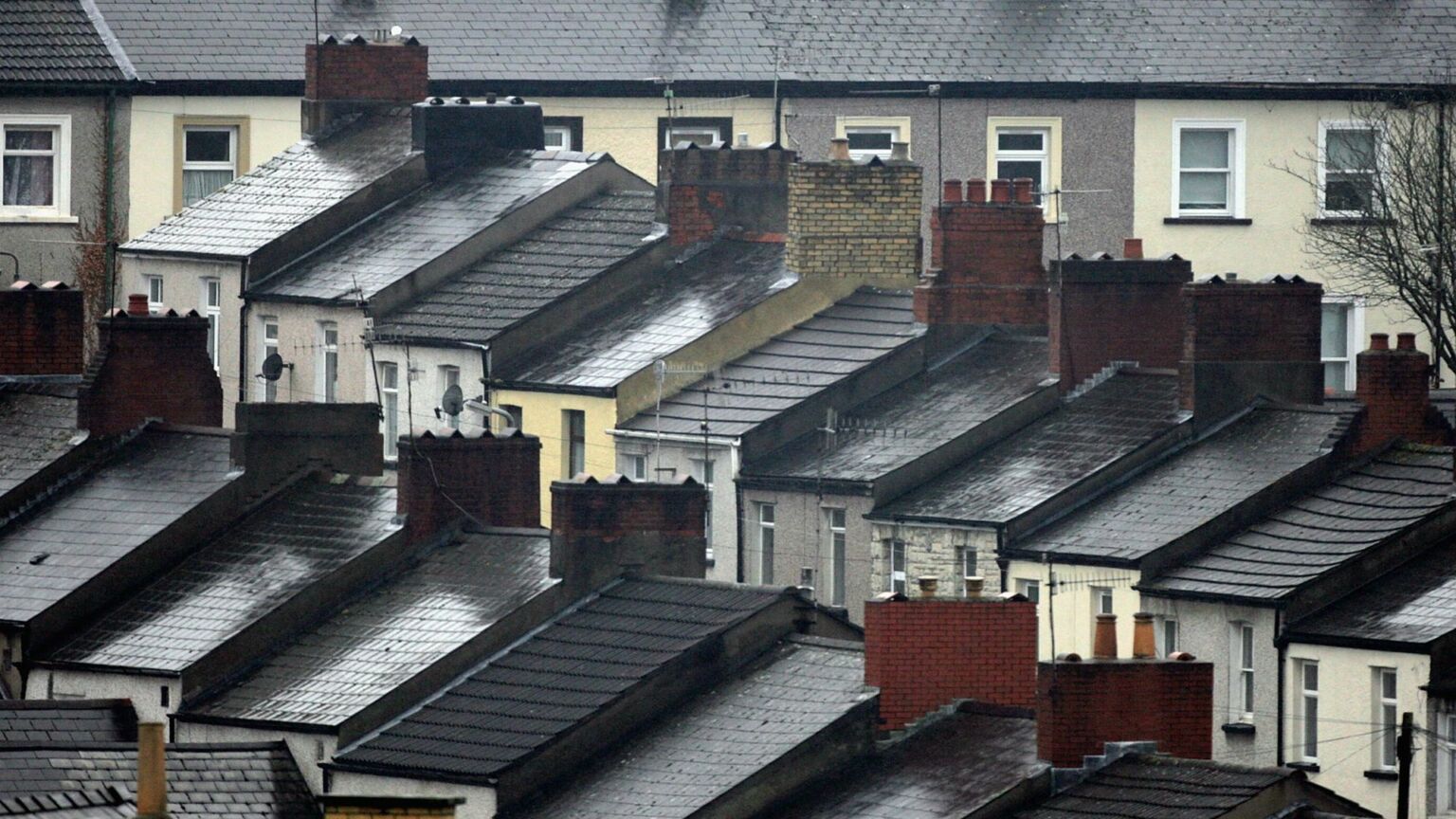
The phrases ‘housing crisis’ and ‘housing shortage’ do not do justice to the scale of the disaster ahead in Britain.
To gain an idea of just how severe the problem is, take the right-leaning Centre for Policy Studies. It says that, in 2023, the UK housed 68.2million people in 30.4million homes – which is 446 homes for every thousand heads. That ratio might seem generous, but in Europe, only Ireland, at 411 homes per thousand, has worse housing provision than the UK. For the UK to reach the 542 homes per thousand averaged by comparable European countries would mean meeting a shortage of no fewer than 6.5million homes.
Our politicians are well aware of the crisis. In 2024, when she became secretary of state at the Ministry of Housing, Communities and Local Government, Angela Rayner announced that Labour planned to build 1.5million homes in England by 2030. Rayner decreed that local authorities must meet mandatory housebuilding targets, as if numbers on computer monitors had magical powers. Later, however, she conceded that her target would only make ‘a dent’ in the nation’s housing need, and that it was ‘stretching’.
New prime minister Andy Burnham is now set to make housing one of his key policy initiatives. He has already stated that Britain is in ‘the grip of a housing crisis’, has promised to end rough sleeping, and has talked of delivering ‘the biggest council-house building programme since the postwar period’. He has also, predictably, laid blame at the door of Margaret Thatcher and her government’s 1980s right-to-buy scheme, allowing council-house residents the opportunity to purchase their homes.
The housing statistics make for grim reading, no question. Fewer new-build housing schemes are ready to start selling homes than for almost a decade. The housing charity Shelter found that, in England, more than 1.3million households are on waiting lists for social housing, yet councils, housing associations and private developers built only 12,198 new such homes in 2025. The situation in London looks dire. And Greater Manchester? That case deserves special scrutiny, given its connection to our current PM.
Burnham was mayor of Greater Manchester between 2017 and 2026. His record in building council houses there inspires very little confidence. In his 2024 mayoral manifesto, Burnham promised 10,000 new council homes across Greater Manchester by 2028. But by June 2025, Greater Manchester Combined Authority reported that just 4,000 homes had been finished since the start of the decade – many of which were not council houses.
Why have Labour and Burnham, despite their partisan fidelity to council housing, found it so hard to build any houses at all? The green lobby has undoubtedly played a role. At the Greater Manchester Green Summit of 2018, hosted by Burnham, it was agreed that the Greater Manchester area should achieve carbon neutrality not by the national target year of 2050, but as early as 2038. Four years later, Burnham’s Greater Manchester Truly Affordable Net Zero Homes (TANZ) task force insisted that all new housing in the Manchester conurbation be Net Zero by 2028. These greener-than-thou requirements of housebuilders can only have slowed the construction of new homes.
Yet though Net Zero zealotry has played a significant role in impeding housebuilding in the UK, other roots of the housing crisis also run deep.
Why the house-price boom ended
Between 1856 and 1939, housebuilding in England and Wales grew by 1.9 per cent a year. That rate fell, however, to 1.2 per cent between 1947 and 2019. Private housebuilding also halved, with the UK registering the lowest housebuilding rate of any similar European country.
Much of the responsibility for this, one of us has long argued, lies with Clement Attlee’s Labour government and its 1947 Town and Country Planning Act (TCPA). That gave the state a monopoly on the development of land. Later legislation and regulation, securing the Green Belt and sites of special scientific interest and creating myriad other environmental devices, further restricted the space on which new homes could be built. The restrictive planning system, limiting the supply of new houses to a trickle, helped to ensure that, for decades, UK house price rises rose consistently and continuously. Nationwide’s widely used house-price index for 1953 onwards shows that, even after boom-and-busts around 1970, 1980 and 1990, annual house-price inflation in the UK recovered to an an annual average of 10 per cent.
Early this century, however, a house-price bust began, complete with a 14 per cent deflation during the Great Financial Crisis of 2007-2008. Since then, annual increases have been five per cent or less. Thus, adjusted for retail-price inflation, the average price of a UK house in real terms, costing above £330,000 from 2021 to 2022, has now fallen by £50,000 – to less than £279,000. In May and June, market prices also stalled.
Extortionate mortgages go some way to explain the fall in house prices. Stewarded by the hapless Andrew Bailey, the Bank of England became the first G7 central bank to raise interest rates to try to beat the inflation that attended Covid. As a consequence, mortgage rates have risen from 1.3 per cent in September and October 2021 to nearly five per cent today. No wonder homes now go unsold. People simply don’t have the means to buy them. Again, London is a prime example – 4,629 recently completed dwellings failed to find a buyer in June, and more than 2,700 were halted before completion.
Britain’s house-price crunch is even more remarkable in the light of net migration to the UK. We might expect migration-fueled population growth to increase demand for housing, and therefore for house prices to rise. From 251,000 in the year to June 2021, net migration soared to a peak of 944,000 in the year to March 2023, only returning to 2021 levels last year. Yet while mass immigration has boomed, in that same period house prices still fell.
What all this tells us is the danger of isolating symptoms of Britain’s housing predicament as causes. High interest rates, after all, reflect a deep-rooted inability to fight inflation by making things cheaper – housing included. Seizing upon mortgage rates or indeed immigrants as the chief culprit for our housing problems, therefore, is lazy. The problems go much deeper than that.
The distinguished economic geographer Paul Cheshire has it right about the house-price crunch. His focus is Britain’s deeper, broader productive malaise. He notes that the UK economy is stagnant, that real incomes haven’t risen since 2008, and that younger house purchasers are ‘unable to pay any more money’ to buy homes. His point about the stagnation of UK plc is key.
Following Cheshire, we should see both the long-term and the recent declines in housebuilding as part of the UK’s general economic struggles. Indeed, both the decline in housebuilding and that in the rate of GDP growth share the same sources – the spread of general bureaucratic regulation, especially around Net Zero, and the spread of what spiked has termed growth scepticism.
Since 1998, when Tony Blair declared economic stability ‘a sexy thing’, UK GDP growth has averaged just 1.5 per cent a year. Housing is caught in an ailing economy.
There are signs of this across the housing sector. Builders such as Vistry and Crest Nicholson have been targeted by short sellers, while Berkeley Group and Taylor Wimpey face thinner profits. Worse, the UK construction sector as a whole is complacent about productivity – fully 22 per cent of builders never bother even to measure it. As a major report by Mace Construct notes, between 1997 and 2022, the productivity of UK general construction improved by about one per cent, against 29 per cent for the UK private sector as a whole and a huge 182 per cent for manufacturing. ‘Almost no other major sector’, Mace Construct says, ‘has stood still for that long’.
The quantity and quality of housebuilding have suffered, too. New homes are not just in short supply – they are also often of dubious quality and wanting in workmanship. Britain’s existing housing stock, not least its council estates, is in a state of widespread dilapidation. Britain’s houses are some of the draughtiest in Europe, lacking both insulation and air conditioning, and they have some of the smallest rooms in Europe.
Sclerosis in Britain’s wider economy cannot fail to rule, too, in its housing sector.
How green tape restrains new housing
Britain’s officious, hyper-regulatory planning system has deepened the housing sector’s travails. As the Organisation for Economic Co-operation and Development puts it, Britain’s planning system for the use of land is ‘overly stringent and complex’.
The sheer size of Britain’s regulatory apparatus in housing speaks volumes. The Ministry of Housing, Communities and Local Government directly employs a good 3,500 people directly, and adds more through the enormous Land Registry (nearly 7,000), Homes England (nearly 1,700) and the Housing Ombudsman Service (600). Its Planning Inspectorate, which attends not just to infrastructure but also to local housing plans, numbers about 450 people, plus another 500 support staff. It makes more than 1,500 decisions a month, but cases typically take about six months. Though it hopes to eradicate case backlogs by next year, this seems unlikely.
Similarly, the Department for Environment, Food and Rural Affairs has 5,800 staff. Then there are its ‘arm’s length’ subsidiaries – the giant Environment Agency (more than 13,000), plus Natural England (2,800). Meanwhile, each of England’s 327 local authorities has a rough headcount of 40 planners, adding a further 13,000 people to look after housing-related matters. Here, too, the wheels of planning grind slow, as local authorities struggle to recruit experienced planners.
Altogether, there are a good 50,000 Brits whose jobs depend on ensuring that residential construction remains an unfathomably complicated business. And this is before we get to the Building Safety Regulator, established in 2023, after the 2017 fire at Grenfell Tower. Charged with the control of ‘higher risk’ buildings (those over seven storeys or 18 metres high), the BSA has 152 staff members and nearly 500 hangers-on. Its cause may be just, but it has refused two-thirds of the applications for building-assessment certificates made to it, and its processing times take ‘twice as long as expected’.
And still the green tape piles up. On New Year’s Day 2027, the UK’s Carbon Border Adjustment Mechanism (CBAM), drawn up in 2023 during Rishi Sunak’s Conservative government, comes into effect. Builders who import the basic raw materials of construction face a carbon cost for these goods’ production ‘comparable to what would have been payable had [the materials] been produced in the UK’. Given that a quarter of the cement, more than half the steel and 90 per cent of the aluminium used by the UK is imported, the costs of CBAM will hit the country hard. And apart from the direct costs to them, UK housebuilders will have to be on continuous lookout for the carbon and perfluorocarbons emitted in producing the steel and aluminium they put in ‘roofs, roofing frameworks, doors and windows and their frames and thresholds for doors, shutters, balustrades, pillars and columns’. Worse, note construction experts Turner and Townsend, as CBAM rules tighten, so builders will find that getting hold of ‘real’ emissions data from suppliers will become ‘essential and standard’ – a bureaucratic requirement that can only raise the cost of new housing.
Labour policy prevents new homes
Britain’s property-owning establishment has no interest in overcoming the morass of regulation we have described. Residential property is a historic bulwark of British capitalism, even if a weak one now. The value of UK housing as an asset is rated at £9.18 trillion. The establishment certainly doesn’t want new houses and new people spoiling the value of that. Its members have made their pile, and insist that any new houses are sustainable and built only on brownfield sites – that is, land that has been previously developed.
In fact Labour has favoured brownfield-only development ever since UK chancellor Gordon Brown first insisted upon it 20 years ago. The policy has also made a big contribution to housing shortages. Indeed, however rapacious Britain’s major housebuilders are, their chokehold on the market is nothing to that exerted by the state.
The state buttresses the sheer unaffordability of housing in the UK today. People now face the very real prospect of never paying off their mortgage. At £268,000, the average price of a UK house in 2026 is nearly seven times average annual total earnings – £39,000. These facts are well known; but we should know what they mean for the future of Britain.
Consider Tom, Dick and Harriet, three main or only earners in households located in England. Say that, respectively, they buy an average house at the average age for a first-time buyer in three different years – 1995, 2010 and 2025. Now, in those years, Tom, Dick and Harriet are likely to be 29, 31 and 34, respectively, with typical pre-tax earnings of £16,000, £26,000 and £38,000. And in those years the average house cost roughly £54,000, £167,000 and £268,000. In other words, Tom bought at about three-and-a-half times his salary; Dick at more than six times; and Harriet at the multiple of seven we have mentioned.
If we now ask what ages Tom, Dick and Harriet will be when their mortgages are finally paid off, the answers are 54, 61 and 69. Tom took the 25-year mortgage that was then standard, and was clear by his mid-fifties. Dick, on a 30-year term, will not finish until he is past 60. And Harriet, on one of the 35-year terms now taken by most first-time buyers, will not make her final payment, if she can, until she is 69 – past the state pension age. Stretch her loan to the 40-year maximum and she clears it at 74. This is not conjecture: Today, new mortgages cluster around borrowers who will be 69 or 74 years old when they finish paying their dues.
These rough figures point in an unmistakable direction. Without growth, Britain is working up a mixture likely to prove explosive – especially among young people, for whom ‘generation rent’ could all too easily morph into ‘generation tent’.
What to do
We need to abolish the Town and Country Planning Act. We need to hold competitions for house designs to first gain ‘type approval’, a standardised certification process used to pre-approve specific building designs and modular structures, and then build nearly anywhere. Some planning law will be important – for example, to ensure that householders have enough space to swing a cat. But the Green Belt, nutrient neutrality and all the rest of the green tape should go. As for new towns, a new act of parliament should annul all restrictive legislation that relates to them, specify the broad building and planning criteria they must meet, and then let both private and public builders get on with the job.
Instead of an obsession with targets, planning law and process, the authorities need to become newly serious about price-cutting innovation in the process of housing production, and about innovation in the final product itself. Britain’s homes need to be cheaper and better. One way toward raising productivity levels, as the Mace Construct report makes clear, is to build large-scale housing developments – and to raise the logistics of getting materials on-site up to the levels reached by logistics at Amazon.
But there is another way. In America, in 2025, 147 plants manufactured more than 100,000 homes, employing more than 60,000 workers. For long, thin, small ‘single section’ homes, average prices were $95,000; for a multi-section home, $156,000. In, too, the US Department of Housing and Urban Development proposed to liberalise the kinds of designs it would allow to be manufactured, to provide buyers with still more of what Donald Trump calls ‘price relief’.
It won’t be easy making a success of manufactured housing in the UK. But ventures in modular homes so far, by firms such as Legal & General and Ilke Homes, have only collapsed because the housing bureaucracy we have described allowed them no guarantee of land and orders to keep their production lines moving. That’s a planning failure, not an engineering one. Indeed, with robotics and Labour’s beloved AI, house-making should be easier than ever in future. And among many improvements in product quality, manufactured homes should be able to withstand heatwaves and cold winters better than Britain’s current housing stock can.
Andy Burnham claims to want to lower the cost of homes, and to make more of them. But all the signs are that he and the British state will concern themselves more with targets and nutrient neutrality. The longer that goes on, the more housing looks set to prompt populist upheaval – the kind of dissent that is ridiculed and cancelled, but only because it proposes a better future.

spiked is funded by readers like you. Only 0.1% of regular readers currently support us. If just 1% did, we could grow our team and step up the fight for free speech and democracy.
Become a spiked supporter and enjoy unlimited, ad-free access, bonus content and exclusive events – while helping to keep independent journalism alive.

Taylor Sheridan’s Gripping 121-Minute Crime Thriller Officially Dominates Streaming Charts

NGB warns against gambling as a quick fix to unemployment and financial hardships

Transfer news LIVE: Liverpool and Arsenal get Barcola boost, Man City identify Rodri replacement

Weekend Open Thread: Staud – Corporette.com

Weekend Open Thread – Corporette.com

Weekend Open Thread: Brooks Brothers
NGB warns against gambling as a quick fix to unemployment and financial hardships

She Became a Millionaire Doing THIS #successmind #money #entrepreneur

Shehzad Poonawalla quits BJP, cites pressing financial and personal issues
-

 Fashion3 days ago
Weekend Open Thread: Ann Taylor
-
 NewsBeat5 days ago
Communication cards help banking customers access services or report scams
-
 Business6 days ago
Oil Price Today (August 11): Crude oil rises to $88 after Trump’s compensation demand dents Hormuz opening. Here’s why
-

 Crypto World6 days ago
Revolut wins French banking licence, creates second EU banking hub
-
 Sports3 days ago
This U.S. Amateur is a glimpse into golf’s future in more ways than you think
-
 Crypto World6 days ago
Why Did Nvidia Stock Fall on Monday Despite a $500 Billion Wall Street AI Deal?
-

 Sports2 days ago
Birmingham 2026: Day 6 Timetable for Irish Athletes
-
 NewsBeat2 days ago
Myanmar says over 300,000 Rohingya refugees verified for repatriation as exodus enters ninth year
-

 Politics2 days ago
SEQ Code: The Three Letter Boarding Pass Code That Could Give You The Worst Seat
-
 Entertainment5 days ago
Keke Palmer Subtly Hints At Sean Evans Drama With Cryptic Post
-
 Crypto World7 days ago
Grayscale quietly drops Cardano, Polkadot and Hedera ETF plans
-

 Fashion7 days ago
Can You Wear Double Cloth Gauze Clothing To Your Office?
-

 Fashion6 days ago
Coffee Break: The Fonteyn Jane Flat
-

 Crypto World6 days ago
Bitcoin's BIP Editors Remove Luke Dashjr Two Days After BIP-110 Fork Stalled
-
 Entertainment6 days ago
57 Years Later, the Best Sitcom Ever Made Still Deserves a Reboot
-

 Tech6 days ago
Zoom Screen-Sharing Bug Let People Fully Take Over Other Devices On A Call
-
 Crypto World7 days ago
Hormuz Nerves Cost Bitcoin $65,000 Mark Despite Solid Institutional Flows
-
 Fashion6 days ago
Claire Life: Kicking Off MVAAFF With the C Suite Luncheon Featuring Phylicia Rashad, Letoya Luckett, and More!
-

 Fashion6 days ago
Should you refinance your debt? Pros, cons, and real numbers
-
 Crypto World5 days ago
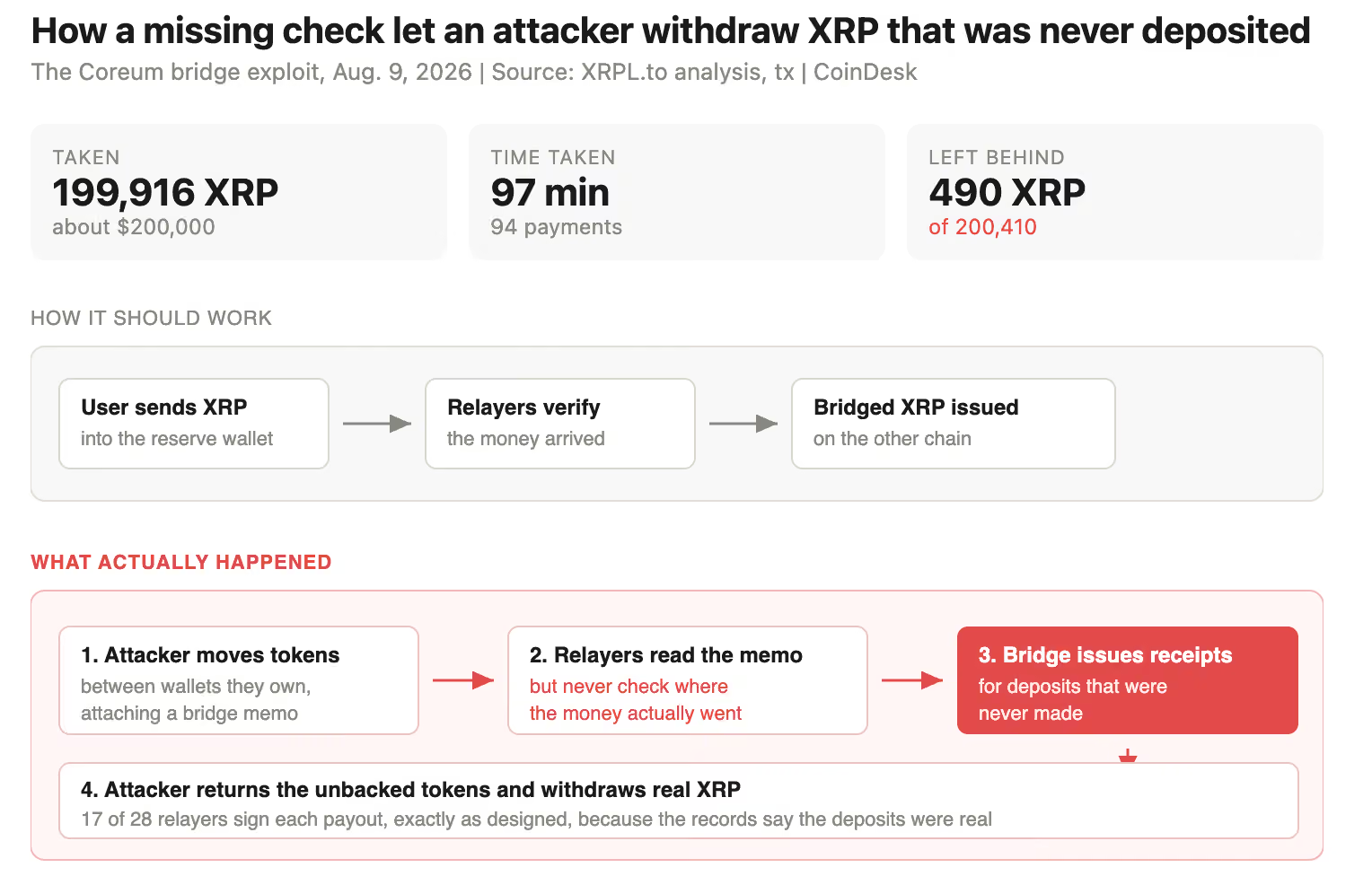
XRP bridge drained after software mistook fake deposits for real ones
You must be logged in to post a comment Login