
Business
Top 10 Things to Know Before Getting a Hair Transplant in Turkey

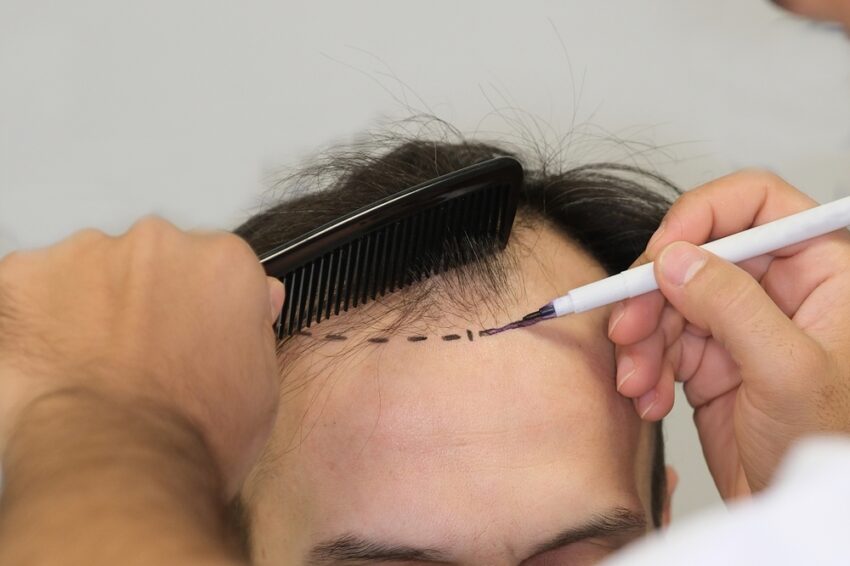
The decision to get a hair transplant is not a small one. It involves real money, real recovery time, and real expectations about how your life might look on the other side of the procedure.
When you add international travel into that equation, the stakes feel even higher. You are not just choosing a surgeon. You are choosing a country, a city, a clinic, a package, and a process that unfolds far from home.
This is exactly why hair transplant in Turkey has become such a popular choice for international patients. Turkey handles this beautifully for most visitors because the industry there is genuinely built around making people feel supported from the moment they land. But no amount of good infrastructure replaces proper preparation on your end. The patients who walk away with the best results and the smoothest experiences are almost always the ones who went in knowing what to expect.
Before you book your flights and confirm your procedure date, here are the ten most important things to understand.
1. Not All Clinics Operate at the Same Standard
Turkey has hundreds of hair transplant clinics, and they are not equal. Some are world-class facilities with highly trained surgeons who have performed thousands of successful procedures. Others are commercial operations where the surgeon you consulted is not necessarily the one performing your procedure, and where the priority is volume rather than outcomes.
The most important research you will do is clinic research. Look for verified before and after photos from real patients, read independent reviews on forums and international platforms, check whether the surgeon is named and verifiable, and ask directly who will be performing your procedure. A clinic that cannot answer that question clearly is already a red flag.
2. The Price Difference Is Real and Legitimate
One of the first questions people ask when they discover how affordable procedures are in Turkey is whether something must be wrong. The answer is no. The price difference exists because operating costs, wages, and the general cost of living in Turkey are substantially lower than in Western Europe or North America. A surgeon in Istanbul can charge a fraction of what a surgeon in London charges and still earn a very comfortable living.
Quality is not inherently tied to price when the economic context is different. Many Turkish surgeons have trained internationally, attend global conferences, and use the same equipment as their Western counterparts. The affordability is structural, not a signal of compromise.
3. FUE and DHI Are Not the Same Thing
Most Turkish clinics offer both FUE (Follicular Unit Extraction) and DHI (Direct Hair Implantation), and some also offer Sapphire FUE as a variation. These are meaningfully different techniques, and the right one for you depends on your specific scalp condition, hair loss pattern, donor area density, and goals.
FUE involves extracting individual grafts and creating recipient channels separately before implantation. DHI uses a specialized implant pen to place grafts directly without pre-made channels, which can offer more precision in angle and direction. Do not let a clinic choose your technique based purely on what they prefer to sell. Make sure the recommendation is based on a proper assessment of your individual case.
4. Your Donor Area Is Everything
The success of any hair transplant depends almost entirely on the quality and density of your donor area, which is typically the back and sides of your scalp. No matter how skilled the surgeon, they can only work with what your donor area provides. A patient with a dense, healthy donor area and moderate hair loss will almost always achieve better results than a patient with advanced loss and a depleted donor zone.
Before travelling, get an honest assessment of your donor area. A reputable clinic will tell you clearly how many grafts are available and whether your expectations are realistic. Be cautious of any clinic that promises dramatic coverage without properly evaluating your donor density first.
5. Timing Your Trip Requires Planning
Most patients who get a hair transplant spend between four and seven days in the country. The procedure itself typically takes one full day, depending on the number of grafts. The day after the procedure usually involves a follow-up wash at the clinic. After that, you are in the early stages of recovery, which means you should not be rushing through airports or sitting on long-haul flights immediately if you can avoid it.
Plan at least two to three rest days after your procedure before your return journey. Use that time to follow your postoperative care instructions carefully, stay out of direct sunlight, avoid any physical strain, and let the initial healing process begin properly. Rushing home too quickly is one of the most avoidable mistakes patients make.
6. The First Three Months Will Test Your Patience
This is perhaps the most important psychological preparation you can do before your procedure. After a hair transplant, the transplanted hairs will shed within the first two to six weeks. This is completely normal and expected. It is called shock loss and it does not mean the procedure failed. The follicles are still alive beneath the scalp and will begin producing new hair growth gradually.
Most patients start to see noticeable regrowth between months three and five. Significant results typically appear between months six and nine. Full results can take up to twelve to eighteen months to manifest. If you go into the procedure expecting to see a full head of hair within a few weeks, you will have an unnecessarily difficult experience. Go in understanding the timeline and the waiting becomes much easier to manage.
7. All-Inclusive Packages Need to Be Read Carefully
Turkish clinics are well known for their all-inclusive packages, and most of them are genuinely good value. However, the word inclusive can mean different things at different clinics. Some packages cover the procedure, accommodation, airport transfers, post-operative care kit, and follow-up consultations. Others might include the procedure and hotel, but charge separately for certain aftercare items or additional graft counts beyond a base number.
Read every package detail before you sign anything. Ask what happens if you need more grafts than initially estimated. Ask whether follow-up consultations after you return home are included. Ask about the accommodation standard. A good clinic will answer every one of these questions clearly and without hesitation.
8. Photographs Are Your Most Useful Consultation Tool
When you have your initial online consultation with a Turkish clinic, the quality of photographs you provide directly impacts the quality of advice you receive. Take clear, well-lit photos of your scalp from multiple angles, including the front hairline, top of the head, crown, and donor area at the back. Take them in natural daylight if possible.
Clinics that give you a detailed graft count estimate and technique recommendation based on a thorough photo review are demonstrating the kind of attention that carries through into the procedure itself. Clinics that give you a price quote without asking for photos at all should be approached with considerable caution.
9. Post Operative Care Is Not Optional
Your surgeon’s skill gets the grafts into your scalp. Your aftercare determines whether they survive and thrive. The first ten to fourteen days after a hair transplant are the most critical period for graft survival. During this time, you need to follow your clinic’s washing instructions precisely, sleep in the recommended position to avoid pressure on the grafts, avoid alcohol and smoking, stay away from swimming pools and direct sun exposure, and resist the urge to touch or scratch the treated area.
Most reputable Turkish clinics provide a detailed aftercare guide and a kit containing the products you need for the first week. Follow the instructions as if they are medical prescriptions because they are. Patients who cut corners on aftercare are the ones most likely to report disappointing results, and almost always, those results could have been prevented.
10. Your Lifestyle After Recovery Affects Long-Term Results
A hair transplant moves follicles from one area of your scalp to another, and the transplanted hairs are generally resistant to the DHT hormone that causes typical male pattern baldness. However, the native hairs surrounding your transplant are not protected in the same way. If your hair loss is progressive and you take no steps to address it medically, you could find yourself with a transplanted area that holds its hair while the surrounding native hair continues to thin.
Many surgeons recommend pairing a hair transplant with medical treatments such as finasteride or minoxidil to protect native hair and slow ongoing loss. This is not a sales pitch from the clinic. It is genuinely sound advice that protects your investment in the procedure. Discuss this openly during your consultation and make an informed decision about your long-term approach before you travel.
Go In Prepared, Come Out Confident
Turkey has earned its global reputation in hair restoration through consistent results delivered to patients who came prepared and chose their clinics wisely. The experience works when you treat it with the same seriousness you would give any significant medical procedure, because that is exactly what it is.
Do your research, ask the hard questions, understand the timeline, follow the aftercare, and protect your results over the long term. If you are still deciding where to begin that research, Dr. Serkan Aygin clinic offers free consultations with no pressure a straightforward way to get honest answers from one of the most experienced surgical teams in the country. Patients who do all of this almost universally look back on their decision as one of the best they ever made.


Xenon Pharma’s azetukalner shows 53% seizure reduction in trial


Oil prices rebound 7% as Strait of Hormuz is closed again


Oil jumps and stock futures slip as Iran tensions unsettle markets

President Donald Trump sits down with FOX Business’ Maria Bartiromo to discuss escalating Middle East tensions, his warning to Iran on nuclear weapons and why he believes gas prices will drop ahead of the midterms.
High gas prices continue to squeeze small businesses across the U.S., but cutting one costly habit could help owners save significantly.
New data from Ford Pro, the commercial vehicle division of Ford Motor Company, shows that unnecessary idling — leaving a car running while parked — can cost fleet operators thousands of dollars each year, cutting directly into margins at a time when fuel prices remain high.
According to the U.S. Department of Energy, the average fleet vehicle idles between one and two hours per day, burning up to two gallons of fuel daily per vehicle. With gas prices rising, those costs can add up quickly.
As of Sunday, the national average price for unleaded gas stood at $4.04, up from $3.88 just a month ago, according to AAA.
BESSENT WARNS GAS STATIONS THAT TREASURY DEPT WILL KEEP THEM ‘HONEST’ AFTER SPIKE IN PRICES

Ford Motor Co. F-150 pickup trucks are displayed at a car dealership in Orland Park, Illinois, on Sept. 27, 2019. (Daniel Acker/Bloomberg via Getty Images / Getty Images)
“You can burn up one to two gallons of gas just doing that,” Matt Krukin, who leads software and digital growth for Ford Pro, told FOX Business. “So if that happens per day… that’s $8 a day that’s idling.”
For businesses operating multiple vehicles, the impact can be substantial. A 20-vehicle fleet idling for two hours a day could waste more than $160 in fuel every day, according to Ford Pro.
Excessive idling is particularly common in North America, where about 29% of fleet vehicles idle unnecessarily, compared to just 10% in Europe, Krukin noted.
To help address the issue, Ford Pro is investing in software and data-driven tools.
FORD SEEKS TRUMP ALUMINUM TARIFF RELIEF AFTER FIRES AT MAJOR US FACTORY, REPORT SAYS

A person pumps gas into a car. (Sean Gallup/Getty Images / Getty Images)
Its newly launched artificial intelligence (AI) assistant allows fleet managers to monitor vehicle behavior in real time, identify inefficiencies and coach drivers to adopt more fuel-efficient habits.
Ford Pro says customers using these tools have seen measurable improvements, including a 52% reduction in idling.
While reducing idling is one of the simplest ways to cut costs, other driving behaviors — such as aggressive acceleration, rapid braking, and speeding — can also increase fuel consumption and wear on vehicles, according to Krukin.
The system can even limit acceleration, while in-cab alerts provide real-time feedback.
FORD BUILDS ONE-OF-A-KIND EXPLORER FOR POPE LEO XIV

Cars are seen driving on the highway. (Jonas Walzberg/picture alliance via Getty Images / Getty Images)
“It’s like the fleet manager’s right next to them to coach them along the way,” Krukin said.
Users have also seen a 25% drop in speeding, a 16% decrease in hard braking and an 11% reduction in harsh acceleration, according to Ford Pro.
GET FOX BUSINESS ON THE GO BY CLICKING HERE
“We’re not just recommending solutions for the heck of it,” Krukin said. “… At the end of the day, it’s really about bringing it all together, so that these fleets actually get a pleasurable experience with the tools and technology coming together.”

BOJ’s hawkish hints keep rate hike on the cards


Eli Lilly in advanced talks to acquire Kelonia Therapeutics for over $2 billion, WSJ says
Business
World Bank Highlights AI Boom as a Bright Spot Amid Slowing Growth in East Asia and the Pacific

Growth across East Asia and the Pacific is losing momentum this year, weighed down by an energy shock, rising trade barriers, and persistent domestic vulnerabilities, but a surge in artificial intelligence-related trade and investment is offering a rare point of optimism, according to the World Bank’s latest regional economic report.
Key takeaways
- AI-related exports and investment surged across East Asia and the Pacific in 2025, with Malaysia, Thailand, and Viet Nam leading the way.
- Regional growth is forecast to slow to 4.2% in 2026, pressured by the Middle East energy shock, trade barriers, and weak domestic demand.
- Closing gaps in connectivity and skills is essential for the region to fully capture the productivity benefits of AI.
Regional growth is projected to slow to 4.2% in 2026, down from 5.0% in 2025, as the energy shock stemming from the Middle East conflict compounds the adverse impact of elevated trade barriers, global policy uncertainty, and domestic economic difficulties.
China, the region’s largest economy, is expected to decelerate from 5.0% growth in 2025 to 4.2% in 2026 and 4.3% in 2027, as weak domestic demand and property sector challenges persist and the global slowdown weighs on exports. The rest of the region is forecast to slow to 4.1% in 2026 before rebounding to 5.0% in 2027 as geopolitical tensions ease.
Against that difficult backdrop, the World Bank’s East Asia and Pacific Economic Update: Industrial Policy in the Digital Age identifies AI as a meaningful bright spot. The report highlights surging AI-related exports and investment in 2025, particularly in Malaysia, Thailand, and Viet Nam, as a notable positive development for the region.
Yet the Bank cautions that the full benefits of AI remain out of reach for much of the region. Adoption is constrained by gaps in connectivity and skills, with only 13 to 17% of multinational subsidiaries in China and Thailand currently using AI, roughly one third of the proportion seen in industrialised countries.
The report also examines how rising energy costs could deepen hardship for ordinary households. A sustained 50% increase in fuel prices could result in a 3 to 4% loss in income for households across the region, with the poor and small and medium enterprises identified as the most vulnerable.
On a longer-term strategy, the update argues that industrial policy, if carefully designed, can help unlock productivity gains. Targeted support for specific industries in the Republic of Korea, Malaysia, and, more recently, Viet Nam proved effective in part because those countries had strengthened their economic foundations, including infrastructure, education, and regulatory institutions, and had liberalised trade and investment. The Bank warns that similar efforts elsewhere have delivered weaker results where those foundations remain fragile.
World Bank Vice President for East Asia and the Pacific Carlos Felipe Jaramillo noted that while the region continues to outperform much of the world, sustaining growth will require confronting structural challenges and seizing the opportunities of the digital age to increase productivity and create more jobs.
World Bank Group Director of Research Aaditya Mattoo cautioned that present difficulties could increase economic distress and inhibit productivity growth, adding that measured support for people and firms could preserve jobs today while reviving stalled structural reforms could unleash growth tomorrow.
Other People are Reading

Two US officials supporting local authorities die in car accident in Mexico
Sidus Space prices $58.5 million stock offering at $4.35/share


Andrew McElroy is Chief Analyst at Matrixtrade, author of the ebook ‘Fractal Market Mastery’ and producer of the ‘Daily Edge.’ The ‘Daily Edge’ is emailed before each US session and outlines actionable ideas, directional bias, and important levels in the S&P500. It also looks at ‘What’s Hot,’ on any particular day, whether it is commodities, stocks, crypto, or forex. Andrew has developed a top-down proprietary system that starts with his weekend Seeking Alpha article focusing on the higher timeframes. Fractals, Elliott Wave, and Demark exhaustion signals are all incorporated, as are macro drivers and analysis of the market narrative. It is much more than just a few lines on a chart – it is a system developed over 15 years and proven to deliver a consistent edge. An independent trader since 2009, Andrew manages a family portfolio of stocks and ETFs with his wife and fellow Seeking Alpha contributor Macrogirl.
Analyst’s Disclosure: I/we have a beneficial long position in the shares of VOO either through stock ownership, options, or other derivatives. I wrote this article myself, and it expresses my own opinions. I am not receiving compensation for it (other than from Seeking Alpha). I have no business relationship with any company whose stock is mentioned in this article.
Seeking Alpha’s Disclosure: Past performance is no guarantee of future results. No recommendation or advice is being given as to whether any investment is suitable for a particular investor. Any views or opinions expressed above may not reflect those of Seeking Alpha as a whole. Seeking Alpha is not a licensed securities dealer, broker or US investment adviser or investment bank. Our analysts are third party authors that include both professional investors and individual investors who may not be licensed or certified by any institute or regulatory body.
The Vikings’ Best Defensive Tackle Options in the Draft

Rack Cage Generator Gets Your Gear Mounted

XRP EARN IN 1 YEAR A LIFETIME OF WAGES! – WILL OWNING XRP BE OUTLAWED? – DR. TRUMP OR JESUS?


-

 Crypto World6 days ago
The SEC Conditionalises DeFi Platforms to Be Avoided for Broker Registration
-

 Fashion2 days ago
Weekend Open Thread: Theodora Dress
-

 Crypto World6 days ago
SEC Signals Exemption for Crypto Interfaces From Broker Registration
-

 News Videos5 days ago
Secure crypto trading starts with an FIU-registered
-

 Sports3 days ago
NWFL Suspends Two Players Over Post-Match Clash in Ado-Ekiti
-

 Crypto World6 days ago
SEC Proposes Certain Crypto Interfaces Don’t Need to Register as Brokers
-

 NewsBeat6 days ago
Trump and Pope Leo: Behind their disagreement over Iran war
-

 Business8 hours ago
Powerball Result April 18, 2026: No Jackpot Winner in Powerball Draw: $75 Million Rolls Over
-

 Politics2 days ago
Palestine barred from entering Canada for FIFA Congress
-

 Crypto World2 days ago
Russia Pushes Bill to Criminalize Unregistered Crypto Services
-

 Sports7 days ago
NWFL opens Pathway for new Clubs ahead of 2026 Season
-
 Business3 days ago
Creo Medical agree sale of its manufacturing operation
-
 Entertainment6 days ago
Brand New Day’ Footage Reveals the Devastating Impact of ‘Now Way Home’
-

 Politics13 hours ago
Zack Polanski demands ‘council homes not luxury flats for foreign investors’
-

 Crypto World7 days ago
Trump whales load up ahead of Mar-a-Lago luncheon.
-
Business7 days ago
Kering slides after Morgan Stanley downgrade, Gucci woes loom
-

 Tech7 days ago
Google adds E2E encryption to Gmail for iOS and Android enterprise users
-

 Tech7 days ago
Apple glasses won’t go brand shopping like Meta did with Ray-Ban and Oakley
-
Entertainment7 days ago
How Euphoria Season 3 Premiere Paid Tribute to Eric Dane After Death
-
 Entertainment6 days ago
Karol G’s ‘Ultra Raunchy’ Coachella Set Gave ‘Satanic Vibes’
You must be logged in to post a comment Login