NEW YORK — California, Texas and Washington are emerging as the top three states experiencing the heaviest job losses from major corporations in 2026, driven by widespread tech sector restructuring, artificial intelligence adoption and broader economic pressures that have prompted thousands of layoffs across Fortune 500 companies.
LOS ANGELES
Data from Worker Adjustment and Retraining Notification filings and industry trackers show these states accounting for a disproportionate share of announced cuts. California leads by a wide margin, followed by Texas and Washington, as companies streamline operations, automate roles and respond to shifting market conditions. The trend reflects a broader national wave of efficiency drives that has seen over a million job cuts announced in recent periods, with technology and related sectors hit hardest.
California: Tech Hub Bears Brunt of Industry Restructuring California continues to lead the nation in corporate job losses, with more than 175,000 positions affected in recent tracking periods. The state’s concentration of technology giants has made it particularly vulnerable to AI-driven changes and cost-cutting measures. Companies like Amazon, Oracle, Meta and Snap have announced significant reductions, contributing to tens of thousands of tech layoffs alone.
High operational costs, including taxes and housing expenses in Silicon Valley and Los Angeles, have accelerated decisions to trim workforces or relocate some functions. Oracle’s cuts in the state, along with Amazon’s corporate reductions, highlight how even profitable firms are prioritizing efficiency. Economists note California’s heavy reliance on the tech sector amplifies national trends, with AI automation and post-pandemic adjustments playing key roles.
State officials have expressed concern about the cumulative impact on local economies. While California remains an innovation powerhouse, the job losses have strained social services and housing markets in affected areas. Community programs and retraining initiatives are expanding to help displaced workers transition to emerging fields like green technology and advanced manufacturing.
Advertisement
Texas: Energy, Tech and Retail Face Combined Pressures Texas ranks among the top states for corporate downsizing, with thousands of jobs impacted across energy, technology and retail sectors. Major employers including Amazon, Albertsons and various manufacturers have announced cuts, contributing to over 5,000 WARN-notified positions in early tracking. The state’s business-friendly reputation has not shielded it from broader industry shifts.
Energy sector volatility, tied to global oil prices and transition pressures, has affected some companies, while tech and e-commerce firms cite efficiency and AI integration. Retail giants facing changing consumer habits have closed locations and reduced staff. Texas’ rapid population growth has increased demand for services but also competition for talent and resources, complicating corporate planning.
Economic development leaders in Texas emphasize the state’s diversification efforts, with investments in semiconductors, biotechnology and renewable energy creating new opportunities. However, short-term pain from layoffs has hit communities reliant on specific employers. Workforce commissions are ramping up support for affected workers through job placement and skills training programs.
Washington: Aerospace, Tech and Retail Reductions Mount Washington state has seen nearly 8,000 jobs impacted by major announcements, with companies like Boeing, Amazon and others trimming workforces amid sector-specific challenges. Aerospace giant Boeing has faced production issues and cost pressures, while tech firms navigate AI transitions and market saturation. Retail and consumer goods companies have also reduced staffing.
Advertisement
The state’s economy, heavily influenced by Seattle-area tech and aerospace, mirrors national patterns of corporate belt-tightening. High living costs in the Puget Sound region have compounded difficulties for employers seeking to retain talent while controlling expenses. Layoffs in pharmaceuticals, healthcare and telecommunications have added to the total.
State leaders highlight resilience through diversification, with strong growth in cloud computing, biotechnology and clean energy. However, immediate job losses have prompted expanded unemployment support and retraining initiatives. Business groups call for policies supporting innovation and workforce development to offset short-term disruptions.
Broader Context and Outlook The job losses reflect multiple converging factors. Artificial intelligence adoption enables efficiency gains that reduce staffing needs in some roles. Economic uncertainty, including inflation concerns and shifting consumer behavior, has prompted caution. Supply chain issues and geopolitical tensions add costs, while regulatory changes influence decisions on where to operate.
Not all impacts are negative. Many companies report healthy profits despite cuts, with funds redirected toward AI infrastructure, research and shareholder returns. New industries are emerging, creating opportunities in areas like renewable energy and advanced manufacturing. The challenge lies in managing transitions to minimize disruption for workers and communities.
Advertisement
Economists expect volatility to continue through 2026 as companies adjust to new realities. States with heavy exposure to affected sectors may face slower recovery, while those investing in future-oriented industries could see gains. Federal and state policies supporting workforce retraining and business incentives will play crucial roles in shaping outcomes.
For workers in impacted states, the situation underscores the importance of adaptable skills and lifelong learning. Community colleges and vocational programs are expanding offerings in high-demand fields. Corporate responsibility initiatives, including severance support and outplacement services, vary widely but are increasingly scrutinized by the public and regulators.
As 2026 progresses, the top three states’ experiences will offer lessons for the broader economy. California’s innovation ecosystem, Texas’ energy and business environment, and Washington’s tech-aerospace strengths each face unique pressures but also opportunities. How leaders, companies and workers respond will influence America’s competitive position in an AI-driven future.
It later included a clause stating the deal can be suspended if the Trump administration is deemed to have “undermined the objectives of the deal, discriminated against EU economic operators, threatened member states’ territorial integrity, foreign and defence policies, or engaged in economic coercion”.
Aon plc (AON) Q1 2026 Earnings Call May 1, 2026 8:00 AM EDT
Company Participants
Gregory Case – President, CEO & Executive Director Edmund Reese – Executive VP & Chief Financial Officer
Advertisement
Conference Call Participants
Elyse Greenspan – Wells Fargo Securities, LLC, Research Division Andrew Andersen – Jefferies LLC, Research Division Robert Cox – Goldman Sachs Group, Inc., Research Division Michael Zaremski – BMO Capital Markets Equity Research Jian Huang – Morgan Stanley, Research Division Cave Montazeri – Deutsche Bank AG, Research Division
Presentation
Advertisement
Operator
Good morning, and thank you for holding. Welcome to Aon plc’s First Quarter 2026 Conference Call. [Operator Instructions] I would also like to remind all parties that this call is being recorded. If anyone has an objection, you may disconnect your line at this time.
It is important to note that some of the comments in today’s call may constitute certain statements that are forward-looking in nature as defined by the Private Securities Reform Act of 1995. Such statements are subject to certain risks and uncertainties that could cause actual results to differ materially from historical results or those anticipated. For information concerning these risk factors, please refer to our earnings release for this quarter and to our most recent quarterly or annual SEC filings, all of which are available on our website.
Now it is my pleasure to turn the call over to Greg Case, President and CEO of Aon plc. Please go ahead.
Advertisement
Gregory Case President, CEO & Executive Director
Thank you, and good morning, and I appreciate you attending our first quarter earnings call. I’m joined today by Edmund Reese, our CFO. The presentation, which Edmund will reference during his remarks is available on our website.
We started 2026, the final year of our 3×3 Plan, with strong momentum. Our first quarter results reflect continued strong performance, consistent execution and
Ford Dearborn Truck Plant Manager Corey Williams details the integration of artificial intelligence on the factory floor and highlights the different applications of the technology on ‘Mornings with Maria.’
Ford Motor Company is marking America’s 250th anniversary with a nationwide pricing push aimed at giving U.S. customers a break.
The Michigan-based automaker on Friday launched its “American Value. For American Values” campaign, offering employee pricing to all U.S. customers on most new 2025 and 2026 Ford and Lincoln vehicles through July 6.
Advertisement
Under the program, buyers can pay the same price as Ford employees — which is below the Manufacturer’s Suggested Retail Price (MSRP) — potentially saving them hundreds to thousands of dollars depending on the vehicle, according to the company.
A Lincoln Navigator SUV is displayed against a desert backdrop at sunset. (Ford Motor Company)
Ford said the campaign highlights its broader commitment to American values.
“Ford has always believed that American values are more than words — they’re actions,” said Andrew Frick, president of Ford Blue and Model e, said in a statement.
“As the nation approaches its 250th anniversary, ‘American Value. For American Values‘ is our way of giving back to the people who show up every day: American workers, small business owners, and families who place their trust in Ford.”
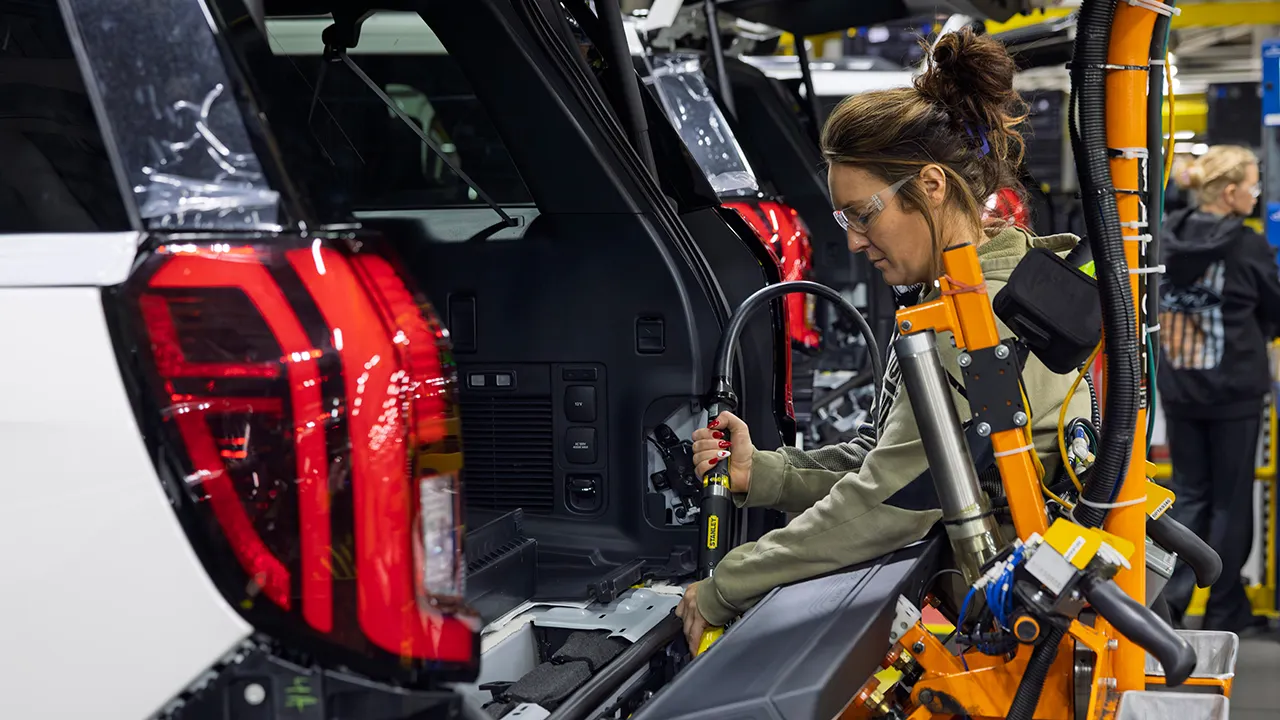
A worker assembles vehicle components on an auto production line at a Ford manufacturing plant. (Ford Motor Company)
In its announcement, Ford also highlighted its domestic footprint, noting it employs more U.S. hourly workers and assembles more vehicles in the U.S. than any other automaker.
“This commitment is not cyclical and not driven by short-term market conditions; it is foundational to Ford’s identity,” the company said.
Advertisement
Earlier this year, Ford was ranked the “most American” brand in the country in a national survey, earning top marks across political affiliations and income levels.
The Ford logo is seen on the Ford Motor Company headquarters in Dearborn, Mich. (Reuters/Rebecca Cook/File Photo / Reuters)
In a statement to FOX Business at the time, Ford Executive Chair Bill Ford said the company’s standing reflects its long-standing role in shaping the U.S. economy.
“As we approach America’s 250th anniversary, I’m proud that Ford has helped strengthen this country — not just by building great vehicles, but by expanding opportunity and improving people’s lives,” Bill Ford told FOX Business in an email.
‘The Big Money Show’ discusses California’s $267M hospice fraud bust as Gov. Gavin Newsom defends the state’s record on fighting theft.
An exclusive holiday gathering just north of San Francisco reportedly turned into a stomach-churning fiscal nightmare for California Gov. Gavin Newsom.
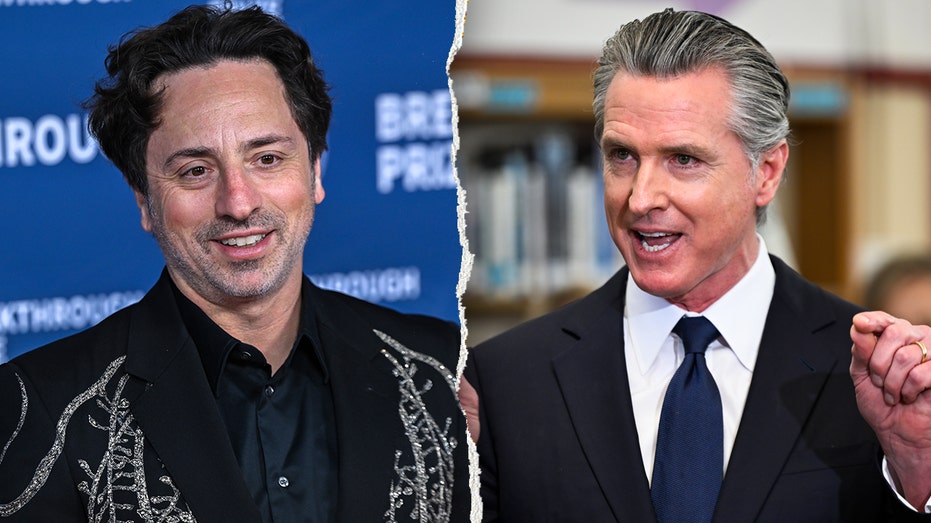
Back in December, Newsom and Google co-founder Sergey Brin attended the same “treehouse party” hosted by crypto investor Chris Larsen. It was there, according to a Bloomberg report, that Brin broke the news that he would be leaving the state in response to a proposed wealth tax.
Advertisement
According to the report, it was a tense, private confrontation so jarring that Newsom reportedly complained about a “lingering cold” he attributed to the interaction for months afterward.
Brin allegedly explicitly cited the Billionaire Tax Act, a 5% one-time excise tax on individuals with a net worth exceeding $1 billion, hitting his nearly $289 billion net worth hard.
Just this week, the Service Employees International Union–United Healthcare Workers West (SEIU-UHW) said it has collected more than 1.55 million signatures, according to a press release, nearly double the 875,000-signature requirement, to put the one-time tax on billionaire assets on the California ballot this November.
Advertisement
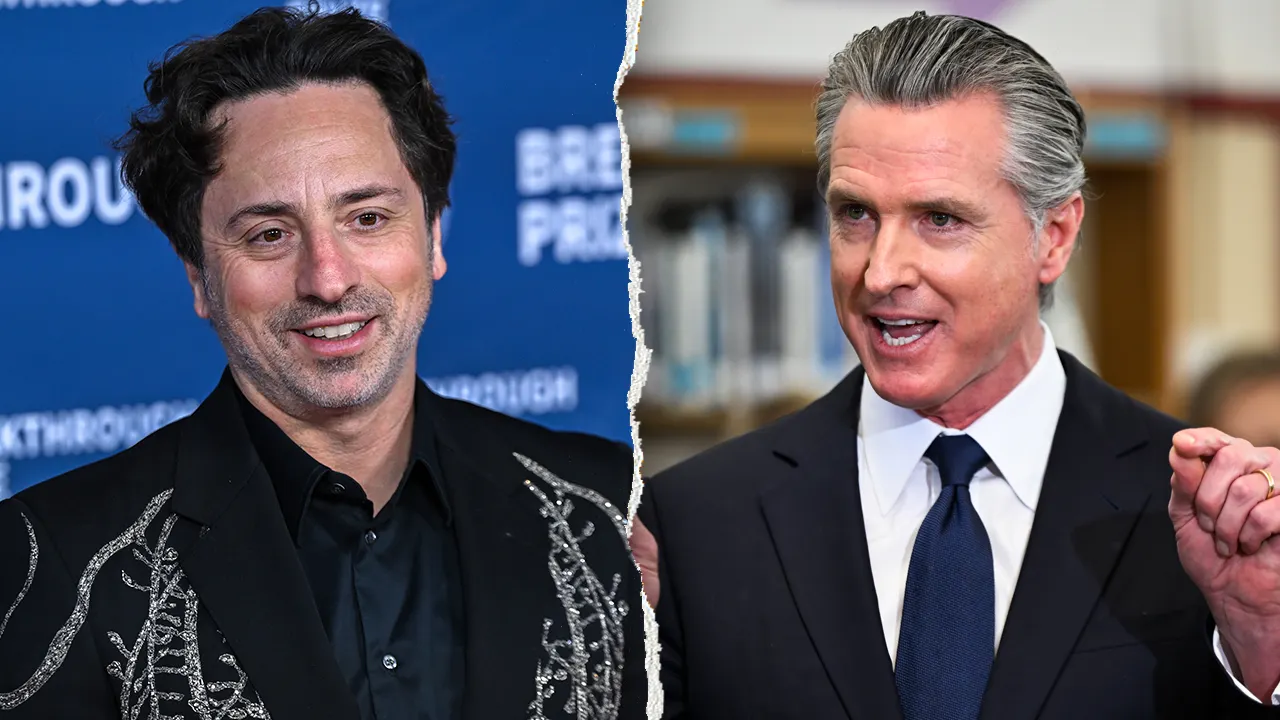
California Gov. Gavin Newsom reportedly felt sick for months after Google co-founder Sergey Brin told him at a holiday party he was leaving the Golden State over the billionaire tax. (Getty Images)
If the measure is approved by voters, anyone who was a California resident on Jan. 1, 2026, would owe the tax, according to the proposal.
Brin effectively shielded his wealth from the retroactive reach of the proposed tax by buying properties in Nevada and Florida. He has also committed at least $45 million to a group called “Building A Better California” to fight the initiative, with his total spending to kill the tax already reaching $58 million this year.
The Corcoran Group agent Julian Johnston exclusively speaks to Fox News Digital about the new wave of California billionaires migrating to South Florida due to a proposed wealth tax.
“I fled socialism with my family in 1979 and know the devastating, oppressive society it created in the Soviet Union. I don’t want California to end up in the same place,” Brin told The New York Times this week regarding a story by the outlet that discussed his move.
Advertisement
Newsom has publicly opposed the billionaire tax, warning the measure would damage the economy and drive away investment. Since January, it’s estimated that more than $1 trillion in capital has left California.
California gubernatorial candidate Steve Hilton joins ‘Mornings with Maria’ to discuss his commanding lead in the race, weigh in on Eric Swalwell’s sudden exit, and outline his plan to tackle crime, high taxes and the state’s economic crisis.
“This is my fear,” Newsom previously said in a Politico interview. “It’s just what I warned against. It’s happening.”
Advertisement
“The evidence is in. The impacts are very real — not just substantive economic impacts in terms of the revenue, but start-ups, the indirect impacts of … people questioning long-term commitments, medium-term commitments,” he continued. “That’s not what we need right now, at a time of so much uncertainty. Quite the contrary.”
Stephen Simpson is a freelance financial writer and investor.Spent close to 15 years on the Street (sell-side, buy-side, equities, bonds).
Analyst’s Disclosure: I/we have a beneficial long position in the shares of ALNY, RHHBY either through stock ownership, options, or other derivatives. I wrote this article myself, and it expresses my own opinions. I am not receiving compensation for it (other than from Seeking Alpha). I have no business relationship with any company whose stock is mentioned in this article.
Seeking Alpha’s Disclosure: Past performance is no guarantee of future results. No recommendation or advice is being given as to whether any investment is suitable for a particular investor. Any views or opinions expressed above may not reflect those of Seeking Alpha as a whole. Seeking Alpha is not a licensed securities dealer, broker or US investment adviser or investment bank. Our analysts are third party authors that include both professional investors and individual investors who may not be licensed or certified by any institute or regulatory body.
TUCSON, Ariz. — The Pima County Sheriff’s Department issued a fresh statement Friday on the disappearance of Nancy Guthrie, the 84-year-old mother of NBC “Today” show co-host Savannah Guthrie, as the investigation enters its fourth month with few public updates and mounting questions about transparency. Authorities described the case as active and ongoing while renewing a plea for tips from the public.
Savannah Guthrie & Nancy Guthrie
Nancy Guthrie was last seen Jan. 31 at her home in the Catalina Foothills north of Tucson. A trail of blood and signs of possible struggle were found inside the residence, prompting authorities to treat the disappearance as a suspected abduction. Despite extensive searches, interviews and forensic work involving the FBI, no arrests have been announced and no suspects publicly identified.
The latest statement from the sheriff’s department, its first detailed comment in nearly a month, emphasized continued collaboration with federal partners. “The Pima County Sheriff’s Department continues to work closely with the FBI as investigators follow up on leads, review information, and pursue the facts surrounding this case,” a spokesperson said. Officials encouraged anyone with information to contact authorities, reiterating that the search remains active.
The relative silence has drawn criticism from some local officials and observers who question the pace of public communication. Sheriff Chris Nanos has faced scrutiny over his department’s handling of the high-profile case, including reports of internal changes prior to the disappearance and his own past disciplinary issues from decades earlier. A county supervisor recently described Nanos as having “perpetrated a fraud” regarding aspects of his employment history, though the sheriff defended his record in a detailed filing.
Emails obtained by media outlets revealed that months before Guthrie vanished, the sheriff’s department collaborated extensively with producers of a reality television show called “Desert Law,” granting behind-the-scenes access to operations, deputies and body camera footage. Critics argue this relationship raises transparency concerns at a time when the agency should focus solely on the investigation. Nanos and department leaders have pushed back, insisting the partnership did not interfere with case work.
Advertisement
Guthrie’s disappearance has captivated national attention due to her daughter’s prominence in broadcast journalism. Savannah Guthrie has shared occasional updates on social media and through the “Today” show, expressing gratitude for the outpouring of support and prayers while asking for privacy as the family copes with uncertainty. A substantial reward, reportedly reaching $1.2 million through combined contributions, remains in place for information leading to her safe return or resolution of the case.
Search efforts have involved volunteers, drones, canines and ground teams scouring desert terrain and nearby areas. Officials recently asked volunteer searchers to stand down as the FBI analyzes evidence, signaling a shift toward investigative leads over broad physical searches. Blood evidence and other forensic items continue undergoing specialized testing at private labs to develop potential DNA profiles or other clues.
The case has highlighted challenges in missing persons investigations involving elderly individuals. Guthrie’s age and health status add urgency, as prolonged time missing increases risks. Authorities have not released a detailed timeline of her final known movements beyond the home scene, citing investigative needs, which has frustrated some community members seeking more openness.
Local media and true crime enthusiasts have speculated widely, with unconfirmed reports of persons of interest surfacing periodically. Sheriff Nanos addressed one such rumor with a terse denial, responding “Nope” when asked about a new detention. Such minimal responses have fueled perceptions of opacity, though department spokespeople stress that protecting the integrity of the probe takes precedence over frequent updates.
Advertisement
Pima County has undergone leadership transitions in law enforcement units, including homicide and cold cases, in the months preceding the disappearance. Some reports link these rotations to the reality TV collaboration, raising questions about resource allocation and preparedness. Sheriff Nanos defended his team’s experience, noting recent high-profile solves under current supervisors.
For the Guthrie family, the prolonged uncertainty compounds emotional strain. Savannah Guthrie has balanced professional duties with private advocacy, occasionally posting messages of hope and resilience. Friends and neighbors describe Nancy as an active, vibrant woman whose sudden absence left a void in the close-knit community.
Broader implications touch on elder safety, home security and rapid response protocols. Advocacy groups urge residents to install cameras, maintain communication routines and report suspicious activity promptly. The case serves as a sobering reminder that abductions can occur in seemingly safe suburban settings.
As weeks turn to months, investigators pursue digital records, financial trails and witness statements. The FBI’s involvement brings federal resources, including behavioral analysis and advanced forensics. Tips continue flowing in, though officials caution that many require verification amid the volume generated by national coverage.
Advertisement
Community vigils and fundraisers have kept Nancy Guthrie’s name prominent. Billboards, social media campaigns and local news segments sustain awareness. Authorities stress that even small details — a vehicle description, unfamiliar person or unusual activity around late January — could prove pivotal.
The sheriff’s department faces pressure to balance transparency with operational security. While some criticize the pace of statements, others recognize the complexities of a case lacking immediate suspects or clear motive. Moving forward, renewed public engagement may yield breakthroughs as the investigation evolves from search to targeted inquiry.
Nancy Guthrie’s story resonates because it strikes at universal fears of vulnerability in later years. Her family, friends and the wider public await resolution with heavy hearts. The latest statement, though brief, reaffirms commitment while underscoring the need for continued community vigilance in this unresolved mystery.























































You must be logged in to post a comment Login