

Business
Toyota, Hyundai, Chinese expected to be most impacted by Iran war

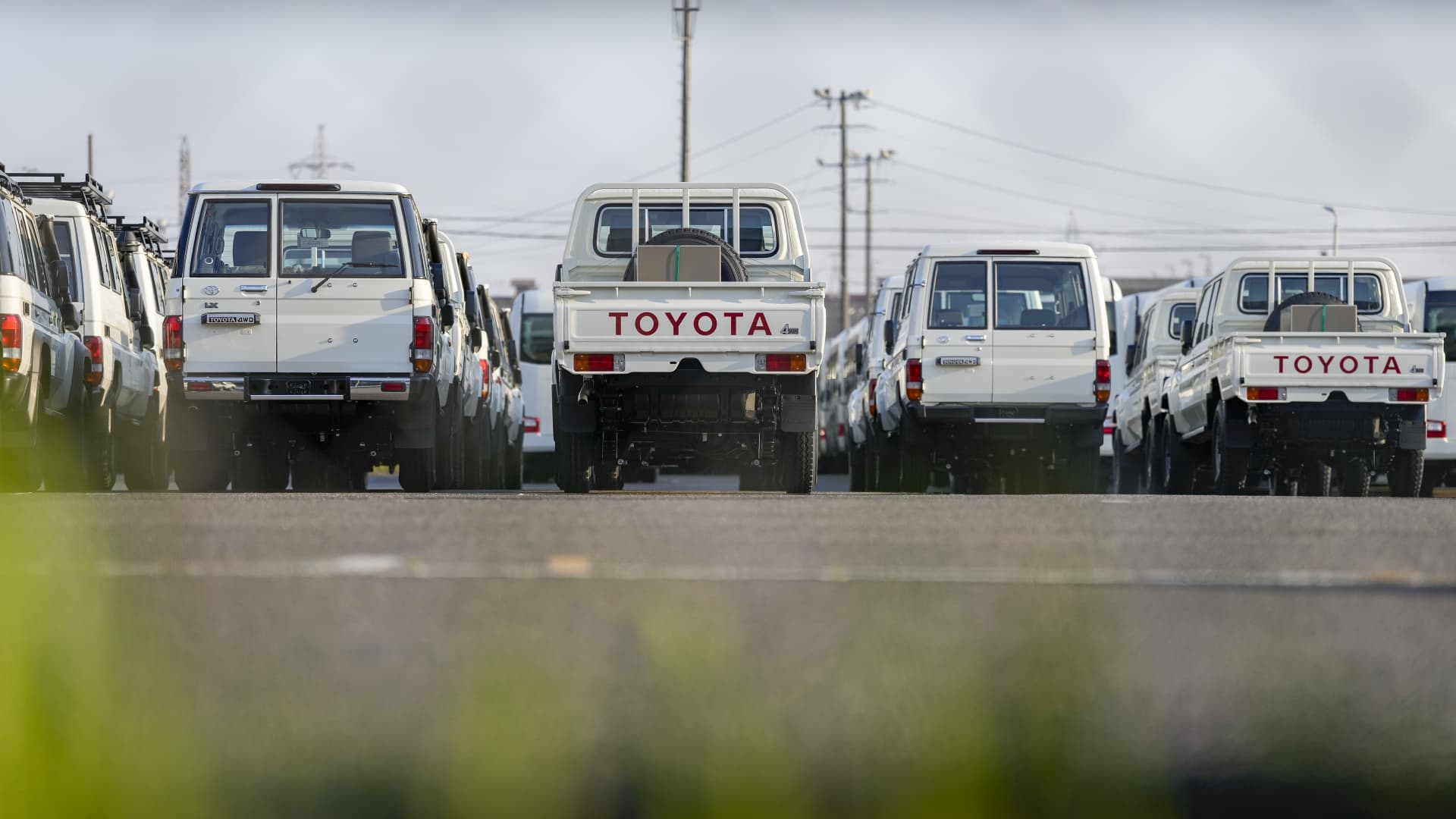
Toyota Motor Corp. vehicles bound for shipment at the Port of Nagoya in Tokai, Aichi Prefecture, Japan, on Tuesday, April 29, 2025.
Toru Hanai | Bloomberg | Getty Images
DETROIT — Toyota Motor, Hyundai Motor and Chinese automakers such as Chery face the most potential impact of non-domestic automakers from the U.S.-Israel war with Iran, according to an analysis by Bernstein.
Those international automakers account for roughly a third of sales in the Middle East, according to the report, led by Toyota at 17%, Hyundai at 10% and Chery at 5%. In Iran specifically, Bernstein reports Iranian automakers Iran Khodro and SAIPA lead, followed by Chery with a 6% market share.
Other Chinese carmakers also are expected to be impacted, as the Middle East has become a growing destination for Chinese auto exports. Bernstein, citing China export data, said the region accounted for about 17% of China’s passenger vehicle exports in 2025.
The Bernstein report notes that while sales in the region will be impacted, the closing of the Strait of Hormuz, which links the Persian Gulf to the Gulf of Oman and the Indian Ocean, and rising oil prices will have ripple effects across the global automotive industry.
“Closure of the Strait of Hormuz adds 10-14 days to transit times,” Bernstein analyst Eunice Lee said in a Wednesday investor note, adding “a prolonged conflict and closure of the strait would hurt sales, increase logistics costs, and delay deliveries.”

Roughly 20 million barrels of crude oil travel through the strait every day, according to consulting firm AlixPartners. It’s also a “critical passage” for vehicle and parts shipments to the Middle East, Bernstein noted.
Bernstein said any effect on Japanese automakers “appears limited for now, but close monitoring of developments is still required.” It also said, of the European automakers, Chrysler and Jeep parent Stellantis “seems to have the largest exposure in light of its overall issues.”
“The impact of rising gasoline pump prices is already being seen in Stellantis’ 11% stock price slump since its close last Friday – making so sharp a pivot to gas guzzling HEMI V8 engines and writing off its electrification efforts seems particularly inauspiciously timed at the moment,” Lee wrote.
U.S. crude oil prices on Thursday topped $80 per barrel, and retail gasoline prices in the U.S. have jumped nearly 27 cents since last week to $3.25 per gallon on average, according to the motorist group AAA.
Stellantis this week said it is “closely monitoring developments across the affected countries,” noting it’s “not yet possible to fully assess the potential impact on local operations.”
Toyota, Hyundai and Chery did not immediately respond for requests for comment.


Prada: Healthy Results, But Some Softening Visible

Apple’s March 2026 Mac refresh has intensified the debate for laptop buyers: the freshly announced M5 MacBook Pro lineup versus the still-capable M4 MacBook Air. With the M5-powered MacBook Air also debuting alongside upgraded Pro models featuring M5 Pro and M5 Max chips, consumers face clear choices depending on needs, budget and workload.

The new announcements, detailed in Apple’s March 3 press releases, bring significant boosts in AI performance, storage baselines and connectivity. The M5 MacBook Pro (14- and 16-inch) targets professionals demanding sustained power, while the M4 MacBook Air—now often discounted as retailers clear inventory—remains a strong everyday option. Here’s a head-to-head breakdown to help decide which MacBook suits you best in March 2026.
Design and Portability
Both lines retain Apple’s signature thin, lightweight aluminum builds. The M4 MacBook Air (13.6-inch and 15.3-inch) weighs 2.7 pounds (13-inch) or 3.3 pounds (15-inch), making it ultra-portable for travel, students and commuters. Its fanless design ensures silent operation, ideal for quiet environments like libraries or coffee shops.
The M5 MacBook Pro (14-inch starting at 3.4 pounds, 16-inch at 4.7-4.8 pounds) adds active cooling fans for prolonged high-performance tasks without throttling. It includes a superior Liquid Retina XDR display (up to 1600 nits peak HDR brightness, mini-LED backlighting) versus the Air’s standard Liquid Retina (500 nits). Pro models offer nano-texture glass options to reduce glare, plus more ports: Thunderbolt 5 (faster than the Air’s Thunderbolt 4), HDMI, SDXC card slot and three Thunderbolt ports on higher configs versus the Air’s two.
For pure mobility, the Air wins; for workstation versatility, the Pro excels.
Performance and Chips
The M4 MacBook Air (still current in many configs) uses a 10-core CPU (4 performance + 6 efficiency), up to 10-core GPU, 16GB unified memory base and strong Neural Engine for Apple Intelligence tasks. It handles everyday work—browsing, office apps, light photo/video editing, coding—effortlessly, with real-world battery life of 14-18 hours.
The M5 MacBook Pro introduces base M5 (in lower configs) or M5 Pro/M5 Max variants. The M5 chip delivers up to 20-30% faster multi-core CPU, significantly improved GPU (with Neural Accelerators per core) and 4x AI performance over M4 equivalents. M5 Pro/Max push further: up to 18-core CPU, massive memory bandwidth (up to 614GB/s on Max), and up to 128GB unified memory. Benchmarks show M5 models 50-200% faster in GPU-heavy tasks like 3D rendering or AI model training compared to M4.
The M5 Pro/Max sustain peak performance longer thanks to cooling, while the fanless Air may throttle under extended heavy loads. For casual to moderate use (web, streaming, productivity), the M4 Air suffices; for video editing, 3D work, machine learning or pro apps, the M5 Pro shines.
Display, Audio and Battery
The Pro’s Liquid Retina XDR offers superior contrast, color accuracy (P3 wide color, 1,000 nits sustained) and ProMotion (up to 120Hz refresh) for smoother scrolling and editing. The Air’s Liquid Retina is excellent but lacks HDR depth and high refresh.
Audio favors the Pro: six-speaker system with force-canceling woofers versus the Air’s four-speaker setup. Both deliver immersive Spatial Audio.
Battery life remains stellar: up to 24 hours on M5 Pro/Max MacBook Pro (real-world 18-22 hours heavy use), versus 18 hours rated on Air (often 14-16 hours tested). Both support fast charging.
Storage, Connectivity and AI
A major win for 2026 models: doubled base storage. The M5 MacBook Air starts at 512GB (up from M4’s 256GB), configurable to 4TB. M5 Pro MacBook Pro begins at 1TB, M5 Max at 2TB.
Connectivity upgrades include Apple’s N1 chip for Wi-Fi 7 and Bluetooth 6 on new models, improving speed and reliability over the Air’s Wi-Fi 6E.
Apple Intelligence features—enhanced writing tools, image generation, on-device AI—are faster on M5 (up to 4x vs M4), benefiting local LLM processing.
Pricing and Value in March 2026
- M4 MacBook Air (clearance deals): 13-inch often $749-$899 (from $999 MSRP), 15-inch around $1,099-$1,199. Excellent value for most users.
- M5 MacBook Air (new): 13-inch $1,099, 15-inch $1,299—with 512GB base.
- M5 MacBook Pro: 14-inch base (M5) around $1,599-$1,699; M5 Pro 14-inch $2,199; 16-inch M5 Pro $2,699; M5 Max higher ($3,599+).
The M4 Air offers the best bang-for-buck for students, casual creators and professionals handling light workloads. Discounts make it compelling before full M5 Air stock arrives.
The M5 Pro/Max MacBook Pro justifies the premium for demanding users—video pros, developers, AI researchers—needing sustained power, better display and ports.
Who Should Buy Which?
- Choose M4 MacBook Air if: You’re budget-focused, prioritize portability/silence, handle everyday tasks (school, office, browsing, light creative), want a large screen option affordably.
- Choose M5 MacBook Pro if: You need pro-level performance (video/3D editing, coding heavy compiles, AI/ML), want the best display/audio/ports, plan long sessions without throttling, or future-proof for intensive workflows.
Both run macOS Tahoe seamlessly with Apple Intelligence. For most people in 2026, the M4 Air (especially discounted) delivers outstanding value. Power users investing in longevity lean toward the M5 Pro lineup.
Check Apple’s site, authorized resellers or carriers for current deals—pre-orders for new models start March 4, with availability March 11. Test in-store if possible; the choice boils down to workload versus wallet.
Business
How the Iran Conflict Could Reshape Energy Strategies, Supply Chains, and Market Entry Plans in ASEAN
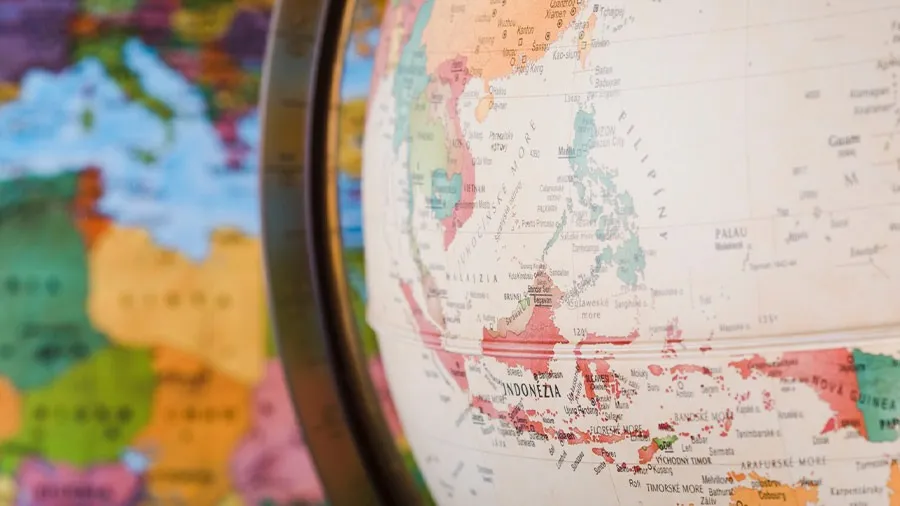
Geopolitical tensions, especially involving Iran, raise energy costs and disrupt shipping, unevenly impacting ASEAN economies based on energy dependence, exports, and flexibility; Indonesia benefits from domestic demand, while Vietnam’s exports increase vulnerability.
🌍 Geopolitical Context
- Rising tensions involving Iran are driving up energy costs and disrupting shipping routes.
- These disruptions affect ASEAN economies differently depending on their energy dependence, export reliance, and fiscal resilience.
⚡ Energy & Supply Chain Impact
- Immediate effects include:
- Higher crude oil prices
- Increased maritime insurance premiums
- Delays along key shipping routes between the Middle East, Asia, and Europe
- These factors increase volatility and force companies to reassess risks and adjust strategies.
📊 ASEAN Economic Vulnerabilities
- Energy-importing nations: face inflation and fiscal strain.
- Export-driven economies: suffer from longer transit times and cash flow challenges.
- Financial hubs: experience capital flow fluctuations differently than manufacturing or resource-dependent economies.
Impact of Iran Tensions on Southeast Asia
The escalation involving Iran introduces a new risk factor for companies considering investment or expansion in Southeast Asia. Immediate effects include rising crude oil prices, increased maritime insurance premiums, and disruptions along key shipping routes linking the Middle East, Asia, and Europe. These factors heighten overall costs and introduce volatility into supply chains, requiring renewed project risk assessments and strategic adjustments.
Diverse Vulnerabilities Across ASEAN Economies
ASEAN countries vary significantly in energy dependence, export focus, fiscal health, and currency management. Energy-importing nations face inflation and fiscal strain, while export-centric economies endure longer transit times and cash flow challenges. Financial hubs handle capital flow fluctuations differently from manufacturing or resource-dependent economies, emphasizing the importance of tailored risk mitigation strategies within the region.
Uneven Transmission of Geopolitical Shocks
Different ASEAN economies respond differently to geopolitical shocks. Indonesia benefits from a large domestic market, with household consumption driving over half of its GDP, offering resilience against external energy shocks. Conversely, Vietnam’s highly export-dependent economy is vulnerable to disruptions in maritime logistics, affecting its manufacturing and trade flows. Understanding these diverse responses helps investors better navigate regional risks.
Read the original article : How the Iran Conflict Should Change Energy, Supply Chain, and Market Entry Planning in ASEAN
Other People are Reading
The widening conflict has choked major air and sea transport corridors through the Middle East. Shipping through the Strait of Hormuz, a conduit for one-fifth of the world’s oil, slowed to a near-halt as Iran retaliated with drone strikes against U.S. and Israeli attacks. Busy air transit routes in the Gulf have gone dark.
Soaring oil and gas prices have pushed up costs for companies, threatening their margins, and raised the spectre for policymakers and investors of a fresh bout of inflation.
“If these effects last longer, everyone will start to feel them,” Young Liu, chairman of Foxconn, the world’s largest electronics maker and a key partner to Nvidia, said on Friday.
A KNOCK-ON EFFECT ON EVERY COMPANY

Even before last Saturday’s strikes, companies were struggling with U.S. President Donald Trump’s trade war, after hefty U.S. import tariffs drove up costs, upended supply chains and hurt consumer confidence. A spike in gas pump prices is another blow to U.S. consumers: a gallon of regular gasoline cost an average $3.32 nationwide on Friday, up from $2.98 a week ago. Brent crude futures have spiked to $90 per barrel but remain below levels of 2022 when Russia invaded Ukraine.
“Any time you see an increase in oil price or gas price, it’s got a knock-on effect further down on every company, on every industry,” Simon Hunt, CEO of Italian drinks maker Campari , told Reuters after the firm’s results this week.
PAIN IN EUROPE STILL RECOVERING FROM 2022 CRISIS
In Europe, still recovering from 2022’s energy crisis, the pain is acute for energy-intensive industries like chemicals.
The IW German Economic Institute said on Thursday that oil at $100 per barrel could cost Germany’s economy 0.3% of GDP this year and 0.6% next year – a loss of economic output amounting to around 40 billion euros ($46 billion) over two years.
Campari’s Hunt said the firm has some long-term contracts in place to protect against big energy price increases. Reckitt Benckiser CFO Shannon Eisenhardt told analysts the consumer goods firm has hedged about 55% of its oil and gas price exposure for 2026.
But Uniden, which represents energy-intensive French industries including chemicals, autos and agriculture, warned some companies were already cutting back.
“The impact on gas prices in Europe has been immediate, with an 80% increase in the spot price and considerable uncertainty about its future,” it said in a statement. “Some production has therefore been halted or slowed down.”
Airline stocks have also been hammered. European budget carrier Wizz Air, which is hedged, warned that the war would dent its net profit for fiscal year 2026 by about 50 million euros ($58 million).
ALUMINIUM, HELIUM AND SULPHUR
The disruption to sea freight affected specialised industrial inputs like sulphur and led major aluminium producers to invoke force majeure clauses. Shippers and insurers have hiked some prices dramatically in response to the conflict.
Qatari smelter Qatalum began shutting down operations this week, while Aluminium Bahrain said it had halted shipments and declared force majeure because it could not move metal through the Strait of Hormuz. The Gulf region accounts for about 8% of global aluminium supply.
Aluminium prices on the London Metal Exchange jumped sharply on the news, while physical premiums in Europe and the United States climbed to multi-year highs.
South Korean officials warned that a prolonged conflict could disrupt supplies of key semiconductor manufacturing materials sourced from the Middle East, including helium, which is essential for chip production and has no viable substitute.
Drone strikes that damaged some of Amazon’s data centres in the United Arab Emirates and Bahrain raised questions about technology supply chains and Big Tech’s pace of expansion in the region.
RECESSION PLAYBOOK
A prolonged energy shock could call for the “recession playbook”, Morgan Stanley warned, while Goldman Sachs analysts said a temporary surge in oil prices to $100 per barrel could slow global growth by 0.4 of a percentage point.
Much depends on the length of the conflict, highly uncertain even if many feel that Trump doesn’t want a protracted and costly war ahead of November’s U.S. midterm elections.
“You don’t really want this to last for too long,” said Emmanuel Cau, Head of European Equity Strategy at Barclays. “If it is a few weeks or months, of course you’re going to have earnings expectations starting to be cut.”
British auto distributor Inchcape said the conflict could delay some Japan-Europe shipments by weeks, while online travel agent Loveholidays is preparing to delay its London IPO because of market turmoil and travel chaos.
Markus Krebber, CEO of RWE, Germany’s biggest power producer, said that energy was “once again dominating headlines all over the world”.
“Gas and oil prices are volatile, key shipping routes face geopolitical pressure, and policymakers are concerned about supply risks,” Krebber said.
“The renewed uncertainty is a reminder of an uncomfortable reality: the next energy crisis isn’t an if – it’s a when, and a question of how prepared we are.”
($1 = 0.8638 euros)

Rimini Street EVP Maddock sells $26,260 in shares
Stocks Tumble After Chaotic NFP And Oil Action – Dow Jones And U.S. Index Outlook
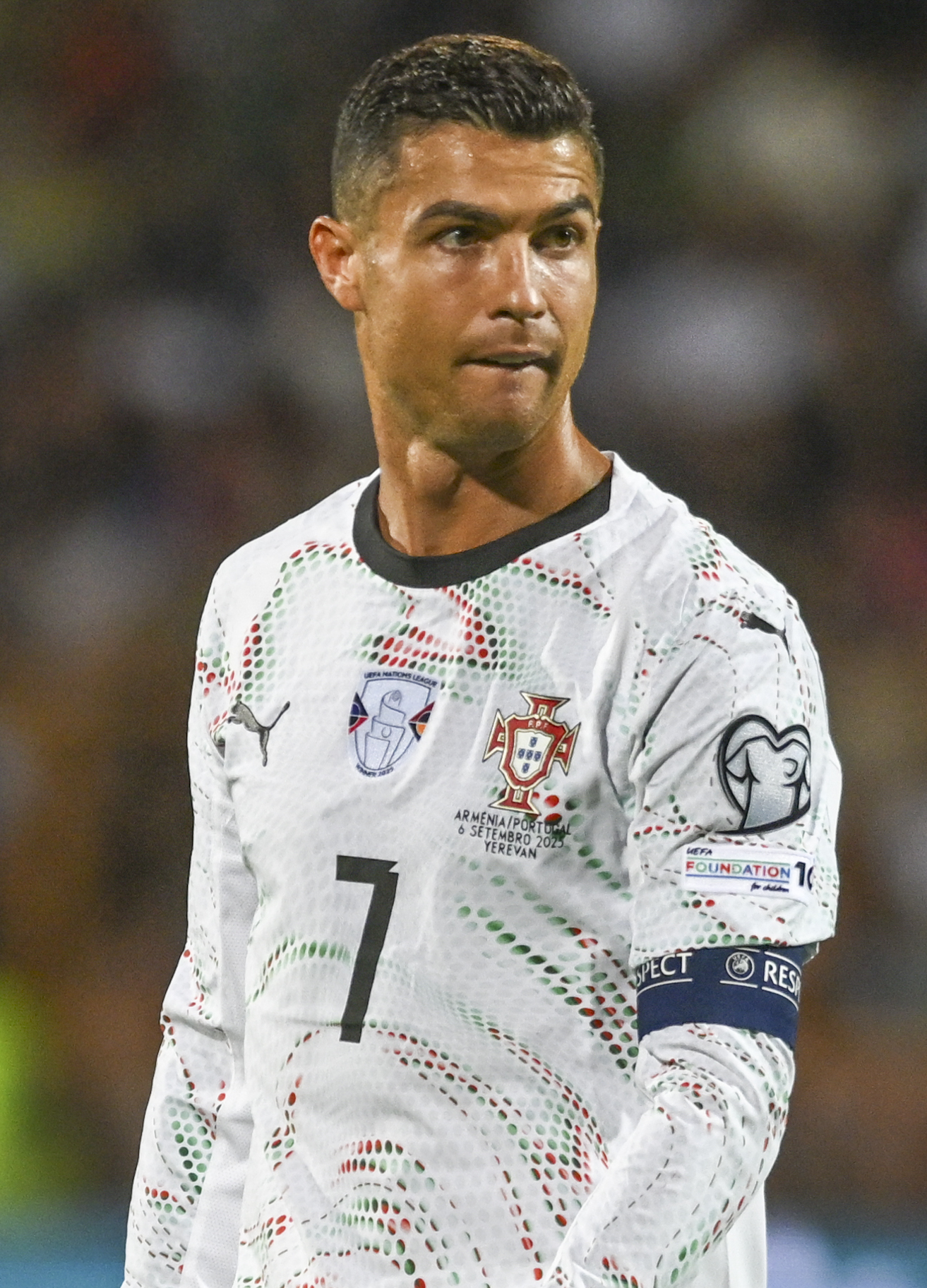
RIYADH, Saudi Arabia — Cristiano Ronaldo faces a brief but concerning spell on the sidelines after sustaining a hamstring injury during **Al-Nassr**’s Saudi Pro League victory over Al-Fayha on Saturday, March 1, 2026. The 41-year-old Portuguese forward limped off in the 81st minute of the 3-1 win, clutching his right hamstring, prompting immediate medical evaluation and rehabilitation.

Al-Nassr issued an official statement on Tuesday, March 3, confirming the diagnosis: “Cristiano Ronaldo has been diagnosed with a hamstring injury after the last game against Al Fayha. He started a rehabilitation program and will be under evaluation day by day.” The club has not provided a fixed return date, emphasizing daily assessments to monitor progress and determine his comeback timeline.
Reports from reliable sources, including transfer expert Fabrizio Romano, indicate the injury could sideline Ronaldo for **two to four weeks**. Romano noted on social media that “Cristiano Ronaldo could be OUT for up to four weeks with muscle injury,” with additional tests pending. The forward is reportedly targeting a swift return, though the severity—described in some outlets as a hamstring tendon issue or more serious than initial muscle fatigue—has prompted specialist care. Recent updates suggest Ronaldo has traveled to Madrid for advanced rehabilitation, as confirmed by Al-Nassr manager Jorge Jesus, who described the setback as “more serious than expected.”
The timing raises questions for both club and country. Al-Nassr, competing in the Saudi Pro League and other competitions, will miss Ronaldo’s goal-scoring prowess and leadership in upcoming fixtures. The team faces potential absences for league games against Neom and Al-Khaleej, and any extended recovery could impact their title chase. Earlier in 2026, Ronaldo had already missed matches amid a brief reported dispute with the club, but he returned to training and action, starting 11 games since January.
For **Portugal**, the injury casts doubt on Ronaldo’s participation in upcoming international friendlies against Mexico on March 29 and the United States on April 1. These matches serve as key preparation for the 2026 FIFA World Cup, co-hosted by the United States, Mexico, and Canada, starting June 11. Portugal coach Roberto Martinez may need to adjust plans if Ronaldo misses the final pre-tournament camp. However, medical experts and multiple reports stress the issue is not long-term, with Ronaldo expected to recover well before the World Cup. A two-to-four-week absence would position him to regain full fitness in April or May, allowing time to build match rhythm ahead of what could be his record sixth World Cup appearance.
Ronaldo, who turns 41 in February 2026, has maintained remarkable form in the Saudi Pro League despite his age. He has been a consistent starter for Al-Nassr under manager Jorge Jesus, contributing goals and assists while adapting to the demands of the league. The hamstring problem follows a season of heavy workload, including club duties and national team commitments. Earlier reports downplayed the initial discomfort as “muscle fatigue,” but further imaging revealed the true extent, leading to cautious management to avoid aggravation.
Fans and analysts express concern over the veteran’s durability, yet optimism prevails given Ronaldo’s history of resilience. The five-time Ballon d’Or winner has overcome numerous injuries throughout his career, often returning stronger. Al-Nassr and Portugal medical teams prioritize a full recovery, with day-by-day evaluations guiding his progression from rehab to light training and eventual return.
The setback underscores the physical toll on elite athletes in their 40s, even legends like Ronaldo. As he focuses on rehabilitation—potentially in Madrid for specialized treatment—supporters worldwide await updates on his status. Al-Nassr continues to dismiss speculation about his future or departure, emphasizing his commitment amid the injury management.
Should recovery align with the two-to-four-week estimate, Ronaldo could miss a handful of club matches but remain on track for international duty later in the spring. His presence remains vital for Portugal’s World Cup ambitions and Al-Nassr’s pursuit of silverware. For now, the focus stays on careful healing to ensure the iconic forward is ready when it matters most.
As the situation develops, follow official club channels and Portugal announcements for the latest. Ronaldo’s determination, paired with top-tier medical support, suggests this is a temporary hurdle rather than a threat to his enduring legacy.

Customers would have zero liability and be entitled to reversal of the transaction if the fraud occurred due to negligence of the bank or because of a third-party breach.
The regulator has proposed to place the burden of proving customer liability on banks in such cases. The directions would apply to electronic banking transactions undertaken from July 1, 2026, the draft regulations said.
 Agencies
 According to the Reserve Bank of India, nearly 65% of fraud cases involve amounts below Rs 50,000.
Compensation would be provided if the loss was established as genuine under the bank’s internal policy. The victim must report the incident both to the bank and the National Cyber Crime Helpline (1930) within five days of the fraud.
After receiving a complaint, banks must examine it, determine liability and respond to the customer within 30 days.
The draft framework sets out a compensation-sharing mechanism. For losses below Rs 29,412, where the compensation would be 85%, the RBI would provide 65%, while the customer’s bank and the beneficiary bank would contribute 10% each, it said. For losses between Rs 29,412 and Rs 50,000, the RBI would contribute Rs 19,118, while the customer’s bank and the beneficiary bank would put in Rs 2,941 each. The proposed compensation mechanism would remain in force for one year from the effective date, after which it would be reviewed, the RBI said. The aim is to gradually increase the share borne by banks and reduce or eliminate the central bank’s contribution in such instances, it said. The regulator has invited comments from stakeholders on the draft until April 6, 2026.
Negligence by a bank includes failure to put in place required security systems, send transaction alerts, provide channels to report fraud or act promptly on customer complaints. Customer negligence includes sharing credentials such as PINs, passwords or OTPs, delaying the reporting of fraud.

Form 4 BlackRock MuniYield Qual Closed III For: 6 March
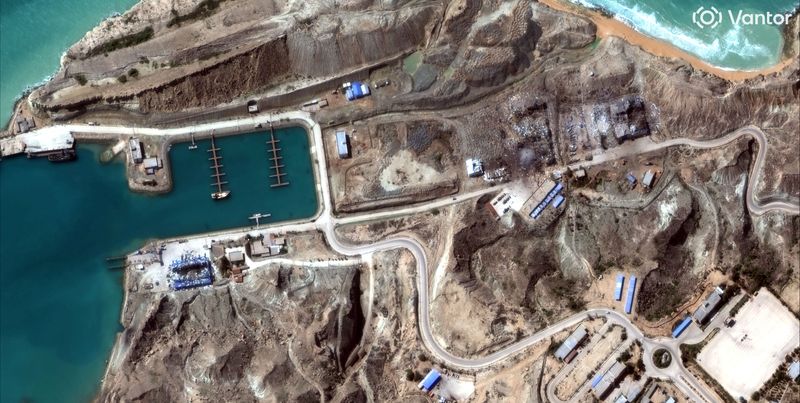

Iran war enters second week as Trump demands ’unconditional surrender’

X is testing a new ad format that connects posts with products

Welsh village with Mediterranean gardens make it ‘feel like you’re in Italy’

Prada: Healthy Results, But Some Softening Visible


-

 Politics4 days ago
Alan Cumming Brands Baftas Ceremony A ‘Triggering S**tshow’
-

 Tech6 days ago
Unihertz’s Titan 2 Elite Arrives Just as Physical Keyboards Refuse to Fade Away
-

 NewsBeat6 days ago
Abusive parents will now be treated like sex offenders and placed on a ‘child cruelty register’ | News UK
-
Business14 hours ago
Form 8K Entergy Mississippi LLC For: 6 March
-

 Fashion10 hours ago
Weekend Open Thread: Ann Taylor
-
 NewsBeat6 days ago
Dubai flights cancelled as Brit told airspace closed ’10 minutes after boarding’
-
Sports7 days ago
The Vikings Need a Duck
-
 NewsBeat7 days ago
The empty pub on busy Cambridge road that has been boarded up for years
-

 NewsBeat6 days ago
‘Significant’ damage to boarded-up Horden house after fire
-

 Tech2 days ago
Bitwarden adds support for passkey login on Windows 11
-

 Entertainment5 days ago
Baby Gear Guide: Strollers, Car Seats
-
 Sports1 day ago
499 runs and 34 sixes later, India beat England to enter T20 World Cup final | Cricket News
-
 NewsBeat6 days ago
Emirates confirms when flights will resume amid Dubai airport chaos
-
Politics6 days ago
FIFA hypocrisy after Israel murder over 400 Palestinian footballers
-

 NewsBeat5 days ago
Is it acceptable to comment on the appearance of strangers in public? Readers discuss
-

 Tech6 days ago
Viral ad shows aged Musk, Altman, and Bezos using jobless humans to power AI
-

 Video5 days ago
How to Build Finance Dashboards With AI in Minutes
-

 Fashion6 days ago
On the Scene at the 57th Annual NAACP Image Awards: Teyana Taylor in Black Ashi Studio, Colman Domingo in Yellow Sergio Hudson, Chloe Bailey in Christian Siriano, and More!
-

 Business3 days ago
Guthrie Disappearance Enters Fifth Week as Family Visits Memorial
-
 NewsBeat5 days ago
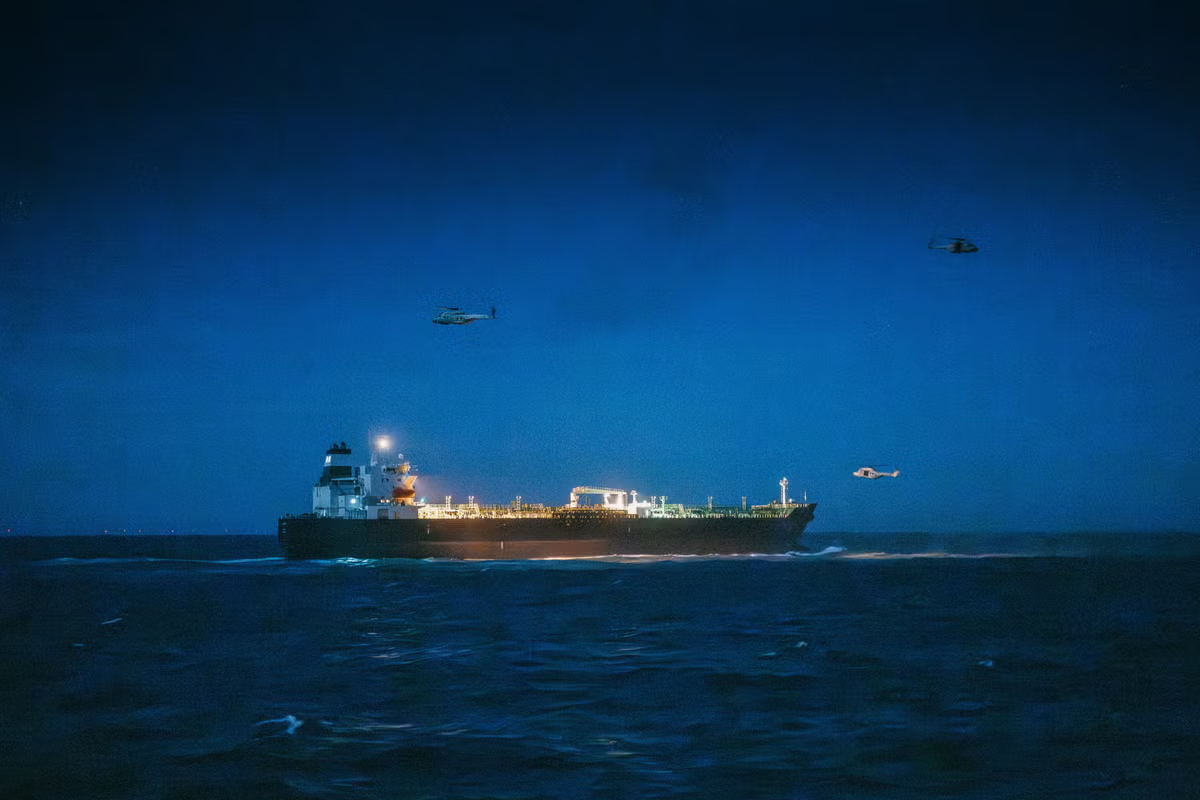
Ukraine-Russia war latest: Belgium releases video showing forces boarding Russian shadow fleet oil tanker