WASHINGTON — President Donald Trump has nominated Cissie Graham Lynch, the granddaughter of the late evangelist Billy Graham, to serve as the U.S. ambassador-at-large for international religious freedom, moving to fill a senior diplomatic post that has lacked a Senate-confirmed occupant since the start of his second term.
The White House announced the nomination Monday, sending Lynch’s name to the U.S. Senate for consideration as part of a broader list of nominations. Lynch, whose full legal name is Jane Lynch, is the daughter of Samaritan’s Purse Chief Executive Officer Franklin Graham and the granddaughter of Billy Graham, the influential evangelist who died in 2018.
Lynch addressed the nomination in a post on social media platform X on Tuesday, describing the opportunity in personal terms. “If confirmed by the Senate, please pray that I would serve with excellence and make the most of every opportunity to protect our most precious and fundamental right — and one that far too many people around the world still live without — freedom of religion,” she wrote, calling the nomination a “great honor and privilege.”
Franklin Graham voiced support for his daughter’s nomination in a separate post on X the same day. “Cissie is uniquely qualified for this — she has traveled the world and been a student of this issue for many years,” Graham wrote. “She has a broad worldview and knowledge of the issues facing religious freedom today.” He added, “If confirmed by the Senate, she will bring a passion for defending religious freedom to this office. I couldn’t be more proud of her, and I ask you to pray that God would give her wisdom and strength.”
Advertisement
The nomination follows an earlier, unsuccessful attempt by the Trump administration to fill the post. Former U.S. Rep. Mark Walker, R-N.C., had previously been nominated for the ambassador role but was not confirmed by the Senate before the end of 2025, with the Senate formally returning his nomination to Trump on January 3. Walker was subsequently appointed to a different position, serving as the State Department’s principal adviser for global religious freedom, according to the U.S. Commission on International Religious Freedom.
The ambassador-at-large for international religious freedom leads the State Department’s Office of International Religious Freedom and serves as a principal adviser to both the president and the secretary of state on matters of religious freedom abroad. The position was established under the International Religious Freedom Act of 1998.
The Religious Freedom Institute praised Lynch’s nomination in a statement issued Monday, framing the role’s importance within the broader scope of U.S. foreign policy. “Our world is afflicted by an unprecedented scourge of religious persecution today,” said David Trimble, president of the Religious Freedom Institute. “We at RFI understand the vital role the International Religious Freedom Ambassador can and should play in U.S. foreign policy, and we stand ready to support Jane Lynch as she prepares, with the Senate’s approval, to assume the responsibilities of America’s chief diplomat for religious freedom.” Trimble added, “The Senate should enter into the forthcoming confirmation process for Ms. Lynch’s nomination with due diligence and expediency.” The organization identified China, Nigeria, Syria and Nicaragua as among the countries it considers most affected by religious repression, discrimination and violence, areas it said should be a focus of Lynch’s efforts if confirmed.
While best known publicly as a member of the Graham family, Lynch has built her own profile as an author and speaker in recent years, working alongside Samaritan’s Purse and the Billy Graham Evangelistic Association. She hosts a podcast called “Fearless” and has a book, titled “Stand Steady: Fearless Faith in a Compromising Culture,” scheduled for release next month. Lynch has also been a public speaker at notable political and religious events, including the Rededicate 250 prayer gathering commemorating the 250th anniversary of the United States, and the 2020 Republican National Convention.
Advertisement
Lynch’s nomination must still be approved by the full Senate before she can formally take office. The chamber currently consists of 53 Republicans and 47 Democrats, meaning Lynch’s confirmation could proceed with Republican support alone if Democratic senators do not back the nomination.
Although international religious freedom policy has generally not been treated as a sharply partisan issue compared with most areas of public policy, confirmation votes for the position have varied considerably in their level of bipartisan support in recent years. Former Kansas Gov. Sam Brownback, who also previously served in the U.S. Senate, required a tie-breaking vote from then-Vice President Mike Pence to be confirmed as ambassador-at-large for international religious freedom during Trump’s first term, after receiving no support from Democratic senators in a closely divided chamber. By contrast, Rashad Hussain’s nomination for the same post during the Biden administration passed with broad bipartisan backing, confirmed by an 85-5 vote in the Senate, with only five Republicans voting against him.
With Lynch’s nomination now before the Senate, attention is likely to turn to the timeline and outcome of her confirmation hearings, particularly given the post’s extended vacancy since the start of Trump’s second term and the earlier failed attempt to confirm Walker for the same position. If confirmed, Lynch would become the latest in a line of ambassadors tasked with representing U.S. policy on religious freedom abroad, a role that has taken on added significance amid what advocacy groups describe as a global rise in religious persecution across multiple regions.
Manchester’s Peel Group already owns around 30% of its Yorkshire counterpart but is bidding to take it over in a deal that would value the firm at around £600m
17:19, 16 Sep 2026Updated 17:26, 16 Sep 2026
The Skelton Grange site where Harworth secured a large land deal with Microsoft.(Image: Harworth Group)
Development group Peel has increased its takeover offer for fellow Northern firm Harworth Group.
Peel’s offer of 177.5p per share for the parts of the company it does not already own values Rotherham-based Harworth at nearly £600m. Harworth said it would evaluate the new bid with its advisors, but recommended shareholders do nothing in the short term.
Advertisement
Peel already holds nearly 30% of Harworth’s shares, but launched a takeover bid in August through a subsidiary. Harworth said the first bid undervalued the company and last week announced a move away from the residential property market in efforts to streamline its operations.
Last week also saw Harworth publish half year results for the six months to the end of June in which EPRA NDV was £697.7m, compared with £725m in the same period last year. It also saw a £16.9m fall in the value of its residential portfolio over the period.
A spokesperson for Peel said: “Harworth’s defence document highlights rather than addresses the issues faced by the Company. It announced a further decline in NAV and cash flow, while remaining silent on the Company’s short-to-medium term outlook. Instead, it flags a new strategy lacking credibility but promising ‘long term’ returns for shareholders. Peel’s revised offer provides shareholders with the certainty at completion of a highly attractive cash alternative at a fair price and 40% premium.”
Harworth responded with a statement to the Stock Exchange which said: “There has been no engagement between Peel and Harworth over the course of the offer period. The Harworth board is evaluating the revised offer with its advisers and a further announcement will be made as appropriate.”
Advertisement
Harworth originated as the property wing of UK Coal, and many of its earliest properties were former mining sites in the North and the Midlands. It currently has holdings of more than 15,000 acres across 100 sites, and specialises in developing industrial and logistics developments for sale.
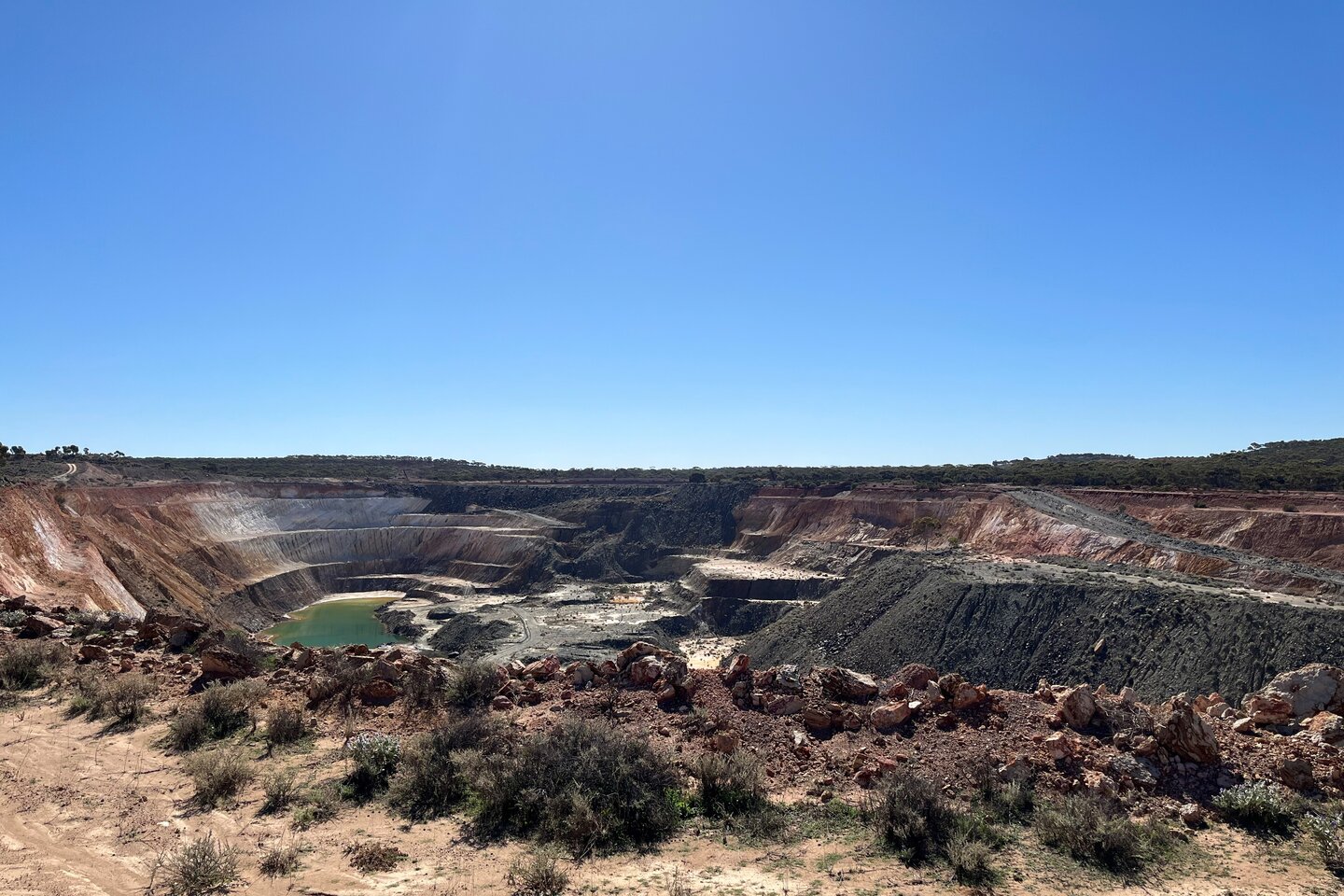
Tim Goyder-chaired Minerals 260 has announced it will raise up to $280 million, as it moves to underpin development of its Bullabulling gold project in the Goldfields.
Wall Street is all but certain that the world’s most powerful central bank will raise interest rates today. Nearly 93% of traders are expecting an increase in rates, according to data from CME Group.
It would be a shocker, to say the least, if the Fed didn’t increase rates amid such high odds.
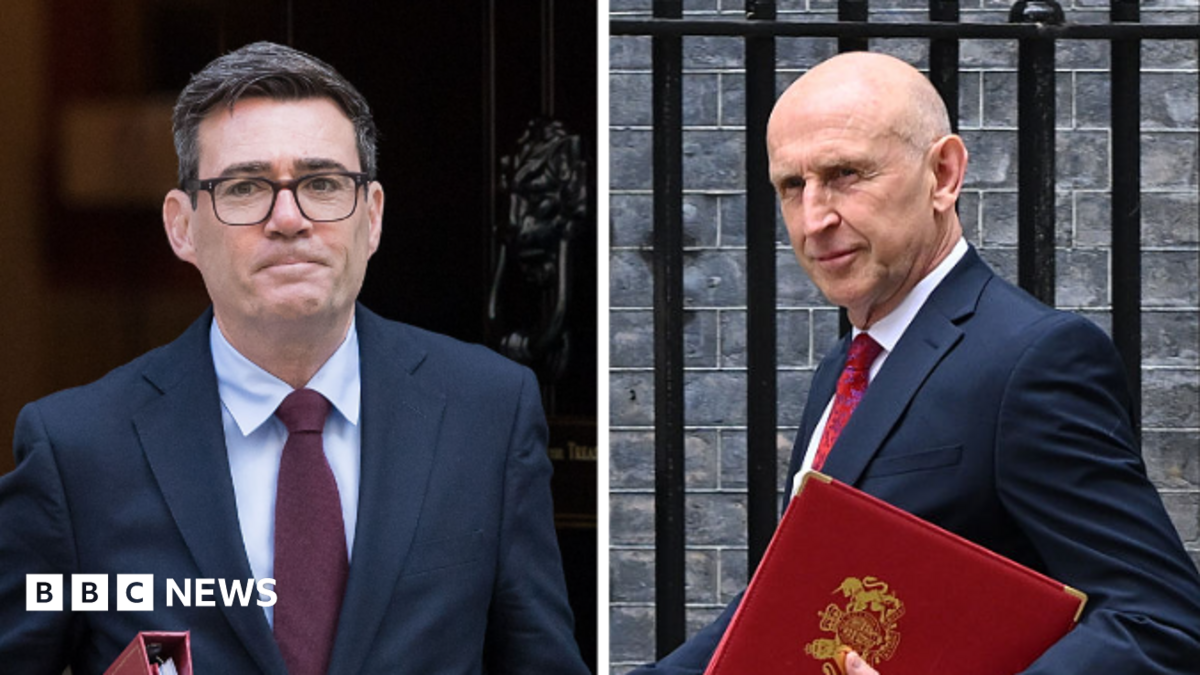
He identified “putting digital ID on hold” as an example of how he had already “taken difficult decisions in this job in relation to reprioritising government spending” and vowed to continue to “take difficult decisions to make sure the economy remains on track”.
Digital ID is a striking choice of example. Burnham announced that he was abandoning the scheme in the days before he became prime minister so that he could focus on policies affecting the everyday cost of living.
But the spending was then, within the new government’s first few days, re-allocated to cut VAT on household electricity bills.
So in that sense it was not a reduction in public spending, just a reprioritisation. And in any case, the former cabinet minister Darren Jones criticised Burnham at the time on the grounds that the government had not yet allocated the money for digital ID.
Advertisement
Certainly the signs from Healey’s first major speech as chancellor last week were that he wants to reassure the markets, promising to “control public spending” and praising Rachel Reeves for beginning to “recover Britain’s fiscal discipline”.
Burnham and Healey would hardly be the first PM-chancellor double act to adopt different tones and emphasise different priorities in their public appearances.
As a junior minister at the Treasury almost 25 years ago, Healey was engaged in the question of how to boost growth around the country, long before it became central to Burnham’s vision for Britain.
But there are people in government who are beginning to wonder whether their economic visions are quite as aligned as expected. “It’s what everyone is thinking and some of us are vocalising,” one government source said.
Advertisement
There are also those who fear the adverse political consequences of a Labour government seeking to go out of its way to demonstrate its fiscal credibility. Arguably that was behind the removal of the Winter Fuel Allowance for most pensioners as one of Sir Keir Starmer’s first acts, an early factor in his political demise.
For Labour’s political opponents, all this amounts to a question of whether the prime minister is willing to disappoint his own MPs. Yet it’s worth remembering that with winter fuel the frustration in parliament was primarily caused by the furious reaction of Labour MPs’ constituents.
Arguably this presents a more fundamental tension: are the kinds of policies needed to soothe the markets politically deliverable given Labour’s electoral coalition and its need to shore up the ‘progressive’ vote?
The Budget is only six weeks away and will be the first and most important sign of the new government’s answer to that question.
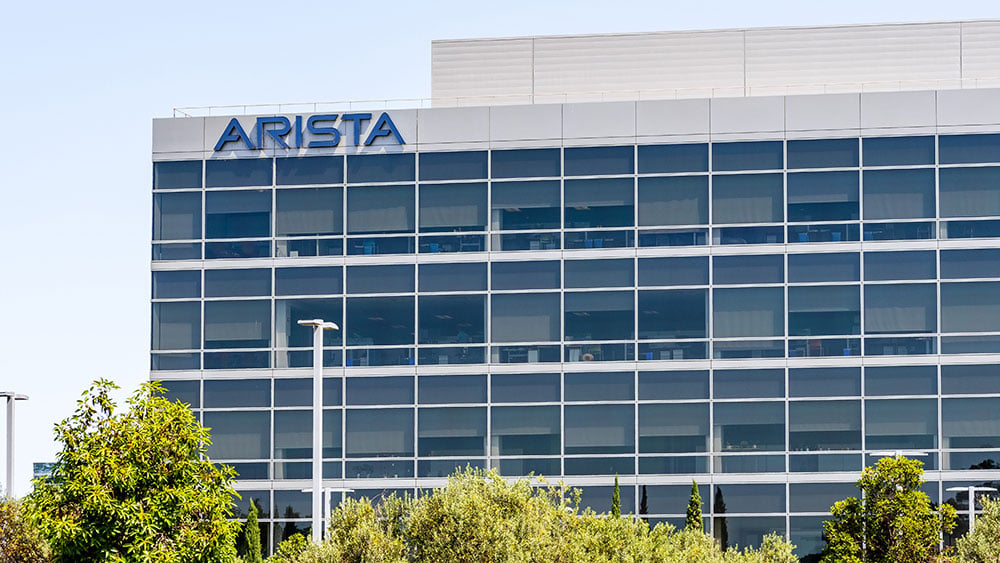
Arista Networks (ANET) is a highly rated stock that is holding up well during the recent market weakness. Income investors who want to generate some option premium on Arista stock could look at a covered call trade. A covered-call strategy is one way to slightly reduce the risk on a long stock position while also generating some option premium. The…

















































You must be logged in to post a comment Login