Business
Trump to head to Beijing for Xi summit amid AI chip and trade talks

Wall Street Journal’s ‘Free Expression’ deputy editor Jack Butler joins ‘Varney & Co.’ to discuss AI risks, global competition, and whether the U.S. should collaborate with rivals like China on emerging technology.
President Donald Trump is set to travel to China this week for a summit with Chinese President Xi Jinping that comes as the relationship between the world’s two largest economies is disrupted by ongoing trade disputes and emerging technology.
Trump’s meeting with Xi in Beijing on May 14–15 comes amid the Iran war affecting global energy markets, while the trade tensions between the U.S. and China continue to simmer amid tariff disputes, the artificial intelligence (AI) race and potential export deals.
The two countries may negotiate new commitments by China to purchase American farm goods and jetliners, with restrictions on the sale of advanced AI chips a potential sticking point.
Derek Scissors, a senior fellow at the American Enterprise Institute whose focus includes U.S. economic ties with China, told FOX Business that the “president wants to announce a bunch of purchases” of U.S. goods following the talks and sees China as having flexibility to make public commitments to that effect.
WHITE HOUSE ACCUSES CHINA OF ‘INDUSTRIAL-SCALE’ AI TECHNOLOGY THEFT WEEKS AHEAD OF TRUMP-XI SUMMIT

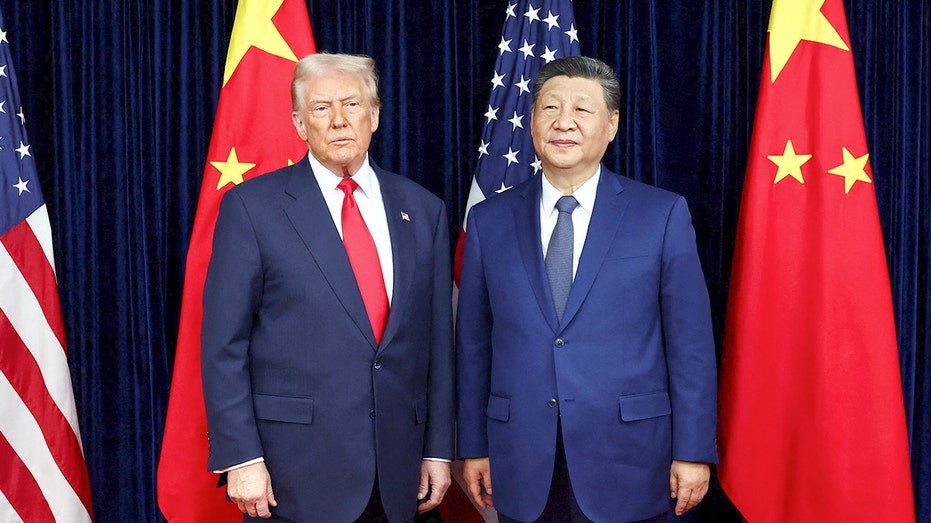
President Donald Trump’s last trip to China to meet with Chinese President Xi Jinping was in November 2017, which was the last visit by a U.S. president. (Evelyn Hockstein/Reuters)
“Xi Jinping can just say, ‘we are going to do this.’ It doesn’t mean they actually do it – they didn’t do it in the phase one deal – but he can say that, and they can announce that China will buy this many Boeings and this many soybeans, so I think they’re going to negotiate a purchase deal,” Scissors said.
He said that he views a public deal involving Chinese purchases of U.S. energy as unlikely due to political sensitivities stemming from the Iran war, but China may seek a deal allowing it to purchase advanced AI chips.
“On the Chinese side, they, of course, want more advanced technology. One of the reasons they have not bought any H200 Nvidia chips is that they want to put pressure on the company to sell them better chips,” Scissors said. “They’ll even eventually acquire H200 chips, and probably already have indirectly, but what they want is an agreement to sell more advanced chips.”
IN LETTER TO XI, TRUMP ASKS CHINA NOT TO SEND WEAPONS TO IRAN

Nvidia’s advanced AI chips have been a major point of contention in U.S. trade with China. (Jakub Porzycki/NurPhoto)
“That’s the basic economic trade: the Chinese make, or at least announce, large-scale purchases of U.S. items that we sell to China, which is aircraft and farm goods in the lead if you’re not going to count energy, and then we agree to sell them more advanced chips than the H200,” he said.
Scissors added that he’s unsure whether Trump is interested in selling the advanced chips to China, given the tension between his stated desire for more U.S. exports and the restrictions that have been put in place on the sale of those chips.
Kyle Chan, a fellow at The Brookings Institution’s John L. Thornton China Center, expressed a similar sentiment and told FOX Business that Beijing’s approach to export controls will be a big question ahead of the summit.
“Trump allowed the sale of Nvidia H200 chips to China subject to certain conditions. Beijing, however, has not been eager to allow the import of these chips. While Chinese AI companies would like to access stronger AI chips, Beijing is keen to support domestic AI chipmakers instead,” Chan noted. “Will Trump see this as a technology issue or a trade issue?”
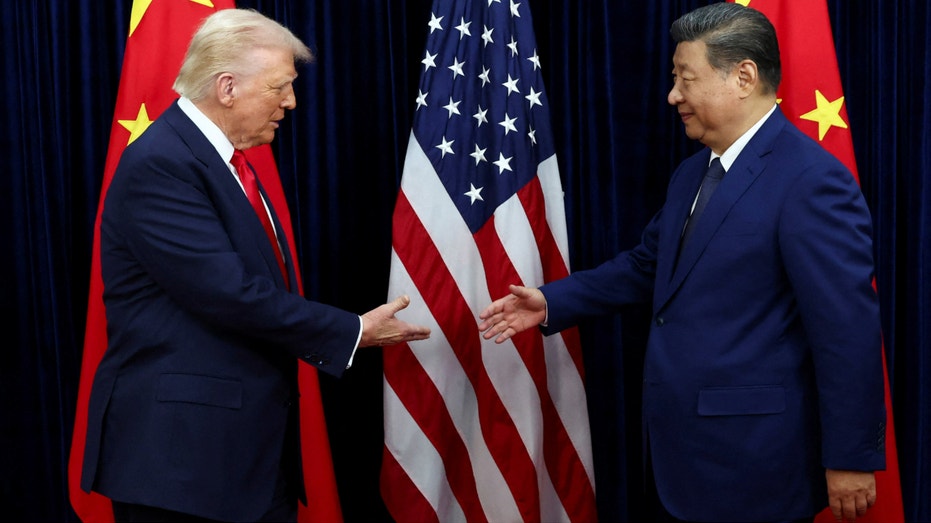
President Donald Trump last met with Chinese President Xi Jinping in October 2025 in Busan, South Korea. (Evelyn Hockstein/Reuters)
Chan added that the investment deals that have been reached between the U.S. and Japan and South Korea, two regional rivals of China, may be appealing to Chinese leadership – though he cautioned it isn’t clear the U.S. would be receptive.
“Beijing is quite interested in increasing Chinese investment in the U.S. They look around and see U.S. investment deals with other countries like Japan and South Korea and wonder whether this might be an easy win-win. The real question is whether the U.S. would find this attractive or see this as a source of greater risk and dependency,” Chan said.
A spokesman for the Chinese Ministry of Foreign Affairs said that the two presidents will exchange their views on “major issues concerning China-U.S. relations and on world peace and development.”
GET FOX BUSINESS ON THE GO BY CLICKING HERE
“China stands ready to work with the U.S. to expand cooperation and manage differences in the spirit of equality, respect and mutual benefit, and provide more stability and certainty for a transforming and volatile world,” the spokesman added.
You must be logged in to post a comment Login