

Business
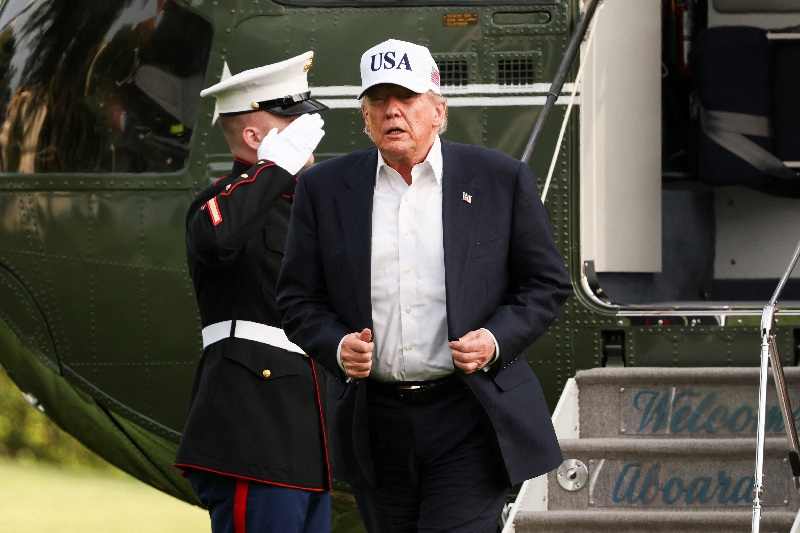
Trump to meet US security advisers Tuesday, Axios reports




Boom Supersonic CEO Blake Scholl joins Varney & Co. to discuss the House passing a bill to permit supersonic passenger flights over the US. He explains their boomless technology and private funding, aiming for passenger flights by end of decade.
The Department of Transportation on Tuesday announced that regulators are moving toward enabling civilian supersonic flights over the continental U.S., which have been banned for decades due to sonic booms.
The Federal Aviation Administration (FAA) proposed a rule that sets a noise-based certification standard for supersonic aircraft and signaled that it will propose another rule later this year covering landing and takeoff noise standards for supersonic aircraft.
Taken together, the FAA’s regulatory moves will give guidance to aircraft manufacturers so they can finalize designs and bring civilian aircraft capable of flying at supersonic speeds into service for travelers.
“Restoring supersonic flight over land isn’t just about speed, it’s about unleashing American innovation and ushering in a Golden Age of Travel,” said Transportation Secretary Sean Duffy.
FASTER-THAN-SOUND PASSENGER FLIGHTS COULD SOON RETURN TO US SKIES AFTER KEY HOUSE VOTE
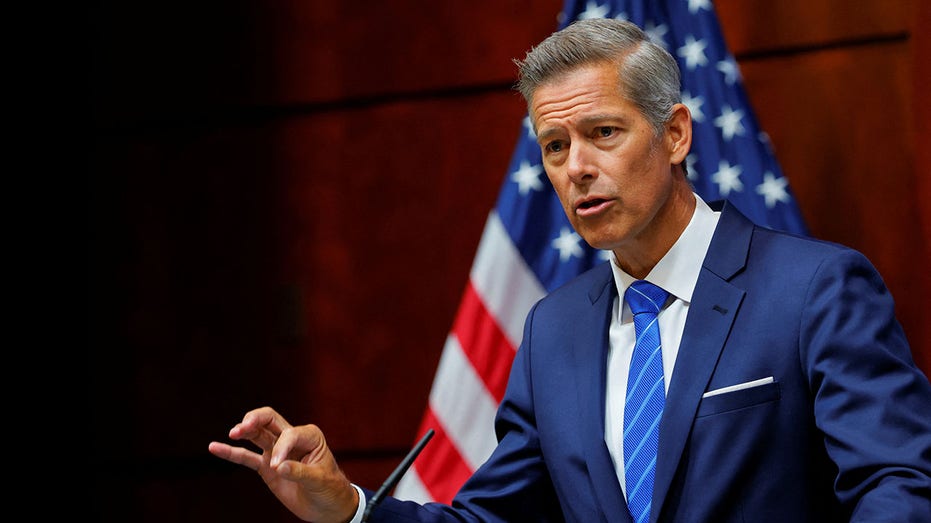
Transportation Secretary Sean Duffy announced the proposed rules to enable supersonic civilian flights over the U.S. (Reuters/Brian Snyder)
“Thanks to President Trump’s leadership, we are working at lightning speed to safely enable the next quantum leap in aviation technology and deliver an exciting new way to fly to the American flying public,” Duffy added.
The FAA is planning to finalize both rules by mid-2027.
Supersonic flights travel at speeds at or above Mach 1, flying at about 770 miles per hour or more. By contrast, commercial airliners generally fly between 550 and 600 miles per hour, giving supersonic aircraft a speed edge that can reduce travel times.
NASA ASTRONAUTS COULD SOON WEAR PRADA AS LUXURY LABEL UNVEILS NEW GEAR FOR ARTEMIS IV
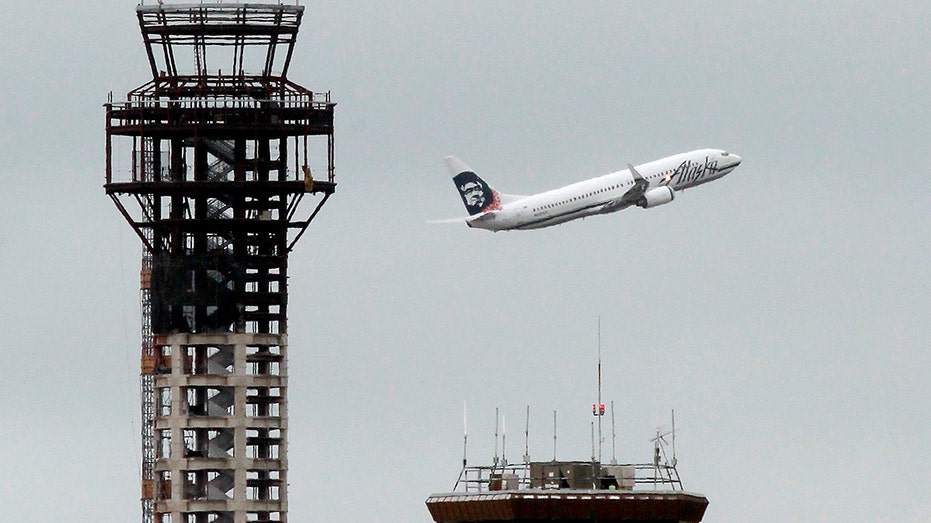
The FAA aims to finalize the rules by mid-2027. (Justin Sullivan/Getty Images)
Civilian flights in the U.S. have been prohibited from operating at speeds above Mach 1 over land in the U.S. under an FAA rule meant to protect the public from the impact of sonic booms, which can present noise issues at ground-level and may damage windows.
Technological advancements have led to a new flight technique called Mach cutoff, which the FAA explained uses the aircraft design, atmospheric conditions, speed and altitude to work together to make the sonic boom bend and refract up into the atmosphere – significantly reducing the ground-level impact in the process.
US IS ‘AHEAD’ OF CHINA IN SUPERSONIC JET AIRCRAFT, SAYS BOOM SUPERSONIC CEO

The Concorde was a commercial airliner capable of supersonic flight, though it was phased out of service in 2003. (STF/AFP via Getty Images)
“Advances in aerospace engineering, materials science, noise reduction, and new operational concepts will eliminate the old sonic boom,” said FAA Administrator Bryan Bedford. “This means we can ultimately repeal the ban from the 1970s on supersonic flight over U.S. territory while minimizing noise impacts to residents in communities along the route and near airports.”
While the newly proposed regulations would apply to domestic supersonic flights, the FAA is also working with its regulatory counterparts from around the world to develop frameworks that could enable supersonic aircraft to serve international flights.
GET FOX BUSINESS ON THE GO BY CLICKING HERE
A year ago, President Donald Trump signed an executive order that called for the FAA to secure safety aviation agreements with foreign aviation regulators to allow for the safe international operation of supersonic aircraft.
Ford’s limited-edition Super Duty Proud to Honor package features patriotic styling, with a portion of proceeds supporting Blue Star Families. (Credit: Ford Motor Company)
Ford is recalling more than 741,000 vehicles across the U.S. after a transmission defect that can damage the parking system and increase the risk of a vehicle rolling away was linked to 24 allegations of property damage and nine alleged injuries.
The recall affects 741,195 vehicles, including certain 2018-2021 Ford Expedition and Lincoln Navigator SUVs, 2020-2021 Ford Explorer and Lincoln Aviator SUVs, and 2021 Ford F-150 pickups, according to the National Highway Traffic Safety Administration (NHTSA).
The agency said the vehicles may experience a transmission problem during certain shifts while in motion that can damage the transmission’s parking mechanism.
FORD IN DEEP WATER AFTER SWEEPING RECALLS HIT EVERY MODEL SINCE 2020 – WITH ONE EXCEPTION
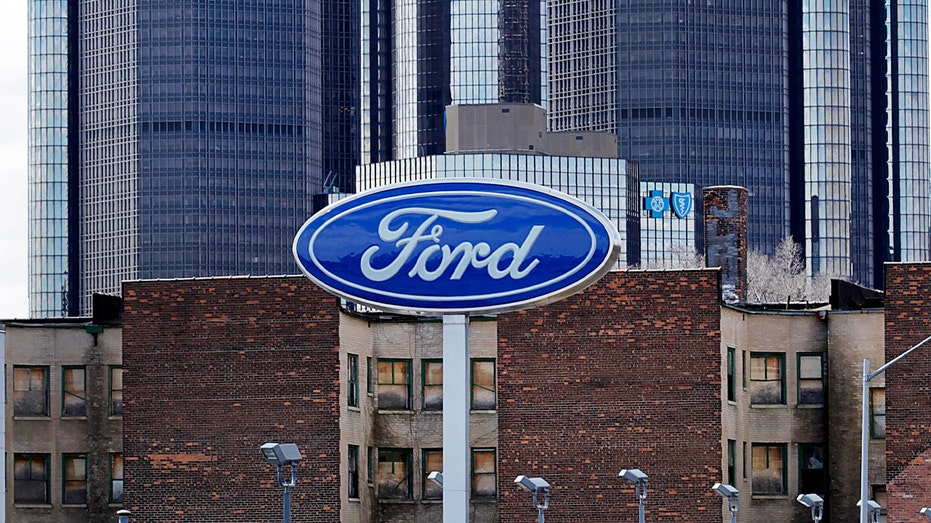
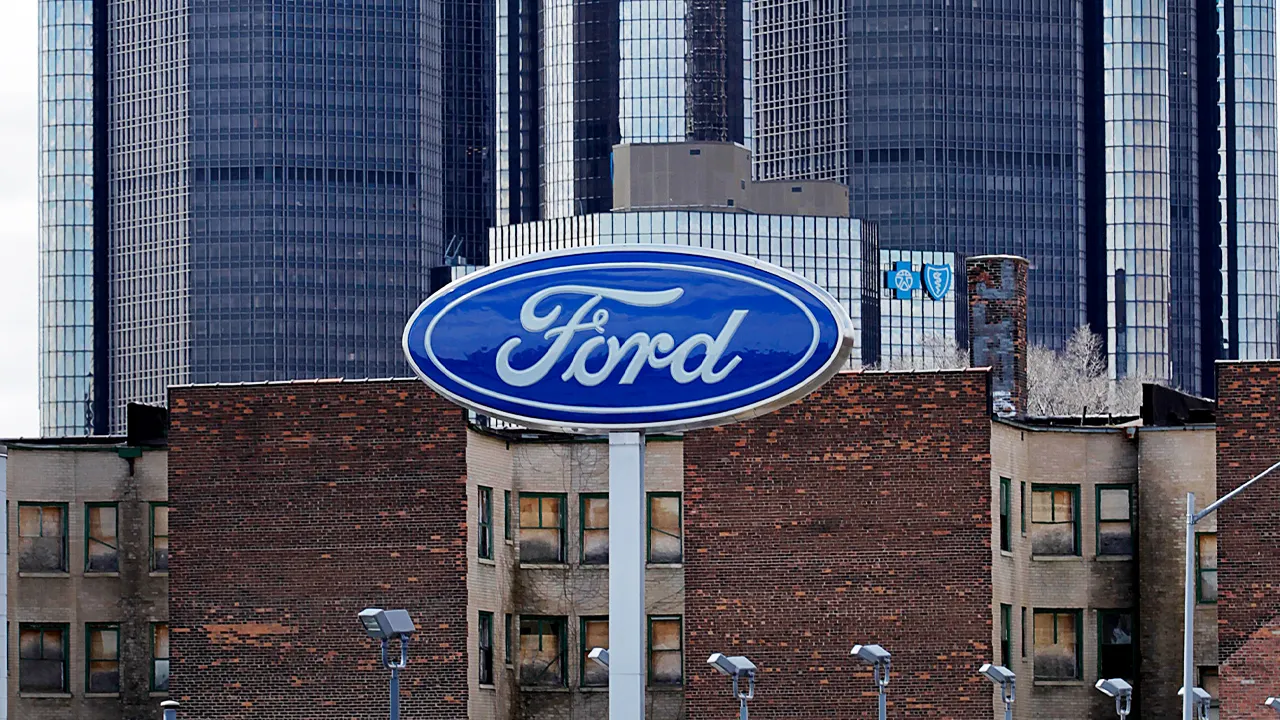
Ford Motor Co. signage is displayed outside a dealership in Detroit, Mich. (Jeff Kowalsky/Bloomberg via Getty Images, File / Getty Images)
If that happens, the transmission may no longer hold the vehicle in place after it is shifted into “Park” unless the parking brake is applied, increasing the risk of a crash or injury.
Ford said the issue stems from a transmission valve body separator plate that can restrict fluid flow to the park valve, allowing the parking mechanism to briefly engage while the vehicle is still moving. Drivers may notice a wrench warning light, and in some cases the electronic parking brake may automatically engage.
| Ticker | Security | Last | Change | Change % |
|---|---|---|---|---|
| F | FORD MOTOR CO. | 13.91 | -0.12 | -0.89% |
Ford said the reported incidents include two allegations involving emotional injuries.
To address the issue, dealers will update the vehicle’s powertrain control module software, inspect the transmission for damage and replace any damaged components free of charge.
FORD RECALLS MORE THAN 615,000 VEHICLES OVER WIPER AND DRIVESHAFT DEFECTS
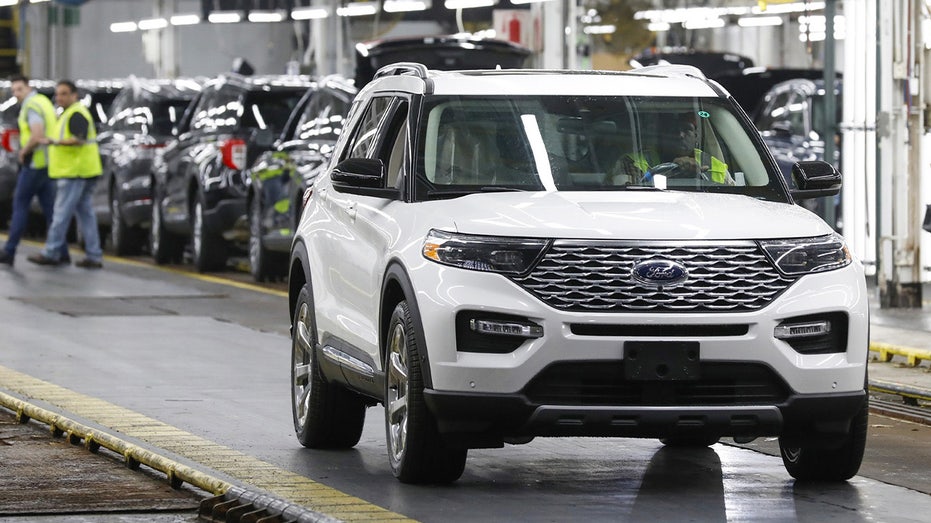
A Ford Explorer at the Ford Chicago Assembly Plant. (Jose M. Osorio/Chicago Tribune/Tribune News Service via Getty Images, File / Getty Images)
Ford expects to begin mailing interim notification letters to owners on Aug. 3.
A permanent repair is not expected to be available until April 2027, when the company plans to begin notifying owners that the remedy is available.
The recall is the latest in a string of safety actions that have put Ford under increased scrutiny in recent years.
In 2025, the automaker set a record for the most recalls issued by a single manufacturer in a single year, topping 150 safety recalls — nearly double the previous record of 77 set by General Motors in 2014.
Ford said the increase reflected a more aggressive strategy of identifying and addressing potential safety issues before they result in major incidents or widespread complaints.
FORD RECALLS MORE THAN 412,000 VEHICLES OVER SUSPENSION ISSUE
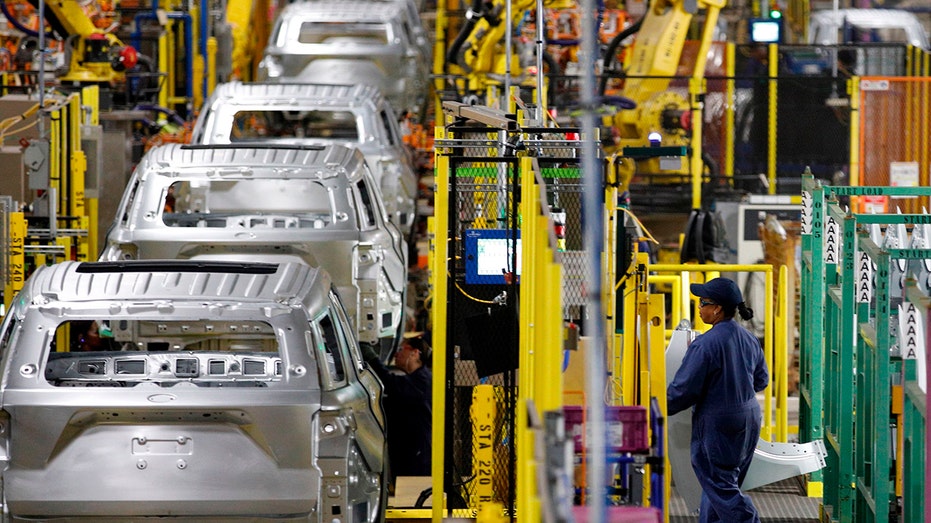
Workers assemble cars at the Ford Assembly Plant in Chicago. (Jim Young/AFP via Getty Images, File / Getty Images)
“The increase in recalls reflects our intensive strategy to quickly find and fix hardware and software issues and go the extra mile to help protect customers,” the company said in a 2025 statement. “Ford has more than doubled its team of safety and technical experts in the past two years and significantly increased testing for failure on critical systems in current Ford vehicles such as powertrains, steering and braking.”
CLICK HERE TO GET FOX BUSINESS ON THE GO
Between 2020 and 2026, nearly every Ford model was recalled at least once, from SUVs and pickups to commercial vans and the Mustang. The lone exception was the Ford GT supercar, which was discontinued after the 2022 model year.
FOX Business has reached out to Ford for comment on the recall and will update this story if a response is received.
Owners with questions can contact Ford customer service at 1-866-436-7332 or the NHTSA Vehicle Safety Hotline at 1-888-327-4236.
FOX Business’ Bonny Chu contributed to this report.
The indexes ended higher for the day as well on Tuesday, with technology among the biggest sector gainers in the S&P 500. Optimism over signs of progress in efforts to bring the Iran war to a lasting halt has helped stocks recently despite continued military tensions. For the month, the S&P 500 fell 1.1%, the Dow rose 2.5%, and the Nasdaq declined 2.8%.
Iran and the U.S. on June 17 signed a memorandum of understanding aimed at ending the four-month-old conflict. But exchanges of fire over the weekend have tested that agreement, and a Qatari official said on Tuesday that top U.S. envoys who have arrived in Doha will not hold a high-level meeting with Iran.
“We’ve had a great first half of the year, certainly better than most expected,” said Oliver Pursche, senior vice president and advisor for Wealthspire Advisors in Westport, Connecticut.
“In spite of all the geopolitical stuff, the U.S. economy is performing well and corporate earnings are strong.”

After a strong first-quarter earnings season for S&P 500 companies, investors are looking forward to second-quarter results in the coming weeks.
According to preliminary data, the S&P 500 gained 55.97 points, or 0.75%, to end at 7,498.38 points, while the Nasdaq Composite gained 374.62 points, or 1.45%, to 26,194.76. The Dow Jones Industrial Average rose 116.17 points, or 0.22%, to 52,298.91. Weakness in heavyweight technology shares has weighed on the market in recent weeks. Strategists at BofA said cyclical, value-oriented sectors such as energy and financials could be the better bet heading into the second half.
Worries about possible interest rate hikes have weighed on the market. Traders are pricing in at least one rate hike by the Federal Reserve by the end of 2026, according to data compiled by LSEG.


US judge blocks Trump’s limits on student loan forgiveness
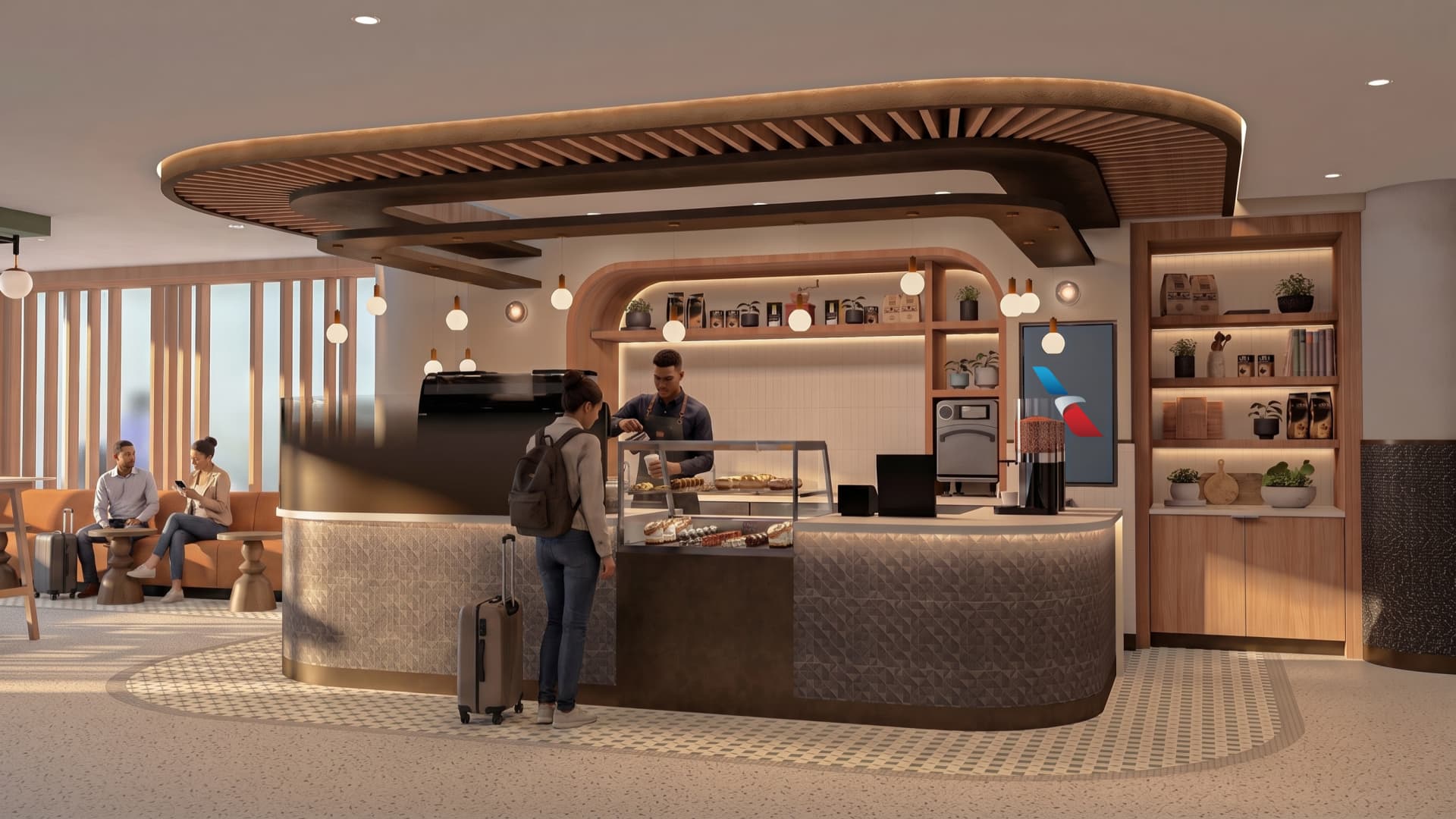
A rendering of American Airlines planned Provisions grab-and-go lounge at New York’s John F. Kennedy International Airport
American Airlines
American Airlines is planning to open a new grab-and-go lounge at New York’s John F. Kennedy International Airport by the end of this year, its first new facility at the airport in more than four years as it continues its fight for high-paying customers to close a profit gap with Delta Air Lines and United Airlines.
The new lounge, a 3,700-square-foot space, will include a barista bar with hot and iced coffee drinks as well as hot and cold food travelers can grab.
Airlines have been adding more of these short-visit lounges in recent years to give credit card holders and big spenders access to spaces without crowding larger airport clubs. United announced its first in late 2022, for Denver International Airport.
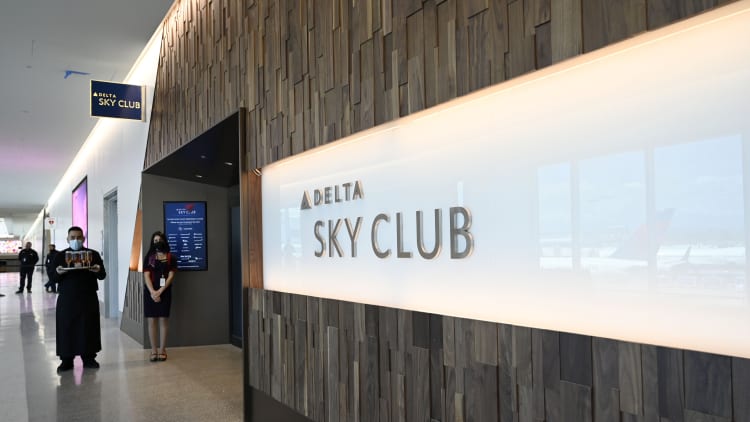
Airlines and credit card companies alike have raised the entry requirements or scaled back on freebies like guest passes to avoid overcrowding.
American opened the first of its grab-and-go lounges, which it calls Provisions, at Charlotte Douglas International Airport in North Carolina, last year.
American operates out of JFK’s Terminal 8, which is shared by its Oneworld Alliance partners, Japan Airlines, Alaska Airlines, British Airways and others.
It has a trio of high-end lounges for business-class travelers, first-class passengers and other frequent flyer elites for long-haul trips, which the airline opened there in 2022. It also operates an Admirals Club there that is used more for lounge membership customers. American hasn’t updated its New York space lately like it has with those in other cities like Chicago and Austin, Texas.

.webp?t=1774966017)
Imbibe identifies the cutting-edge trends underpinning improved beverage velocities.


Albert Anthony is the pen name of a business author on Amazon and his newest book is “How To Pick Stocks: 8 Steps For Long-Term Investing with Fundamental & Technical Analysis,” now available as a 2026 edition paperback and Kindle ebook in several regions including the US, UK, Canada, and Europe. The author is an analyst & contributor for investing platform Seeking Alpha since 2023, where he has nearly 2,000 followers and has covered hundreds of stocks in multiple sectors including banks/financials, REITs, insurance, pharma, and more. He has also written for platforms like Investing dot com, and has taken part in many business conferences includes Bloomberg Adria’s Investment Outlook 2026 as well as Money Motion 2026. Albert Anthony has Croatian-American roots, having grown up in the US and living in the NYC/New Jersey area as well as the Austin Texas area while working in enterprise IT roles at several prominent companies, including a top 10 financial firm. The author earned a B.A. from Drew University, and also completed certifications from Microsoft, CompTIA, and Corporate Finance Institute where he earned the specialization in risk management. He is founder of a boutique equities research firm, Albert Anthony & Company, which is a trade name both in the US and Croatia. Besides his writing and analyst work, the author has been active on camera as well, as a film/TV extra for casting agencies in Croatia/Europe, and also took part in roundtable panel discussions and appeared in several media stories in that region. You can also check out the author’s video content on the Albert Anthony channel on YouTube where he discusses investing topics, @author.albertanthony Please note: The author does not write about non-publicly traded companies, small cap stocks, crypto, or startup CEOs, so any such mail received and pitches from PR agencies will be deleted. Any official mail to the author should be sent to albertanthony.info@gmail.com. *Author Disclaimer: Albert Anthony and Albert Anthony & Co, is a US-based sole proprietorship registered as a trade name in Austin, Texas, and a sole proprietor registered in Croatia. The author nor his company are registered financial advisors and do not provide personalized financial advisory services to clients and do not manage client assets but provide general markets commentary and research as well as actionable insights based on publicly-available data and their own analysis. The author does not sell or market financial products and services, nor is compensated by any company for rating them. The author does not hold any material position in any stock he rates at the time of writing, unless otherwise disclosed. All investment is assumed to be at risk and readers are expected to do their due diligence beyond the scope of this author’s commentary, agreeing to indemnify the author of any liability for potential investment losses.
Analyst’s Disclosure: I/we have a beneficial long position in the shares of DOC either through stock ownership, options, or other derivatives. I wrote this article myself, and it expresses my own opinions. I am not receiving compensation for it (other than from Seeking Alpha). I have no business relationship with any company whose stock is mentioned in this article.
Author is a small shareholder in Healthpeak Properties, who holds a stake in this stock, and he also invests in a diversified portfolio of REITs and REIT mutual funds. Author does not hold any shares in Janus Living as of this writing.
Seeking Alpha’s Disclosure: Past performance is no guarantee of future results. No recommendation or advice is being given as to whether any investment is suitable for a particular investor. Any views or opinions expressed above may not reflect those of Seeking Alpha as a whole. Seeking Alpha is not a licensed securities dealer, broker or US investment adviser or investment bank. Our analysts are third party authors that include both professional investors and individual investors who may not be licensed or certified by any institute or regulatory body.

Inside The S&P 500's June Swoon And AI Boom, July Fireworks Possible

REA Group: Buy A Beaten-Up Market Leader

Texas Instruments: An AI Beneficiary, But Not Cheap Enough To Buy

New attack provides one more reason why AI browsers are a bad idea

Martinelli scores late to help Brazil beat Japan 2-1 at World Cup

FAA proposes noise rules to lift ban on supersonic flights over US





-

 Fashion4 days ago
Weekend Open Thread: Staud – Corporette.com
-

 Politics5 days ago
The House | Manchesterism won’t survive the painful trade-offs unless it gets citizens on board
-

 Crypto World19 hours ago
Strategy authorizes up to $1.25B in Bitcoin sales under new capital plan
-

 Politics5 days ago
Potential 2028er World Cup attendee leaderboard
-

 Business5 days ago
Asia stock markets slide as tech shares slump
-

 News Videos2 days ago
MAJOR BITCOIN & MARKET UPDATE!!!! (MUST WATCH ASAP!!!)
-

 Tech5 days ago
A Look At A Gaggle Of Transputer Boards
-

 Crypto World7 days ago
Securitize Wraps Roubini's SEC-Registered ETF as Dubai VARA Digital Security
-
Crypto World7 days ago
Bitcoin (BTC) Dips Below $62K, Ethereum (ETH) Plunges 6% Daily: Market Watch
-
 Crypto World5 days ago
Dell (DELL) Shares Tumble Over 5% Following Analyst Downgrade to Hold
-

 Crypto World3 days ago
Coinbase, Circle Deepen Crypto Stock Losses Despite Resilient S&P 500
-
Business7 days ago
Entergy settles forward sale agreements, raises $672 million in cash proceeds
-

 Crypto World4 days ago
Kraken's xStocks Opens Bending Spoons IPO Registration to EEA Retail
-

 Business18 hours ago
Australia treasurer says alleged access of prime minister’s bank data ’incredibly concerning’
-

 Sports4 days ago
FIH Pro League: India defeat Pakistan 7-1, register biggest win of campaign | Other Sports News
-

 Crypto World5 days ago
Bitcoin Sparks $600M Hourly Liquidations With $65,000 Set To Become Resistance
-

 Tech3 days ago
Bluekit phishing kit adopts browser-in-the-middle for login theft
-

 Tech3 days ago
Russian hackers now target Signal backup recovery keys
-
 Crypto World4 days ago
Hyperliquid Named on Singapore MAS Investor Alert Register
-

 Crypto World6 days ago
Ripple and SBI launch RLUSD in Japan after JFSA approval
You must be logged in to post a comment Login