
Business
UAE quits OPEC after 59 years as experts warn other members may follow


‘The Big Money Show’ panelists comment on the financial impact on Iran as the U.S. tightens the blockade, the U.A.E. departing from OPEC and more.
The United Arab Emirates (UAE) announced Tuesday it would quit membership in the Organization of Petroleum Exporting Countries (OPEC) and OPEC+. It comes after 59 years at the club. But it could be good news for the world in the long run, experts say.
To understand what happened, it’s important to know that OPEC, which is dominated by Saudi Arabia, is all about restricting crude oil output via quotas to raise energy prices, Marc Chandler, chief market strategist at Bannockburn Capital Markets and an expert on geopolitics, told FOX Business, “The cartel producers discipline the member countries to produce only what the quotas allow and try to get a higher oil price for all.”
Soon after the news from the UAE, some media outlets were calling the change a win for President Donald Trump, who has long opposed OPEC’s efforts to keep energy prices high. Quitting OPEC could also be beneficial for the UAE, also known as the Emirates.
UAE EXITS OPEC AND OPEC+, SEEKING OUTPUT FLEXIBILITY AS GLOBAL ENERGY MARKETS TIGHTEN

The Emirati flag flutters in Abu Dhabi on Jan. 23, 2026. (Giuseppe Cacace/AFP via Getty Images)
“Outside of the cartel, the Emirates will be able to produce more oil,” Max Pyziur, research director at Energy Policy Research Foundation, told FOX Business. “It makes sense that they would want to break away.”
Specifically, the UAE can now increase its daily oil output. Before the war between the U.S. and Israel against Iran, the Emirates produced 3.6 million barrels of oil a day, according to recent data from the International Energy Agency. But it now plans to increase output to as much as 5 million barrels a day in 2027.
Another part of the UAE leaving the cartel is that the country has been using its own 249-mile-long pipeline to bypass the Strait of Hormuz, which has been difficult to pass since the war began. The pipeline gets the oil to the Gulf of Oman, Chandler says. “If the strait is reopened and the UAE has a lot to rebuild, it will sell more oil and not linger under the thumb of OPEC.”
Another reason for the Emirates leaving OPEC is the tension between Saudi Arabia, which dominates the oil quota system, and the UAE. “The two have been at loggerheads for a while,” Chandler says. Notably, the two countries have widely differing views about Yemen. On the Saudi view, Yemen is a possible threat as well as a potential buffer, while the UAE seeks to influence Yemen using proxies.
LARRY KUDLOW: UNCONDITIONAL DICTATION

President Donald Trump attends a business forum at Qasr Al Watan during the final stop of his Gulf visit in Abu Dhabi, United Arab Emirates, on May 16, 2025. (Amr Alfiky/Reuters)
On Tuesday, Brent Crude Oil was trading at $111 per barrel. That means the extra 1.4 million barrels the UAE is planning could provide much-needed cash to help repair the damage from the recent Iranian attacks. “The repair bill could be large for the UAE,” Clayton Seigle, senior fellow in the CSIS Energy Security and Climate Change Program, told FOX Business.
Iran has had a big impact on the oil-rich countries in the Middle East. “We can assume that until the war began in late February, many countries thought that the U.S. bases were protective, as you had a U.S. presence,” Chandler says. The evidence is that while Iran did bomb countries such as the UAE, Saudi Arabia, Bahrain, Kuwait and Oman, it also hit U.S. bases across the region. “Now Iran has shown the U.S. bases are a sign of vulnerability,” he said.
The UAE wasn’t the first to quit OPEC. Qatar did the same in 2019. But this change could lead more oil-rich OPEC members to leave the organization. So, who’s next?

OPEC logo is pictured ahead of an informal meeting between members of the Organization of the Petroleum Exporting Countries in Algiers, Algeria, Sept. 28, 2016. (Ramzi Boudina/Reuters)
CLICK HERE TO GET FOX BUSINESS ON THE GO
“Iraq will probably be thinking that if rich UAE is quitting, then why should we be left holding the bag,” Seigle says. “The big risk is the domino effect with more countries following the UAE out the door, and that would weigh on medium-term oil prices.
Ultimately, analysts say a collapse of OPEC could lead to far lower oil prices worldwide.

Revenue at Amazon Web Services (AWS) jumped 28% to $37.6 billion in the first quarter ended March, compared with analysts’ average estimate of a 25.08% increase to $36.61 billion, according to data compiled by LSEG.
Shares of the company, however, dipped 2% in volatile extended trading after it projected current-quarter operating income between $20 billion and $24 billion, slightly lower than estimates of $22.62 billion at midpoint.
The upbeat cloud revenue comes when Amazon – the world’s largest cloud services provider – has already boosted investor confidence by deepening its partnership with the two biggest AI firms, OpenAI and Anthropic, within days of each other.
On Tuesday, Amazon made available all of OpenAI’s latest models and its coding agent, Codex, on AWS, taking advantage of loosened ties between the ChatGPT maker and cloud rival Microsoft.

Last week, Amazon stuck a deal to invest up to $25 billion in Anthropic, while the Claude creator committed to spending more than $100 billion on AWS in the next 10 years.
The announcements, coupled with a disclosure earlier this month that AI services at AWS were generating more than $15 billion in annualized revenue, have helped push Amazon’s stock up some 14% so far this year, putting it among the best performers in the “Magnificent 7” group of tech mega-caps. Amazon, which has set a target of around $200 billion in capital spending this year, has been going all out to reassure investors that its spending on AI infrastructure will generate returns in the near term.
CEO Andy Jassy said in his shareholder letter this month that much of the company’s 2026 spending will be monetized over 2027 and 2028.
Still, the roughly $600 billion that Big Tech is expected to pour into AI this year – a historic outlay that has dented cash flows at these companies – is testing investors’ patience, even as companies say that it is necessary to increase computing capacity as strong AI demand outstrips supply.
At its retail business, Amazon has been investing in expanding same-day delivery to more towns and small cities, and has sharpened focus on grocery delivery in a bid to better compete with supermarket chains such as Walmart and Kroger.

NEW YORK — NXP Semiconductors NV shares skyrocketed more than 24% on Wednesday, April 29, 2026, trading around $314 in morning action after the analog chipmaker reported robust first-quarter results that beat Wall Street expectations and highlighted broad-based growth driven by industrial, automotive and AI-related demand.

The company posted revenue of $3.18 billion for the quarter ended March 29, 2026, up 12% year-over-year and exceeding analyst forecasts. Non-GAAP diluted earnings per share reached $3.05, surpassing consensus estimates. GAAP net income attributable to stockholders was $1.13 billion, significantly boosted by a one-time gain from the sale of its MEMS sensors business.
CEO Rafael Sotomayor described the quarter as a strong start to 2026, noting broad-based improvement across all focus end markets. “Our growth reflects sustained investment, disciplined execution, and growing customer adoption of our differentiated portfolio, particularly in industrial and automotive processing that supports software-defined vehicles and physical AI,” he said in the earnings release.
The results triggered enthusiastic buying, with volume surging well above average. The move ranks among the strongest percentage gains on Nasdaq Wednesday morning and reflects renewed investor confidence in NXP’s positioning within high-growth segments like AI infrastructure, automotive electrification and industrial automation.
NXP’s performance was driven by strength in multiple segments. Automotive revenue rose 6% year-over-year (10% on an adjusted basis excluding the MEMS divestiture), while Industrial & IoT and Communication Infrastructure & Other segments posted gains exceeding 20%. The company’s focus on higher-margin, differentiated products helped expand non-GAAP gross margin to 57.1% and operating margin to 33.1%.
Analysts reacted positively to the beat. Several firms raised price targets following the report, citing improved visibility, margin expansion and NXP’s exposure to secular growth drivers. The results validate the company’s strategy of investing in advanced analog and mixed-signal solutions for emerging technologies.
For investors, today’s surge underscores the market’s appetite for companies benefiting from AI, automotive electrification and industrial digitization. NXP’s semiconductors are critical components in a wide range of applications, from vehicle safety systems and data centers to industrial automation and consumer electronics. As these markets expand, demand for NXP’s specialized chips is expected to remain robust.
The company also returned capital to shareholders, paying $256 million in dividends and repurchasing $102 million of common shares in the quarter. This disciplined approach to capital allocation has been well-received by investors seeking both growth and shareholder returns.
Broader semiconductor sector sentiment has been mixed in 2026, with some names facing headwinds from inventory corrections and macroeconomic uncertainty. NXP’s strong results and positive commentary stand out, highlighting the resilience of its diversified portfolio and focus on high-value applications.
Longer-term, analysts remain constructive on NXP. The combination of secular tailwinds, strong competitive positioning and operational execution supports a favorable outlook. While valuations have expanded on AI enthusiasm, many view current levels as reasonable given the company’s growth trajectory and margin profile.
As trading continued Wednesday morning, shares held near session highs with sustained volume. Technical analysts noted the breakout above recent resistance levels, with potential near-term targets in the low-to-mid $320s if momentum persists. Options activity showed aggressive call buying, suggesting traders anticipate further upside.
The day’s performance caps a strong period for NXP. The stock has delivered significant returns for investors who recognized its critical role in the semiconductor supply chain. With record results and positive momentum, many expect continued upside through the remainder of 2026 and beyond.
For long-term investors, NXP offers exposure to key technology trends including automotive electrification, industrial IoT and AI infrastructure. Its focus on analog and mixed-signal solutions provides differentiation in a market increasingly driven by advanced nodes and system-level integration.
Near-term risks include macroeconomic uncertainty, potential slowdowns in end-market demand and geopolitical factors affecting supply chains. However, NXP’s diversified customer base and technological leadership provide a solid foundation for navigating these challenges.
As the market digests today’s move, NXP Semiconductors stands out as a standout performer, illustrating how strong execution and exposure to high-growth technologies can drive significant shareholder value in the semiconductor space. The coming quarters will reveal whether the company can sustain this momentum and continue capitalizing on favorable industry trends.
Business
Anthropic weighs new funding round at valuation exceeding $900 billion, Bloomberg News reports


Anthropic weighs new funding round at valuation exceeding $900 billion, Bloomberg News reports
Average renewable contributions to Western Australia’s wholesale electricity market fell back more than 6 per cent quarter-on-quarter during the three months to March 31.

Western Australia’s rental availability and affordability have decreased from last year, Anglicare WA’s latest report shows.
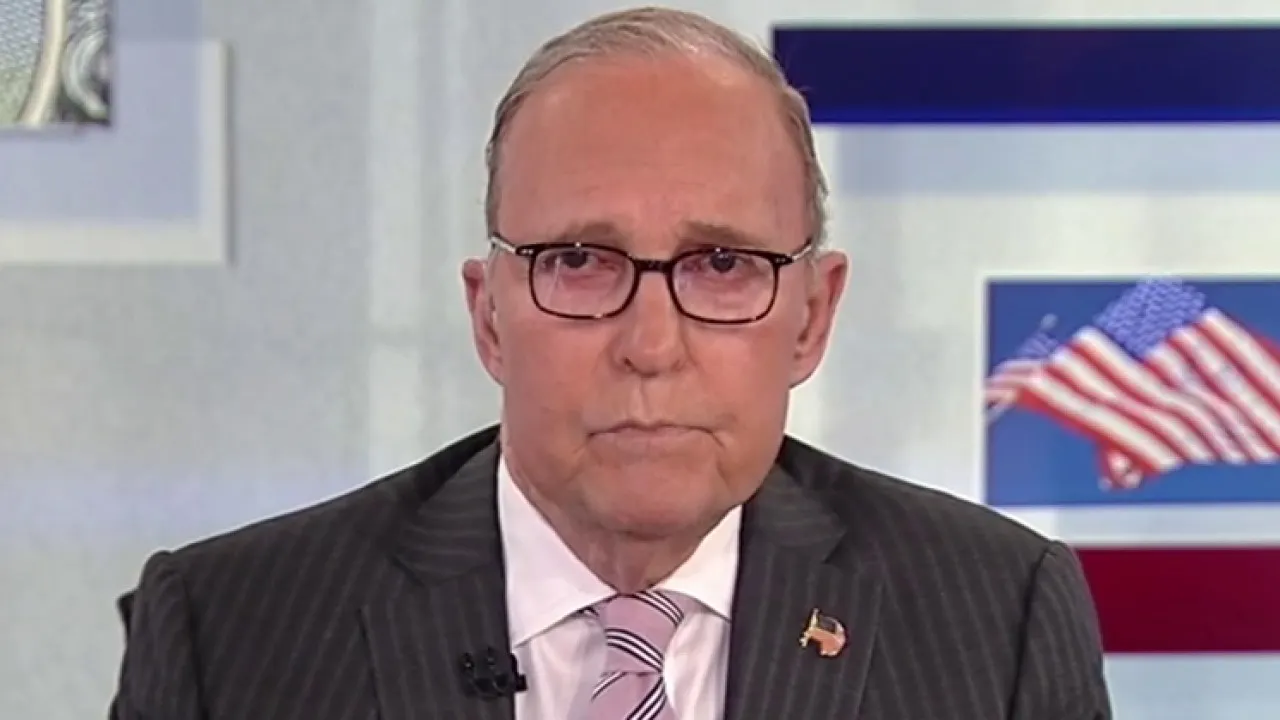
FOX Business host Larry Kudlow discusses the Federal Reserve chairman’s leadership decision on ‘Kudlow.’
So I guess the Fed chairman, Jay Powell, is not going off quietly into the night. Today is his last meeting as chairman, but he announced his ungentlemanly decision to stay on as a Fed board member for who knows how long. “I’ve said that I will not leave the board until this investigation is well and truly over with transparency and finality, and I stand by that,” he said. “In terms of when I would leave, I will leave when I think it’s appropriate to do so,” he added. “The things that have happened in the last three months, I think, left me no choice but to stay.” Mr. Powell concluded that “after my term as chair ends on May 15th, I will continue to serve as a governor for a period of time to be determined. I plan to keep a low profile as a governor.”
Mr. Powell’s not the martyr he thinks he is. You can’t have two chief executives.
President Trump’s choice to lead the Fed, Kevin Warsh, was confirmed today by the Senate Banking Committee, by a 13-11 vote. And he undoubtedly will be confirmed by the whole Senate probably some time next week.
Nobody’s going to listen to Mr. Powell. The cost overrun investigation is being run by the Fed’s inspector general, who is independent, and Mr. Powell has nothing to do with it. And by the way, only once before in the 113-year history of the central bank, has another former chairman stayed on as a board member.
This speaks poorly of Mr. Powell. His record as Fed chairman was undistinguished. The Consumer Price Index averaged 3.5 percent per year under Mr. Powell. That was the highest level since the tenure of Paul Volcker, giving Mr. Powell the worst record in more than 40 years. Cumulatively the CPI rose a whopping 32 percent. And as far as the economy, real gross domestic product averaged 2.4 percent at an annual rate. Another unimpressive performance. On top of that, Mr. Powell was also a highly political Fed chairman who embraced President Biden’s radical climate agenda and even more radical DEI.
U.S. Treasury Secretary Scott Bessent breaks down Operation Economic Fury and the pressure against the Iranian regime on ‘Kudlow.’
In an interview today, Treasury Secretary Scott Bessent expressed to me his strong displeasure with Powell by saying “I think it is an insult to Kevin Warsh, Miki Bowman, and Chris Waller to think that these other Republican nominees do not care about the institution of the Fed and that he alone can maintain the integrity of the Fed.”
The good news is that Mr. Warsh will take the helm as chairman and make a number of important changes. Hopefully the Fed’s economic models that are based on the false premise that strong growth leads to higher inflation will be thrown out the window.
Mr. Warsh understands the positives of low tax rates and deregulation in producing a disinflationary impact of faster productivity and lower unit labor costs. Mr. Warsh wants to shrink the Fed’s balance sheet by refocusing the central bank on monetary policy, and leaving fiscal and debt management policies to Mr. Bessent at the Treasury.
The Fed should not be some vast central planning agency. And the cacophony of yapping by various Fed officials will come to an end hopefully, along with something called forward guidance. Mr. Warsh wants the Fed to earn its independence by staying out of politics, and sticking to better control of the money supply, and maintaining a strong and stable dollar. The chairman’s job at the central bank is a very powerful job. So whether Mr. Warsh sees fit to give Mr. Powell a parking spot remains to be seen.
The Facebook-parent now expects 2026 capital expenditure between $125 billion and $145 billion, compared with its prior forecast of $115 billion to $135 billion.
Shares of the company fell around 5% in extended trading.
Family daily active people (DAP), a metric Meta uses to track unique users who open any one of its apps in a day, rose 4% from a year earlier to 3.56 billion.
The results come weeks after Reuters reported first about Meta’s plans for sweeping layoffs, as CEO Mark Zuckerberg attempts to aggressively integrate AI into the company’s workflows and reshape its workforce around the technology.
Meta, which owns Instagram, WhatsApp and Threads, has been spending heavily on AI infrastructure and high compensation for employees such as those working in its Meta Superintelligence Labs, which released its first AI model called Muse Spark earlier this month.
The company’s robust ad platform, which allows advertisers to automate and personalize their campaigns, has remained its growth engine and has helped support its investments in AI infrastructure. Its Advantage+ ad automation tools are powered by ad-retrieval engine Andromeda, ranking architecture Lattice and generative recommendation model GEM, helping it attract more marketers on the platform even as companies face geopolitical uncertainty due to the Middle East conflict.
Meta launched ads on messaging service WhatsApp and microblogging platform Threads last year, intensifying competition with platforms like Elon Musk’s X. Simultaneously, Instagram’s Reels continue to jostle with TikTok and YouTube Shorts in the lucrative short-video market.
For the first time, Meta is projected to overtake Alphabet as the world’s biggest online advertiser, with an expected $243.46 billion in global net ad revenue this year, excluding traffic acquisition costs. The forecast, by research firm Emarketer, puts the Google- and YouTube-parent’s annual ad revenue at $239.54 billion.
Last week, the company expanded the availability of Meta AI business assistant, designed to help advertisers optimize campaign performance and resolve technical issues through real-time guidance.
Meta is installing new tracking software on U.S.-based employees’ computers to capture mouse movements, clicks and keystrokes to train its AI models, part of a broad initiative to build AI agents that can perform work tasks autonomously, Reuters reported last week.
Meanwhile, China ordered Meta to unwind its $2 billion-plus acquisition of AI startup Manus on Monday, as Beijing tightens scrutiny of U.S. investment in domestic startups developing frontier technologies.

Rush Street Interactive CLO Paul Wierbicki sells $1.24 million in stock
Earnings call transcript: Moelis & Co Q1 2026 earnings miss forecasts, stock dips
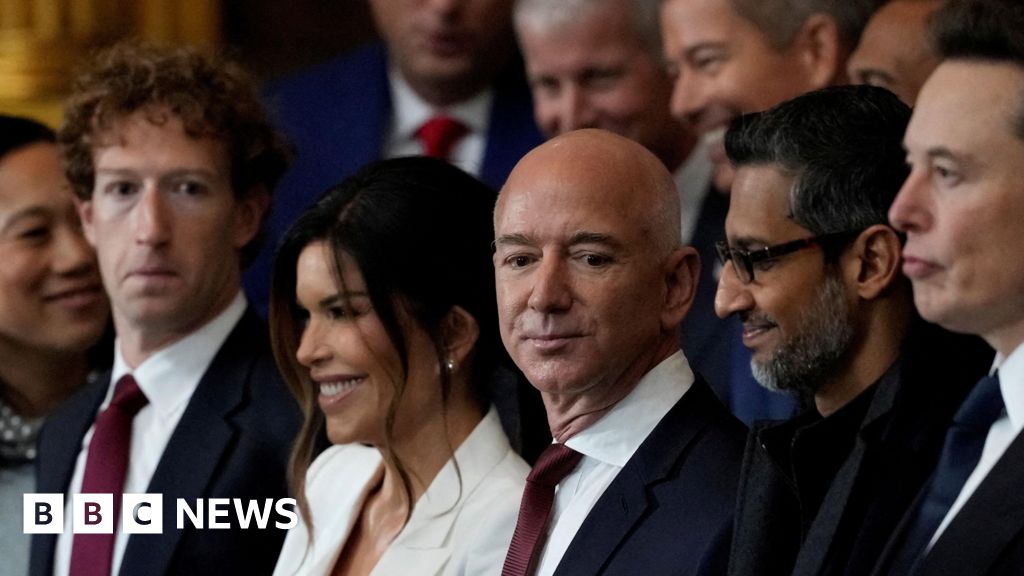
Meta, Amazon, Alphabet, and Microsoft all reported their financial performance at the same time on Wednesday

NYT Strands hints and answers for Thursday, April 30 (game #788)
Amazon beats quarterly cloud growth estimates on strong AI demand; AWS revenue jumps 28%

Atletico Madrid 1-1 Arsenal: Mikel Arteta ‘fuming’ with officials

Manchester United reach agreement with Casemiro over contract clause amid transfer speculation

US brings back mandatory military draft registration

Steven Gerrard disagrees with Gary Neville over ‘shock’ Chelsea and Arsenal claim | Football


-

 Tech2 days ago
Register Renaming | Hackaday
-

 Fashion5 days ago
Weekend Open Thread – Corporette.com
-
 Crypto World4 days ago
Hyperliquid $HYPE Rally Builds Momentum as AI Sector Enters Prove-It Phase
-

 Business6 days ago
Patterson-UTI Energy, Inc. (PTEN) Q1 2026 Earnings Call Transcript
-
 Sports3 days ago
IPL 2026: Ruturaj Gaikwad registers slowest fifty of the season, enters all-time unwanted list | Cricket News
-

 Politics2 days ago
Drax board avoid their own AGM, accused of greenwashing & environmental racism
-

 NewsBeat4 days ago
LK Bennett closes all stores after entering administration
-

 Crypto World6 days ago
Michael Saylor says BTC winter is over. Market analyst disagrees, says bitcoin was in a pullback
-
 Sports7 days ago
Tim Bradley names the current best in the world: “Better than Inoue and Usyk”
-

 Fashion1 day ago
Kylie Jenner’s KHY Enters a New Era with ‘Born in LA’
-
Entertainment7 days ago
Michael B. Jordan and Austin Butler's “Miami Vice” movie will bring the action back to the '80s
-
 Entertainment4 days ago
Mariah Carey Slams Deposition Claims In Brother’s Lawsuit
-
Business7 days ago
Altimmune prices $225 million public offering at $3 per share
-
Entertainment7 days ago
Russell Brand Had Sex With 16 Year Old When He Was 30
-
Crypto World6 days ago
Is Algorand One of the Few Quantum-Resistant Blockchains? Here’s What the Data Shows
-

 Business1 day ago
Most Commercial Energy Audits Miss the Real Losses
-
 NewsBeat6 days ago
Trump threatens to review UK’s claim to Falkland Islands and punish Nato allies over Iran war disagreement
-

 Business7 days ago
SL Green Realty: Dividend Cut And Record Leasing Fuel Their Potential Recovery
-

 Sports6 days ago
2026 NFL Draft tonight: Time, TV channel, where to watch, order
-

 Tech2 days ago
Images of Samsung’s rumored smart glasses have leaked
You must be logged in to post a comment Login