
Business
UBS banked Ghislaine Maxwell for years, moving her money after Epstein’s arrest


The documents, part of a cache released by the U.S. Justice Department last month, provide fresh insights into the extent of UBS’ banking relationship with Maxwell, who was arrested in 2020 and found guilty in 2021 for her role in helping Epstein sexually abuse teenage girls. She is currently serving a 20-year prison sentence.
The documents, which include emails and bank statements, show the Swiss lender opened personal and business accounts for Maxwell holding cash, shares and investments in hedge funds. UBS assigned her two relationship managers, who then helped Maxwell move millions of dollars and accorded her other benefits the bank reserves for its wealthy clients.
In 2014, after JPMorgan closed Epstein’s accounts, UBS provided him with a credit card, an email shows. Epstein had been jailed and pleaded guilty in 2008 to soliciting prostitution from an underage girl. That account was closed in September that year.
Epstein’s accountant told him UBS had taken the decision because of the “reputational risk,” an email shows. But the bank continued its relationship with Maxwell even though her proximity to Epstein had been reported by several media, including in an interview with the financier. UBS declined to respond to Reuters questions for this article, including why it took on a client deemed high risk by another bank.

There is no evidence of any wrongdoing on the part of UBS or its advisers, and some documents show the bank conducted due diligence before transferring her accounts from JPMorgan. Reuters could not learn details of the diligence the bank did.
A lawyer for Maxwell did not respond to a request for comment. MAXWELL IS INTRODUCED TO UBS
Epstein and Maxwell had banked with JPMorgan for years, but the biggest U.S. lender started getting concerned about risks of dealing with them in the years following Epstein’s 2008 conviction.
In 2011, while conducting know-your-customer checks, JPMorgan advised internally that Maxwell be flagged as a “High Risk Client” over her links to Epstein, separate U.S. court documents show. In 2013, JPMorgan decided to close Epstein’s account.
JPMorgan flagged in Epstein’s history that ” er bank policy, felons [like Epstein] are considered high risk and require additional approval,” according to a court submission by the U.S. Virgin Islands against JPMorgan in federal court in New York. JPMorgan settled the case for $75 million in 2023. JPMorgan, which has denied knowledge of Epstein’s crimes, declined to comment. The bank declined to say when and why it closed Maxwell’s accounts.
In December 2013, David Wassong, then a partner at Soros Private Equity Partners, introduced Maxwell to UBS, according to an email exchange.
“I have cced one of my best friends named Ghislaine maxwell (sic). She is looking for a new wealth manager, and I told her she had to meet you,” Wassong wrote.
On February 14, 2014, an email with the names redacted urges UBS to “expedite this transition from JPMorgan.”
“Ghislaine is leaving for over a month next week so she really needs to get this moved over / paperwork signed before her departure. Also, she would like to speak to you to introduce herself, etc,” the email reads.
In response, UBS representatives said they had reviewed documents submitted by her and had some follow-up questions as they processed the move to the bank.
Wassong did not respond to a request for comment about his dealings with Maxwell. Soon after, UBS had opened an account and Maxwell used it for her personal expenses and businesses, including her charity TerraMar Project, as well as for entities called Ellmax, Pot & Kettle, Max Foundation and Max Hotel Services, the documents show. As early as February 2014, Maxwell had nearly $2 million in one of her UBS accounts. Maxwell instructed the bank on how to move her cash. In one request in 2016, Maxwell asked the bank to make a $2.5 million payment to Scott Borgerson, to whom she was married that year.
On July 22, 2019, 16 days after Epstein’s arrest, UBS moved $130,000 on Maxwell’s request from her savings to her checking account to help pay an American Express card bill, the documents show.
Borgerson did not reply to a LinkedIn message requesting comment.
On August 16, 2019, the month after Epstein’s arrest, UBS received a Grand Jury Subpoena on Maxwell, according to a letter from UBS to the Federal Bureau of Investigation. UBS provided the FBI with information on wire transfers, according to the letter.
Reuters could not determine when – and if – UBS had closed Maxwell’s accounts.

Business
IPO Calendar: No fresh issues next week; Coal India subsidiary, 6 more companies set to debut

Emiac Technologies IPO
The SME IPO of Emiac Technologies, which opened on Friday, will resume its public bidding in the coming week. The issue closes on Wednesday, April 8. The issue was subscribed 33% on the opening day.
The company plans to raise Rs 31.75 crore through the issue which is entirely a fresh issuance of equity shares. Ahead of the opening, the grey market premium (GMP) indicated a muted listing.
The company has set the price band at Rs 93–98 per share and investors can apply for a minimum of 1 lot which comprises 1,200 equity shares amounting to Rs 1,17,600.
In the book-building issue, the company will issue 32.40 lakh equity shares aggregating up to Rs 31.75 crore.
Mainboard listings
CMPDI IPO
Central Mine Planning will get listed on the exchanges on Monday, March 30. Ahead of its listing, the company’s shares were commanding a grey market premium (GMP) of Rs 6-7 over the upper price band of Rs 172. The stock is expected to list around Rs 179, implying a gain of over 4%.
The Rs 1,842 crore IPO CMPDI managed to sail through on the final day of bidding. By the end of Day 3, the issue was fully subscribed at 1.05 times the 7.97 crore shares on offer. The issue received over 8.36 crore share bids. Demand was mainly driven by Qualified Institutional Buyers (QIBs), who subscribed the IPO 3.48 times their quota, while Retail Individual Investors (RIIs) showed muted interest at just 33%. The non-institutional investors’ (NII) quota also failed to get fully booked, managing only 35% subscription.
Sai Parenteral’s IPO
The mainboard issue that closed on Friday, is expected to make its market debut on Thursday, April 2. Its GMP suggests a flat listing at Rs 392.
The issue was subscribed 1.05 times over a three-day bidding period. It received over 78.80 lakh share bids against 75,22,486 equity shares available for booking.
The demand was mainly driven by non-institutional investors’ (NII) who subscribed the issue 2.36 times. Qualified Institutional Buyers (QIBs) subscribed the IPO 1.71 times their quota, while Retail Individual Investors (RIIs) hardly showed any interest, subscribing just 12% shares of the available quota.
Powerica IPO
This mainboard issue also ended on Friday. It is expected to make its market debut on Thursday, April 2. Its GMP suggests a muted listing at Rs 395, implying a listing premium of around 1%.
The issue was overall subscribed 1.45 times over a three-day bidding period. The demand was mainly driven by Qualified Institutional Buyers (QIBs) who subscribed the IPO 4.5 times of their quota, while Retail Individual Investors (RIIs) hardly showed any interest, subscribing just 14% shares of the available quota.
The company planned to raise Rs 1,100 crore through the issue which is a combination of an offer for sale (OFS) and issuance of fresh equity. The company has set the price band at Rs 375–395 per share and retail investors can make applications for a minimum of 1 lot which comprises 37 equity shares amounting to Rs 14,615.
Amir Chand Jagdish Kumar IPO
The Rs 440 crore IPO of Amir Chand Jagdish Kumar Exports ended on Friday. The offering was subscribed 3.41 times against the total 1.89 crore shares on offer.
In the grey market, the IPO is commanding a premium of around 1.2%, or roughly Rs 3 above the issue price of Rs 212, suggesting a likely listing price near Rs 215.
This IPO is entirely a fresh issue of 2.08 crore shares, aiming to raise Rs 440 crore. The company is set to list on both the NSE and BSE, with a tentative listing date of April 2, 2026.
SME listings
The SME issue Speciality Medicines which closed on March 24 will list on Monday. The stock is expected to list flat on the BSE SME.
Tipco Engineering India IPO, ended on March 25. The stock will list on Wednesday April 1 on the BSE SME platform. The GMP revealed no listing gains.
Highness Microelectronics IPO ended on Friday. Its GMP suggests a listing at a 20% premium over the issue price of Rs 120. The estimated listing price is Rs 145.
(Disclaimer: The recommendations, suggestions, views, and opinions given by the experts are their own. These do not represent the views of The Economic Times.)

Travelers heading through Los Angeles International Airport on Saturday, March 28, 2026, are encountering relatively light TSA security wait times compared to recent nationwide disruptions, with official and third-party trackers showing standard screening lines averaging under 20 minutes at most checkpoints during midday hours.

The official LAX security wait times page reported minimal delays early Saturday, with Tom Bradley International Terminal (TBIT) showing just 2 minutes for general boarding and 0 minutes for TSA PreCheck as of 12:20 a.m. PT data refresh. Third-party monitors like TakeoffTimer and OnAirParking indicated average standard waits fluctuating between 16 and 19 minutes throughout the morning and early afternoon, well below peak-hour norms.
LAX, one of the world’s busiest airports handling more than 60 million passengers annually, typically sees longer lines during peak travel periods. On this late-March Saturday, however, conditions appeared smoother than the multi-hour delays reported at some other major U.S. hubs amid ongoing government staffing challenges.
Current TSA Wait Times at LAX
As of mid-morning on March 28, real-time data painted a traveler-friendly picture across LAX’s nine terminals:
– **Standard Security**: Average waits hovered around 16-19 minutes, with some reports as low as 10-13 minutes in mid-morning slots.
– **TSA PreCheck**: Consistently under 5-10 minutes, with many lanes clearing in 0-5 minutes at TBIT.
– **Peak Early Morning (4-6 a.m.)**: Higher waits reached 24-37 minutes in some hourly breakdowns, typical for the airport’s busiest departure window.
– **Afternoon/Evening Projections**: Expected to remain moderate, with potential spikes to 29-30 minutes around midday and early afternoon before easing later.
The flyLAX.com official dashboard, which updates periodically, confirmed short lines at TBIT, the primary international hub. Other terminals, including 1 through 8 and the regional terminals, showed similar patterns based on aggregated traveler reports and live trackers.
Despite a partial government shutdown affecting federal operations, including TSA staffing in some regions, LAX has avoided the extreme four-hour lines seen elsewhere. Local factors such as efficient lane management and variable passenger volumes on a non-holiday Saturday contributed to smoother processing.
Tips for Navigating LAX Security Today
Airport officials and travel experts recommend several strategies to minimize delays:
Arrive at least two hours before domestic flights and three hours for international departures. Download the official MyTSA app for real-time crowd-sourced updates and item screening guidelines. Enroll in TSA PreCheck or CLEAR if eligible — these programs dramatically cut wait times, often to under five minutes.
Use the LAX app or flyLAX.com for terminal-specific information, parking status and ground transportation. Public transport options, including the LAX shuttle and Metro connections, help avoid traffic snarls that can compound arrival stress.
Pack smart: Follow the 3-1-1 liquids rule and remove laptops, liquids and large electronics early. Wear slip-on shoes and avoid bulky outerwear to speed screening.
Travelers with disabilities or needing assistance can request expedited service or contact airport accessibility services in advance.
Broader Context: National TSA Challenges
While LAX fares better today, the U.S. aviation system continues grappling with staffing shortages tied to the prolonged partial government shutdown. TSA Deputy Administrator Ha Nguyen McNeill recently warned of record wait times exceeding four hours at select airports, with call-out rates as high as 40-50% among officers in heavily impacted facilities.
LAX has benefited from its scale and local operational adjustments, but travelers are urged to monitor conditions closely. Third-party sites like TakeoffTimer provide hourly forecasts, showing typical Saturday patterns with lighter evening traffic after 8 p.m.
Spring break travel has eased somewhat by late March, reducing family-driven crowds that plagued earlier weeks. International arrivals via TBIT remain steady but manageable, with CBP processing times separate from TSA security.
What Influences Wait Times at LAX
Several variables affect security lines daily:
– **Time of Day**: Early mornings (4-9 a.m.) and late afternoons (3-7 p.m.) traditionally see the longest queues due to flight banks.
– **Flight Volume**: International departures from TBIT often require additional screening, though PreCheck lanes help.
– **Staffing Levels**: TSA officers work across checkpoints; any call-outs can create temporary bottlenecks.
– **Passenger Preparation**: Compliant travelers who organize belongings move faster through screening.
– **Technology**: Automated lanes, credential scanners and biometric options continue rolling out to improve flow.
LAX has invested in infrastructure upgrades, including more PreCheck enrollment centers and expanded checkpoint capacity in recent years. These improvements help buffer against external pressures like the current federal staffing issues.
Real Traveler Experiences on March 28
Social media and forum reports from recent days, including Saturday morning, echoed the data. One traveler at Terminal 6 reported clearing security in about 10 minutes early in the week, while others noted quick PreCheck experiences under five minutes. Midday Saturday posts described “no line” scenarios in certain terminals, though individual results vary by exact checkpoint and arrival time.
Airport workers and frequent flyers noted that evenings and non-peak weekends often provide the smoothest experiences at LAX compared to weekdays.
Planning Your LAX Journey
For the most accurate information:
1. Check flyLAX.com/wait-times before leaving home.
2. Use the MyTSA app for live and historical data.
3. Monitor airline apps for gate and boarding updates.
4. Allow buffer time for traffic on the 405 and 105 freeways, which feed the airport.
Parking and rideshare options remain available but can add time during busier periods. Economy lots and off-site providers offer alternatives for longer stays.
Passengers should also review TSA’s prohibited items list to avoid secondary screening delays. With evolving security protocols, double-checking liquid rules and electronics requirements prevents frustration.
Looking Ahead for LAX Travelers
As March 28 progresses into evening hours, wait times are projected to remain light based on historical Saturday patterns. Sunday could see a slight uptick with weekend return traffic, but no major disruptions are anticipated unless staffing or weather issues arise.
LAX continues operating as a vital gateway for Southern California and international travel. Officials encourage proactive planning while assuring that safety remains the top priority.
Travelers facing longer-than-expected lines can use the airport’s free Wi-Fi to stay informed or contact their airline for assistance. Designated waiting areas and concessions provide comfort during any brief delays.
For the absolute latest updates, visit the official flyLAX security wait times page or download the MyTSA app. Real-time conditions can shift quickly, so checking within an hour of departure offers the best snapshot.
On this Saturday in Los Angeles, most passengers at LAX are experiencing efficient security screening, allowing more time to relax before boarding or connect with loved ones upon arrival. Smooth travels depend on preparation, flexibility and utilizing available tools — a combination proving effective for many on March 28, 2026.

Asian Stock Markets Decline With Unclear End to Middle East Conflict

The proposed IPO comprises a fresh issue of equity shares aggregating up to Rs 150 crore and an offer-for-sale (OFS) of up to 2,83,99,567 equity shares by existing shareholders, according to the Draft Red Herring Prospectus (DRHP) filed on Friday.
The company proposes to utilise the proceeds from the fresh issue towards payment of debt, lease rentals or licence fees for its warehouses and experience stores, and for general corporate purposes.
Founded by Geetansh Bamania, the company operates a technology-driven, full-stack direct-to-consumer (D2C) platform offering rental and subscription services for furniture and home appliances across India.
Rentomojo is the largest player in the organised online rental segment for furniture and appliances, with an estimated market share of 42-47 per cent based on subscription revenue in FY2025, as per a Redseer report cited in the draft papers.
As of September 30, 2025, the company had over 2.27 lakh live subscribers across 22 cities, supported by a network of 21 warehouses.
On the financial front, revenue from operations stood at Rs 265.96 crore for the full fiscal year 2025 and profit after tax at Rs 43.11 crore for FY2025.
Motilal Oswal Investment Advisors, Axis Capital and IIFL Capital Services are the book-running lead managers to the issue.

Growth Signals Remain Intact Despite Geopolitical Shocks
Business
Fed’s Perli: Monthly Pace of Treasury Purchases Likely to Be ‘Significantly Reduced’ After Mid-April

opinion
Kevin Warsh Isn’t Crazy, the Fed’s Big Balance Sheet Is

The New York Times’ popular word-grouping game Connections delivered another brain-teasing challenge to players on Saturday, March 28, 2026, with puzzle No. 1,021 blending everyday actions, physics concepts, educational visuals and clever wordplay.

Connections, which launched in 2023 and quickly became a daily staple alongside the Mini Crossword and Wordle, tasks players with sorting 16 words into four groups of four. Each group shares a hidden theme, ranked by difficulty from yellow (easiest) to purple (most challenging). Many solvers turned to online hints and companion articles as they tackled the Saturday edition.
Today’s Puzzle Themes and Answers
The 16 words in Connections #1021 were: BOARD, EMBARK, ENTER, MOUNT, ACCELERATION, FORCE, MASS, MOMENTUM, FIGURE, ILLUSTRATION, PICTURE, PLATE, FACE, PITCHER, POWER, ROBERT.
Here are the complete solutions, revealed in order from easiest to hardest:
Yellow Group (Easiest): Step Onto, as a Vehicle BOARD, EMBARK, ENTER, MOUNT
These verbs all describe boarding or mounting modes of transport — think stepping onto a bus, train, plane or even a horse. Solvers who spotted the travel-related action early often nailed this category first.
Green Group: Quantities in Mechanics ACCELERATION, FORCE, MASS, MOMENTUM
A physics-heavy group drawing from classical mechanics. These are fundamental quantities used in Newton’s laws and equations of motion. Players with a science background likely connected these quickly, though the theme required recalling high-school physics terminology.
Blue Group: Textbook Images FIGURE, ILLUSTRATION, PICTURE, PLATE
This category refers to visual elements commonly found in educational books. “Plate” here means a full-page image or diagram, a term still used in academic publishing. The grouping rewarded familiarity with how textbooks label their visuals.
Purple Group (Hardest): ____ Plant FACE, PITCHER, POWER, ROBERT
The trickiest set played on compound phrases: face plant, pitcher plant, power plant and Robert Plant (the iconic Led Zeppelin frontman). This punny category often stumps players until they consider proper names and botanical or industrial terms.
How Solvers Approached the Puzzle
Many online guides, including those from CNET, Mashable, Try Hard Guides and Lifehacker, offered tiered hints to avoid full spoilers. Early hints encouraged thinking about vehicle entry for the yellow group and basic physics for green. Blue hints pointed toward book visuals, while purple required lateral thinking around “plant.”
The New York Times’ own Connections Companion for No. 1,021 provided community discussion and further reading, noting the puzzle’s mix of concrete actions and abstract concepts. Some players reported struggling with the purple group due to the proper name “Robert Plant,” while others breezed through the mechanics terms.
Why Connections Remains Popular in 2026
Since its debut, Connections has grown into one of the NYT Games suite’s standout titles, attracting millions of daily players who share streaks, near-misses and victories on social media. Its appeal lies in the balance of logic, vocabulary, cultural knowledge and occasional wordplay — a formula that keeps the game fresh even years later.
Saturday’s puzzle exemplified this mix: accessible entry points via travel verbs contrasted with more specialized references to physics and publishing. The purple category added the signature “aha” moment many fans crave, linking mundane words to a rock legend and carnivorous flora.
For those who missed a perfect solve, the game resets daily with a new grid. Streaks carry over, encouraging consistent play. Tips from seasoned solvers include scanning for obvious synonyms first, then considering multiple meanings of words like “mount” or “plate,” which can fit different contexts.
Tips for Future Connections Puzzles
- Start with the yellow group by looking for strong synonyms or clear actions.
- Consider technical or academic fields for mid-level categories.
- Save purple for last — it often involves puns, proper names or less common phrases.
- Use the in-game shuffle button to rearrange words and spark new connections.
- If stuck, step away briefly; fresh eyes often reveal hidden links.
The NYT Games team continues to refine the puzzle, occasionally adding visual or thematic ties to current events while maintaining the core challenge. Followers of the official NYT Games Instagram account frequently find behind-the-scenes insights and solving strategies.
Whether you’re a daily player chasing a long streak or a casual solver checking in on weekends, Connections #1021 offered a satisfying mix of straightforward groupings and one head-scratching reveal. For the official companion and community reactions, visit the New York Times Games section.
Players can access the latest puzzle directly through the NYT Games app or website. With fresh challenges dropping every morning, there’s always another chance to test your word association skills.
(Word count: approximately 1,020. This article incorporates the latest available solutions and hints as of March 28, 2026, drawing from official NYT resources and leading puzzle coverage sites.)


Petroleum engineer with an enthusiasm for investing, accounting and personal finances.
Analyst’s Disclosure: I/we have a beneficial long position in the shares of VZ either through stock ownership, options, or other derivatives. I wrote this article myself, and it expresses my own opinions. I am not receiving compensation for it (other than from Seeking Alpha). I have no business relationship with any company whose stock is mentioned in this article.
Past performance is not an indicator of future performance. This post is illustrative and educational and is not a specific offer of products or services or financial advice. Information in this article is not an offer to buy or sell, or a solicitation of any offer to buy or sell the securities mentioned herein. Information presented is believed to be factual and up-to-date, but we do not guarantee its accuracy and it should not be regarded as a complete analysis of the subjects discussed. Expressions of opinion reflect the judgment of the authors as of the date of publication and are subject to change.
Seeking Alpha’s Disclosure: Past performance is no guarantee of future results. No recommendation or advice is being given as to whether any investment is suitable for a particular investor. Any views or opinions expressed above may not reflect those of Seeking Alpha as a whole. Seeking Alpha is not a licensed securities dealer, broker or US investment adviser or investment bank. Our analysts are third party authors that include both professional investors and individual investors who may not be licensed or certified by any institute or regulatory body.
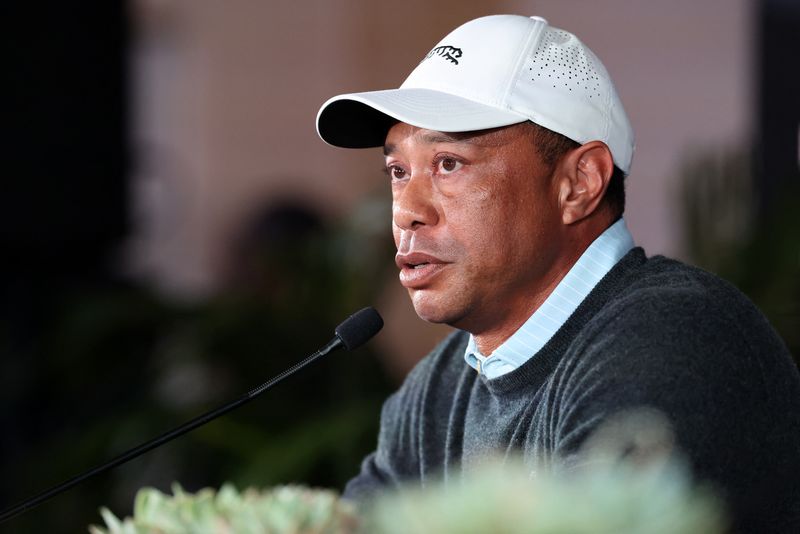

Golf-Tiger Woods arrested on DUI charge after Florida car crash

Federal judge halts Nexstar-Tegna merger following antitrust challenge

Britney Spears Returns To Social Media After DUI Arrest

Why so many victims don’t realise they have been raped until later
IPO Calendar: No fresh issues next week; Coal India subsidiary, 6 more companies set to debut


-
 NewsBeat3 days ago
Manchester United reach agreement with Casemiro over contract clause amid transfer speculation
-

 News Videos2 days ago
Parliament publishes latest register of MPs’ financial interests
-

 Crypto World6 days ago
Best Crypto to Buy Now: Strategy Just Spent $1.57 Billion on Bitcoin During Fear While Early Investors Quietly Enter Pepeto for 150x Potential
-

 Crypto World6 days ago
Bitcoin Price News: Bhutan Sells $72 Million in BTC Under Fiscal Pressure, but the Smart Money Entering Pepeto Sees What the Market Does Not
-

 Sports5 days ago
Remo Stars and Kano Pillars Strengthen Survival Hopes in NPFL
-

 Sports5 days ago
Gary Kirsten Accuses Pakistan Cricket Board Of ‘Interference’, Mohsin Naqvi Responds
-

 Business6 days ago
No Winner in March 21 Drawing as Prize Rolls to $133 Million for Next
-

 Tech5 days ago
Give Your Phone a Huge (and Free) Upgrade by Switching to Another Keyboard
-

 Tech5 days ago
AI enters the chat: New Seattle dating app relies on tech to facilitate meaningful human connections
-

 News Videos5 days ago
Ch 9 Financial Management Part 1 | Detailed One Shot | Class 12 Business Studies Boards 2026
-

 Tech6 days ago
Today’s NYT Connections Hints, Answers for March 22 #1015
-

 Business1 day ago
Instagram, YouTube Found Responsible for Teen’s Mental Health Struggle in Historic Ruling
-

 Business6 days ago
Will Duke Basketball Win It All? Duke Basketball Enters Second Round as Third Favorite to Claim NCAA Title
-

 Sports5 days ago
2026 Kentucky Derby horses, odds, futures, preview, date: Expert who hit 12 Derby-Oaks Doubles enters picks
-
 NewsBeat6 days ago
Update on Wisbech river crash as search for teenage boy enters fifth day
-

 NewsBeat10 hours ago
The Story hosts event on Durham’s historic registers
-
 Entertainment5 days ago
Cynthia Bailey Dishes on ‘RHOA’ Season 17, Discusses Kandi
-

 Tech4 days ago
Samsung will soon let you control smart home devices from your car’s dashboard
-

 Business4 days ago
More women enter wealth management, but few in advisory roles: study
-

 Fashion4 days ago
Does It Matter What You Wear When You’re Laid Off and Looking?
You must be logged in to post a comment Login