
Business
United Natural Foods Guides for Sales to Rise This Fiscal Year


United Natural Foods UNFI -0.55%decrease; down pointing triangle expects profit and sales to rise this fiscal year as it onboards further business from new and existing customers.
The forecast came as the company, a major food distributor for Whole Foods, swung to a fourth-quarter profit despite lower sales.
Copyright ©2026 Dow Jones & Company, Inc. All Rights Reserved. 87990cbe856818d5eddac44c7b1cdeb8



Toyota Motor has a rare problem for an automaker: There is so much demand for its new RAV4 and the inventory is so limited that dealers only have a few days’ supply.
“It is really unusual to see cars fly off the dealers’ lots like this,” said Jessica Caldwell, head of product insight at Edmunds. “It is not something that exists in that very practical, very suburban, small-midsize crossover segment.”
At Colonial Toyota in Milford, Connecticut, the lack of RAV4s has left owner Bobby Crabtree with several open spots for new vehicles at his dealership.
“This lot can handle another 250 vehicles, so I am probably about a third full of that capacity,” Crabtree said as he looked out at scores of new and used Toyotas.
Not all of those open spaces would be filled with new RAV4s during normal times, but there certainly would be more, he said.
The 2026 Toyota RAV4 Plug-in Hybrid GR Sport at the Vancouver Auto Show in Vancouver, British Columbia, Canada, on Wednesday, March 25, 2026.
James MacDonald | Bloomberg | Getty Images
Toyota’s RAV4 has been a red-hot model over the past several years, with almost 480,000 sold in the U.S. last year. It was the third best-selling model in the country in 2025 behind the Ford F-150 and Chevrolet Silverado, two full-size pickups that have been top sellers for years, according to Cox Automotive.
When Toyota announced it would be rolling out new versions of the RAV4, two things stood out. First, the crossover utility vehicle would only be sold as a hybrid. Second, production would be limited at first and then steadily increase. In other words, there would not be the normal allotment of new RAV4s at dealerships.
That has not stopped buyers like Nancy and Ira Berman of Danbury, Connecticut. When they ordered their RAV4 in March, they knew they would be waiting a while before they got their new SUV.
“The wait was a slight annoyance,” said Nancy Berman. “It didn’t stop us from going and doing this because we do have our other Toyotas to drive.”
Six months after placing their order, the Bermans will soon get their new RAV4.
For Toyota, the shift to an all-hybrid RAV4 lineup comes as more buyers are pivoting to those types of cars due to gas prices that remain elevated. In 2026, more than 18% of the vehicles sold in the U.S. have been hybrids, according to J.D. Power, still well behind the 75% of vehicles with internal combustion engines but above the 7% of pure electric vehicles.

With dealers unable to stock their lots with new RAV4s and customers being told they will have to wait weeks or perhaps even months for a vehicle, it raises the question of whether Toyota could lose sales. So far, Toyota’s U.S. sales in 2026 are still up 0.3% through July. Given the appeal of the RAV4, Caldwell said the impact of dealers having a limited supply is likely limited.
“There are other vehicles within the Toyota lineup that consumers can go to,” Caldwell said. “Toyota has a lot of brand loyalty, people who buy a Toyota usually stay with Toyota for many years not just one vehicle purchase but several.”
Business
Nifty weekly outlook: Nifty trapped in 23,900-24,750 range; fresh buying should remain selective

Nifty eventually closed at 24,175.65, registering a mild weekly loss of 76.35 points (-0.31%). The index continues to consolidate within its established range, with the 23,900–24,000 zone remaining an important support area. On the upside, a significant cluster of moving averages continues to restrict meaningful gains.
 Agencies
Nifty is currently caught between these support and resistance zones, and unless either boundary is decisively breached, the index is likely to remain rangebound. A sustained move below 23,900 could invite incremental weakness, while a convincing move above the cluster of major moving averages in the 24,400–24,750 region would be required for the index to regain directional strength.
The coming week is likely to see a quiet to cautiously positive start, although the broader trading range may continue to dominate price action. Immediate resistance is expected at 24,330 and 24,500, while supports are likely at 24,000 and 23,900.
The weekly RSI stands at 49.11, remaining neutral and showing no meaningful bullish or bearish divergence against price. The weekly MACD remains below the zero line but above its signal line, while the positive histogram indicates that downside momentum has moderated. The latest weekly candle has a relatively small bearish body but does not indicate indecision. Pattern analysis also continues to point to an extended consolidation.

Nifty remains below a key long-term moving-average cluster, with the 100-week MA at 24,428, the 200-DMA at 24,652 and the 50-week MA at 24,729. Their proximity creates a formidable 24,400–24,750 resistance zone, making this area crucial for any sustainable breakout. On the downside, the 23,900–24,000 zone continues to provide an important floor. Until either side is decisively breached, the existing range should be respected.
Given this setup, aggressive directional exposure may not be rewarding while Nifty remains trapped within its defined boundaries. Fresh buying should remain selective and stock-specific, particularly as the index approaches the overhead moving-average cluster, while existing gains should be protected at higher levels. Conversely, short positions should not be chased while the 23,900–24,000 support zone remains intact.The preferred approach for the coming week is therefore to remain selective, keep position sizes measured and wait for a confirmed breakout or breakdown before adopting a stronger directional view.
In our Relative Rotation Graphs® analysis, we compared various sectors against the CNX500 (Nifty 500 Index), which represents over 95% of the free-float market capitalisation of all listed stocks.
Agencies
AgenciesThe Relative Rotation Graph (RRG) shows that the Nifty Media, Auto and Realty indices are in the leading quadrant. These sectors may relatively outperform the broader benchmark, the Nifty 500 Index.
The Nifty Pharma Index is in the weakening quadrant but is showing an improvement in relative momentum. The Midcap 100 Index is also in the weakening quadrant and may see some continued slowdown in its relative performance.
The Nifty Infrastructure and Energy indices remain in the lagging quadrant. The Metal and PSE indices are also in the lagging quadrant but are showing a sharp improvement in relative momentum against their benchmark.
The Nifty Financial Services, Nifty Bank, IT, Services Sector and PSU Bank indices are in the improving quadrant. Among these, the IT Index is showing strong rotation and is likely to continue doing so.
(Important Note: RRG charts show the relative strength and momentum of a group of stocks. In the above chart, they show relative performance against the Nifty 500 Index (broader markets) and should not be used directly as buy or sell signals.)
Business
(VIDEO) New Video, Black Boxes Show Amazon Jet Floated Past Touchdown Zone Before Deadly Miami Overrun

MIAMI — New video of an Amazon cargo jet floating down a Miami runway, then bursting through a fence and into traffic, has given the public the same picture federal investigators described from the black boxes: a late, fast landing that never settled into a normal stop.
The Boeing 767-300, flying Prime Air Flight 7598 for contractor 21 Air, arrived Sunday from San Juan, Puerto Rico, as storms built around Miami International Airport. Airport and bystander video released in the days since shows the jet remaining airborne well past the usual touchdown zone on Runway 30, a 9,360-foot strip. Tracking data put it still near 130 mph at the pavement’s end. It ran about 1,300 feet beyond the runway, hit a Ford Econoline van carrying a cleaning crew inside the airport, tore through fencing and barriers, struck a Toyota SUV on a public road and stopped in grass, on fire.
Five men in the van were killed: Rolando Aleman Leon, 55; Yoel Rodriguez Naranjo, 53; Julio C. Pineda, 75; Carlos Acosta Fajardo, 53; and Javierkys Reyes Quevedo, 47, the Miami-Dade Sheriff’s Office said. Two others in the van, ages 79 and 32, were among the most seriously hurt. Five people were injured in all. Both pilots survived. Television footage later showed one of them jumping from the burning aircraft.
National Transportation Safety Board Chair Jennifer Homendy called the scene “utter devastation.”
The video answers one question viewers asked at once: Did the jet land long? It did. The recorders answer a harder one: What did the crew do in the last half-minute?
Investigator-in-charge Chihoon Shin laid out the flight-data timeline late Tuesday. About 30 seconds before the recording ended, the nose gear and right main gear touched at roughly 158 knots — about 182 mph, faster than a typical 767 landing. Brakes came on about seven seconds later, slowing the jet toward 168 mph. The left main gear did not plant until about 19 seconds before the tape ended, at about 154 mph. The airplane was not fully on its wheels for a stretch of the rollout.
Fifteen seconds before the end of the recording, Shin said, the brakes were released at about 138 mph and “throttles increased to values consistent with go-around thrust.” Four seconds after that, throttles went to idle and brakes were reapplied at about 135 mph. There was no indication that speed brakes or thrust reversers deployed — the two systems that dump lift and throw engine power backward after a landing.
Aviation specialists who reviewed the briefing said that sequence looks like a late, incomplete decision to abort and climb away, then a return to stopping on pavement that was already gone. The NTSB has not called it a probable cause. Interviews with the two pilots and 21 Air’s chief and assistant chief pilots were set for Wednesday. Cockpit-voice-recorder details had not been released.
The captain was identified as Joseph Carroll (also reported as Carol), 55, with more than 7,000 hours and a 767 type rating since May. First officer Jaime Felipe Silva Molina, 37, had more than 2,500 hours and a 767 rating since April 2025.
The jet weighed on the order of 230,000 pounds. NTSB officials said the payload included more than 32,000 pounds of contact lenses. It was a converted passenger 767. Amazon does not fly the aircraft itself; 21 Air does, in Amazon colors.
Weather is in the file. Storms were near the field. Early video analysis and some experts pointed to a tailwind that would have carried the airplane past the aiming point if the crew did not correct or go around in time. Investigators will also look at speed on final, flare, brake and reverse logic, mechanical condition and why a go-around started and stopped with so little runway left.
The crash shut two of Miami’s four runways on a holiday weekend. It also renewed an old airport question: how much engineered stopway and public-road setback sit beyond Runway 30 when a heavy jet does not stop. Homendy’s team was still working the wreckage days later.
Amazon and 21 Air have not published a technical explanation. The NTSB does not assign blame from an on-scene briefing. What the new video and the boxes agree on is narrower. The airplane used a long stretch of concrete before all three gears were down. Power came up as if for a missed approach, then came back. The devices that should have helped it stop do not appear to have been used. Five workers in a van on airport property never had a chance to get out of the way.
Probable cause, if one is reached, will take months. Until then the pictures do the reporting: a freighter that would not put its wheels down where they belonged, a road that should never have met a 767, and a cleaning crew that was not flying.
Business
MSCI rebalancing on Monday: Adani Energy, Groww set for big inflows; RIL, Jio Financial may face outflows

According to a report by Nuvama Alternative and Quantitative Research, the rebalancing includes additions and exclusions from the MSCI index, along with changes in the weights of several stocks.
Stocks added to MSCI
Laurus Labs, Lenskart, Adani Energy Solutions and Groww are set to be included in the index, which is expected to result in inflows into the four stocks.
Laurus Labs is expected to see inflows of $598 million, while Lenskart could attract $352 million. Adani Energy Solutions is estimated to see $310 million in inflows, while Groww could receive $256 million. The four stocks together are expected to account for total inflows of $1.516 billion.
Stocks excluded from MSCI
Three stocks are set to be removed from the index, potentially resulting in outflows. Balkrishna Industries is expected to see outflows of $169 million, followed by SBI Cards at $143 million and Astral at $138 million.The three stocks together are expected to see total outflows of $450 million.
Stocks with higher weights
MSCI is also increasing the weights of seven stocks, which is expected to bring additional inflows.
Eternal is expected to see the largest inflow at $674 million, followed by Adani Enterprises at $202 million and Adani Ports at $77 million. JSW Energy is expected to attract $34 million, while Adani Power could see inflows of $28 million. GMR Airports and Swiggy are expected to see inflows of $22 million and $13 million, respectively.
Together, these weight increases are expected to bring total inflows of $1.050 billion.
Stocks with lower weights
The rebalancing will also reduce the weights of five stocks, potentially leading to outflows.
Reliance Industries is expected to see the largest outflow at $523 million, followed by Jio Financial at $61 million. Indian Hotels is expected to see an outflow of $32 million, while AB Capital and Colgate could see outflows of $21 million and $16 million, respectively.
The five stocks together are expected to see total outflows of $653 million.
Market outlook for the week
According to Sudeep Shah of SBI Securities, Nifty is trading below all its crucial moving averages. However, most of these moving averages have turned flat, reflecting the lack of a decisive trend amid the prevailing sideways momentum. Momentum indicators and oscillators are also pointing towards continued consolidation.
The daily RSI has remained in the sideways zone for the past 13 trading sessions, while the Stochastic is also oscillating within a range. With momentum indicators failing to provide a clear directional signal, price levels now hold the key to the next move.
This brings the focus back to the crucial support zone. Going ahead, the 24,000–23,950 zone is likely to act as an important support for the index, with the prior swing low and upward-sloping trendline placed in this region. A sustained move below 23,950 could trigger further correction towards 23,700 in the short term.
(Disclaimer: Recommendations, suggestions, views and opinions given by the experts are their own. These do not represent the views of The Economic Times)

The Stock Exchange of Thailand will list 28 new depositary receipts linked to international stocks and ETFs, covering markets in Asia, the United States and Europe. The move is part of SET’s effort to broaden investment choices for domestic investors and strengthen Thailand’s capital-market competitiveness against other Asian exchanges.
The new listings span high‑growth sectors such as semiconductors, AI, electronics, clean energy, infrastructure, and aerospace. Asian names include Chinese chip‑equipment makers Advanced Micro-Fabrication Equipment Inc and Hua Hong Grace Semiconductor while U.S. heavyweights Dell, Intel, and Palantir, as well as Europe’s Airbus, are also part of the lineup. This move reflects a broader regional trend of exchanges offering easier access to global blue‑chip equities.
These new depositary receipts aim to provide investors with broader access to global markets, allowing them to diversify their portfolios with greater ease. By linking to international stocks and ETFs, investors can tap into growth opportunities across different regions, benefiting from the economic developments in Asia, the United States, and Europe. This initiative is part of the Stock Exchange of Thailand’s efforts to enhance market offerings and meet the growing demand for international investment options among Thai investors.
Key figures / indicators: 28 new DRs; underlying assets include international equities and ETFs across Asia, the US and Europe.
Why it matters: Easier access to global assets could deepen Thailand’s capital market while allowing domestic investors to diversify without opening overseas brokerage accounts. It also reflects a broader shift in SET strategy toward keeping Thai savings and trading activity within the local financial system as investors increasingly look beyond domestic equities.

LOS ANGELES — ServiceTitan shares collapsed Wednesday after the trades-software company beat fiscal second-quarter estimates and still told Wall Street the next quarter would be smaller than the last.
The stock traded at $57.32 around 12:06 p.m. Eastern, down $24.27, or 29.74%, from Tuesday’s close of $81.58. Intraday it printed as low as about $55.55. Volume ran many times a typical session. Barron’s, citing Dow Jones data, said a close near $57 would be the largest one-day percentage drop since the December 2024 listing and the weakest finish since mid-May.
The numbers that went out Tuesday after the close looked fine in isolation. Revenue for the quarter ended July 31 was $292.8 million, up 21% from a year earlier and above a consensus near $286 million. Adjusted earnings were 40 cents a share versus 35 cents expected. Platform revenue rose 22% to $284.5 million. Gross transaction volume — invoices run through the system, the company’s proxy for customer sales — increased 17% to $26.8 billion. Non-GAAP operating income was $44.4 million. Non-GAAP free cash flow was $50.5 million. The GAAP operating loss narrowed to $27.6 million; the net loss was $24.9 million, or 26 cents a share.
Then came the guide. Fiscal third-quarter revenue was put at $285 million to $287 million. The midpoint sits under the roughly $288 million FactSet estimate and under the quarter just reported. Full-year fiscal 2027 revenue was raised only a notch, to $1.139 billion–$1.144 billion from $1.130 billion–$1.140 billion, a touch above the Street’s $1.138 billion. Non-GAAP operating income for the year was guided at $152 million to $154 million; for the third quarter, $29 million to $30 million.
That combination — beat the last quarter, miss the next one’s sales print by a few million, and freeze growth in the mid-teens for the back half — is how a software name with a rich multiple loses a third of its value before lunch. Robert W. Baird cut its target to $85 from $101. Other desks still carried Buy ratings and targets clustered near $100, which only underlined how far the tape had run ahead of a one-quarter wobble.
Co-founder and Chief Executive Ara Mahdessian tried to keep the story on artificial intelligence. “Our strong momentum delivering the Agentic Operating System to the Trades resulted in 21% year-over-year revenue growth and over $50 million of non-GAAP free cash flow this quarter,” he said in the release. “Delivering this Agentic Operating System to our customers and leveraging AI to further enhance our organizational velocity are once in a lifetime opportunities to execute against.”
President and co-founder Vahe Kuzoyan said execution on Max, the company’s agentic product, was ahead of plan. “We exceeded our goal of doubling Max locations during Q2,” he said. “As a result of strong execution with existing customers and progress with select new customers, we now expect to end this fiscal year with over 700 enrolled Max locations.” The company said it had doubled enrolled Max sites toward just over 100 earlier in the year and would double again. Research spending rose about 38% to staff that push. Net dollar retention stayed above 110%. Active customers were about 10,800; more than 2,000 book more than $100,000 a year.
Chief Financial Officer Dave S. told analysts the third-quarter step-down had a calendar excuse: one fewer business day than a year earlier. Max revenue, he said, should start to show more clearly in the fourth quarter. He also said the firm’s habit is to beat its own midpoint by $9 million to $10 million when usage and GTV run hot — and that the inverse can happen, which is what occurred in the second quarter’s mix. Incremental margins of 25% are now framed as a yearly floor, not a stretch goal; the company pointed to 33% incremental margins in the current year plan.
Investors heard something else: management is narrowing, not widening. The company said it is concentrating on existing commercial trades and residential roofing rather than opening new verticals, so it can upsell Max instead of chasing logos. A chief revenue officer change traveled with the print. For a platform sold as the operating system of HVAC, plumbing and electrical shops, a CRO exit plus a sequential revenue dip reads as a sales-engine question, not a rounding error.
ServiceTitan exists because those shops still run on clipboards. Founders Mahdessian and Kuzoyan, sons of trades owners, built scheduling, dispatch, invoicing and payments for an industry that invoices tens of billions through the product each quarter. Subscriptions were $212.4 million, up 22%. Usage revenue was $72.1 million, up 24%. Platform gross margin was about 79%. That is a real business. It is also a business whose growth rate is being asked to fund AI headcount while GTV growth cools from the mid-20s toward the high teens.
The 52-week range of about $54 to $120 is the map. Wednesday’s print sat on the floor of that range because software buyers punish guidance that does not compound. A $6 million raise to the full-year sales box does not offset a quarter guided below both consensus and the prior period. Insider sales of tens of millions of dollars over recent months did not help the tape.
None of that makes the beat fake. Cash flow of $50 million and a 21% top line are not distress. They are not the 30% growth the multiple once assumed, either. Mahdessian called the agentic stack a once-in-a-lifetime chance. The market priced the next 90 days as a lifetime of slower invoices. The third-quarter report will decide which reading lasts.

Apple joins foldable phone race with $1,999 passport-shaped iPhone Duo
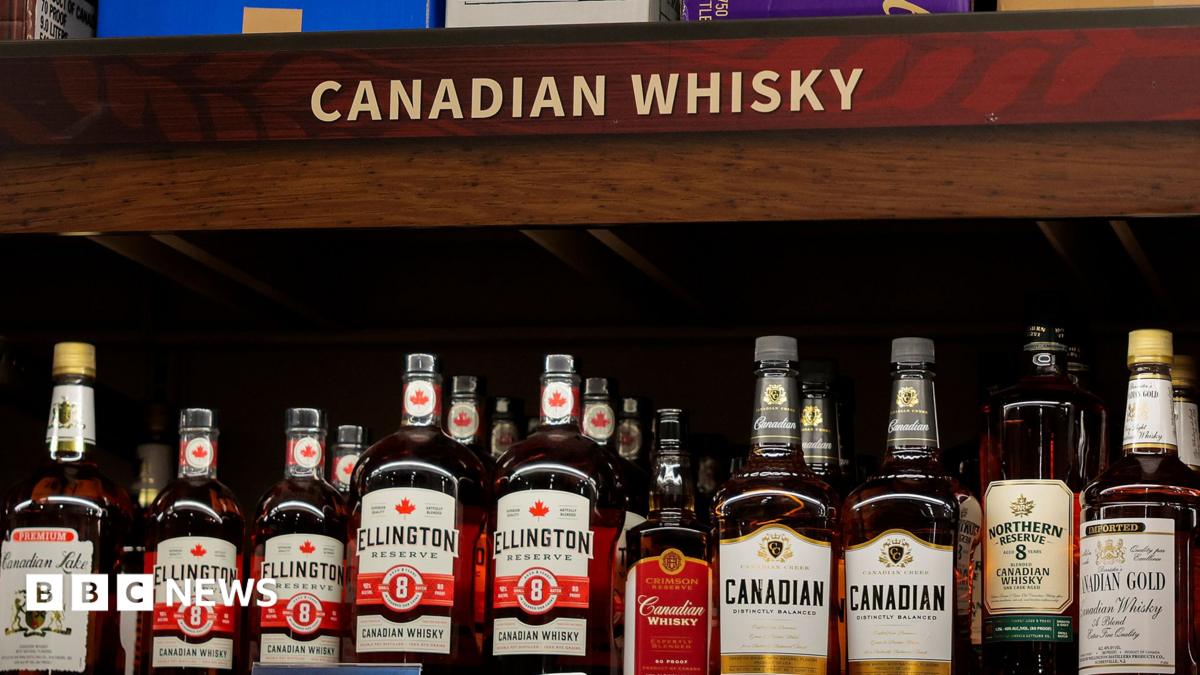
While tariffs can end up hitting consumers in the pocket, there are other impacts on households.
Import taxes can complicate trade for businesses that have cross-border supply. As well as the higher costs, the uncertainty created by the trade war could put off investment plans and stunt job creation.
Saunders suggests the biggest impact on households may not just be through prices, but job losses instead.
“If you’re, let’s say, a bespoke furniture producer in BC [British Columbia], you’re now facing a 50% tariff on your exports to the US – that could really shut the business down. I think that would be more the direct impact on households as opposed to these retaliatory measures.”
Canada’s forest industry employs almost 200,000 people and has called on the government to boost domestic demand through federal housing programs to make greater use of Canadian wood, though it admits “no support package can replace reliable access to our largest export market”.
When it comes to US, consumers are unlikely to see much of a difference in terms of the cost of living as result of this latest battle with Canada, but frictions to trade can have longer-term economic impacts.
Such tensions also feed into concerns over the free-trade agreement between Canada, the US and Mexico, known as the USMCA. Both Canada and Mexico have said they want the USMCA extended for another 16 years, but the US has said it will not renew in its current form.
Despite the deal remaining operational, tariffs risk putting off talks in the near future, creating more uncertainty for cross-border trade.
John Iselin, associate director at the Budget Lab at Yale, estimates the cost will only be about $3 per American household on average, but when taking into account Trump’s wider trade war with the rest of the world, and particularly China, the added costs rise to about $1,000 for the average family.
“It’s hard to view this particular instance with Canada in isolation because we’ve had similar interactions with a range of other countries, all of which makes doing business harder. It’s just another in a series of tariff shocks.”

Logistics company OneRail is launching a platform using Nvidia‘s artificial intelligence software to help retailers make faster decisions on the most efficient delivery options at scale, CNBC has learned.
The new platform, called OmniStar, allows retailers to use AI to evaluate all of their delivery options and identify the best one for each individual order, using OneRail’s proprietary data.
The last-mile delivery company told CNBC the new platform will allow smaller companies to deliver at scale and improve margins to compete with the retail giants of the world, including Amazon and Walmart.
As e-commerce grows, retailers have had to keep up with surging demand and invest in nimble supply chains to optimize their efficiency. But those manual processes are often fragmented across the retailer and the logistics businesses.
“If you don’t have the ability to make lightning-fast decisions, you’re giving up margin,” OneRail CEO Bill Catania told CNBC. “Last-mile fulfillment is expensive.”
Where choosing the best routing for a package may have previously taken 20 minutes, OneRail said its platform can do it in 2½ minutes leveraging AI. That time saved means retailers can operate larger, faster and more precise supply chains, Catania said.
“That’s where the artificial intelligence comes in. It’s making those kinds of decisions extremely rapidly, and so to do that, that’s where the Nvidia hardware and the software comes in and really makes this thing work at scale,” said David Daeschler, the head of AI at OneRail.
Daeschler said the company began partnering with Nvidia three years ago to explore ways to incorporate AI into the logistics process.
“The result is a real-time decision layer that can route an order to the right carrier and delivery mode at the right cost, rather than relying on static rules or manual planning,” said Azita Martin, Nvidia’s vice president and general manager of retail and consumer packaged goods.
Catania said OneRail’s proprietary data, which includes a network of more than 12 million drivers and over 1,000 logistics partners, is being used to train the AI on the most efficient routes and delivery options.
“It’s for the benefit of them and us: We operate more efficiently. They save money and provide a better customer experience,” Daeschler said.
The company told CNBC its platform has already been deployed with some customers, including a large tire distributor that saw OmniStar save the company a run rate of $40 million over three years because it’s able to use its resources more efficiently.
It’s also estimating the platform will surpass $6 billion in gross merchandise volume in the fourth quarter.
Nvidia’s Martin said the platform will allow retailers to make much faster decisions.
“For retailers, the bigger value is the ability to evaluate more scenarios, respond more quickly as conditions change and improve delivery economics without sacrificing service,” Martin said.
OneRail said the platform could help smaller retailers compete more effectively on delivery speed and efficiency.
OneRail announced a partnership earlier this year with FedEx to bring same-day delivery services to all of its customers, joining a rush of retailers trying to offer their customers the best and fastest delivery options. That partnership will now allow OneRail to better work with smaller businesses as well, Catania added.
“We’re kind of doing for delivery what ChatGPT and Anthropic have done for words – it all works the same way,” Daeschler said. “They give people more access to knowledge. We’re giving people access to being able to do delivery in a way that’s affordable. … That’s all done based on original models, training on data that we have, just like words on the internet.”

Yes. Corporate subscriptions are available for teams and organisations, with discounted rates as user numbers increase. Pricing starts from $1,625 + GST per user.
Get in touch
to discuss the right option for your organisation.
Business News subscriptions are used by executives, investors, consultants and professionals who need to stay informed and make better decisions about the WA market. When you subscribe you’ll get
- Unlimited access to WA’s most trusted business journalism
- Data & Insights — detailed profiles of WA companies, people, projects and deals
- MyBN — a personalised feed based on the companies, people and sectors you follow
- Special publications and industry reports
- Daily and weekly email newsletters
Data & Insights is a research tool built specifically for the WA market. It draws on more than 30 years of Business News reporting, updated regularly to reflect what’s happening now. Use it to:
- Look up detailed profiles of WA companies, including financials, directors and ownership
- Find decision-makers and track their career movements
- Research live and completed projects across WA industries
- Monitor deals, appointments and market activity
- Access industry rankings and league tables
Data & Insights is updated daily by our dedicated research team, which uses the latest announcements, ASX filings and editorial coverage to keep our person, company, list and project records up to date.
Business News welcome all opportunities to make our dataset accurate, complete and current, so if you have an update request, please email the team at
general@businessnews.com.au, and we’d be happy to assist.
MyBN
is part of every subscription. It’s your personalised view of Business News. You can follow the companies, people, sectors and projects that matter to you, and get a news feed and alerts tailored to your interests. You can save articles to read later and retain only what you need.
Only subscribers have full access to all content on the Business News website.
If staying informed about the WA economy is part of your job, and/or you’re looking for networking opportunities in WA, Business News is built for you.
Business News subscribers are:
- Executives and directors tracking competitors, clients and market movements
- Investors and advisers researching companies, deals and industry trends
- Consultants and professionals staying across sectors relevant to their clients
- Business owners looking for leads, context and market intelligence
Most Business News publications cover national or global markets. Business News is focused entirely on Western Australia, which means the journalism, the data and the intelligence are all built around WA companies, people and projects — not adapted from a national feed. Data & Insights, included with every subscription, combines more than 30 years of WA-specific editorial research with live business data. There’s no comparable product for the WA market.
The Morning Digest Email provides a comprehensive wrap of the major headlines, relevant to WA business, and includes with a snapshot of the overnight news covering oil, gold and ASX-listed companies.
The Afternoon Wrap Email focuses on the news covered by our team of journalists during the course of the working day, including exclusive stories and analysis, all of which relates to WA business and the local economy.
The BN Weekender Email contains a wrap of the Business News from the week that was, highlighting the top stories in each area of WA business.
Sign up for free.
We’re happy to help.
Get in touch
and our team will come back to you.

Potential outcomes if the bill fails to pass
The 20 best cult documentaries and docuseries of all time, ranked

The Harsh Truth About MONEY.


-

 Crypto World21 hours ago
Bitcoin price risks $76K drop as $78K support weakens
-
 Tech1 day ago
Memory prices are slowing because buyers ran out of money
-

 Crypto World21 hours ago
Ethereum price stalls below $2,500 as ADX drops to 11
-

 Crypto World1 day ago
Robinhood Stock: How To Take Advantage With Reduced Risk
-
 Sports1 day ago
Phones confiscated, players sent home: Pakistan’s England tour turmoil revives memories of Mohammad Amir, Salman Butt and Mohammad Asif’s 2010 Lord’s spot-fixing scandal | Cricket News
-

 NewsBeat1 day ago
England up in reading, maths and science rankings as Scotland and Wales dip
-
 Crypto World14 hours ago
Bitcoin price holds near $79K as cycle drawdowns narrow
-

 Business19 hours ago
Meta debuts long-awaited personal AI agent, Muse
-
 Crypto World1 day ago
Brent Crude Oil Moves Above $100 for the First Time in 3 Months
-

 Crypto World1 day ago
Visa expands stablecoin card network to 160 programs
-

 Business1 day ago
Egyptian TV Presenter Sarah Khalifa, 11 Others Sentenced To Death In Major Drug Trafficking Case In Cairo
-
 Tech1 day ago
Strong Password Policy and Password Manager Guide
-

 Crypto World1 day ago
Intel Stock Jumps 9% on Chip Price Hike Report, US Stake Gains $36 Billion
-

 Sports1 day ago
Ballon d’Or 2026 Nominees: Lionel Messi In, Cristiano Ronaldo Out; Erling Haaland Included In Top 30
-
 NewsBeat1 day ago
Tehran’s assertive rhetoric signals a new and dangerous phase in conflict
-

 Tech1 day ago
Meta debuts its Muse AI agent. Will consumers trust it?
-
Business22 hours ago
Xometry at Goldman Sachs Communacopia + Technology Conference 2026: growth, AI and Siemens
-

 Tech1 day ago
Google’s revived nuclear power plant gets $1.9B loan from US government
-
 Business1 day ago
Oil Higher on Hormuz Escalation, Weighing on Sentiment
-

 Crypto World1 day ago
Pump Fun and Kraken delete Hunter Biden $LAPTOP promotion
You must be logged in to post a comment Login