
Business
US economy grows 2% in Q1, missing economist expectations of 2.3%

RBC Chief Economist Frances Donald discusses her April 2026 forecast for U.S. GDP and inflation risks, the health of the labor market and consumer spending patterns contributing to a bifurcated economy on ‘Making Money.’
U.S. economic growth rebounded in the first quarter of the year from a sluggish fourth quarter, according to the Commerce Department’s latest estimate.
The Bureau of Economic Analysis (BEA) on Thursday released its advance estimate of first-quarter GDP, which showed the economy grew at an annualized rate of 2% in the three-month period including January, February and March.
That figure was lower than the expectations of economists polled by LSEG, which had estimated 2.3% GDP growth in the first quarter.
It comes after the U.S. economy grew at a roughly 2.1% rate in 2025. The second half of last year saw 4.4% annualized growth in the third quarter and 0.5% growth in the fourth quarter.
FED’S FAVORED INFLATION GAUGE REMAINED ELEVATED IN MARCH
The BEA reported that the main contributors to the rise in GDP in the first quarter were investment, exports, consumer spending and government spending. Imports increased in the first quarter.
Most of the investment was focused on equipment, particularly computers and related equipment amid the artificial intelligence (AI) buildout, as well as intellectual property products, including software and private inventories at retail and wholesale trade firms.
Investment in residential and nonresidential structures declined and partly offset those gains.
GAS PRICES SOAR TO HIGHEST POINT SO FAR DURING UNSETTLED CONFLICT WITH IRAN
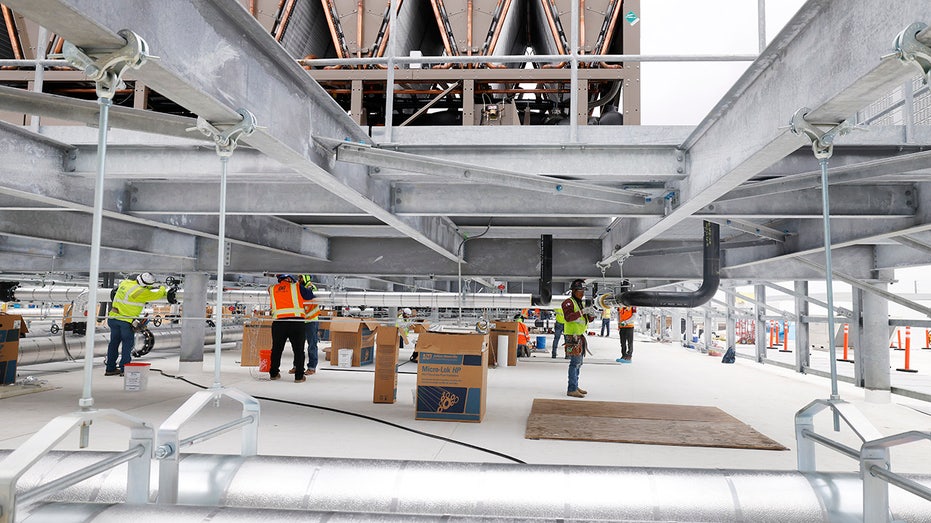
The BEA reported that the main contributors to the rise in GDP in the first quarter were investment, exports, consumer spending and government spending. (Tom Fox/The Dallas Morning News via Getty Images)
The rise in government spending was led by federal employee compensation increasing after the end of the government shutdown that occurred in the fourth quarter, when it declined as federal workers missed paychecks.
Rising consumer spending was attributed mainly to services led by healthcare, including both hospital and nursing home services along with outpatient services.
Real final sales to private domestic purchasers, which is the sum of consumer spending and gross private fixed investment, increased 2.5% in the first quarter after a more modest increase of 1.8% in the fourth quarter.
FEDERAL RESERVE LEAVES INTEREST RATES UNCHANGED AS POWELL’S CHAIRMANSHIP NEARS END

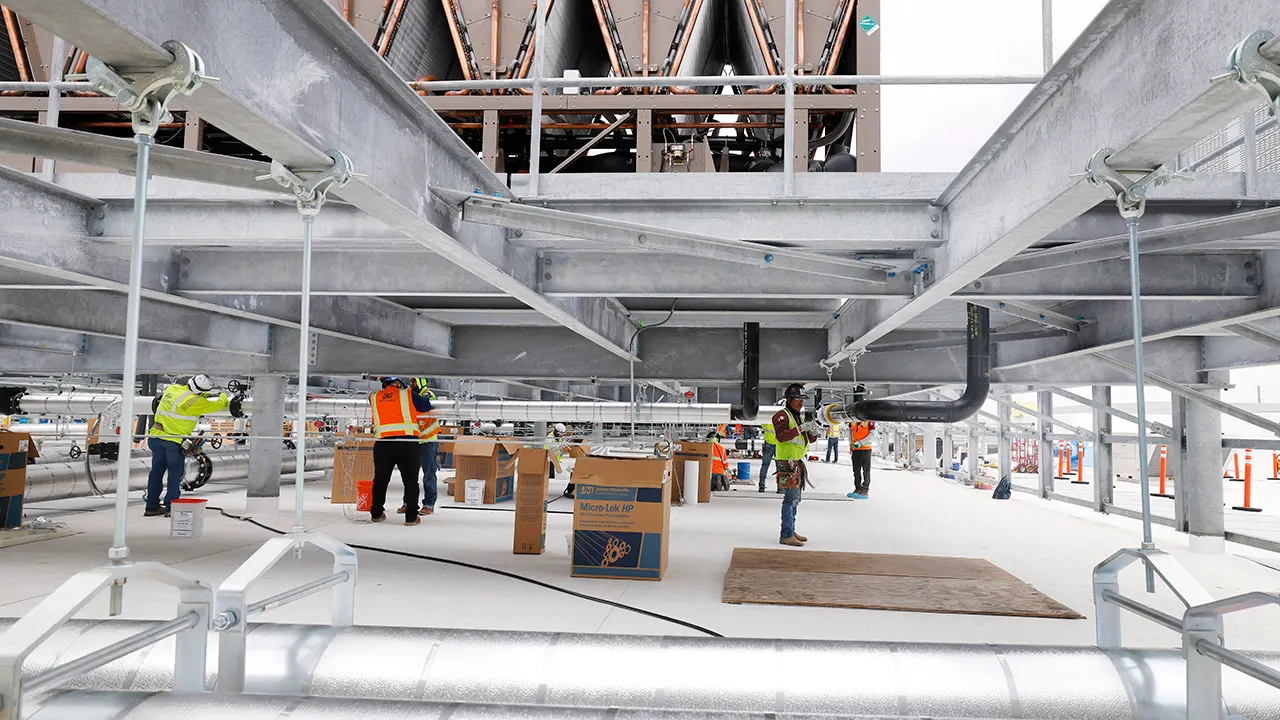
Investment in AI data centers has helped boost GDP. (iStock)
What experts are saying
Michael Pearce, chief U.S. economist at Oxford Economics, said the “core of the economy remained solid in Q1, driven by the AI buildout and the tax cuts beginning to feed through. Those factors will continue to drive growth over the rest of the year, but the jump in energy prices will take some of the shine off what would otherwise have been a strong year for the economy.
“Some of the strength of consumer spending in March is payback for the poor weather at the start of the year. Fiscal stimulus is more than outweighing the drag from higher energy prices for now, but that balance will begin to shift in the months ahead, especially with gas prices still climbing.”
Gregory Daco, chief economist at EY-Parthenon, said that while “AI investment promises to reinforce organic productivity growth in the coming years, its near-term impact through increased capex, infrastructure buildout and energy demand is likely to add to inflationary pressures.”
GET FOX BUSINESS ON THE GO BY CLICKING HERE
“Private sector demand showed firmer momentum than in Q4 2025, but it reflects an uncomfortable balance where the three narrow A-pillars of growth — affluent consumers, AI-investment and asset price gains — mask an uneven foundation where headline gains look good, but hide underlying fragilities,” Daco said.


A subsidiary company holding a 10 per cent stake in the Shell-led Prelude LNG project recorded a $58.3 million impairment on its stake in the asset last year.

Fintech stocks came under broad pressure in the first quarter of 2026, as investors pulled back from growth names in a more uncertain macro environment.
The valuations across the sector fell sharply, with fintechs significantly underperforming the broader market. One notable exception was Freedom Holding Corp., whose shares rose nearly 17% over the period. The move was supported by its more diversified ecosystem business model, which extends beyond financial services into telecom, travel, and other lifestyle segments.
A decline in fintech valuations was highlighted in a report titled “Fintech’s rapidly melting market cap,” published in mid-April by PitchBook, a leading provider of financial data and analytics. “The public fintech sector entered 2026 with momentum, but the first quarter turned sharply as the Iran war drove energy inflation, reversed rate-cut expectations, and pushed investors into a risk-off posture. With 18% of the sector’s market cap being wiped out and median cohort returns ranging from -13% to -35.3%, fintech significantly underperformed the broader market in Q1,” according to the report. Not that fintech companies suddenly got worse, rather investors became less willing to pay high valuations for growth stocks in a more uncertain, inflation-sensitive environment.
Fintech Under Pressure
Declines were widespread across nearly all segments of fintech, spanning credit-focused Buy Now Pay Later (BNPL) providers, brokers, and payment platforms.
BNPL stocks came under pressure as investors pulled back from high-growth, credit-sensitive business models amid rising inflation concerns and fading expectations for interest-rate cuts. Klarna Group (KLAR), a provider of flexible payments that earns revenue from consumer installment lending and merchant fees, fell 54% in Q1 2026. Affirm Holdings (AFRM), which offers transparent installment plans and consumer lending products with no hidden fees, lost 38% over the first three months of the year.
Even the traditional lending segment, typically seen as less risky than consumer credit, was not immune. Upstart Network (UPST), an AI-driven lending platform that uses proprietary machine-learning models to underwrite personal, auto, and home equity loans, fell 44% over the period. Retail brokerage and investing platforms also came under pressure. Robinhood Markets (HOOD), the operator of the pioneering commission-free trading app Robinhood, fell 40% over the quarter.
Digital payments and money transfer fintechs held up better but still saw a decline in market cap. Shares of PayPal Holdings (PYPL), one of the most established global payments fintechs operating across roughly 200 markets, declined 22%. The stock of Block Inc. (XYZ), which runs Square, Cash App, and Afterpay and spans payments, merchant services, peer-to-peer transfers, and BNPL, fell 8%.
The downturn also extended to the neobank and consumer financial platform segment. SoFi Technologies (SOFI), which is building an all-in-one ecosystem spanning savings, banking products, lending, investing, and wealth protection within a single app, saw its market capitalization fall 42%. Even Nu Holdings (NU), one of the largest digital financial services platforms and a global neobank pioneer, serving approximately 131 million customers across Brazil, Mexico, and Colombia through its branchless model, declined 16% in Q1.
Freedom Holding: A Different Story
Shares of Freedom Holding Corp. moved in the opposite direction in Q1, gaining nearly 17% from $124.23 at the start of January to $144.88 on March 31. The stock continued higher into April, breaking above $160 mid-month. Freedom’s market capitalization has surpassed $9.5 billion. The growth has been supported by a series of positive corporate developments, including continued expansion into international markets, ongoing integration of Freedom Holding’s ecosystem, and strong financial results.
Revenue for the quarter ending December 31, 2025, rose to $628.6 million from $526.1 million in the previous quarter, while net income nearly doubled from $38.7 million to $76.2 million. Over the first nine months of the fiscal year, the group generated $1.69 billion in revenue and $144.5 million in net income. These numbers reflect the growing investments in further development of Freedom’s ecosystem, which integrates financial, telecom, and lifestyle businesses and is available to clients through the holding’s SuperApp, which now serves 11 million users.
In its core market of Kazakhstan, the group operates a leading brokerage, a top-ten bank by assets, and maintains strong positions in insurance. It is also strengthening its domestic banking presence through additional acquisitions
In neighboring Tajikistan, the group based on Freedom Bank Tajikistan is replicating the model, which has been previously tested and refined in Kazakhstan. As Freedom Holding sees the banking business as a locomotive for the entire multi-industrial ecosystem, it is acquiring new banks in Georgia and Turkey. Recently, the management also announced plans to buy banks in Armenia and France.
Besides that, in Europe, the group is actively developing its travel segment services, such as ticketing, bookings, and events. Freedom Holding Corp’s travel-focused subsidiary plans to cover all traveler needs, from a global hotel aggregator set to launch in May 2026, to transfers, excursions, curated tours, visa support, and more. With this, the holding seeks to compete with those of the largest international platforms, such as Booking.com and Airbnb.
In technology, the group is investing in proprietary AI tools and assistants and plans to develop a national AI hub in partnership with Nvidia to support the broader adoption of artificial intelligence across up to 70% of the Kazakhstan population.
To finance all these movements, Freedom Holding is considering a potential secondary share offering outside the United States, in Kazakhstan, and possibly in Hong Kong.
The Ecosystem Advantage
Analysts point to the company’s more diversified business model, which extends beyond financial services. Unlike many fintechs that rely mainly on lending, payments, or brokerage activity, Freedom has multiple revenue streams, which have helped support its share price growth during the sector-wide decline.
“The era of stand-alone financial services is coming to an end. The future lies in super-apps that integrate financial services into everyday life – from grocery shopping to travel planning. Banking will increasingly become an invisible layer embedded within these ecosystems,” says Saurabh Tripathi, Senior Partner and Global Leader of the Financial Institutions practice at Boston Consulting Group.
According to Fortune Business Insights, the global fintech market was valued at $394.9 billion in 2025 and is projected to reach $1.76 trillion by 2034, implying a CAGR of 18.2%. Much of that growth, however, is increasingly expected to come from embedded financial services integrated into broader digital ecosystems rather than delivered as standalone products.
Business
Vistance Networks Stock Soars 22% on Q1 Beat, $1.85B RUCKUS Sale to Belden and $100M Buyback Plan
RICHARDSON, Texas — Vistance Networks Inc. shares surged more than 22% Thursday, climbing to $12.84 in morning trading after the networking technology company reported a strong first-quarter earnings beat and announced a transformative $1.846 billion all-cash sale of its RUCKUS Networks business to Belden Inc., accelerating its shift toward a focused, high-margin Aurora platform.

The move marks the latest milestone in Vistance’s ongoing restructuring, formerly known as CommScope, which has involved major divestitures to streamline operations and return capital to shareholders. The RUCKUS transaction, combined with robust Q1 results, sent the stock sharply higher as investors cheered the cash infusion and strategic clarity.
Vistance reported net sales of $471.8 million for the quarter ended March 31, up 21.6% from $388.1 million a year earlier. The top line exceeded analyst expectations. Non-GAAP adjusted net income per diluted share reached $0.34, smashing estimates by $0.12 and representing a 209% increase from the prior-year period.
Core non-GAAP adjusted EBITDA rose 38.4% to $87.3 million, reflecting margin expansion to 18.5% of sales. Both the RUCKUS and Aurora segments contributed to the growth, with Aurora — the company’s cable and video infrastructure business — posting a 32.6% revenue increase to $298.4 million.
“This transaction allows us to focus on value creation in our Aurora business,” CEO Chuck Treadway said in a statement. “With an unlevered balance sheet, we have significant financial flexibility to further invest in the Aurora business, including evaluating accretive acquisitions.”
The RUCKUS sale to Belden, expected to close in the second half of 2026 subject to regulatory approvals, represents a premium valuation for the wireless networking unit. Proceeds will bolster Vistance’s already strong cash position of approximately $2.51 billion at quarter-end and support additional shareholder returns.
Vistance’s board also authorized a $100 million share repurchase program, providing another tool to support the stock following last week’s $10 per share special dividend that caused a nearly 50% ex-dividend drop.
Analysts viewed the announcements positively. The combination of earnings strength and strategic divestiture addresses lingering concerns about the company’s post-restructuring trajectory. Vistance has shed non-core assets, paid down debt and distributed billions to shareholders while positioning Aurora as a pure-play growth engine in broadband and data center-adjacent infrastructure.
Aurora delivered particularly strong results, with adjusted EBITDA up 31.7% year-over-year. Management guided for the standalone Aurora business to generate $225 million to $250 million in adjusted EBITDA for full-year 2026, offering a clear financial target post-transaction.
The RUCKUS segment, while being divested, still showed resilience with 6.3% sales growth to $173.4 million and solid margin performance. Belden described the acquisition as accelerating its transformation into a full-stack networking solutions provider, highlighting strategic fit.
Vistance’s restructuring echoes broader industry trends. Communication equipment providers face pressure to specialize amid rapid technological change in 5G, Wi-Fi 7, fiber broadband and AI-driven data centers. By focusing on Aurora, the company aims to capitalize on demand for high-performance access networks.
Shares had traded as low as $3.55 in the past year before rebounding. Even after Thursday’s surge, the stock trades well below analyst targets around $22, suggesting room for further upside if execution continues. Consensus ratings lean toward Hold with Buy potential on improved visibility.
Challenges remain. The company reported negative free cash flow in the quarter due to timing and discontinued operations effects. Integration risks with prior Amphenol transaction and broader market cyclicality in telecom spending could influence results. However, an unlevered balance sheet provides a significant buffer.
For investors, the developments highlight Vistance’s evolution from a diversified but debt-laden infrastructure player into a leaner entity. The $10 special dividend last week, while causing a mechanical price drop, returned substantial value. Combined with the RUCKUS proceeds, management has flexibility for organic investment, M&A or further distributions.
Wall Street reaction underscored relief. The stock’s 22%+ move on heavy volume reflected pent-up demand for positive catalysts after the dividend adjustment. Pre-market enthusiasm carried into regular trading, with buyers stepping in aggressively.
Vistance, rebranded in January 2026, traces roots to 1976. It employs about 4,500 people and serves telecom operators, cable providers and data center managers worldwide. The strategic pivot prioritizes intelligent network solutions in a market increasingly driven by bandwidth demand from streaming, cloud computing and AI.
Looking ahead, the company plans a conference call to discuss details. Management will likely outline post-sale capital allocation priorities and Aurora growth drivers. Analysts expect focus on margin sustainability, regional performance and potential acquisitions.
The RUCKUS deal closes a chapter while opening another. Belden gains a strong wireless portfolio; Vistance gains cash and focus. For shareholders, the sequence of asset sales, debt reduction, dividends and buybacks has created multiple value-unlocking events in a short period.
Risks include deal execution, customer transitions and macroeconomic factors affecting telecom capex. Yet the current setup — strong earnings momentum, clean balance sheet and clear strategic direction — positions Vistance favorably compared to peers navigating similar transitions.
As trading continued Thursday, the rally showed signs of holding with conviction. Whether this marks the start of sustained re-rating depends on delivery against the new Aurora-centric guidance and effective deployment of capital. For now, investors appear optimistic that Vistance has turned a corner.
The networking sector watches closely. Successful completion of the Belden transaction could validate similar portfolio optimization strategies across the industry. For Vistance, the focus now shifts fully to executing in Aurora while realizing value from the divestiture.

Pershing Square Holdings to see reduced performance fees
Form 13D/A DoubleDown Interactive Co. For: 30 April
Business
Glaukos Stock Surges 18% on Record Q1 Sales Beat and Raised 2026 Outlook as iDose TR Demand Soars

ALISO VIEJO, Calif. — Glaukos Corp. shares jumped more than 17% Thursday, climbing to $137.49 in morning trading after the ophthalmic medical technology company posted record first-quarter sales that crushed expectations and raised its full-year 2026 revenue guidance, driven by explosive adoption of its iDose TR glaucoma implant.
The company reported net sales of $150.6 million for the quarter ended March 31, a 41% increase from the year-ago period on a reported basis and 39% on a constant-currency basis. The results far exceeded Wall Street forecasts around $137 million, marking another strong quarter for the glaucoma-focused innovator.
U.S. glaucoma sales led the charge, reaching a record $93.5 million, up 58% year-over-year. International glaucoma revenue added $35.8 million, rising 23% on a reported basis. The iDose TR, Glaukos’ groundbreaking dropless, long-duration intracameral implant that continuously delivers glaucoma medication, contributed approximately $54 million in the quarter as physician and patient uptake accelerated.
“This performance reflects strong execution across our commercial and development priorities,” CEO Thomas Burns said in the earnings release. “Our teams continue to demonstrate the strength of our differentiating technology platforms as we advance as an increasingly diversified leader in ophthalmology.”
Investors rewarded the outperformance and forward-looking optimism. Glaukos raised its full-year 2026 net sales guidance to $620 million to $635 million, up from the previous range of $600 million to $620 million. The update signals confidence in sustained momentum for iDose TR and the broader glaucoma franchise.
The stock’s surge came on heavy volume as traders reacted to the beat-and-raise report released after the market close Wednesday. Shares had traded around $117 before the move, reflecting renewed enthusiasm for Glaukos’ interventional ophthalmology strategy.
Glaukos specializes in minimally invasive glaucoma surgery devices and novel pharmaceutical therapies. Its iStent family of micro-bypass implants and the newer iDose TR aim to reduce or eliminate the need for daily eye drops, addressing a major challenge in glaucoma management where patient non-compliance often leads to disease progression.
Gross margin performance remained robust. GAAP gross margin stood at approximately 78%, while non-GAAP gross margin reached about 84%, up 120 basis points year-over-year. The company reported a GAAP net loss of $19.8 million, or 34 cents per share, and a non-GAAP net loss of $10.4 million, or 18 cents per share — both better than expected.
Glaukos ended the quarter with a strong balance sheet: $280.5 million in cash, cash equivalents, short-term investments and restricted cash, and no debt. This financial flexibility supports ongoing commercialization, pipeline development and potential strategic opportunities.
Analysts largely viewed the results positively. The beat on both top and bottom lines, combined with the guidance raise, validated Glaukos’ growth trajectory amid a competitive ophthalmology landscape. Several firms noted the accelerating iDose TR ramp as a key positive, with real-world physician feedback highlighting the implant’s ease of use and clinical benefits.
The glaucoma market represents a significant opportunity. With millions of patients worldwide requiring ongoing treatment, therapies that improve adherence and outcomes carry substantial commercial potential. Glaukos’ pipeline also includes candidates for corneal disorders and retinal diseases, providing longer-term diversification.
Challenges remain. The company continues to invest heavily in commercial infrastructure, clinical trials and manufacturing scale-up for iDose TR. Competition from established pharmaceutical eye-drop makers and other device players persists. Reimbursement dynamics and physician training curves can influence adoption rates.
Still, momentum appears firmly positive. Recent regulatory wins, including a permanent J-code for its Epioxa corneal cross-linking therapy, further bolster the portfolio. Glaukos has positioned itself as a leader in “interventional ophthalmology,” blending devices, drugs and sustained-delivery platforms.
Wall Street consensus price targets have trended higher in recent months, with several analysts maintaining Buy or Outperform ratings. The raised guidance places Glaukos on track for roughly 25-30% growth in 2026, a pace that could support further multiple expansion if execution remains strong.
For investors, Thursday’s rally underscores Glaukos’ transition from a micro-invasive glaucoma surgery pioneer to a broader ophthalmic platform company. The iDose TR launch has been a pivotal catalyst, shifting revenue mix and demonstrating the company’s ability to commercialize innovative therapies at scale.
Looking ahead, management will provide more color on the Q1 conference call and future catalysts. Key focus areas include international iDose TR expansion, pipeline progress in retina and cornea, and margin trends as volumes grow. The company’s May investor events or scientific presentations could offer additional visibility.
Broader sector dynamics also favor Glaukos. Aging populations drive demand for eye care, while innovation in drug delivery and surgical techniques addresses unmet needs. Glaukos’ cash position and debt-free status provide a competitive advantage in funding R&D and acquisitions.
Risks include slower-than-expected adoption curves, regulatory hurdles for new indications, and macroeconomic pressures on elective procedures. Yet the first-quarter results and guidance increase suggest Glaukos is navigating these challenges effectively.
As the stock consolidated some of Thursday’s gains, the narrative around Glaukos has clearly shifted toward growth. From its roots in tiny stents to sustained-release implants, the company continues to push boundaries in preserving vision for patients worldwide.
For a medical technology firm in a specialized field, delivering consistent beats while raising guidance is a powerful combination. Thursday’s market reaction reflects investor belief that Glaukos is entering a new phase of scaled commercialization and innovation leadership in ophthalmology.

Check out what’s clicking on FoxBusiness.com.
Fidelity and Vanguard’s charitable arms have reportedly paused grants to the Southern Poverty Law Center (SPLC) through their donor-advised funds after the group was indicted on federal charges.
The Justice Department last week charged the civil rights nonprofit with financial crimes, including wire fraud and money laundering. In the wake of the charges, many supporters moved to donate to help support the group’s legal defense, The New York Times reported.
However, both Fidelity Charitable and Vanguard Charitable said they are temporarily pausing grants to the organization while the case moves forward, according to the outlet.
AMERICANS SURGE TOWARD FINANCIAL RESOLUTIONS FOR 2026 AMID HOUSEHOLD BUDGET CONCERNS

Southern Poverty Law Center headquarters in Montgomery, Ala., where Fidelity and Vanguard have reportedly paused grants to the organization. (Barry Lewis/InPictures via Getty Images, File / Getty Images)
“Fidelity Charitable is aware of an ongoing governmental investigation into Southern Poverty Law Center,” the company, an affiliate of Fidelity Investments, said in a message to a donor.
“Consistent with our grant-making standards and practices, the organization is not an eligible grant recipient during the ongoing investigation.”
Vanguard Charitable provided a similar explanation, according to The New York Times.
“The organization has had allegations and/or charges brought against them for activities that may call into question their ability to carry out their tax-exempt charitable purpose,” the company said when declining a grant request.
THE TYPICAL AMERICAN WORKER HAS JUST $955 SAVED FOR RETIREMENT, STUDY SHOWS
Vanguard’s charitable arms have reportedly paused grants to the Southern Poverty Law Center. (Gabby Jones/Bloomberg via Getty Images, File / Getty Images)
A donor-advised fund (DAF) lets people make a tax-deductible donation, then recommend how the money is given to charities over time, according to the IRS.
“Vanguard Charitable grants only to organizations that meet IRS eligibility requirements. If we become aware an organization has been charged with a crime by state or federal authorities, we pause grantmaking while the matter is pending,” a spokesperson for the company told FOX Business.
“All grant decisions are made based on the information available at the time of the grant recommendation.”
On its website, Fidelity Charitable notes that a grant recommendation may be declined if an organization is being investigated for “alleged illegal activities or non-charitable activities.”
RETIREES FACE STAGGERING 6-FIGURE HEALTH CARE BILL WHEN LEAVING THE WORKFORCE
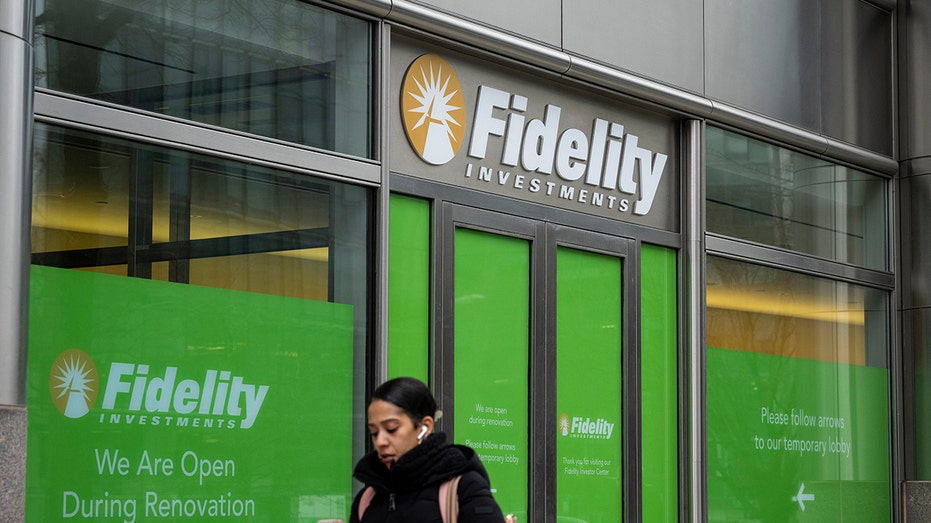
Fidelity has stopped donating to the Southern Poverty Law Center through its charitable fund. (Graeme Sloan/Bloomberg via Getty Images, File / Getty Images)
The Justice Department indicted the SPLC on charges of wire fraud and conspiracy to commit concealment and money laundering, stemming from allegations that the civil rights organization funneled $3 million in donations to people linked to various violent extremist groups, including Unite the Right, the Ku Klux Klan and the Aryan Nations.
“The SPLC allegedly engaged in a massive fraud operation to deceive their donors, enrich themselves, and hide their deceptive operations from the public,” FBI Director Kash Patel said in a statement.
“They lied to their donors, vowing to dismantle violent extremist groups, and actually turned around and paid the leaders of these very extremist groups — even utilizing the funds to have these groups facilitate the commission of state and federal crimes,” Patel added.
GET FOX BUSINESS ON THE GO BY CLICKING HERE
The SPLC did not immediately respond to FOX Business’ request for comment.
Fox News Digital’s Elaine Mallon contributed to this report.

LOS ANGELES — Fresh off the massive success of her GUTS World Tour, Olivia Rodrigo announced Thursday “The Unraveled Tour,” a sprawling 65-date arena run supporting her highly anticipated third studio album “you seem pretty sad for a girl so in love,” set for release June 12. The tour kicks off Sept. 25 in Hartford, Connecticut, and stretches into May 2027, giving fans across two continents a chance to experience the 23-year-old superstar’s evolving sound live.

Ticketmaster and Live Nation confirmed presales begin May 5, with general on-sale expected shortly after. Early demand is already surging, mirroring the frenzy that surrounded Rodrigo’s previous outings. The announcement, timed perfectly with buzz around her new record, has sent social media into overdrive as “Livies” scramble for details on dates and openers.
The North American leg opens with back-to-back nights at PeoplesBank Arena in Hartford on Sept. 25 and 26, then hits Pittsburgh, Washington D.C., Charlotte, Chicago, Boston, Montreal, Toronto, Philadelphia, Atlanta, Orlando, Nashville, Vancouver, Seattle, Oakland, Sacramento, Las Vegas and multiple nights in Los Angeles before wrapping the U.S. portion in Brooklyn on Feb. 16, 2027. International dates follow in Europe, culminating May 2, 2027, in Barcelona.
A carefully curated lineup of supporting acts adds depth to the bill. Wolf Alice, The Last Dinner Party, Devon Again, Grace Ives and Die Spitz will rotate across dates, bringing a mix of alt-rock, indie and emerging talent that aligns with Rodrigo’s genre-blending style. The choices reflect her reputation for championing rising artists, much as she did on the GUTS tour.
Rodrigo’s previous tour grossed over $200 million and solidified her as one of the biggest live draws of her generation. The GUTS World Tour, which wrapped in 2025 with a “Spilled” extension, earned rave reviews for its emotional intensity, theatrical staging and raw vocal performances. Fans expect “The Unraveled Tour” to push boundaries further as she debuts material from the new album, which insiders describe as a deeper, more introspective evolution of her signature confessional pop-punk sound.
The new record arrives amid sky-high expectations. Lead single “drop dead,” performed at recent intimate shows, has already dominated streaming charts and sparked speculation about themes of heartbreak, self-discovery and resilience — hallmarks of Rodrigo’s songwriting since her breakout “drivers license” in 2021. Early setlists from surprise appearances hint at a mix of fan favorites and fresh tracks, with acoustic moments and high-energy anthems.
At just 23, Rodrigo has amassed three Grammy Awards, billions of streams and a cultural impact that transcends music. Her tours are known for cathartic sing-alongs, emotional vulnerability on stage and production that balances intimacy with arena-scale spectacle. “The Unraveled Tour” name suggests a theme of emotional exposure and personal unraveling turned into empowerment — a narrative arc that resonates deeply with her young audience.
Promoted by Live Nation, the tour will feature state-of-the-art production elements. Past shows included striking visuals, costume changes and moments of audience interaction that made crowds feel part of the storytelling. Expect similar theatrical flair as Rodrigo processes the whirlwind of fame, relationships and growth since her meteoric rise.
Ticket prices for previous tours started around $49.50 for standard seats, with VIP packages and “Silver Star” accessible options offered to promote inclusivity. Similar structures are anticipated here, though exact pricing and availability will be confirmed during the presale. Fans are advised to use official channels to avoid scalpers, as secondary market prices often soar immediately after on-sale.
The announcement comes at a pivotal career moment. After dominating charts and stages with “SOUR” and “GUTS,” Rodrigo has taken time to craft a project that feels more mature while retaining the angsty edge that made her a Gen Z icon. Collaborators and producers from previous albums are expected to return, with possible new influences shaping the live arrangements.
Industry observers see the tour as a major revenue driver and cultural event. Arena runs of this scale for young artists often sell out quickly, especially with a new album fueling demand. Rodrigo’s team has emphasized sustainable touring practices in the past, though specifics for this outing remain under wraps.
For fans, the wait has been worth it. Many who caught the GUTS tour describe life-changing experiences — screaming lyrics that felt written just for them, finding community in shared heartbreak and walking away empowered. “The Unraveled Tour” promises to deliver that same magic on an even larger canvas as Rodrigo steps into her next chapter.
As presale approaches, excitement builds around potential setlist surprises, guest appearances and how new songs translate in a live setting. Rodrigo has proven masterful at balancing nostalgia with forward momentum, ensuring veterans and newcomers alike leave satisfied.
The global trek underscores her status as a generational talent. From Disney Channel roots to stadium-filling pop-rock powerhouse, her journey continues to inspire. With “The Unraveled Tour,” Olivia Rodrigo isn’t just performing — she’s inviting fans into the raw, beautiful unraveling of young adulthood set to a soundtrack that already feels like the voice of a generation.
Dates will continue rolling out, with more international stops likely to follow. For now, the focus is on North America this fall, where the first wave of tickets will determine the tour’s early success. One thing is certain: when the lights go down and Rodrigo steps on stage, arenas will erupt as another chapter of her remarkable story unfolds.
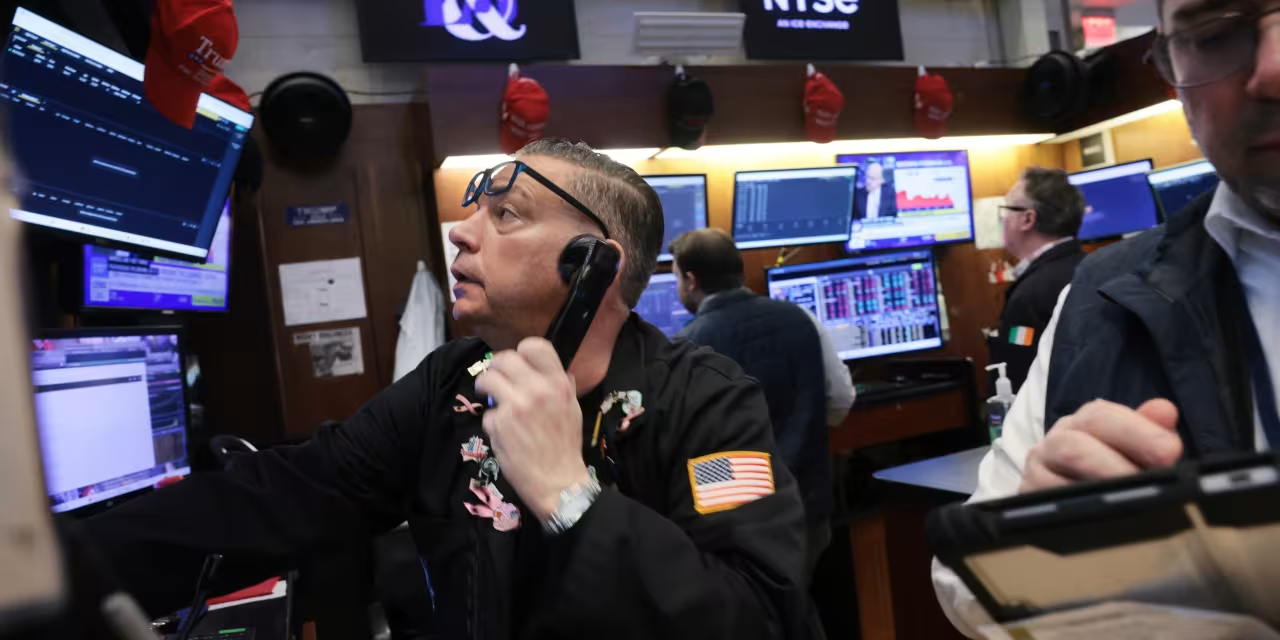
U.S. stocks are braced for perhaps the most active two-day stretch in years starting Wednesday, with a key Federal Reserve interest-rate decision and a Senate vote to approve a new chair, a host of megacap tech earnings, and data on growth, jobs and inflation that will determine the early impact of the ongoing war with Iran.

Form DEF 14A Figure Technology Solutions Ltd For: 30 April

The Best Business Casual Sneakers for Women (Comfortable and Office-Appropriate)

Stormont leaders slam ‘deliberate’ Mournes wildfires as lives put at risk

Prelude hit with $58m Kogas impairment

Manchester United reach agreement with Casemiro over contract clause amid transfer speculation

US brings back mandatory military draft registration

Steven Gerrard disagrees with Gary Neville over ‘shock’ Chelsea and Arsenal claim | Football


-

 Tech3 days ago
Register Renaming | Hackaday
-

 Fashion6 days ago
Weekend Open Thread – Corporette.com
-
 Crypto World5 days ago
Hyperliquid $HYPE Rally Builds Momentum as AI Sector Enters Prove-It Phase
-

 Politics3 days ago
Drax board avoid their own AGM, accused of greenwashing & environmental racism
-
 Sports5 days ago
IPL 2026: Ruturaj Gaikwad registers slowest fifty of the season, enters all-time unwanted list | Cricket News
-

 Tech3 days ago
Images of Samsung’s rumored smart glasses have leaked
-

 NewsBeat5 days ago
LK Bennett closes all stores after entering administration
-

 Tech4 days ago
Why Blue Badges Disappeared From Toyota Hybrids
-

 Crypto World7 days ago
Michael Saylor says BTC winter is over. Market analyst disagrees, says bitcoin was in a pullback
-

 Fashion2 days ago
Kylie Jenner’s KHY Enters a New Era with ‘Born in LA’
-
 Entertainment5 days ago
Mariah Carey Slams Deposition Claims In Brother’s Lawsuit
-

 Business2 days ago
Most Commercial Energy Audits Miss the Real Losses
-
 NewsBeat7 days ago
Trump threatens to review UK’s claim to Falkland Islands and punish Nato allies over Iran war disagreement
-

 Business6 days ago
Jeanine Pirro announces closure of Federal Reserve building cost probe
-

 Business3 days ago
(VIDEO) Charlize Theron Climbs Times Square Billboard to Promote New Netflix Thriller ‘Apex’
-

 Tech5 days ago
Microsoft to roll out Entra passkeys on Windows in late April
-

 Tech5 days ago
OpenAI’s Sam Altman apologizes for not reporting ChatGPT account of Tumbler Ridge suspect to police
-

 Crypto World2 days ago
CFTC’s AI will review U.S. crypto registration applications, chairman tells CoinDesk
-
 Crypto World6 days ago
Nvidia (NVDA) Stock Jumps 5% as Intel Earnings Ignite Semiconductor Rally
-
Entertainment7 days ago
Snooki says “Jersey Shore” cast plans to film show 'until we're in a nursing home': 'It's not over for us'
You must be logged in to post a comment Login