
Business
US railroads Union Pacific, Norfolk Southern seek approval for $85 billion merger




A Pilbara native title group is building a home away from home in Perth to house traditional owners visiting the city for medical treatment.

The zero-tariff regime gives China’s soft power a boost, but may lead to uneven gains, say analysts.
Zekelman Industries Chairman and CEO Barry Zekelman joins ‘Mornings with Maria’ to discuss how President Donald Trump’s tariffs are boosting U.S. steel, driving jobs and investment and countering China’s impact.
President Trump announced Thursday he was removing tariffs on Scotch whisky after a four-day British royal state visit to the United States, crediting King Charles III and Queen Camilla.
As he often does, Trump announced the move on Truth Social.
“The King and Queen got me to do something that nobody else was able to do, without hardly even asking!” he wrote. “In Honor of the King and Queen of the United Kingdom, who have just left the White House, soon headed back to their wonderful Country, I will be removing the Tariffs and Restrictions on Whisky.”
FEDERAL RESERVE LEAVES INTEREST RATES UNCHANGED AS POWELL’S CHAIRMANSHIP NEARS END
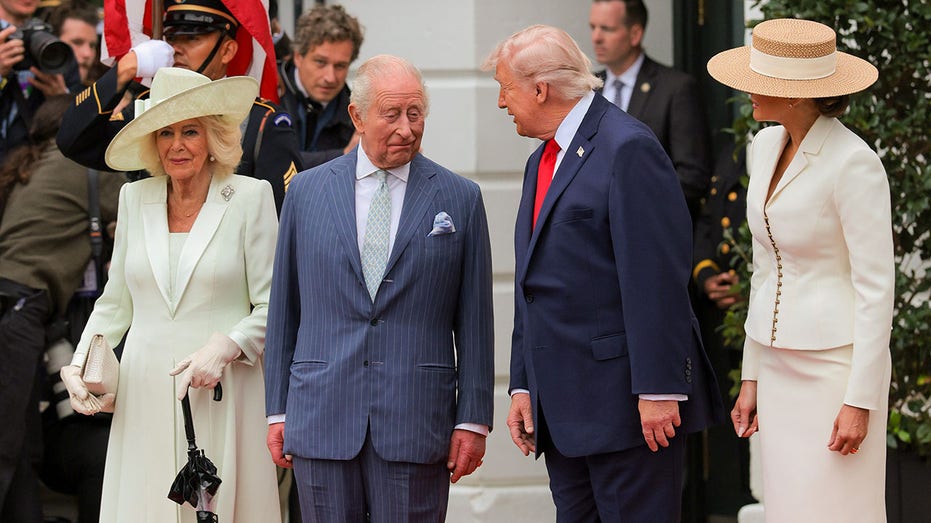
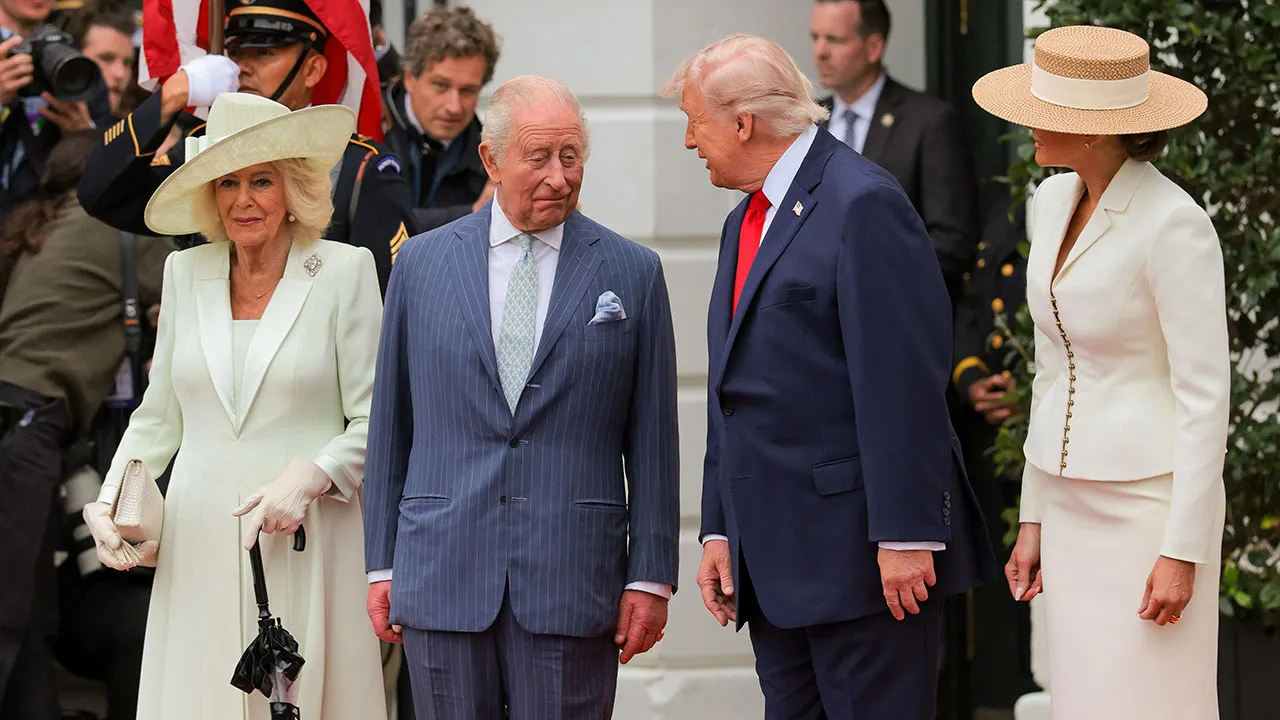
Queen Camilla, King Charles III, U.S. President Donald Trump, and first lady Melania Trump pose during a state arrival ceremony on the South Lawn of the White House on April 28, 2026, in Washington, D.C. (Chip Somodevilla/Getty Images / Getty Images)
The removal affects restrictions “on Whiskey having to do with Scotland’s ability to work with the Commonwealth of Kentucky on Whisky and Bourbon, two very important industries within Scotland and Kentucky,” he added.
Trump said people have been asking for the change. However, his announcement was unclear as to whether the tariff removal applied to bottles of Scotch or on the materials used to produce alcohol in both the United States and Scotland.
Fox News Digital has reached out to the White House for comment.
In 2025, the U.S. and the United Kingdom signed a deal allowing Washington to impose a 10% baseline tariff on imports of most British goods, part of an effort by Trump to correct what he perceived as long-standing trade imbalances.
AIR CANADA SCRAPS KEY US ROUTES AS FUEL COSTS SURGE AMID IRAN CONFLICT

Jameson and Powers whisky for sale at a supermarket as a new minimum price increase for alcohol is implemented in Galway, Ireland, Jan. 4, 2022. (Clodagh Kilcoyne/File Photo / Reuters)
While speaking to reporters in the Oval Office, Trump said the tariffs were lifted to enhance the trade of barrels between Scotland and Kentucky, which produces almost all the world’s bourbon. The barrels are used to age the alcohol, The Associated Press reported.
John Swinney, Scotland’s first minister, praised the removal, calling it a “tremendous success” for his country.
“People’s jobs were at stake. Millions of pounds were being lost every month from the Scottish economy,” he said.
Chris Swonger, the president and CEO of the Distilled Spirits Council, called Trump’s announcement a “major victory” for American hospitality businesses that are deeply impacted by international trade.
“The United States and the United Kingdom share a deep and enduring spirits tradition built on generations of craftsmanship, agriculture and market access,” he said in a statement. “We applaud President Trump for working to restore a proven zero-for-zero model of fair, reciprocal trade between our two nations.”
‘The Big Money Show’ panel breaks down the Supreme Court’s 6-3 decision striking down President Donald Trump’s sweeping tariffs, what it means for billions in potential refunds and how the administration’s Plan B could reshape the trade fight.
CLICK HERE TO GET FOX BUSINESS ON THE GO
Swonger said the move “strengthens transatlantic ties” and brings “much-needed certainty to our industry,” allowing spirits producers on both sides of the Atlantic to grow, invest and support jobs at a critical time.
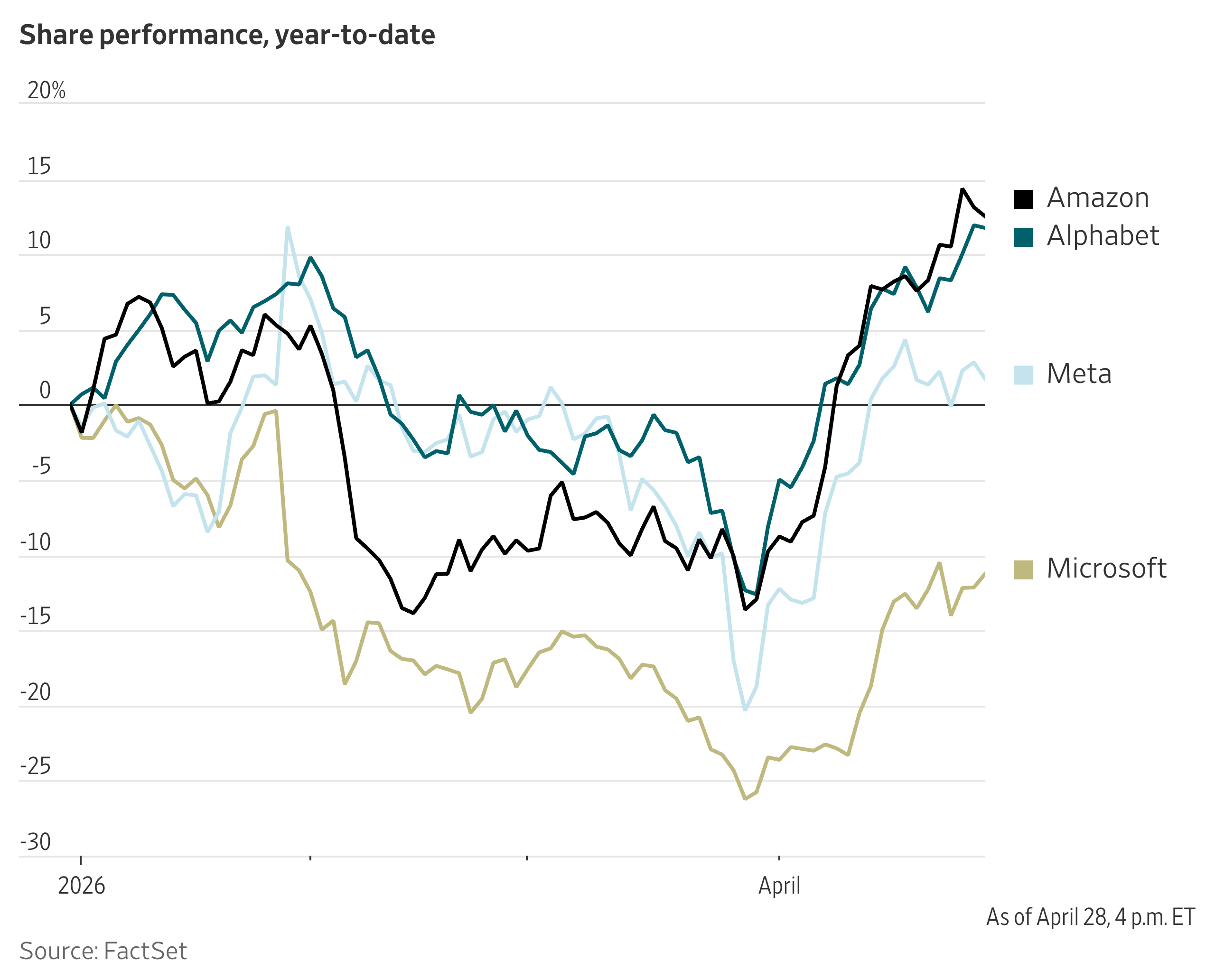
Traders are gearing up for Wall Street’s “Super Bowl” Wednesday when tech giants Alphabet, Amazon, Meta and Microsoft will all share their latest quarterly results. Investors will have one eye on revenue growth and the other on the firms’ capital expenditures–the price tag for the firms’ massive artificial intelligence buildouts.
“Investors do not want capex getting revised higher, “ said Jed Ellerbroek, a portfolio manager at Argent Capital Management.

Silver And Gold Intraday Outlook: Metals Shine Bright After The FOMC Meeting

Choosing the right business law firm is one of the more important decisions you will make as an SME owner. It shapes how you handle risk, manage transactions, and deal with issues as they come up.
If you want a clear way to assess your options, focus on five things:
- Breadth of legal services under one roof
- Commercial understanding, not just legal knowledge
- Transparent and predictable fees
- Relevant transaction and sector experience
- Easy access to consistent, experienced advisers
Get these right, and everything else tends to follow.
Does the Firm Cover All the Legal Areas Your Business Needs?
Most SMEs do not deal with legal issues in isolation. Employment, contracts, property, and corporate work often overlap, sometimes within the same transaction. If your firm only covers part of that, you end up managing multiple advisers. That usually means higher costs, slower progress, and more chances for gaps.
Rubric Law provides legal services across corporate, employment, commercial, and dispute resolution, giving SMEs a single, consistent point of contact as different issues arise. This matters most when legal areas connect.
An acquisition with TUPE implications, or a business sale linked to a property transaction, needs joined-up advice. If teams are not aligned, issues tend to surface later, when they are harder and more expensive to fix.
When comparing firms, ask which areas they handle in-house. If work is referred out, it adds time, cost, and another layer to manage.
Does the Firm Offer Commercial Insight?
Legal accuracy should be a given. What actually makes a difference is whether the firm can explain what that legal position means for your business.
Think about it this way. You are not just asking, “Is this clause enforceable?” You are really asking, “What does this mean for me, and what should I do next?”
A good adviser will talk in terms of risk, options, and likely outcomes. They will connect the legal detail to your commercial reality.
You can usually spot this early. In initial conversations, pay attention to the questions they ask. A strong firm will want to understand:
- Your business model
- Your objectives
- Your appetite for risk
If they skip that and go straight into technical explanation, that is often how they will approach the rest of the work.
Fixed Fee vs Hourly Billing Structure
Fees are where a lot of SME frustration comes from, usually because of uncertainty rather than the cost itself.
The billing model makes a big difference to how well you can plan:
| Factor | Fixed Fee | Hourly Billing |
| Cost certainty | High | Low |
| Best suited to | Defined-scope matters | Complex, open-ended matters |
| Budget planning | Predictable | Harder to forecast |
| Overrun risk | Firm carries it | Client carries it |
Fixed fees work well when the scope is clear, things like shareholder agreements, employment contracts, or standard conveyancing.
Hourly billing tends to fit situations where the scope is less predictable, such as disputes or more complex transactions.
Some firms default to hourly billing for everything. That can make routine work more expensive than it needs to be, and it makes budgeting harder than it should be.
It is worth asking a few direct questions upfront:
- Which services are offered on a fixed fee basis?
- Which are billed hourly?
- Can you provide typical cost ranges for the work I am likely to need?
Clarity here saves a lot of friction later.
Does Their Transaction Experience Match Your Sector?
Not all corporate experience is equal. There is a difference between general corporate advice and hands-on transaction experience.
For example, a management buy-out involves specific deal structures and negotiation points. A share sale requires careful handling of disclosures, warranties, and completion processes. These are not things you want a firm learning as they go.
Sector experience matters just as much. If your business operates in a regulated space like healthcare, financial services, or food production, there are compliance requirements that directly affect how deals are structured.
A firm without that background may still get there, but it often takes longer and carries more risk.
Ask for specific examples of completed transactions in your sector and deal size. General statements about experience are less useful than real, recent examples.
Accessibility and Relationship Continuity
Good legal advice is only helpful if you can get it when you need it. There will be moments where something urgent comes up, a contract issue, an employee problem, or a decision that cannot wait. In those situations, slow responses are more than frustrating; they can affect outcomes.
Different firms handle this in different ways. Larger firms may introduce you to a senior partner, then pass the day-to-day work to junior team members. Smaller firms may offer a more personal service but struggle with capacity on more complex matters.
What most SMEs need is consistency. You want to know who you are dealing with, and you want that person to stay involved.
Before you instruct a firm, ask:
- Who will handle my work day to day?
- Will that person stay involved throughout?
- What are your typical response times?
It sounds basic, but it makes a real difference once work starts.
Checklist, Questions to Ask Before Instructing a Business Law Firm
If you are comparing a few firms, these questions help you cut through the surface-level differences:
- Which practice areas do you handle in-house, and which do you refer out?
- Can you provide examples of work completed in my sector?
- How do you structure fees for the type of work I need most?
- Who will manage my matter day to day?
- What are your standard response times?
- How do you explain legal risk in commercial terms?
- Have you advised businesses at my stage of growth or transaction size?
Get the Legal Support Your Business Needs
Choosing a business law firm is worth doing properly. When you take the time to assess service breadth, commercial understanding, fee clarity, experience, and accessibility, you reduce the risk of problems later.
If you are about to instruct a firm, use the checklist above and have those conversations early. It will give you a much clearer sense of whether they are the right fit for your business.

Sable offshore EVP, CFO Patrinely sells $1.08m in stock

The age of artificial intelligence agents has arrived. From the neon-lit corridors of a Las Vegas cloud conference to the factory floors of Osaka, two converging stories this week underscore that autonomous AI systems are transitioning from corporate pilot programs into the foundational layer of global enterprise.
Key takeaways
- Google has officially ended the experimental phase of enterprise AI, consolidating its agent strategy under “Gemini Enterprise” and backing it with $175–185 billion in capital spending and new TPU 8t/8i chips purpose-built for agentic workloads.
- Japan’s AI agent market is set to grow nearly tenfold from $250 million in 2024 to $2.43 billion by 2030, driven less by hype than by demographic necessity as the country confronts a shrinking workforce and an aging population.
- Across both markets, agentic AI has crossed the threshold from pilot to deployment, with Forrester documenting 55–75% process cycle-time reductions and the global enterprise agent market projected to reach $142.35 billion by 2035.
The question that once dominated boardroom discussions, whether agentic AI was ready, has quietly been retired.
Google Draws a Line in the Sand
At Alphabet’s annual Google Cloud Next conference in Las Vegas, CEO Sundar Pichai and Google Cloud chief Thomas Kurian made no effort to temper expectations. Kurian set the tone during the opening keynote, declaring that the experimental phase is now behind the industry and that the real challenge is just beginning. The message was deliberate: for enterprise customers, the moment for cautious evaluation has passed.
Google signaled to investors that AI agents, human-like digital assistants capable of autonomous planning, decision-making, and action, are the linchpin of its strategy to monetize artificial intelligence, with large enterprise customers emerging as the industry’s most reliable revenue stream.
The financial commitment backing this shift is substantial. Pichai reaffirmed Alphabet’s capital spending plan of between $175 billion and $185 billion for the year, with just over half of the company’s investment in machine learning computing power dedicated to its cloud business.
To consolidate its position, Google announced it was unifying a suite of AI products under the name “Gemini Enterprise,” most notably rebranding and expanding Vertex AI, a platform that allows cloud customers to select from a range of AI models for business applications. According to Kurian, the platform’s primary use case has already undergone a quiet but dramatic transformation, shifting away from traditional machine learning workflows toward a surge in users building custom AI agents.
The hardware strategy is equally ambitious. Google unveiled two new custom tensor processing units, the TPU 8t and TPU 8i, both designed end-to-end for what the company describes as the age of agents. The TPU 8i, tuned for inference workloads that power real-time agent responses, delivers 80 per cent better performance than the prior generation.
Google’s push is also a direct response to intensifying competition. While traditional cloud rivals such as Amazon and Microsoft remain ahead in overall market share, Google has grown its cloud market share to 14 per cent as of end-2025, buoyed by heavy investment in AI, data centres, custom chips, and networking infrastructure. Meanwhile, model providers including OpenAI and Anthropic have aggressively shifted resources toward enterprise customers, pushing into application-layer tools and agent-building platforms, forcing Google to differentiate not on model capability alone, but on end-to-end enterprise infrastructure.
Japan: Where Demographics Are Driving a $2.43 Billion Imperative
While Silicon Valley frames agentic AI as a strategic opportunity, Japan’s adoption is being shaped by something far more urgent: structural necessity.
Japan’s AI agent market was valued at $250 million in 2024 and is projected to reach approximately $2.43 billion by 2030, growing at a compound annual growth rate of 46.3%, the highest among all enterprise software verticals in the country, and one of the fastest in the Asia-Pacific region.
The driver is not technological enthusiasm. It is demography. With more than 28 per cent of Japan’s population aged 65 or above and the working-age population shrinking for over two decades, the country faces a fundamental gap in manpower that immigration reform and productivity initiatives cannot adequately bridge. AI agents, autonomous software systems capable of continuous operation without human supervision, offer the most viable solution at scale.
Government policy has hardened this trajectory into law. Japan adopted the Act on the Promotion of Research and Development and Utilization of AI-related Technologies in May 2025, establishing an AI Strategic Office at the Cabinet Office under direct oversight of the Prime Minister and underpinning a ¥3 trillion public-private partnership for frontier AI infrastructure. The country’s broader Society 5.0 framework, a government blueprint for a human-centric, technology-integrated society, has positioned AI agents as instruments of national industrial policy, not just commercial innovation.
Sector-level adoption reflects Japan’s industrial heritage. Manufacturing and industrial automation represents the largest current segment, with AI agents deployed for predictive maintenance, quality control anomaly detection, and supply chain coordination, functions that align naturally with Japan’s precision-manufacturing culture. Healthcare is the fastest-growing vertical, driven by the mounting pressures of an aging population, with agents already deployed in hospital networks for patient triage, medication management, and clinical documentation.
The competitive landscape is increasingly crowded. Domestic heavyweights including Fujitsu, NEC, Hitachi, and NTT Data have each launched enterprise AI agent platforms in the past year, while SoftBank, NEC, Sony, and Honda have partnered to develop a sovereign Japanese AI model with a capacity of one trillion parameters, a direct challenge to US and Chinese frontier AI dominance. Global players are moving in parallel: Microsoft pledged $2.9 billion in Japanese AI and cloud investment in April 2024, while NTT Corp. released its Smart AI Agent Ecosystem backed by $59 billion in five-year domestic commitments.
Convergence: A Global Infrastructure Shift
What emerges from these two narratives, Google’s enterprise pivot and Japan’s structural adoption, is a coherent picture of an industry crossing a threshold. The terminology has changed. Vendors no longer speak of AI “pilots” or “proofs of concept.” The word now is deployment.
Google’s Kurian told Reuters that the shift reflects models becoming significantly more sophisticated, with enterprises now building custom agents rather than merely experimenting with off-the-shelf tools. In Japan, research firm Forrester has found that enterprises deploying agentic AI workflows are achieving process cycle time reductions of between 55 and 75 per cent in relevant use cases, numbers that make the business case increasingly difficult to ignore.
The broader global enterprise AI agent market, valued at $6.65 billion in 2025, is forecast to reach $142.35 billion by 2035, with Japan’s trajectory outpacing even that remarkable global average. As Google bets its infrastructure roadmap on agents and Japan bets its economic future on them, the remaining question for enterprises worldwide is no longer whether to act, but at what speed, and with whose tools.
Other People are Reading

The 10-year yield traded at a high of 7.06% on the day, as crude oil prices were at its highest in four years. Yields opened at 7.04% and remained elevated around 7.06% for most of the session. They eased modestly after 3 pm as crude oil prices cooled, allowing yields to close lower at 7.01%.
Yields climbed following hawkish comments by the Federal Reserve.
“Bonds were already a pain point for traders, and oil above $120 per barrel is adding to it. Additionally, commentary from the Federal Reserve reinforces expectations of tighter global financial conditions,” said a bond trader from a primary dealership. Separately, money market rates shot up, with the weighted average call rate trading at 5.07% on Thursday versus 5.00% a week earlier. The firming up of yields comes amid shrinking surplus of banking liquidity.

Wiluna Mining has been fined $575,000 over an incident at its gold open pit that caused permanent spinal injury to an 18-year-old apprentice.

Tod’s Summer 2026 Campaign Is Pure Italian Ease

Metformin pharmacist gives warning to diabetes users over side effect

Karlka Nyiyaparli Aboriginal Corporation to build Swan Valley hub for Perth medical travel

Manchester United reach agreement with Casemiro over contract clause amid transfer speculation

US brings back mandatory military draft registration

Steven Gerrard disagrees with Gary Neville over ‘shock’ Chelsea and Arsenal claim | Football


-

 Tech3 days ago
Register Renaming | Hackaday
-

 Fashion6 days ago
Weekend Open Thread – Corporette.com
-
 Crypto World5 days ago
Hyperliquid $HYPE Rally Builds Momentum as AI Sector Enters Prove-It Phase
-

 Politics3 days ago
Drax board avoid their own AGM, accused of greenwashing & environmental racism
-
 Sports5 days ago
IPL 2026: Ruturaj Gaikwad registers slowest fifty of the season, enters all-time unwanted list | Cricket News
-

 Tech3 days ago
Images of Samsung’s rumored smart glasses have leaked
-

 NewsBeat5 days ago
LK Bennett closes all stores after entering administration
-

 Tech4 days ago
Why Blue Badges Disappeared From Toyota Hybrids
-

 Crypto World7 days ago
Michael Saylor says BTC winter is over. Market analyst disagrees, says bitcoin was in a pullback
-

 Fashion2 days ago
Kylie Jenner’s KHY Enters a New Era with ‘Born in LA’
-
 Entertainment5 days ago
Mariah Carey Slams Deposition Claims In Brother’s Lawsuit
-

 Business2 days ago
Most Commercial Energy Audits Miss the Real Losses
-
 NewsBeat7 days ago
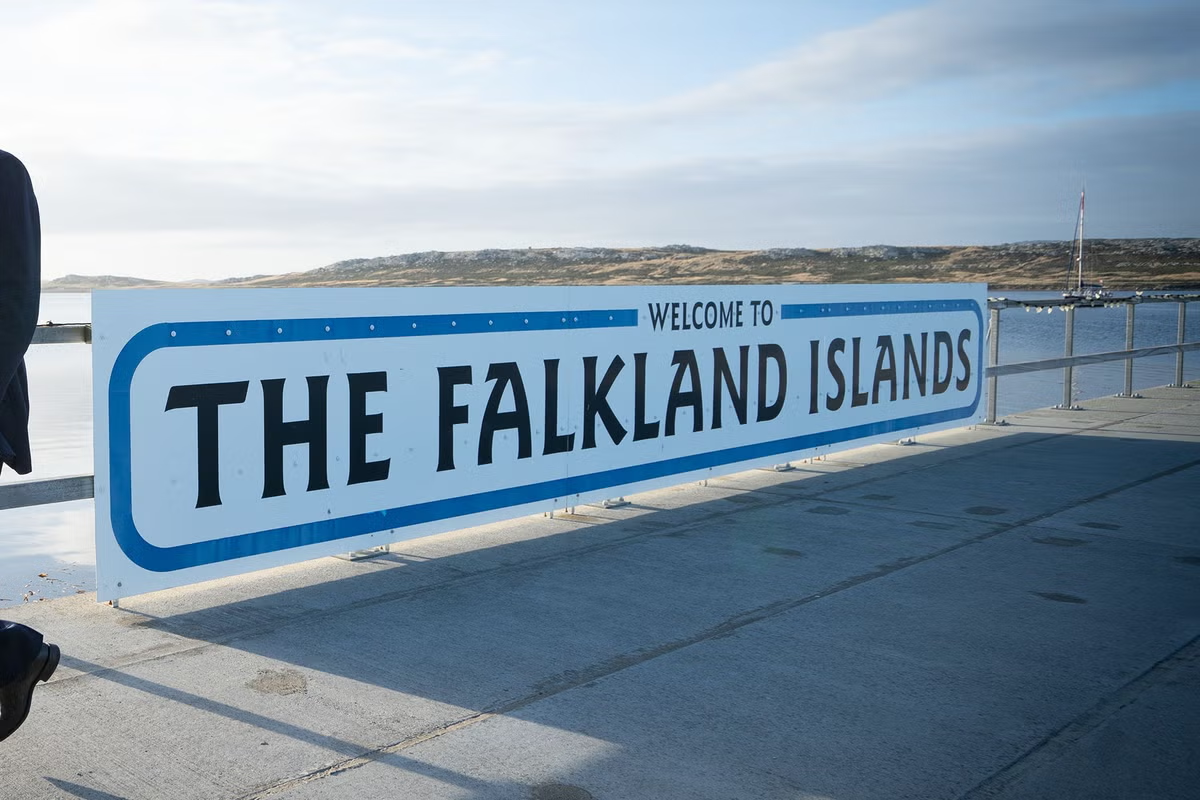
Trump threatens to review UK’s claim to Falkland Islands and punish Nato allies over Iran war disagreement
-

 Business6 days ago
Jeanine Pirro announces closure of Federal Reserve building cost probe
-

 Business4 days ago
(VIDEO) Charlize Theron Climbs Times Square Billboard to Promote New Netflix Thriller ‘Apex’
-

 Tech5 days ago
OpenAI’s Sam Altman apologizes for not reporting ChatGPT account of Tumbler Ridge suspect to police
-

 Tech5 days ago
Microsoft to roll out Entra passkeys on Windows in late April
-

 Crypto World3 days ago
CFTC’s AI will review U.S. crypto registration applications, chairman tells CoinDesk
-
 Crypto World6 days ago
Nvidia (NVDA) Stock Jumps 5% as Intel Earnings Ignite Semiconductor Rally
-
Entertainment7 days ago
Snooki says “Jersey Shore” cast plans to film show 'until we're in a nursing home': 'It's not over for us'
You must be logged in to post a comment Login