
Business
US Study Finds Ages 50 to 64 Drinking More Heavily While Younger Adults Cut Back on Alcohol


NEW YORK — Overall drinking among U.S. adults edged down after 2022, but people ages 50 to 64 kept drinking more — and more of them drank heavily — according to a study in Annals of Internal Medicine.
That band roughly matches Generation X. It was the only age group in the analysis in which drinking continued to rise after the first pandemic years. Adults under 40 were the only group whose rate of heavy drinking fell between 2018 and 2024.
Dr. Brian P. Lee, a hepatologist and liver-transplant specialist at Keck Medicine of USC and the study’s principal investigator, said people in their 50s and early 60s are those who “we were already most worried about health-related risks for alcohol” and where “we are seeing the highest increases in heavy drinking.” “That combination is particularly concerning,” he said.
The share of U.S. adults who drank any alcohol was 66 percent in 2018, rose to 69 percent in 2020 and held there in 2022. By 2024 it was 68 percent — still above the pre-pandemic mark but the first decline since 2018. Heavy drinking, defined as more than 15 drinks a week for men and more than eight for women, went from 5.1 percent of adults in 2018 to 6.1 percent in 2020. It later eased for the country as a whole. In the 50-to-64 group it rose from 5.6 percent in 2018 to 7.7 percent in 2024.
Lee said the leading theory for the pandemic bump was stress. “We saw that with 9/11; we saw that with Hurricane Katrina,” he said.
David Jernigan, a Boston University professor who has studied alcohol policy for decades, said the older cohort “drank a lot in high school, and they have continued to drink a lot. Drinking patterns get set fairly early in life, and the sea change just hasn’t reached that cohort.”
Lee flagged the timing. Alcoholic cirrhosis often appears around age 52, and most alcohol-associated cancers occur at 50 or older, research he cited shows. “Alcohol is a poison for the body,” he said.
Public-health agencies have moved away from the idea that a daily glass of red wine is protective. Jernigan said: “The health halo around alcohol has been largely discredited, and the younger generation, particularly the gen Zers, they seem to be getting that health message that alcohol is actually not good for you.”
Bars feel the split. IWSR, a drinks-industry data firm, said U.S. alcohol consumption fell 5 percent in 2025 from the year before. Venues that once counted on people in their 20s and 30s after midnight are programming earlier nights and 1980s playlists.
Laura Baginski, 51, started Earlybirds Club in 2024 as a dance party for women who have obligations in the morning. Events run 6 to 10 p.m. She said upcoming dates in Boston, Berkeley, California, and Chicago sold out, as did two nights at Washington’s 9:30 Club. “Going out and having a good time is really important for your mental health,” she said. “Alcohol is a part of the experience for a lot of people, especially when they arrive at 6 p.m. and are feeling a little like, ‘I haven’t gone out dancing in so long. I think I need a little liquid courage here.’”
Andrew Bochenek, owner of The Magic Bag in suburban Detroit, said Generation X has shaped his bookings for 30 years. “You would expect that to become less and less and we would try to cycle through the new generations that are coming up,” he said. “But in light of what is happening with gen Z and later millennials not drinking alcohol as much, it’s made us really lean into the gen X crowds.” Alcohol sales at his room are down about 25 percent since 2019. “I don’t think it’s a bad thing that younger adults are not drinking. I just think that for our business model and for others like us, it’s really difficult to maintain that same level of operation when you don’t have the income to support it.”
He is adding nonalcoholic drinks to reach younger customers. Jernigan said mocktails can still margin well if priced like cocktails, and he compared bar-closure fears to smoking-ban predictions that did not empty rooms. “There are lots of ways around this,” he said. “And frankly, the industries are going to have to get used to it because the trend is downward.”
The medical point is narrower than the nightlife story. A national dip in any drinking is not a dip in harm if the heaviest drinkers are older and accumulating years of exposure. Lee’s concern is that combination: rising heavy use in the age band already closest to cirrhosis and alcohol-linked cancer.
The paper does not assign every extra drink in that group to pandemic stress, nor does it prove bars will fail without Generation Z cocktails. It documents a fork: younger adults drinking less, midlife adults drinking more, and a hospitality trade chasing the cohort that still orders.


Earnings call transcript: Synlait H2 2026 loss narrows as turnaround gains pace

S&P 500: Q4 Outlook – Danger And Opportunity (Technical Analysis)
Business
Tigst Assefa Wins Berlin Marathon in Third-Fastest Time Ever, But Late Cramps Cost Her World Record Bid

Tigst Assefa won the Berlin Marathon on Sunday in the third-fastest women’s time in history, but the Ethiopian runner’s bid to reclaim the world record ended in painful fashion after cramps struck in the closing kilometers, forcing her to hobble across the finish line before collapsing in tears.
Assefa, 29, crossed the line in 2 hours, 11 minutes and 4 seconds, setting a new Berlin course record and improving on her own previous personal best of 2:11:53, which she had set at the same race in 2023. The win marked her third Berlin Marathon victory, following earlier titles in 2022 and 2023.
For much of the race, Assefa looked on course to smash the existing world record of 2:09:56, set by Kenya’s Ruth Chepngetich at the 2024 Chicago Marathon, a mark that remains overshadowed by the three-year doping ban Chepngetich received in 2025. Assefa opened aggressively, reaching the 5-kilometer mark in 15:30 and quickly building a commanding lead over the rest of the field, passing 15 kilometers with a full minute’s advantage. She reached halfway in 1:04:57, the third-fastest halfway split ever recorded in a women’s marathon, and remained comfortably inside world-record pace through the 35-kilometer mark, reaching 40 kilometers in 2:03:00.
It was shortly after that point, in the final stretch before the Brandenburg Gate, that Assefa’s race unraveled. The Ethiopian, known throughout the sport for her strong closing speed, instead began showing clear signs of physical distress as cramps set in, dramatically slowing her pace over the race’s final kilometers. She gritted her teeth and limped over the finish line before slumping to the ground, visibly fighting back tears as she was helped away from the course, according to reporting on the race.
Despite the dramatic finish, Assefa’s time still stands as the third-fastest women’s marathon performance in history, and comfortably improved on the 2:15:41 she ran in winning the London Marathon earlier this year, a result that had itself broken her own record for a women’s-only marathon race format. Assefa also holds a silver medal from the women’s marathon at the Paris Olympics two years ago.
Behind Assefa, Ethiopian runners swept the remainder of the women’s podium and beyond, taking all of the top five finishing positions. Bedatu Hirpa finished second in 2:16:53, followed by Dera Dida in 2:16:55, Bekelech Gudeta in 2:18:58 and Alemitu Tariku in 2:19:01.
In the men’s race, fellow Ethiopian Guye Adola, 35, claimed victory in 2:02:50, marking his second Berlin Marathon title following an earlier win in 2021. Gemechu Dida Diriba of Ethiopia finished second in 2:03:19, with Gabriel Gerald Geay of Tanzania placing third in 2:03:59.
The men’s world record holder, Sabastian Sawe, was unable to compete in Sunday’s race due to injury, though he attended the event as a guest of honor. Organizers moved the marathon’s start times earlier in the day than originally planned, a decision made in response to forecasts of high temperatures, following a similarly hot edition of the race the previous year.
Berlin has long served as one of the marathon world’s premier venues for record-breaking performances, owing to its flat, fast course and generally favorable running conditions. The course has produced a steady succession of men’s world records over the past two decades, including multiple records set by Eliud Kipchoge, and Assefa herself set the previous women’s world record on the same course in 2023, before Chepngetich’s subsequent run in Chicago the following year eclipsed that mark.
Sunday’s near-miss adds another dramatic chapter to Assefa’s own history with the Berlin course, a venue where she has now recorded three victories and, in 2023, a world record, even as this year’s race ultimately denied her the chance to reclaim that record given how the cramping affected her final kilometers. Her performance through 40 kilometers, however, offered a clear indication of the pace and ambition she brought into the race, having tracked comfortably inside world-record pace for the overwhelming majority of the 42.2-kilometer distance before the late physical setback intervened.
With Assefa’s world record bid falling just short despite one of the most striking record attempts in recent marathon history, attention within the sport is likely to turn toward whether the Ethiopian will make another attempt at reclaiming the record in a future race, given how close Sunday’s performance came to succeeding before the late cramping derailed what had, for nearly the entire distance, looked like a historic run.

“The Ramsey Show” co-host explains how the Fed’s latest rate hike could affect credit cards, mortgages and savings.
The Federal Reserve’s first interest rate hike in more than three years is likely to increase borrowing costs for many consumers, particularly those carrying variable-rate debt such as credit cards and home equity lines of credit.
Earlier this month, the Fed voted unanimously to raise its benchmark federal funds rate by 25 basis points, lifting its target range from 3.5%-3.75% to 3.75%-4%. The increase marked the central bank’s first rate hike since July 2023 after holding rates steady through its first five meetings of the year.
For consumers, the biggest impact will likely come through higher borrowing costs.
“Borrowing just got a little bit more expensive,” George Kamel, co-host of “The Ramsey Show,” told FOX Business. “… Think, your credit card — instead of 28%, it might be 28.25%. Your mortgage, if you go get a new mortgage today on a fixed rate, it might go from 6% to 6.25%.”
WHY THE FED ISN’T READY TO DECLARE VICTORY ON INFLATION

Kamel said the Fed’s decision primarily affects variable-rate debt, including credit cards. (iStock)
Kamel said the Fed’s decision primarily affects variable-rate debt, including credit cards, home equity lines of credit (HELOCs) and adjustable-rate mortgages once they reset.
Consumers with existing fixed-rate mortgages, auto loans and other fixed-rate debt generally will not see their monthly payments change.
For Americans carrying credit card balances, Kamel said the latest rate hike should serve as another reminder to make paying down high-interest debt a priority.
“Credit cards have some of the highest APRs of any kind of consumer debt, anywhere from 20% all the way up to 30%,” Kamel said. “… Cut up the cards, stop using the cards, don’t add anything more to the balance, and just aggressively try to knock down extra onto the principal until that thing is gone.”
FEDERAL RESERVE HIKES INTEREST RATES FOR FIRST TIME SINCE 2023 AMID STUBBORN INFLATION

Mortgage rates are influenced more by Treasury yields and the bond market than by the federal funds rate, Kamel said. (iStock/Getty Images Plus)
Kamel said he recommends the “debt snowball” strategy, which involves paying off debts from the smallest balance to the largest while making minimum payments on all other accounts.
Mortgage rates are influenced more by Treasury yields and the bond market than by the federal funds rate, Kamel said.
Still, prospective homebuyers could see borrowing costs edge higher.
“It’s not going to be a life-changing amount, but it just makes it a little bit more difficult for those people who are trying to get their foot in the door of homeownership,” he said.
Savers, however, may see a modest benefit. Kamel said banks could gradually raise yields on high-yield savings accounts, allowing consumers to earn more on emergency funds and down payment savings.
WHAT WARSH’S JACKSON HOLE SPEECH SIGNALS ABOUT WHERE INTEREST RATES ARE HEADED

Ultimately, Kamel said consumers should focus on paying down variable-rate debt and building savings rather than worrying about future Fed moves. (FOX Business)
“There is a silver lining to the Fed funds rate hike, and that is high-yield savings accounts could get a boost,” he said.
GET FOX BUSINESS ON THE GO BY CLICKING HERE
Overall, Kamel said consumers should focus on paying down variable-rate debt and building savings rather than worrying about future Fed moves.
“The Fed is going to move rates up and down for the rest of your life,” he said. “Your job is to make sure it doesn’t matter when they do.”
FOX Business’ Eric Revell contributed to this report.

Dell Technologies general counsel sells $2.33m in shares

AVUV's Profitability Screen Has Holes
Business
William and Kate’s Joint Appearance Reads as a Message to Harry and Meghan, Royal Commentator Now Says
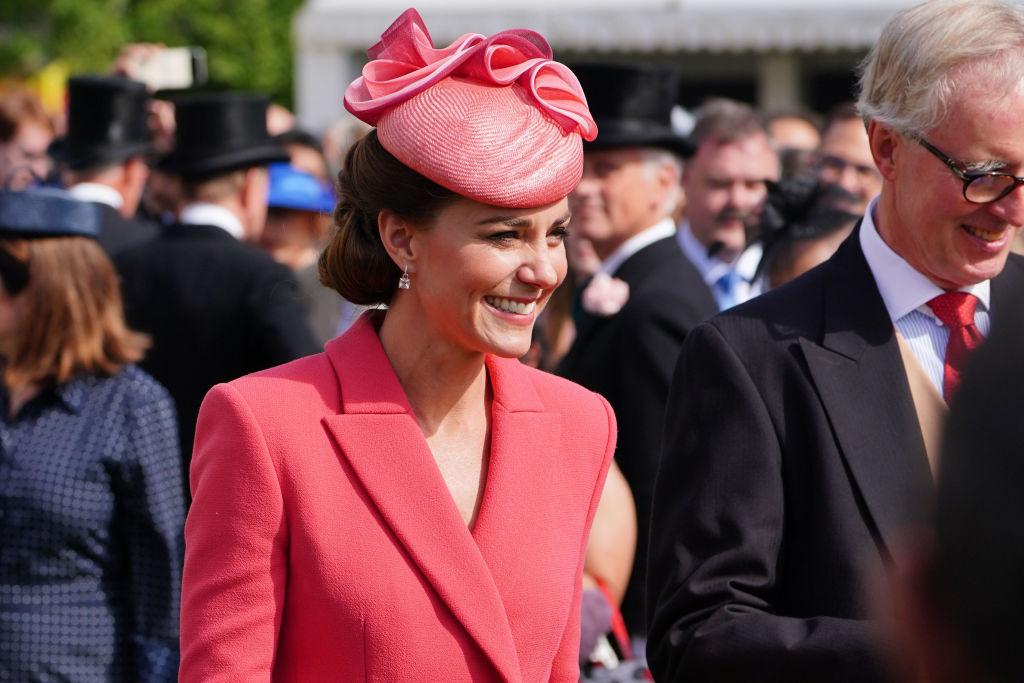
LONDON — Prince William and Catherine, Princess of Wales, carried out their first joint public engagement since the summer break earlier this month, an appearance royal commentator Duncan Larcombe has characterized as a deliberate, strategic signal aimed at Prince Harry and Meghan Markle amid the ongoing tension between the two branches of the royal family.
The confirmed event itself was straightforward: William and Kate visited Everton Football Club’s home in Liverpool to mark World Suicide Prevention Day, an engagement that had reportedly been expected to be a solo outing for William before Kate ultimately joined her husband at the event.
Writing in a feature that first appeared in Woman magazine, Larcombe argued that Kate’s decision to accompany William, rather than allowing the visit to proceed as a solo appearance, carried significance well beyond the engagement’s official purpose. “While to many casual onlookers this may have been interpreted as just another official engagement carried out by the two most popular members of the Royal Family, in reality this was the regal equivalent of flexing their combined muscles in a show of solidarity that sent a message to the Sussexes,” Larcombe wrote.
Larcombe framed the couple’s decision to appear together as part of a broader strategy tied to Harry and Meghan’s return to the United Kingdom in late August. “William and Kate clearly want to ensure they take centre stage as they brace for Harry and Meghan to make their next move,” Larcombe wrote, characterizing Kate’s decision to join the event as, in his words, “throwing down the gauntlet to her brother- and sister-in-law, now that they have returned to the UK.”
It is important to note that this characterization reflects Larcombe’s own interpretation and analysis of the couple’s public behavior, rather than any statement or confirmation from William, Kate, or Kensington Palace regarding their specific intentions behind the joint appearance. Larcombe himself acknowledged this distinction in his piece, noting that “it is often the subtle signs that count for so much when observing the actions and behaviour of members of the Royal Family,” a framing that positions his analysis as informed speculation about symbolic meaning rather than reporting on any confirmed royal strategy.
Larcombe pointed to a further planned engagement as additional evidence for his broader thesis. Kate is rumored to be accompanying William to Mumbai in November for the Earthshot Prize ceremony, a trip that, if confirmed, would mark the couple’s first significant joint overseas official engagement in four years. Larcombe described the rumored trip as “another sign of a strategy that appears to signal the next stage in the war of the Windsors,” continuing his broader framing of the couple’s recent public schedule as a coordinated response to developments involving Harry and Meghan.
Larcombe acknowledged that William and Kate have not made any public statements addressing the yearslong rift with the Sussexes directly. “So far William and Kate have avoided saying anything publicly about the years-long feud with the Sussexes,” he wrote, while maintaining that the couple remained “clearly keen to meet the challenge posed by Harry and Meghan head-on” through their actions rather than their words.
This commentary arrives amid a broader stretch of heightened media attention on the dynamic between the two couples, following Harry and Meghan’s return to Britain in late August after several years based in the United States. That return has prompted extensive speculation across British media about the state of relations between the brothers and their families, much of it, as with Larcombe’s piece, drawing on interpretation of public appearances and scheduling decisions rather than confirmed statements from the family members themselves.
Neither Kensington Palace nor representatives for William and Kate have issued any public comment addressing Larcombe’s specific characterization of the Everton visit or the broader strategic framing he has applied to the couple’s recent and upcoming engagements. As with much of the commentary surrounding the relationship between the Wales and Sussex households, the interpretation offered here reflects one royal commentator’s reading of the situation rather than an account confirmed directly by the family.
With the rumored Mumbai trip for the Earthshot Prize ceremony still to be officially confirmed, and William and Kate continuing to maintain their public silence on the substance of their relationship with Harry and Meghan, further commentary and speculation along these lines is likely to continue circulating in British media in the weeks ahead, even as the underlying facts available to the public remain limited to the couples’ confirmed public schedules rather than any stated intentions behind them.

Medpace Holdings CEO August J. Troendle sells $6.75m in stock


Austin Rogers is a REIT specialist with a professional background in commercial real estate. He writes about high-quality dividend growth stocks with the goal of generating the safest growing passive income stream possible. Since his ideal holding period is “lifelong,” his focus is on portfolio income growth rather than total returns. Austin is a contributing author for the investing group High Yield Landlord, one of the largest real estate investment communities on Seeking Alpha, with thousands of members. It offers exclusive research on the global REIT sector, multiple real money portfolios, an active chat room, and direct access to the analysts. Learn more.
Analyst’s Disclosure: I/we have no stock, option or similar derivative position in any of the companies mentioned, but may initiate a beneficial Long position through a purchase of the stock, or the purchase of call options or similar derivatives in PFFV over the next 72 hours. I wrote this article myself, and it expresses my own opinions. I am not receiving compensation for it (other than from Seeking Alpha). I have no business relationship with any company whose stock is mentioned in this article.
Seeking Alpha’s Disclosure: Past performance is no guarantee of future results. No recommendation or advice is being given as to whether any investment is suitable for a particular investor. Any views or opinions expressed above may not reflect those of Seeking Alpha as a whole. Seeking Alpha is not a licensed securities dealer, broker or US investment adviser or investment bank. Our analysts are third party authors that include both professional investors and individual investors who may not be licensed or certified by any institute or regulatory body.
Business
HYBE Plunges 48.9%, JYP Falls 41.4% as K-pop Stocks Suffer From Heavy Single-Artist Dependence, SM Fares Best

SEOUL — South Korea’s major entertainment companies are enjoying some of the most visible global success in K-pop history, with BTS touring world stages again, Stray Kids filling arenas internationally, and aespa and BABYMONSTER rapidly expanding their overseas fan bases. But in the stock market, the opposite has been true, with shares of the country’s four largest entertainment agencies all declining over the past six months, according to a report published by Chosun Ilbo.
HYBE, the agency behind BTS, has fallen 48.9% over the past six months, the steepest decline among the four major companies. JYP Entertainment, home to Stray Kids, has dropped 41.4% over the same period. YG Entertainment, which manages BLACKPINK, declined 23.3%, while SM Entertainment posted the smallest decline of the group at 9.2%.
Analysts point to a shared underlying problem at both HYBE and JYP: heavy dependence on a single, dominant artist or group. For HYBE, that concentration centers on BTS; for JYP, on Stray Kids. HYBE faces an additional profitability challenge, generating substantial revenue that has not translated into comparable net profit.
According to a report from SK Securities, HYBE’s gross margin fell from 43% in the first quarter of this year to 32% in the second quarter, a period that fully reflected BTS’s world tour. While concert revenue rose sharply during that stretch, artist settlement payments and production costs for the tour rose alongside it, compressing margins. HYBE reported revenue of 2.6499 trillion won last year, but still posted a net loss of 239.8 billion won for the year. Established, long-tenured artists like BTS, now on renewed contracts, typically receive a higher share of revenue through settlement agreements than they did earlier in their careers, meaning the company’s profitability and share price increasingly depend on how well its newer artists perform.
SK Securities analyst Park Jun-hyung lowered his price target on HYBE to 290,000 won, citing the company’s concentrated reliance on a single intellectual property. “High dependency on single IP (BTS) means securing new IP to diversify is essential,” Park said.
Looking at forward price-to-earnings ratios based on projected 2026 earnings and closing prices from September 23, JYP trades at approximately 11.7 times projected earnings, while YG and SM each trade around 15.6 times. HYBE, by contrast, trades at 35.2 times projected earnings, roughly three times JYP’s multiple. A lower forward price-to-earnings ratio is generally associated with a stock being undervalued, though analysts caution that a low ratio can also reflect genuine underlying performance concerns rather than a straightforward buying opportunity.
Sangsangin Securities projects JYP’s revenue this year at 806.6 billion won, with operating profit of 141.3 billion won, representing declines of 1.9% and 9%, respectively, from the prior year. The firm’s analysis indicates JYP’s current performance is effectively being carried by Stray Kids alone, with no clear successor yet established. TWICE faces growing uncertainty around full-group activity, while NMIXX has only just begun its first world tour. Sangsangin Securities analyst Lee Na-ra, in a report titled “Stray Kids Becomes the Breadwinner of JYP,” wrote that “rookie groups like NEXZ and Kick Flip are not yet generating revenue large enough to fill Stray Kids’ gap,” adding that “expanding the scale of lower-tenure IP is urgent.”
SM Entertainment’s relatively smaller decline reflects a more diversified roster, with aespa operating alongside RIIZE, NCT WISH, Hearts2Hearts and other active groups simultaneously, reducing the company’s exposure to any single act’s performance. SM’s concert revenue is projected at 201.0 billion won this year and its merchandise and licensing revenue at 266.4 billion won, both expected to grow next year to 221.7 billion won and 289.3 billion won, respectively. Based on this year’s projected earnings per share of 5,297 won, SM’s forward price-to-earnings ratio stands at approximately 15.6 times at current prices, falling to 12.7 times based on next year’s projected earnings per share of 6,481 won.
An SK Securities analyst covering SM said the company’s push into Western markets through aespa’s recent activity is gradually resolving what had previously been a valuation discount tied to limited Western exposure, adding that a strategic shift toward reducing the proportion of Asian tour dates in favor of expanded arena-level shows across Latin America, North America and Europe, where ticket prices are set higher than in Asia, is expected to contribute to improved profit margins going forward.
YG Entertainment continues to rely heavily on BLACKPINK as its dominant global act, with company performance historically fluctuating significantly based on the group’s activity level. Growth from girl group BABYMONSTER has begun narrowing that dependence in recent periods. YG’s current forward price-to-earnings ratio stands at approximately 15.6 times this year’s projected earnings and 13.4 times next year’s. Daol Investment & Securities analyst Lim Do-young said BABYMONSTER’s continued growth in touring and merchandise sales, combined with the group’s planned Western tour and additional scheduled activity from BIGBANG, leaves room for further upward revisions to next year’s performance projections.
With all four major Korean entertainment stocks declining over the past six months despite what analysts describe as strong underlying artist activity and global fan growth, the sector’s near-term stock performance appears increasingly tied to how successfully each company can diversify beyond its current flagship acts, particularly for HYBE and JYP, whose concentrated dependence on BTS and Stray Kids, respectively, has left their share prices considerably more exposed than SM’s more evenly distributed roster of active groups.

Top 5 Market Catalysts That Could Move Stocks and Crypto This Week

Clearaudio Compact Phono Preamp Supports MM and MC Cartridges in a Pocket-Sized Design

MLB Highlights (Sept. 27)





-
 Fashion2 days ago
Weekend Open Thread: J.McLaughlin – Corporette.com
-

 Crypto World5 days ago
Goldman Sachs and Deutsche Bank Agree: The S&P 500 Rally Isn't Over
-

 Fashion3 days ago
8 iPhone Accessories That Add Personality
-

 Crypto World7 days ago
Who Needs CLARITY Anyway? ARB Could See 70X Increase: Hodler’s Digest
-

 Entertainment5 days ago
These 17 Fall Amazon Dresses Seriously Look Like Anthropologie
-

 Business7 days ago
Analog Devices (ADI) Bets $1.35 Billion on Chips that Let Machines Think for Themselves
-

 Crypto World7 days ago
Coinbase, Robinhood, Circle Seen as Tokenized-Stock Winners
-

 Tech5 days ago
Reolink’s solar 4K security camera falls to its lowest price in months
-

 Crypto World5 days ago
This Bearish Netflix Stock Trade Can Cash In On Video Streaming Giant’s Woes
-

 Crypto World5 days ago
Trump-Xi Polymarket Odds for Handshake Hit 50%
-

 Tech6 days ago
Google’s $899 Googlebook is a bet that you’ll buy a new laptop for Gemini
-

 Crypto World4 days ago
Crude Oil Prices Pressured by Diplomatic Hopes in the Middle East
-
 Business5 days ago
Oil Price Today (September 23): Crude oil below $100 on hopes of US-Iran talks. What did Trump say?
-

 Crypto World4 days ago
Bitcoin price tests $83,600 Supertrend support after $87K rejection
-

 Crypto World4 days ago
Bitcoin Threatens Sub-$84,000 Breakdown as Long Liquidations Spike
-

 Crypto World6 days ago
Meta Jumps 11% As Muse Shines and Investors Show an Appetite for Advancing AI
-

 Crypto World5 days ago
BitGo says Bitcoin absorbed Fed hike, CLARITY failure
-

 Crypto World5 days ago
Did Jim Cramer Just Give GameStop Stock the Kiss of Death When He Said the Turnaround Is Working?
-

 Crypto World7 days ago
Bitcoin price holds above $81K as key catalysts line up
-

 Crypto World7 days ago
ARB Price Signals Spur Speculation of 70x Upside in Hodler Digest
You must be logged in to post a comment Login