




Connect with us
DAPA Banner
DAPA Coin
DAPA
COIN PAYMENT ASSET
PRIVACY · BLOCKDAG · HOMOMORPHIC ENCRYPTION · RUST
ElGamal Encrypted MINE DAPA
🚫 GENESIS SOLD OUT
DAPAPAY COMING

Business

Veradermics: VDPHL01 Looks Promising Enough On Paper

Published

on

Veradermics: VDPHL01 Looks Promising Enough On Paper
Continue Reading
Click to comment

You must be logged in to post a comment Login

Leave a Reply

Business

Performance Marketing for Faster Business Growth

Published

on

Recent years have been characterised by unique events, constant change, and challenging economic conditions. While businesses have become accustomed to operating in an ever-evolving landscape, the start of a new year offers a chance to reflect and look forward.

In the past, how well a business was doing was mostly judged by how much people knew about it. A company bought ad space, showed its message to a large audience, and hoped that this would lead to more sales.

That model is still around, but many digital businesses now need something more direct. They need marketing that can be measured, tested, improved, and connected to revenue.

This is where performance marketing comes in. It looks at specific actions like clicks, leads, registrations, app installs, purchases, deposits, subscriptions, or repeat sales. Instead of asking only how many people saw an advert, the business asks what those people did next.

This approach can help startups, affiliate projects, SaaS companies, eCommerce brands, iGaming products, finance platforms, and mobile apps get better results from their marketing spend. It also helps teams see which channels deserve more budget and which ones should be paused before they become expensive.

It is rare for performance to improve just because of one campaign. It usually comes from tracking, testing, partner traffic, paid acquisition, conversion optimisation, and clear economics. Companies that work with partners like Riddick’s Partners often see performance marketing as more than just advertising. They see it as a way to connect traffic, offers and results that can be measured.

Advertisement

What Performance Marketing Means

Performance marketing is a way of doing marketing where the success of a campaign can be measured. A business can pay for impressions or clicks, but what they’re really interested in is usually something more in-depth, like the cost per lead, the cost per acquisition, the return on ad spend, the lifetime value, the conversion rate, and the retention rate.

This makes the channel useful for growth teams. They can test a campaign, read the data, adjust the funnel, and scale what works. The process is not always quick, but it is more controlled than guessing.

A strong performance strategy usually connects several areas, such as media buying, analytics, creative testing, landing pages, CRM, partner management and product data.

The Role of Data and Tracking

If you don’t track your marketing, it becomes just another kind of advertising. The business needs to know where each user came from, what they clicked on, what action they completed, and whether that action created value.

Advertisement

A proper setup may include UTM tags, pixels, postbacks, event tracking, CRM data, and revenue reports. Some businesses need more than one attempt to make a sale. A lead may look cheap but never buy. A customer who buys something for the first time might buy just the one time and never buy anything else. A traffic source might have fewer users, but these users might spend more money.

That is why growth teams should look beyond surface metrics. Clicks are important, but it’s more important to make money. Registrations are important, but activation and retention are important too.

Testing Creatives, Funnels, and Offers

Performance marketing also speeds up learning. Each campaign can test a small part of the growth system. A team may test:

  • Different headlines and visuals;
  • Landing page layouts;
  • Short vs long forms;
  • GEOs and languages;
  • Device segments;
  • Pricing messages;
  • Traffic sources;
  • Audience groups;
  • Retargeting sequences.

This kind of testing helps businesses avoid making assumptions. Instead of saying “this market doesn’t work”, the team can see if the problem is the creative, the offer, the landing page, or the traffic source.

Better Budget Allocation

One of the best things about performance marketing is that it helps you to stick to your budget. Money is given to campaigns that show they can do a good job.

Advertisement

This doesn’t mean that every test will be profitable. Many tests fail. But a failed test can still be useful if it shows what not to scale. The real danger is not losing money on a controlled test. The real danger is to plan a campaign without understanding the numbers.

Businesses that manage performance well usually define limits before launch. These limits include target CPA, minimum conversion volume, acceptable ROAS, testing budget, and rules for pausing weak segments.

Performance Marketing and Partner Channels

Affiliate and partner channels are a great way to do performance marketing. They allow businesses to work with external traffic sources while paying for actions that can be measured or performance goals that have been agreed upon.

This can help companies enter new markets faster. A partner might already understand a GEO, audience, or vertical that the business has not tested yet. But there are too many people coming to the site. The company should track quality, approve traffic sources, validate conversions, and compare long-term value by partner.

Advertisement

If you manage them well, partner channels can help you to attract more customers without costing you more.

Common Mistakes to Avoid

Performance marketing can help a business grow faster, but only if it is managed carefully. Here are some common mistakes to avoid:

  • Launching without tracking;
  • Judging campaigns only by clicks;
  • Changing settings too often;
  • Testing too many variables at once;
  • Scaling before the funnel is stable.

Another mistake is ignoring retention. If a campaign brings in cheap users who don’t stick around, it might seem like your growth is good for a week, but then it’ll disappear. Strong teams look at how people behave when they first see the advert and afterwards.

Conclusion

Performance marketing helps businesses grow faster because it connects the money spent on marketing with results that can be measured. It lets teams test offers, compare channels, control budgets, and grow based on facts instead of guesses.

You’ll get the best results when you think about performance marketing as a way to help your business grow. All the different parts of a website, like the traffic, creatives, landing pages, tracking, partners, and retention, need to work well together. When they do, businesses can move faster, spend their money more wisely, and build growth that is easier to repeat.

Advertisement

Continue Reading

Business

Cherry industry debuts True Tart certification

Published

on

Cherry industry debuts True Tart certification

True Tart mark clarifies US grown Montmorency tart cherry standards.

Continue Reading

Business

Meghan Markle Returns to UK, Reunites With King Charles at Highgrove for the First Time in Four Years

Published

on

Meghan Markle

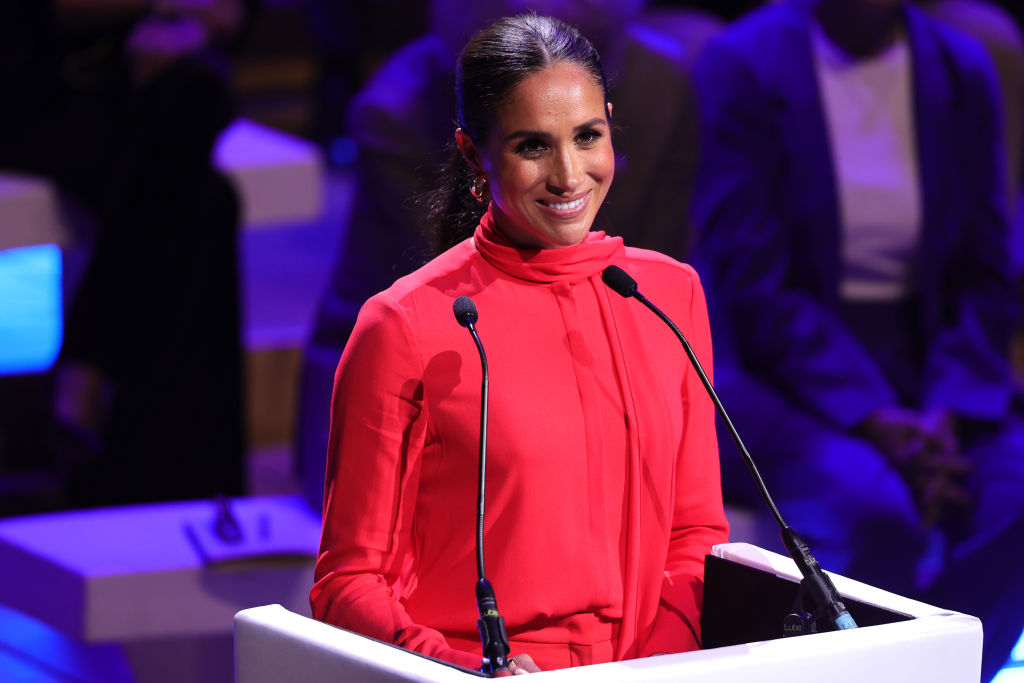
Meghan Markle made her first trip back to the United Kingdom in four years earlier this month, reuniting privately with King Charles III at his Gloucestershire estate alongside Prince Harry and their two children, marking one of the more significant developments in the family’s relationship with the royal household since the couple stepped back from royal duties in 2020.

The Duke and Duchess of Sussex, along with their children, Prince Archie, 7, and Princess Lilibet, 5, met with King Charles and Queen Camilla on Friday, July 10, at Highgrove House, the king’s private country residence in Gloucestershire, west of London. Buckingham Palace confirmed the meeting took place but described it strictly as a private family occasion, saying no photographs or additional details would be released from the visit.

The gathering marked the first time King Charles had seen his grandchildren in person in more than four years. Harry and Meghan had not been in the United Kingdom together since 2022, when they returned for the funeral of Queen Elizabeth II. In the years since, Harry has made several brief solo trips back to Britain, including for his grandmother’s funeral and his father’s coronation in 2023, along with a private tea with the king at Clarence House last September. Friday’s Highgrove meeting, however, represented the first confirmed occasion the full Sussex family had spent time together with the monarch since the couple relocated to Montecito, California.

According to reporting from the U.K.’s PA news agency, the family flew in from an unspecified European destination ahead of the visit, with plans having shifted in the days leading up to the reunion. Meghan had initially been expected to join Harry publicly at an Invictus Games countdown event earlier in the week, but those plans changed, and the family instead prioritized the private gathering at Highgrove. The Sussex family was believed to be staying at Althorp House in West Northamptonshire during their visit, the childhood home of Harry’s late mother, Princess Diana, and the site of her grave, according to reporting from The Mirror.

Advertisement

Notably, Prince William and his family were absent from the Highgrove gathering. According to the BBC, William was taking part in a charity polo match in Windsor at the same time his brother’s family was meeting with the king. There have been no reports indicating any plans for Harry and William to meet during this particular visit, and the relationship between the two brothers has remained visibly strained in the years since Harry and Meghan’s departure from royal life.

The visit came against the backdrop of the upcoming Invictus Games, the international sporting event for wounded, injured and sick service members and veterans that Harry founded in 2014. The Duke of Sussex traveled to London the week prior for a series of charity engagements, including an appearance at Chatham House on July 7 for a conversation on Invictus Games policy, part of the broader “One Year to Go” celebrations ahead of the Invictus Games Birmingham 2027. Reports had circulated for weeks beforehand about whether Meghan and the children might accompany Harry on this trip, with The Telegraph first reporting on July 9 that the Duchess would be traveling to Britain alongside her husband and children.

Security arrangements have remained one of the central complicating factors in any Sussex return to the UK. Harry has previously said it would be “impossible” to bring Meghan and their children to Britain without adequate security protection, a matter that has been the subject of an extended legal and administrative review in recent years. Some royal and security officials were reported to feel a degree of unease ahead of the visit, given ongoing questions about how any public backlash might be managed alongside the practical logistics of protecting the family during their time in the country.

Buckingham Palace has given no indication whether the Highgrove meeting signals the start of broader reconciliation efforts between the Sussexes and other senior royals, characterizing the visit solely as a private family occasion. Questions remain about whether and when Harry might next meet with William, even as the meeting with King Charles was widely viewed by royal commentators as a meaningful step following years of limited contact.

Advertisement

Beyond the royal reunion, Meghan has continued to maintain a public presence through her business and entertainment ventures in the weeks surrounding the UK trip. She is set to appear as a guest judge on MasterChef Australia later this month, with Endemol Shine Australia and Channel 10 confirming she will feature in the show’s July 26 episode. As a guest judge, Meghan will reportedly ask contestants to prepare a dish tied to a personal story, continuing her recent pattern of blending television appearances with themes connected to food and lifestyle content, an area she has increasingly built out through her Netflix series “With Love, Meghan” and her As Ever lifestyle brand.

Meghan’s broader business ventures have also drawn attention in recent months. Her As Ever brand, which sells items including fruit spreads, herbal teas and home goods, reportedly generated significant sales momentum earlier this year, with a website glitch at one point allowing customers to calculate approximate sales figures for the brand’s signature fruit spread. Royal commentators have pointed to that commercial momentum, along with her growing entertainment profile, as context for how Meghan may be approaching any potential return to a more visible public role in the UK going forward.

For now, the Sussex family’s exact plans beyond the Highgrove visit and Meghan’s upcoming MasterChef Australia appearance remain unclear. With the Invictus Games Birmingham set to take place in 2027, royal watchers expect the family’s ties to the UK, and the broader question of their relationship with senior royals, to remain a closely watched storyline in the months ahead, particularly as preparations for the games continue to bring Harry back to Britain on a more regular basis.

Advertisement
Continue Reading

Business

Small business growth expectations hit record low, says FSB

Published

on

Small business growth expectations hit record low, says FSB

Just one in six of Britain’s small businesses expects to grow over the next 12 months, the lowest proportion since records began in 2014, while nearly one in three anticipate shrinking, selling up or closing their doors for good.

The findings, from the Federation of Small Businesses’ quarterly Small Business Index, lay bare the scale of the challenge facing Andy Burnham as he prepares to enter Downing Street on Monday. The lobby group warned the incoming prime minister faces a “huge test” to turn the economy around.

The gap between firms predicting growth and those predicting shrinkage, a sale or closure is now the widest the FSB has recorded. The net balance first turned negative a year ago and has stayed below zero ever since.

For the owners behind the numbers, the culprits are familiar. The survey of 1,113 small business owners and sole traders, conducted in June, found the state of the UK economy, taxes and labour costs were expected to act as the biggest drags on growth over the coming year.

Tina McKenzie, the FSB’s policy chairwoman, said: “We cannot and must not accept a ‘new normal’ where more small firms believe they will shrink, sell up, or close entirely than anticipate growing over the next year. Small firms are the only engine of growth present in each and every postcode and we need them firing on all cylinders.”

Advertisement

The timing hands Burnham an immediate in-tray item. McKenzie said she hoped he would honour his pledge to expand small business rates relief, a live issue for the 104,000 small firms swept into the rates net when April’s revaluation collided with a decade-long threshold freeze.

“The new prime minister’s first budget will be a huge early test of whether he can put small businesses first, drive down costs, and drive up growth, opportunity and jobs, but what is crucial is that this is complemented by every department finally putting growth first and pulling in the same direction,” she said.

The trading picture behind the gloom is stark. Only one in five small companies reported higher takings in the second quarter, significantly outnumbered by the more than half who saw revenues fall.

Costs, meanwhile, keep climbing. Close to nine in ten respondents reported higher running costs than a year earlier, up slightly on the first quarter, with taxation the most-cited reason for the increase.

Advertisement

McKenzie also urged ministers not to let the late payment crackdown now before parliament slip down the agenda, saying the legislation, billed by the government as the largest crackdown on late payments in more than 25 years, “must be prioritised”.

She said she hoped Burnham’s government would recognise that small businesses “suffer just as much as everyone else when a ‘Whitehall knows best’ culture fails to listen to the people delivering growth on the ground”.

For SME owners, the message to the new administration is simple enough: the sector that employs millions across every postcode in Britain is running out of road, and the first budget will show whether anyone in Whitehall is listening.


Jamie Young

Jamie Young

Jamie Young is Senior Reporter at Business Matters, covering SME finance, employment law and Westminster policy since 2016. He has reported on every Budget and Autumn Statement since 2018, helped make sense of the ‘covid era’ and the bounce-back loan scheme from launch through the fraud investigations, and broke the magazine’s coverage of the 2024 late-payment reforms. He joined Business Matters straight from completing his BA in Administration from Exeter University and is NCTJ-qualified. Reach him at jyoung@cbmeg.co.uk

Advertisement

Continue Reading

Business

Pubs boss William Lees-Jones demands support from Andy Burnham as he reveals record results

Published

on

Business Live

JW Lees breaks £100m turnover mark and continues pub investment

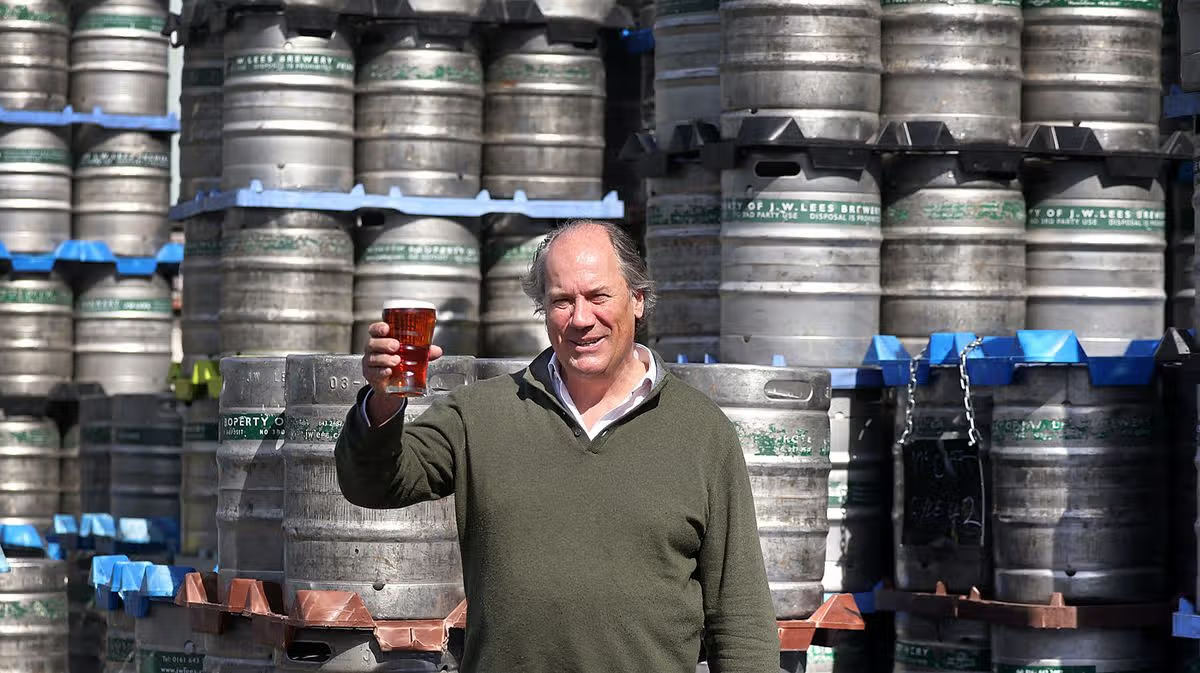
William Lees-Jones at JW Lees Greengate Brewery , Middleton

William Lees-Jones at the JW Lees Greengate Brewery , Middleton(Image: Sean Hansford | Manchester Evening News)

The boss of family pub and brewing group JW Lees says his company has enjoyed a record year despite “little or no useful support from Government” – and says incoming prime minister Andy Burnham must give more support to the hospitality sector.

Managing director William Lees-Jones has announced that JW Lees saw revenues of £105.6m for the year to March 31 – up 5.7% on 2025. That drove pre-tax profit to £8.8m, up on last year’s figure of £7.1m, with EBITDA earnings of £12.3m.

Advertisement

JW Lees operates 138 pubs and is based at its historic brewery home in Middleton. Over the year, the group saw JW Lees core draught beer sales rise 3.7% – with sales boosted by the relaunch of Boddingtons Cask Bitter, which Lees brews under licence from Budweiser.

The group invested more than £10m in its pub and hotel estate over the year, with more than 20 major refurbishments. Since the end of the year JW Lees has bought two new pubs – The Royal Oak in Glossop and the Bull’s Head in Poynton – and is investing in them before reopening them in coming weeks.

JW Lees has also announced that it will bring together its Managed Pubs and Inns & Hotels divisions in April 2027 under the leadership of Chris Moulson as director of operations. Meanwhile Gary Stafford has become director of operations – pub partners and Lee Reeves has become director of people, with both joining the group management board from October.

JW Lees is run by the sixth generation of its founding family. William Lees-Jones has long spoken out for the interests of family businesses, and has led the charge against recent inheritance tax changes.

Advertisement

Earlier this year, he told BusinessLive those changes were an “act of self harm ” that will stop family firms growing. He said: “JW Lees will survive, because we’ll do whatever it takes, but in the short term it means less investment, less job creation, more short-term survival tactics. And that for me is an act of self-harm by a British government at a time when the government was elected on the principle of growth.”

Announcing the latest results, Mr Lees-Jones said: “It’s fantastic for JW Lees to report a record year both in terms of turnover and profitability. The long hot summer of 2025 was a great way to start the year and our teams pulled together to drive higher productivity at JW Lees to new levels.

“Brewing and hospitality are tough sectors right now and we continue to be impacted by above-inflation rises in labour rates, high business rates and little or no useful support from Government. We hope that Andy Burnham can change all that, with more favourable policies to help the hospitality sector which will also create new jobs.

“For family businesses like JW Lees the changes that Rachel Reeves brought in to change Business Property Relief (BPR) have made things even tougher since we are now having to plan for higher levels of inheritance tax for our family shareholders and this will inevitably lead to reduced investment in the business.

Advertisement

“At a time when the UK economy desperately needs growth it seems unfair that the Government has handed competitive advantage to overseas companies and private equity who are not exposed to these costs and this negatively impacts UK family businesses’ ability to invest with family businesses making up more than 50% of all UK private sector jobs.

“JW Lees will do whatever it takes to remain a family company as we approach our 200th anniversary in 2028.”

Continue Reading

Business

NatWest confirms relocation of its Welsh headquarters

Published

on

Business Live

It is moving to the One Central Square building

Siwan Rees, head of NatWest Cardiff Accelerator Hub; Jess Shipman, chair of NatWest Cymru Board; Faye Long, NatWest regional managing director; Gemma Yorke, South Wales business banking & West Wales commercial banking outside One Central Square in Cardiff.

NatWest is relocating its Welsh headquarters to the One Central Square office building in the centre of Cardiff.

Its new home, in a relocation from its existing headquarters in Cardiff at the One Kingsway office scheme, will also house its private banking and wealth management business, Coutts, as well as its business start-up support accelerator hub.

Advertisement

It is taking a floor in the now fully let 136,000 sq ft building that was occupied by law firm Blake Morgan, which remains in the building on a smaller footprint.

Paul Thwaite, chief executive of, NatWest Group, said: “Our investment in a new NatWest Cymru head office is a statement of our confidence and our ongoing commitment to Wales. We have supported Welsh customers for generations and we want to continue to be a partner in its future – with expert teams that understand the needs and ambitions of our customers across the country.

“Backing powerful nations and regions sits at the heart of our growing together strategy. By bringing together the expertise and knowledge of our NatWest Cymru and Coutts colleagues, as well as an expanded asccelerator space, in the centre of Cardiff’s business community, we’re strengthening our ability to support economic growth, unlock opportunity and help power Welsh ambition.”

Jessica Shipman, chair of the NatWest Cymru board, said: “Being based at One Central Square puts us right at the heart of the Welsh economy – so we can back the people, businesses and entrepreneurs driving growth across the nation.

Advertisement

“NatWest has been part of Wales’s story for more than 200 years. While the economy has changed over that time, our role has remained the same – supporting customers, businesses and communities across the country, and helping them succeed.

“We’re proud to open our doors at One Central Square and continue providing services in both Welsh and English, ensuring everyone feels welcome. Our Queen Street branch will remain open as usual for everyday banking.”

The new office will span 7,000 sq ft and provide desk space for up to 70 in addition to a client meeting and event suite.

NatWest ‘s start-up support accelerator hub was previous located in the building, before relocating to One Kingsway. Professional advisory firm PwC recently relocated its Welsh HQ from the One Kingsway building, into One Central Square. It has taken 33,500 sq ft of space vacated by car finance firm Motonovo, for around 400 staff.

Advertisement

Siwan Rees, NatWest accelerator manager, said: “Moving our accelerator hub to One Central Square marks a powerful new chapter for NatWest Cymru and the entrepreneurs we support.

While our journey began years ago in our original Cardiff location, this investment in a new, state-of-the-art space signals our continued belief in the ambition and potential of Welsh business. We are proud to provide a home where the next generation of Welsh entrepreneurs can connect, innovate, and grow – right in the heart of the city.”

Work has now started to refurbish the new offices with NatWest expected to take occupancy in the final quarter of the year.

Cabinet Minister for Enterprise, Connectivity and Energy, Adam Price, said: “A thriving business district in our capital city is essential to Wales’ economic prosperity, and NatWest Cymru’s decision to establish its new Welsh headquarters at One Central Square demonstrates strong confidence in Cardiff’s property market and in Wales as a whole.

Advertisement

“As a newly elected government we are committed to fostering a strong culture of entrepreneurship in Wales, and we share NatWest’s ambition to help entrepreneurs and start-ups build the skills and confidence they need to succeed in a rapidly changing world.”

One Central Square is owned by Middle Eastern investors and asset managed by property advisory firm Knight Frank, who, through its Cardiff office, are also the letting agents.

Continue Reading

Business

MakeMyTrip India files confidential IPO DRHP with Sebi. Check details

Published

on

MakeMyTrip India files confidential IPO DRHP with Sebi. Check details
MakeMyTrip’s India unit has filed confidential papers with market regulator Sebi for a proposed initial public offering on Indian stock exchanges. The company said its wholly owned subsidiary, MakeMyTrip (India) Ltd, has submitted the confidential filing with Sebi, BSE and NSE for a proposed listing on the main board.

The IPO is expected to involve a sale of equity shares in MakeMyTrip India by MakeMyTrip and its wholly owned subsidiary, ibibo Group Holdings (Singapore) Pte Ltd. The Gurugram-headquartered travel company disclosed the plan in a regulatory filing with Nasdaq.

After the proposed IPO, MakeMyTrip India will continue to remain a subsidiary of MakeMyTrip. Its financial results will also continue to be consolidated with those of the parent company.

The company said proceeds received by MakeMyTrip and ibibo Holdings from the sale of shares in MakeMyTrip India will strengthen MakeMyTrip’s cash position. The funds are expected to be used for long-term growth, strategic inorganic initiatives and repurchases of different classes of securities, including convertible securities.

Advertisement

Also read: SBI Funds Management IPO allotment likely today; GMP signals 17% listing premium. Here’s how to check status


MakeMyTrip said it continues to see strong long-term travel demand in India. It said demand is being supported by a growing middle class, rising spending on travel, higher digital adoption and low penetration of organised travel services.
The company also pointed to its scale in the Indian travel market. It has more than 87 million lifetime transacted retail customers and over 77,000 SME and large corporate customers. It also said its app has seen more than 549 million downloads.MakeMyTrip said it has sold more than 32.5 million hotel room nights under its hotels and packages business and more than 104.6 million bus tickets.

The IPO filing comes at a time when India’s travel and tourism market has seen a strong recovery after the pandemic, helped by higher domestic travel, premium leisure demand, business travel and greater use of online booking platforms.

A listing of MakeMyTrip India would give domestic investors a chance to invest directly in one of the country’s largest online travel platforms. The timing, size and other details of the IPO will be known after the regulatory process moves ahead.

(Disclaimer: Recommendations, suggestions, views and opinions given by the experts are their own. These do not represent the views of The Economic Times)

Advertisement
Continue Reading

Business

Andy Burnham: Five headaches for the incoming prime minister

Published

on

Twenty young people from underrepresented communities have completed in July 2026 a nine-month scheme designed to help them secure jobs, apprenticeships and university places.

The social care system in England – which is delivered mainly by independent providers rather than the NHS – is widely perceived as underfunded and unfair.

Public funding is means tested and it is estimated, external that there are two million older people in England now living with some unmet need for social care.

And around 10% of people aged 65 and over face lifetime care costs above £100,000 for their care.

Burnham has himself described it as a “broken” system., external

Advertisement

And , externalhe made an attempt to reform it, external when he was health secretary in Gordon Brown’s cabinet, though his plan was abandoned after Labour lost the 2010 election.

A government-commissioned report by the economist Andrew Dilnot in 2011, external proposed a state-funded cap on lifetime care costs, of around £35,000, meaning no one would be required to pay more than that to fund their own care.

The principle of a state-funded cap was accepted by Conservative ministers, but the Dilnot system was never implemented.

Former Prime Minister Theresa May put a separate plan for a new system of social care support into the 2017 Tory manifesto, which proposed including the value of a person’s home in the means test for care received in an individual’s home – and did not initially mention a cap on lifetime contributions.

Advertisement

This proved controversial because homeowners could have been required to contribute more towards their care costs, external based on the value of their property.

But the former PM was forced to reverse course within days and the proposal was blamed for the loss of the Tory majority in that election.

Labour’s 2024 manifesto, external pledged a new “national care service”.

But Starmer kicked the reform can down the road when he became PM and commissioned Baroness Casey to produce a review on options for reform, external, instructing her to deliver her final report by 2028.

Advertisement

Burnham has suggested he will ask Baroness Casey to report back sooner – by the end of 2026 – and could choose to implement her recommendations.

But any reform is likely to cost money, likely billions of pounds a year.

In the past, Burnham has suggested changing inheritance tax to pay for social care reform, external, floating the idea of a 10% levy on all estates.

However, polling frequently suggests inheritance tax is widely regarded as the least fair tax, external. It should be said more recently he has said he is open to getting rid of inheritance tax completely, external and instead moving to tax “the wealthy properly while they are alive”.

Advertisement

Continue Reading

Business

Why is Nebius stock rallying today?

Published

on


Why is Nebius stock rallying today?

Continue Reading

Business

Major contract win for one of Wales’ tech firms IQE

Published

on

Business Live

On the back of the $14m contract broker Panmure Liberum has upgraded its recommendation on IQE shares from hold to buy

IQE

IQE

One of Wales’ leading technology firms, IQE, has secured a multi-year production order valued at $14 million from a strategic global technology customer.

The order, which is to be manufactured at IQE’s Newport foundry, supports applications serving AI and datacentre markets, where increasing data generation and hyperscale infrastructure requirements are driving demand for high-performance storage technologies.

Advertisement

In addition to the production order with the new undisclosed client, IQE said it continues to engage with the customer on future opportunities, including the development of next-generation technologies supporting multiple stages of the customer’s data lifecycle.

The Alternative Investment Market listed business is leading global supplier of compound semiconductor wafer products and advanced material solutions.

Its chief executive Jutta Meier said: “We are pleased to have secured this production order with a strategic global technology leader, supporting the rapid growth of AI and datacentre markets from IQE’s volume manufacturing facility at Newport and expected to build over the coming years.

“This highlights the role IQE plays supporting high-performance infrastructure from the datacentre to the edge, enabled by our differentiated epitaxy portfolio, which also includes indium phosphide optical communications, silicon photonics and gallium arsenide vertical-cavity surface emitting laser-datacom applications.”

Advertisement

Earlier this year IQE was boosted with £81m funding package which included a £30m investment by US semiconducter manufacturer MACOM Technologies Solutions. MACOM is supporting the company with a further £15m in convertible loan notes . The US business, which has become a minority shareholder ,remains a long-term client of IQE

On the back of the latest deal broker Panmure Liberum has upgraded its hold recommendation on IQE to a buy position, with a share target price of 50p.

In a note it said: “We upgrade IQE to buy to take advantage of the pullback in the shares. The recent significant investment, with MACOM becoming a strategic investor, has bolstered its balance sheet, the strongest it has been for years. MACOM is a long-term lead customer. Following on from the MACOM long-term agreement, Tower Semiconductor signed another one in June.

“We would expect to see further long-term agreements signed, which would further build through cycle capacity utilisation, driving higher margins and cash generation. IQE is now well placed to engage the AI, space and defence themes. Generating positive margins and cash flow through the cycle is materially more likely now.”

Advertisement

Following the MACOM investment its executives Robert Dennehy and David O’ Carroll have joined the board of IQE as non-executives.

Mr Dennehy has more than 30 years of experience at MACOM and since last November has been its senior vice president and chief operating officer.

Mr O’ Carroll over has more than 10 years of experience with MACOM, with particular expertise in international operations, finance, and government relations across Europe and Asia. He has served as MACOM’s vice president since October 2023, managing facilities in France, Japan and Ireland and overseeing MACOM’s Asian operations.

Mark Cubitt, chairman of IQE, said: “I am delighted to welcome Robert and David to the board of IQE. I look forward to working with them and the rest of the Board as we capitalise on the opportunities ahead for the company.”

Advertisement
Continue Reading

Trending

Copyright © 2025