
Business
Vibe coding, parasocial and Rickroll officially added to dictionary


‘The Big Money Show’ panel discusses ‘Landmaxxing,’ a new real estate trend where billionaires purchase entire blocks of neighboring homes to create massive private compounds.
From “vibe coding” to “trash panda,” the internet has officially talked its way into the dictionary.
Merriam-Webster has added 1,400 new words and definitions to its online catalog, giving a digital-age “glow-up” to the language and official recognition to an internet-fueled mix that also includes “looksmaxxing,” “parasocial” and “Rickroll.”
The publisher said the new entries reflect terms and meanings that have demonstrated widespread use over time, offering what it called “a window into the world today.”
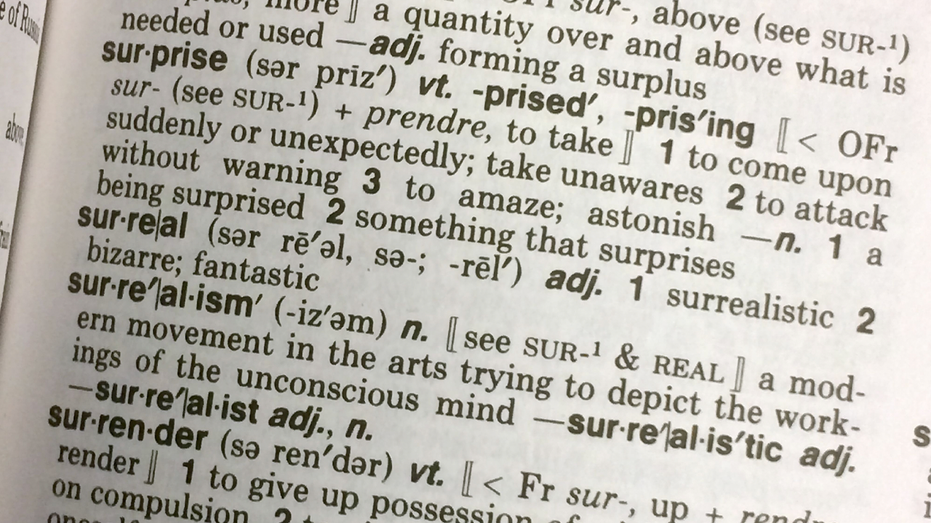
Words and definitions appear on a printed dictionary page in a file image. Merriam-Webster said new entries must demonstrate widespread use over time. (Karen Bleier/AFP via Getty Images / Getty Images)
Merriam-Webster pointed to social media culture as a driving force behind a number of the additions. “Looksmaxxing,” a term tied to efforts to improve one’s physical appearance, made the cut alongside “parasocial,” which commonly describes a one-sided connection someone feels toward a public figure or media personality.
Merriam-Webster also welcomed “meme coin,” “promposal” and “Rickroll,” the internet prank that redirects an unsuspecting user to Rick Astley’s 1987 music video for “Never Gonna Give You Up.”
NEW YORK MAKES HISTORY WITH FIRST-OF-ITS-KIND LAW REGULATING AI-POWERED COMMERCIALS

Several AI applications can be seen on a smartphone screen, including ChatGPT, Claude, Gemini, Perplexity, Microsoft Copilot, Meta AI, Grok and DeepSeek. (Philip Dulian/dpa/Getty Images / Getty Images)
Artificial intelligence left a major imprint on the update, with “vibe coding,” “AGI” and a new noun form of “compute” joining the dictionary.
The publisher also added “uncanny valley,” the unsettling feeling sparked by something artificial that appears nearly human, but not quite.
The additions stretch well beyond screens and Silicon Valley.
Food-related newcomers include “superfood,” “cake pop,” “shishito,” “bao” and “chili crisp.” The relationship term “cuffing season” also earned a spot, defined as a time when single people seek short-term romantic partners for the colder months.
VIRAL RACCOON JIMOTHY GETS HIS OWN MLB THEME NIGHT AS SEATTLE MARINERS EMBRACE THE TREND

The Merriam-Webster logo is displayed on a smartphone. The publisher added 1,400 new words and definitions to its online dictionary. (Thomas Fuller/SOPA Images/LightRocket via Getty Images / Getty Images)
Other entries capture the mood of modern life, including “Sunday scaries,” “crashout,” “copium,” “California sober” and “yacht rock.” “Shapewear” and “neckbeard” were also added, while “letterboxing” received a new digital meaning.
The list even includes the “Mandela Effect,” a term for a shared false memory, and “trash panda,” a playful name for a raccoon.

The one-of-one gold Jimothy rookie card pulled by 13-year-old Mariners fan Abby sold for $21,100 after attracting 100 bids on eBay. (oscar_j104 via eBay / Fox News)
Merriam-Webster said words are not added simply because they suddenly go viral. Its editors look for sustained, widespread use before an entry is granted a place in the dictionary.
The sweeping update comes just months before Merriam-Webster is expected to announce its 2026 Word of the Year.
THE AI YOU USE EVERY DAY IS BIASED — AND IT’S QUIETLY SHAPING YOUR WORLDVIEW, NEW REPORT SAYS
In 2025, the publisher selected “slop,” defining it as “digital content of low quality that is produced usually in quantity by means of artificial intelligence.”
“The flood of slop in 2025 included absurd videos, off-kilter advertising images, cheesy propaganda, fake news that looks pretty real, junky AI-written books, ‘workslop’ reports that waste coworkers’ time … and lots of talking cats,” Merriam-Webster said at the time. “People found it annoying, and people ate it up.”
CLICK HERE TO DOWNLOAD THE FOX NEWS APP
Other terms highlighted by the publisher in 2025 included “gerrymander,” “touch grass,” “performative,” “tariff,” “six seven” and “conclave.”

Business
Anthony Albanese Formally Launches Australia’s Bid for UN Security Council Seat with Focus on AI Regulation and Pacific Security
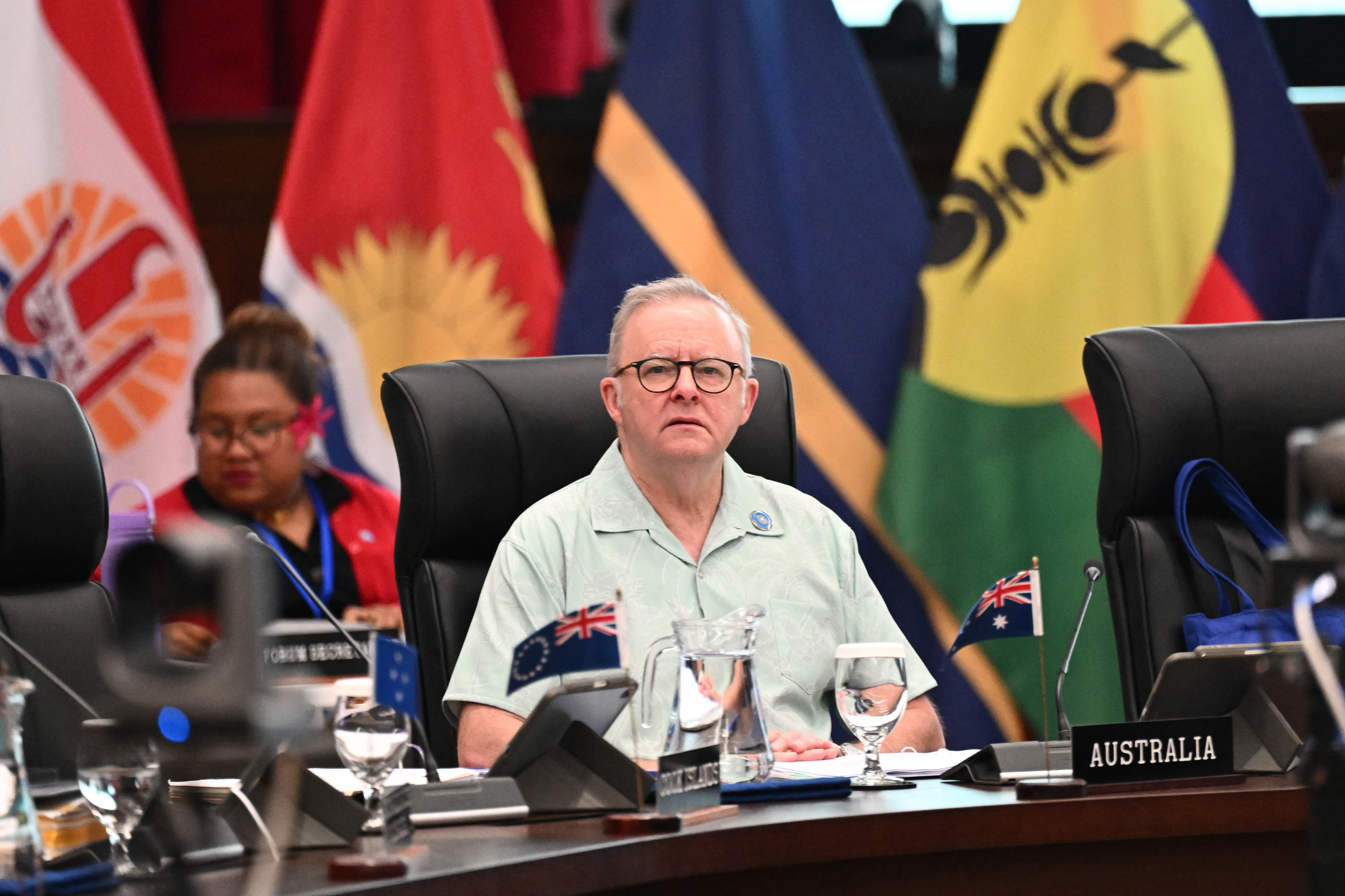
CANBERRA, Australia — Australia UN Security Council Seat Bid Anthony Albanese initiatives have reached a key international milestone as the Commonwealth officially opens its diplomatic campaign for a non-permanent seat on the United Nations Security Council for the 2029–2030 term.
Prime Minister Anthony Albanese formally launched the multi-year campaign while attending high-level diplomatic meetings at the United Nations General Assembly in New York. Addressing delegates and international media, the Prime Minister outlined Australia’s strategic vision, emphasizing that Canberra will leverage the influential multilateral platform to champion global artificial intelligence guardrails, child internet safety regulations, and targeted climate resilience for Pacific island nations. Marking Australia’s first bid for a Security Council mandate since its 2013–2014 term, candidate countries are required to assemble a robust two-thirds secret ballot majority—representing at least 129 votes from the 193 UN member states—when formal elections take place in New York in June 2028. Senior Australian foreign affairs strategists view the non-permanent seat as an essential diplomatic mechanism to amplify Indo-Pacific security priorities, safeguard sovereign trade corridors, and reinforce multilateral rules-based international law amid intensifying major-power friction.
Diplomatic analysts note that securing direct representation on the UN’s highest executive body equips capable middle powers with vital legislative leverage to shape crisis response protocols, international sanctions, and binding global regulatory standards.
Key Campaign Priorities: Global AI Regulation, Digital Safety, and Pacific Climate Action
The Australian diplomatic campaign anchors its election platform on three core policy pillars designed to assemble broad consensus across diverse UN voting blocs.
First, Australia is actively positioning its domestic legislative achievements—including world-first social media age limits and mandatory ethical guardrails for frontier AI deployment—as a global model for digital safety governance. Speaking at the launch, Anthony Albanese emphasized that managing emerging technological risks requires immediate multilateral coordination. Second, the Labor government is highlighting climate change as an immediate existential security threat to Pacific island states, pledging to serve as a committed regional advocate for climate adaptation funding on the world stage. Third, Canberra stresses the vital necessity of preventative middle-power diplomacy and conflict mitigation, aiming to bridge ideological divides between major Western allies and developing countries across the Global South.
The comprehensive campaign reflects Australia’s intent to project constructivist influence beyond traditional military partnerships into global technology and environmental policy.
Technology Governance: Advocating for enforceable international standards on artificial intelligence guardrails, cyber threat mitigation, and algorithm transparency.
Pacific Climate Advocacy: Elevating regional vulnerability frameworks and environmental security priorities for Pacific Island Forum member states.
Diplomatic Outreach: Engaging voting delegations across ASEAN, Latin America, and Africa ahead of the June 2028 secret ballot.
Historical Track Record: Leveraging Australia’s previous 2013–2014 UN Security Council tenure to demonstrate pragmatic crisis management leadership.
Securing a seat establishes Australia as an active contributor to binding global security decisions directly affecting the Indo-Pacific region.
The Voting Threshold: Navigating WEOG Dynamics and Assembly Balloting
The primary electoral benchmark determining Australia’s campaign success is securing two-thirds voting support across the 193-member General Assembly.
Operating within the Western European and Others Group (WEOG) regional voting bloc, Australia must sustain extensive bilateral diplomatic engagement leading up to 2028 to assemble the mandatory 129-vote threshold. Even in un-contested slating scenarios alongside regional candidates such as Finland, candidate states face rigorous secret ballot scrutiny, requiring Department of Foreign Affairs and Trade (DFAT) envoys to maintain continuous lobbying efforts across non-aligned nations. Official diplomatic delegations have already initiated structured briefings to highlight Australia’s historic contributions to international peacekeeping operations, multilateral trade oversight, and humanitarian assistance.
Achieving broad international consensus across global voting blocs remains essential to ensuring Australia successfully clears the two-thirds electoral margin.
Campaign teams face a demanding multi-year diplomatic itinerary to lock in formal voting commitments ahead of the 2028 ballot in New York.
Strategic Impact on Middle-Power Influence and Regional Security
Establishing a non-permanent Security Council presence represents a critical component of Australia’s long-term strategy to safeguard Indo-Pacific stability.
While Australia continues to strengthen core defense partnerships through AUKUS and Five Eyes, direct seat tenure on the UN Security Council allows Canberra to independently champion rules-based maritime order, unhindered commercial navigation, and small-state sovereignty. Direct participation on the council grants Australian negotiators early access to resolution drafting, sanctions committee monitoring, and international peacekeeping mandate formulation. Furthermore, elevating digital safety and AI risks to Security Council discussions ensures that rapidly evolving technological threats are integrated into primary conflict prevention frameworks.
Following the formal campaign launch, Australian diplomatic envoys will launch structured briefings with voting delegations across Europe, Africa, and Asia to build sustained momentum.
Autonomous diplomatic access ensures Australia retains a direct voice in high-level multilateral decisions shaping international economic and security architecture.
Expanding Australia’s Multilateral Security and Economic Footprint
The multi-year campaign reinforces Australia’s broader commitment to maintaining an active, principled, and highly engaged foreign policy footprint.
By investing heavily in global multilateral institutions, the Australian government protects its national security interests while opening new avenues for strategic trade, intelligence exchange, and climate partnership. The specialized capabilities highlighted during the campaign—spanning cyber resilience, technology regulation, and maritime domain awareness—will generate valuable diplomatic dividends across key regional bodies like ASEAN and the Pacific Islands Forum. Furthermore, holding a direct voting seat on the UN Security Council helps insulate Australian trade routes and economic stability against unexpected global geopolitical shocks.
The ongoing bid for a Security Council seat underscores Australia’s evolution into a proactive, policy-driven middle-power leader on the international stage.
Sustained engagement in international institutions remains a cornerstone of Australia’s foreign policy framework, ensuring national security priorities are reflected in global governance.

Behind the strategy are attractive valuations and the potential to profit from carry trades, where investors borrow in low-yielding currencies to invest in higher-yielding assets.
Read more: JioBlackRock CIO Rishi Kohli decodes Nifty’s inflection point after two years of weak returns
On Friday, US Treasury yields experienced an upward movement as investors expressed concerns regarding inflation. The Federal Reserve’s recent increases in interest rates and indications of more hikes in the future contribute to this shift. With traders predicting additional adjustments in upcoming meetings, there is a growing focus on global central banks tightening their monetary policies to address escalating price pressures.
The preference is showing up in fund flows, positioning and relative performance. A Bloomberg gauge of domestic EM debt has beaten an index of dollar-denominated bonds by more than 3 percentage points since the end of June, set for the biggest quarterly outperformance since 2022.
Fund managers are leaning into that divergence too. A Bank of America Corp. survey of 38 global fixed-income fund managers overseeing $444 billion in combined assets showed that 84% of the respondents were overweight local EM debt relative to hard currency bonds, versus just 38% in August. The poll was conducted between Sept 4 and 9.

Read more: Will Nifty extend gains to 4th session on Monday? US sanctions on Russia among factors to decide D-Street action
The trade could still be tested after the Federal Reserve raised interest rates and signaled it may do so again. A renewed advance in the dollar could turn investors away from emerging-market assets such as local-currency debt.

Europe faces Q4 jet fuel supply deficit even as South Korea becomes latest big supplier

ICE agent wounds man in Austin, Texas, shooting, city officials say

Australia’s Telix agrees to buy Germany’s ITM Isotope for $1.65 bln
Business
Still Working at 73? The IRS Lets You Skip RMDs on Your Current Employer’s 401(k) but Not on the IRA You Rolled Your Last One Into

Quick Read
-
Still-working employees past 73 can defer 401(k) RMDs until retirement, but rollover IRAs and old employer plans must pay out starting at 73.
-
A $680,000 rollover IRA triggers roughly $25,660 in taxable withdrawals in 2026, while a current employer’s $410,000 401(k) keeps compounding untouched.
-
Owning more than 5% of the sponsoring business kills the exception entirely, and family attribution rules count shares held by a spouse or child.
-
Two retirees, same $1 million, same 4% rule, buy one finished with $1.4 million, the other hit $0 in 12 years. Our free reader guide explains the flaw that separated them, and the income-first method built to avoid it.
You turned 73 in 2026, you’re still on payroll, and your HR benefits portal shows a healthy 401(k) balance. Good news: the IRS says you can leave that account alone. The traditional IRA you built by rolling over a 401(k) from the job you left in 2019? Different story. That one has to start paying out.

The rule doing the work here is the still-working exception to required minimum distributions. It lives in the tax code at Section 401(a)(9)(C) and it applies only to the qualified plan of the employer you currently work for. Not the IRA down the hall. Not the 401(k) at the last place. Just the one tied to the W-2 you’re still collecting.
How the Exception Actually Works
Normally, the year you hit age 73, the IRS forces you to start pulling money out of tax-deferred accounts on a schedule set by the Uniform Lifetime Table. Miss a distribution and the penalty is 25% of the amount you should have taken, reducible to 10% if you correct it promptly.
The still-working exception carves out one narrow reprieve. If you’re employed by the company sponsoring the plan on December 31 of the distribution year, and the plan document allows it (most do, but confirm), you can defer RMDs from that specific 401(k) until April 1 of the year after you actually retire.
The 4% Rule is Broken, Built On A World That No Longer Exists
Every retiree knows about the 4% rule, but it frames retirement as a slow liquidation and still causes retirees with seven-figure accounts to agonize over a dinner out.
There’s a different way to run the math that makes more sense today. Build an income floor — dividends, interest, and Social Security that cover your essential bills every month — and you never have to sell shares into a down market just to pay them.
Our free reader guide, The 4% Rule Is Broken, walks through it in about 15 minutes. Access the report here.

On September 9, 2026, Analog Devices, Inc. (NASDAQ:ADI) agreed to acquire privately held Alif Semiconductor for $1.35 billion in cash, with up to $200 million in additional contingent payments. It adds Alif’s low-power, AI-native microcontrollers and fusion processors to ADI’s portfolio of sensing, signal-processing and power-management technology. ADI CEO Vincent Roche described the deal as advancing “Physical Intelligence,” letting systems sense, reason and act locally in real time. The acquisition is expected to close by the end of 2026 pending U.S. antitrust review.

Bull Case
Alif gives Analog Devices, Inc. (NASDAQ:ADI) a direct foothold in the fast-growing edge-AI market. Alif’s AI-native microcontrollers and fusion processors support low-latency inference, sensor fusion, and on-device AI. It allows systems to process information locally rather than relying entirely on the cloud. The acquisition also expands ADI’s addressable market across industrial, data-center infrastructure, defense, energy, robotics, digital health and wearable applications.
ADI is acquiring technology that already has commercial traction. Alif’s silicon already ships in production and has design wins with leading consumer and industrial customers. It gives ADI an established platform rather than an early-stage technology project. ADI can combine Alif’s digital processing capabilities with its own sensing, signal-processing, power, connectivity and software technologies to offer more complete system solutions.
The acquisition fits ADI’s push into AI while the core business makes strong cash flow. ADI completed its $1.5 billion Empower Semiconductor acquisition in July to strengthen power delivery for AI computing, while third-quarter revenue reached a record $4.02 billion, up 40% year over year, and trailing 12-month free cash flow reached $4.94 billion. The Alif deal therefore adds edge intelligence to an AI strategy while ADI retains substantial financial capacity to fund acquisitions and shareholder returns.
Bear Case
Analog Devices, Inc. (NASDAQ:ADI) must make enough returns to justify the $1.35 billion upfront price. The firm will pay $1.35 billion in cash at closing and could pay another $200 million in contingent consideration. It takes the potential consideration to $1.55 billion. ADI therefore needs Alif’s technology, customer wins, and expanded addressable market to turn into real revenue and earnings growth rather than simply adding another promising technology platform to its portfolio.
Yes. Corporate subscriptions are available for teams and organisations, with discounted rates as user numbers increase. Pricing starts from $1,625 + GST per user.
Get in touch
to discuss the right option for your organisation.
Business News subscriptions are used by executives, investors, consultants and professionals who need to stay informed and make better decisions about the WA market. When you subscribe you’ll get
- Unlimited access to WA’s most trusted business journalism
- Data & Insights — detailed profiles of WA companies, people, projects and deals
- MyBN — a personalised feed based on the companies, people and sectors you follow
- Special publications and industry reports
- Daily and weekly email newsletters
Data & Insights is a research tool built specifically for the WA market. It draws on more than 30 years of Business News reporting, updated regularly to reflect what’s happening now. Use it to:
- Look up detailed profiles of WA companies, including financials, directors and ownership
- Find decision-makers and track their career movements
- Research live and completed projects across WA industries
- Monitor deals, appointments and market activity
- Access industry rankings and league tables
Data & Insights is updated daily by our dedicated research team, which uses the latest announcements, ASX filings and editorial coverage to keep our person, company, list and project records up to date.
Business News welcome all opportunities to make our dataset accurate, complete and current, so if you have an update request, please email the team at
general@businessnews.com.au, and we’d be happy to assist.
MyBN
is part of every subscription. It’s your personalised view of Business News. You can follow the companies, people, sectors and projects that matter to you, and get a news feed and alerts tailored to your interests. You can save articles to read later and retain only what you need.
Only subscribers have full access to all content on the Business News website.
If staying informed about the WA economy is part of your job, and/or you’re looking for networking opportunities in WA, Business News is built for you.
Business News subscribers are:
- Executives and directors tracking competitors, clients and market movements
- Investors and advisers researching companies, deals and industry trends
- Consultants and professionals staying across sectors relevant to their clients
- Business owners looking for leads, context and market intelligence
Most Business News publications cover national or global markets. Business News is focused entirely on Western Australia, which means the journalism, the data and the intelligence are all built around WA companies, people and projects — not adapted from a national feed. Data & Insights, included with every subscription, combines more than 30 years of WA-specific editorial research with live business data. There’s no comparable product for the WA market.
The Morning Digest Email provides a comprehensive wrap of the major headlines, relevant to WA business, and includes with a snapshot of the overnight news covering oil, gold and ASX-listed companies.
The Afternoon Wrap Email focuses on the news covered by our team of journalists during the course of the working day, including exclusive stories and analysis, all of which relates to WA business and the local economy.
The BN Weekender Email contains a wrap of the Business News from the week that was, highlighting the top stories in each area of WA business.
Sign up for free.
We’re happy to help.
Get in touch
and our team will come back to you.

You should aim to take in about 1,500-2,500ml of fluid a day, whatever the weather, says McManamon.
This can obviously come from bottled water, but also from what she describes as fluid rich tinned foods if supplies are short.
For those worried about whether tinned food is as nutritious as fresh food, Dr Gill says it absolutely can be used as part of a healthy diet.
“There is little difference nutritionally between canned and fresh food in terms of macronutrients, like carbohydrates, protein, fats, and fibre, as well as fat-soluble vitamins, like vitamin A and E, and minerals,” she says.
It may not be as good for other vitamins, such as B and C, because the canning process has been found to decrease vitamin levels, but Gill offers assurances that these foods can still be a “useful source” of vitamins.

Fitch Ratings has revised Thailand’s sovereign outlook to Stable from Negative, while affirming the country’s BBB+ long-term foreign- and local-currency ratings. The move, announced on September 19, means Thailand now has a Stable outlook from all three major international rating agencies, following Moody’s revision in April and S&P Global’s existing Stable assessment.
Key points
- Fitch changed Thailand’s outlook to Stable from Negative, affirming the BBB+ sovereign rating.
- Public debt is forecast to stabilise below 63% of GDP by FY2028.
- Fitch expects 2.3% GDP growth in 2026 and a return to a 1.5% current-account surplus by 2027.
Fitch’s decision reflects greater confidence that Thailand’s public debt will stabilise over the medium term and that political conditions have become more predictable following this year’s election. The agency also highlighted Thailand’s strong external financial position and the government’s ability to implement a medium-term fiscal framework under the current administration.
The fiscal outlook has improved modestly. Fitch now expects public debt to stabilise at below 63% of GDP by fiscal 2028, compared with its previous projection of around 65%, while the current-account surplus is forecast to return to 1.5% of GDP by 2027. The agency expects Thailand’s economy to expand 2.3% in 2026, supported by domestic consumption and investment linked to artificial intelligence.
The upgrade does not remove Thailand’s structural weaknesses. Growth remains relatively modest, household debt remains high and the country continues to face productivity and demographic constraints. But the improved outlook should reduce one source of uncertainty for investors as Bangkok attempts to attract capital into data centres, AI, advanced manufacturing and clean-energy infrastructure.
The development is particularly relevant for the cost of government and corporate financing. Thailand’s government debt is predominantly denominated in baht and held domestically, limiting exposure to currency shocks, while a stable sovereign outlook can help support investor confidence in Thai bonds and other local assets.
Why it matters: The Stable outlook gives Thailand a stronger macro-financial foundation as it competes for investment. It is not a growth upgrade, but it reduces perceived sovereign risk and strengthens the government’s case that fiscal discipline and political stability can coexist with targeted investment support.

AI robots could follow dangerous instructions, study warns

Brad Pitt is mobbed by fans as he arrives at San Sebastian Film Festival in Spain as friends reveal how marriage to Angelina Jolie sent his life ‘spiraling’

Anthony Albanese Formally Launches Australia’s Bid for UN Security Council Seat with Focus on AI Regulation and Pacific Security




-

 Fashion2 days ago
Weekend Open Thread: Talbots – Corporette.com
-

 Crypto World2 days ago
Circle launches Arc Studio AI agent for building onchain apps
-

 Crypto World6 days ago
Revolut Attackers Warn of Ongoing Daily Customer Data Leaks
-
 NewsBeat2 days ago
Trump says US has reached an agreement to take permanent control of Greenland’s security
-

 Crypto World6 days ago
Kraken Lets xStocks Holders Earn Yield Through DeFi
-

 Crypto World5 days ago
Robinhood engineers charged over $50K crypto scheme
-

 Crypto World5 days ago
What Is the Status of the U.S.-Iran Peace Talks? Here's What Both Sides Are Saying
-

 Crypto World4 days ago
US Charges Robinhood Engineers Over Crypto Listing Trades
-

 Crypto World2 days ago
Bitcoin price breaks channel as RSI climbs to 63
-

 Crypto World6 days ago
Elon Musk Drops a Bombshell: Grok 5 Could Be the AGI Breakthrough
-
 NewsBeat6 days ago
‘Sick conspiracy’: Trump says only guardrails AI needs is ‘a strong and smart (High IQ!) president’ in all-caps rant
-
 Crypto World6 days ago
NVIDIA Analysis: Attempted Rising Wedge Breakout Amid Pressure on the AI Sector
-
Business6 days ago
SK Hynix ADRs Fall More Than 6% as Memory Rally Breaks on Fears of Slower AI Spending
-
 Crypto World7 days ago
3 Token Unlocks to Watch in the Third Week of September 2026
-

 Tech5 days ago
Webb’s IC 348 Mosaic Includes Two-Jupiter Dwarfs, Twin Jets, and a Nursery Still Making Worlds
-
Crypto World6 days ago
Can Circle’s Arc Repeat Robinhood Chain’s Meme Coin Boom?
-

 Crypto World6 days ago
DOJ Seeks to Seize $61M in Iran Oil Funds From Binance Accounts It Vouched For
-

 Entertainment5 days ago
Big Brother Update: Melody Explodes at Drew as Illness Sweeps BB28 House
-

 Crypto World2 days ago
World Money launches in 150+ countries with Stripe
-

 Crypto World3 days ago
Silver prices recover quickly, hitting weekly high today
You must be logged in to post a comment Login