
Business
(VIDEO) Elon Musk Predicts AI Robotics Will Make Work Optional Ushering in New Era of Abundance by 2040s

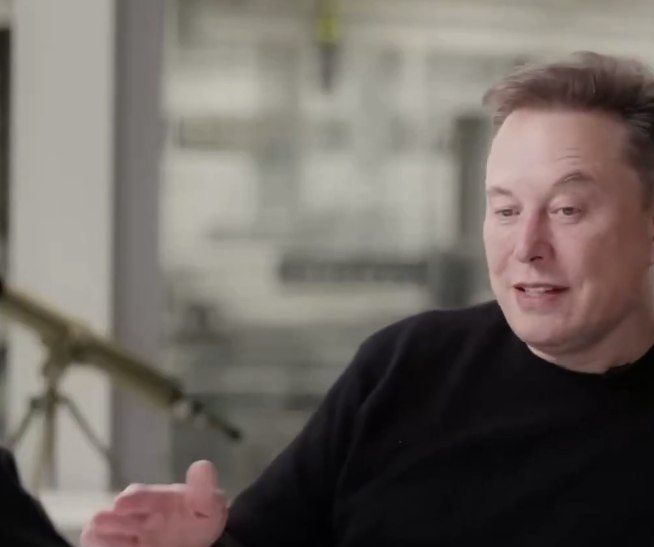
AUSTIN, Texas — Elon Musk has reignited global debate over the future of labor with a viral video clip in which the Tesla and xAI CEO declares that rapid advances in artificial intelligence and robotics will soon render working optional, paving the way for an era of unprecedented abundance where people can obtain virtually any goods or services they desire.

The 56-second excerpt, posted Monday by X user @XFreeze, has already amassed more than 77,000 views and hundreds of replies within hours. In the footage, Musk, seated in what appears to be a Tesla facility, gestures animatedly as he outlines a vision that has become a recurring theme in his public remarks over the past year.
“I’m confident that if AI and robotics continue to advance — which they are advancing very rapidly — working will be optional, and people will have any goods and services that they want,” Musk states in the clip. He adds that AI and robotics are progressing so quickly that they could eventually satisfy nearly every human need. “At that point, abundance becomes the default, and the real question is no longer about production, but purpose.”
Elon Musk on the rapid advancement of AI and robotics
“I’m confident that if AI and robotics continue to advance which they are advancing very rapidly working will be optional, and people will have any goods and services that they want”
AI and robotics are advancing so fast… pic.twitter.com/X76G8getXm — X Freeze (@XFreeze) April 20, 2026
Musk continues by noting practical limits on consumption. “There is a limit — people can only eat so much food. But I think if you can think of it, you can have it in the future,” he says, underscoring his belief that scarcity could give way to a post-work society driven by intelligent machines.
The comments echo predictions Musk has made in recent interviews and forums dating back to late 2025. At the U.S.-Saudi Investment Forum and on entrepreneur Nikhil Kamath’s podcast, he forecasted that work could become optional within 10 to 20 years, likening it to playing sports or a video game rather than an economic necessity. He has repeatedly tied this outlook to Tesla’s humanoid robot Optimus and breakthroughs in AI hardware, including the company’s AI5 and upcoming AI6 chips.
Tesla has poured resources into Optimus, aiming for a general-purpose bipedal robot capable of performing unsafe, repetitive or boring tasks. Musk has described Optimus as a cornerstone of sustainable abundance, posting in December 2025 that “the future is going to be AMAZING with AI and robots enabling sustainable ABUNDANCE for all.” In February and March 2026 updates, he highlighted deployments of Optimus units at Supercharger stations and praised the Tesla AI team’s progress on real-world autonomy.
xAI, Musk’s separate artificial-intelligence venture, is also accelerating development of models like Grok to complement robotics efforts. The convergence of these technologies, Musk argues, will eliminate traditional labor demands and shift humanity’s focus from survival to higher pursuits such as creativity, exploration and personal fulfillment.
Yet the vision has sparked intense discussion — and skepticism — across social media and among economists. Replies to the viral post range from enthusiastic support to pointed concerns. One user wrote that “if everything becomes abundant, then scarcity just moves somewhere else,” while another warned, “He is missing a crucial point. Who owns and controls AI?” Several commenters raised the issue of purpose, noting that many people derive meaning from their jobs and could struggle in a work-optional world. “The end of scarcity isn’t the end of effort; it’s the birth of pure purpose,” one reply observed.
Critics question whether the benefits of abundance will be widely shared. Musk has acknowledged that reaching this future will require “a lot of work,” but some analysts worry about wealth concentration if a handful of companies control the underlying AI and robotics infrastructure. Others point to historical parallels: past automation waves created new jobs, but AI’s ability to learn and adapt could disrupt entire sectors simultaneously.
Economists and futurists have long debated similar scenarios. Proponents of universal basic income or “universal high income,” as Musk has sometimes referenced, see AI-driven abundance as an opportunity to decouple survival from employment. Detractors argue that without careful policy, the transition could exacerbate inequality, with displaced workers facing uncertainty while tech leaders reap rewards.
Tesla’s own trajectory offers a glimpse into the changes. The company’s Full Self-Driving technology and Optimus prototypes already hint at robots handling manufacturing, logistics and household chores. Musk has said Optimus could eventually outnumber humans, performing tasks from factory assembly to elderly care. In January 2026, he celebrated the Tesla AI chip design team’s progress, predicting AI5 and successors would become the highest-volume AI chips in the world.
Broader industry trends support Musk’s optimism about speed. AI capabilities have advanced faster than many forecasts, with models now demonstrating reasoning, creativity and physical-world understanding through robotics. Companies like OpenAI, Google DeepMind and Chinese firms are racing to deploy similar systems, intensifying the global competition Musk frequently cites.
Still, practical hurdles remain. Current robots lack the dexterity, reliability and cost-effectiveness for mass deployment in every home or workplace. Energy demands for training and running advanced AI are enormous, raising sustainability questions. Regulatory frameworks around safety, liability and job displacement are only beginning to form. Musk himself has cautioned that the path to abundance involves significant engineering challenges and societal adjustments.
The viral clip arrives amid heightened public interest in AI’s societal impact. Recent polls show mixed feelings: many Americans welcome productivity gains but fear job losses and ethical dilemmas. In education, healthcare and creative fields, AI tools are already reshaping workflows, prompting questions about what roles humans will retain.
Musk’s emphasis on purpose aligns with philosophical discussions dating back decades. If machines handle production, humans might pursue art, science, community service or space exploration — areas Musk champions through SpaceX. He has described a future where people “do things for cause” rather than necessity, echoing themes in his earlier remarks about money becoming irrelevant.
Supporters of the vision highlight potential upsides: reduced poverty, more leisure time, accelerated innovation. Families could spend more time together; individuals could explore passions without financial pressure. Environmental benefits might follow if robots optimize resource use and renewable energy scales alongside AI.
Skeptics counter that human motivation often stems from necessity and competition. Without work as a central organizing force, societies might face mental-health challenges, inequality in access to advanced technologies or even new forms of scarcity around attention, status or rare experiences. One reply to the post captured this tension: “If the material is completely rich, will there be many people who can’t find a goal in life?”
For now, Musk’s companies continue pushing boundaries. Tesla aims to ramp Optimus production, while xAI expands data centers and training clusters. Government and academic institutions are studying the implications, with some proposing pilot programs for post-work economic models.
The Monday video’s rapid spread on X underscores how Musk’s pronouncements continue to shape public discourse. Whether the timeline of 10 to 20 years holds remains uncertain — Musk has invited skeptics to “play this back” in the future — but few dispute that AI and robotics are advancing at breakneck speed.
As the clip circulates, it invites reflection on a profound shift: from an economy defined by labor scarcity to one defined by meaning. Musk’s message is clear — the technology is coming. The deeper challenge lies in how humanity prepares for the abundance it promises and the questions of purpose it leaves behind.
In boardrooms, classrooms and living rooms worldwide, the conversation sparked by a 56-second clip is only beginning. For Musk and millions following his lead, the future is not about whether machines will take over work, but what humans will choose to do once they no longer have to.


BofA raises Amazon stock price target to $298 on AWS growth outlook

The conflict in the Middle East has increased pressure on the cost of petrol, household energy bills and even food.
Business
TopBuild Stock Soars 16% on $17 Billion Takeover Deal by QXO in Building Products Mega-Merger

NEW YORK — TopBuild Corp. shares skyrocketed more than 16% in early Monday trading on April 20, 2026, surging $67.80 to $478.11 after the leading insulation and building products installer agreed to be acquired by QXO Inc. in a $17 billion cash-and-stock transaction that values the company at a substantial premium.

The deal, announced late Sunday, marks a major consolidation move in the fragmented building products distribution and installation sector. QXO will pay $505 per share for TopBuild, representing a 23.1% premium to Friday’s closing price of $410.31 and a 19.8% premium to the 60-day volume-weighted average price. The transaction is expected to close in the third quarter of 2026, subject to shareholder and regulatory approvals.
Under the terms, TopBuild shareholders can elect to receive $505 in cash or approximately 20.2 shares of QXO common stock for each TopBuild share, subject to proration to maintain an overall mix of roughly 45% cash and 55% stock. The structure gives investors a choice between immediate liquidity and participation in the combined company’s future growth.
TopBuild (NYSE: BLD), headquartered in Daytona Beach, Fla., is a dominant player in the installation of insulation and commercial roofing, as well as a specialty distributor of related building materials. The company operates across the United States and Canada with a network of more than 14,000 employees and hundreds of branches. It has grown aggressively through acquisitions, completing seven deals in 2025 alone that added about $1.2 billion in annual revenue, including the Progressive Roofing and Specialty Products and Insulation transactions.
The acquisition creates a powerhouse with combined annual revenue exceeding $18 billion and adjusted EBITDA above $2 billion. QXO, which has been rapidly expanding its building products platform, described the deal as immediately and substantially accretive to earnings while targeting $300 million in synergies by 2030 through operational efficiencies, procurement savings and cross-selling opportunities.
“TopBuild is an exceptional business with market-leading positions, strong free cash flow generation and a proven track record of growth through both organic execution and strategic acquisitions,” QXO executives said in a joint statement. “This combination accelerates our vision of building a scaled, diversified leader across the building products value chain.”
Analysts and investors reacted positively to the premium and strategic fit. The surge in TopBuild shares reflected the market’s quick pricing in of the deal value near $505, though some early profit-taking and uncertainty around the proration mechanics kept the stock below that level in morning trading. Volume was significantly elevated as traders rushed to position themselves.
The deal comes as TopBuild has delivered consistent strong performance. For the full year 2025, the company reported sales of approximately $5.4 billion and adjusted EBITDA exceeding $1 billion. In its February 2026 outlook, TopBuild projected 2026 sales between $5.925 billion and $6.225 billion with adjusted EBITDA in the range of $1.005 billion to $1.155 billion, driven by continued acquisition integration and healthy underlying demand in residential and commercial construction.
Recent operational highlights include the promotion of John Achille to president and chief operating officer in early April, signaling internal confidence in execution capabilities. The company is scheduled to report first-quarter 2026 results on May 5, with a conference call at 9 a.m. ET, though the takeover agreement now shifts focus to deal-related matters.
For QXO, the move significantly broadens its footprint in insulation, roofing and mechanical insulation distribution. The combined entity is expected to benefit from TopBuild’s specialized installation expertise and nationwide branch network, complementing QXO’s existing distribution operations.
Wall Street had generally viewed TopBuild favorably before the announcement, with a consensus “Moderate Buy” rating from 16 analysts and an average price target around $440. The takeover offer represents a clear step-up from those targets, potentially capping near-term upside unless the deal faces complications or a superior bid emerges.
Regulatory hurdles include Hart-Scott-Rodino antitrust clearance, though both companies expressed confidence in obtaining approvals given limited direct overlap in certain markets. The agreement includes a $600 million termination fee payable by TopBuild if it accepts a superior proposal under specified circumstances, along with customary “no-shop” provisions and matching rights for QXO.
Some shareholder advisory firms and law firms quickly signaled scrutiny. Ademi LLP announced an investigation into whether TopBuild’s board obtained a fair price and adequately considered alternatives, a common step in large M&A deals that often leads to additional disclosures but rarely derails transactions.
TopBuild has returned substantial capital to shareholders in recent years, repurchasing more than $434 million of its stock in 2025 and over $2 billion over the past decade. The company’s disciplined approach to capital allocation, combining tuck-in acquisitions with buybacks, has supported strong compound annual growth since its 2015 spin-off from Masco Corp. — nearly 13% in sales and more than 25% in adjusted EBITDA.
The building products sector has seen increased M&A activity amid favorable long-term demographics, including housing shortages and aging infrastructure needs. Insulation demand benefits from energy efficiency trends and stricter building codes, while commercial roofing and mechanical insulation provide diversification.
Industry observers noted that the premium reflects TopBuild’s high-quality assets, including its skilled installer workforce and relationships with major homebuilders and general contractors. The deal also comes against a backdrop of steady U.S. construction spending, even as interest rates and material costs have created periodic headwinds.
For TopBuild employees and customers, the companies pledged a smooth transition with no immediate changes expected to day-to-day operations. QXO plans to add one TopBuild nominee to its board upon closing.
The transaction values TopBuild at an enterprise value that underscores the strategic premium for scale in a consolidating industry. With QXO assuming the role of acquirer, the combined platform could pursue further bolt-on deals while realizing cost synergies from overlapping functions.
As trading continued Monday morning, TopBuild shares held most of their gains but traded with volatility typical of deal stocks. Some investors locked in profits near the $478 level while others bet on potential upside if the market fully prices in the $505 valuation or if QXO shares perform well.
QXO’s own stock reacted positively in premarket and early sessions, reflecting investor approval of the accretive nature of the deal and the expanded scale. The merger is structured as a two-step transaction, providing a clear path to completion once approvals are secured.
Looking ahead, both companies will focus on obtaining shareholder votes, regulatory clearances and preparation of a registration statement for the QXO shares to be issued. The expected Q3 2026 closing timeline gives time for integration planning while minimizing disruption to ongoing operations.
TopBuild’s transformation from a spin-off to a market leader highlights the value created through disciplined execution and opportunistic acquisitions. The pending sale to QXO caps a strong run for shareholders while positioning the business within a larger platform poised for continued growth in the North American building products market.
The announcement injects fresh momentum into an otherwise quiet start to the week for many construction-related stocks. With housing demand supported by demographic trends and commercial activity showing resilience, the combined QXO-TopBuild entity could emerge as a more formidable player capable of weathering cyclical fluctuations.
As details continue to emerge and the market digests the implications, TopBuild’s dramatic 16%+ jump on April 20 served as a vivid illustration of how transformative M&A can rapidly reshape shareholder value in the industrials sector. Investors will now monitor developments around approvals, any competing offers and the companies’ ability to articulate a compelling vision for the combined future.
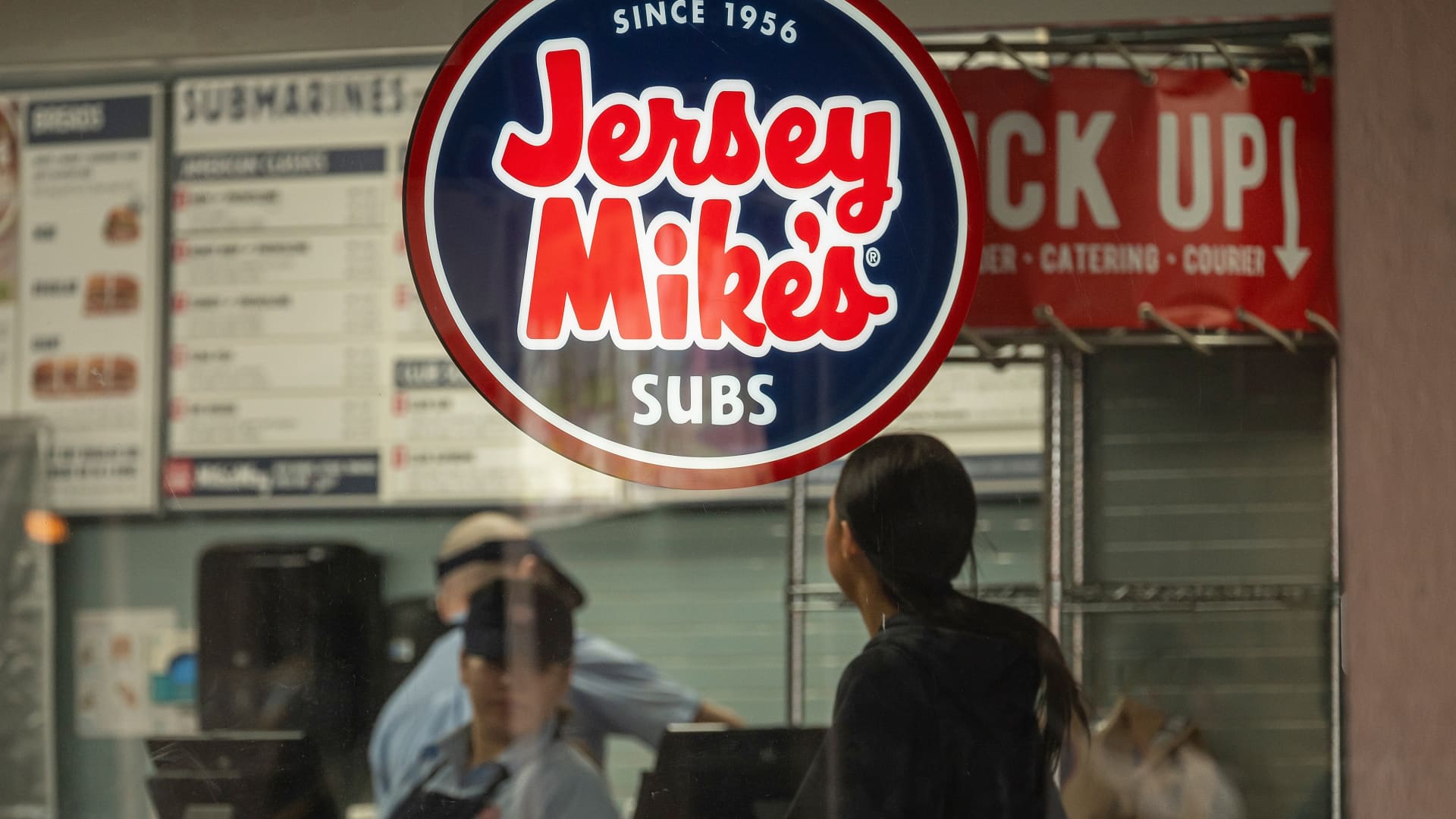
A Jersey Mike’s restaurant in Walnut Creek, California, Nov. 21, 2024.
David Paul Morris | Bloomberg | Getty Images
Jersey Mike’s has confidentially filed for an initial public offering, the company said on Monday.
The announcement comes more than a year after Blackstone bought a majority stake in the sandwich chain in a deal that reportedly valued Jersey Mike’s at roughly $8 billion.
After the Blackstone deal closed, Jersey Mike’s tapped former Wingstop CEO Charlie Morrison to helm the company. Morrison led the chicken wing chain for a decade, ushering it through its own IPO and a period of historic growth.
With more than 3,000 locations nationwide, Jersey Mike’s is the second-largest hoagie sandwich chain in the U.S., trailing only Subway.
Jersey Mike’s reported revenue of $309.8 billion in 2025, up 10.6% from the prior year, according to franchise disclosure documents. The chain also reported net income of $183.6 million in 2025, down from the prior year’s net income of $238.8 million.
Founder Peter Cancro began working at a Jersey Shore sandwich shop at age 14 in 1971; four years later, he pulled together enough money to buy Mike’s Subs. Cancro later changed the name and began franchising the chain. Until the sale to Blackstone, he was the outright owner of Jersey Mike’s.
The confidential filing is the first step for Jersey Mike’s to be publicly traded. If it goes public, it will mark the first restaurant IPO since Black Rock Coffee Bar’s offering in September.
The market for initial public offerings has been tepid, although that could change this year. Market volatility, economic uncertainty and recent poor performance among IPO stocks has led to a backlog of listings. However, several blockbuster IPOs, like the SpaceX offering that could value the company at $1 trillion, are anticipated in the coming months.

AST SpaceMobile: The Pullback I Was Waiting For
Northern Trust earnings in focus as strategy shift faces test
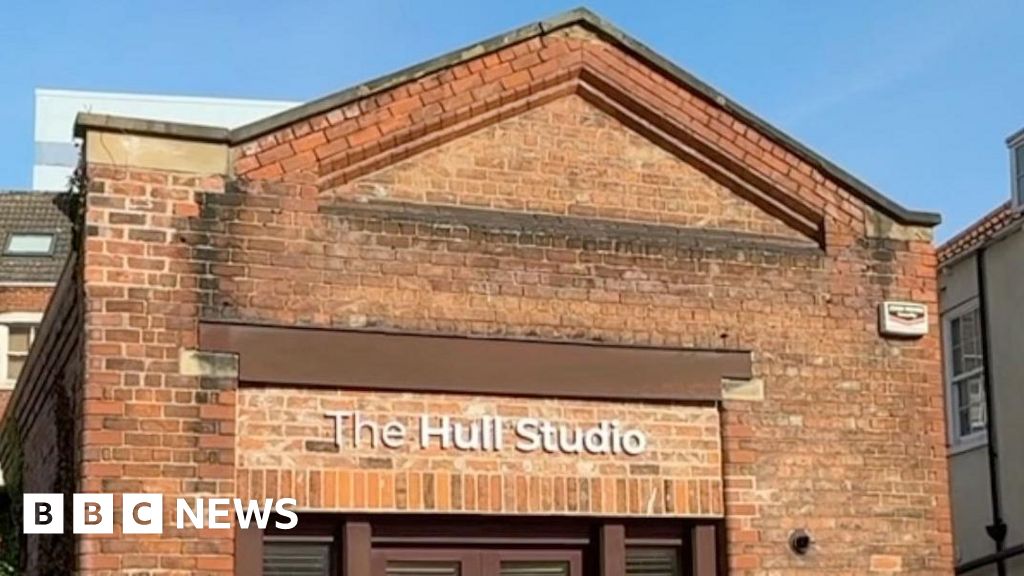
Hull’s creative scene has a new home, with green screens, cameras and a mini radio studio.
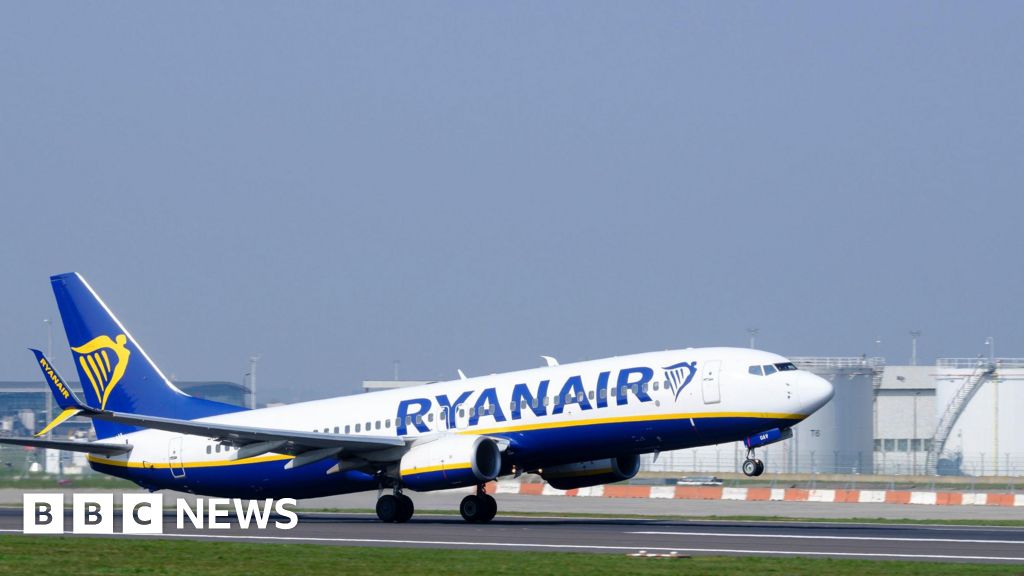
New European border rules have caused delays at airports across the continent, affecting flights.
The Eli Lilly logo appears on the company’s office in San Diego, California, U.S., Nov. 21, 2025.
Mike Blake | Reuters
Eli Lilly will acquire biotech company Kelonia Therapeutics in a deal worth up to $7 billion, the company said Monday.
Lilly will pay $3.25 billion upfront, and the remaining payments are contingent upon clinical, regulatory and commercial milestones, it said. The transaction is expected to close in the second half of 2026.
Kelonia is developing technology to reprogram patients’ T-cells inside the body so those cells can attack cancer, called in vivo CAR-T. Current treatments require that work to be done outside the body, or ex vivo, a process that involves harvesting cells, engineering them in a lab and then reintroducing them. While logistically intensive, the procedure has been successful for blood cancers like multiple myeloma.
“It’s an intravenously delivered therapy, one time,” said Jacob Van Naarden, president of Lilly oncology and head of corporate business development. “It targets your body’s T-cells, transforms them into attacking the cancer in the body, and requires no preconditioning at all.”
Johnson and Johnson’s CAR-T treatment for multiple myeloma, Carvykti, accounted for $1.89 billion in sales last year. Gilead recently acquired partner Arcellx and its rival to J&J’s drug, called anito-cel, for $7.8 billion.
Lilly’s Van Naarden called Kelonia’s data “nothing short of remarkable.”
“We’re going to be a player in hematology,” he said. “It’s nice to have another medicine to go to those doctors with a medicine that can be used broadly, that isn’t relegated to academic medical centers who can do ex-vivo personalized cell therapy.”
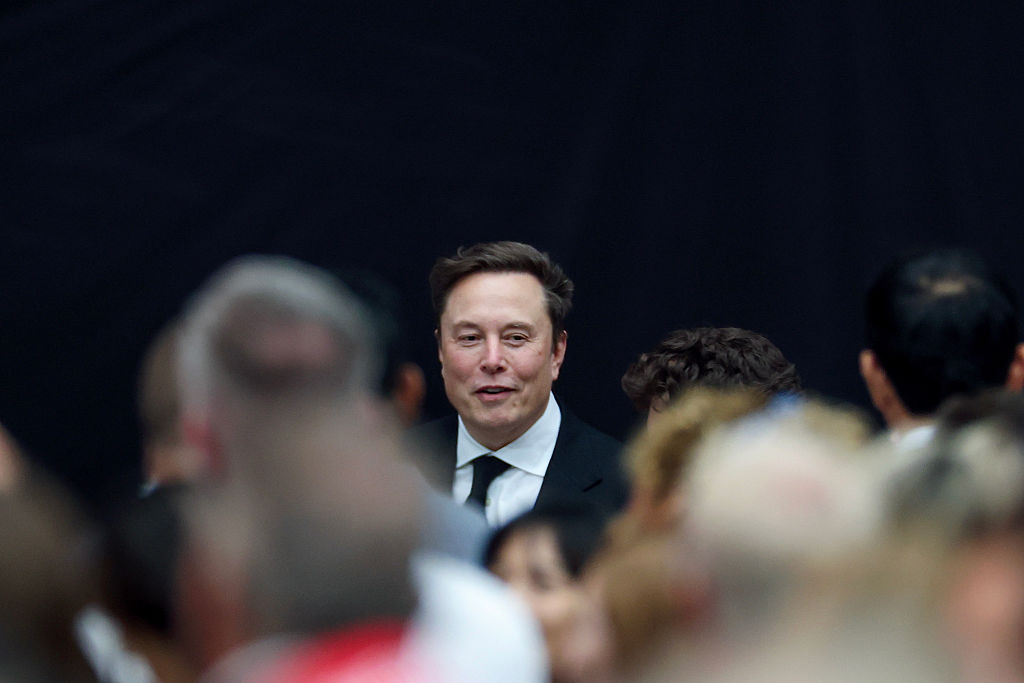
Tech billionaire Elon Musk has sparked fresh debate after proposing a “universal high income” program as a solution to job losses caused by artificial intelligence.
In a post shared on X, Musk said the federal government should provide citizens with direct payments.
“Universal HIGH INCOME via checks issued by the Federal government is the best way to deal with unemployment caused by AI,” he wrote. The post quickly gained attention and remains pinned to his account.
Musk argued that such a plan would not lead to inflation. He claimed that advances in AI and robotics would produce so many goods and services that the increase in money supply would not cause prices to rise, ET reported.
His idea builds on growing concerns that automation could replace millions of jobs in the coming years.
JUST IN: Elon Musk says universal high income from the Federal government “is the best way to deal with unemployment caused by AI.”
“AI/robotics will produce goods & services far in excess of the increase in the money supply, so there will not be inflation.” pic.twitter.com/GksSuTk9UF
— Watcher.Guru (@WatcherGuru) April 17, 2026
Experts Warn of Inflation Risks in Musk Income Plan
However, many economists pushed back against the proposal. Sanjeev Sanyal criticized the idea, saying it misunderstands how economies work.
“He is so wrong on this,” Sanyal wrote, adding that while AI may disrupt jobs, it will also create new ones over time. He warned that the plan could place a heavy financial burden on governments.
According to FoxBusiness, another critic, Pratyush Rai, raised concerns about how such payments would affect daily life.
He said giving everyone a high income could increase competition for housing, education, and other limited resources, potentially driving prices higher.
Still, not everyone dismissed the idea. Andrew Yang, who previously promoted a universal basic income plan, expressed cautious support.
“It’s clear that AI will wind up funding universal income. Let’s make that happen ASAP,” he wrote online.
Musk’s proposal goes further than traditional universal basic income programs. While UBI is designed to cover basic living costs while people continue working, a universal high income could reduce the need for work altogether.
This shift raises questions about how society might function if fewer people rely on jobs for income.
Originally published on vcpost.com

Alicia Carmody, Rosie DiMare Explain Feud On ‘RHORI’

creator spotlight : home design influencers

How Wall Street Took Over Bitcoin



-

 Crypto World7 days ago
The SEC Conditionalises DeFi Platforms to Be Avoided for Broker Registration
-

 NewsBeat6 days ago
Trump and Pope Leo: Behind their disagreement over Iran war
-

 Fashion3 days ago
Weekend Open Thread: Theodora Dress
-

 Crypto World7 days ago
SEC Signals Exemption for Crypto Interfaces From Broker Registration
-

 News Videos5 days ago
Secure crypto trading starts with an FIU-registered
-

 Sports3 days ago
NWFL Suspends Two Players Over Post-Match Clash in Ado-Ekiti
-

 Crypto World6 days ago
SEC Proposes Certain Crypto Interfaces Don’t Need to Register as Brokers
-

 Business24 hours ago
Powerball Result April 18, 2026: No Jackpot Winner in Powerball Draw: $75 Million Rolls Over
-

 Crypto World3 days ago
Russia Pushes Bill to Criminalize Unregistered Crypto Services
-

 Politics3 days ago
Palestine barred from entering Canada for FIFA Congress
-
 Business4 days ago
Creo Medical agree sale of its manufacturing operation
-

 Politics1 day ago
Zack Polanski demands ‘council homes not luxury flats for foreign investors’
-
 Entertainment6 days ago
Brand New Day’ Footage Reveals the Devastating Impact of ‘Now Way Home’
-

 Crypto World3 days ago
Russia Introduces Bill To Criminalize Unregistered Crypto Services
-

 Tech6 days ago
Microsoft adds Windows protections for malicious Remote Desktop files
-
 Entertainment7 days ago
Karol G’s ‘Ultra Raunchy’ Coachella Set Gave ‘Satanic Vibes’
-

 Sports7 days ago
Aaron Judge says Yankees need to ‘simplify’ approach amid offensive slump
-
 Crypto World7 days ago
Senate Bill Faces Delay Over Stablecoin Yield Debate
-

 Entertainment7 days ago
How Babylon 5 Turned Brief Side Story Into Emotional Masterpiece
-

 Tech7 days ago
What was the first ransomware attack to demand payment in Bitcoin?
You must be logged in to post a comment Login