
Business
(VIDEO) Frozen 3 First Look Reveals Anna’s Wedding, Olaf’s New Love Interest And A Mysterious Villain


ANAHEIM, Calif. — Disney gave fans their first extended look at “Frozen 3” on Friday night, revealing that Anna and Kristoff’s long-awaited wedding will open the film before a mysterious new villain and an unexplored, dangerous realm pull the characters far from their kingdom of Arendelle.
The reveal came during Disney’s D23 Entertainment Showcase at the Honda Center in Anaheim, where stars Idina Menzel and Kristen Bell walked onto the stage together and performed a rendition of “Frozen Heart,” the song that opened the original 2013 film, before discussing the upcoming threequel in detail. Bell confirmed that Anna will marry Kristoff, referring to her love interest by his familiar nickname. “This royal wedding has been a long time coming,” Bell told the crowd, noting that Elsa will be by her sister’s side for the ceremony.
According to descriptions from outlets present at the event, the footage shown to the D23 audience opened on the night of Anna and Kristoff’s wedding, when the newlyweds come upon Elsa on a dock, studying a mysterious stone that appears to open a portal into an entirely new, snow-covered dimension. Menzel, who plays Elsa, described the realm awaiting the characters as considerably more perilous than anything her character has previously encountered. “A frozen land more wild and dangerous than anything Elsa has ever created,” Menzel said, teasing the scale of the adventure awaiting Anna, Elsa, Kristoff, Olaf and Sven in the new film.
Once the characters step through the portal, they are quickly confronted by a new antagonist. Outlets in attendance described the character as a woman with short black hair and a dark, dramatic cape, though her face was not shown during the footage. In the scene, the new villain approaches the group from atop a snowy peak and addresses Anna and Elsa directly, acknowledging their identity as Arendelle’s ruling sisters in a tone that made clear she was not a friendly presence.
The presentation also confirmed a lighter subplot involving fan-favorite snowman Olaf. Josh Gad, who voices the character, joined Bell and Menzel on stage to perform a new song dedicated to a character named Samantha, described as Olaf’s love interest in the upcoming film. The addition appears to be a nod to a running joke from “Frozen 2,” in which Olaf briefly mentions an imaginary friend named Samantha during the film’s post-credits scene.
“Frozen 3” is scheduled for release November 24, 2027, timed to arrive just ahead of the Thanksgiving holiday in the United States, mirroring the release strategy Disney used for the franchise’s two previous installments. The returning voice cast includes Bell as Anna, Menzel as Elsa, Jonathan Groff as Kristoff and Gad as Olaf, with the story once again centered on the fictional kingdom of Arendelle, even as this chapter is expected to take the characters well beyond its borders for much of the film.
Friday’s reveal builds on concept art Disney first showed for the project two years earlier, also at D23, depicting Elsa and Anna riding separately toward a distant white palace, with Elsa mounted on the water spirit Nokk and Olaf perched on the back of Anna’s horse. At that earlier presentation, “Frozen 3” co-director Jennifer Lee said the story had grown complex enough that it would take two films to resolve the questions left open at the end of “Frozen 2,” a comment that first confirmed a fourth “Frozen” film was also in development alongside the third.
Kristen Bell has previously discussed the film’s development in press interviews, telling Variety in October 2025 that production was getting underway, though she had not yet heard any of the film’s music at that point. Bell also used that interview to deny reports claiming she would be paid $60 million to reprise her role as Anna, though she did not disclose her actual compensation for the film.
The “Frozen” franchise ranks among Disney’s most commercially successful properties, with its first two films combining for more than $2.76 billion in worldwide box office receipts and two Academy Awards. “Frozen 2,” released in 2019, remains one of the highest-grossing animated films in box office history.
With “Frozen 3” still more than a year from release, Disney has not yet revealed the new villain’s identity, name or full motivations, nor detailed the specific nature of the frozen realm introduced in Friday’s footage. For now, fans have confirmation of a wedding, a new romance for Olaf, and the outline of a threat serious enough to pull Anna and Elsa away from Arendelle once again, with additional details expected to emerge as the film moves closer to its Thanksgiving 2027 release.

Business
Stephen Curry Trade Rumors Persist as Warriors Insist Superstar Remains Committed to Golden State
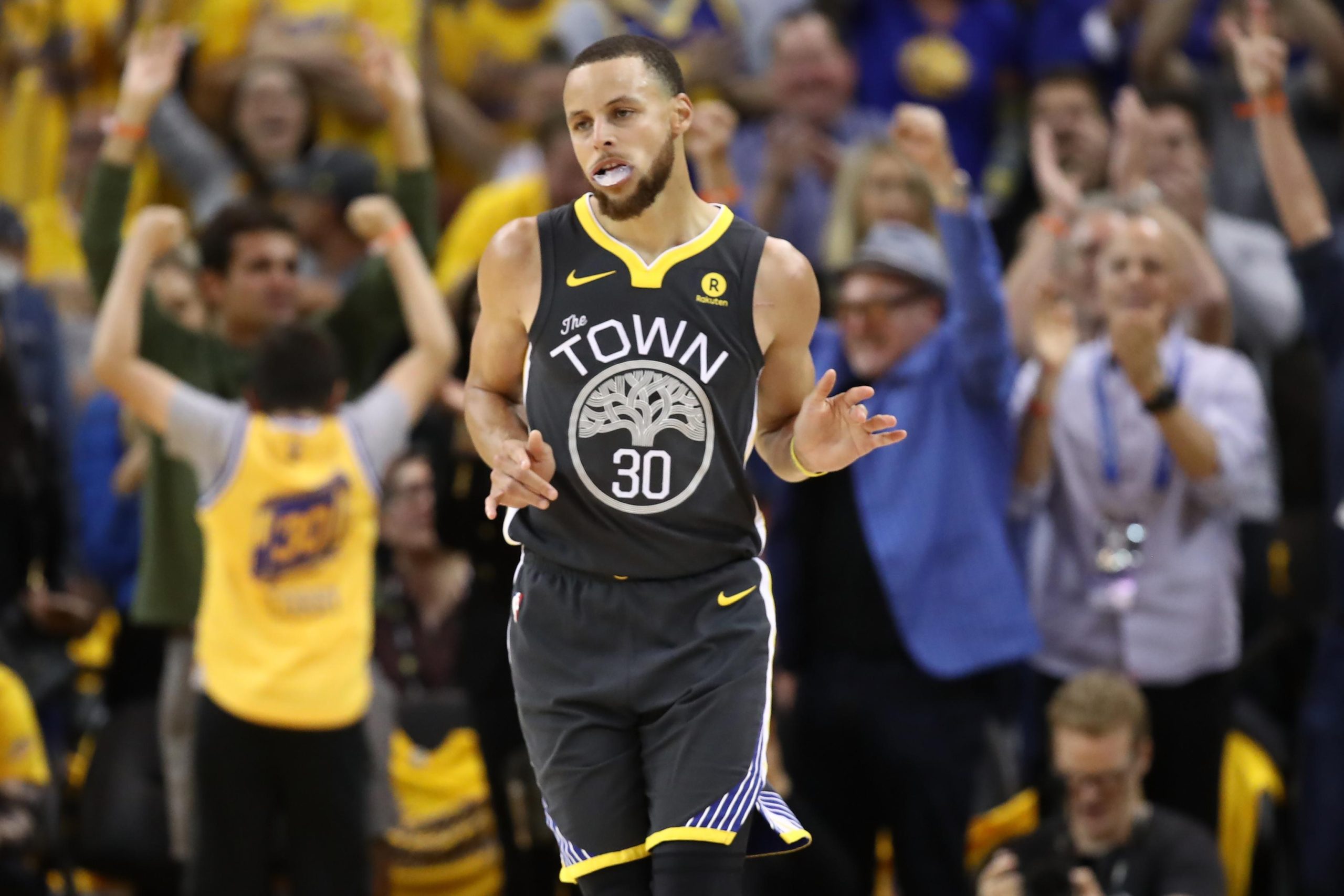
Stephen Curry trade speculation continues to circulate in NBA circles despite repeated assurances from Golden State Warriors executives that the franchise icon has no plans to leave the only team he has ever played for.
The latest wave of rumors gained traction earlier this month after Sports Illustrated published a speculative piece suggesting the Boston Celtics could explore a deal for the four-time champion. The report was later clarified as hypothetical rather than based on concrete discussions, with subsequent coverage noting that no formal offer had been made. Still, the conversation has lingered, fueled by Curry’s status as an impending free agent after the 2026-27 season and questions about the Warriors’ ability to build a consistent contender around him.
Golden State general manager Mike Dunleavy addressed the situation directly in recent comments. “There’s two things I’m confident about with Steph,” Dunleavy said. “He really, really wants to win and he wants to finish his career as a Warrior. I don’t think that changes tomorrow, August 29th, the start of the season, middle of the season, the end of next season. Those things are going to be consistent.”
Dunleavy added that any future decision would ultimately rest with Curry. “Ultimately it’s his call, his decision, whether that’s allowing his contract to run out and move on,” he said. “Look, if he comes to me and wants to be moved, Joe and I will talk it through. We wouldn’t love it. But he’s earned the right to do what he wants. But as far as the messaging or any idea that he would be anywhere else, that’s not a thing we’re looking at or he’s looking at.”
Warriors owner Joe Lacob was more blunt in dismissing the chatter. Appearing on a podcast, Lacob described the trade speculation as “clickbait” and said he had never heard any indication from Curry that he wanted to leave. “I’m very close with Steph — he lives right near me, he’s incredibly happy with the organization, with his life,” Lacob said. “I’ve never heard a word about that, and I can’t imagine it. We certainly don’t want him to go anywhere. I just think people are completely making a bunch of crap up.”
Curry himself has not publicly addressed the rumors in detail. The 38-year-old guard is entering the final year of his current contract and becomes eligible for an extension later this month. Reports have indicated mutual interest in a multiyear deal that would keep him in the Bay Area beyond next season.
Despite the official denials, hypothetical landing spots continue to be debated. A USA Today analysis listed four potential destinations should Curry ever seek a change of scenery: the Boston Celtics, Charlotte Hornets, Denver Nuggets and Miami Heat. The Celtics were cited for their three-point-oriented system under coach Joe Mazzulla and the complementary skills of players such as Jayson Tatum and Derrick White. Charlotte was framed as a sentimental hometown option. Denver offered the intriguing pairing of Curry with Nikola Jokic, while Miami was noted for its defensive foundation that could ease Curry’s responsibilities on that end of the floor.
Former Warriors guard D’Angelo Russell added fuel to the Boston conversation on a recent podcast, saying he would like to see Curry play in a different system. Russell suggested the Celtics’ veteran core could help Curry contend for another title more effectively than Golden State’s current roster construction.
The speculation arises against the backdrop of a challenging period for the Warriors. After years of contention built around Curry, Klay Thompson and Draymond Green, the franchise has struggled to maintain championship-level supporting talent. Last season’s results and a relatively quiet offseason have intensified questions about the team’s direction, even as executives insist they remain committed to competing while Curry is still productive.
NBA front offices routinely monitor star players entering contract years, and Curry’s combination of scoring, gravity and historical significance would make him an attractive target for any contender able to construct a viable offer. However, multiple reports have emphasized that no serious trade talks are underway and that Curry has not requested a move.
For now, the Warriors appear focused on the upcoming season with Curry as their centerpiece. Training camp and the start of the regular season will provide the next opportunities for both the player and the organization to reinforce their shared commitment publicly. Until then, the rumor mill is likely to keep generating scenarios, even as the people closest to the situation maintain that Curry’s future remains in Golden State.
The situation illustrates the perennial tension in the modern NBA between franchise loyalty and the desire for late-career contention. Curry has spent his entire professional career with the Warriors, winning four championships and revolutionizing the game with his long-range shooting. Whether that story ends in the Bay Area or elsewhere will depend on factors that have not yet fully played out, including the team’s performance this season and any extension negotiations that may follow.
As the league moves toward the start of the 2026-27 campaign, both sides have publicly signaled continuity. The persistent nature of the rumors, however, ensures the topic will remain part of the broader NBA conversation until more definitive clarity emerges.

Celanese SVP Murray buys $98,004 in common stock

Customers of Mediacom Communications have reported a range of service problems in recent weeks, including internet outages, slow speeds, intermittent connectivity and television disruptions, according to outage tracking sites and consumer review platforms.
Mediacom provides cable television, broadband internet and phone services to residential and business customers in 22 states. The company operates primarily in smaller markets and rural areas where competition from other high-speed providers can be limited. Downdetector, which aggregates user-submitted reports of service disruptions, has indicated elevated problem reports for Mediacom at various points in August 2026. The most frequently cited issues involve Wi-Fi connectivity and broadband internet performance, followed by fixed wireless internet problems.
Individual user comments on tracking platforms describe multi-day outages in locations such as Apache Junction, Arizona, and recurring nighttime interruptions in other service areas. Some customers reported paying for gigabit-level speeds while receiving substantially lower performance, along with frequent disconnections that required repeated modem restarts. Television channel outages have also been noted in certain markets, with some users saying specific channels remained unavailable for extended periods.
Consumer review sites reflect similar patterns of dissatisfaction. Recent submissions on platforms such as ConsumerAffairs describe rising monthly bills alongside declining reliability. One reviewer in early August 2026 noted that internet service had become “choppy” since the start of the year, affecting remote work and online studies, while bills increased. Others reported outages lasting more than 24 hours on multiple occasions over recent years and expressed frustration with response times from customer support.
Better Business Bureau filings and additional customer feedback highlight related concerns, including billing disputes over equipment returns after cancellation, long waits for technician visits, and repeated service calls that fail to resolve underlying problems. Work-from-home users have particularly emphasized the impact of intermittent outages on productivity, with some describing daily or near-daily drops in connectivity.
Mediacom offers tools for customers to check service status, including a mobile care app and online account dashboards. Company support channels advise basic troubleshooting steps such as restarting equipment and verifying connections before escalating to a technician appointment. In areas with limited alternative providers, some customers report feeling constrained in their options despite ongoing frustrations.
The pattern of complaints is not unique to a single region. Reports have surfaced from Midwestern markets, including parts of Iowa, as well as locations in the Southwest and Southeast. Weather-related events, network maintenance and local infrastructure issues can contribute to temporary disruptions, though users frequently describe problems as recurring rather than isolated.
Broadband reliability has become increasingly important as more households rely on high-speed internet for remote work, education, telehealth and streaming entertainment. Cable operators like Mediacom face growing pressure from fiber providers and fixed wireless services in markets where those alternatives expand. In areas where Mediacom remains the primary or only option for high-speed wired service, customer expectations for consistent uptime have risen accordingly.
Industry observers note that cable networks can experience capacity strain during peak usage hours and may require ongoing investment in node splits, equipment upgrades and fiber deep deployments to maintain performance. Customer service responsiveness, particularly the availability of timely technician appointments and clear communication during outages, also influences overall satisfaction scores.
Mediacom has not issued a broad public statement addressing the recent volume of user reports in the materials reviewed. Individual support interactions typically focus on case-by-case troubleshooting. Customers experiencing prolonged outages are generally advised to document the duration of the disruption, as some providers offer credits for extended service interruptions under specific conditions.
For households considering alternatives, options may include checking for fiber availability from competitors, evaluating fixed wireless or satellite services such as those offered by emerging providers, or reviewing local municipal broadband initiatives where they exist. Availability varies significantly by address, and switching costs, equipment returns and contract terms can influence the decision.
The volume of recent reports underscores ongoing challenges for regional cable providers balancing network reliability, customer support capacity and competitive pressures. As digital dependence deepens, consistent broadband performance remains a critical measure of service quality for companies operating in both urban fringes and more rural communities across Mediacom’s 22-state footprint.
Users continue to monitor outage trackers and share experiences on public forums, providing real-time visibility into localized problems even when company systems do not immediately flag a widespread incident. Whether the current wave of reports reflects temporary network issues or deeper systemic concerns will likely become clearer as more data emerges from customer feedback channels and any subsequent network performance metrics released by the provider.
Business
(VIDEO) Apple May Delay Standard iPhone 18 to 2027 as Pro Models and Foldable Set for Fall Launch
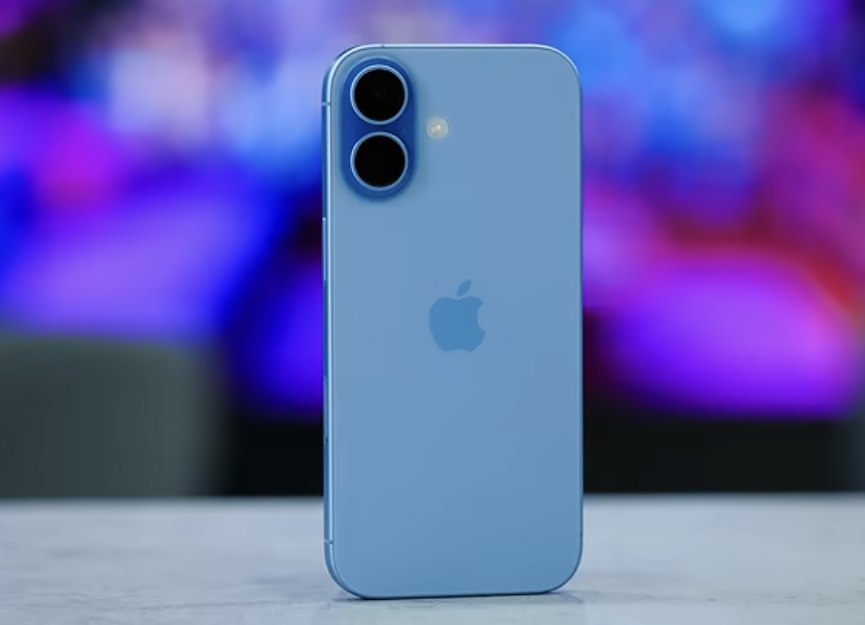
Apple is expected to split its next iPhone generation across two release windows, launching premium models this fall while delaying the standard iPhone 18 until early 2027, according to recent statements from key suppliers and consistent industry reporting.
Taiwanese contract manufacturer Pegatron indicated during its second-quarter 2026 earnings call that the iPhone 18 Pro and Pro Max models remain on track for a traditional September release. The base iPhone 18, however, is now projected to arrive in the first quarter of 2027. The more affordable iPhone 18e and a second-generation iPhone Air are also expected in that later window.
The reports align with earlier signals from the supply chain. Analyst Ming-Chi Kuo and outlets including The Information had previously outlined a strategy in which Apple would prioritize its higher-end devices in the fall of 2026. A chairman of Largan Precision, a major supplier of iPhone camera lenses, earlier noted that a significant U.S. customer had postponed a new product launch to the first quarter of 2027, remarks widely interpreted as referring to Apple’s standard models.
Fall 2026 is instead expected to feature the iPhone 18 Pro, iPhone 18 Pro Max and Apple’s first foldable smartphone, frequently referred to in reports as the iPhone Ultra. This would mark a notable departure from the company’s pattern of the past several years, in which standard and Pro models typically debuted together in September.
Supply constraints appear to be a primary factor. Reports cite ongoing shortages of memory chips and other components, along with bottlenecks in semiconductor production. Pegatron executives pointed to customers adjusting shipment schedules amid these limitations. Higher-margin Pro models are being prioritized to maintain the September launch cadence for Apple’s most profitable smartphones while the broader lineup is staggered.
The shift would leave the current iPhone 17 series, including the standard model and earlier Air variant, on the market for an extended period. Buyers seeking a more affordable new iPhone would face a choice between purchasing a Pro model this fall, holding onto existing devices, or waiting until spring 2027. Carriers that traditionally center fourth-quarter upgrade promotions around a full new iPhone lineup may need to adjust marketing and inventory plans accordingly.
Apple has not publicly confirmed the revised schedule. The company typically unveils its annual iPhone generation in early to mid-September, followed by sales beginning later that month. A dual-window approach would separate premium and mainstream offerings more clearly, potentially allowing the company to focus production capacity and marketing resources on the higher-priced devices during the critical holiday quarter.
The foldable model represents a long-anticipated expansion of Apple’s portfolio. Industry observers have tracked development of a folding iPhone for several years, with recent reports suggesting production readiness for a 2026 debut. Pairing it with the Pro series in the fall would give Apple three distinct high-end options while the standard, entry-level and thinner Air models arrive later.
Component allocation challenges are not limited to Apple. Broader industry tightness in advanced memory and packaging capacity has affected multiple smartphone makers. In this environment, directing scarce supply toward models with higher average selling prices is a pragmatic response that protects near-term revenue even as it extends the wait for lower-priced devices.
For consumers, the practical effect is a longer wait for the standard iPhone 18. Those who upgrade annually or rely on carrier financing cycles may find the Pro models more attractive this year, or they may extend the life of current handsets. The spring 2027 window could also create a secondary sales period, potentially smoothing Apple’s revenue cadence beyond the traditional fourth-quarter peak.
The reported strategy continues a gradual evolution in Apple’s product cadence. The company has previously introduced mid-cycle or early-year models such as the iPhone SE and more recent “e” variants. Expanding that approach into a formal separation of Pro and non-Pro generations would represent a more structural change to the annual calendar.
As September approaches, attention will focus on whether Apple confirms the dual timeline at its fall event. Until then, the combination of Pegatron’s earnings comments and earlier supply-chain indications provides the clearest picture yet of a staggered iPhone 18 rollout, with premium devices arriving on schedule and more accessible models deferred into the following year.

Finance of America CIO Prahm sells $130,402 in FOA shares

Merck EVP DeLuca sells $5.9m in stock

Avalo Therapeutics CSO Jennifer Riley sells $52,012 in stock

Avalo Therapeutics CMO Mittie Doyle sells $13,580 in stock

Elon Musk has told SpaceX employees that artificial intelligence is poised to become the dominant force in the company’s future, projecting that AI will account for 99 percent of its value within four to five years while already generating substantial and rapidly growing revenue.
In a recent all-hands meeting with staff, the SpaceX chief executive outlined an aggressive shift. “Long-term, probably in four or five years, AI will be 99% of the value of SpaceX. I’d say five years for sure, AI will be 99% the value of SpaceX. And the value of SpaceX will be some astronomical number,” Musk said.
He also forecast a nearer-term milestone. “Definitely our AI revenue will exceed all other space revenue probably in September, like next month,” Musk told employees, adding that the segment “will significantly exceed all other SpaceX revenue in the fourth quarter.”
The comments come as SpaceX, now a publicly traded company, reported strong second-quarter results. Total revenue reached $7.8 billion, up 92 percent from the year-earlier period. The AI segment contributed $2.6 billion, representing roughly one-third of the total and growing about 247 percent year over year. Connectivity services, primarily Starlink, generated about $4.3 billion, while traditional space products and launch activities accounted for the remainder.
SpaceX has been expanding its AI-related offerings, which include access to the Grok family of large language models, cloud computing infrastructure and related services. The company has signed significant cloud services agreements, including deals involving Anthropic and Alphabet’s Google. In the second quarter alone, it reported $14.1 billion in contracted cloud sales. Capital expenditures remain elevated, with a large share directed toward building AI compute capacity.
Musk detailed ambitious infrastructure targets. The company currently operates about 1.4 gigawatts of AI compute power and aims to reach 2 gigawatts by the end of 2026, then approximately 10 gigawatts by the end of 2027. “The value per watt is probably going to be 30 to $50, which means if we bring 10 Gigawatts of AI online by the end of next year, it will be 300 to $500 billion a year in revenue,” he said.
In filings related to its public listing, SpaceX estimated a total addressable market of $28.5 trillion across its businesses, with $26.5 trillion attributed to AI. The projection underscores management’s view that compute infrastructure, model services and related software could far outstrip the scale of launch services and satellite internet over time.
The rapid growth in AI revenue has drawn investor attention, yet it also highlights execution risks. Building large-scale data centers and securing power requires massive ongoing investment. Competition in AI infrastructure is intense, with established cloud providers and specialized players vying for the same customers. Concentration risk exists as well; a single customer has accounted for a notable share of recent AI revenue in some periods.
SpaceX’s traditional businesses continue to advance. Starlink remains a leading provider of low-Earth-orbit broadband, and the company maintains its position as a dominant launch provider with reusable rocket technology. Development of the next-generation Starship vehicle proceeds alongside these efforts. Musk has framed AI success as supportive of the broader multiplanetary goals, suggesting that substantial AI cash flows could help fund long-term space ambitions.
Analysts have noted the dual nature of the opportunity and the challenge. Strong top-line growth in AI, if sustained, could support higher valuations even if near-term profitability remains constrained by heavy capital spending. At the same time, the bullish scenario depends on continued robust demand for AI compute, successful scaling of capacity, and the ability to convert contracted revenue into recurring, high-margin streams.
Musk has emphasized the strategic importance of succeeding in both hardware and software aspects of AI. The company is integrating capabilities across its ecosystem, including training models on internal data and expanding enterprise offerings. Whether the ambitious timelines materialize will depend on execution in an industry known for rapid technological change and significant capital intensity.
For investors, the message from the SpaceX leader is clear: the company that transformed access to space now sees its greatest long-term value in artificial intelligence. The coming months will test whether AI revenue can overtake other segments as quickly as projected, while the multiyear horizon will determine if the 99 percent valuation claim becomes reality. In the meantime, SpaceX continues to operate at the intersection of two of the most capital-intensive and transformative industries of the era—space exploration and artificial intelligence—with the balance between them shifting rapidly according to its chief executive.

Patricia Mulroy sells $37,415 of Bowman Consulting stock

Did JP Morgan Just Buy $650M Bitcoin? | Two Bullish Signals the Bitcoin Bottom Is In!

Asda and Morrisons urgent recall on pasta over listeria fears

Stephen Curry Trade Rumors Persist as Warriors Insist Superstar Remains Committed to Golden State


-

 Fashion23 hours ago
Weekend Open Thread: Ann Taylor
-

 Business6 days ago
Datadog: Best Of Breed For Multiple Reasons
-

 Business7 days ago
How to Start a Cleaning Business: A Step-by-Step Guide
-

 Business7 days ago
BDC Weekly Review: Private BDC Q2 Numbers Are Strong
-
 NewsBeat4 days ago
Communication cards help banking customers access services or report scams
-
 Business5 days ago
Oil Price Today (August 11): Crude oil rises to $88 after Trump’s compensation demand dents Hormuz opening. Here’s why
-

 Fashion6 days ago
Amazon Sundays: Closet Care Before Fall
-
 Crypto World5 days ago
Why Did Nvidia Stock Fall on Monday Despite a $500 Billion Wall Street AI Deal?
-

 Politics7 days ago
Be quiet, Miriam! – spiked
-
 Entertainment7 days ago
Will Ferrell’s New Netflix Series Just Became One of the Streamer’s Biggest Hits of 2026
-

 Business6 days ago
5 Things You Must Know About Jorge Messi, the Father and Longtime Agent Who Shaped Lionel Messi’s Career
-

 Politics6 days ago
Ben-Gvir’s crocodile project halted but abuses at Ketziot Prison continue
-

 Crypto World5 days ago
Revolut wins French banking licence, creates second EU banking hub
-

 Politics6 days ago
The Church of England’s ruinous reparations racket
-

 Politics6 days ago
Saudi Arabia used 86% of missile stockpile defending Iran attacks
-

 Politics6 days ago
The House Article | Burnham still needs to sell devolution to the public
-

 Politics6 days ago
What’s An EDT? The Rise Of ‘Extreme Day Trips’ As A Travel Trend
-

 Fashion5 days ago
Can You Wear Double Cloth Gauze Clothing To Your Office?
-
 NewsBeat10 hours ago
Myanmar says over 300,000 Rohingya refugees verified for repatriation as exodus enters ninth year
-
 Crypto World6 days ago
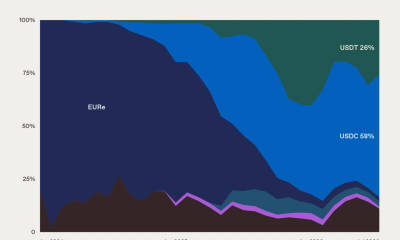
USDC and USDT Now Own 84% of Crypto Card Spend as the Euro Retreats
You must be logged in to post a comment Login