Business
(VIDEO) Supreme Court Strikes Down Trump’s Sweeping Tariffs in 6-3 Ruling, Prompting New 10% Global Levy

WASHINGTON — The U.S. Supreme Court on Friday, Feb. 20, 2026, struck down President Donald Trump’s broad tariffs imposed under the International Emergency Economic Powers Act (IEEPA), ruling 6-3 that the president exceeded his authority by using the 1977 emergency law to unilaterally impose duties on imports from nearly every trading partner.

Chief Justice John Roberts wrote the majority opinion, joined by Justices Sonia Sotomayor, Elena Kagan, Neil Gorsuch, Amy Coney Barrett and Ketanji Brown Jackson. The dissent came from Justices Clarence Thomas, Samuel Alito and Brett Kavanaugh. The decision, in consolidated cases including *Learning Resources, Inc. v. Trump* and *Trump v. V.O.S. Selections, Inc.*, held that IEEPA’s grant to “regulate … importation” does not extend to imposing tariffs, a power the Constitution assigns to Congress under Article I.
Roberts emphasized that IEEPA lacks any reference to tariffs or duties, and no prior president had interpreted it to confer such authority. “The President asserts the extraordinary power to unilaterally impose tariffs of unlimited amount, duration, and scope,” he wrote. “IEEPA’s grant of authority to ‘regulate … importation’ falls short.” The ruling affirms lower court decisions and vacates parts of the case for jurisdictional dismissal, but the core holding invalidates the IEEPA-based tariffs without ambiguity.
The tariffs, enacted through executive orders in 2025, included 25% duties on most imports from Canada and Mexico, 10% on Chinese goods tied to drug trafficking claims, and a broader “reciprocal” or “Liberation Day” regime of at least 10% on imports from dozens of nations, with higher rates for some. They generated an estimated $130-200 billion in revenue, though much was passed to consumers via higher prices.
The decision does not affect tariffs imposed under other laws, such as Section 232 national security duties or Section 301 unfair trade measures. It leaves open the question of refunds for importers who paid the now-invalid duties, with estimates of potential claims reaching $133-175 billion. Justice Kavanaugh’s dissent warned of a “mess” involving billions in refunds and uncertainty for trade deals facilitated by the tariffs.
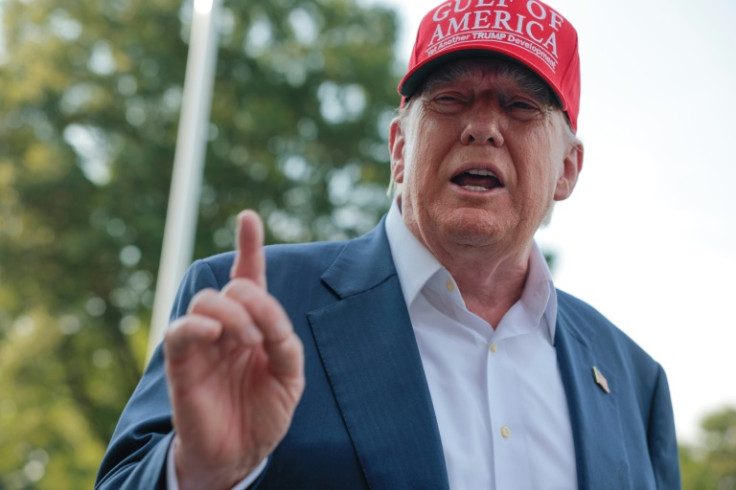
Trump reacted defiantly in a White House news conference hours after the ruling, calling it “deeply disappointing” and labeling some justices “fools and lap dogs.” He announced a new across-the-board 10% global tariff under Section 122 of the Trade Act of 1974, a rarely used provision allowing temporary duties up to 15% for 150 days to address balance-of-payments issues. The new levy takes effect Feb. 24, 2026, with exemptions for certain minerals, agricultural products, pharmaceuticals and electronics. Trump framed it as a necessary response to protect U.S. manufacturing.
Markets reacted with initial volatility but stabilized, as the ruling removes uncertainty from the broadest tariffs while the new measure introduces a shorter-term shift. Economists noted potential inflationary pressure from the replacement duties, though limited duration caps their impact absent congressional extension.
The ruling represents a rare bipartisan check on executive power, with the majority spanning ideological lines. It reaffirms congressional primacy in taxation and commerce, rejecting expansive readings of emergency statutes. Challengers, including businesses and states like California, hailed it as a victory for rule of law and economic stability.
Trump’s team signaled plans to pursue alternative authorities for similar policies, potentially including Section 301 expansions or new legislation. The decision may prompt legal battles over refunds, with importers likely filing claims through the U.S. Court of International Trade.
As global trade partners monitor developments, the ruling injects fresh uncertainty into U.S. policy while underscoring limits on unilateral presidential action. The administration’s pivot to new tariffs ensures trade tensions persist, even as the court curbs one avenue of enforcement.

