
Business
(VIDEO) Taylor Swift Fans Outside MSG Lose Their Minds Over a Possible Wedding Pastry Handed Out


NEW YORK — The morning after Taylor Swift and Travis Kelce’s wedding at Madison Square Garden, the thousands of fans who had spent much of the previous day crowding the streets of midtown Manhattan were treated to one final, unexpected chapter in the celebration, an unverified but thoroughly viral encounter with a white bakery van whose contents briefly became the most coveted object in New York City.
A video posted to social media Saturday morning showed a crowd of Swifties surrounding a white van bearing the markings of SP Bakery Distributors Inc., parked or passing near the arena shortly after the wedding festivities had concluded. The clip, which spread rapidly across X, Instagram and TikTok, showed fans in various stages of euphoric speculation about whether the vehicle had delivered desserts for the reception of one of the most elaborate celebrity weddings in recent memory.
No official confirmation has been made that the van had any connection to the Swift-Kelce wedding. The pastry’s origin has not been verified. None of that appeared to matter in the slightest to the fans involved.
In the video, bystanders attempted to interrogate the van’s driver through his window, asking him directly about the quality of the event. “How was it? Good?” one person asked. The driver, for his part, offered nothing definitive, which in the logic of a crowd operating entirely on wishful thinking was somehow interpreted as confirmation of everything.
The social commentary accelerated as the crowd attempted to reverse-engineer the wedding menu through charades-style negotiation. One fan asked the driver for a thumbs-up if the reception had served chocolate cake. A thumbs-down request followed for vanilla. The exchange produced no reliable data on the Swift-Kelce dessert selection but generated considerable noise.
The moment that elevated the video from charming to genuinely viral came when a man inside the van raised a box toward the window, apparently either showing the crowd what he was carrying or making a gesture toward the gathered fans. The crowd’s response was immediate and unambiguous.
“Throw it! I’ll catch it!” a fan shouted, apparently willing to gamble both their dignity and their physical safety on the possibility that a pastry of uncertain origin might have passed through the same kitchen as a dessert consumed by Selena Gomez, Gigi Hadid, Patrick Mahomes or any number of other documented wedding guests.
Before the contents of the box could be distributed freely, a police officer on the scene intervened and took possession of the item, a development that temporarily shifted the crowd’s diplomatic attention from the van’s driver to the badge-wearing intervenor. The negotiation that followed was brief and to the point.
“Officer, I deserve it. May I please have it?” one fan appealed directly.
The argument apparently carried sufficient merit, because the officer subsequently handed the pastry to the fan who had made the case for it. The resulting reaction from the surrounding crowd was the kind of spontaneous, collective eruption of joy that requires no context to understand and that translates perfectly across social media regardless of whether the viewer has any knowledge of Taylor Swift, Travis Kelce or the wedding that had just taken place inside the building.
“Oh my God, guys, we’re having Taylor Swift dessert!” the recipient exclaimed, holding the pastry aloft in a moment that landed somewhere between religious experience and a very good Saturday morning.
The pastry itself, based on what was visible in the video, appeared to be a glazed, laminated pastry with what may have been a fruit filling, a description consistent with a croissant, a Danish or a similar Vienna-style baked item. Whether it had any connection to the wedding remains entirely unverified and is essentially beside the point.
The episode is the kind of cultural footnote that attaches itself to major celebrity events when the principals themselves have successfully sealed off every official channel of fan access. Swift and Kelce, with the help of an arena’s worth of controlled entry points, an underground parking structure for arriving guests and a New York Police Department perimeter that turned midtown into a carefully managed exclusion zone, ensured that no meaningful access to the wedding itself was available to the fans who spent 12 hours singing on the sidewalk in 37-degree heat on Independence Day.
What remained, in the absence of any official acknowledgment, any leaked photographs, any guestlist confirmation or any other traditional mechanism of parasocial participation, was a bakery van and a police officer with a pastry. In that vacuum, the crowd created its own ceremony, complete with negotiation, a moment of intercession, a dispensation and a communion, all built around a glazed laminated baked good of uncertain provenance.
Swift and Kelce were officially confirmed as married by publicist Tree Paine following the ceremony, which was officiated by actor Adam Sandler. The couple wore Christian Dior, with a wedding gown designed by Jonathan Anderson. Swift’s brother Austin served as man of honor and Travis’s brother Jason Kelce served as best man. Approximately 1,000 guests attended the main ceremony, which came after a smaller gathering of roughly 100 people the previous evening.
None of that detail, comprehensive as it is, will likely generate more genuine public joy than the image of a fan holding a possibly-wedding-adjacent pastry above a cheering crowd on a Manhattan sidewalk the morning after the wedding, offering a reminder that the fan experience of a major celebrity event is sometimes less about the event itself and more about the community that forms around its edges, finding its own moments of meaning in whatever raw material happens to present itself.
For the record, the pastry was eaten. A full review of its quality, its possible significance and whether it was indeed chocolate or vanilla has not been published.

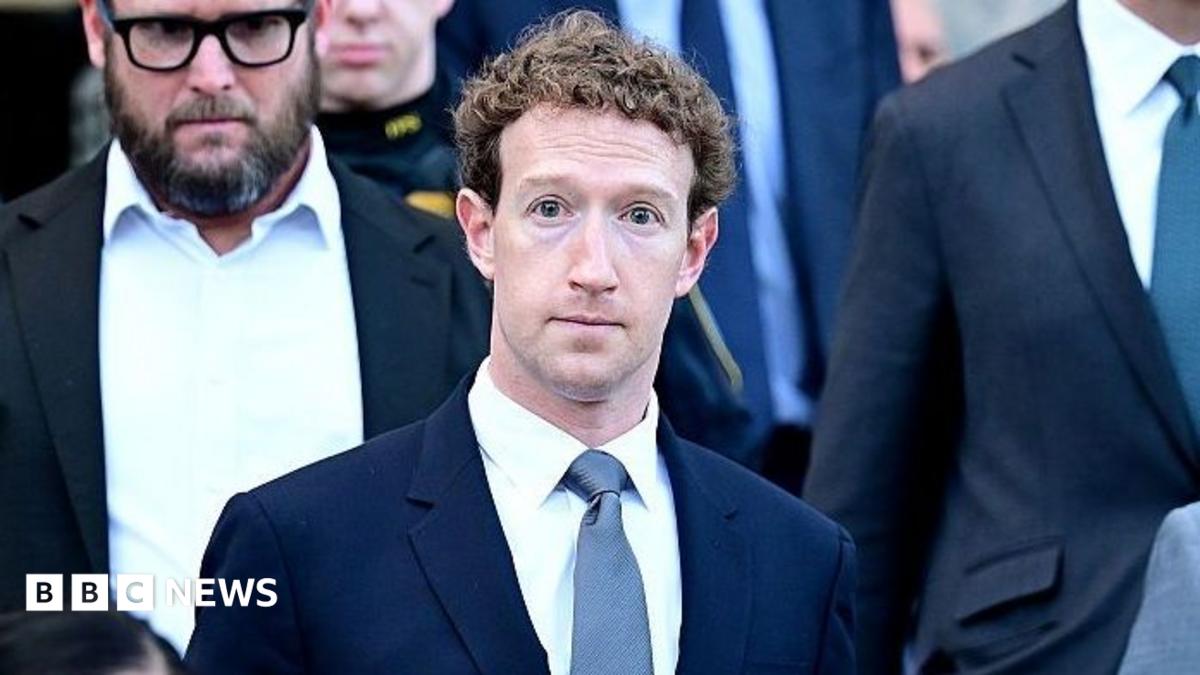
As part of the settlement, the social media giant has agreed to make a number of changes to the way Instagram and Facebook operate for its youngest users.
Some experts say it is long overdue.
The new safety barriers include a two-hour time limit across both platforms, which will be a default setting for known teen users. But direct messaging on the platforms will not count towards the daily use limit.
Notifications will be muted between midnight and 06:00 and on school days between 08:00 and 15:00.
Likes on posts and content will also be entirely hidden on the platforms for teens.
Most of these new features will be made either default or an option for teens within six months.
However, new efforts by Meta to better identify which users on its platforms are children will take up to a year to be rolled out.
I would be surprised if these measures remain within the confines of the US for very long, as other countries will almost certainly be keen to adopt them too.
Meta also says the new features will only truly help children if all of its rivals adopt them as well.
It’s a highly competitive industry, but given the global backlash against social media and its impact on children, perhaps others like TikTok and Snapchat may have to follow suit.
The question then is whether children will still bother with them, once they are deliberately toned down into a much blander offering.
And perhaps that would bring the social media era to a natural end, as existing adults gradually aged out of it.
Arturo Bejar, the ex-Instagram engineer turned whistleblower, says the proof of the pudding will be in whether the new teen safety features are effective.
“At the end of the day, Meta needs to be held accountable for results, not efforts,” he told me.
Additional reporting from Kali Hays

Ocular Therapeutix CEO Dugel sells $233,159 in shares
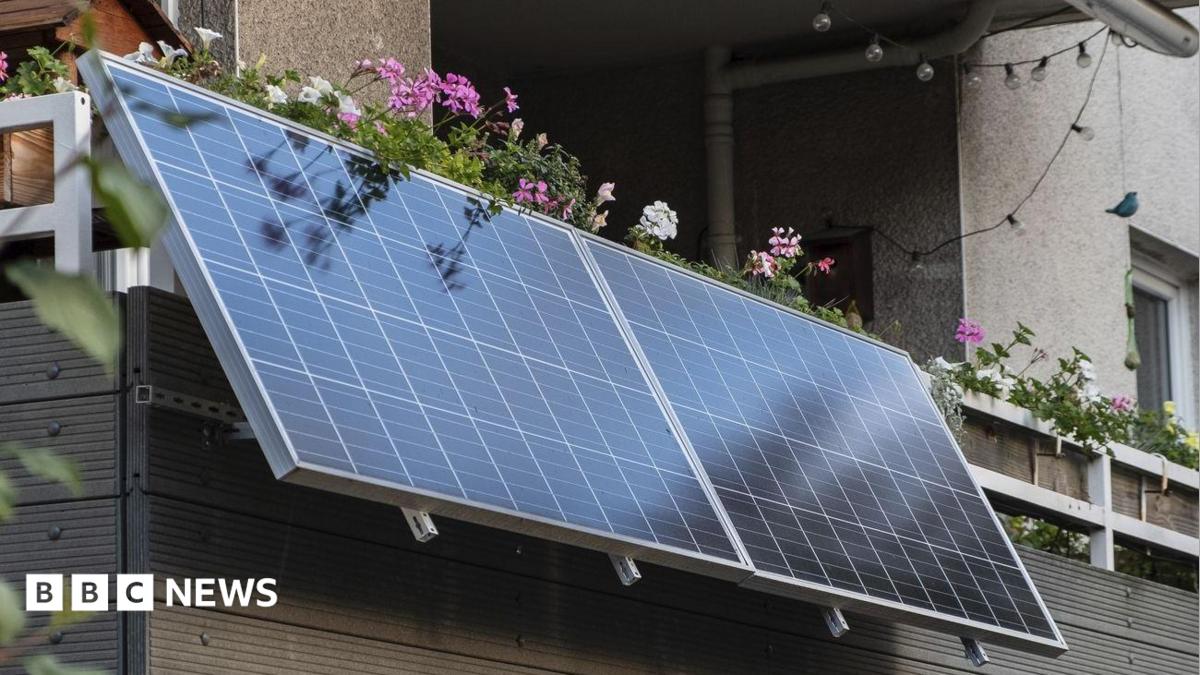
The government hopes the plug-in panels will offer people a more affordable way into solar energy compared to roof installation, although savings will be lower because they generate less power.
A one-panel kit will cost £699 while two-panels will be £1,089, according to UK solar company UKSOL.
The government expects prices to settle at £400-£600 as competition increases and more products are developed.
Its research shows a household could save between £70 and £110 a year on their energy bills.
The precise amount will depend on how the panels are orientated and how long they run. An unshaded south-facing spot is best.
Households which use energy during daylight hours will benefit most as the electricity must be used as it is generated.
Any power not consumed will flow back to the grid, but it’s unlikely homes will get any cash for this.
Unlike rooftop solar panels, these systems do not need to be certified under the official Microgeneration Certification Scheme (MCS), which is the UK’s official quality mark for small-scale renewable energy systems.
But it also means they will not normally qualify for the Smart Export Guarantee that pays people for excess solar power.

Experts share tips on how to make a flat or house feel like your own without annoying the landlord.

Globalstar director James F. Lynch sells $8.99m in shares

Most owners never think about asbestos until a builder stops work mid-job. Yet it sits quietly in thousands of older commercial premises across the country. The material is harmless while left alone, and dangerous once disturbed. For a business owner, that quiet risk carries a real legal duty.
The scale is easy to underestimate. Any property built or refurbished before 2000 may hold it, since the last types were only banned in 1999. Older shops, offices, and workshops sit among the many buildings that contain asbestos materials, and the risk stays hidden until a drill or a refit brings it into the open. Knowing where it lives, and what the law expects, protects both your staff and your budget.
Where Is Asbestos Hiding In Older Commercial Buildings?
Asbestos-containing materials, or ACMs, rarely look dramatic. They blend into fabric that owners walk past every day. That is exactly why a quick visual glance is never enough. Trained surveyors find it in places most people would never check.
Common spots include pipe lagging, ceiling tiles, and textured coatings such as old Artex. It also turns up in floor tiles, cement roof sheets, and guttering. Asbestos insulating board sat behind many partition walls and fire doors. Any refit from the 1960s to the late 1990s deserves a careful look.
Condition matters as much as location. Sealed, undamaged material in good order poses little immediate threat. Problems start when the surface breaks and fibres drift into the air. So a sound record of what sits where, and in what state, is the real starting point.
What Does the Law Ask of a Business Owner?
The core rule is the Control of Asbestos Regulations 2012. Its heart is a legal duty to manage asbestos in non-domestic premises. This applies whether you own the freehold or hold a repairing lease. It is a duty to control the risk, not always to remove the material.
The duty runs through a clear cycle. You must find out if asbestos is present and record its location. You then assess the risk and write a plan to manage it. That plan needs regular review, and everyone who might disturb the material must be told.
This sits alongside wider workplace safety law. If you are new to a site, the same care applies before you sign. Anyone renting a commercial space should ask for the asbestos register before taking on the lease. A gap in that paperwork can become your problem on day one.
Who Counts as the Duty Holder?
The law puts the duty on whoever controls maintenance and repair. In a leased unit, that role can sit with the landlord, the tenant, or both. The tenancy agreement usually settles the split. Read it closely, because assumptions here get expensive.
Alt text: A clipboard with survey notes on a table inside an old industrial building
Owner-occupiers carry the duty outright. A managing agent may hold it on behalf of a client. Where several parties share a building, the duty can be shared too. The safest move is to name the duty holder in writing and keep that clear.
How Do You Manage Asbestos Once You Find It?
Start with a survey by a competent, accredited surveyor. A management survey covers normal day-to-day occupation of the building. A refurbishment or demolition survey goes further before any works begin. The type you need depends on what you plan to do next.
From the survey you build an asbestos register and a management plan. The register lists each ACM, its location, and its condition. The plan sets out how you monitor it and who acts if it is damaged. Official HSE asbestos guidance sets out these duties in practical detail.
Training closes the loop. Anyone liable to disturb asbestos needs awareness training first, from electricians to shopfitters. This is one of the health and safety rules that owners forget until an inspection lands. A short course is far cheaper than a stop notice or a fine.
When Should You Call a Licensed Professional?
Not every job needs a licensed contractor, but the riskiest ones do. Higher-risk work, such as removing sprayed coatings or insulating board, requires an HSE licence. Lower-risk tasks may be handled under notifiable non-licensed work rules. Guessing the category is the mistake that hurts people.
If material looks damaged, stop and seek advice before anyone touches it. Do not sweep, drill, or bag suspect debris yourself. A qualified surveyor can test a sample and confirm what you are dealing with. Paying for that certainty is always the cheaper path in the end.
A Duty Holder’s Practical Starting Checklist
- Confirm in writing who holds the duty to manage for each premises.
- Arrange a management survey for any building predating the year 2000.
- Build an asbestos register and keep it somewhere staff can find it.
- Book awareness training for anyone whose work might disturb the fabric.
- Review the plan at least once a year, or after any building work.
- Ask for the register before you sign a lease on older premises.
Making Asbestos Management Part of Doing Business
Handled early, asbestos is a routine matter rather than a crisis. The steps are known, the surveyors are accredited, and the paperwork is light once set up. What turns it into a problem is silence and delay.
Treat the duty as ordinary upkeep, like a gas check or a fire drill. Book the survey, keep the record current, and brief your team. Do that, and a hidden risk becomes a managed line in your maintenance file. Your people stay safe, and your business stays on the right side of the law.
Frequently Asked Questions
Does My Business Really Have an Asbestos Duty?
Yes, if you control the maintenance or repair of non-domestic premises. The Control of Asbestos Regulations 2012 place a legal duty to manage on you. This holds even when you rent rather than own. The exact split between landlord and tenant depends on your lease.
How Do I Know If My Building Contains Asbestos?
Age is the first clue. Any building worked on before 2000 may contain it, as the final ban came in 1999. A management survey by an accredited surveyor gives you a proper answer. Never rely on a quick look, because most ACMs are hidden from view.
Do I Have to Remove Asbestos I Find?
Not always, and often you should not. Material in good, sealed condition is usually safer left in place and monitored. Removal is a job for trained contractors and can release fibres if done badly. Your management plan decides whether to manage, repair, or remove.
What Happens If I Ignore the Duty to Manage?
The risk to health is the first and worst outcome. On top of that, breaches can bring enforcement notices and heavy fines. Inspectors can stop work on a site until the issue is fixed.
Business
Ring Launches New ‘TAKE’ Encryption System, Set to Become Default for All Customers Worldwide
Amazon-owned Ring announced a new video encryption system Wednesday called TAKE, short for Throw Away the Key Encryption, which the company says will become the default privacy standard for all Ring customers worldwide once fully rolled out, beginning in phases this September.
According to Ring, TAKE is designed to deliver stronger default privacy protections for the company’s video doorbells and home security cameras while still preserving the intelligent features customers rely on, including Smart Alerts, a balance the company says its previous end-to-end encryption option could not offer without sacrificing certain functionality.
Ring’s videos have already been encrypted both while traveling to the cloud and while stored at rest, according to the company. TAKE adds an additional layer of control by using unique, rotating encryption keys for each video. A copy of those keys is temporarily held inside what Ring describes as a secure enclave within the cloud, a protected environment the company compared to a sealed vault that grants Ring access to the key only under strict, limited conditions tied to the specific intelligent features a customer has activated on their account. Once those features have processed the video, Ring says it discards and permanently deletes its copy of the key. From that point forward, only the account holder, along with any trusted Shared Users they have specifically chosen to enable, retains access to the keys needed to view the video on their own enrolled devices, such as a phone, tablet or computer.
Ring described the system using a household analogy to illustrate how the new encryption approach functions in practice. The company compared TAKE to house keys: the company that manufactures a lock does not keep a copy of the key for itself, a homeowner might give a spare key to a close friend or family member they trust completely, and if a handyman needs access to fix something, the homeowner lends a key only for the duration of the job before getting it back. According to Ring, TAKE operates on that same underlying principle, with the account holder retaining the master key to their videos and deciding who receives access to a spare, and for what specific purpose.
The new system builds on privacy protections Ring first introduced in 2021, when the company became the first major smart home security provider to offer customers full end-to-end encryption, or E2EE, as an optional setting for those seeking the highest available level of video privacy and control. That E2EE option will remain available going forward as an alternative to the new default TAKE system, according to Ring. Under E2EE, only a customer’s specifically enrolled devices ever gain access to their encryption keys, a design that limits certain functionality; because access is restricted so tightly under E2EE, Shared Users and various cloud-based features are not supported under that setting, though core functions including live view, playback and direct video sharing continue to work seamlessly.
Under the new arrangement, every Ring customer will receive stronger encryption protections by default once TAKE fully rolls out, according to the company, while customers who want an even higher level of control can continue opting into the existing E2EE setting instead. Ring said customers will be able to manage their encryption settings at any time directly within the Ring app, adjusting those settings on a per-device basis and switching between the two encryption options as their needs change.
The announcement arrives alongside a broader hardware update from Ring. According to the company, Ring is also introducing 4K video support for battery-powered video doorbells for the first time, alongside three new 2K doorbell models that expand high-resolution video recording capability across both battery-powered and hardwired doorbell products.
Ring framed the TAKE rollout as part of an ongoing, continuous approach to privacy and security development rather than a one-time initiative. The company said it remains focused on listening to customer feedback regarding privacy priorities and continuing to develop new features and protections in response to those concerns as its technology and product lineup continue to evolve.
According to Ring, TAKE will roll out to customers in phases beginning in September, with the company indicating the system will ultimately become the default encryption standard applied to all Ring customers globally once that phased rollout is complete. The company has published a white paper detailing the technical specifics of the new encryption upgrade and has directed customers seeking additional information about how their video content is protected to visit Ring’s dedicated privacy page.
The introduction of TAKE reflects broader industry-wide attention to privacy and data security within the connected home security camera market, a sector that has faced periodic scrutiny in recent years over how companies handle and protect sensitive video footage captured inside and around customers’ homes. By introducing a system designed to combine stronger default encryption with continued access to cloud-based smart features, Ring appears to be positioning TAKE as a middle-ground option between standard cloud storage, which typically grants the company broader technical access to stored video, and full end-to-end encryption, which restricts cloud-based functionality more significantly in exchange for maximum customer control over video access.
As the phased rollout of TAKE begins in September, Ring customers can expect the new encryption standard to gradually become the default setting applied across their devices, with the company emphasizing that customers will retain the ability to adjust their specific encryption preferences at any time through the Ring app as the new system becomes more widely available across the company’s global customer base.

FOX Business’ Kelly Saberi joins ‘Making Money’ to detail the Energy Department’s mission to ramp up automation technology at American oil rigs to boost domestic energy production.
President Donald Trump’s new national emergency declaration could restrict U.S. purchases and imports of certain foreign-made power grid equipment and potentially force utilities and infrastructure operators to replace equipment already in service as the administration moves to address national security risks to the electric system.
Under an executive order signed Wednesday, the Energy Department can prohibit the acquisition, importation, transfer or installation of foreign-produced bulk-power equipment if officials determine the transaction involves a covered foreign entity and poses an unacceptable security risk.
The order goes further for equipment already operating on the U.S. grid. The energy secretary can require foreign-manufactured or operated equipment to be identified, isolated, monitored, secured, disconnected, replaced or removed, potentially requiring utilities and other infrastructure operators to make changes to existing systems.
Those provisions could carry financial and operational consequences for the power sector, although the order does not estimate potential costs or identify which equipment or vendors could ultimately be affected.
TRUMP BLASTS BIG OIL FOR ‘MAKING TOO MUCH MONEY’

The power transmission infrastructure and switchyard at San Onofre Nuclear Generating Station in California. (Allen J. Schaben/Los Angeles Times via Getty Images / Getty Images)
The administration said the restrictions are necessary because foreign-produced equipment could contain vulnerabilities, including digital backdoors capable of providing remote access to critical infrastructure. The White House also argues that reliance on foreign suppliers leaves the U.S. vulnerable to equipment shortages caused by trade disruptions or other supply shocks.
The stakes have increased as artificial intelligence, data centers, advanced manufacturing and defense production drive greater demand for reliable electricity, according to the order.
NEW YORK’S AI DATA CENTER PAUSE SPARKS WARNINGS US COULD LOSE GROUND TO CHINA

President Donald Trump signs an executive order in the Oval Office at the White House in Washington, D.C. (Bonnie Cash/UPI/Bloomberg via Getty Images / Getty Images)
The equipment potentially covered spans major pieces of grid infrastructure, including transformers, generators, battery energy storage systems, grid-connected inverters, turbines and industrial control systems, as well as associated software, firmware and remote-access capabilities.
The order directs officials to weigh reliability and safety, the availability of secure replacement equipment and continuity of essential service before requiring equipment to be isolated, disconnected, replaced or removed. The Energy Department can also phase in compliance.
The order does not impose a blanket ban on all foreign-made grid equipment. Restrictions depend on Energy Department determinations involving covered foreign entities and national security risks, and the department can establish a list of pre-qualified equipment and vendors.
The Energy Department has 120 days to publish implementing rules or regulations as needed, providing the power industry with a clearer picture of which suppliers and equipment could face restrictions.

Workers assemble transformers at a factory in Neijiang, China, on July 31, 2026. President Donald Trump’s executive order gives the Energy Department authority to restrict certain foreign-produced bulk power equipment that officials determine poses a (Tang Mingrun/VCG via Getty Images / Getty Images)
CLICK HERE TO GET FOX BUSINESS ON THE GO
Trump is also directing the federal government to reconsider how it purchases energy infrastructure. Within 180 days, the energy secretary must recommend changes to federal procurement rules aimed at addressing national security risks and prioritizing U.S.-manufactured energy infrastructure in federal procurement.
That provision could have another business impact, shifting some federal demand away from foreign suppliers and toward domestic manufacturers as Washington seeks to secure the equipment underpinning an increasingly power-hungry U.S. economy.

Rainier Acquisition prices $75M IPO on Nasdaq
Business
Super Hi International Holding Ltd. 2026 Q2 – Results – Earnings Call Presentation (NASDAQ:HDL) 2026-08-26


Seeking Alpha’s transcripts team is responsible for the development of all of our transcript-related projects. We currently publish thousands of quarterly earnings calls per quarter on our site and are continuing to grow and expand our coverage. The purpose of this profile is to allow us to share with our readers new transcript-related developments. Thanks, SA Transcripts Team

2 Broke Girls | Caroline’s Financial Disaster

York residents evacuated after ‘explosion’ at property

Meta’s $18bn settlement may hasten reckoning for social media on child safety





-

 Fashion5 days ago
Weekend Open Thread: Madewell – Corporette.com
-

 Crypto World24 hours ago
SpaceX stock could rise 75% to $240, JPMorgan says
-

 Business4 days ago
Musk’s Tesla, SpaceX Confirm $16.8 Billion ‘Terafab’ Chip Plant as World’s Largest Building in Texas
-

 Crypto World5 days ago
anatomy of crypto’s biggest liquidation event since 2021
-

 Crypto World2 days ago
A $30 Billion AI Fund Implodes, Now the SEC Is Investigating Wall Street’s Role
-

 Politics5 days ago
6 months on, Irish renters crushed by effects of government housing bill
-
 NewsBeat5 days ago
The ‘Lucky Dip Gang’ causing carnage for clicks: After five thugs were killed speeding in the wrong direction on a motorway, GUY ADAMS investigates a sick new trend… and why police aren’t even allowed to pursue them
-

 Crypto World20 hours ago
Did Trump Just Move SpaceX Stock With One Truth Social Post?
-

 Business4 days ago
Mystery AI Model ‘Ox Alpha’ Draws Developers With Free Access as Chinese Lab Origins Remain Debated
-

 News Videos7 days ago
Don’t Leave Your Financial Future To Chance | August 19, 2026
-

 Business6 days ago
Five Below: Kids Discount Retailer Reaps Rich Rewards
-

 Business2 days ago
Moderna CEO warns China is pouring state money into mRNA technology
-

 Business2 days ago
NVIDIA Stock Drops Nearly 2 Percent to $210 on Seventh Losing Day Ahead of Critical AI Earnings
-

 Business5 days ago
UK firms in critical financial distress rise 9% to 53,756
-

 Sports4 days ago
Deshaun Watson fires back at Browns fans after being booed: ‘It’s a disrespectful thing’
-

 Crypto World6 days ago
Optimism-funded team's deciding vote shifts $49 million in OP tokens away from users
-

 Tech7 days ago
OpenAI confirms ChatGPT is down as logins and signups fail
-

 Crypto World4 days ago
Google Gemini AI Predicts Ethereum Could Become the Trade Retail Misses in 2026
-

 Business7 days ago
PayPal and Venmo now accepted for tuition at several universities
-
 Crypto World5 days ago
Nvidia Stock Suffers Longest Losing Streak Since 2022: Will Q2 Earnings End It?
You must be logged in to post a comment Login