

Business
(VIDEO) Three Firefighters Killed Battling Fast-Moving Wildfires Along Colorado-Utah Border

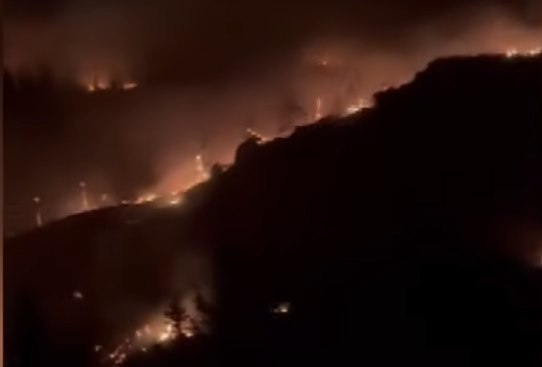
BEAVER, Utah — Three firefighters died and two others were injured Saturday while battling rapidly spreading wildfires along the Colorado-Utah border, authorities said, as hot, dry and windy conditions fueled blazes across the drought-stricken West.
The fatalities occurred during a burnover on the Knowles and Gore fires in western Colorado’s Mesa County, where crews were part of an interagency response effort. The injured firefighters were transported to a hospital with burn injuries after deploying emergency shelters in a last-ditch effort to protect themselves from the advancing flames.
The U.S. Wildland Fire Service confirmed the deaths Sunday, describing the incident as a tragic loss during operations on the fast-moving fires. Hot, gusty winds and low humidity created dangerous conditions that caused the blazes to intensify quickly, overrunning the firefighters’ position.
Colorado Gov. Jared Polis expressed deep sorrow over the loss. “I’m devastated by the loss of three heroic firefighters who died in the line of duty,” he said in a statement.
The incident highlights the extreme risks faced by wildland firefighters as the wildfire season intensifies across the region. Prolonged drought, above-average temperatures and strong winds have created tinder-dry landscapes primed for rapid fire spread.
Multiple fires continue burning in Utah and Colorado, prompting firefighting resources to be stretched thin. In Utah, officials have imposed restrictions on fireworks ahead of the Fourth of July holiday due to extreme fire danger. The Snyder Fire, burning near the border, has scorched thousands of acres.
Fire officials urged caution and vigilance as conditions remain volatile. Crews are working around the clock to contain active blazes, but shifting winds and rugged terrain complicate suppression efforts.
The deaths come amid a challenging wildfire season in the Western United States. Climate patterns, including La Niña influences in some forecasts, combined with persistent dry weather have elevated fire risks. Experts warn that such conditions may become more frequent as the climate warms.
Wildland firefighting involves coordinated efforts from federal, state and local agencies. The fallen firefighters were part of a larger team responding to the border fires, which threatened communities and vast areas of public lands.
Investigations into the exact circumstances of the burnover are underway, a standard procedure following line-of-duty deaths. Officials will examine weather data, fire behavior models and deployment decisions to learn lessons for future incidents.
The two injured firefighters are receiving medical care, though details on their conditions were not immediately released. Support services for first responders and their families have been activated in the wake of the tragedy.
Across the West, other fires are also demanding attention. Utah has seen significant activity, with blazes forcing evacuations and road closures in some areas. Colorado has similarly grappled with multiple starts, taxing resources already committed to the border incident.
Fire managers emphasize the importance of public cooperation. Campfire restrictions, fireworks bans and awareness of dry vegetation help prevent human-caused ignitions, which account for a large percentage of wildfires.
The loss of three firefighters serves as a somber reminder of the dangers inherent in protecting lives, property and natural resources. Wildland firefighters often work in remote, hazardous environments with limited escape options when fires behave erratically.
Communities near the affected areas have rallied in support. Processions honored the fallen as news spread, with residents lining roads in Grand Junction and other locales to pay respects.
Federal and state leaders have pledged full support for ongoing firefighting operations and investigations. Resources from across the country are being mobilized to assist as the season progresses.
Climate scientists note that wildfire seasons are starting earlier and lasting longer in many regions due to changing weather patterns. Drier fuels and more extreme fire weather days increase both frequency and intensity of blazes.
For families of the deceased, the coming days will involve mourning and memorial arrangements. Fire agencies typically hold formal honors to recognize the ultimate sacrifice made in service to the public.
Meanwhile, containment efforts continue on the Knowles, Gore and other fires. Progress has been made in some sectors, but complete control remains elusive amid challenging conditions.
Residents in fire-prone areas are advised to prepare evacuation plans, maintain defensible space around homes and stay informed through official channels. Air quality alerts have also been issued due to heavy smoke in downwind communities.
The incident underscores the critical role of wildland fire management in the American West. As development expands into wildland-urban interfaces, the stakes for both firefighters and civilians continue to rise.
Support for wildfire prevention and suppression funding remains a priority for Western lawmakers. Investments in technology, training and fuel reduction projects aim to reduce risks, though experts acknowledge that complete elimination of danger is impossible.
As recovery and investigation efforts proceed, the focus remains on honoring the fallen and supporting their colleagues and loved ones. The bravery displayed in the face of such peril exemplifies the commitment of those who choose this demanding profession.
Broader weather patterns suggest the fire season may have more challenges ahead. Forecasts indicate continued hot and dry conditions across much of the region, necessitating sustained vigilance from both responders and the public.


Founded in 2008, Pristine Logistics operates an integrated rail-focused multimodal logistics platform, offering transportation and infrastructure solutions for both containerised and non-containerised cargo. Its operations combine long-haul rail transportation with first- and last-mile road connectivity through strategically located logistics terminals serving domestic and export-import (EXIM) corridors.
The company has emerged as one of India’s fastest-growing rail-focused multimodal logistics players in terms of revenue and EBITDA growth between FY23 and FY25. During the period, it expanded its terminal network from eight to 12 terminals, while container volumes increased from 402,049 TEUs to 506,447 TEUs and non-containerised cargo volumes rose from 1.92 million metric tonnes to 2.51 million metric tonnes.
Aastha Spintex IPO opens for subscription. Check GMP, brokerages review and other detailsPristine offers a diversified portfolio of services including EXIM and domestic container logistics, rail transportation, bulk rail logistics, warehousing, container maintenance and repair, and mining logistics following its acquisition of Sical Logistics. As of December 31, 2025, the company operated more than 5,000 domestic rail containers and around 455 specialised 40-foot dwarf containers, besides managing a warehousing network of approximately 1.2 million square feet across India.

The company is also expanding its logistics footprint with new terminals at Bhurkunda (Jharkhand), Haldia (West Bengal) and Bengaluru (Karnataka). The Haldia facility will mark its entry into port-based liquid cargo logistics, while the Bengaluru project is being developed as a rail-linked inland container depot near major industrial hubs.
Adding to its growth pipeline, Pristine recently secured a long-term overburden excavation and removal contract worth Rs 3,422 crore (excluding GST) from South Eastern Coalfields Limited, providing significant long-term revenue visibility.

World Acceptance director Charles Way sells $174,930 in stock


Part of three-year pilot program with OFI.

International clients will continue to receive BSE Market Data Products from BSE starting January 1, 2027, with no interruption in service, the exchange said in a statement.
BSE and Deutsche Borse AG are working together to ensure a smooth transition throughout the migration process. There will be no change for clients based out of India, who will continue to access market data products directly from BSE.
In October 2013, BSE and Deutsche Borse AG entered into a market data service agreement for licensing BSE market data products to all international clients. Under this agreement, Deutsche Borse AG was responsible for sales and marketing of all BSE market data products to customers outside of India, while BSE serves all the domestic clients directly.

Most B2B marketing now pushes buyers towards self-service. Chatbots, automated email sequences and gated content do the heavy lifting, and a salesperson only appears at the very end, if at all. And for a lot of the journey, that’s exactly what buyers want. But watch what happens at the decision point, and the picture shifts.
When the stakes are high, buyers reach for a person. We’ll walk you through why that conversation still matters and what businesses lose when they remove it.
What Buyers Are Really Looking For in That Call
By the time a B2B buyer picks up the phone, they’ve usually done their homework. They’ve read your site, compared you against two or three competitors and formed a rough opinion. What they can’t get from any of that is reassurance, and that’s the thing they’re after when they ask to speak to someone.
They want their specific questions answered. Not the generic ones a FAQ page covers, but the awkward ones tied to their own setup, their budget and the people they’ll have to convince internally. A chatbot script can’t handle that. A real conversation can.
There’s also a quieter test happening. The buyer is working out whether you actually understand their problem or whether you’re just reading from a deck. A good agent picks up on that and adjusts, reading the room in a way a script can’t. It’s the kind of judgement a knowledgeable B2B telemarketing agency is built around, and it’s often what keeps a deal moving when automation has taken it as far as it can.
The Gap Most Businesses Aren’t Filling
Plenty of companies have poured money into content and automation to handle the research stage, and they’ve done it well. The problem is what happens next. When the buyer is finally ready to talk, there’s nobody picking up the phone.
That gap costs deals. Most buyers do prefer to research on their own first, and Gartner found in early 2026 that 67% would rather buy without a rep at all. But that’s not the whole picture. Buyers who go fully self-service are 1.65 times more likely to regret the purchase, and Gartner expects that by 2030, 75% of buyers will prefer sales experiences that put human interaction ahead of AI. The demand for a real conversation is there at the moments that matter. The supply, on the buyer’s terms, often isn’t.
The fix doesn’t mean scrapping your automation. It means having experienced people ready to step in at the point where the buyer wants a proper discussion. Some businesses build that capacity in-house, while others bring in outside help to put trained agents on the phone who can hold a consultative conversation instead of a scripted one.
Why Complex Deals Make the Human Even More Important
The bigger the decision, the stronger the pull towards a human. A few things tend to be true of high-value B2B purchases:
- The contract value is significant, so the buyer wants to reduce their risk
- Several stakeholders are involved, each with their own concerns
- The product is complex enough that a written answer leaves too much room for doubt
Gartner puts the typical B2B buying group at six to ten people, each weighing the decision differently. The more voices in the room, the harder it is for static content alone to bring them to a shared yes.
In those situations, a conversation does work that no email can. It lets the buyer think out loud, push back and get straight answers in real time. It also lets the supplier qualify properly, so both sides know early whether there’s a genuine fit.
This is the part automation will probably never replace. Software is brilliant at scale and consistency, but it can’t read hesitation in someone’s voice or sense when a prospect needs more time. A skilled agent can, and that’s often what tips a careful buyer into saying yes.
A Quick Recap
If you’ve leaned hard into digital-first marketing, it’s worth checking whether you’ve accidentally removed the human from the moment buyers most want one. The research stage runs well on automation. The decision stage rarely does.
Keep the content and the email sequences doing what they’re good at. Just make sure that when a prospect is ready to talk, there’s someone capable on the other end of the line. That combination, smart automation early and a real conversation when it counts, is what tends to close the better deals.

.webp?t=1782738178)
Discover how ROHA’s micronized natural colors elevate clean-label, high-performance food innovation.
Ford’s limited-edition Super Duty Proud to Honor package features patriotic styling, with a portion of proceeds supporting Blue Star Families. (Credit: Ford Motor Company)
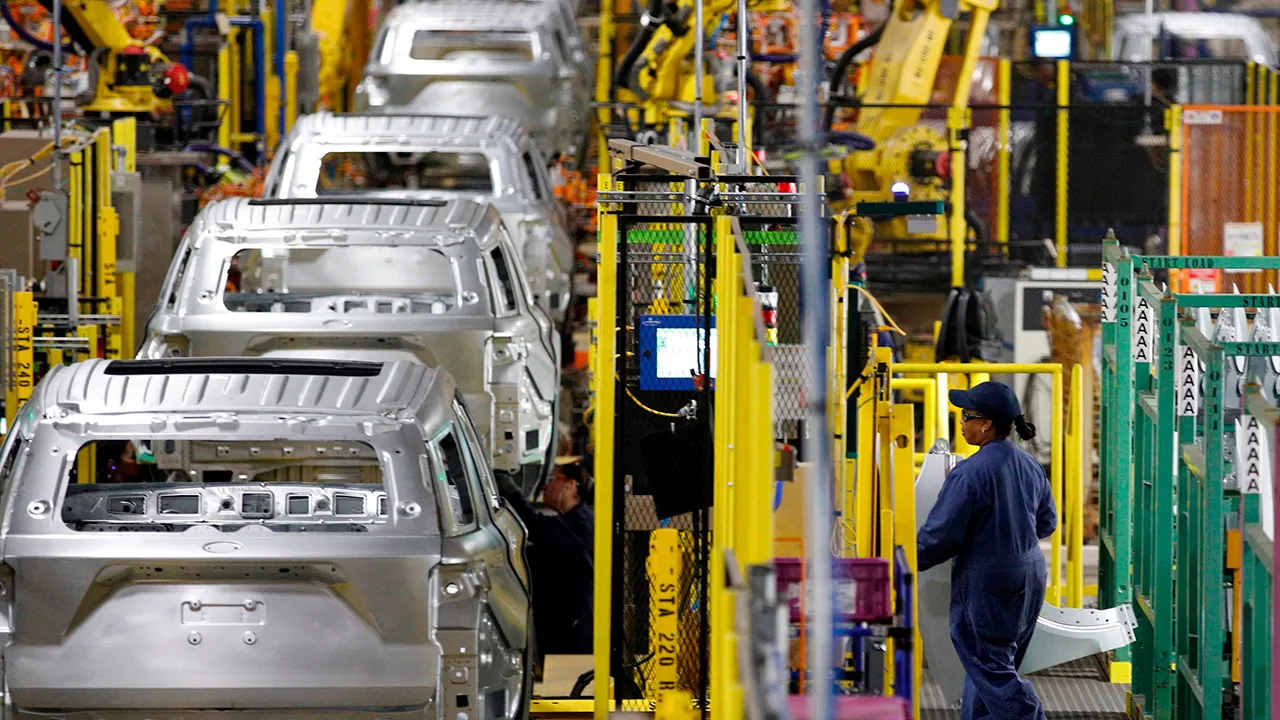
Ford has rehired experienced human engineers to help address the shortcomings of artificial intelligence (AI) tools meant to tackle quality issues in the automaker’s production processes.
The hiring push helped Ford top the JD Power 2026 U.S. Initial Quality Study (IQS) for the first time since 2010 amid improvements in the quality of its new vehicles, and follows some hard-learned lessons about the ability of AI to replace human knowledge in production processes.
“Artificial intelligence is a fantastic tool, but it’s only as good as the information you use to train it,” Charles Poon, Ford’s vice president of vehicle hardware engineering, said on a press call Wednesday, according to a report by Bloomberg.
“Over prior years, we didn’t pay as much attention as we should have to the experience of our most knowledgeable engineers that have been with us through many product cycles,” he said.
FORD TEAMS UP WITH OUTDOOR OUTFITTER FILSON TO LAUNCH NEW BRONCO SUV
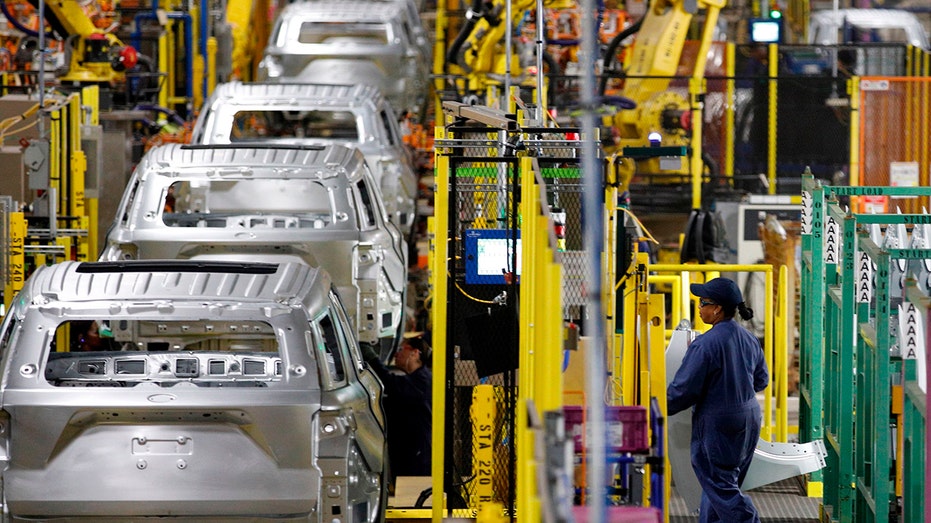
Ford rehired veteran engineers to help guide AI systems that weren’t sufficient to improve production quality on their own. (Jim Young/AFP via Getty Images)
“Mistakenly, we thought that by just introducing artificial intelligence and ingesting the design requirements that we had, that would produce a high quality product,” Poon said.
He also noted that the AI tools lacked the training and expertise that veteran technicians have, and many of the company’s veteran technicians left Ford before their knowledge could be used to improve the performance of the AI tools.
“We recognized that for us to enhance some of our automation and machine learning and artificial intelligence tools, we needed to ensure that they were trained by the most experienced individuals,” Poon said.
FORD CEO SAYS ‘CUSTOMER HAS SPOKEN’ AFTER EV SHIFT DRIVES MAJOR QUARTERLY LOSS
| Ticker | Security | Last | Change | Change % |
|---|---|---|---|---|
| F | FORD MOTOR CO. | 14.13 | +0.02 | +0.14% |
The Detroit giant said that it has hired about 300 veteran engineers to work in its vehicle engineering division in the last few years.
“Free from daily production schedules, these engineers now act as internal auditors, running mandatory weekly design reviews to hunt for and eliminate potential failure points before blueprints ever reach the factory floor,” Ford said in a release.
Ford Chief Operating Officer Kumar Galhotra said that the experienced engineers and technical specialists were “at the heart” of the company’s efforts to improve production quality by addressing process issues before they’re incorporated into workflows.
FORD RECALLS MORE THAN 255,000 FOCUS VEHICLES OVER ENGINE STALL RISK
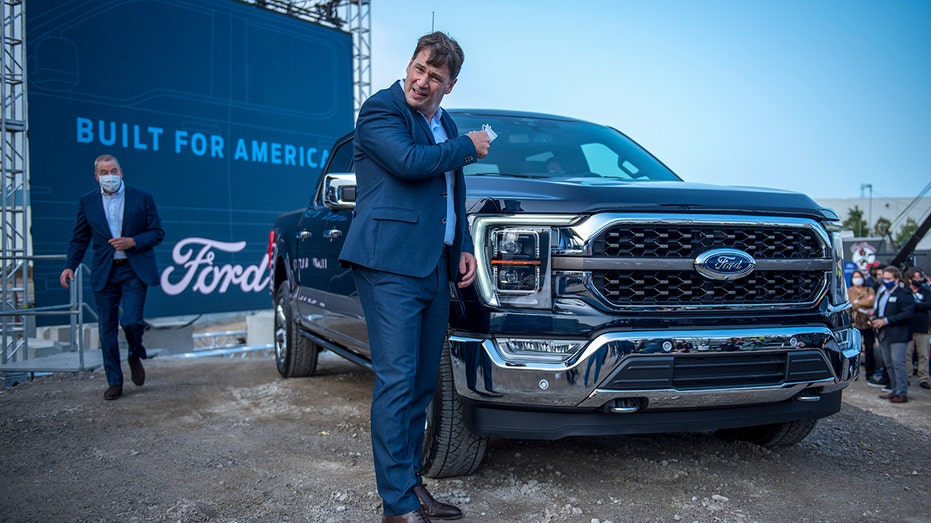
Ford CEO Jim Farley said the quality improvements are helping Ford’s bottom line. (Nic Antaya/Getty Images)
Ford CEO Jim Farley told Bloomberg TV that the shift is helping improve the company’s financial performance, with spending on warranty coverage and recalls coming down, which in turn is boosting the automaker through cost reductions.
JD Power’s 2026 IQS not only placed Ford at the top of the list for the first time in 16 years, but it also ranked the Ford F-150, Ford Mustang and Ford Super Duty at the top of their respective segments for the second straight year.
GET FOX BUSINESS ON THE GO BY CLICKING HERE
Additionally, the Ford Escape, Ford Explorer, Ford Expedition and Ford Maverick also ranked among the top three in their segments – which meant that seven of the company’s top 10 models ranked in the top three of their categories.
FOX Business reached out to Ford for comment.

The construction industry has always been built on hard work, skilled teams, and careful planning. Today, technology is changing how projects are managed, tracked, and completed. Few people understand that shift better than Ryan Basnaw.
As the CEO of Axsus Civil Development Company, Basnaw has spent years working at the intersection of construction and technology. His experience in engineering, project management, and business operations has shaped the way he approaches both challenges and opportunities.
His journey began long before he entered the construction industry. Growing up in northeastern Washington, Basnaw developed a strong appreciation for discipline, problem-solving, and the outdoors. He spent much of his free time riding dirt bikes, snowmobiling, skiing, and playing music. Those experiences helped build the mindset that would later define his career.
Today, he is focused on helping construction companies improve the way they operate through technology and better systems.
How Ryan Basnaw’s Engineering Background Shaped His Career
Basnaw attended Newport High School before earning an Associate of Engineering degree from Spokane Falls Community College in 2014. He later completed a Bachelor’s degree in Petroleum Engineering in 2017.
Engineering taught him to think systematically. Instead of focusing only on the problem in front of him, he learned to examine the process behind it.
That mindset became valuable as he entered the construction industry.
Over time, Basnaw recognized that many contractors faced similar operational challenges. Tracking labor, equipment, schedules, inspections, materials, and project costs often required multiple systems and significant manual effort.
Rather than accepting those inefficiencies, he began looking for ways to improve them.
“Never be too proud to admit you don’t know something,” Basnaw says. “That’s how you learn and improve.”
That willingness to keep learning became one of the driving forces behind his leadership style.
Lessons Learned From Real Construction Challenges
Like many business leaders, Basnaw’s biggest lessons came from difficult situations.
He openly discusses challenges involving cash flow issues, lawsuits, and team members who misrepresented their qualifications or abilities. Instead of viewing those experiences as setbacks, he treated them as opportunities to strengthen his business systems.
One lesson stands out.
On a past project, significant rework became necessary because an inspector failed to properly document completed work. The disagreement created costly complications that could have been avoided with better records.
The experience changed how Basnaw approaches project documentation.
“A project required significant rework due to an inspector not documenting our work correctly,” he recalls. “Now we document everything so inspectors can never claim they didn’t know something when it happened.”
The lesson reinforced a principle that remains central to his leadership philosophy: details matter.
Why Documentation and Consistency Matter in Construction
Ask Basnaw what contributes most to long-term success and his answer is simple.
“Consistency and attention to detail.”
While many people search for shortcuts, he believes strong systems and daily execution create lasting results.
That philosophy can be seen throughout his work. Whether managing construction operations or developing software tools, he focuses on creating processes that help teams stay organized, accountable, and efficient.
The approach reflects another one of his guiding beliefs.
“Show up and do the work.”
It is a straightforward message, but one that has become increasingly important in industries where project complexity continues to grow.
For Basnaw, success is rarely about a single breakthrough. It comes from repeated actions performed well over time.
How Technology Is Changing Construction Management
As construction projects become more complex, technology is playing a larger role in daily operations.
Basnaw has been heavily involved in developing systems designed to help contractors manage their businesses more effectively. These tools support areas such as time tracking, fleet management, inspections, scheduling, material management, and cost tracking.
His interest in technology stems from a practical goal: helping companies gain better visibility into their operations.
The construction industry generates enormous amounts of information every day. Without proper systems, important details can easily be lost.
Basnaw believes technology should simplify decision-making rather than complicate it.
By improving visibility and accountability, companies can better understand what is happening across projects and respond more effectively when issues arise.
What Success Means to Ryan Basnaw
Many people define success by revenue, titles, or growth.
Basnaw views it differently.
“Your level of success is measured by the freedom to do what you want with your time.”
That perspective influences both his personal and professional goals. He believes people should pursue success in a way that creates long-term flexibility and fulfillment.
At the same time, he recognizes that professional achievement cannot exist in isolation.
“Personal and professional success have to be focused on together.”
It is a balanced view that reflects years of experience managing businesses, projects, and teams.
Looking Ahead
Ryan Basnaw’s career has been shaped by engineering, construction, technology, and a commitment to continuous improvement.
From growing up in northeastern Washington to leading a construction company and helping develop modern management tools, his path has been built on practical experience and lessons learned in the field.
Through challenges, successes, and industry changes, one principle has remained constant.
Pay attention to the details. Keep learning. Show up every day and do the work.
For Basnaw, those simple ideas continue to guide both his leadership and his vision for the future of construction.

Fabrício Blois
Group CEO & Executive Director
Hello, partners. Welcome to our results day. I’m Fabricio, I’m CEO of Prosus. Today morning, we released our results. I’m very excited about what we are delivering, and I hope you’ll enjoy our results call today.
Today is a special call. I’m not going only to show you the numbers, but we are going — we have 2 special guests, yes. Last time, you asked me to talk more about the ecosystem and food delivery. And today, we have the CEO of iFood and the CEO of Just Eat here with me to tell you much more details about what’s happening at Prosus.
I’m very excited about the results. I’m going to make an introduction to you about our ecosystem, and I hope you’ll enjoy what we are going to see today. So to start, first, I’m very happy on how Prosus is delivering. We are now much more focused. We are focused in delivery. We are focused in finance. We are focused in experience, and all our business are growing and doing well. And I’m going to open to you today much more info about how we are operating.
We are also focused in

The proposed IPO comprises a fresh issue of equity shares worth up to Rs 500 crore and an offer-for-sale (OFS) of up to 1.32 crore equity shares by promoters and another selling shareholder, according to the draft red herring prospectus (DRHP) filed on Sunday.
The promoters offloading shares through the OFS are C Bharanikumar, Pradeep Chandrasekaran, Prasath Chandrasekaran, Sabarinathan Anbalagan, Hari Sudhan A, Nithin Arumugam, P Anbalagan and P Arumugam, while Palaniappan Ramalingam is the other selling shareholder.
The Coimbatore-based company may also consider a pre-IPO placement of up to Rs 100 crore in consultation with the book-running lead managers. If such a placement is completed, the size of the fresh issue will be reduced accordingly.
As per market sources, the IPO size is pegged at Rs 1,100 crore to Rs 1,300 crore.
Proceeds from the fresh issue will include Rs 150 crore to part-finance capital expenditure towards the Phase-II expansion of its manufacturing facility at Mundra in Gujarat, Rs 250 crore for payment of debt, with the remaining funds to be used for general corporate purposes, the draft papers showed.
Incorporated in 1987, Eswari Global Metal Industries is an integrated multi-metal and waste recycling and value-added manufacturing company engaged in recycling non-ferrous metals, plastics and e-waste.It manufactures value-added products including pure lead and lead alloys, aluminium alloys, copper ingots, tin products and plastic granules catering to industries such as battery manufacturing, automotive and industrial sectors.
The company operates nine manufacturing facilities across Karnataka and Tamil Nadu through itself and its subsidiaries, with a total installed production capacity of 165,106 metric tonnes per annum (MTPA) as of December 31, 2025.
For the nine months ended December 2025, the company reported a revenue of Rs 1,401.5 crore and a net profit of Rs 83.9 crore.
DAM Capital Advisors, ICICI Securities and Motilal Oswal Investment Advisors are the book-running lead managers to the issue, while KFin Technologies is the registrar.

India women qualify for LA28 Olympics despite World Cup exit, but men’s team haven’t yet; here’s why

Usernames Are Coming to WhatsApp Soon. Here’s How to Reserve Yours

‘My lifelong commitment to support other parents after my daughter’s rocky start in life’


-
 Sports6 days ago
Two goals and an assist by sheer aura: Cristiano Ronaldo just entered the World Cup chat
-

 Fashion3 days ago
Weekend Open Thread: Staud – Corporette.com
-

 Politics3 days ago
The House | Manchesterism won’t survive the painful trade-offs unless it gets citizens on board
-

 Politics4 days ago
Potential 2028er World Cup attendee leaderboard
-

 Business3 days ago
Asia stock markets slide as tech shares slump
-

 News Videos23 hours ago
MAJOR BITCOIN & MARKET UPDATE!!!! (MUST WATCH ASAP!!!)
-

 Tech4 days ago
A Look At A Gaggle Of Transputer Boards
-
Crypto World6 days ago
Bitcoin (BTC) Dips Below $62K, Ethereum (ETH) Plunges 6% Daily: Market Watch
-
 Crypto World4 days ago
Dell (DELL) Shares Tumble Over 5% Following Analyst Downgrade to Hold
-

 Crypto World5 days ago
Securitize Wraps Roubini's SEC-Registered ETF as Dubai VARA Digital Security
-

 Crypto World2 days ago
Coinbase, Circle Deepen Crypto Stock Losses Despite Resilient S&P 500
-
Business6 days ago
Entergy settles forward sale agreements, raises $672 million in cash proceeds
-

 Crypto World3 days ago
Kraken's xStocks Opens Bending Spoons IPO Registration to EEA Retail
-

 Sports3 days ago
FIH Pro League: India defeat Pakistan 7-1, register biggest win of campaign | Other Sports News
-

 Tech2 days ago
Russian hackers now target Signal backup recovery keys
-

 Crypto World3 days ago
RTX holders must register wallets before token distribution begins
-
 Crypto World3 days ago
Hyperliquid Named on Singapore MAS Investor Alert Register
-

 Tech2 days ago
Bluekit phishing kit adopts browser-in-the-middle for login theft
-

 Crypto World4 days ago
Bitcoin Sparks $600M Hourly Liquidations With $65,000 Set To Become Resistance
-
 Crypto World4 days ago
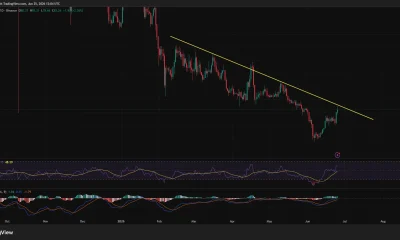
AAVE price tests 9-month trendline after 17% rebound as breakout hopes build
You must be logged in to post a comment Login