

Business
(VIDEO) World Cup Final Debuts First Halftime Show With Shakira, Madonna, BTS and Bieber, Draws Mixed Reviews


EAST RUTHERFORD, N.J. — The 2026 FIFA World Cup final delivered a first in the tournament’s nearly century-long history Sunday, staging a full-scale halftime show during the championship match between Spain and Argentina, a production curated by Coldplay frontman Chris Martin that drew both praise and sharp criticism from fans and commentators around the world.
The performance, which stretched the intermission between the first and second halves to 27 minutes, featured an extensive lineup including Madonna, Justin Bieber, K-pop group BTS, Colombian singer Shakira, Nigerian artist Burna Boy, conductor Gustavo Dudamel, the Muppets, and a cameo appearance from actor Jason Sudeikis reprising his role as Ted Lasso. The show closed with a group of children gathered at midfield joining several of the performers for a song about love.
Madonna opened her segment from the stadium tunnel before moving out onto the field as the crowd cheered. Dudamel then led the Muppets through a rendition of “Seven Nation Army,” before BTS joined the performance to sing their hit “Dynamite.” In a scripted transition, Sudeikis’ Ted Lasso character “subbed in” Bieber, who performed a slower ballad called “Everything Hallelujah,” reworking some lyrics to reference the World Cup. Shakira and Burna Boy later performed the tournament’s official anthem, “Dai Dai,” backed by a large ensemble of dancers, providing what many viewers described as the show’s most energetic stretch before the closing number.
The spectacle marked a significant departure for FIFA and World Cup organizers, who have never previously staged a Super Bowl-style halftime show at a men’s World Cup final. This year’s tournament, hosted jointly by the United States, Mexico and Canada, has been billed by organizers as one of the most ambitious global sporting events ever staged. Alex Lasry, chief executive of the New York New Jersey host committee, had described the final in the lead-up to Sunday’s match as potentially one of the largest events in human history, citing the scale of preparations for an anticipated global audience of billions and the presence of international dignitaries.
Reaction to the show was sharply divided. Many viewers and commentators compared it favorably to recent Super Bowl halftime performances, including Bad Bunny’s widely discussed set earlier this year, with several observers noting that Sunday’s show felt more energetic and easier to follow. Others took issue with the length and premise of the show altogether, questioning why a 27-minute intermission was inserted into a sport that has never featured elaborate halftime entertainment at its biggest matches.
Former England international Wayne Rooney was among the most vocal critics, telling the BBC broadcast team that he thought the show was “crap.” His comments echoed a broader thread of criticism from soccer traditionalists who argued that the production imported an American sporting convention into a global tournament that had never asked for it.
Despite the criticism, the overall reception leaned positive, with many viewers saying the show flowed well and did not overstay its welcome despite its unusual length for a soccer match. Given the show’s apparent success, organizers and analysts suggested it could become a permanent fixture of future World Cup finals, following the same trajectory that turned the Super Bowl halftime show into one of the most-watched entertainment events in the United States each year.
The elaborate production stood in contrast to the match itself, which many observers described as one of the more underwhelming finals in recent World Cup history. Both Spain and Argentina played cautiously in the opening exchanges, with the contest slow to develop scoring opportunities even as the two nations vied for the sport’s most prestigious trophy. Spain ultimately emerged victorious in extra time, defeating a 10-man Argentina side after a red card left the South Americans facing the closing stages of the match a player short.
Sunday’s final carried additional historical weight beyond the halftime spectacle. Argentina had entered the match with a chance to become the first nation to win consecutive World Cup titles since Brazil accomplished the feat in 1958 and 1962, while the tournament as a whole was already being described as the most attended World Cup ever held and among the most expensive major sporting events in history.
The match also drew a heavy political presence, with President Donald Trump attending the final in person, arriving at the stadium as part of a large helicopter convoy ahead of kickoff. His attendance added another layer of attention to a final that organizers had positioned as a landmark moment not just for soccer, but for large-scale international sporting spectacle more broadly.
Social media reaction to the halftime show was immediate and voluminous, with debate continuing well after the final whistle over whether the performance represented a welcome evolution for the World Cup or an unnecessary Americanization of the sport’s oldest and most storied championship match. Supporters of the show pointed to its relatively restrained political tone and broad international lineup, featuring artists from Latin America, Asia, Europe and the United States, as evidence that organizers had successfully balanced entertainment value with global appeal.
Critics, meanwhile, continued to argue that soccer’s biggest stage did not need supplementary entertainment to draw attention, given the sport’s existing global following and the drama inherent in a World Cup final itself. That tension between spectacle and tradition is likely to shape discussions ahead of future tournaments, particularly if FIFA and host organizers choose to continue expanding the ceremonial elements surrounding the sport’s championship match.
For now, Sunday’s show stands as a one-time experiment that has already reshaped expectations for how the World Cup’s biggest match might be presented in years to come, even as reaction to its first attempt remains far from unanimous among fans, players and commentators who watched it unfold in New Jersey.


Former Miami Mayor Francis Suarez discusses Miamis 36% consumer price index hike since 2019, making it pricier than NYC. He addresses housing affordability for the middle class and Cubas impending collapse.
Americans who are looking to buy a home for the first time are seeing some gradual improvement in affordability, though the market remains far more challenging than it was before the COVID-19 pandemic – particularly in some parts of the country.
A new analysis by Realtor.com finds that the cost of a typical starter home has risen from $256,000 in 2019 to $344,000, while the share of affordable listings priced under $350,000 has fallen from 55% to 37.6% in that period.
Realtor.com senior economist Hannah Jones told FOX Business that the market for starter homes has changed “dramatically” since the pandemic, with shifts driven by higher mortgage rates and inventory limitations.
“Factoring in mortgage rates, the income needed to qualify has risen from $43,000 to $78,000, a jump that incomes haven’t matched, and monthly payments are up more than 80% since 2019,” she said. “Altogether, buyers are paying more for less and the squeeze is most severe for the bottom tier of earners.”
WHY HOMEBUYERS ARE RACING TO THIS PENNSYLVANIA PORT CITY

Starter homes are more scarce and higher priced than they were before the pandemic, though those metrics have improved in the last few years. (Eric Thayer/Bloomberg/Getty Images)
Those dynamics have contributed to a rise in the age of the average first-time homebuyer to 40 years old, with Jones noting that the share of first-time buyers was only 30% a year ago – though it recovered somewhat to 35% in May.
“The profile has shifted toward higher-income households who can qualify at current rates, because lower-income buyers have largely been priced out,” she said.
“More households are pooling resources, living with parents longer to save, or relocating to more affordable markets. The practical effect is that today’s starter home buyer increasingly resembles the move-up buyer of a decade ago,” Jones said.
MORTGAGE RATES JUMP TO HIGHEST LEVEL IN ALMOST A YEAR

The average age of a first-time homebuyer has risen in recent years. (David Paul Morris/Bloomberg via Getty Images)
The report noted that there are 220,000 more starter homes for sale compared with 2022, with prices down 4.2% from that period, so there has been improvement in the last few years after the pandemic shock.
Jones said that most of that change is due to new construction – much of which has occurred in the South – while homeowners with relatively low mortgage rates are largely remaining in place due to their reluctance to take on a higher-rate mortgage after moving.
“Builders in Texas, Florida, and the Carolinas drove the South’s recovery by bringing supply to market just as demand moderated,” she said. “Lock-in is still very much in play nationally, with almost 70% of outstanding mortgages at 5% or below. Life-event-driven turnover is happening at the margins, keeping the market cranking, but hasn’t meaningfully unlocked existing inventory more broadly yet.”
HOUSING AFFORDABILITY TO IMPROVE AS HOME PRICE GROWTH COOLS, REALTOR.COM FORECASTS
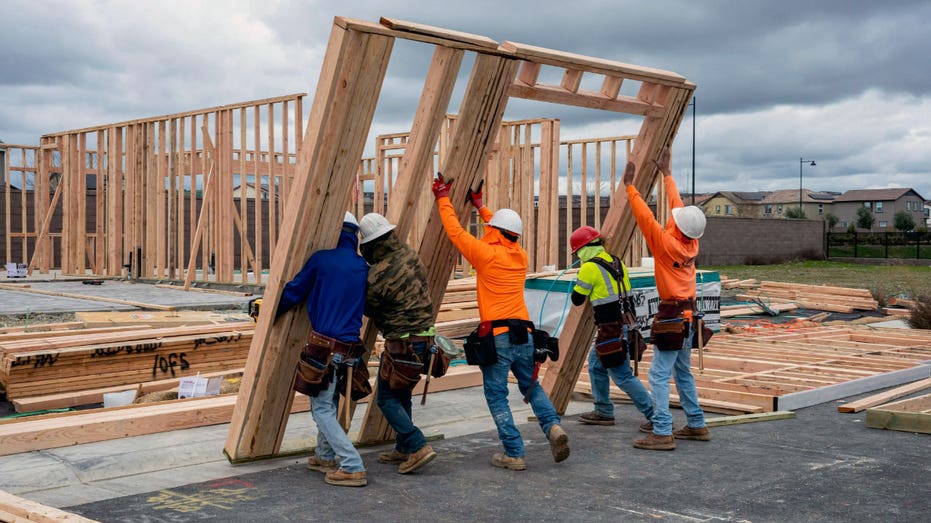
New home construction has helped ease affordability challenges in some parts of the country. (David Paul Morris/Bloomberg via Getty Images)
Jones said that while the national picture for the starter home market is slowly improving, the outlook across various regions of the country varies widely.
“The South is the clearest bright spot, with starter home prices down 3.5% from peak and 170,000 more sub-$350K listings, driven by aggressive Sun Belt construction. The West has also seen real price correction, down 7.3% from peak, though gains are concentrated in markets like Phoenix and Denver rather than California’s coast,” she said.
GET FOX BUSINESS ON THE GO BY CLICKING HERE
“The Midwest remains the most affordable region but is losing that edge, with prices up 10% since 2022,” Jones noted. “The Northeast is the hardest story: prices up 12.6% since 2022, affordable listings down from 48% of inventory pre-pandemic to under 30% today.”
Check out what’s clicking on FoxBusiness.com.
The Trump administration on Monday announced it will impose a 50% tariff on certain Canadian imports, citing what officials called trade “discrimination” against American businesses.
The duties will target specific Canadian goods and are set to take effect on Aug. 19 under the Tariff Act of 1930.
Officials said Canada’s current tax policies unfairly target U.S. automakers, contributing to a significant decline in American vehicle exports while giving foreign competitors an advantage.
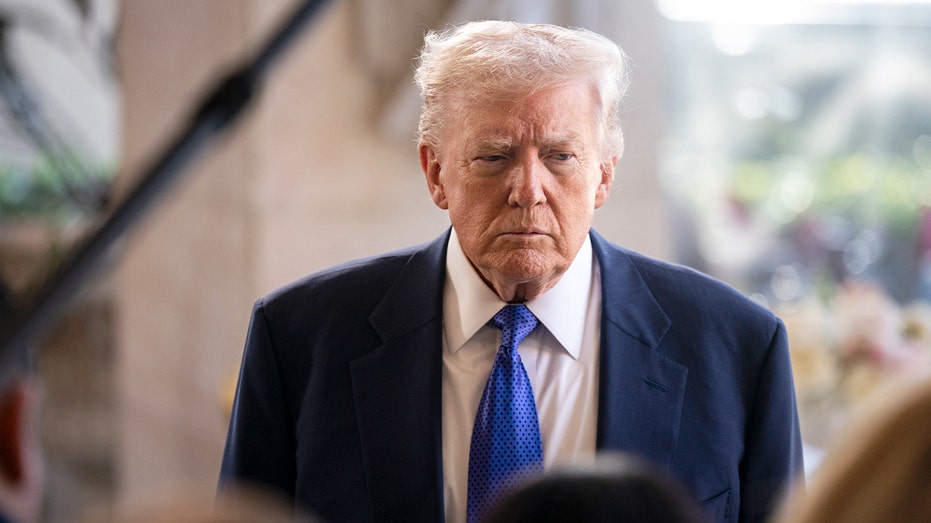
The U.S. will levy a 50% tariff on certain Canadian imports beginning Aug. 19 (Al Drago/Getty Images / Getty Images)
GET FOX BUSINESS ON THE GO BY CLICKING HERE
“I find that it is necessary and appropriate and in the public interest to impose an additional ad valorem duty of 50 percent on certain products of Canada,” the order said.
“The United States, U.S. businesses and workers, and U.S. commerce suffer from Canada’s discriminatory, unequal, and unreasonable tariff scheme.”
This is a developing story. Please check back for updates
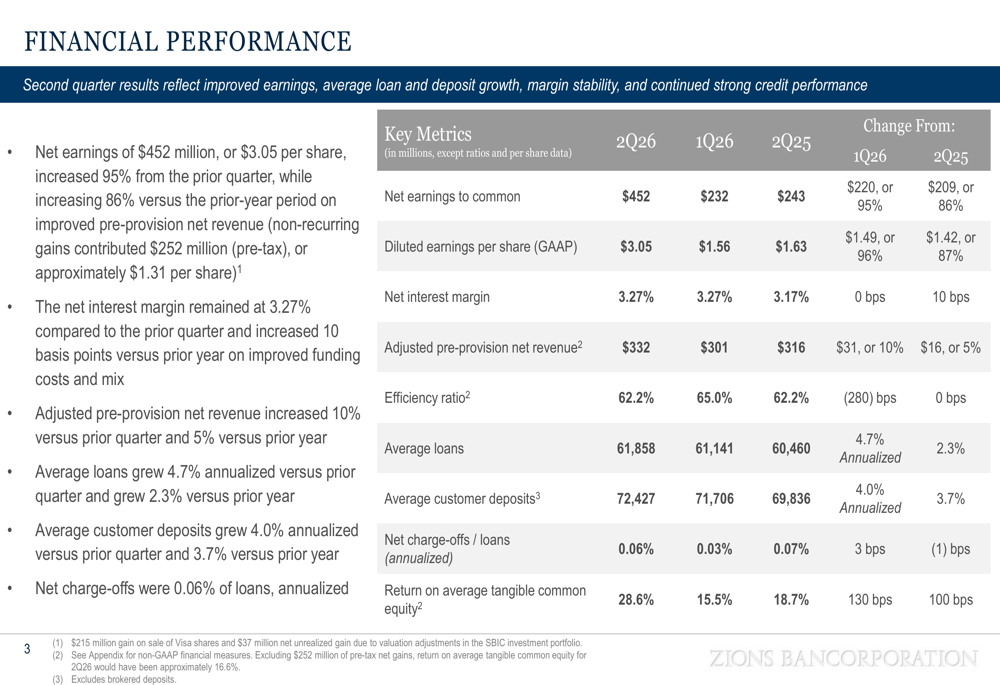
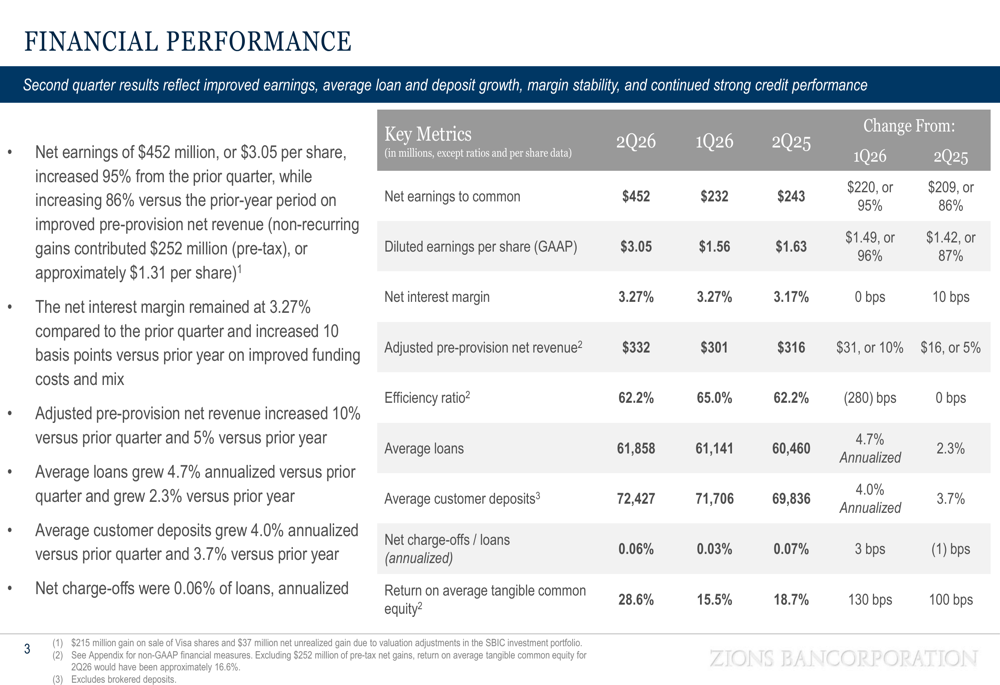
Zions Q2 2026 slides: strong core results, credit quality shines
Business
Micron Stock Rebounds From Recent Selloff as Company Warns Memory Chip Supply Will Stay Tight Past 2027

Shares of Micron Technology climbed Monday morning, rising 3.42%, or $29.00, to $877.95, as the memory chipmaker’s stock rebounded following a turbulent stretch that had seen its shares fall sharply amid a broader selloff across the semiconductor sector.
The gain comes after a difficult few weeks for Micron, whose stock had declined roughly 22% to 30% from its post-earnings high, which had climbed above $1,200 following the company’s blockbuster fiscal third-quarter results in late June. Despite the recent pullback, Monday’s rebound suggests investor appetite for memory chip stocks may be stabilizing following weeks of intense volatility across the broader AI hardware sector.
Record earnings driven by AI memory demand
Micron’s recent stock swings have unfolded against a backdrop of extraordinary underlying business performance. The company reported record revenue of $41.4 billion for its fiscal 2026 third quarter, which ended May 28, marking a 346% increase compared with the same period a year earlier. That surge was fueled primarily by artificial intelligence-related memory demand across all four of the company’s business segments, with cloud memory contributing the largest share of revenue growth on the strength of booming sales of high-bandwidth memory, or HBM, chips.
The company’s profitability improved just as dramatically. Micron’s earnings rose 1,368% year over year to $24.67 per share during the quarter, while non-GAAP gross margin climbed to 85%, up sharply from 39% in the prior-year period. Micron’s own guidance suggests further revenue growth and continued margin expansion in the periods ahead, reflecting management’s confidence in sustained demand for the company’s memory products.
A supply crunch expected to persist for years
Much of Micron’s recent strength has stemmed from a global memory chip shortage that has allowed the company considerable pricing power across its product lines. The company has indicated that tight supply conditions for memory chips are expected to persist well beyond 2027, a forecast that has reinforced bullish sentiment among some investors even as the stock has experienced significant short-term volatility.
That supply-demand imbalance has been driven in large part by soaring AI infrastructure investment, with high-bandwidth memory chips serving as a critical component in the data center hardware stack powering artificial intelligence systems. Nvidia CEO Jensen Huang has previously identified memory as the single biggest bottleneck in AI infrastructure development, a characterization that has helped fuel investor interest in Micron and its primary memory chip rival, SK Hynix.
Strategic partnerships add to the bullish case
Beyond the underlying supply dynamics, Micron has also moved to deepen its position within the broader AI ecosystem through several notable partnerships. The company entered into a multiyear artificial intelligence partnership under which it will serve as the first-choice supplier of memory and storage for the advanced AI systems developed by Anthropic. As part of that arrangement, Micron will co-develop high-bandwidth memory and storage technologies alongside Anthropic while also making internal use of Claude, Anthropic’s AI model, and taking a strategic investment stake in Anthropic’s most recent financing round.
Micron has also expanded its footprint in the automotive sector, signing long-term supply agreements with Qualcomm, Visteon and other automotive ecosystem suppliers, further diversifying the company’s exposure across different segments of the broader AI and technology supply chain. Altogether, Micron has secured 16 long-term agreements collectively worth approximately $22 billion in future revenue, according to recent analyst estimates.
Wall Street remains largely bullish despite the volatility
Despite the sharp swings in Micron’s share price over recent weeks, Wall Street analysts have largely maintained a positive long-term outlook on the stock. Analysts tracking the company have continued to issue strong buy ratings, with some price targets implying substantial additional upside from current levels, even as the stock’s average analyst target has reportedly implied more than 80% potential upside following its recent decline.
Not all market participants share that optimism, however. Billionaire investor Michael Burry has disclosed a short position against Micron stock, reflecting a degree of skepticism among some market participants regarding how sustainable the current memory chip boom and Micron’s elevated valuation ultimately are. Additionally, the recent Nasdaq listing of SK Hynix, Micron’s chief HBM competitor, has drawn increased American investor attention to the broader memory chip competitive landscape, potentially creating capital rotation pressure between the two companies’ shares.
Broader chip sector context
Micron’s recent volatility has occurred alongside a broader selloff across memory and semiconductor stocks more generally, with the sector as a whole briefly falling into bear market territory amid concerns about oversupply as additional memory manufacturing capacity comes online and questions persist about the durability of near-term AI demand. Some analysts have cautioned that near-term volatility in the sector could continue even as the longer-term growth trajectory for AI-driven memory demand remains intact.
With Micron’s stock rebounding meaningfully Monday, investors appear to be reassessing the company’s near-term prospects following weeks of turbulence, even as the underlying business fundamentals, record revenue growth, expanding margins, and a persistent supply-demand imbalance in the memory chip market, continue to support a broadly optimistic long-term narrative around the company. Whether Monday’s gains mark a durable turning point or simply a temporary bounce within a still-volatile sector is likely to become clearer as Micron and its competitors continue reporting results and providing updated guidance in the weeks ahead.
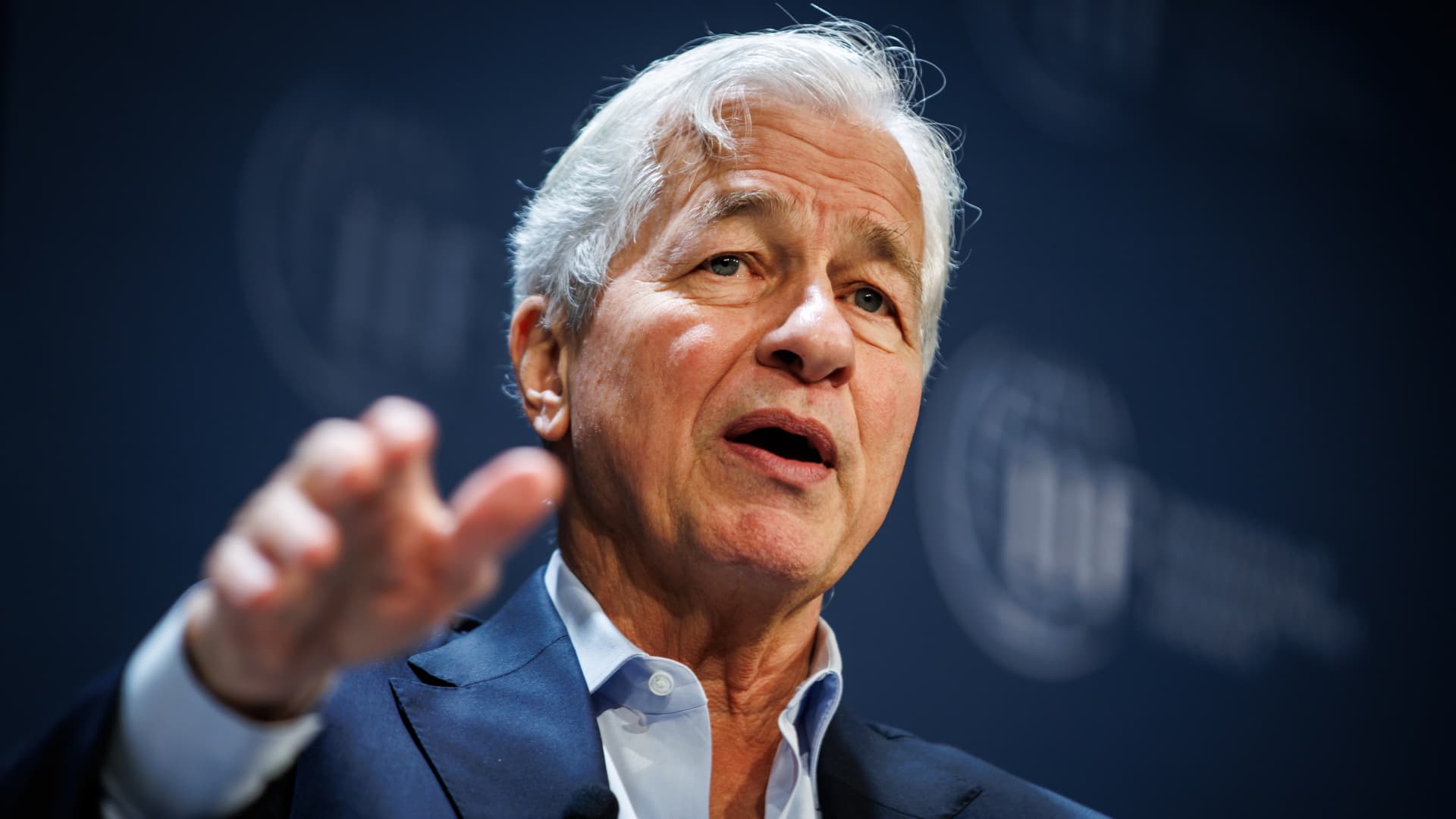
Jamie Dimon, chief executive officer of JPMorgan Chase & Co., speaks during the 2025 Institute of International Finance annual membership meeting in Washington, Oct. 16, 2025.
Samuel Corum | Bloomberg | Getty Images
JPMorgan Chase CEO Jamie Dimon said investors are underestimating the risks facing the global economy and that he wouldn’t buy either equities or long-dated U.S. Treasurys at their current prices.
In an hourlong interview with Wilfred Frost released late Monday, Dimon said markets aren’t fully accounting for a growing list of geopolitical and fiscal threats.
“I do think those risks are probably bigger than other people think,” Dimon said, pointing to wars in Ukraine and the Middle East, tensions between the U.S. and China, and rising military spending in a time of mounting government deficits.
Asked whether markets are underpricing the chance of a major shock, Dimon said it’s difficult to know exactly what risks are already reflected in asset prices.
“It’s possible something’s baked in, but what’s not baked in is what actually happens,” he said.
Dimon, who leads the world’s largest bank by market cap, often warns the public about the economic risks he sees.
His latest comments contrast with investors’ recent willingness to look past wars, tariffs and other shocks. The S&P 500 has returned nearly 10% this year as consumers continue to spend, inflation has moderated and investors have embraced the artificial intelligence trade.
Last week, JPMorgan Chase and its peers posted blockbuster quarterly results powered by surging trading and investment banking revenue, reinforcing the view that the U.S. economy has weathered recent geopolitical turmoil better than many expected.

Dimon acknowledged in the interview with “The Master Investor Podcast” that the global economy has become more resilient because of a lower energy dependence than in previous decades, but warned that doesn’t eliminate the possibility of a sudden inflection point.
“You may need more straws in the camel’s back to cause that tipping point,” he said. “Even this current war starting up again, maybe that’s not enough to do it.”
Persistent U.S. budget deficits will eventually force a reckoning, potentially driving interest rates higher, Dimon said.
“My view is it will become a problem,” he said, predicting higher interest rates as so-called bond vigilantes demand greater compensation to finance the government’s debt.
Stocks, AI cycle
When asked, Dimon said he wouldn’t purchase long-dated Treasurys: “Personally, no,” he said.
Even if inflation falls back to the Federal Reserve’s 2% target, “the 10-year bond should probably be at 4% to 4.5%,” he said, adding that he sees little upside for Treasury prices.
He was similarly cautious on stocks. While he would consider an individual stock if it was “a great investment,” Dimon said he wouldn’t be a buyer of the broader market at current valuations.
Dimon also struck a measured tone on artificial intelligence, comparing today’s spending boom to the early days of the internet.
“The amount of money being spent is huge. Will it in total pay off? Probably, just like the internet did,” Dimon said.
He also pointed out that during that internet boom, big early players such as Yahoo and Netscape faded while eventual winners such as Google and Facebook emerged later.
“Will it pay off the way you expect and the timetable you expect? Definitely not,” Dimon said.
Business
Studsvik AB (publ) 2026 Q2 – Results – Earnings Call Presentation (OTCMKTS:SUDKY) 2026-07-20


Seeking Alpha’s transcripts team is responsible for the development of all of our transcript-related projects. We currently publish thousands of quarterly earnings calls per quarter on our site and are continuing to grow and expand our coverage. The purpose of this profile is to allow us to share with our readers new transcript-related developments. Thanks, SA Transcripts Team

In her teens, Michelle Huynh, the eldest daughter of migrant parents in Australia, made a promise to her family that she would become a millionaire by the time she turned 30.
The 26-year-old describes it as “a somewhat silly promise” inspired by the sacrifices her non-English-speaking parents made to raise the family.
But she is trying to make that dream come true by investing her savings in the stock market.
“Times are so different and investing has become a necessity,” says Huynh, who works in sales for a tech firm. “It feels like our purchasing power is shrinking. This is the only way to combat that.”
This year, the technology-driven surge in stock markets has edged her closer to that goal.
With more than a third of her investments in tech stocks, by the middle of July that part of her savings had jumped this year by 50% – a rise of A$31,000 (£16,100; $21,666).
But those gains have now eased to about A$22,000 as the sector is going through what she calls a “wild moment”.
Huynh says she’s prepared for the volatility, viewing those investments as a long-term bet.
The rise in tech stocks, led by firms riding the artificial intelligence (AI) boom, has attracted large numbers of ordinary investors, many of them in their 20s and early 30s, even as some analysts warn that the fervour around AI may be overblown.
Retail investors have been caught up in the excitement, which has been fuelled by social media and marketing efforts to draw non-professionals, says Glenn Tan from advisory firm Providend.
Business
GameStop Shares Dip Slightly as CEO Ryan Cohen Vows to Keep Pushing His Contested Bid to Acquire eBay

Shares of GameStop slipped modestly Monday morning, trading at $21.74, down 0.71%, or 16 cents, as investors continue to weigh the company’s contested bid to acquire eBay and the broader strategic direction chief executive Ryan Cohen has charted for the video game retailer.
The dip comes amid ongoing uncertainty surrounding GameStop’s unsolicited $125-per-share proposal to acquire the outstanding shares of eBay that it does not already own, an offer eBay’s board has already formally rejected. Despite that rejection, Cohen has signaled he has no intention of abandoning the pursuit.
Cohen digs in after eBay’s rejection
Responding directly to eBay’s decision to reject the takeover proposal, Cohen made clear GameStop intends to keep pressing forward. “We’re Coming for eBay,” Cohen said in comments reported by TipRanks, reflecting his refusal to back down despite the board-level pushback from eBay’s leadership.
According to Yahoo Finance, Cohen has indicated plans to take his case directly to eBay shareholders rather than relying solely on board-level negotiations, a strategy that would attempt to build shareholder pressure on eBay’s leadership to reconsider the offer. That approach leaves the ultimate outcome of the proposed acquisition uncertain and has contributed to a degree of investor caution surrounding GameStop’s stock in recent weeks.
Shareholders clear the way for a potential deal
GameStop took a significant procedural step toward enabling the proposed acquisition earlier this month. At the company’s 2026 Annual Meeting of Stockholders, held July 7, shareholders approved all proposals presented to them, including an amendment to GameStop’s certificate of incorporation increasing the number of authorized shares of Class A common stock to 2.5 billion. The amendment passed with 68.7% of votes cast in favor, providing GameStop with substantially greater flexibility to issue common stock in connection with strategic transactions, including its proposed eBay acquisition.
Beyond the share authorization increase, stockholders also ratified the appointment of KPMG LLP as the company’s independent registered public accounting firm for the fiscal year ending January 30, 2027, with more than 333 million votes cast in favor. Executive compensation was also approved on a non-binding, advisory basis, while a previously disclosed proposal regarding a chief executive performance award was withdrawn prior to the meeting and not presented for a shareholder vote.
Details of the proposed eBay transaction
GameStop first delivered its non-binding proposal to eBay’s board on May 3, 2026, offering to acquire all outstanding eBay common stock that GameStop does not already own at a price of $125 per share, payable through a combination of cash and GameStop common stock. As of its most recent disclosures, GameStop directly owns more than 4.3 million shares of eBay common stock and has additionally entered into a series of American-style put/call option transactions with an unaffiliated financial institution, providing economic exposure to nearly 39.1 million additional eBay shares. Those options are set to expire in February 2028, and GameStop does not currently hold voting or dispositive power over the underlying shares unless the option pairs are physically settled for common stock.
An important regulatory condition tied to that arrangement was satisfied on June 3, 2026, when the waiting period under the Hart-Scott-Rodino Antitrust Improvements Act, commonly known as the HSR Act, was cleared. That development gave both GameStop and its counterparty financial institution the option, though not the obligation, to elect physical settlement of the underlying eBay shares going forward.
A broader strategic pivot for GameStop
The eBay pursuit represents part of a broader transformation underway at GameStop under Cohen’s leadership, as the company continues shifting away from its traditional identity as a struggling brick-and-mortar video game retailer. GameStop recently provided its fiscal year 2026 outlook, projecting adjusted EBITDA in excess of $600 million for the fiscal year ending January 30, 2027, a substantial increase from the $345.4 million in adjusted EBITDA the company reported for fiscal year 2025.
GameStop has also continued to diversify its business through new partnerships, including a recently announced collaboration with Uber Eats to launch on-demand gaming delivery services, an initiative aimed at expanding the company’s relevance among gamers seeking faster access to physical game and hardware purchases.
A stock shaped by more than fundamentals
GameStop’s stock has long been influenced by factors extending well beyond traditional retail fundamentals, given the company’s history as one of the most prominent “meme stocks” during the retail trading surge of 2021. In more recent periods, the stock has continued to draw attention for reasons tied to Cohen’s broader capital allocation strategy, including the company’s substantial cash reserves and, at times, exposure to cryptocurrency holdings as part of its treasury management approach.
With eBay’s board having already rejected GameStop’s initial offer and Cohen signaling intent to appeal directly to shareholders, the path forward for the proposed acquisition remains uncertain. Investors are likely to continue closely watching for further developments regarding both the eBay bid and GameStop’s broader operational transformation, including additional details on strategic partnerships and updates tied to the company’s fiscal 2026 financial targets, as the situation continues to unfold in the weeks ahead.
Let me quote from Truth Social, a very important quote from the president: “Every time Iran kills an American soldier, they will pay for that killing many times over.” The president adds that “This directive has been passed on to Secretary of War Pete Hegseth, Chairman of the Joint Chiefs of Staff Daniel Cain and every leader in the military.” That was from President Trump’s Truth Social platform today. Let me just say, I fully support him and I fully support those sentiments.
And to some extent, I think this is a moment of truth for the president with respect to completely destroying the barbaric, totalitarian, Nazi-like regime that is still running Iran. They crossed his red lines by not reopening the Strait of Hormuz and continuing to develop their capabilities on the nuclear front. Those were the red lines, and they crossed them. He is now responding with major force, and this is where the game can finally be ended. Now, it’s being reported that America is increasing our aircraft numbers in the Middle East theater. America is planning to send additional F-16 and F-35 fighter jets from bases in Europe, plus additional aerial refueling tankers.
Also widely reported was the Situation Room briefing with various options such as capturing Kharg Island or bombing Pickaxe Mountain. Again, my hope is the president pursues both options. Capturing Kharg Island would be a Venezuela-like takeover of Iran’s oil and energy and economic capabilities. We, meaning America, can refine and export the oil better than Iran can, put it on ships and increase the world’s oil supply.
They’re bringing down prices, but the money won’t go to the Islamic Revolutionary Guard Corps regime. It’ll either be escrowed or given to our Gulf allies to rebuild from Iranian bombing damage. We can do the oil story with minimum invasion. And maximum world economic benefits.
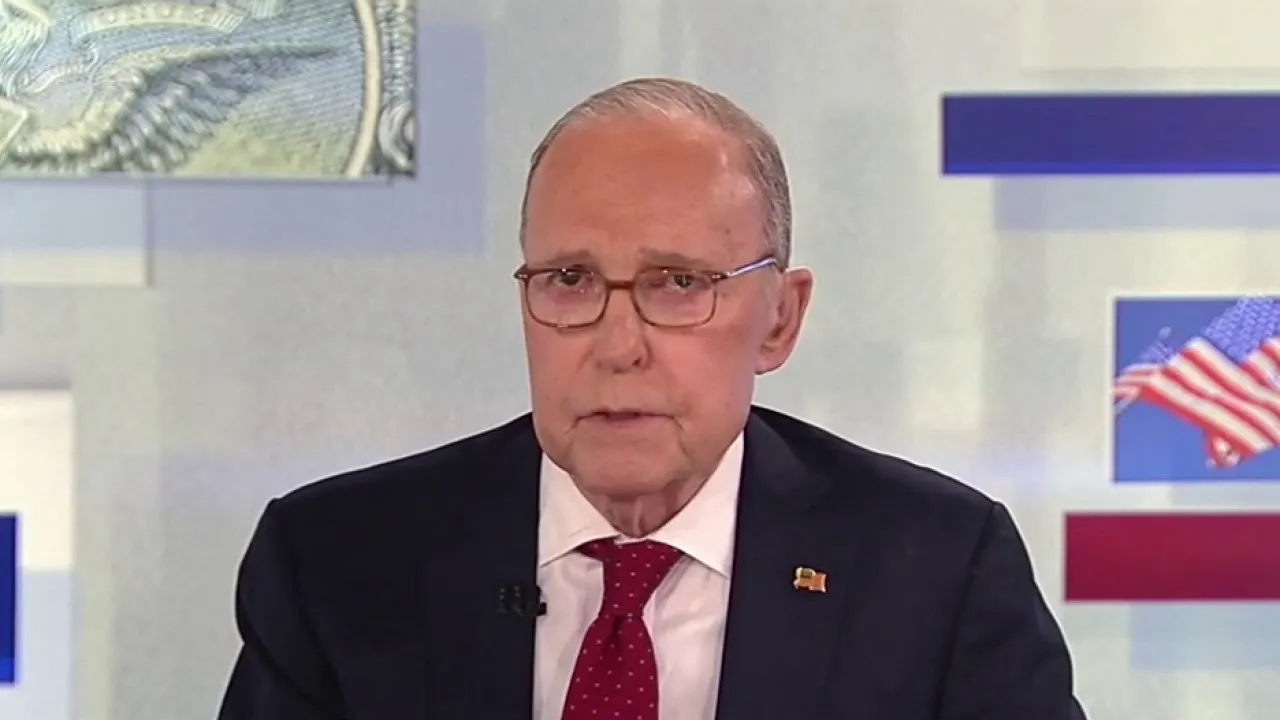
Fox News senior strategic analyst Ret. Gen. Jack Keane assesses escalation of the U.S.-Iran conflict, emphasizing the strategic importance of the Strait of Hormuz, on ‘Kudlow.’
And as for Pickaxe Mountain, my view is that any remaining nuclear capabilities should be smashed. And importantly, let’s bring in our Israel ally to help us as they always have, despite some egregious and foolhardy sniping at Israel from a senior administration source.
Israel can help us in so many ways. And they’re supplying plenty of intelligence to our Gulf allies, including the Saudis, and they’re working hand in glove with our CIA. One thought I have is for Israel and the American secret service is to identify and supply Iranian dissidents with as much military and other help as possible to overthrow the IRGC regime.
There’s a Ronald Reagan element to this. As the Gipper helped arm Poland, and so many other Eastern European states, to overthrow Soviet communism. Working with Margaret Thatcher and Pope John Paul II, Reagan’s goal of overturning Soviet communism was realized. Why not try this with Iran? Perhaps we are already trying. There’s nothing wrong with conducting some kind of diplomacy while the military options are implemented and the daily bombing continues.
Yet I think as far as Mr. Trump is concerned, he is intent on destroying the regime. He knows this is what history demands. They must not have any nuclear capabilities at all. And they must open the Strait of Hormuz. And if Iran won’t do it, we will do it for them. Mr. Trump knows this is about America First freedom. He’s not concerned about the midterm elections in my view, but he realizes that doing the right thing will be its own benefit. This is history.
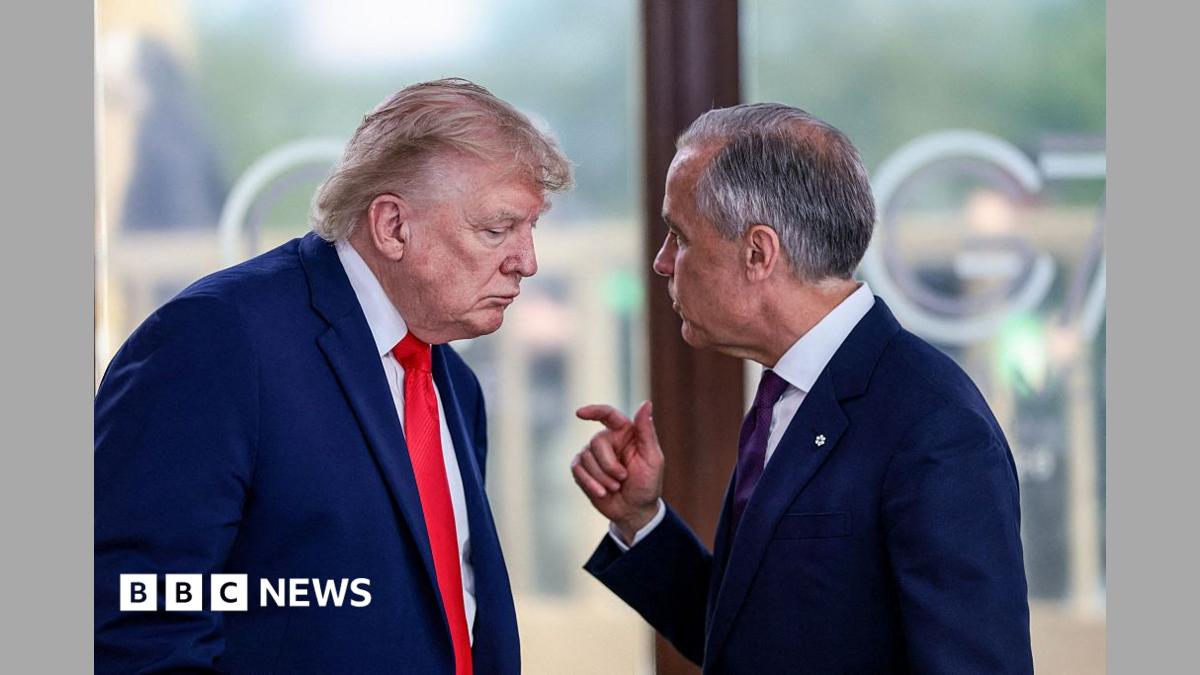
US President Donald Trump has imposed a 50% tariff on a wide range of goods imported from Canada, in retaliation for what he called “unequal treatment” of US cars, dairy and alcohol.
The duties take effect on 19 August and mark a major escalation in trade tensions between the North American neighbours.
The White House said the tariffs were necessary to protect American businesses.
Goods targeted range from everyday consumer items like wine and hockey sticks to industrial goods such as commercial cement. However, several key exports will be spared, such as energy, potash, critical minerals and fish.
The new duties apply to all covered goods regardless of whether the product was included under the existing free trade agreement between Canada, the US and Mexico, known as the USMCA.
The new import taxes build on trade barriers already in place between the two nations.
The US has been maintaining active tariffs ranging from 15% to 50% on Canadian steel, aluminum, and copper. Washington also charges a 35% tariff on Canadian softwood lumber, alongside a 25% tax on non-US parts in cars.
Canada has its own 25% counter-tariff on selected imports of American steel, aluminium and vehicles.
Monday’s duties come in the wake of President Trump’s threat to impose tariffs over Canadian wildfire smoke drifting into US cities.
But there is no mention of wildfires in the executive orders that Trump signed on Monday.
Instead, the three proclamations list US trade irritants that were previously known to Canada related to cars, dairy and alcohol – signalling a breakdown of trade negotiations between the two countries.
On cars, Trump is accusing Canada of charging a tax on US motor vehicles and parts that are not covered under USMCA.
He argues it is “unreasonable” and that Canada has discriminated against the US by not charging other countries a similar tax.
Automotive manufacturing in North America is highly integrated between Canada, the US and Mexico.
But Trump’s Commerce Secretary Howard Lutnick has said in the past that he believes Canada should “come second” to the US.
Trump has also named cars in the past as one issue where the two countries have competing interests.
Dairy, meanwhile, has long been a problem for the US, specifically Canada’s supply management system, which sets limits on foreign imports. Those that exceed the limit are charged a tariff upwards of 300%.
And lastly, the enduring boycott of US booze by most Canadian provinces has become a major sore point for the Americans since it was imposed last year.
Canadian premiers have said repeatedly that the boycott will be lifted if the US removes its tariffs on key Canadian sectors, including metals and automobiles.
Canadian trade negotiators have been working on trying to secure a deal that would at least reduce some of the current US tariffs.
In February, the US Supreme Court struck down international tariffs imposed by President Trump through the International Emergency Economic Powers Act of 1977.
The justices ruled that the president had exceeded his authority when he announced the duties under a law reserved for national emergencies.
The White House vowed at the time that it would invoke other mechanisms to impose import taxes.
Monday’s duties have been imposed under Section 338 of the 1930 Tariff Act, which covers trade discrimination rather than national emergencies.
Candance Laing, head of the Canadian Chamber of Commerce, called the move a “regrettable decision”, but urged officials to make “meaningful progress” in talks before the new duties take effect in 30 days’ time.
The BBC has contacted the White House and the Canadian government for comment.

First-time homebuyers get some relief, but affordability remains a challenge

Consensys Halted MetaMask Releases Over North Korea-Linked Contractor

Cher Lloyd Confirms Marriage Is Over, Wedding Ring ‘Is In The Bin’

Renter of Home in Anne Heche Crash Denies Settlement With Son

No Jackpot Winner as $257 Million Prize Rolls Over to $269 Million Monday Draw

Weekend Open Thread: Staud – Corporette.com

Bitcoin Near Collapse As Crypto Bill Heads To Senate Vote

China Debt Trap Busted: Why Bangladesh Urgently Requested Massive Financial Aid Package From India

WHY WILL XRP BE EXPENSIVE? BECAUSE IT WORKS! – CAN TOKENIZATION PUSH XRP TO $10K
-
 NewsBeat4 days ago
London Mayor Sadiq Khan handed a peerage by Keir Starmer alongside 15 other Labour figures… just days before the PM leaves No10
-

 Fashion3 days ago
Weekend Open Thread – Corporette.com
-

 Politics3 days ago
The House | The City of London can help the new chancellor deliver growth in every postcode
-

 Politics5 days ago
Young campaigners urge incoming PM to act on outdoor junk food ads
-

 Crypto World5 days ago
CFTC blocks Kalshi from unwinding Michigan trades after court order
-
 Crypto World4 days ago
Two July Windows Left: The CLARITY Act’s Senate Fight and What Failure Means
-

 Crypto World3 days ago
Ripple Payments Joins MiCA With 14 Firms, Does It Mean Anything For XRP?
-

 Business5 days ago
Nvidia Stock Slips After Big Tuesday Rally as Huang Confirms Vera Rubin Chip Is Now in Production Today
-

 Politics1 day ago
Democrats look to World Cup watch parties to register thousands of voters
-
 Entertainment5 days ago
Disney’s Most Ambitious Failed Star Wars Attraction Is Coming to SDCC
-

 Crypto World3 days ago
Ripple wins EU-wide access as ESMA adds it to MiCA register
-

 Business5 days ago
Palantir Shares Rise After Expanded Nvidia Partnership and Fresh Analyst Upgrades Ahead of Earnings Day
-

 Crypto World4 days ago
Injective Submits SEC Transfer-Agent Registration to Onchain Ownership Records
-

 NewsBeat3 days ago
Registration is now open for March for Men with Kev 2026
-

 Tech7 days ago
Get Your ESP32 Sunny Side Up With This Solar Dev Board
-

 News Videos6 days ago
XRP BOMBSHELL… XRP OMBOARDED FOR TRANSACTIONS!!!
-

 Tech6 days ago
Dark Secrets Emerge When Jailbreaking LLMs
-

 NewsBeat12 hours ago
Unregistered fitter used Gas Safe logo on business flyers
-
 Sports5 days ago
New Cornerback Enters Vikings Trade Rumor Mill
-

 News Videos4 days ago
Money | Class 12 Economics | CBSE Board Exam 2026-27
You must be logged in to post a comment Login